Affiliate Disclosure: Vibration Plate Zone is a proud participant in the Amazon Services LLC Associates Program.
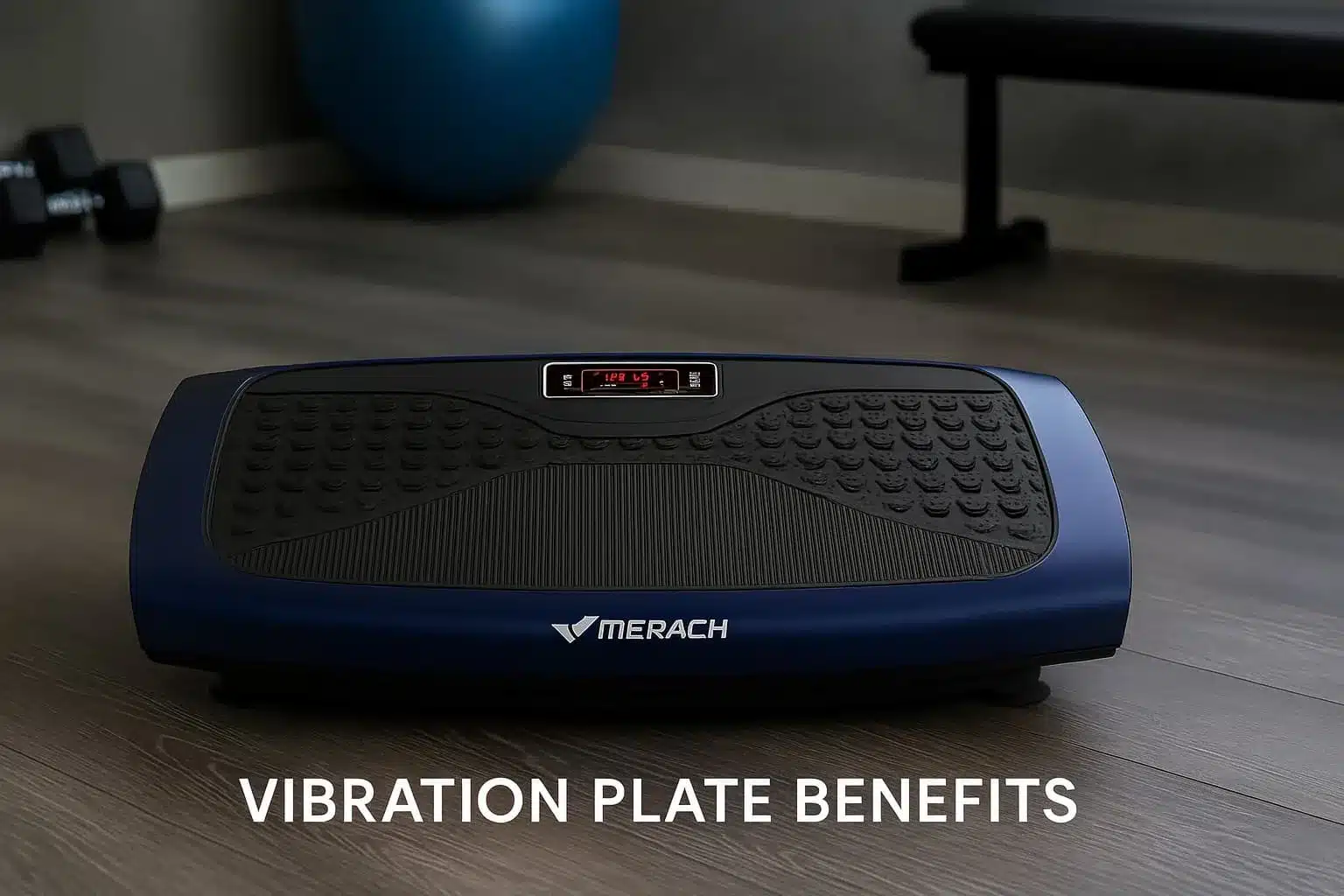
Whole body vibration therapy using vibration plates has moved from clinics, to gyms, to home gyms, even to office rec rooms, leaving many people wondering “Do vibration plates work?”. In simple terms, they send controlled waves through your body so your muscles react by tightening and relaxing rapidly. This reflexive activity increases neuromuscular engagement.

About the author: Hello! I’m Vladimir Stanar, professor of physical education, kinesiotherapist, marathon runner, cyclist, and cycling coach, and long-time advocate of health, fitness, and active living.
My journey with vibration plates runs parallel to my professional career in education, sports medicine, and athletic development. Over time, I’ve come to see vibration plates as one of the most versatile tools for enhancing health, recovery, and performance.
✅ Expert-Reviewed by: Vanja Vukas, MPhEd
📚 Expert Contributor: Milutin Tucakov, MPhEd
When used correctly and consistently, a vibration plate can support strength, coordination, circulation, and general well-being. The key is knowing how to integrate vibration plates workouts into a balanced training plan rather than treating them like a magic fix.
Do Vibration Plates Work for Everyday Fitness?
A vibration plate introduces controlled mechanical oscillations to your body. When you stand, sit, or perform vibration plate exercises, those vibrations trigger rapid muscular contractions through the stretch reflex. These contractions engage stabilizing muscles as well as larger movers.
Readers who want to understand how that reflex response translates into practical range-of-motion improvements can find a thorough breakdown in my guide to using a vibration plate for flexibility.
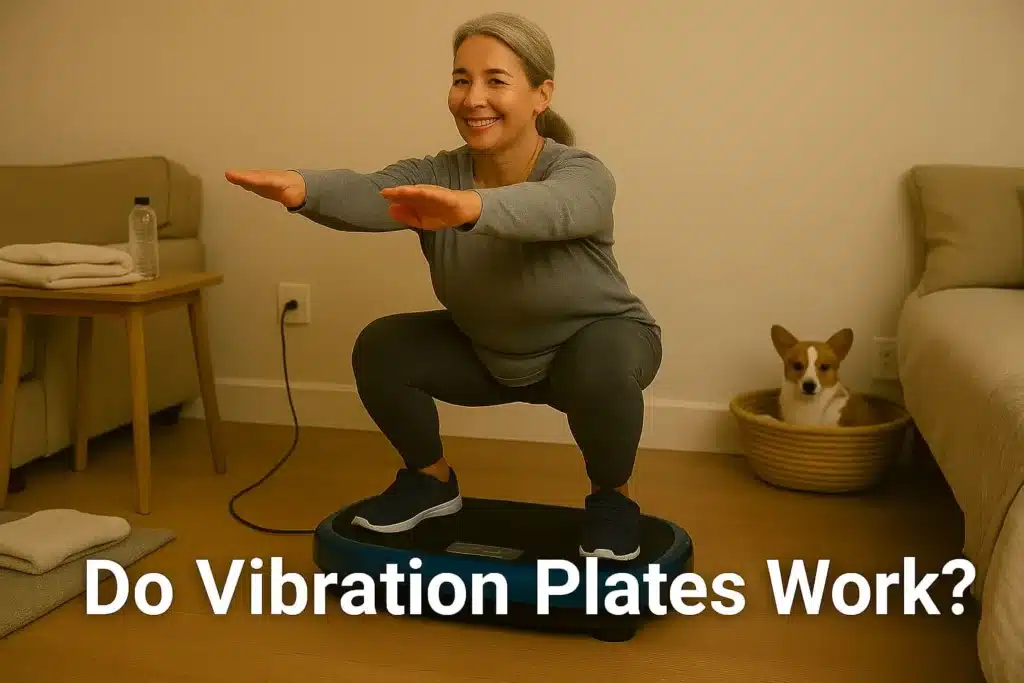
Because your muscles respond involuntarily, the experience often feels more intense than an identical move performed on the floor. For most people starting at home, sessions of 10–15 minutes are ample. After you learn how to use a vibration plate safely, I advise setting the frequency at a moderate level and choosing exercises you know well, such as bodyweight squats, lunges, calf raises, hip bridges, or plank variations.
The vibrations make these movements feel harder. That extra challenge means you can get meaningful work in a short time without heavy weights. Gentle hip hinging, ankle pumps, or seated pelvic tilts are also useful for circulation and mobility.
I learned through experience that pairing vibration with simple movements produces the most noticeable results. Standing passively will promote some blood flow, but adding controlled motion engages more muscle fibers. It also makes sessions feel purposeful.
Over time, you might progress to single-leg stances, overhead reaches, or light resistance band rows while on the plate. Each variation trains balance and coordination because the unstable platform encourages constant micro-adjustments. Listening to your body is important when starting.
Begin with three sessions a week and leave a day of recovery between them. Monitor how your joints and muscles feel during and after each session. If you notice excessive fatigue or discomfort, reduce intensity or shorten the session.
How Vibration Plates Actually Work
The vibration source creates rapid oscillations that travel through the platform and into the body. At frequencies between 20 and 50 Hz, the platform oscillates fast enough that the neuromuscular system cannot consciously track each individual movement. What activates instead is the stretch reflex: muscles stretch slightly with each oscillation and contract reflexively to stabilize the joint. This happens dozens of times per second, producing the muscle activation and fatigue associated with vibration plate training even during low-effort positions like a static squat or calf raise.
Frequency determines the rate of these oscillations. Lower frequencies, from 5 to 15 Hz, produce larger, slower movements suited to recovery, circulation, and warm-up use. Mid-range frequencies, from 15 to 30 Hz, activate fast-twitch fibers and suit general strength and toning work. Higher frequencies, from 30 to 50 Hz, are used in clinical settings for bone density protocols and produce the highest levels of muscle fiber recruitment. Amplitude determines how far the platform moves with each oscillation. A plate with low frequency but high amplitude creates a different stimulus from one running at high frequency with low amplitude. Both variables matter, and the right combination depends on the goal.
The body does not need to perform complex movements to receive this stimulus. Standing in a soft-knee position, seated with feet on the platform, or holding a shallow squat while the plate runs all activate the reflex. That low-skill entry point is part of why vibration plates work for users who struggle with conventional resistance training.

How Vibration Therapy Fits Different Goals
Strength and Tone
Strength gains from vibration training come from increased recruitment of muscle fibers. A basic squat on the floor might primarily engage your quadriceps and glutes. On a vibrating surface, smaller stabilizers in your hips, knees, and core must react constantly to maintain alignment.
Because the vibrations cause rapid stretch reflexes, both fast-twitch and slow-twitch fibers are stimulated. Over time, this can lead to improved strength and muscle tone without adding heavy loads. Short sets of eight to twelve squats or lunges are often enough to feel the muscles working.
You can perform two or three rounds with 30–60 seconds of rest in between. As you progress, hold a light dumbbell or wear a weighted vest for added resistance. Focus on quality of movement rather than sheer quantity.
Balance and Mobility
Balance training on a vibration plate works because the unstable surface challenges your body to maintain equilibrium. Simple exercises, such as standing on one leg, shifting weight from side to side, or performing small knee bends, force your ankles, knees, and hips to adjust quickly. Over time, this improves proprioception, which is the sense of where your body is in space.
Better proprioception reduces the risk of falls and enhances performance in everyday tasks. Mobility gains come from moving through full ranges of motion while the plate is active. Gentle hip hinges, calf pumps, and arm swings encourage muscles and connective tissues to adapt to the oscillations.
This added stimulus can help reduce stiffness in areas like the hips, lower back, and calves. It’s a subtle but noticeable benefit that complements stretching or yoga routines. It also supports daily comfort when bending, reaching, or walking.
For those exploring whether a vibration plate might also support digestive health, my guide on vibration plate for functional constipation covers the direct clinical evidence, the limitations of what has been studied, and how to use one safely alongside other management strategies.
Circulation and Recovery
Many people use vibration plates to stimulate blood flow and benefit from the best vibration plates for lymphatic drainage. When the platform vibrates, it creates rhythmic pressure changes that encourage fluids to move through muscles and tissues. This can help reduce swelling in the lower legs and support recovery after exercise.
I go deeper into this in my guide on using a vibration plate for muscle recovery, including what the research says about creatine kinase and DOMS timing.
I often step onto my plate after long runs to loosen tight calves and promote circulation. A 5–10 minute session on a gentle setting is enough to feel a difference. Because vibration therapy doesn’t rely on high impact or heavy weights, it’s accessible on recovery days.
Sitting with your feet on the plate or lying with your calves elevated on the platform provides a soothing sensation. By improving circulation, these sessions may help flush metabolic waste from muscles. They also deliver nutrients needed for repair. For anyone managing blood pressure concerns alongside these circulation benefits, my guide on vibration plate for high blood pressure examines whether improved blood flow translates to measurable changes in readings.
For users dealing with lymphedema, poor lower-leg circulation, or venous insufficiency, vibration at 6 to 15 Hz produces a gentle compressive stimulus without the cardiovascular demand of conventional aerobic exercise. The oscillations help move fluid through the lymphatic vessels and reduce the pooling effect that worsens with prolonged sitting or standing. My breakdown of the best vibration plate for lymphedema covers models suited to this lower-frequency, circulation-focused use.
Users targeting general blood flow and vascular health rather than a specific medical condition get the most from sessions of 8 to 15 minutes at 6 to 20 Hz, used consistently three to five times per week. My guide to the best vibration plate for circulation covers the machine features that matter most for this goal, including oscillation type, platform size, and speed granularity.
For those curious whether circulation improvements from vibration also carry over to skin health, my article on vibration plate benefits for skin addresses what the research shows and where the limits are.
Everyday Energy
A brief session on the best vibration plate for your needs can provide a gentle energy boost. The vibrations activate your nervous system and improve blood flow, which may leave you feeling more alert. I like to stand on my plate for a few minutes in the morning while I drink water or read messages.
It’s a simple way to start the day with a bit of movement. This low-intensity approach can be especially beneficial for those with sedentary jobs. It helps set a steady rhythm for the day without requiring a full workout.
Factors That Drive Results
So, are vibration plates good for you? Will they bring results? Yes, but you need to consider the following factors.

Frequency, Amplitude, and Exercise Choice
Vibration plates allow you to adjust frequency and amplitude. Most consumer machines operate between 20 and 50 hertz. Lower frequencies tend to feel more gentle and are often used for balance and circulation.
Higher frequencies produce more intense muscle contractions and suit strength goals. Amplitude settings range from a few millimeters for subtle movement to over a centimeter for a bigger challenge. Choosing the right combination depends on your objective.
For beginners, I recommend starting with moderate frequency and low amplitude. Then you can adjust as you gain confidence. Pair these settings with exercises that match your goal.
Time and Progression You Can Maintain
Consistency matters more than long individual sessions. Early on, keep workouts around 10 minutes and perform them two or three times per week. As your body adapts, you can gradually add time or intensity.
Increase sessions to 15 minutes or add a fourth weekly workout. You can also add a second set to each exercise. These incremental changes reduce the risk of overuse injuries and help the habit stick.
Avoid jumping into daily, high-intensity use right away. Muscles and connective tissues need time to respond to the new stimulus. A gradual approach yields better results and minimizes fatigue.
Footwear, Stance, and Comfort
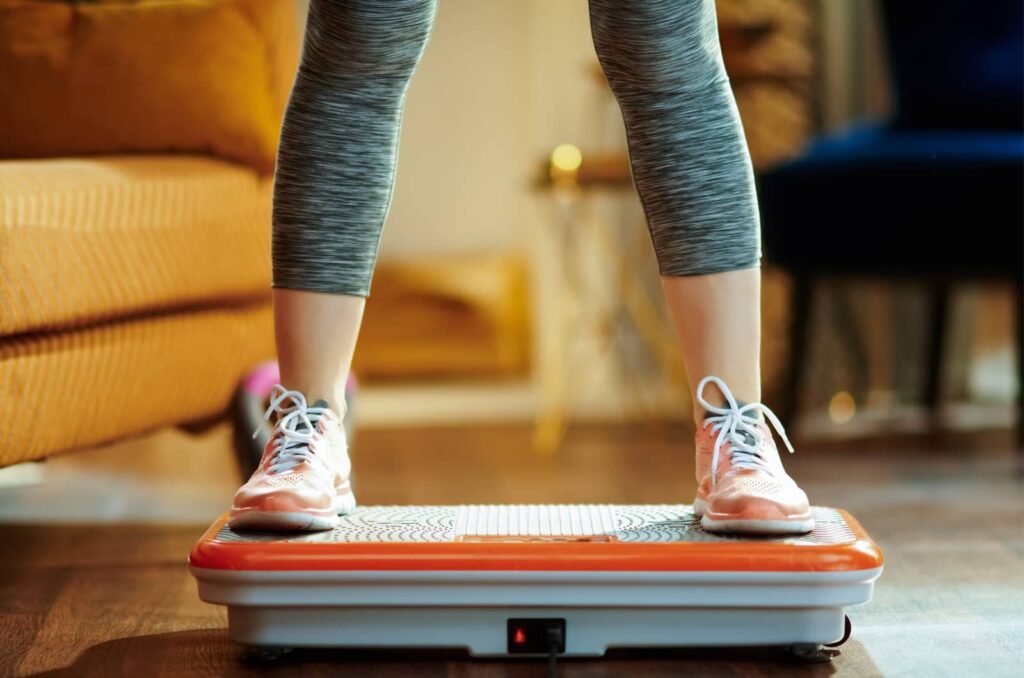
Proper stance and footwear contribute to a safe, effective vibration session. Most plates work well with athletic shoes because the cushioning helps dampen excessive vibration. Unless your machine’s manual specifies bare feet, I recommend wearing supportive sneakers.
Keep your knees slightly bent and your core engaged. This posture absorbs the vibrations through your muscles. It prevents them from traveling upward into your head or jaw.
For a full breakdown of what happens when vibration reaches the head and what the evidence says, my guide on vibration plates bad for your brain covers the topic in detail.
Spacing your feet shoulder-width apart provides a stable base. On some models, the intensity varies across the platform. The center may vibrate less than the edges.
Experiment with foot placement to find the most comfortable position. If you feel buzzing in your head or discomfort in your teeth, step off immediately. Re-position and lower the intensity before continuing.
Recovery Between Sessions
Your muscles need time to adapt to any training stimulus. Although the workouts are short, the rapid contractions can fatigue muscles and central nervous system pathways. Allow at least one full day between strength-focused sessions.
On non-training days, you can still use the plate for gentle recovery sessions. Keep frequency and amplitude low. Proper recovery also includes hydration, balanced nutrition, and adequate sleep, so consider using a vibration plate before bed.
If you integrate vibration training with other workouts, plan your schedule so that intense sessions on the plate do not coincide with heavy lifting or vigorous cardio. This approach helps you avoid overtraining. It also supports steady progress.
Do Vibration Plates Work for Weight Loss?

The best vibration plates for weight loss can assist with weight management, but they are not a standalone solution. Standing on a vibrating platform increases muscular activation, which slightly elevates your heart rate and energy expenditure. However, the calorie burn from a short session is modest compared to longer cardio workouts.
The primary weight loss vibration plate benefits come from using the plate to support an overall active lifestyle. I’ve found that combining vibration sessions with regular walking, light jogging, or resistance training creates a more effective approach to fat loss. The plate makes bodyweight exercises more challenging, which helps build muscle.
Increased muscle mass boosts metabolic rate. That means you burn more calories at rest. In addition, the improved circulation and recovery you get from vibration therapy can encourage you to stay consistent with other workouts.
A balanced diet remains a critical component to support vibration plate therapy. To lose weight, your overall calorie intake must be lower than your expenditure. Vibration training can contribute by making workouts more efficient and supporting muscle maintenance while you’re eating slightly less.
The key is integrating the plate into a broader plan that includes balanced nutrition and varied exercise. Patience is important. Sustainable weight loss happens gradually through consistent habits.
For people weighing an exercise bike against a vibration plate in a weight management plan, my vibration plate compared to an exercise bike covers how the two differ in cardiovascular output, calorie burn, and how each fits a sustainable routine.
Do Vibration Plates Work for Bone Health and Joint Conditions?
Bone density is one of the better-researched applications of vibration plate therapy. The mechanism is mechanical loading: when the platform oscillates, it applies repeated compressive stress to the bones of the legs, hips, and spine. Bones respond to this stress by maintaining or increasing density, the same principle behind weight-bearing exercise like walking or resistance training.
A German study of 150 postmenopausal women found that regular whole-body vibration reduced fall risk, and a 2019 meta-analysis of seven trials covering 280 participants showed improvements in hip and lumbar spine density in postmenopausal women who trained consistently over six to twelve months. The protocol in most of these trials used frequencies between 25 and 40 Hz for sessions of ten to twenty minutes, three times per week. For users with osteoporosis or those building a preventive routine, my picks for the best vibration plate for osteoporosis cover the frequency range and platform stability that bone density protocols require.
For users with arthritis, the evidence points to a gentler approach. Vibration at lower frequencies, between 6 and 15 Hz, appears to reduce joint pain and improve range of motion without aggravating inflamed tissue, particularly in the knees. Avoiding the higher-frequency, high-amplitude settings is the key, as those can overload already-compromised cartilage. Users with active flares or significant joint damage should consult a healthcare provider before starting. For machine recommendations suited to joint conditions, my guide to the best vibration plate for arthritis covers models with the lower amplitude and wider platform that joint-condition users tend to do better with.
The takeaway for both groups is that the right frequency and amplitude combination is not the default factory setting. Bone density protocols run at higher frequencies than recovery or general fitness use, while joint conditions require the opposite adjustment. Matching the settings to the specific goal is what separates effective use from wasted sessions.
Gains You Can Expect in the First 4–8 Weeks

Stronger Legs and Core
Most beginners notice changes in leg and core strength within a month or two of consistent use. Tasks like getting up from a chair, climbing stairs, or carrying groceries may feel easier. This improvement comes from increased muscle recruitment and better coordination.
Because vibration plates stimulate deep stabilizers, you may also sense greater stability in your hips and trunk. This translates to improved posture and less wobbling during daily tasks. These changes build confidence in movement.
Better Balance and Joint Comfort
Improved balance is another common early benefit. The constant adjustments your body makes on the plate translate into more confidence on uneven surfaces. People with joint discomfort sometimes report steadier knees and ankles after a few weeks.
This may happen because stabilizer muscles become stronger. Circulation around the joints also improves. Together, these effects can reduce stiffness and help with smoother movement.
Looser Hips, Calves, and Lower Back
Short sessions on a vibration plate can reduce tightness in muscles. The vibrations encourage blood flow and relaxation. Hip hinges, calf pumps, and gentle spinal rotations are especially useful.
After several weeks, range of motion often improves. Bending, reaching, and twisting can feel more natural. The lower back and hips may feel less restricted during everyday activities.
More Motivation to Move
When results show quickly, motivation grows. Short workouts that fit easily into your day encourage consistency. These small wins create a cycle of progress and confidence.
For neuropathic pain, it's worth considering vibration plate vs foot massager for neuropathy as both devices create a motivating basis for moving more.
I also recommend reading my vibration plate for knee pain detailed guide.
Feeling stronger and steadier can spark interest in other exercise. Walking, cycling, or light strength work become easier to stick with. The plate often acts as a gateway to a more active lifestyle.
For people choosing between a vibration plate and an elliptical as that entry point, my vibration plate compared to an elliptical covers how the two differ in effort, calorie burn, joint loading, and how each supports a broader fitness routine.
Those also wondering whether vibration exercise may have a calming effect on mood or anxiety levels can find a practical breakdown in my guide on using a vibration plate for anxiety.
Vibration Plates for Seniors and Beginners

Many older adults and beginners are curious about vibration therapy because it feels approachable. It allows them to train without heavy weights or high impact. Holding a chair for support during mini squats or ankle circles builds strength safely.
Safety must come first. People with medical implants or recent surgeries should ask a doctor before starting. Pregnant individuals also need professional advice.
For beginners, short sessions of five to eight minutes are best. Focus on form and posture. Stop immediately if you feel numbness, dizziness, or pain.
Over time, sessions can lengthen and intensity can increase. Stable setups are helpful for seniors. Placing the plate near a wall or sturdy surface gives extra confidence.
Celebrate every improvement. Rising from a chair with less effort or walking with steadier steps is meaningful progress. These practical gains improve quality of life.
Readers who are starting from a highly inactive routine can also find a dedicated beginner plan in my vibration plate for sedentary beginners guide, which covers the first six weeks of progression from passive standing to active training.
Choosing the right machine matters more for senior users than for most others. A platform with a stable, non-slip surface, handrails or side grips, and a lower maximum frequency range produces a safer and more controlled experience than machines built primarily for general fitness. My breakdown of the best vibration plate for seniors covers the models I consider most appropriate for this group, with attention to platform stability, speed range, and ease of use for those new to vibration training.
Using Whole Body Vibration With Other Training

Vibration plates fit well alongside other exercise. Before a walk or run, five minutes on the plate warms up muscles and primes the nervous system. After a strength workout, a gentle session promotes circulation and eases stiffness.
When combining with weights, keep loads lighter on the plate. The goal is control, not maximum effort. Push-ups with hands on the platform or band rows are safe and effective.
Yoga or Pilates movements can also adapt to the plate. Half-squats, bridges, and plank holds feel different when vibrations are added. Stick to grounded positions and avoid complex inversions for safety.
For a side-by-side breakdown of how a vibration plate and yoga compare as separate training choices rather than in combination, my guide on how vibration plates compare to yoga covers muscle activation, flexibility, and what each method does better.
Clearing Up Common Misconceptions
Some believe that standing still is enough. While it helps circulation, the biggest gains come from moving on the platform. Even small knee bends or weight shifts make a difference.
Another myth is that longer sessions always mean better results. In truth, vibration training works best in short bursts. Ten to twenty minutes is usually sufficient.
Not all plates perform the same way. Machines vary in stability, settings, and build quality. Choosing a sturdy, adjustable model makes a big difference in comfort and safety.
Hormonal claims are another area where marketing often overstates the evidence, and my breakdown of the hormonal effects of vibration plates separates what studies actually show for growth hormone, testosterone, and insulin sensitivity from the overclaims that appear in product descriptions.
Hormonal claims are another area where marketing often overstates the evidence, and my breakdown of the hormonal effects of vibration plates separates what studies actually show for growth hormone, testosterone, and insulin sensitivity from the overclaims that appear in product descriptions.
Finally, vibration plates are not a replacement for all exercise. They complement other activities. Cardio, flexibility, and resistance training remain important for overall health.
For readers using vibration as a deliberate training supplement alongside structured sport or fitness programming, my guide on vibration plate for athletic training covers how to position each session type within a weekly plan.
To clear out the misconseptions and answer the most frequent questions my readers ask, I wrote a detailed article to cover vibration plates FAQs.
A Practical Starter Plan
Weeks 1–2: Do three sessions per week. Each session should last 10 minutes. Focus on sit-to-stand transitions, squat holds, calf raises, band rows, and balance holds.
Weeks 3–4: Move to three or four sessions per week. Increase to 12–14 minutes per session. Add a second set to some exercises and include hip bridge holds.
Weeks 5–8: Progress to four sessions per week. Each should last 15 minutes. Add side steps, push-ups on the platform, or plank variations.
Keep one session light for recovery. Pay attention to daily balance and strength improvements. Adjust intensity if fatigue builds up.
Those looking to build their routine around stability gains specifically will find structured protocols and the supporting evidence in my article covering vibration plate exercises for balance.
Readers who are structuring a regular routine should also look at my guide on vibration plate before or after workout, which covers how to position each session within a training week without adding unnecessary fatigue.
What to Look for When Choosing a Plate
Selecting the right machine starts with stability. A plate that feels solid underfoot allows you to focus fully on exercises. Textured or rubberized surfaces reduce slipping.
Handle design affects comfort and posture. Handles that are too high or low force awkward positions. Look for ergonomic or adjustable designs.
Controls should be simple. Quick adjustments keep sessions flowing smoothly. A reliable remote adds convenience.
Frequency and amplitude ranges determine versatility. A wide range lets you adjust as you progress. Check the machine’s weight limit and dimensions to ensure it fits your needs.
Noise level is another factor. Quieter models are the best vibration plates for home use. Compact machines also fit easily in small spaces.
Durability matters for long-term value. High-quality materials and solid construction extend lifespan. A good warranty provides extra peace of mind.
Readers who want durable construction and warranty coverage without a premium price tag will find my picks in the guide to the best budget vibration plate options.
For a detailed look at how those criteria apply to one of the more transparent home models, my Fitboard 3D review covers the Sunny Health & Fitness plate across specs, build, and performance.
Accessories like resistance bands or guides can add training variety. Analysis, such as our Power Plate MOVE review, provide insight into real-world performance. Use these details to make an informed choice.
Bringing It All Together
Vibration plates can support strength, balance, and recovery when used with purpose. Short, consistent sessions are more effective than long, irregular ones. Combining vibration training with other activities produces the best results.
Selecting the right model improves both comfort and safety. Reviews on our site, like the Power Plate MOVE, highlight features that matter most. These insights guide you toward making a confident decision.
For a focused review of a therapeutic-use linear model, my VT007 therapeutic vibration plate covers a plate built around precise frequency adjustment and clinical-style use.
So do vibration plates work? Yes, they do when you use them correctly and pair them with a balanced approach. With consistency, you can experience stronger muscles, better balance, and improved recovery.
The honest answer is conditional. Vibration plates work for specific outcomes when used correctly and consistently. They do not work as passive fat-burning devices or shortcuts to fitness. The outcomes with the strongest evidence are: improved balance and fall prevention in older adults, reduced muscle soreness after exercise, improved circulation in people with venous insufficiency, and maintained muscle mass in people who cannot perform conventional exercise. Expecting these outcomes from appropriate use is reasonable. Expecting weight loss from passive standing is not.
User compliance predicts outcomes more reliably than machine specifications. A $150 entry-level oscillating plate used consistently three times per week for 12 weeks will produce measurable results in balance and circulation. A $600 premium plate used twice in the same period will not. The machine is the tool; the habit is the mechanism. This distinction matters because most assessments of vibration plate performance are based on how often people use them correctly, not on how the machines perform under ideal conditions.
If you are trying to decide which plate type suits your goals, my guide to oscillating vs linear vs tri-planar plates compares what the research shows for each mechanism across strength, balance, and circulation.
The format suits some lifestyles better than others. People who travel frequently, have irregular schedules, or find gym membership impractical benefit most from having a vibration plate at home: sessions are short, require no setup, and fit into a morning or evening routine without planning. People who are already active and want marginal gains are unlikely to see dramatic results. Vibration plates deliver the most value as an entry point or a complement, not as the center of an established training program.
For people deciding whether to add a rowing machine or a vibration plate to that complementary role, my vibration plate compared to a rowing machine breaks down how the two differ in training demands, cardiovascular output, and how each fits a broader routine.
FAQs
Do vibration plates work for weight loss?
Yes, vibration plates can support weight loss when combined with a healthy lifestyle. They increase muscle activation, raise calorie burn slightly, and help preserve muscle. Results improve when paired with cardio, strength training, and mindful eating.
How often should I use a vibration plate?
Using a vibration plate two to four times per week is a good starting point. Begin with 10 minutes per session and rest between strength days. You can increase frequency gradually as your body adapts.
Can vibration plates tone your muscles?
Vibration plates can help tone muscles by increasing muscle fiber activation. Performing moves like squats, lunges, and planks on the plate strengthens both large and small muscles. Over time, this improves definition and endurance.
Are vibration plates safe for seniors?
Yes, vibration plates are generally safe for seniors with proper guidance. Sessions should be short and intensity low. A chair or wall nearby adds stability, and medical approval is recommended before starting.
Do vibration plates help with cellulite?
Vibration plates may help reduce cellulite by supporting circulation and fluid movement. Better blood flow and lymphatic drainage improve tissue health. The effect is gradual and works best with regular exercise and hydration.