Affiliate Disclosure: Vibration Plate Zone is a proud participant in the Amazon Services LLC Associates Program.
Vibration plate hormonal benefits are often described in exaggerated terms. Whole body vibration can produce short-term changes in some hormones, but current research does not show that a home vibration plate broadly balances hormones or corrects an endocrine disorder.

About the author: Hello! I’m Vladimir Stanar, professor of physical education, kinesiotherapist, marathon runner, cyclist, and cycling coach, and long-time advocate of health, fitness, and active living.
My journey with vibration plates runs parallel to my professional career in education, sports medicine, and athletic development. I’ve developed a unique process for testing vibration plates as they are some of the most versatile tools for enhancing health, recovery, and performance.
✅ Expert-Reviewed by: Vanja Vukas, MPhEd
📚 Expert Contributor: Milutin Tucakov, MPhEd
Some small studies have reported temporary changes in growth hormone, testosterone, cortisol, norepinephrine, insulin sensitivity, and adiponectin. The results depend on the person, vibration settings, body position, session length, and whether active exercises are performed.
The most realistic potential benefit involves metabolic health rather than dramatic increases in anabolic or reproductive hormones. A vibration plate should be viewed as an exercise tool, not a form of hormone therapy.
How Exercise Affects Hormones
Hormones carry chemical signals between tissues and organs. They help regulate blood sugar, stress responses, reproduction, metabolism, growth, appetite, sleep, and many other processes.
Exercise can temporarily change hormone levels because working muscles need energy and the body must maintain blood pressure, temperature, and blood glucose. These changes are part of normal exercise physiology and usually return toward baseline after the session.
A temporary hormonal response is different from a long term adaptation. It is also very different from correcting a diagnosed hormone deficiency.
For example, growth hormone may rise briefly after demanding exercise. That does not mean resting growth hormone remains higher or that the exercise treats growth hormone deficiency.
How Whole Body Vibration May Affect Hormones
A vibration plate creates rapid movements beneath the feet or hands. The muscles respond with repeated contractions as the body tries to maintain posture and stability.
This muscular activity may affect glucose use, nervous system activity, circulation, and the release of exercise related hormones. A demanding squat routine on a vibration plate is likely to create a different response from standing passively for five minutes.
Frequency, amplitude, acceleration, session length, and rest periods can all change the physical demand. Body position matters too, because a shallow squat usually requires more muscle activity than an upright stance.
This variation helps explain why hormonal studies do not always agree. Two studies may both use whole body vibration while applying very different forms of exercise.
For a broader overview of how whole body vibration works as a training method, how equipment settings affect outcomes, and what the full research landscape covers, my whole body vibration guide covers the foundational mechanisms in detail.
Vibration Plates and Growth Hormone
Growth hormone is one of the most frequently studied hormones in whole body vibration research. It supports normal growth, tissue repair, metabolism, and the regulation of body composition.
A systematic review found that most of the included studies reported an acute growth hormone response. The protocols varied widely, however, and some involved repeated squats, added weight, or strong vibration rather than relaxed standing.
This distinction matters because conventional resistance exercise can also produce a temporary growth hormone response. Part of the change may come from muscular effort rather than vibration alone.
A short increase after one session does not prove that the plate produces faster muscle growth or fat loss. It also does not support claims about anti aging effects or treatment of growth hormone deficiency.
Can a Vibration Plate Increase Testosterone?
Some early vibration studies reported a temporary rise in testosterone after a single session. These findings helped create the idea that vibration plates might naturally raise testosterone.
Other controlled studies found no meaningful change in total or free testosterone. One trial exposed healthy men to 25 minutes of whole body vibration and found no significant testosterone response compared with standing without vibration.
The research has mostly involved small groups of healthy men. Results from these participants cannot automatically be applied to women, older adults, or people with clinically low testosterone.
For older adults who want to support healthy aging through movement and are weighing vibration plate options, my picks for the best vibration plate for seniors cover models suited to lower-impact use with clear guidance on settings and session length.
There is no convincing evidence that regular consumer vibration plate use produces a lasting rise in baseline testosterone. Someone concerned about low testosterone needs proper testing and medical assessment.
Does a Vibration Plate Lower Cortisol?
Cortisol is often described as a harmful stress hormone, but the body needs it. Cortisol supports blood pressure, energy availability, immune function, and the response to physical or emotional stress.
Research on whole body vibration and cortisol is inconsistent. Some studies have reported a temporary reduction, while others found an increase or no meaningful difference.
A demanding vibration workout may raise cortisol in the same way that other challenging exercise can. A gentle session may feel relaxing, but feeling calm does not prove that cortisol has fallen.
Claims that vibration plates automatically reduce cortisol are too broad. The response depends on exercise intensity, session duration, fitness level, sleep, food intake, and the time of day.
For readers managing joint inflammation who want a low-impact way to stay active, my breakdown of the best vibration plate for arthritis covers models suited to joint-sensitive use and the protocols that work best for inflamed or stiff joints.
Vibration Plates, Insulin, and Blood Sugar
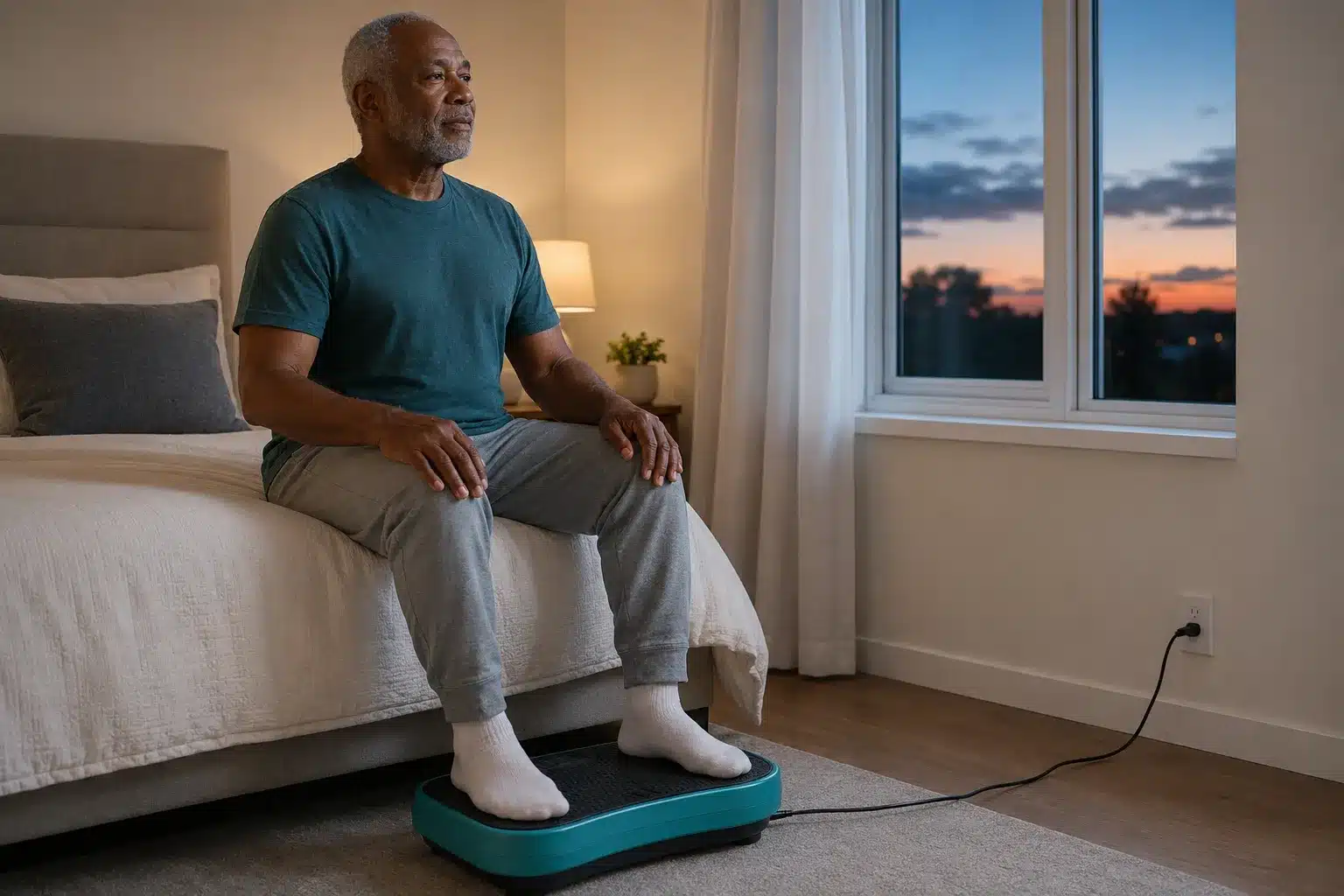
Insulin helps move glucose from the bloodstream into cells. During exercise, contracting muscles can also increase glucose uptake, which may support better blood sugar control over time.
One controlled study in healthy men found a small temporary reduction in blood glucose after vibration. Insulin did not change significantly, suggesting that the working muscles may have used more glucose without requiring a large insulin response.
An eight week trial in sedentary adults with obesity compared a reduced calorie diet with the same diet plus whole body vibration. Both groups lost a similar percentage of body weight, but the vibration group had a larger improvement in insulin sensitivity and post meal glucose regulation.
These findings are promising, but the study was small. A vibration plate cannot replace walking, resistance training, dietary management, medication, or clinical care for diabetes.
Readers building toward better metabolic health can pair these insights with my vibration plate for sedentary adults guide, which covers how to combine beginner vibration sessions with walking and daily movement for improved energy balance.
For readers focused on improving metabolic health and body composition, my guide to the best vibration plate for weight loss covers the models and session approaches most suited to fat-loss and fitness goals.
Adiponectin and Leptin
Adiponectin and leptin are hormones released mainly by fat tissue. Adiponectin is connected with insulin sensitivity and the way the body processes glucose and fatty acids.
In the obesity trial, adiponectin increased more in the group that combined vibration with a reduced calorie diet. This change occurred alongside improvements in insulin sensitivity and body composition.
Leptin did not show the same difference between the groups. Leptin helps regulate appetite and energy balance, but its role becomes more complex when the body develops leptin resistance.
This is a useful example of why the phrase hormone balance is misleading. One hormone may change while another remains the same, and the clinical importance of that change may still be uncertain.
For readers who have questions about how vibration use intersects with blood pressure and cardiovascular health alongside metabolic markers, my guide on vibration plate and high blood pressure covers the relevant safety considerations and what the research actually shows.
Norepinephrine and the Stress Response
Norepinephrine is involved in alertness, blood vessel control, and the sympathetic nervous system response. It can rise when the body experiences exercise, physical demand, or psychological stress.
One controlled study found a temporary rise in norepinephrine following vibration exposure. Epinephrine and most other measured hormones did not change significantly.
The rise may reflect increased nervous system activity and muscular work. It does not prove a lasting hormonal benefit, but it shows that vibration can create a genuine physiological stimulus.
For readers curious about how these nervous system effects extend to neurological health more broadly, my guide on whether vibration plates are bad for your brain examines the evidence on vibration exposure and cognitive function in detail.
What About IGF 1?
Insulin like growth factor 1, often called IGF 1, works closely with growth hormone and supports tissue growth and repair. The two hormones are related, but they do not always rise and fall together.
A study involving older adults found a different IGF 1 response after vibration squats compared with a control condition. Other endocrine studies have found little or no meaningful change.
Current evidence does not support using a vibration plate to raise IGF 1 for muscle growth or anti aging purposes. The findings are too limited and inconsistent for that claim.
For a complete picture of what vibration plates can and cannot realistically offer across multiple health areas, my overview of vibration plate benefits covers strength, circulation, bone density, and recovery alongside the limitations the research consistently flags.
Can Vibration Plates Balance Female Hormones?
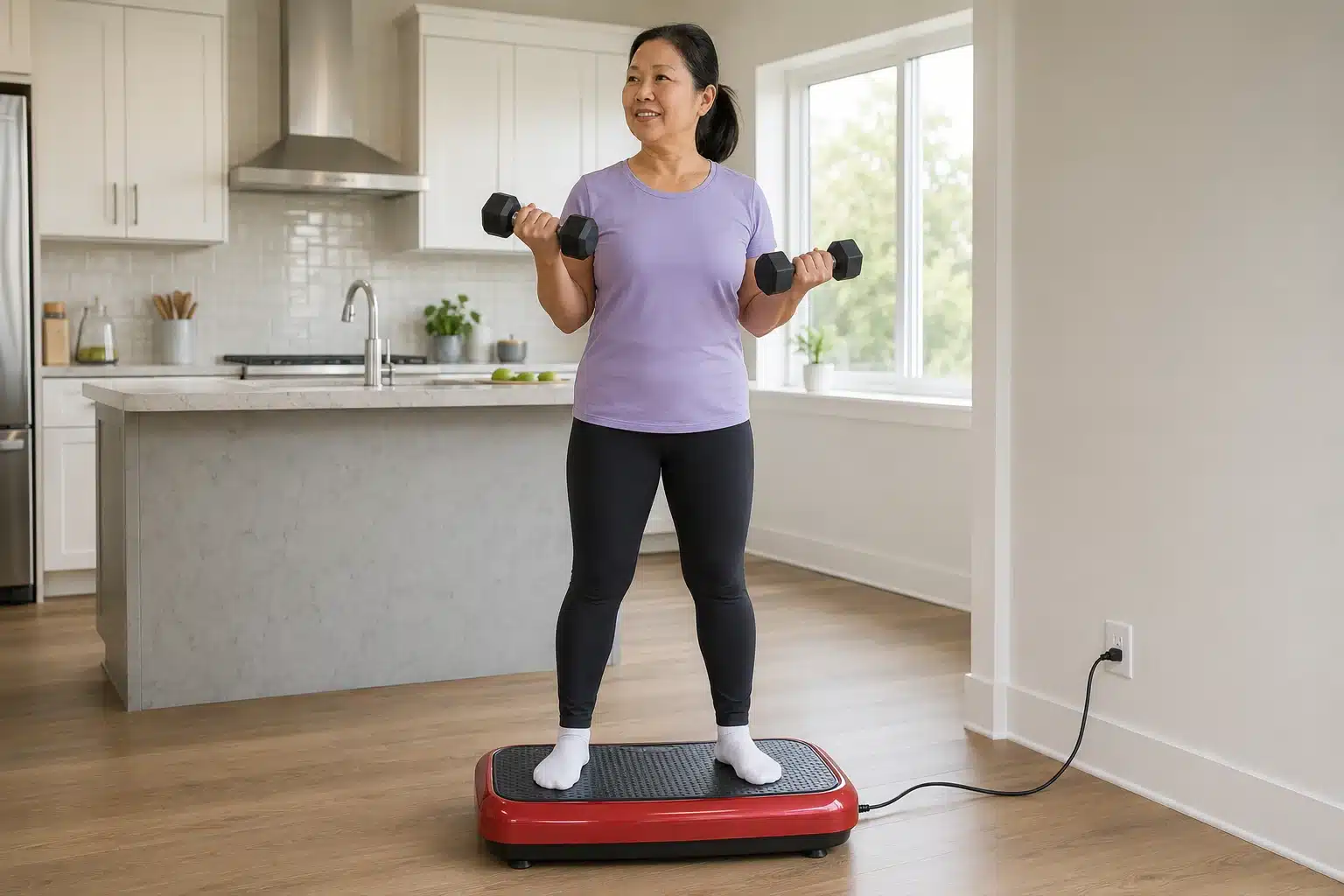
There is not enough evidence to claim that vibration plates balance estrogen, progesterone, or other reproductive hormones. Very few studies have directly measured these outcomes.
Research is also limited for menopause symptoms, menstrual cycle regulation, fertility, and polycystic ovary syndrome. A clinical trial has examined whole body vibration and insulin resistance in women with polycystic ovary syndrome, but one study cannot establish a general treatment effect.
Metabolic improvements may still matter for conditions linked with insulin resistance. That is different from proving that vibration regulates reproductive hormones or treats the underlying condition.
Women with unexplained cycle changes, fertility concerns, or menopausal symptoms should seek appropriate clinical evaluation. A vibration plate cannot identify the cause of hormonal symptoms.
For women managing bone density concerns related to hormonal changes, my picks for the best vibration plate for osteoporosis cover models and protocols that have been studied for bone health support.
Do Vibration Plates Affect Thyroid Hormones?
Evidence involving thyroid stimulating hormone, T3, and T4 is extremely limited. These hormones have been measured in very little whole body vibration research.
There is no reliable evidence that a vibration plate improves thyroid function or corrects an underactive or overactive thyroid. It cannot replace thyroid medication, blood testing, or medical monitoring.
Fatigue, weight changes, temperature sensitivity, and changes in heart rate can have many causes. They should not be self treated with vibration based on marketing claims about thyroid support.
Do Hormonal Changes Mean More Muscle or Less Fat?
Short term hormonal changes do not automatically predict long term changes in muscle or body fat. A brief rise in growth hormone or testosterone after exercise may not be large enough or long enough to alter body composition.
Muscle growth still depends on sufficient resistance, gradual progression, nutrition, recovery, and repeated training. Standing passively on a vibration plate does not provide the same stimulus as a structured strength program.
Fat loss still depends mainly on sustained energy balance. Vibration may support activity and muscle engagement, but it does not cause fat to disappear through hormonal changes alone.
For readers whose primary goal is supporting blood flow and metabolic function through regular movement, my picks for the best vibration plate for circulation cover models and settings best suited to that goal.
How to Create a Meaningful Exercise Stimulus
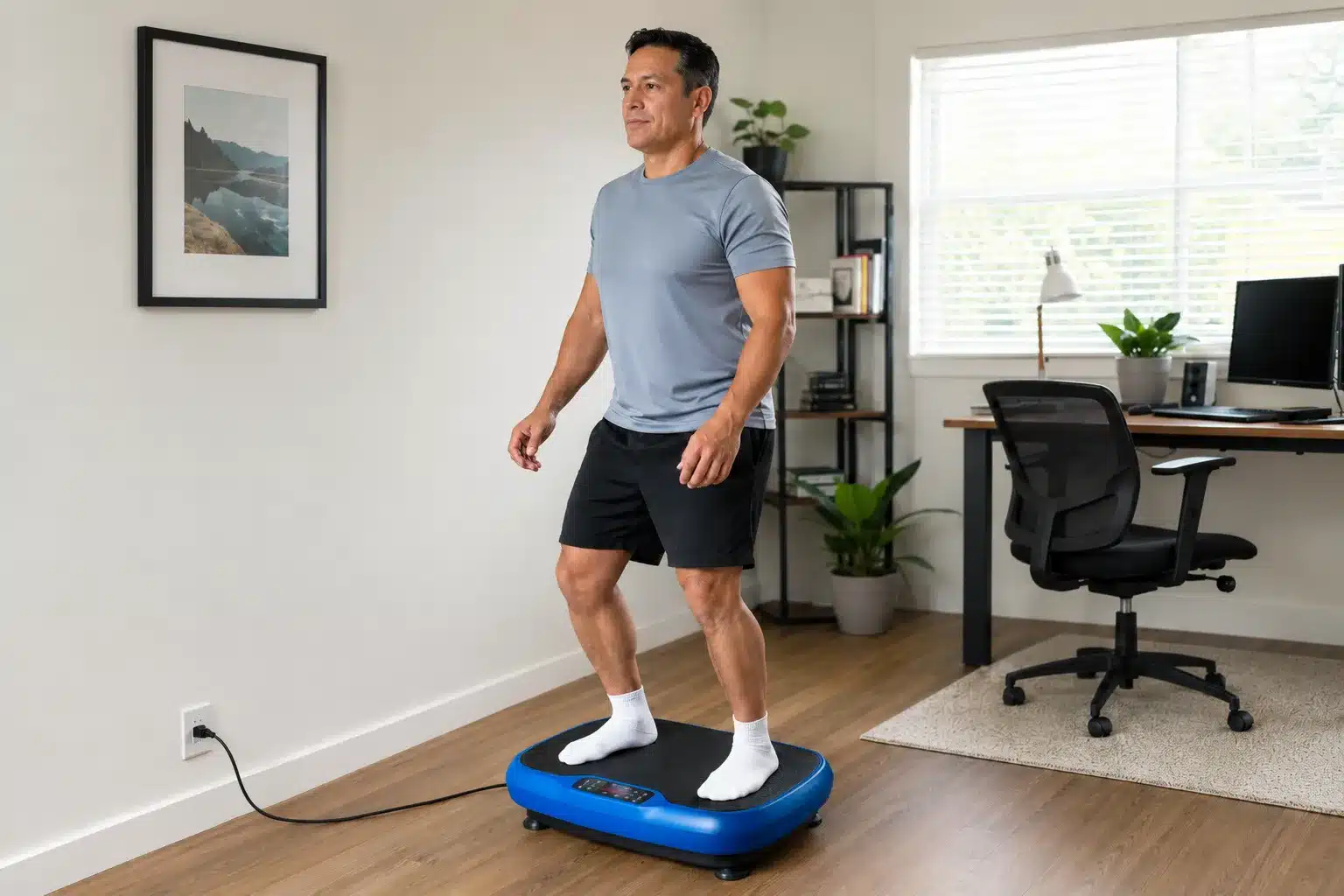
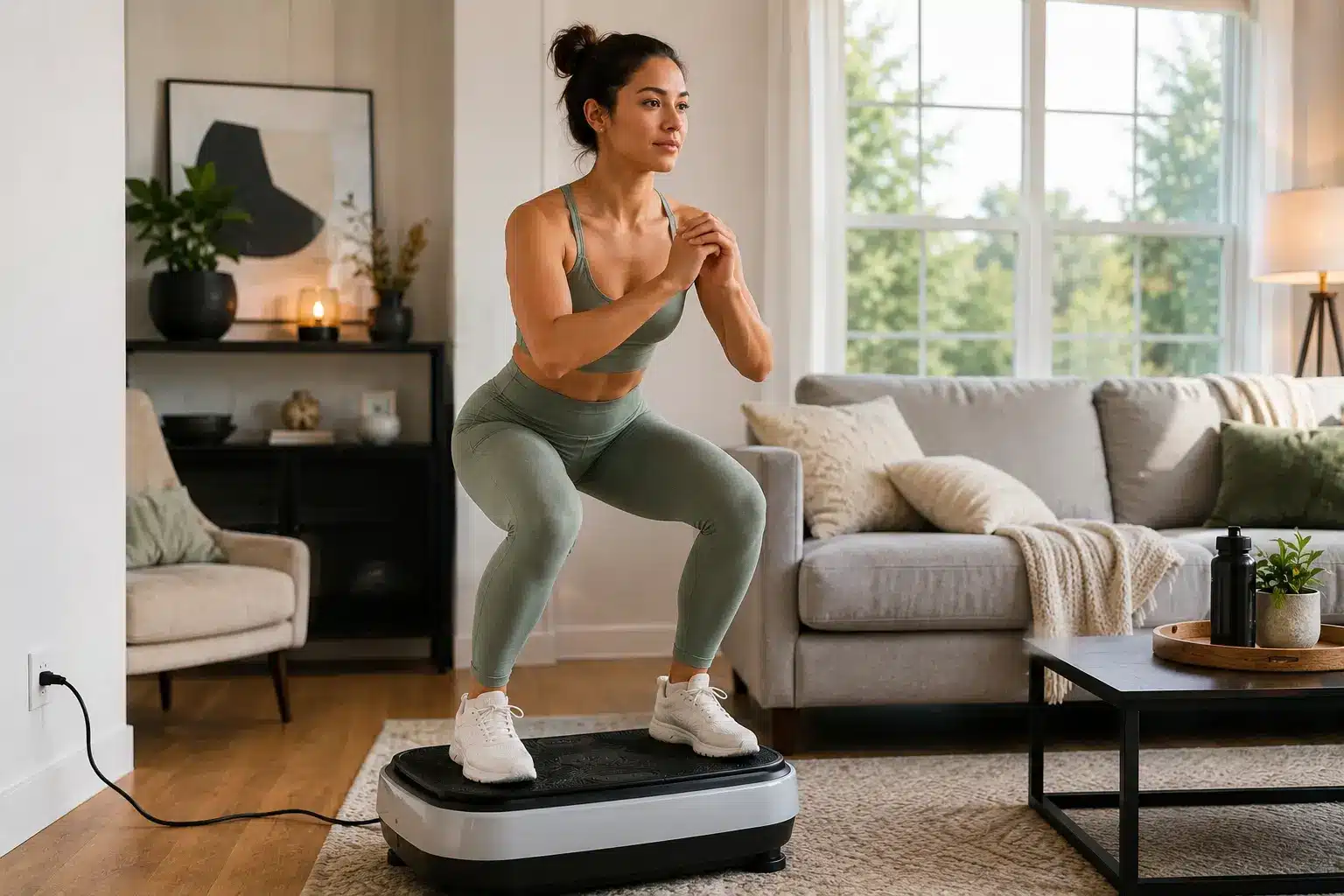
Active positions are more likely to create a useful exercise response than relaxed standing. Shallow squats, calf raises, supported lunges, static holds, and controlled resistance band movements all require more muscular work.
I would begin with a low setting and short sessions. Increasing the frequency, amplitude, session time, stance width, and exercise difficulty at once makes the session harder to control.
The goal should not be to chase a hormone spike. A repeatable routine with safe posture and gradual progress is more valuable than one exhausting session.
For readers ready to start a home vibration routine, my guide to the best vibration plate for home use covers the models that balance performance, size, and price for everyday home training.
Anyone with diabetes, a diagnosed endocrine disorder, unexplained symptoms, pregnancy, or serious cardiovascular concerns should discuss vibration training with a qualified healthcare professional. Medication should never be changed because a home vibration routine appears to affect energy, appetite, or blood sugar.
My Practical Take on Vibration Plate Hormonal Benefits
Whole body vibration can cause short lived hormonal responses, particularly when the session includes active exercise. Growth hormone and testosterone may rise under some protocols, while cortisol findings remain inconsistent.
The more practical area of interest is metabolic health. Small studies suggest possible improvements in muscular glucose use, insulin sensitivity, and adiponectin when vibration is combined with dietary changes or structured exercise.
If you are ready to choose a plate and want a broad overview of the top options across price ranges and use cases, my guide to the best vibration plate covers the models I have tested with full notes on performance, build, and value.
The evidence does not show that vibration plates broadly balance hormones. I would use a vibration plate for movement, muscle activation, and exercise rather than treating it as an endocrine therapy.
The best-supported hormonal effect of regular WBV training is a reduction in cortisol over time with consistent use. Cortisol, the primary stress hormone, responds to physical activity in a dose-dependent way: short bouts of moderate activity lower it, while exhausting exercise spikes it. A 10-minute low-intensity vibration session falls in the moderate category, making it a low-risk activity for people whose cortisol load is already high from chronic stress.
Growth hormone is released briefly in response to exercise, and WBV appears to trigger this response at higher frequencies, 30 Hz and above, in studies involving healthy adults. The magnitude of the effect is modest and short-lived. It does not change body composition on its own, but it contributes to the post-session anabolic environment in combination with the muscle activation produced by loaded exercises on the plate.
For women with hormonal conditions such as PCOS or perimenopausal hormone fluctuation, the most practical benefit is indirect: improved insulin sensitivity, reduced visceral fat accumulation, and a consistent physical activity habit that keeps metabolic markers in a better range. These downstream effects influence hormone balance over months, not sessions. The plate is one input in a larger lifestyle picture, not a hormonal intervention.
For an honest look at what the current research supports across all goal areas, my guide on what vibration plates reliably produce covers the evidence on muscle, metabolic, and hormonal outcomes in one place.
FAQs
Do vibration plates balance hormones?
No, vibration plates do not have a proven ability to balance hormones. They may cause temporary changes in certain hormones, but the response varies and does not show that a plate corrects an endocrine disorder.
Do vibration plates increase growth hormone?
Vibration plates may increase growth hormone temporarily during some active exercise protocols. This short response does not prove lasting increases, faster muscle growth, anti aging effects, or treatment of growth hormone deficiency.
Can a vibration plate increase testosterone?
A vibration plate may temporarily increase testosterone under certain demanding conditions, but several studies found no meaningful change. There is no strong evidence that regular home use produces a lasting increase in baseline testosterone.
Does a vibration plate lower cortisol?
A vibration plate does not consistently lower cortisol. Studies have reported reductions, increases, and no change, with results depending on the session and the participants.
Can a vibration plate improve insulin sensitivity?
A vibration plate may improve insulin sensitivity when combined with regular training and dietary changes. Small trials have reported positive results, but vibration is not a replacement for established diabetes care.
Do vibration plates affect estrogen or menopause hormones?
There is not enough research to show that vibration plates meaningfully affect estrogen or other menopause related hormones. Possible improvements in strength or mobility should not be described as hormone regulation.
Can vibration plates help with PCOS?
Vibration plates may support physical activity and insulin sensitivity, which could be relevant for some people with PCOS. Evidence specific to PCOS remains too limited to claim that whole body vibration treats the condition.
Do vibration plates affect thyroid hormones?
There is not enough evidence to show that vibration plates improve thyroid hormone levels. They cannot replace thyroid medication, testing, or clinical care.
Notable Studies
Bosco C, et al. Hormonal responses to whole body vibration in men. This study reported acute increases in testosterone and growth hormone and a reduction in cortisol after a single vibration session.
Di Loreto C, et al. Effects of whole body vibration exercise on the endocrine system of healthy men. This randomized controlled study found a small reduction in glucose and an increase in norepinephrine, with no significant changes in insulin, glucagon, cortisol, epinephrine, growth hormone, IGF 1, or testosterone.
Bellia A, et al. Effects of whole body vibration plus diet on insulin resistance in middle aged obese subjects. The trial found greater improvements in body fat, insulin sensitivity, glucose regulation, and adiponectin when vibration was added to a reduced calorie diet.
Cardinale M, et al. Hormonal responses to a single session of whole body vibration exercise in older individuals. This randomized crossover study examined cortisol, testosterone, growth hormone, and IGF 1 after vibration squats and a control condition.
Fabregat Fernandez J, et al. Whole body vibration therapy and type 2 diabetes: A systematic review and meta analysis. This review assessed the effects of vibration therapy on glycemic and functional outcomes in people with type 2 diabetes.
Rubio Arias JA, et al. Effects of whole body vibration training on body composition, cardiometabolic risk, and strength in people with overweight and obesity. This systematic review and meta analysis evaluated metabolic and physical outcomes linked with regular vibration training.
ClinicalTrials.gov. Effect of whole body vibration on insulin resistance in females with polycystic ovarian syndrome. This registered study compared whole body vibration with treadmill exercise in women with PCOS and insulin resistance.