Affiliate Disclosure: Vibration Plate Zone is a proud participant in the Amazon Services LLC Associates Program.
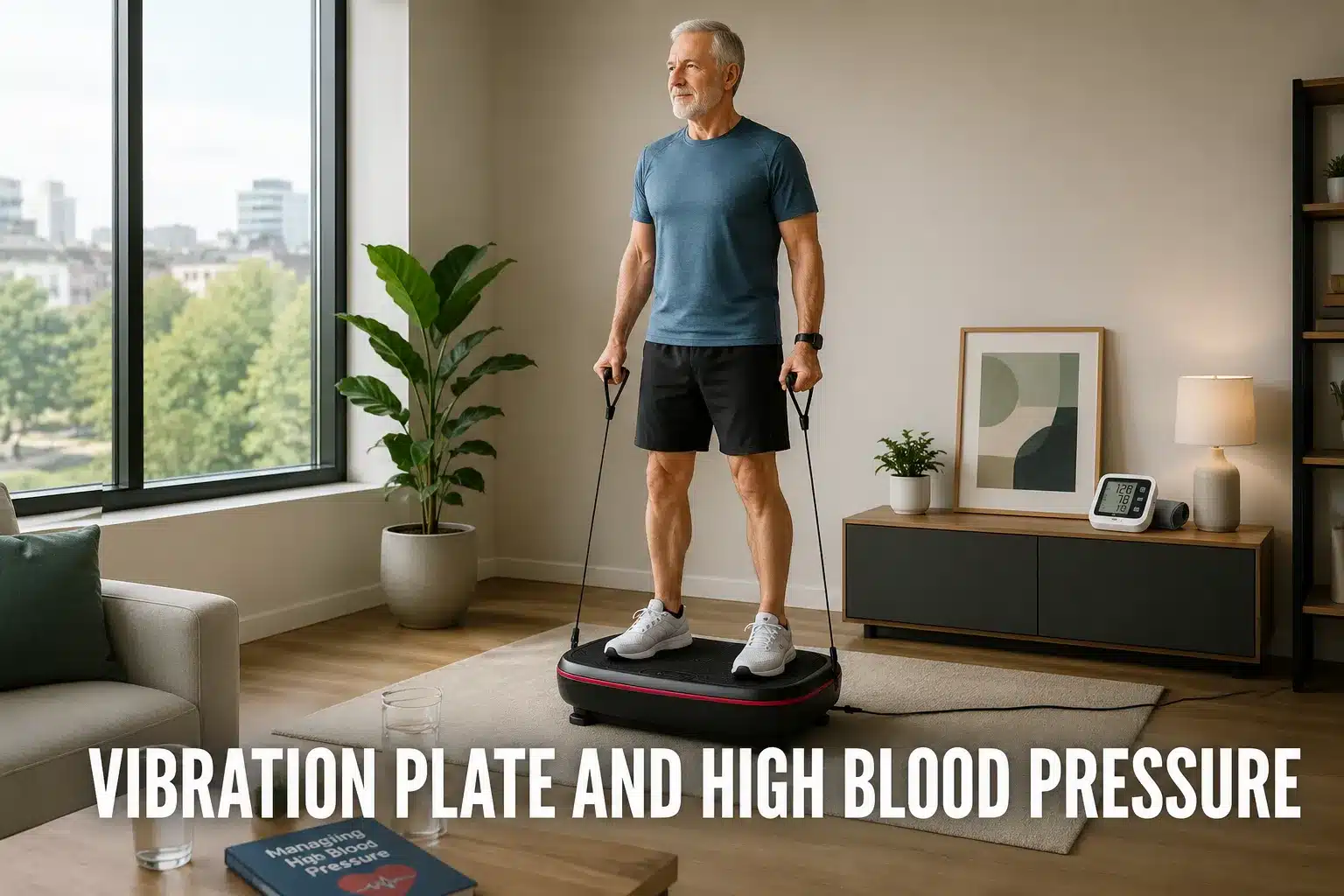
A vibration plate may be suitable for some people with controlled high blood pressure, but the decision depends on the severity of the condition, medication, cardiovascular health, and exercise tolerance. Someone with diagnosed hypertension should discuss vibration training with a healthcare professional before beginning.

About the author: Hello! I’m Vladimir Stanar, professor of physical education, kinesiotherapist, marathon runner, cyclist, and cycling coach, and long-time advocate of health, fitness, and active living.
My journey with vibration plates runs parallel to my professional career in education, sports medicine, and athletic development. I’ve developed a unique process for testing vibration plates as they are some of the most versatile tools for enhancing health, recovery, and performance.
✅ Expert-Reviewed by: Vanja Vukas, MPhEd
📚 Expert Contributor: Milutin Tucakov, MPhEd
Research suggests that regular whole body vibration training may produce modest reductions in resting systolic and diastolic blood pressure. The evidence is encouraging, but a vibration plate cannot replace prescribed medication, regular aerobic activity, dietary changes, or medical monitoring.
The way the plate is used also matters. Gentle standing creates a different cardiovascular demand from repeated squats, long holds, or strong vibration settings.
How a Vibration Plate Affects Blood Pressure
A vibration plate creates rapid mechanical movements beneath the feet. The muscles respond with repeated contractions that help the body maintain balance and posture.
This activity can change circulation, heart rate, and blood pressure during and after a session. The response depends on the vibration frequency, amplitude, session length, body position, and exercises being performed.
My guide on whole body vibration covers how each of these variables works and what the research says about optimising them for different health goals.
Systolic blood pressure is the upper number in a reading. It shows the pressure in the arteries while the heart contracts and pumps blood.
Diastolic blood pressure is the lower number. It reflects the pressure between heartbeats while the heart relaxes.
Exercise can temporarily change both numbers. This immediate response should not be confused with a reduction in resting blood pressure after several weeks of regular training.
Does a Vibration Plate Raise Blood Pressure During Use?
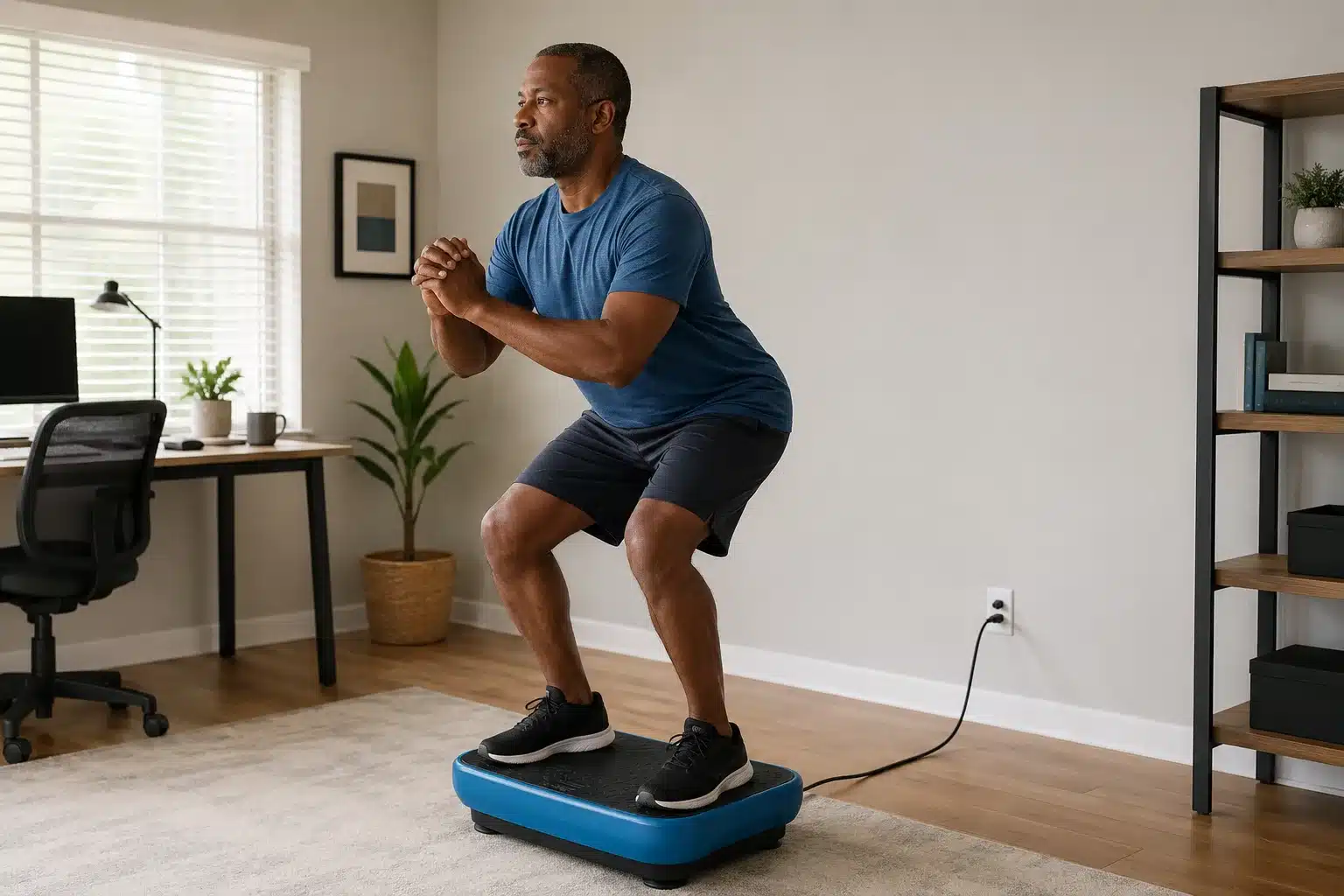
A vibration plate may temporarily change blood pressure during use because whole body vibration places a physical demand on the muscles and cardiovascular system. The size of this response varies considerably between users.
Passive standing at a gentle setting may create only a mild demand. Squats, calf raises, resistance band exercises, and isometric holds usually require more effort and may produce a stronger cardiovascular response.
Breathing technique is particularly important. Holding the breath while straining can cause a sharper rise in blood pressure, especially during squats or static positions.
I recommend breathing steadily throughout every repetition. Exhaling during the harder part of a movement can help prevent breath holding and unnecessary straining.
Medication may also change the response. Some blood pressure medicines affect heart rate, exercise tolerance, or the body's ability to adjust when moving from sitting to standing.
This is one reason another person's vibration routine may not be appropriate for you. The same machine and setting can produce different responses in people with different health conditions.
Can Whole Body Vibration Lower Resting Blood Pressure?
A recent systematic review and meta analysis of randomized trials found that whole body vibration training reduced resting systolic and diastolic blood pressure in adults. The average reduction was greater among participants who started with higher blood pressure.
The review also reported stronger results in people with overweight or obesity. Programs that combined vibration with movements such as squats and heel raises appeared to produce larger changes than passive exposure alone.
My guide to the best vibration plate for weight loss covers the models and protocols that align with this combined approach, for buyers where body weight is also part of the blood pressure management plan.
These findings are promising, but they do not prove that every vibration plate routine lowers blood pressure. The included trials used different machines, frequencies, amplitudes, exercises, program lengths, and participant groups.
Some individual studies have found little or no meaningful change in blood pressure. This variation suggests that the training method and the characteristics of the participant both influence the outcome.
A vibration plate should therefore be viewed as a possible exercise tool. It should not be promoted as a device that treats hypertension.
What Research Shows About Arterial Stiffness
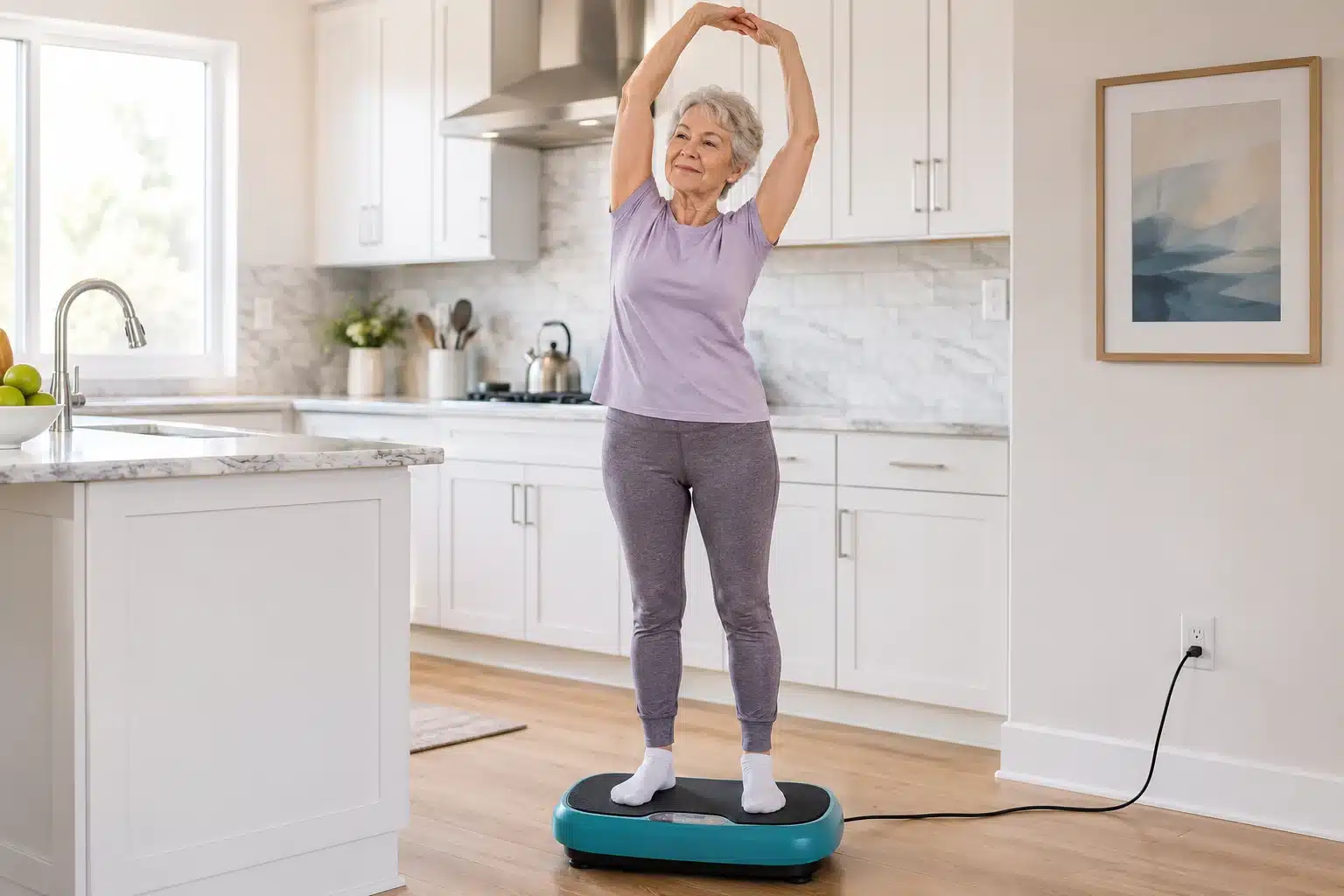
Healthy arteries expand and contract as blood moves through them. Arterial stiffness means the artery walls have become less flexible, which can increase the workload placed on the heart.
Researchers often measure arterial stiffness with pulse wave velocity. This test looks at how quickly the pressure wave created by each heartbeat moves through the arteries.
Several small vibration training studies have reported improvements in arterial stiffness. Some also found reductions in central and peripheral blood pressure.
One possible explanation is that repeated muscle contractions affect blood flow and blood vessel function. The mechanical stimulation may also influence the way blood vessels widen during and after exercise.
My guide to the best vibration plate for circulation covers the models where this vascular response has been most consistently reported, for buyers who prioritise blood flow as the primary goal.
These results should still be interpreted carefully. Many studies include small participant groups, and researchers do not yet agree on the best vibration dose for people with hypertension.
Controlled and Uncontrolled Hypertension Are Different
Someone with controlled hypertension has blood pressure that remains relatively stable through medication, lifestyle changes, or both. This person may be able to use a vibration plate after receiving appropriate exercise guidance.
The first sessions should remain gentle. Low settings, short durations, steady breathing, and a stable standing position make it easier to assess tolerance.
My guide to the best vibration plate for seniors covers models with the stability features and resistance ranges that suit this kind of careful, measured approach.
Uncontrolled hypertension requires greater caution. Persistently high or rapidly changing readings can increase the risk associated with unsupervised exercise.
A person with uncontrolled blood pressure should focus on medical assessment and treatment before starting a new vibration routine. Feeling well does not confirm that blood pressure is within a safe range because hypertension often causes no clear symptoms.
My guide on the dangers of vibration machines covers the full list of conditions that require caution or medical clearance, beyond blood pressure.
A reading above 180/120 mm Hg requires prompt attention. If it occurs with chest pain, shortness of breath, weakness, numbness, vision changes, or difficulty speaking, emergency medical care is necessary.
Vibration Plates and Blood Pressure Medication
Blood pressure medication can affect how someone feels during a vibration plate session. Some medicines may contribute to fatigue, lightheadedness, a slower heart rate, or dizziness when standing.
The combination of vibration and a sudden change in posture may increase balance problems. I would stand up slowly, use rigid support when needed, and avoid stepping directly onto a strong setting.
A person taking beta blockers may not experience the same increase in heart rate as someone who is not taking them. Heart rate alone may therefore be a poor guide to exercise intensity.
Medication should never be reduced or stopped because home readings improve after vibration training. Only the prescribing clinician should make that decision.
Passive Standing Versus Active Vibration Exercise
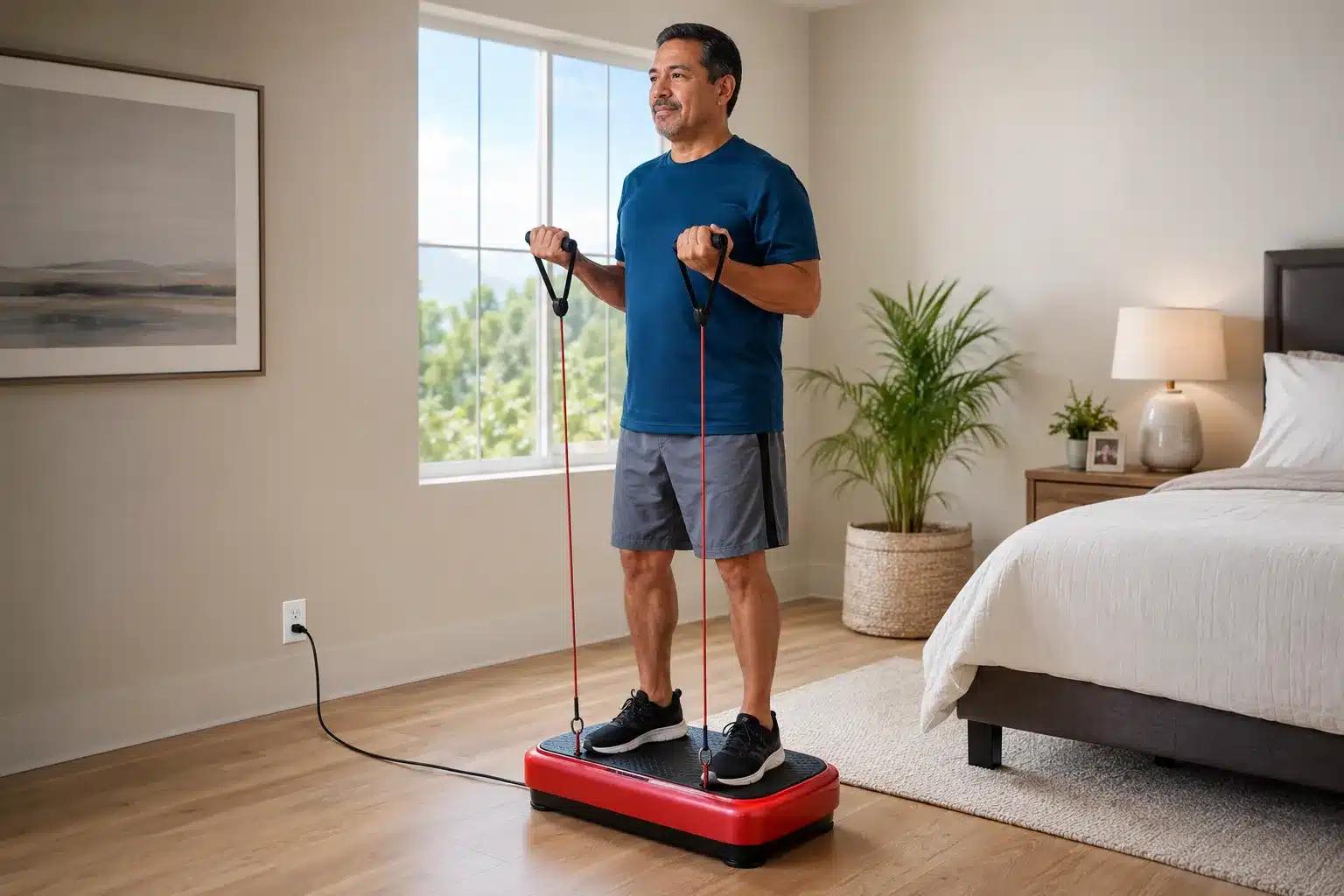
Passive standing causes repeated muscular adjustments, but it usually creates a lower training demand than active exercise. It may be a reasonable starting point for someone who is inactive or unsure how their blood pressure will respond.
Active vibration training can include shallow squats, calf raises, supported lunges, and controlled holds. These movements require more muscle work and may provide a stronger training stimulus.
They may also create a larger short term cardiovascular response. Someone with hypertension should not copy an intense online workout or research protocol without considering current fitness and medical status.
I would build from simple standing to gentle calf raises before adding squats or longer holds. One change at a time makes it easier to identify which setting or exercise causes symptoms.
For people managing joint pain alongside blood pressure, my guide to the best vibration plate for arthritis covers models with the gentler resistance profiles that suit both conditions.
How to Start Safely With High Blood Pressure
Get medical guidance if you have diagnosed hypertension, take blood pressure medication, or have another cardiovascular condition. Ask whether whole body vibration is suitable for your current level of blood pressure control.
For older adults managing multiple conditions at once, my guide to using a vibration plate for elderly users covers the safety adjustments and starting protocols that apply across overlapping health concerns.
Check your blood pressure under consistent resting conditions. Sit quietly, support your back and arm, keep both feet on the floor, and use a validated upper arm monitor.
Do not measure immediately after the vibration session and compare that reading with a normal resting value. Exercise can temporarily alter blood pressure, so allow time to sit and recover.
Start with about five minutes at a low setting. Keep the knees slightly bent and use a comfortable stance.
Breathe normally throughout the session. Do not hold your breath while performing a squat or gripping the handles.
Use a stable rail or another rigid support if balance is uncertain. Flexible resistance bands do not provide reliable balance support.
Increase only one part of the routine at a time. You might add one or two minutes, raise the setting slightly, or introduce calf raises, but avoid changing all three during the same session.
Keep a record of blood pressure readings, session settings, and symptoms. A pattern recorded over several days provides more useful information than one isolated reading.
For a practical guide on frequency settings, session lengths, and how to progress over the first weeks, my article on vibration plate usage guidelines for beginners covers the variables most relevant to early-stage routines.
My picks for the best vibration plate for home use include models that pair well with this kind of self-monitoring routine, with straightforward controls that make it easy to keep settings consistent between sessions.
When to Stop a Vibration Plate Session
Stop using the vibration plate if you develop chest pain, pressure, severe headache, blurred vision, unusual shortness of breath, weakness, numbness, or difficulty speaking. These symptoms require prompt assessment, particularly when blood pressure is very high.
Dizziness, faintness, nausea, palpitations, or loss of balance are also reasons to stop. Sit or lie down safely rather than trying to finish the session timer.
Mild leg fatigue is different from cardiovascular warning signs. Still, any new or persistent symptom deserves attention.
Do not test the same strong setting again to see if the problem repeats. Speak with a healthcare professional before resuming use.
Can a Vibration Plate Replace Walking or Cardio?
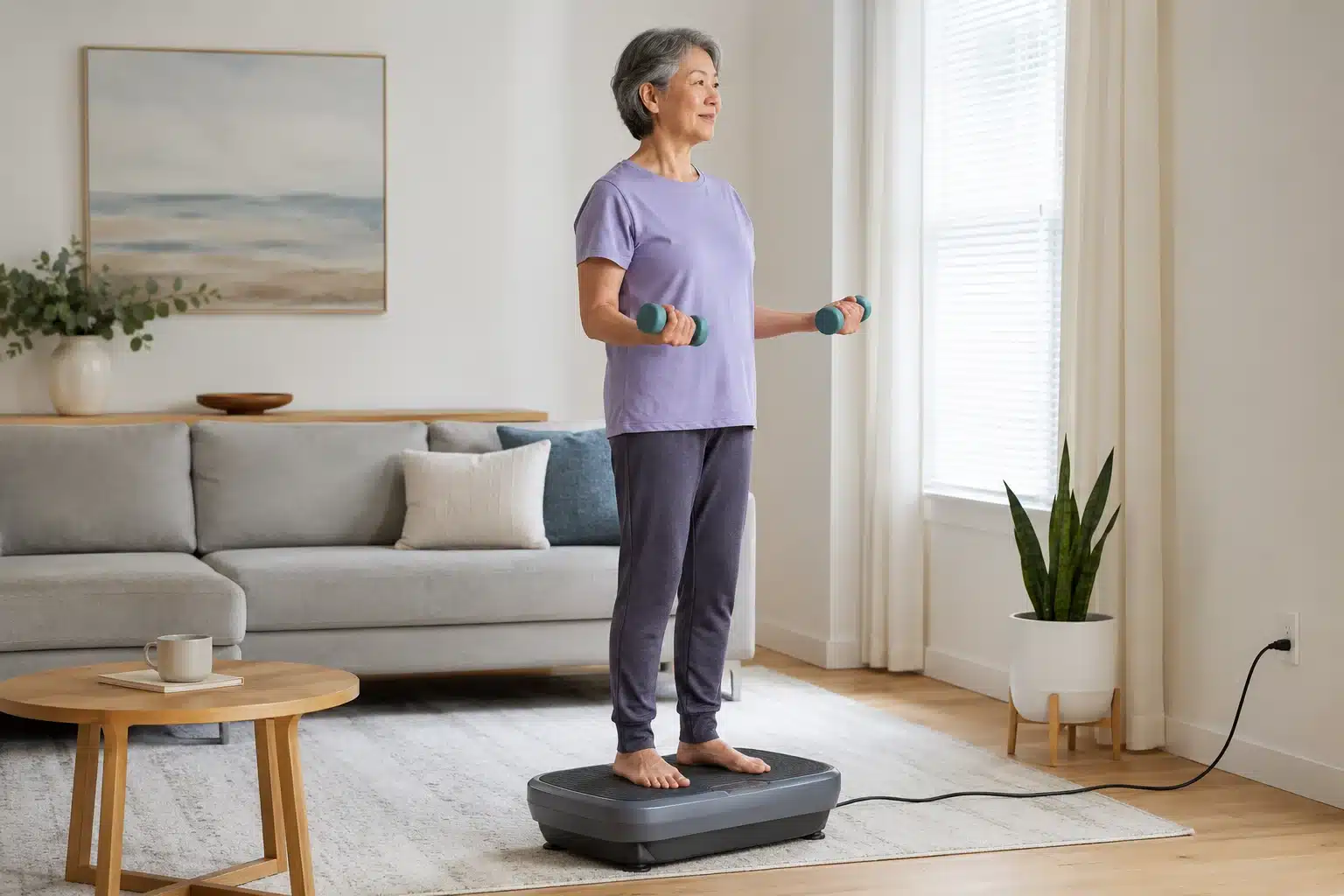
A vibration plate cannot replace all the cardiovascular effects of walking, cycling, swimming, or another form of aerobic activity. These activities train the heart and lungs through sustained movement and increased oxygen demand.
Whole body vibration may help someone begin exercising when walking is difficult. It can also support lower body muscle activation and add variety to a wider routine.
For people managing bone density alongside blood pressure, my guide to the best vibration plate for osteoporosis covers models where the research on mechanical bone loading is most directly relevant.
Regular aerobic activity remains a central part of blood pressure management. Many adults are advised to work toward at least 150 minutes of moderate aerobic activity per week, with the plan adapted to health and ability.
The vibration plate can support that plan, but it should not become the only form of movement.
Readers whose broader goals include reducing abdominal fat alongside managing blood pressure can find condition-aware guidance in my guide on vibration plate and belly fat, which covers how much activity actually drives fat loss and what the research shows.
Can a Vibration Plate Replace Blood Pressure Medication?
A vibration plate cannot replace blood pressure medication. Even when regular training lowers resting readings, the effect may be modest and may differ between individuals.
Hypertension management can involve medication, physical activity, dietary changes, weight management, sleep, stress management, and reduced alcohol intake. These parts work together rather than competing with one another.
Stopping medication without professional guidance can allow blood pressure to rise again. Improved home readings should be shared with the prescribing clinician.
My Practical Take on Vibration Plates and High Blood Pressure
A vibration plate may be a useful low impact exercise option for some people with controlled high blood pressure. Research suggests that regular whole body vibration training may help reduce resting pressure and arterial stiffness, particularly when it includes simple exercises.
The evidence does not support treating a vibration plate as a hypertension therapy. Safety depends on stable blood pressure, sensible settings, normal breathing, medication effects, and the person's wider cardiovascular health.
For a broader view of what the platform can offer beyond blood pressure, my guide to vibration plate benefits covers the full range of documented effects across different health goals.
I would start gently, monitor responses consistently, and use the plate as part of a broader activity plan. Someone with uncontrolled pressure, recent cardiovascular problems, or concerning symptoms should get medical clearance before stepping onto the platform.
For anyone ready to choose a machine, my breakdown of the best vibration plate covers the full range of options across frequency settings, resistance levels, and stability features.
The acute response to vibration differs from the long-term adaptation. During a first session, blood pressure may rise slightly due to sympathetic nervous system activation. With regular sessions over several weeks, studies show a trend toward lower resting blood pressure, particularly in individuals with stage 1 hypertension. Starting gently and monitoring over time distinguishes the initial response from the training adaptation.
Sessions should be short at first. Five minutes is a reasonable starting point for someone with uncontrolled or borderline hypertension. The goal is to confirm the body tolerates the stimulus before extending duration. A heart rate or blood pressure cuff check immediately before and 10 minutes after a session provides useful data in the early weeks.
Low-frequency oscillating settings, 10 to 20 Hz, are the most appropriate starting point. These settings support circulation without the muscle activation demand of higher frequencies, which keeps cardiovascular stress low. Strength-focused exercises like deep squats or resistance band work on the plate increase demand and should be deferred until the body has adapted to basic vibration exposure.
For a wider look at the outcomes vibration training can support, including the evidence on muscle and circulatory health, my article on how effective vibration plates are is a useful starting point.
FAQs
Can you use a vibration plate with high blood pressure?
You can use a vibration plate with high blood pressure in some cases, especially when the condition is controlled, and a healthcare professional has approved exercise. Begin with low intensity, short sessions, steady breathing, and stable support.
Does a vibration plate raise blood pressure?
A vibration plate may temporarily change blood pressure during a session because the muscles and cardiovascular system are working. The response depends on intensity, exercise choice, breathing, medication, and baseline health.
Can a vibration plate lower blood pressure?
A vibration plate may modestly lower resting blood pressure when used regularly as part of a structured training plan. Research has found average reductions in systolic and diastolic pressure, but individual results vary.
Is a vibration plate safe with blood pressure medication?
A vibration plate may be safe with blood pressure medication after medical approval. Some medications can cause fatigue, dizziness, slower heart rate, or a drop in pressure when standing, so early sessions require caution.
How long should someone with hypertension use a vibration plate?
Someone with hypertension should usually begin with about five minutes at a low setting. Session length can increase gradually if blood pressure remains controlled and no concerning symptoms occur.
Should I check my blood pressure before using a vibration plate?
Yes, checking your blood pressure before early vibration plate sessions can help identify unusually high readings. Measure it after sitting quietly and use the same method and conditions each time.
Can vibration plates replace blood pressure medication?
No, vibration plates cannot replace blood pressure medication. Medication should only be changed or stopped by the healthcare professional who prescribed it.
Notable Studies
Pan Y, Luo P, Jia B, Pang J. Effects of whole body vibration training on resting blood pressure in adults: A systematic review and meta analysis of randomized controlled trials. Blood Pressure, 2026. The review included 14 randomized trials with 490 adults and reported average reductions of 6.57 mm Hg in systolic pressure and 3.01 mm Hg in diastolic pressure.
Figueroa A, et al. Whole body vibration exercise training reduces arterial stiffness in postmenopausal women with prehypertension or hypertension. The study examined brachial and aortic blood pressure and measures of arterial stiffness after a structured vibration program.
The Effects of Single Session Whole Body Vibration Training Applied at Different Mechanical Vibration Frequencies on Arterial Stiffness and Heart Rate Variability in Hypertensive Patients. This crossover study compared acute responses to sessions performed at 0, 25, and 40 Hz in adults with diagnosed hypertension.
Acute effects of whole body vibration with resistance exercise on postexercise blood pressure and oxygen consumption in prehypertensive adults. This randomized crossover trial compared vibration plus resistance exercise, resistance exercise alone, and a control condition.
American Heart Association. Home Blood Pressure Monitoring. This resource explains home monitoring technique, blood pressure categories, severe hypertension, and emergency symptoms.
American Heart Association. Getting Active to Control High Blood Pressure. This resource explains the role of regular physical activity in blood pressure, weight, stress, and cardiovascular health.
American Heart Association. How to Manage High Blood Pressure. This resource covers physical activity, diet, medication adherence, weight management, smoking, alcohol, and clinical monitoring.
American Heart Association. Understanding Blood Pressure Readings. This resource explains systolic and diastolic values, hypertension categories, and the need for professional diagnosis.