
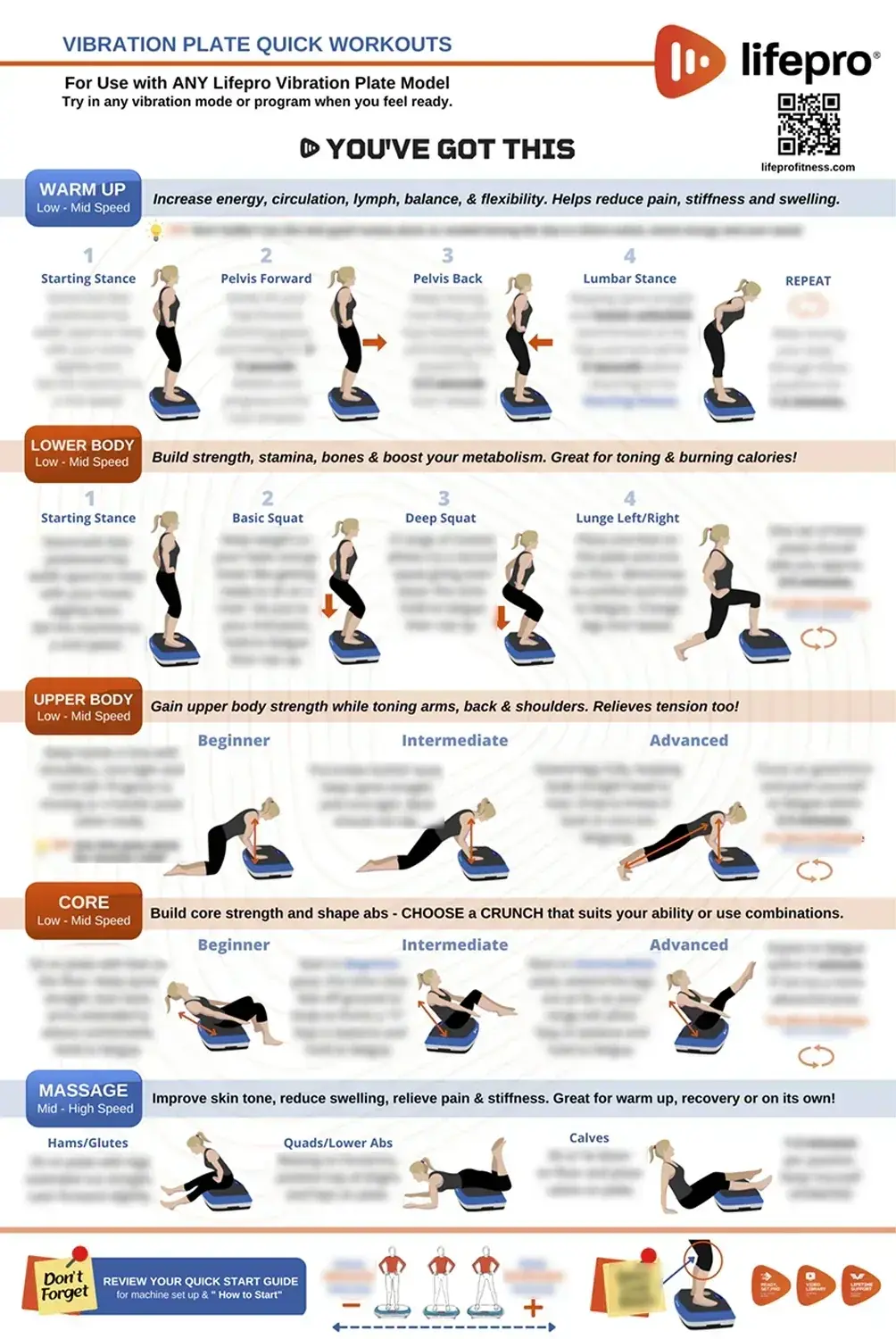
Get a FREE Lifepro Whole Body Vibration Workout Chart with exclusive Vibration Plate Zone Coupon Code!
For a limited time, Vibration Plate Zone readers can get a complimentary Lifepro Whole Body Vibration Workout Chart with the purchase of any vibration plate.
Use coupon code VPZLPFQ2 from April 1, 2026 through December 31, 2026.
Save $24.99 on paper chart or $12 on laminated chart.
To claim the offer, add at least 1 vibration plate and the chart to your cart, then apply the coupon code at checkout. You can choose either the paper or laminated version.
Joint stiffness and soreness can make even light activity feel demanding. Soft vibration helps keep blood moving through affected areas without putting weight through painful joints.

About the author: Hello! I’m Vladimir Stanar, professor of physical education, kinesiotherapist, marathon runner, cyclist, and cycling coach, and long-time advocate of health, fitness, and active living.
My journey with vibration plates runs parallel to my professional career in education, sports medicine, and athletic development. I’ve developed a unique process for testing vibration plates as they are some of the most versatile tools for enhancing health, recovery, and performance.
✅ Expert-Reviewed by: Vanja Vukas, MPhEd
📚 Expert Contributor: Milutin Tucakov, MPhEd
Affiliate Disclosure: Vibration Plate Zone is a proud participant in the Amazon Services LLC Associates Program.
August 2026 Editorial Updates:
✅ Plates re-evaluated for joint comfort and low-impact vibration
✅ Fitboard 3D by Sunny Health & Fitness added as Best 3D Vibration Plate for Arthritis
✅ Verified review counts updated across all top picks
✅ Availability of all products on the list verified
Living with arthritis can make each day feel like an obstacle course. In this guide I share my experience and research to highlight the best vibration plates for arthritis so you can make an informed decision.
Stiff joints, swelling, and persistent discomfort often limit how much you can move and can steal joy from activities you once enjoyed. I have spent years working with people who live with arthritis, and I have tried many tools to help ease pain and enhance mobility. Among these options, vibration plates stand out because they provide gentle, low‑impact stimulation that loosens stiff joints, enhances circulation, and supports muscle strength.
Throughout this guide, I outline detailed specifications, provide pros and cons tables, and offer advice on safe use.
My Recommended Top 3 Best-Buys for Arthritis: Reviewed & Rated

6 Best Vibration Plates for Arthritis Reviewed in 2026
I’ve selected these vibration plates that cater to a wide range of needs, budgets, and preferences. Each model offers its own mix of vibration types, speed ranges, sizes, and accessories. What they have in common is a focus on comfort and adjustability, which is critical for people with sensitive joints.
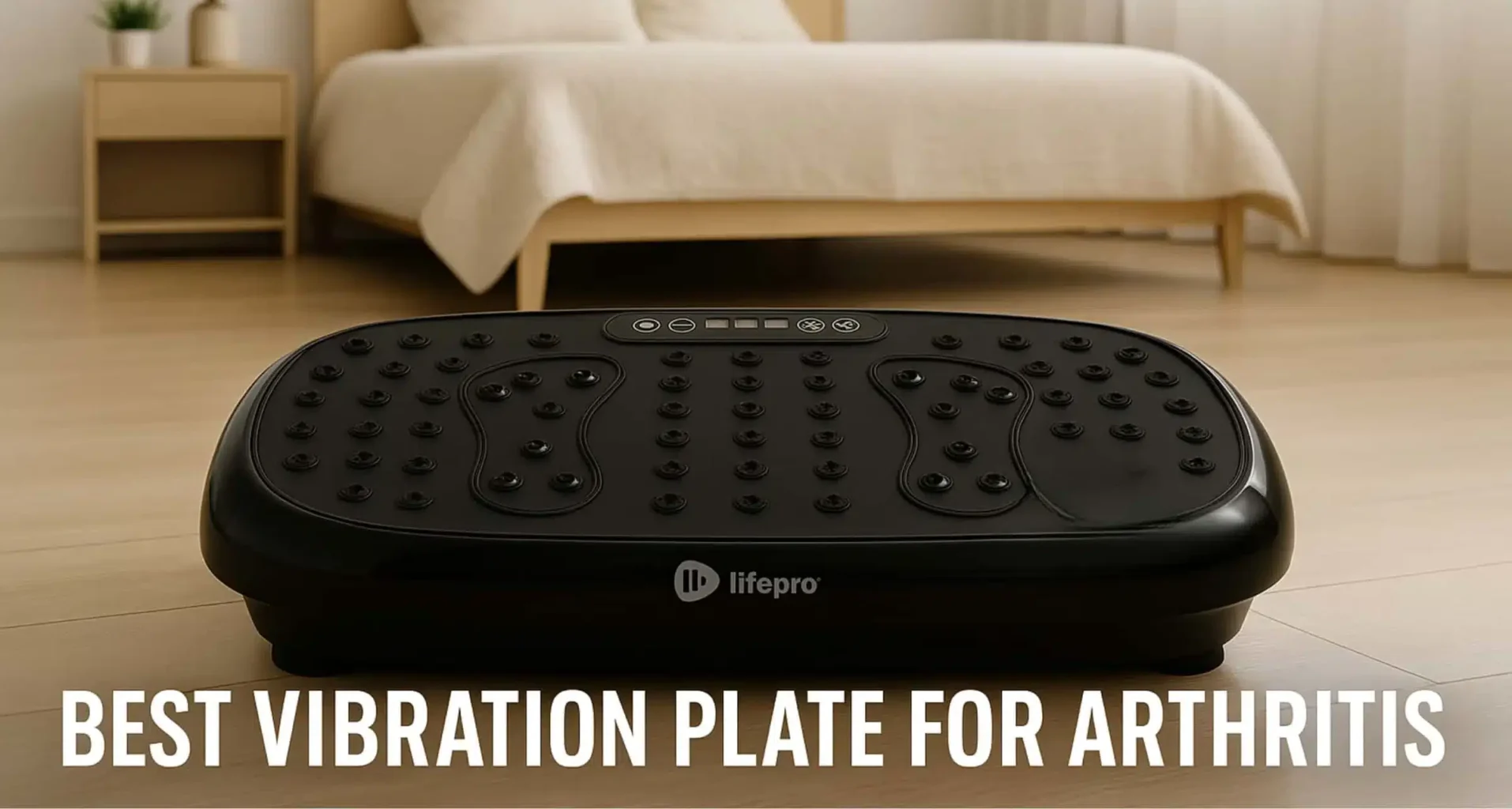
1. LifePro HexaPlate – [Best Vibration Plate for Arthritis]

The LifePro HexaPlate is a versatile machine that combines magnetic therapy with a wide range of speeds. It offers 120 speed levels, nine preset programs, and a manual mode that allows you to customize session length and vibration intensity.
The platform measures around 22 by 12½ inches and supports up to 330 pounds. Weighing about 16 pounds, it is portable enough to store under a bed or in a closet. The hexagonal pattern on the surface houses small magnetic stones that provide a massaging effect on the soles of your feet while the machine vibrates, giving you an extra layer of comfort.
What’s Included
- Remote control with battery
- Two resistance bands for upper‑body exercises
- Instruction manual and exercise guide
- Power cord and non‑slip mat
Why It’s Ideal for Arthritis
Arthritis sufferers often experience unpredictable flare‑ups, and the HexaPlate’s adjustable settings help you adapt. On days when my knees feel swollen, I use the lowest speeds to stimulate circulation without causing discomfort. When I need a bit more stimulation to loosen stiff joints, I increase the speed or use one of the preset massage programs.
The magnetic therapy surface is a bonus; it soothes sore soles and may improve blood flow. Because the plate is small and light, you can easily move it to a comfortable chair or a supportive wall, giving you flexibility in how you use it.
Specifications
| Feature | Details |
|---|---|
| Platform Dimensions | Approximately 22.2" x 12.6" |
| Weight Capacity | 330 lb |
| Machine Weight | ~16 lb |
| Speed Levels | 120 |
| Programs | 9 preset routines plus manual mode |
| Motor Power | 180 W |
| Timer Range | 1–20 minutes |
| Special Features | Magnetic therapy surface, non‑slip mat |
I like this plate because it lets you start slow and gradually increase intensity. You can choose gentle settings when your joints feel tender or switch to higher speeds as your strength improves.
The sturdy rubber surface keeps you steady, and the remote control means you don’t need to bend down to change settings. This flexibility makes the HexaPlate suitable for people who need to manage varying pain levels.
Pros and Cons
| Pros | Cons |
|---|---|
| Wide speed range allows gradual progression and personalized sessions | Lower power than heavier machines |
| Lightweight and portable for easy storage | |
| Remote control and clear display reduce bending | |
| Magnetic surface provides gentle massage and added comfort | |
| Easy to move and set up in any room |
My Final Verdict
The LifePro HexaPlate offers a unique combination of versatility and comfort. It stands out with its magnetic therapy surface and wide range of speeds. I recommend it to anyone seeking a compact, user‑friendly plate that adapts to fluctuating pain levels.
2. AXV Vibration Plate – [Best Budget Vibration Plate for Arthritis]

The AXV Vibration Plate in its slim configuration offers a sleek design and a robust range of 120 speed levels. Measuring roughly 21 by 12½ inches and standing less than five inches tall, this plate is designed for easy storage under furniture. It weighs about 19 pounds and supports users up to 330 pounds.
The motor produces consistent oscillation, and an LED display on the top surface shows your speed, time, and program. Five preset programs provide variety and guide you through sessions, while manual control lets you customize speed and duration.
What’s Included
- Remote control with battery
- Two resistance bands
- Instruction manual
- Power cord
Why It’s Ideal for Arthritis
People with arthritis often need to adjust intensity levels carefully. The AXV’s 120 speed settings mean you can start at a very low vibration and progress gradually. On days when my joints feel stiff, I choose one of the slower preset programs to warm up my muscles without aggravating pain.
When I need more stimulation, I increase the speed in small increments. The machine’s light weight also means you can reposition it quickly, which is helpful if you need to sit down or use a chair for support.
Specifications
| Feature | Details |
|---|---|
| Platform Dimensions | Approximately 21" x 12.6" |
| Weight Capacity | 330 lb |
| Machine Weight | ~19 lb |
| Speed Levels | 120 |
| Programs | 5 presets plus manual mode |
| Motor Power | 200 W |
| Display | LED screen showing speed and time |
| Special Features | Slim profile for easy storage |
I appreciate how simple the AXV is to use. The smooth top surface has a slight curve that helps position your feet comfortably. Because the machine is light, I can carry it from room to room without strain. The provided resistance bands clip onto the sides, allowing for gentle upper‑body movements while the plate vibrates.
Pros and Cons
| Pros | Cons |
|---|---|
| Slim, lightweight design fits under beds or sofas | Platform is smaller than some competitors |
| 120 speed levels allow precise control of vibration intensity | |
| LED display and remote control simplify operation | |
| High weight capacity relative to size | |
| Included resistance bands enhance workout variety |
My Final Verdict
The AXV Vibration Plate is an excellent choice for people who want a portable yet powerful device on a budget. It offers a wide speed range in a small package, making it ideal for apartments or limited spaces. Its straightforward controls and slim design mean you can easily integrate it into your daily routine. For more guidance on choosing a machine for home use, read my guide to the best vibration plate for home use.
3. LifePro Rumblex 4D – [Best 4D Vibration Plate for Arthritis]
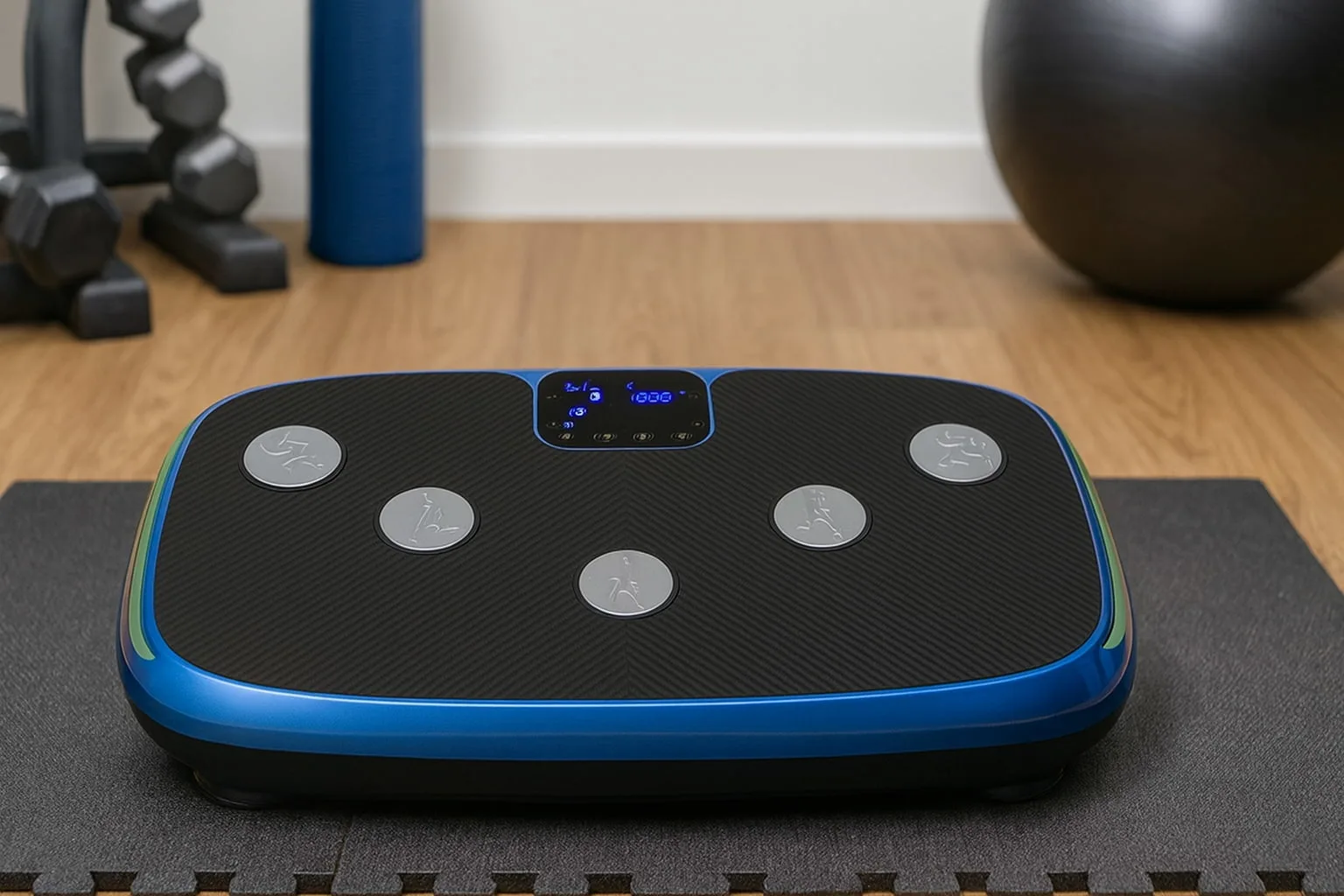
The LifePro Rumblex 4D brings multi‑directional vibration to your living room. It combines oscillation, linear, and pulse movements into various patterns, delivering what many call “4D” motion. The platform measures about 33 by 23 inches and supports up to 330 pounds. It weighs roughly 42 pounds, which keeps it stable during use.
With up to 80 speed levels and a handful of preset programs, you can fine‑tune your session to match how you feel. The curved surface and textured mat provide good grip, and the remote allows you to adjust settings without bending.
What’s Included
- Remote control with battery
- Resistance bands for upper‑body exercises
- Instruction manual and exercise guide
- Built‑in wheels for easier movement
- Power cord
Why It’s Ideal for Arthritis
When you have arthritis, no two days are the same. The Rumblex helps you adapt because you can switch between oscillation for gentle rocking, linear for a up‑and‑down motion, and pulse for a massaging effect. During flare‑ups I opt for oscillation to avoid adding stress, and on better days I incorporate pulse mode for deeper muscle engagement.
The wide platform offers plenty of room to stand or perform light exercises. Even though the machine is heavier than some models, built‑in wheels make it easier to reposition.
Specifications
| Feature | Details |
|---|---|
| Platform Dimensions | Approximately 33" x 23" |
| Weight Capacity | 330 lb |
| Machine Weight | ~42 lb |
| Speed Levels | Up to 80 |
| Vibration Types | Oscillation, Linear, Pulse, Combination |
| Programs | Several preset routines plus manual control |
| Amplitude | Up to about 12 mm |
| Frequency Range | Roughly 4–40 Hz |
One of the standout features is the ability to choose different vibration modes. Some days you might want gentle oscillation to warm up your joints. Other times you might choose a combined mode for a stronger massage. This flexibility makes the Rumblex versatile for varying pain levels and fitness goals.
Pros and Cons
| Pros | Cons |
|---|---|
| Offers multiple vibration modes to suit varying needs | Larger and heavier than compact models |
| Wide platform provides stability for exercises | |
| Built‑in wheels help with moving despite weight | |
| Good range of speed settings and programs | |
| Durable construction with strong motor |
My Final Verdict
The Rumblex 4D stands out for its adaptability. Its ability to switch between multiple vibration modes and a wide range of speeds makes it a strong choice for those who want variety and control. I’ve found that this machine can handle both gentle therapy and more intense sessions, providing relief across a spectrum of arthritis symptoms. To learn more about this versatile model, read my LifePro Rumblex review.
4. Fitboard 3D by Sunny Health & Fitness - [Best 3D Vibration Plate for Arthritis]
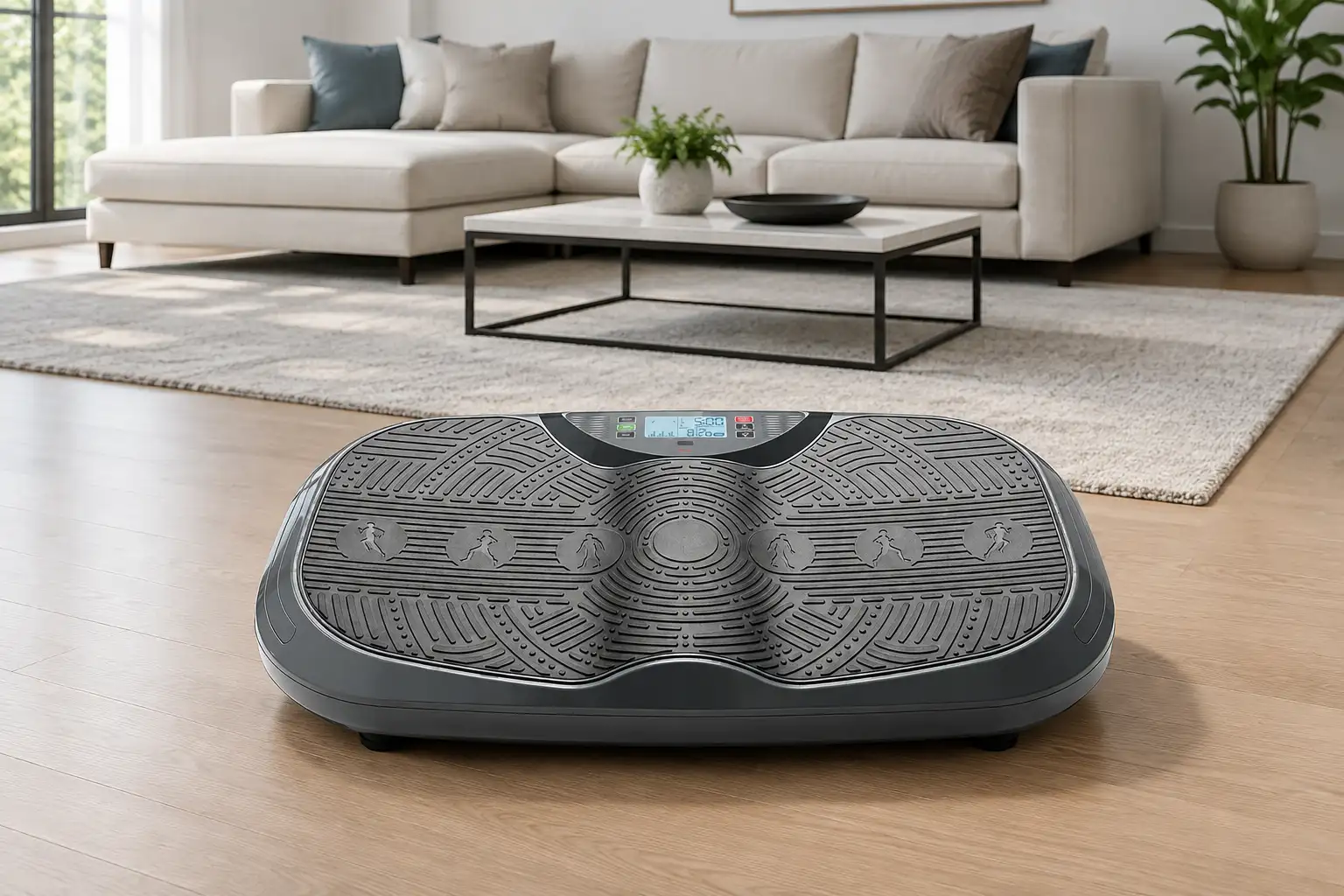
The Fitboard 3D by Sunny Health & Fitness offers something genuinely useful for arthritis: the ability to choose between three different vibration patterns depending on how your joints feel that day. On a good day you can run the combined 3D mode. On a flare-up day, the gentler translational vibration alone is a different proposition entirely.
What I particularly value here is that Sunny publishes the actual frequency and amplitude figures. When you are making decisions that affect your joints, knowing you are working at 3.42 to 7.67 Hz with 17 mm of displacement is far more useful than being told the machine has 99 speeds.
Features & Specs
| Parameter | Value |
|---|---|
| Dimensions | 30.7 x 18.3 x 6.7 in |
| Vibration Modes | Vertical, translational (horizontal), combined 3D |
| Frequency | 3.42 to 7.67 Hz (vertical); 2.45 to 5.7 Hz (translational) |
| Amplitude | 17 mm ±10% (vertical); 14 mm ±10% (translational) |
| Intensity Levels | 16 |
| Weight Capacity | 265 lb |
| Controls | Digital display, wireless remote |
| Accessories | 2 detachable resistance bands |
Benefits and Unique Points
The frequency range is the first thing I check when recommending a vibration plate for arthritis. At 3.42 to 7.67 Hz with 17 mm of amplitude, this is a low-frequency, rhythmic movement rather than the high-speed vibration that can feel jarring on sensitive joints. I would not put someone with active arthritis flares on a 40 Hz plate without serious reservations.
Having 16 distinct intensity levels is more useful than it sounds. Joint pain changes from day to day, and you need to make real adjustments, not guess between speed 47 and speed 48 on a hundred-level scale. A step from Level 3 to Level 4 on this machine is deliberate and noticeable.
The seated session option is one of the features I recommend most for arthritis in the knees or hips. You sit in a chair, place your feet on the platform, and the lower legs receive the stimulus without your body weight loading through the affected joints. That is a meaningful difference when standing for ten minutes is genuinely painful.
The 43-pound chassis and suction cup feet keep the platform planted during use. With arthritis, a lightweight plate shifting position mid-session forces a sudden stabilizing correction. This machine does not move unless you move it.
| Pros | Cons |
|---|---|
| Three vibration modes let you match intensity to how your joints feel that day | 265 lb weight capacity is not the highest in this category |
| Low verified frequency (3.42 to 7.67 Hz) is gentle on arthritic joints | |
| 16 distinct levels allow very gradual, controlled progression | |
| Seated use keeps weight off painful knees and hips | |
| Stable 43-lb chassis with suction cups stays planted without jarring shifts |
What's Included
The Fitboard 3D comes with the vibration platform, two detachable resistance bands, and a wireless remote. The bands allow gentle upper-body movement during sessions, which is useful for keeping arm and shoulder joints active without adding any impact load.
My Final Verdict
The Fitboard 3D earns its place on this list because it gives arthritis sufferers real options. The three movement modes, low verified frequency, 16 progressive levels, and seated use capability add up to a machine that adapts to how your joints feel on a given day rather than demanding the same session every time.
For anyone who finds other vibration plates too aggressive or too one-dimensional for managing arthritis symptoms, this is worth a serious look.
5. MERACH 4D Vibration Plate – [Best Smart Sensing Vibration Plate for Arthritis]

The MERACH 4D Vibration Plate brings innovation with its smart sensing technology and curved platform. Measuring about 28 by 16 inches, it has a sleek, rounded shape that complements modern home gyms. This model weighs approximately 40 pounds and supports up to 330 pounds.
A triple‑motor system delivers oscillation, lateral, and pulse vibrations, combining to produce 4D motion. There are 120 speed levels and seven preset programs, which give you plenty of customization options. The slightly concave surface helps distribute your weight evenly, reducing strain on any single joint.
What’s Included
- Wristband remote control
- Resistance bands
- Instruction manual and exercise guide
- Power cord
Why It’s Ideal for Arthritis
Flexibility and responsiveness are key when dealing with joint issues. The MERACH 4D plate’s smart sensing technology accommodates subtle shifts in your posture, ensuring consistent vibration and reducing jarring. I appreciate the curved design because it keeps my ankles aligned and reduces pressure on my knees.
When my joints feel particularly tender, I select the massage program and let the pulse vibrations soothe soreness. On better days I pair lateral and oscillation modes for a more dynamic session. This versatility makes the plate suitable for both relaxing and strengthening routines.
Specifications
| Feature | Details |
|---|---|
| Platform Dimensions | Approximately 28" x 16" |
| Weight Capacity | 330 lb |
| Machine Weight | ~40 lb |
| Speed Levels | 120 |
| Vibration Types | Oscillation, Lateral, Pulse, Combined 4D |
| Programs | 7 preset routines plus manual mode |
| Motors | Triple motor system (three separate motors) |
| Special Features | Smart sensing technology, curved surface |
One of the most intriguing features is the smart sensing mode. This setting adjusts vibration intensity in response to your body’s pressure on the platform. If you lean forward or shift your weight, the machine compensates automatically. A bright LED display shows current speed and time, and a wristband remote allows you to change settings without bending.
Pros and Cons
| Pros | Cons |
|---|---|
| Smart sensing adjusts intensity based on your posture | Curved surface may require a brief adjustment period |
| Triple motors create varied and effective vibrations | |
| Sleek design with bright LED display | |
| Wristband remote for convenient control | |
| Curved surface distributes weight evenly |
My Final Verdict
The MERACH 4D plate blends technology and thoughtful design. Its smart sensing mode and curved surface make it easy to adjust sessions to your comfort. I recommend it for people who want a responsive machine that adapts to their movements. If you want more context on this brand and other models, read my MERACH vibration plate review.
6. Fitboard 3D by Sunny Health & Fitness - [Best 3D Vibration Plate for Arthritis]
The Fitboard 3D by Sunny Health & Fitness is one of the few home vibration plates that publishes verified frequency and amplitude data, and one of even fewer that runs two distinct motion systems. It can deliver vertical vibration, horizontal translational vibration, or both simultaneously, which means you can choose the movement type that suits your joints on a given day.
The operating frequencies sit between 3.42 and 7.67 Hz in vertical mode and 2.45 to 5.7 Hz in the translational system. Those low frequencies produce rhythmic, gentle contractions without the jarring sensation that higher-speed plates can cause. The 30.7-inch wide platform gives you room for different foot positions, and the 43-pound chassis stays planted with suction cup stabilizers.
What's Included
- Two detachable resistance bands
- Wireless remote control
- Power cord
Why It's Good for Arthritis
The translational mode engages the stabilizing muscles around the ankles and knees in a way that vertical-only platforms cannot. Those muscles support the joint structure, and activating them through low-frequency vibration can relieve load on the joint itself. I found the 16 intensity levels give enough range to start gently on difficult days and work up gradually as comfort allows.
The wireless remote removes the need to bend down and adjust settings mid-session, which matters for anyone with hip or lower-back involvement. The wide platform lets you shift your foot position across sessions, distributing the load and targeting different muscle groups without changing machines. Seated use is also possible: place your feet on the plate while sitting in a chair to get vibration through the lower legs without full weight-bearing.
Specifications
| Feature | Details |
|---|---|
| Platform Dimensions | 30.7 x 18.3 x 6.7 in |
| Vibration Modes | Vertical, translational, combined 3D |
| Frequency (vertical) | 3.42 to 7.67 Hz |
| Frequency (translational) | 2.45 to 5.7 Hz |
| Amplitude (vertical) | 17 mm ±10% |
| Amplitude (translational) | 14 mm ±10% |
| Intensity Levels | 16 |
| Weight Capacity | 265 lb |
The resistance bands attach directly to the machine and allow you to add arm movements during standing sessions. Hold the bands while standing on the plate and perform light pulling movements to keep circulation active through the arms and shoulders without adding stress to the lower joints.
Pros and Cons
| Pros | Cons |
|---|---|
| Three vibration modes with verified frequency data | 265 lb weight capacity is lower than some competitors |
| Low frequencies reduce impact on sensitive joints | No hand rail for balance support |
| 16 intensity levels for gradual progression | |
| Wide platform for varied foot positions | |
| Wireless remote and seated use supported |
My Final Verdict
The Fitboard 3D is worth considering for arthritis because it gives you documented frequency data and a choice of vibration directions most plates do not offer. The low-frequency operation is what makes it suitable for sensitive joints, and the wireless remote removes the need to interrupt sessions to adjust settings.
I put its joint comfort, frequency specs, and all three vibration modes through testing in my full Fitboard 3D review.
Understanding Arthritis and Whole Body Vibration
Arthritis is not a single disease but a term for a group of conditions that involve joint inflammation, stiffness, and pain. The most common types are osteoarthritis, which results from wear and tear of cartilage, and rheumatoid arthritis, an autoimmune condition where the immune system attacks joint tissues. Less common forms include psoriatic arthritis and gout, each with its own symptoms and triggers.
Living with arthritis means dealing with swelling, reduced range of motion, and often a decrease in overall quality of life. Traditional treatments involve medication, physical therapy, and sometimes surgery.
Whole body vibration therapy provides an alternative or complementary approach to managing symptoms. It stimulates the body through mechanical vibrations delivered via a platform.
When you stand or sit on a vibration plate, your muscles react to the oscillations by contracting and relaxing quickly. These contractions boost blood flow to the joints and may help flush out inflammatory by‑products. More circulation brings oxygen and nutrients to tissues, which can help speed recovery and reduce stiffness. When used correctly and consistently, vibration training can form part of a broader joint‑care plan.
Why Vibration Plates Help with Arthritis
Vibration plates work by sending small, controlled vibrations through your body. These vibrations cause your muscles to contract and relax rapidly, which boosts blood flow and helps lubricate the joints. When used correctly, a vibration plate can serve as both a warm‑up and a rehabilitation tool.
Vibration machines influence the body in several ways that can benefit arthritic joints.
Firstly, the vibrations increase circulation. Enhanced blood flow delivers nutrients to cartilage and joint surfaces and helps carry away waste products. This process may reduce swelling and ease pain.
Secondly, vibration stimulates synovial fluid production. Synovial fluid lubricates joints and acts as a cushion between bones. Increased fluid reduces friction, making movements smoother and less painful.
Thirdly, vibration engages stabilizing muscles around your joints. Stronger muscles support and protect the joints, improving balance and reducing strain. Fourth, the rhythmic motion warms up tissues and can break up small adhesions, leading to improved flexibility.
Finally, vibration training can trigger the release of endorphins. Endorphins act as natural painkillers and mood enhancers, which can elevate your sense of wellbeing. Combining these effects makes vibration plates a helpful tool in an arthritis management routine.
Factors to Consider When Choosing a Vibration Plate for Arthritis
Selecting the right vibration plate requires considering features that influence comfort and effectiveness for arthritis sufferers. Think about the type of vibration motion. Oscillation creates a side‑to‑side rocking motion that feels gentle and is often more comfortable for arthritic joints. Vertical or linear vibration moves straight up and down, offering a different sensation. Mixed or 4D motion combines multiple patterns and can deliver both gentle and intense stimulation.
Arthritis vibration therapy at low frequencies between 15 and 35 Hz produces the joint-warming and circulation-stimulating effect without the percussive impact that can aggravate inflamed tissue.
A vibration plate for osteoarthritis works best at frequencies that trigger passive muscle contractions around the affected joint, since the muscle activity supports the joint structure and promotes synovial fluid circulation.
A vibration plate for rheumatoid arthritis should be used at the lowest frequency settings during any active inflammatory phase. The goal is circulation support rather than muscle loading when the joint is already inflamed.
The best vibration plate for rheumatoid arthritis is a low-frequency oscillating model set below 30 Hz. The gentler alternating motion is less likely to aggravate a joint that has active inflammation or reduced connective tissue integrity.
Look at the range of frequency and speed levels. Plates with more speeds let you start slowly and progress gradually. Consider the platform size. A larger surface gives you more room to stand and perform exercises. Stability is crucial; heavier plates tend to feel more secure, while lighter models may vibrate more easily.
Check support features like handles or side arms if balance is a concern.
Finally, review the number of preset programs and the ease of use. Remote controls and large displays reduce bending and make adjustments simpler. Budget and warranty length should also influence your decision.
Safety Tips for Using Vibration Plates with Arthritis
Safety is paramount when incorporating vibration plates into an arthritis management plan. Start with short sessions lasting two or three minutes. Use the lowest speed settings and gradually increase intensity as you become comfortable. Maintain proper posture: stand with your feet shoulder‑width apart, knees slightly bent, and core engaged. Avoid locking your joints to prevent vibrations from traveling directly through bones.
Use supports if needed. Stand near a wall or a sturdy chair, or choose a plate with handles. This helps if you have limited balance. Pay attention to how your body feels. Mild tingling or warmth is normal, but if you feel dizzy or experience pain, stop immediately and adjust the settings.
Combine vibration training with stretching, gentle cardio, and strength exercises for a balanced routine. Always consult your doctor, especially if you have implants, heart conditions, or recent surgeries.
The approach on a flare-up day should be different from a stable day. During a flare, when a joint is actively inflamed, warm to the touch, or more painful than usual, vibration training on or near that joint is not appropriate. The plate can still be used for gentle circulation support on low settings, but loading an inflamed joint with vibration stimulus risks worsening the inflammatory response. When inflammation is controlled and the joint is in its stable state, regular low-to-moderate intensity sessions are appropriate.
Keeping a simple log of session intensity and next-morning joint response reveals patterns within two to three weeks. If a particular speed setting consistently produces increased stiffness the morning after, that setting is too high for your current joint state. The goal is to find the highest speed that produces no next-day worsening. That is your working intensity for this phase.
The best vibration plate for knee pain is an oscillating model set to 20 to 35 Hz. Using it from a seated position on flare days lets the vibration reach the lower leg and knee joint without requiring full weight-bearing.
A vibration plate for arthritis in knees delivers its benefit through the calf and quadriceps contractions it triggers. These contractions improve blood flow through the knee joint and stimulate the synovial fluid production that lubricates the joint surfaces.
The best vibration plate for hip pain is a stable wide-deck model with a handrail. Hip arthritis often reduces balance, and a secure grip helps maintain the stance that directs vibration through the hip joint.
A vibration plate for gout should not be used on any joint that is in an active flare, since the mechanical stimulus can increase blood flow to an area already inflamed by urate crystal deposition. Wait until the flare resolves before resuming sessions.
Suggested Exercises on a Vibration Plate
Variety keeps training engaging and helps target different muscle groups. Here are some exercises you can perform on a vibration plate, keeping each movement gentle and mindful.
Gentle Squats
Stand on the plate with your feet shoulder‑width apart and knees slightly bent. Lower your hips back and down as if you’re sitting into a chair, then slowly return to standing. Do eight to ten repetitions. Squats build strength in your legs and glutes, supporting the knee joints and improving stability (see my vibration plate for knee pain guide).
Standing Calf Raises
Place the balls of your feet on the platform with your heels hanging slightly off the edge if space allows. Slowly lift your heels as high as you can, then lower them with control. Perform ten to fifteen repetitions. Calf raises promote circulation in the lower legs and strengthen muscles around the ankles and knees.
Plank Variations
Kneel in front of the plate and place your forearms on the surface. Step your feet back into a plank position, keeping your body in a straight line. Hold for twenty to thirty seconds. Planks engage your core, which supports the spine and reduces strain on the hips and lower back. You can modify by keeping your knees on the ground or lifting one leg at a time.
Seated Marches
Sit on a sturdy chair with the vibration plate positioned in front of you. Place your feet on the platform, knees bent at ninety degrees. Lift one foot a few inches, then lower it and lift the other foot. Perform twenty to thirty marches. This exercise encourages blood flow in the legs without requiring you to stand, which is ideal for people with severe joint pain.
Shoulder Press with Bands
Attach the resistance bands to the sides of your plate. Stand with your feet hip‑width apart and hold the band handles at shoulder height with elbows bent. Press the bands overhead, then return to the starting position. Aim for eight to twelve repetitions. This move strengthens your shoulders and triceps while the vibrations engage your core.
Maintenance and Care Tips
Proper maintenance ensures your vibration plate operates safely and lasts longer. After each session, wipe the surface with a soft cloth and mild cleaner to remove sweat and dust. Avoid abrasive chemicals that might damage the mat. If your model has a touchscreen or display, clean it gently with a microfiber cloth. Sanitize handles and resistance bands regularly.
Every few weeks, check screws, bolts, and adjustable parts. Tighten any that feel loose. Look at the power cord for fraying or damage and make sure it is not under tension when you use the machine. Always unplug the device when it is not in use. If the machine makes unusual noises or the display flickers, contact the manufacturer’s customer support.
Use the machine in a well‑ventilated area to prevent overheating, and adhere to recommended session durations. Store the plate in a dry room away from moisture and direct sunlight, and coil the power cord loosely.
Personal Experience and Results
My introduction to vibration therapy came when a colleague loaned me their basic vibration plate. At the time, my knees were stiff and walking up stairs was challenging. I started with two‑minute sessions at a low speed. The warmth and tingling in my legs surprised me. After a week of consistent use, I noticed that my knees felt looser and daily movements required less effort.
Since then I’ve used and tested many plates. I progressed to using models like the Rumblex 4D and Merach 4D as my confidence and curiosity grew. I appreciate how different machines offer distinct sensations.
Some days I need a gentle oscillation, and other days I crave the deep pulse of a high‑speed mode. I’ve also seen clients in their seventies benefit from using plates like the LifePro HexaPlate and Zelus 2000W. They enjoy improved balance, reduced swelling, and a greater sense of independence. These experiences reinforce my belief that vibration plates, when used thoughtfully, can be a valuable addition to an arthritis care plan.
Notable Studies into Vibration Plates and Arthritis (Joint Pain & Function)
Qiu et al. (2022) — Effects of Whole-Body Vibration Therapy on Knee Osteoarthritis: A Systematic Review and Meta-Analysis of RCTs found that adding vibration to exercise reduced knee pain and improved WOMAC scores and Timed-Up-and-Go performance.
Lai et al. (2021) — Comparison of WBV Training vs Strength Training on Physical Function in Knee OA found that home-based vibration delivered equal or better pain relief, balance improvements, and neuromuscular activation than standard strength training.
Jan et al. (2008) — Effects of Whole-Body Vibration Training with Quadriceps Strengthening in Knee Osteoarthritis reported superior gains in knee extensor strength and stair-climb ability when vibration was added to strengthening programs.
Summary and My Final Recommendation
Choosing the best vibration plates for arthritis depends on your symptoms, space, and budget.
If you want a compact plate with magnetic therapy, the LifePro HexaPlate offers gentle stimulation and portability.
If you need a slim design with a high speed range, the AXV Vibration Plate fits easily under furniture and provides precise control.
The LifePro Rumblex 4D brings multi‑directional motion and a wide platform, giving you variety and stability. For those seeking innovative technology and curved design, the MERACH 4D adapts to your posture and offers triple‑motor power.
And if you desire a heavy‑duty plate with a large platform and strong motor, the Zelus 2000W delivers robust vibration and a secure stance.
No matter which machine you choose, start slowly and listen to your body. Incorporate stretching, light cardio, and strength exercises into your routine. Clean and inspect your plate regularly to ensure safe operation.
Recap: Using a Vibration Plate with Arthritis (Reducing Joint Stress While Staying Active)
When dealing with arthritis, the main goal is to stay active without increasing joint pain. A vibration plate can help, but only if it is used with the right setup.
Vibration plate arthritis routines work best when frequency and session length are matched to the current joint state, not to a fixed schedule. On worse days, 5 minutes at low frequency is more productive than a planned longer session.
How do you choose a vibration plate that is safe for arthritis? Look for a minimum frequency below 5 Hz, a large non-slip deck, and a handrail or nearby wall support for balance during sessions.
The top-rated vibration platform for joint pain relief is one with a verified low-frequency range. Research on vibration and arthritis consistently uses frequencies below 35 Hz rather than the higher speeds marketed for fitness.
The best vibration plate for inflammation caused by arthritis or overuse is a low-frequency oscillating model, since the gentle alternating contractions improve lymphatic clearance of inflammatory compounds without mechanically loading the inflamed tissue.
The biggest mistake is using settings that are too aggressive. High intensity vibration can put unnecessary stress on sensitive joints. For arthritis, low to moderate intensity works better because it allows gentle muscle activation without discomfort.
The type of vibration also matters. Oscillating plates are often more comfortable because the side-to-side motion feels smoother and more natural. Vertical vibration can feel sharper and may not be as well tolerated, especially in the knees or hips.
Posture plays a key role in reducing joint impact. Standing with a slight bend in the knees helps absorb the vibration and prevents it from traveling directly into the joints. Locked joints increase pressure and can make sessions uncomfortable.
Foot placement can also change how the vibration feels. Standing slightly wider or adjusting weight between feet can reduce pressure on specific areas. Some users prefer to start with shorter sessions and gradually increase duration as their body adapts.
For users approaching vibration training for the first time rather than specifically for joint support, my picks for the best beginner vibration plate options cover the machines and starting protocols suited to users who need a cautious, low-intensity entry point.
For users approaching vibration training for the first time rather than specifically for joint support, my picks for the best beginner vibration plate options cover the machines and starting protocols suited to users who need a cautious, low-intensity entry point.
Session length should stay controlled. Short sessions of 5 to 10 minutes are often enough to support movement without overloading the joints. The goal is not fatigue, but gentle stimulation.
One benefit that is often overlooked is improved joint mobility through muscle activation. As muscles around the joints engage, they can help support better movement patterns. This may reduce stiffness over time, especially when combined with light stretching.
Vibration plate and arthritis research consistently supports low-frequency oscillation as a complement to standard care, with the strongest evidence coming from studies on knee osteoarthritis using frequencies between 25 and 40 Hz.
Is a vibration plate good for arthritis? The clinical evidence says yes for knee and hip osteoarthritis when frequency stays below 40 Hz and sessions are short and consistent. Rheumatoid arthritis requires more caution, particularly during active flares.
Vibration plate good for arthritis means good for the circulatory and muscular components of joint health: improving blood flow, activating stabilizing muscles, and stimulating synovial fluid. It does not repair cartilage or reverse structural joint damage.
Another factor is ease of use. A machine that is simple to step on, easy to control, and stable during use is more likely to be used consistently. Consistency is what makes the difference, not intensity.
It is also important to listen to how your body responds. If a setting feels uncomfortable, lowering the speed or shortening the session is usually the better approach. There is no benefit in pushing through discomfort in this case.
A vibration plate can be a useful support tool for arthritis when used correctly. Focus on comfort, stability, and regular use rather than high intensity. That approach tends to deliver better long-term results.
Can you use a vibration plate if you have arthritis? Yes, for most forms at low settings, but with modifications: shorter sessions, seated use on bad days, and no vibration directly on a joint in active flare.
Does a vibration plate help with arthritis? It helps manage the muscular and circulatory aspects of the condition, reducing stiffness and improving movement over weeks of consistent use, but it does not alter the underlying joint pathology.
Is vibration plate good for arthritis as a long-term tool? For most people with osteoarthritis of the knee or hip, yes, when sessions stay within 5 to 15 minutes at low to moderate frequency and are combined with light stretching and walking.
FAQs
Are vibration plates good for arthritis?
Yes, vibration plates can be good for arthritis when used appropriately. They improve circulation, stimulate synovial fluid production, and strengthen muscles around the joints. Always start with low settings and seek medical guidance if you have health concerns.
What is the best vibration plate for knee arthritis?
The best vibration plate for knee arthritis depends on your preferences. Plates with larger platforms and supportive features, such as the Rumblex 4D or Zelus 2000W, provide stability and accommodate gentle exercises. Choose a model with adjustable speeds so you can start slowly.
Is it safe to use a vibration plate every day with arthritis?
No, using a vibration plate at high intensity every day is not recommended. Short daily sessions at low speeds may be fine, but it’s wise to allow rest days between longer or more intense sessions. This helps your joints recover and prevents irritation.
Who should not use vibration plates?
People with pacemakers, recent surgeries, severe heart conditions, or implants should not use vibration plates without consulting a healthcare professional. Pregnant individuals and children should avoid vibration training unless advised by a doctor. Always seek medical clearance if you have concerns.
Can vibration plates help manage arthritis symptoms long-term?
Yes, vibration plates can help manage arthritis symptoms over the long term when combined with a balanced program of stretching, strength training, and aerobic exercise. Consistency and proper technique are key to achieving lasting benefits.
Healthcare and Medical Disclaimer
The information provided on Vibration Plate Zone is for general informational purposes only and is not intended to replace professional medical advice, diagnosis, or treatment. Always seek the guidance of a qualified healthcare provider with any questions you may have regarding a medical condition, and never disregard or delay seeking professional advice.