
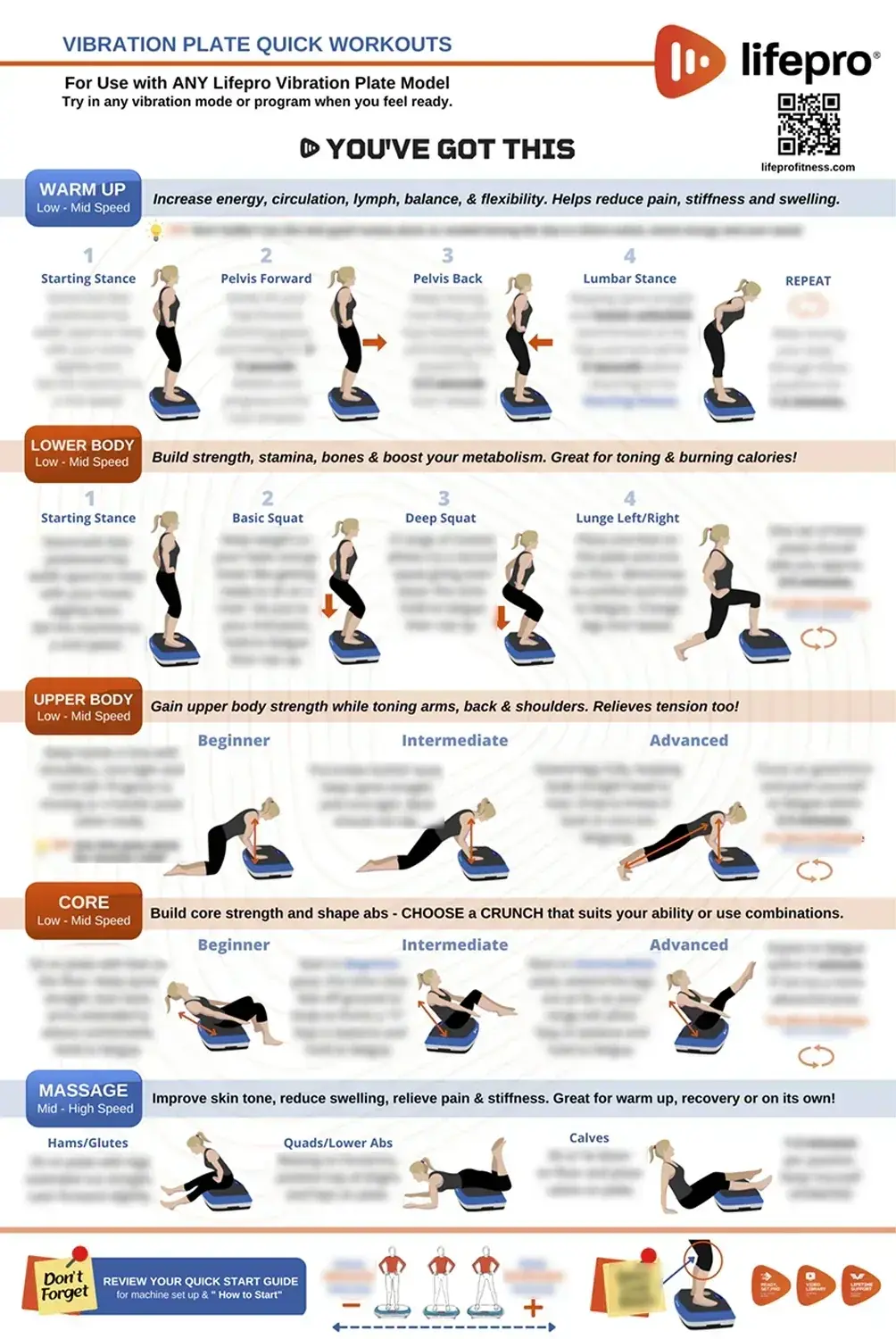
Get a FREE Lifepro Whole Body Vibration Workout Chart with exclusive Vibration Plate Zone Coupon Code!
For a limited time, Vibration Plate Zone readers can get a complimentary Lifepro Whole Body Vibration Workout Chart with the purchase of any vibration plate.
Use coupon code VPZLPFQ2 from April 1, 2026 through December 31, 2026.
Save $24.99 on paper chart or $12 on laminated chart.
To claim the offer, add at least 1 vibration plate and the chart to your cart, then apply the coupon code at checkout. You can choose either the paper or laminated version.
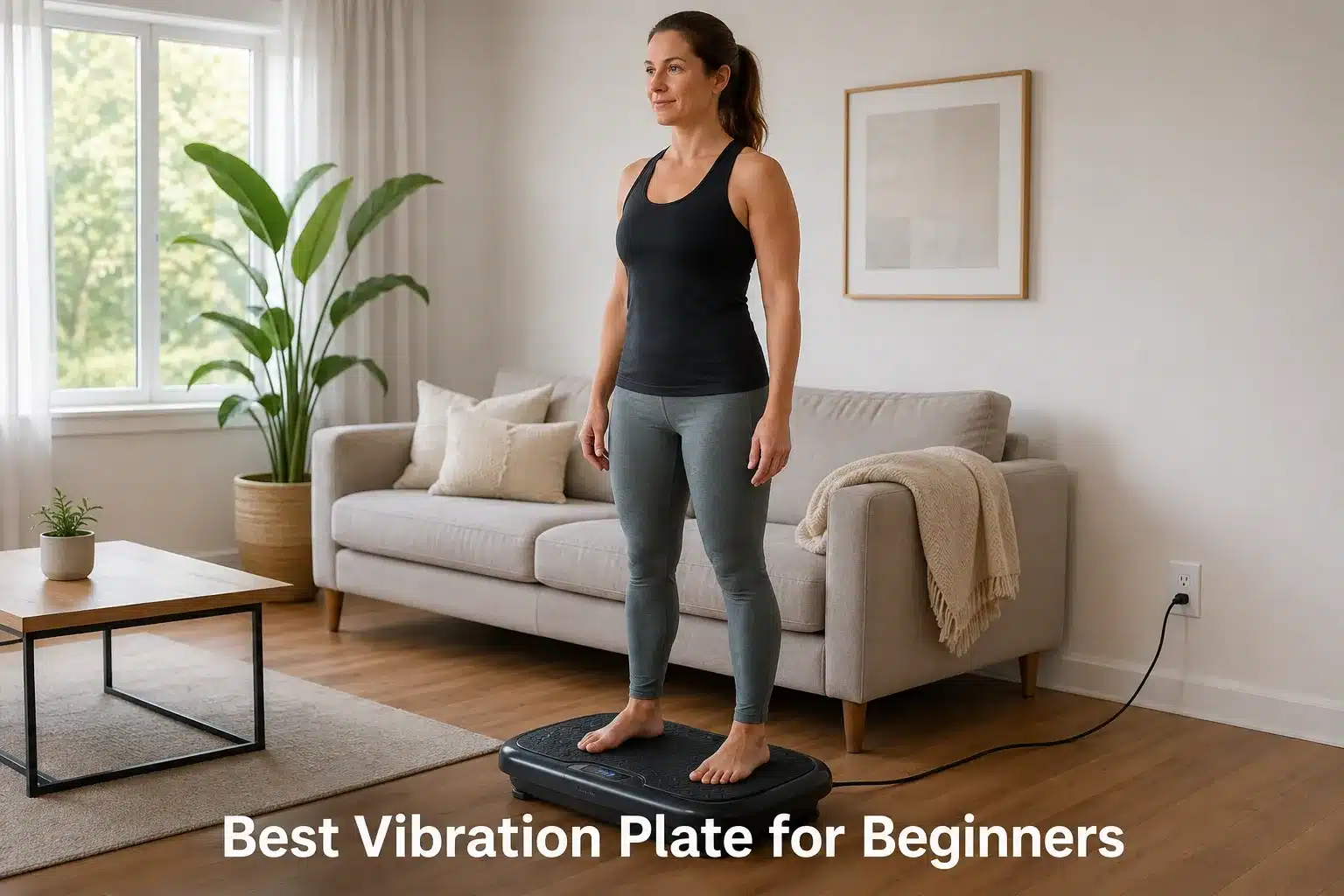
The Nautilus Vibratone is my pick for the best vibration plate for beginners overall. It combines accessible controls, plenty of intensity adjustment, automatic programs, and a lightweight design that is easier to move than most full-size platforms.

About the author: Hello! I’m Vladimir Stanar, professor of physical education, kinesiotherapist, marathon runner, cyclist, and cycling coach, and long-time advocate of health, fitness, and active living.
My journey with vibration plates runs parallel to my professional career in education, sports medicine, and athletic development. I’ve developed a unique process for testing vibration plates as they are some of the most versatile tools for enhancing health, recovery, and performance.
✅ Expert-Reviewed by: Vanja Vukas, MPhEd
📚 Expert Contributor: Milutin Tucakov, MPhEd
Affiliate Disclosure: Vibration Plate Zone is a proud participant in the Amazon Services LLC Associates Program.
A beginner needs more than a low price or a large number of speed settings. The plate should feel stable, start gently, provide enough standing room, and allow the user to change settings without repeatedly bending toward the control panel.
A beginner vibration plate should feel stable at its lowest setting and offer enough adjustment room to progress without replacing the machine as confidence builds.
The most practical beginner vibration plate for home use is one that remains accessible throughout the session. Remote control and simple preset programs make it easier to maintain focus on posture rather than the panel.
I compared these models based on vibration type, controls, platform size, programs, capacity, portability, support features, accessories, and potential for progression. I also considered how easy each plate would be to understand during the first session, since an advanced machine is not helpful when its controls discourage regular use.
My Recommended Top 3 Best Vibration Plates for Beginners
7 Best Vibration Plate for Beginners Reviews
The easiest vibration plate is not always the smallest or least expensive one. A very narrow deck, unclear controls, abrupt settings, or weak floor grip can make a cheap model more difficult to use than a better designed alternative.
I would start with passive standing only long enough to understand the machine. Supported calf raises, weight shifts, shallow squats, and resistance band rows provide a more useful path once balance and posture feel comfortable.
1. Nautilus Vibratone [Best Overall]
Overview
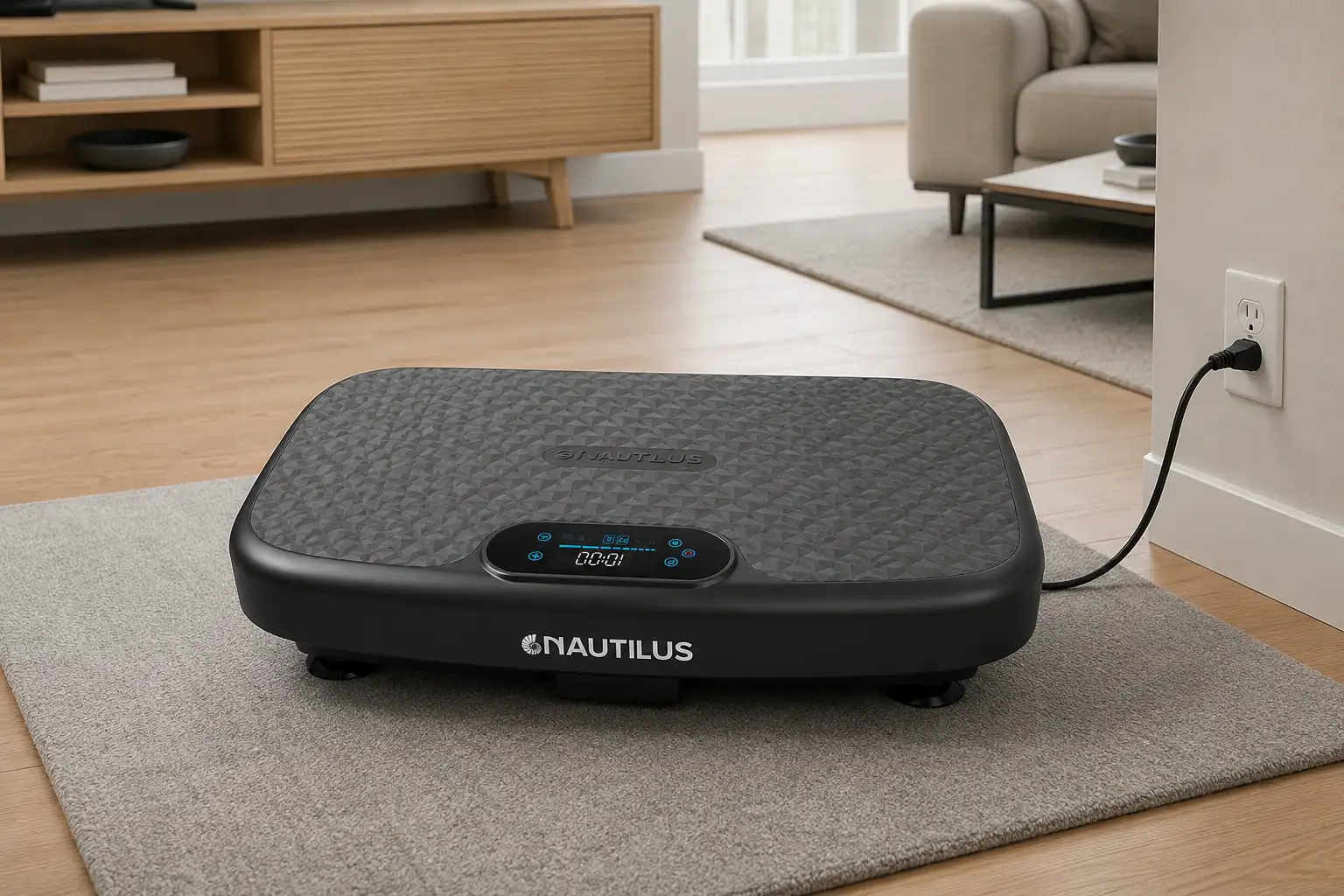
The Nautilus Vibratone earns my best overall award because it offers a manageable learning curve without feeling overly limited. Its broad intensity range and four automatic programs provide several ways to begin, while the remote allows settings to be adjusted without bending down during use.
At around 14 pounds, it is also considerably easier to move than most advanced multidirectional plates. I see that as a meaningful beginner benefit because a machine that is difficult to position or store often ends up being used less frequently.
The main compromise is platform size. It works well for standing, calf raises, shallow squats, and band exercises, but users planning wide lunges or extensive floor work may prefer a larger open deck.
Unique Features and Benefits for Beginners
The combination of manual control and guided programs is one of the Vibratone’s strongest beginner features. I would learn the lower manual levels first, then experiment with the automatic programs after becoming familiar with how the plate changes intensity.
Its low machine weight makes it suitable for multipurpose rooms where the platform cannot remain permanently on display. The remote, nonslip surface, suction feet, and detachable resistance bands also make it possible to progress beyond basic standing without immediately buying more accessories.
Bluetooth speakers are included, although I would not choose a plate based on speakers alone. They may make sessions more enjoyable, but the simple controls and portability have much greater practical value.
Specifications
| Specification | Details |
|---|---|
| Vibration type | Oscillating |
| Motor configuration | Single motor, 200 W |
| Frequency range | Not publicly specified |
| Amplitude | Not publicly specified |
| Intensity levels | 120 |
| Automatic programs | 4 |
| Broader intensity modes | 3 |
| Full dimensions | Approximately 23 × 14.25 × 6.25 inches, based on available documentation |
| Usable platform size | Not separately disclosed |
| Machine weight | Approximately 14 pounds |
| Weight capacity | 265 pounds |
| Display and controls | Integrated display and remote |
| Remote control | Yes |
| Bluetooth | Yes |
| Resistance bands | Yes |
| Warranty | Confirm current terms with the seller |
Nautilus lists 120 adjustable settings, three intensity options, four programs, Bluetooth speakers, resistance bands, a remote, a nonslip deck, and suction feet. The company does not publish the same level of frequency and amplitude detail provided for some specialist vibration platforms.
What’s Included
- Nautilus Vibratone vibration board
- Remote control
- Two detachable resistance bands
- Power cord
- Quick start or user guide
- Integrated Bluetooth speakers
At 14 lbs the machine is the lightest in its performance tier, light enough to lift single-handed for relocation or under-furniture storage between sessions.
Four preset programs automate a full session sequence with pre-configured speed variation, reducing the manual effort of managing intensity changes during a timed recovery or warm-up protocol.
Two detachable resistance bands extend session variety to upper-body exercises performed simultaneously with lower-body vibration absorption, increasing total muscle group engagement per session.
Pros and Cons
| Pros | Cons |
|---|---|
| Straightforward control layout | Frequency and amplitude are not disclosed clearly |
| 120 gradual intensity settings | Smaller deck than oversized platforms |
| Four automatic programs | 265 pound capacity is lower than several competitors |
| Three broader intensity options | |
| Remote control included | |
| Detachable resistance bands | |
| Built in Bluetooth speakers | |
| Lightweight construction | |
| Nonslip platform | |
| Easy to move and store |
Final Verdict
I rank the Nautilus Vibratone first because it balances accessibility, portability, and progression better than the other models in this lineup. It is easy enough for cautious standing sessions while still supporting squats, calf raises, and upper body band work as confidence improves.
I would choose a larger platform when extensive floor exercise is the priority. For the typical beginner who wants uncomplicated home use, however, the Vibratone is the most balanced first purchase.
2. LifePro Waver [Best Entry Level]
Overview
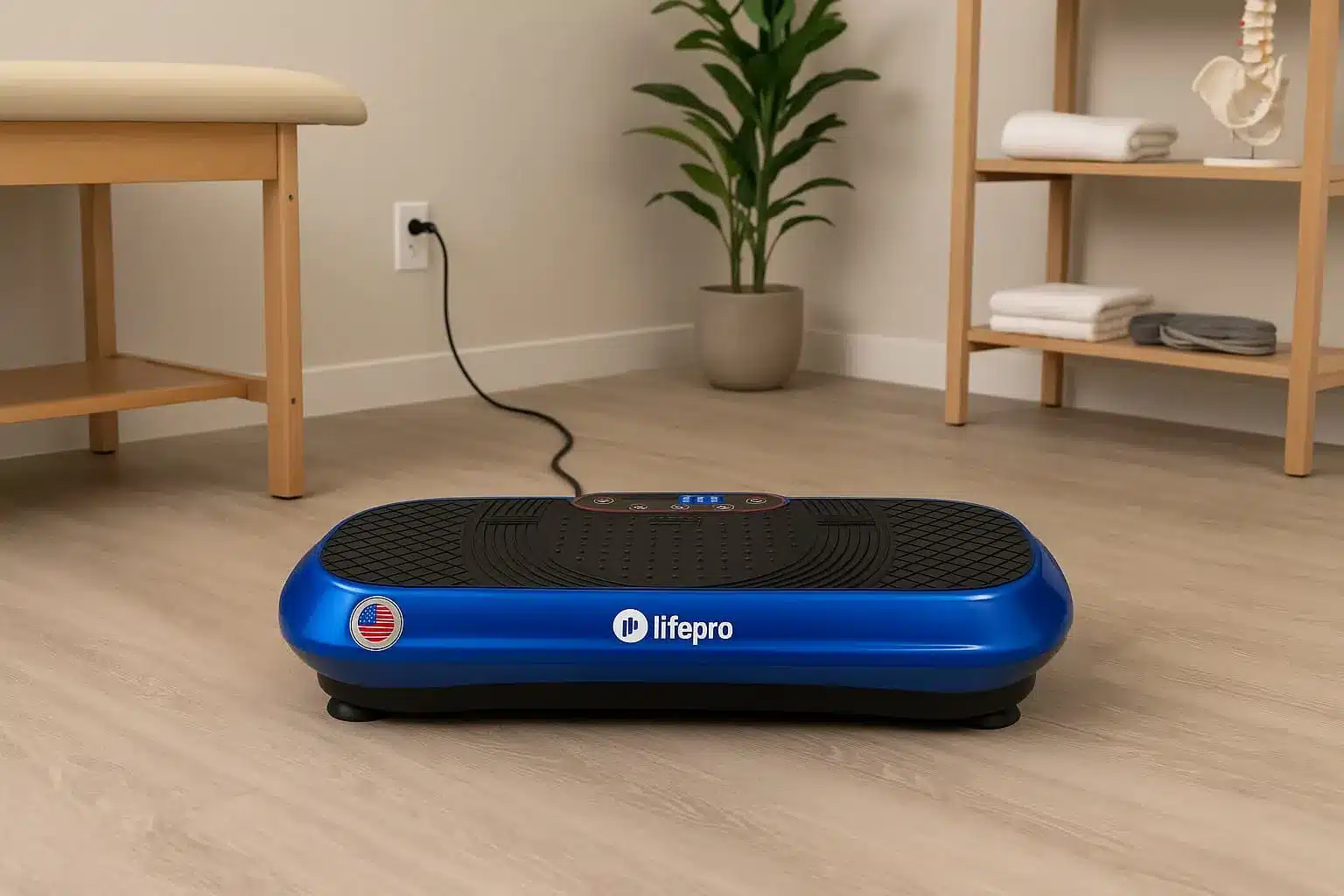
The LifePro Waver is my preferred entry level option for buyers who want one predictable type of movement. Its oscillating platform rocks from side to side rather than asking the user to learn several motors and vibration combinations.
For buyers looking for the best inexpensive vibration plate that still delivers consistent oscillation output, the models in this guide represent the floor of what I would recommend: below this price tier, motor consistency under body weight becomes unreliable enough to undermine the main use cases for beginners.
The 330 pound capacity and medium size deck make it suitable for a wider range of users than many compact plates. Its 99 levels also provide enough adjustment to progress gradually without adding the complexity of a 4D control system.
I would choose the Waver over a multidirectional machine when simplicity matters more than mode variety. It is easier to understand during the first session and still offers enough exercise options for long term general fitness use.
Unique Features and Benefits for Beginners
Oscillating movement is easy to recognize and control. The predictable rocking action lets a beginner focus on knee position, posture, and balance rather than wondering which motor combination is running.
The remote is especially useful because it reduces the need to look down or bend toward the display. LifePro also includes handled resistance bands and mini loop bands, giving beginners several ways to add upper and lower body work.
I also value the Waver’s published technical information. LifePro identifies its motor output, approximate maximum frequency, amplitude, dimensions, machine weight, and capacity, making it easier to understand what is being purchased.
Specifications
| Specification | Details |
|---|---|
| Vibration type | Oscillating |
| Motor configuration | Single motor |
| Motor power | 200 watts |
| Frequency range | Up to approximately 12 Hz |
| Amplitude | Up to approximately 8 mm |
| Intensity levels | 99 |
| Automatic programs | Current materials list 9 or 10, depending on version |
| Full dimensions | Approximately 27.6 × 15.7 × 5.5 inches |
| Usable platform size | Not separately disclosed |
| Machine weight | Approximately 27.8 pounds |
| Weight capacity | 330 pounds |
| Display and controls | Time, speed, and mode display |
| Remote control | Yes |
| Resistance bands | Handled and loop bands |
| Warranty | Lifetime coverage advertised after registration |
LifePro’s official materials describe the Waver as a 200 watt oscillating platform with 99 settings, up to approximately 12 Hz, as much as 8 mm of amplitude, and a 330 pound user limit. The number of preset programs appears to differ between current LifePro pages, so buyers should verify the version attached to the exact listing.
What’s Included
- LifePro Waver vibration plate
- Wireless remote
- Two handled resistance bands
- Four mini loop bands
- Power cable
- User manual
- Access to LifePro training resources
A built-in heart rate sensor in the handlebar grip tracks pulse in real time during the session, providing biofeedback without requiring a separate wearable monitor.
Ninety-nine speed levels span the oscillation frequency range from gentle 4 Hz warm-up intensity to higher activation levels used in muscle conditioning protocols.
The 330 lb capacity covers the full adult weight range while keeping the footprint small enough for dedicated home gym corners with limited floor space.
Pros and Cons
| Pros | Cons |
|---|---|
| Predictable oscillating movement | No linear or combined 4D modes |
| 99 adjustment levels | Platform may restrict very wide exercises |
| Published frequency information | Preset count varies between current materials |
| Up to 8 mm listed amplitude | |
| 330 pound weight capacity | |
| Responsive remote control | |
| Handled resistance bands | |
| Four mini loop bands | |
| Medium size textured platform | |
| Lifetime warranty advertised |
Final Verdict
The LifePro Waver is the strongest entry level choice for someone who values predictable movement and clear technical information. Its controls are straightforward, the capacity is generous, and the accessory package makes it easy to expand the routine.
I would not recommend paying for a 4D machine when a beginner only wants standing exercises, squats, calf raises, and resistance band work. The Waver covers those needs without adding motors and settings that may never be used.
3. LifePro Rumblex 4D [Best Upgrade Pick]
Overview
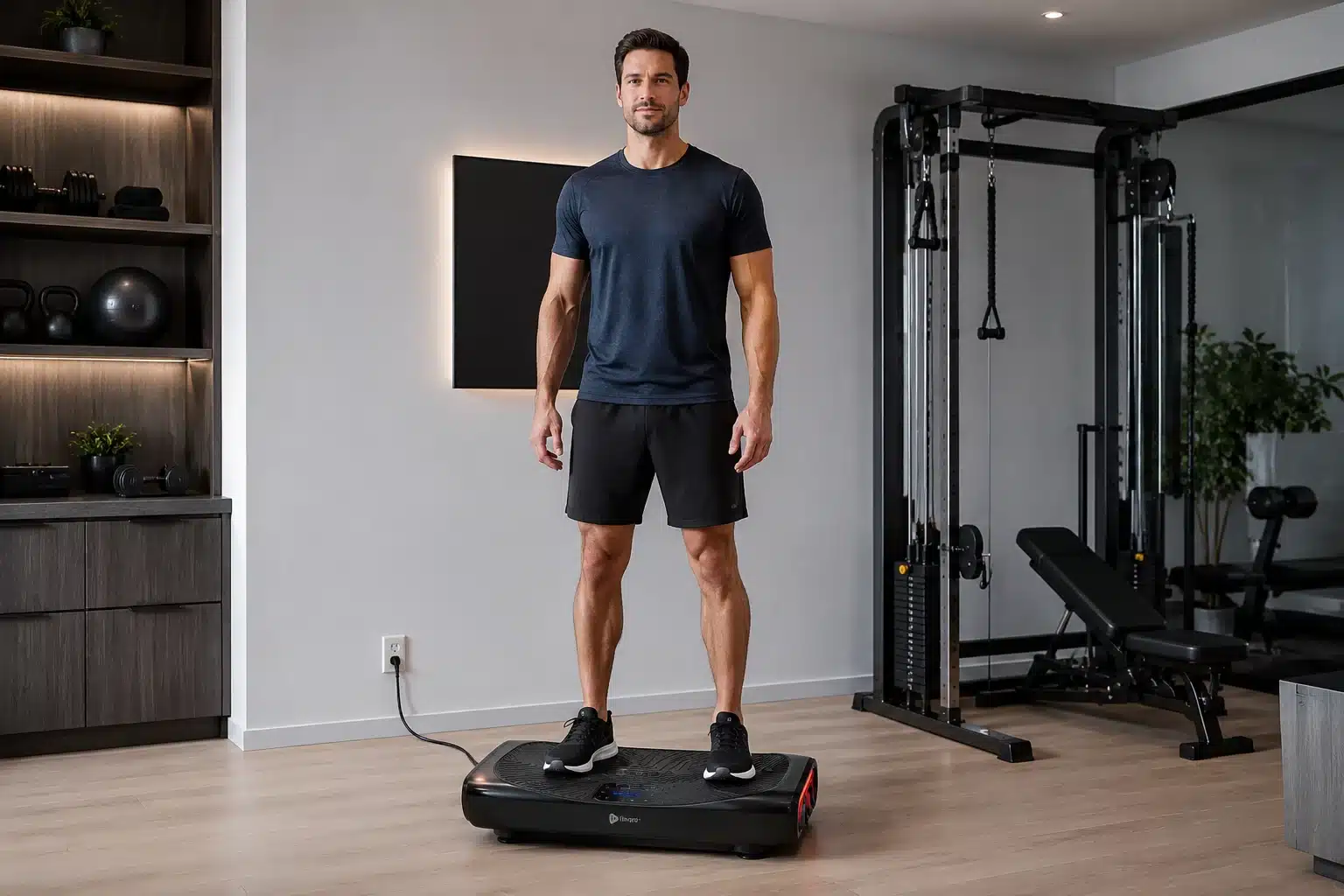
The LifePro Rumblex 4D is the most advanced option in this beginner lineup. Its triple motor design can produce oscillating, lateral, pulsating, and combined movement, giving it far more training variety than a traditional single motor plate.
I see the Rumblex as a buy once option for a committed beginner. It costs more and takes longer to understand, but its large platform and multiple movement styles make it unlikely that the user will outgrow it quickly.
The heavier construction helps the machine remain settled during active exercises. That same weight makes it inconvenient to lift after every session, so I would give it a permanent location whenever possible.
Unique Features and Benefits for Beginners
The Rumblex allows a beginner to start with one low intensity mode and introduce additional movement types gradually. I would not begin with every motor running together because that makes it harder to understand how each setting affects balance and comfort.
Its oversized deck is particularly useful for progression. There is more room for stance changes, shallow lunges, planks, pushups, and seated positions than on the Nautilus or Hurtle.
The wrist remote is another practical advantage. It allows settings to be changed while keeping both hands free for posture, resistance bands, or stable support.
Specifications
| Specification | Details |
|---|---|
| Vibration type | Oscillating, lateral, pulsating, and combined |
| Motor configuration | Triple motor |
| Combined motor output | Approximately 440 watts |
| Frequency range | Approximately 4 to 40 Hz |
| Amplitude | Varies by movement type, with oscillation listed up to approximately 12 mm |
| Intensity levels | 60 |
| Automatic programs | 3 |
| Full dimensions | Approximately 30.7 × 17.8 × 7.7 inches |
| Usable platform size | Large open deck |
| Machine weight | Approximately 39.1 pounds |
| Weight capacity | 330 pounds |
| Display and controls | Multi mode display |
| Remote control | Wrist worn infrared remote |
| Bluetooth | Yes |
| Resistance bands | Handled and mini bands |
| Warranty | Lifetime coverage advertised after registration |
The Rumblex 4D uses three motors and provides oscillating, lateral, pulsating, and combined movement. LifePro lists 60 levels, a 4 to 40 Hz range, three programs, a 330 pound capacity, Bluetooth speakers, and an oversized platform.
What’s Included
- LifePro Rumblex 4D vibration plate
- Wrist worn remote
- Two handled resistance bands
- Four mini resistance bands
- Exercise or vibration mat
- Power cable
- User manual
- Integrated Bluetooth speakers
Amplitude reaches up to 12 mm at peak settings, providing the tissue displacement range used in clinical WBV studies on lymphatic and circulatory outcomes.
The 440W peak output holds vibration amplitude consistent at a full 330 lb load, unlike single-motor models that lose frequency stability as body weight increases.
Silent motor operation produces no disruptive mechanical noise during standard sessions, making it viable for apartment use without floor-transmitted vibration complaints.
Pros and Cons
| Pros | Cons |
|---|---|
| Triple motor configuration | More complicated than single mode plates |
| Four movement options | Heavy and difficult to store daily |
| Published 4 to 40 Hz range | Considerably more expensive |
| 60 adjustment levels | |
| Oversized open platform | |
| 330 pound capacity | |
| Wrist worn remote | |
| Extensive band package | |
| Bluetooth speakers | |
| Substantial long term progression |
Final Verdict
The LifePro Rumblex 4D is my upgrade recommendation for a beginner who wants advanced modes and a spacious deck from the start. It is the most versatile machine here, but it also requires the most learning and the largest budget.
I would choose it for active full body training rather than short passive sessions. Beginners looking for a predictable first experience will get better value from the Waver.
4. EILISON FitMax 3D XL [Best Large Platform]

Overview
The EILISON FitMax 3D XL earns its award because its wide deck provides generous stance and exercise room. A beginner with larger feet, a wider natural stance, or concerns about feeling confined may find it more comfortable than a compact plate.
More space also makes progression easier. Shallow squats, weight shifts, wider calf raises, and incline hand positions can be arranged without crowding the control area or raised edges.
I would prioritize this model when the plate can remain in a dedicated exercise space. Its larger body is less appealing when the machine must be carried and hidden after every use.
Unique Features and Benefits for Beginners
The expanded surface allows the user to experiment with foot position without stepping near the edge. That matters on oscillating and multidirectional platforms because stance width can change how strong the movement feels.
The textured acupressure style surface provides pronounced foot contact and traction. I would use appropriate footwear if the raised pattern feels uncomfortable, provided that this is consistent with the supplied manual.
Its wide adjustment range creates room for gradual progression. The model naming and technical descriptions vary across retail pages, however, so I would verify the exact motor configuration and included package before ordering.
Specifications
| Specification | Details |
|---|---|
| Vibration type | 3D (vertical, lateral, rotational) |
| Motor configuration | Not publicly specified |
| Frequency range | Up to 30 Hz |
| Amplitude | Up to 6 mm |
| Intensity levels | 120 |
| Automatic programs | Not publicly specified |
| Full dimensions | 28.5 × 15.8 × 5.7 in |
| Usable platform size | Large XL deck |
| Machine weight | ~14 lbs |
| Weight capacity | 300 lbs |
| Display and controls | Integrated panel |
| Remote control | Yes |
| Resistance bands | Yes |
| Loop bands | Listed with some packages |
| Warranty | Verify current registration and support terms |
Current retail descriptions identify the FitMax 3D XL as a large deck, multidirectional platform with 120 manufacturer defined levels and an acupressure style surface. The exact frequency, amplitude, dimensions, capacity, and motor terminology are not presented consistently across listings, so I would rely on the manual supplied with ASIN B09WTZC8JG rather than specifications from a related FitMax model.
What’s Included
- EILISON FitMax 3D XL platform
- Remote control
- Handled resistance bands
- Loop bands where included in the current bundle
- Power cable
- User manual
Eighty-four percent of reviewers specifically rate the safety features positively, citing the suction-cup stabilizer feet and non-slip surface as effective at preventing plate movement during high-intensity sessions.
The bundled remote has a limited effective range under 10 feet, requiring users to remain close to the plate for reliable signal — a noted shortcoming compared to models with longer-range remotes.
A 300W brushless motor powers 120 speed levels with consistent output across the full range, and 75% of verified buyers specifically cite the machine's silent operation as a standout characteristic.
Pros and Cons
| Pros | Cons |
|---|---|
| Spacious standing area | Harder to move and store |
| Room for wider foot placement | Raised texture may feel uncomfortable barefoot |
| Suitable for active squats | Exact technical data varies across listings |
| Useful deck for incline exercises | |
| Multidirectional movement | |
| 120 adjustment levels | |
| Remote operation | |
| Resistance accessories | |
| Strong traction pattern | |
| Practical for multiple household users |
Final Verdict
The EILISON FitMax 3D XL is my choice for beginners who place platform space above portability. The wider surface supports a natural stance and leaves room for more exercises as the routine develops.
The main drawback is inconsistent specification reporting. I would verify the manual, capacity, warranty, and exact vibration system before buying rather than assuming that every FitMax 3D or 4D listing describes the same machine.
5. LifePro TrimLite [Best With Handles]

Overview
The LifePro TrimLite combines a compact oscillating plate with an adjustable upright handle. That fixed contact point may make the first session feel less intimidating for someone who dislikes standing on an open platform.
The handle can help with confidence, posture, and supported shallow squats. It is not medical fall prevention equipment, so people with significant balance limitations may still need individual guidance or stronger support.
I like the TrimLite for users who expect to remain primarily upright. The handle becomes less convenient when planks, pushups, side approaches, and other open platform exercises are a major priority.
Unique Features and Benefits for Beginners
The height adjustable handle gives the user a consistent hand position. I would prefer this to grabbing elastic resistance bands because bands stretch and cannot provide dependable balance support.
The TrimLite keeps the simpler oscillating movement found on the Waver while adding nine programs and 99 levels. Its relatively low machine weight also makes it easier to reposition than large 4D platforms.
The control panel and remote provide two ways to manage sessions. Beginners can remain on low manual settings until they understand how the plate feels before allowing a preset program to change intensity automatically.
Specifications
| Specification | Details |
|---|---|
| Vibration type | Oscillating |
| Motor configuration | Single motor |
| Motor power | 150 watts |
| Frequency range | 4–12 Hz |
| Amplitude | Approximately 3 mm |
| Intensity levels | 99 |
| Automatic programs | 9 |
| Full footprint | Approximately 20.3 × 17.9 inches |
| Handle height | Approximately 26.8 to 37.8 inches |
| Machine weight | Approximately 23.6 pounds |
| Weight capacity | 265 pounds |
| Display and controls | Time, speed, and program |
| Remote control | Yes |
| Resistance bands | Yes |
| Warranty | Lifetime coverage advertised after registration |
What’s Included
- LifePro TrimLite vibration plate
- Adjustable handle assembly
- Remote control
- Two clip on resistance bands
- Power cable
- User manual
Two included resistance bands attach to the handlebar base, enabling bicep curls, shoulder raises, and rows simultaneously with lower-body vibration absorption.
At high speed levels, the vibration intensity can feel overwhelming for users new to WBV therapy; starting at levels 1-10 for the first week is documented as the standard acclimation protocol.
Some units produce louder motor noise than the product listing suggests, particularly at speed levels above 70 where the motor operates near its output ceiling.
Pros and Cons
| Pros | Cons |
|---|---|
| Adjustable fixed handle | Handle restricts some exercise positions |
| Predictable oscillating motion | Compact platform limits wider stances |
| 99 intensity levels | 265 pound capacity |
| Nine automatic programs | |
| Manual control available | |
| Remote included | |
| 150 watt motor | |
| Relatively light construction | |
| Compact home footprint | |
| Lifetime warranty advertised |
Final Verdict
The LifePro TrimLite is the best vibration plate with handles for beginners who want a stable hand position. Its oscillating movement and accessible controls are easy to understand, while the handle supports upright exercises.
I would choose an open plate when exercise variety matters more than standing support. For nervous first time users who mainly plan to stand, perform calf raises, and complete shallow squats, the TrimLite is a sensible match.
6. FLYBIRD 4D [Best Compact Pick]

Overview
The FLYBIRD 4D provides multidirectional movement in a low profile open platform. It is compact compared with machines that add an upright tower or wide external frame, although it is not especially light.
Its open deck is useful for standing exercises, squats, planks, and resistance band work. Nine programs can help structure sessions, while manual levels give the user direct control during the learning stage.
I would choose the FLYBIRD for a space conscious buyer who still wants advanced movement options. Someone seeking the simplest possible first plate will find the Nautilus or Waver easier to understand.
Unique Features and Benefits for Beginners
Automatic programs reduce the need to design every session manually. I would still begin with manual mode because a first time user should understand the lowest settings before allowing the machine to change intensity.
The platform is substantial enough for active exercise but has no integrated handle blocking access from the sides. This gives it more positional flexibility than the TrimLite.
Its multidirectional operation creates more progression than a basic compact plate. The tradeoff is a steeper learning curve and a machine weight that makes frequent lifting less convenient.
Specifications
| Specification | Details |
|---|---|
| Vibration type | Multidirectional 4D |
| Motor configuration | Triple motor, 800 W total |
| Frequency range | 5.2–40 Hz |
| Amplitude | Up to 11 mm |
| Intensity levels | 99 |
| Automatic programs | 9 |
| Full dimensions | Approximately 31.5 × 17.7 × 6.7 inches |
| Usable platform size | Large open deck |
| Machine weight | Approximately 43.4 pounds |
| Weight capacity | Commonly listed at 330 pounds, follow supplied manual |
| Display and controls | LED panel |
| Remote control | Yes |
| Resistance bands | Yes |
| Exercise mat | Listed with current bundles |
| Warranty | Commonly listed at one year |
What’s Included
- FLYBIRD 4D vibration plate
- Remote control
- Resistance bands
- Additional loop or exercise bands where included
- Exercise mat
- Power cord
- User manual
A 5.2-40 Hz frequency range covers the full spectrum from low-frequency relaxation through clinical lymphatic drainage into the bone-density stimulation zone, all within a single platform.
Triple motors power three independent axes, enabling any combination of oscillation, linear, and pulsation to run simultaneously across 99 speed levels and 9 preset programs.
The 500 lb capacity is one of the highest in the consumer vibration plate category, making it suitable for heavier users without the amplitude reduction that affects lower-rated machines at load.
Pros and Cons
| Pros | Cons |
|---|---|
| Multidirectional movement | Heavy for frequent storage |
| 99 adjustment levels | More complex than an oscillating plate |
| Nine automatic programs | Frequency and amplitude are not clearly disclosed |
| Large open platform | |
| Remote control | |
| LED display | |
| Resistance accessories | |
| Exercise mat included in current bundles | |
| No handle restricting side access | |
| More progression than a basic compact model |
Final Verdict
The FLYBIRD 4D is my compact multidirectional pick for beginners who want an open deck and advanced modes. It provides more room for progression than a small oscillating plate without requiring an upright support frame.
The word compact refers more to its low profile than its weight. I would not select it for someone who needs to carry the machine between rooms after every workout.
7. Hurtle [Best Budget Pick]

Overview
The Hurtle is the most affordable entry point in this lineup. It offers 40 adjustment levels, a remote, resistance bands, a compact body, and transport wheels without the price of a premium multidirectional platform.
Forty settings may look modest beside models advertising 99 or 120, but beginners do not need a three digit number. Smooth low settings, accessible controls, and stable positioning matter more than the number printed in the product description.
I see the Hurtle as a low commitment way to test whether vibration training fits a regular routine. Buyers who already expect long term active training may get better value from the Waver or Rumblex.
Unique Features and Benefits for Beginners
The control system is less crowded than those on advanced 4D plates. A beginner can choose a low setting, learn a stable stance, and introduce basic movements without managing several motors.
Transport wheels make repositioning easier, although the machine still weighs more than the Nautilus. The resistance bands support upper body exercises after the user is stable enough to avoid treating them as balance handles.
Its deck is adequate for standing, calf raises, shallow squats, and simple band work. A larger premium platform provides more room when wide lunges, planks, and varied floor positions become important.
Specifications
| Specification | Details |
|---|---|
| Vibration type | Oscillating |
| Motor configuration | Not publicly specified |
| Frequency range | Not publicly specified |
| Amplitude | Not publicly specified |
| Intensity levels | 40 |
| Automatic programs | Not publicly specified |
| Full dimensions | Approximately 26.8 × 15 × 4.7 inches |
| Usable platform size | Medium compact deck |
| Machine weight | Approximately 30.8 pounds |
| Weight capacity | Approximately 265 pounds |
| Display and controls | Integrated controls |
| Remote control | Yes |
| Resistance bands | Yes |
| Transport wheels | Yes |
| Warranty | Verify current seller terms |
What’s Included
- Hurtle vibration platform
- Remote control
- Two resistance bands
- Power cable
- User manual
- Integrated transport wheels
Oscillation across adjustable speed levels produces the repetitive low-impact muscle contractions used in passive lymphatic drainage and circulation improvement without high-impact loading of the joints.
A budget price point makes WBV therapy accessible at entry level, with the trade-off that motor power and amplitude consistency under heavy load are lower than mid-tier multi-motor alternatives.
A remote control allows speed adjustment from standing height without bending to the panel, which is a practical feature for users with flexibility limitations that make bending uncomfortable.
Pros and Cons
| Pros | Cons |
|---|---|
| Affordable entry price | Technical documentation is limited |
| Straightforward controls | Lower capacity than several alternatives |
| 40 adjustment levels | Less room for advanced progression |
| Remote included | |
| Resistance bands included | |
| Compact dimensions | |
| Transport wheels | |
| Suitable for basic standing exercises | |
| Low financial commitment |
Final Verdict
The Hurtle is my budget recommendation for beginners who want the essential functions without paying for premium modes. It provides enough adjustment and exercise space to determine whether the user will remain consistent.
I would spend more on the LifePro Waver when budget allows because its specifications, capacity, accessories, and support are clearer. The Hurtle remains a reasonable first step for occasional basic use.
For a closer look at budget-friendly options beyond the Hurtle, my picks for the best budget vibration plates cover the models that keep entry costs low without cutting corners on the specs that matter most.
Comparison Table
| Product | Award | Vibration Type | Levels | Programs | Capacity | Main Beginner Benefit |
|---|---|---|---|---|---|---|
| Nautilus Vibratone | Best Overall | Oscillating | 120 | 4 | 265 lb | Simple and lightweight |
| LifePro Waver | Best Entry Level | Oscillating | 99 | 9 or 10 | 330 lb | Predictable movement |
| LifePro Rumblex 4D | Best Upgrade Pick | Multiple modes | 60 | 3 | 330 lb | Long term progression |
| EILISON FitMax 3D XL | Best Large Platform | Multidirectional | 120 | Verify | Verify | Spacious deck |
| LifePro TrimLite | Best With Handles | Oscillating | 99 | 9 | 265 lb | Adjustable fixed handle |
| FLYBIRD 4D | Best Compact Pick | Multidirectional | 99 | 9 | 330 lb listed | Open advanced platform |
| Hurtle | Best Budget Pick | Oscillating | 40 | Verify | 265 lb | Low purchase cost |
Buyer’s Guide: Choosing the Best Vibration Plate for Beginners
What Makes a Vibration Plate Beginner Friendly?
A suitable beginner plate should feel controllable at its lowest setting. I place more importance on a gentle start, stable deck, and predictable controls than on an enormous maximum speed number.
Remote operation is also valuable because bending down can affect balance. I prefer controls that allow the session to stop immediately and make small changes without cycling through complicated menus.
The plate should also remain useful after passive standing becomes easy. Enough deck space for calf raises, shallow squats, weight shifts, and band exercises helps prevent the machine from becoming a one position device.
Oscillating Versus 3D and 4D Vibration
Oscillating Vibration
Oscillating plates rock around a central point, causing one side to rise while the other falls. I generally prefer this predictable movement for a nervous beginner because there is only one primary motion to understand.
The best vibration plates for low-impact home workouts and rehabilitation are oscillating models operating below 35 Hz. The side-to-side rocking motion activates leg muscles without the compressive load that makes standing exercise uncomfortable for recovering joints.
For rehabilitation contexts, the plate should allow extremely gentle settings, ideally below 10 Hz, so the vibration can be introduced gradually without overwhelming sensitive tissue during early recovery sessions.
The Waver and TrimLite fit this category. They are suitable for users who value simplicity more than a large menu of vibration combinations.
For joint-conscious beginners who need a plate that stays within a safe range at the lowest settings, my picks for the best vibration plates for arthritis cover the oscillating and low-amplitude options that reduce impact on sensitive joints.
Linear and Pulsating Vibration
Linear movement usually raises and lowers both sides of the platform together. Pulsating modes may feel more like repeated vertical tapping, depending on the machine’s design.
I would introduce these settings cautiously because the sensation can differ greatly from oscillation. Neither style is automatically better for every beginner or every goal.
3D and 4D Vibration
Consumer labels such as 3D and 4D usually indicate that the platform offers more than one movement direction or motor combination. There is no universal naming standard that guarantees every manufacturer uses these terms in exactly the same way.
I recommend advanced machines to beginners only when they want long term versatility and are willing to learn the controls. Paying for four modes provides little value when the user plans to remain on one gentle setting.
Speed Levels Do Not Equal Frequency
A machine with 120 settings does not necessarily operate at 120 Hz. Those numbers are manufacturer defined control steps, and the same setting can feel very different across brands.
I would compare published frequency, amplitude, vibration style, and lowest usable intensity where that information is available. Setting 20 on the Nautilus cannot be treated as equivalent to setting 20 on the Waver or Hurtle.
More settings can make progression smoother, but the raw number should not determine the ranking. Ten well spaced and controllable options may be more useful than 120 abrupt ones.
Platform Size and Usable Exercise Space
Compact decks work well for basic standing, calf raises, and shallow squats. Larger decks provide more freedom for lunges, planks, pushups, wider stances, and hand placement.
I look at the usable nonslip area rather than the machine’s total width. Displays, raised borders, and control sections can reduce the amount of space actually available for the feet or hands.
A larger platform normally weighs more and takes up more floor space. I would choose the smallest deck that still supports the exercises the buyer realistically plans to perform.
Weight Capacity and Stability
The plate’s stated capacity should sit comfortably above the intended user’s body weight. I would avoid buying a model whose maximum rating barely exceeds the user’s current weight.
Capacity alone does not prove build quality. Machine weight, suction feet, housing construction, platform shape, and floor compatibility all affect how settled the plate feels.
Place the platform on a level surface and follow the manufacturer’s flooring guidance. A soft or uneven base can make an otherwise solid machine feel unstable.
Controls, Programs, and Remote Operation
Manual mode is usually the best starting point because the movement remains predictable. I prefer learning how the machine feels before allowing a preset program to change intensity automatically.
Programs become useful after the user understands the stop button and the lower settings. A sudden increase can feel unsettling when someone is still learning balance and posture.
The remote should be tested before stepping onto the platform. I would keep it within easy reach rather than placing it on furniture across the room.
Handles and Balance Support
An integrated handle can improve confidence and provide a fixed hand position. The TrimLite is the most suitable option here for someone who prefers that arrangement.
A handle does not eliminate fall risk or turn the machine into rehabilitation equipment. Someone with severe balance impairment may require supervision or a purpose designed support system.
For users who need a lower starting intensity, wider platform support, and a gentler progression than a standard beginner guide provides, my picks for the best vibration plates for seniors cover the machines that prioritize safety and stability above all else.
I would never use resistance bands as safety handles. They stretch under tension and can pull the user off balance when grip or footing changes.
Noise, Flooring, and Apartment Use
Motor sound is only one part of vibration plate noise. Even a quiet motor can transfer mechanical movement through the floor and into the room below.
Hard, level flooring normally creates the most secure base, although users should follow the manual for the exact model. A dense mat may reduce floor transmission, but several soft layers can make the machine rock.
I would test the plate during reasonable daytime hours before assuming it is apartment friendly. Floor construction can affect transmitted vibration more than the advertised motor volume.
Portability and Storage
Machine weight should be considered alongside handles, wheels, dimensions, and shape. The 14 pound Nautilus is far easier to lift than the Rumblex or FLYBIRD, even when a heavier model is described as compact.
I recommend measuring the planned storage space before ordering. Product photos often make platforms appear lower and smaller than their actual dimensions.
A heavy machine is not necessarily a poor choice. It becomes inconvenient only when the user must move it before and after every session.
For a list built around home-friendly sizing, storage options, and quiet operation, my guide to the best vibration plates for home use covers the models that work well in living rooms, bedrooms, and shared spaces.
Accessories
A remote, resistance bands, loop bands, exercise mat, and clear manual can add genuine value. I would not raise a model’s ranking because it includes decorative or low quality accessories that do not improve training.
Handled bands are useful for rows, curls, and presses once balance is secure. Loop bands can support hip and leg exercises away from the platform as well.
Bluetooth speakers are pleasant but optional. I place stability, controls, deck size, and technical transparency above entertainment features.
Warranty and Customer Support
Beginners may need help with setup, program selection, remote pairing, unexpected noises, or determining whether a movement is normal. Clear customer support is therefore more important than it may appear during the purchase.
LifePro advertises lifetime coverage on several registered products, while other brands provide shorter or less clearly defined protection. I would read registration requirements and exclusions soon after delivery.
A vague promise of support is not necessarily the same as a replacement warranty. Buyers should save the receipt, serial number, and registration confirmation.
How to Use a Vibration Plate for the First Time
Before the First Session
Read the manual, position the plate on a stable floor, and learn the start and stop controls before stepping on. Keep the cable away from the standing area and place a rigid support nearby when balance is uncertain.
I would also test the remote while standing beside the plate. Knowing which button stops the machine is more important than understanding every program during the first session.
Beginner Starting Position
Stand at a comfortable width with the knees softly bent, shoulders relaxed, and head neutral. Distribute weight evenly and look forward rather than staring down at the display.
Locked knees can allow more vibration to travel upward. I would lower the setting or bend the knees further if the jaw, head, or vision begins shaking noticeably.
Beginner Session Length
Start with approximately five minutes at the lowest comfortable setting. The first session should test balance, posture, and tolerance rather than push fatigue.
Notice how the body feels later that day as well as during the session. Sharp pain, numbness, nausea, dizziness, or unusual head movement are not normal goals of vibration training.
For users who experience lower leg heaviness, swelling, or reduced circulation, my picks for the best vibration plates for circulation cover the frequency ranges and vibration types that research links to improved blood flow.
Beginner Progression
Begin with supported standing and gentle weight shifts. Add calf raises and shallow squats after the basic stance feels controlled.
Resistance band rows can follow once the user no longer relies on the bands for balance. I recommend increasing only one variable at a time, such as duration, intensity, exercise difficulty, or weekly frequency.
For readers whose primary goal is fat loss and metabolic output, my guide to the best vibration plates for weight loss covers the machines and protocols that research associates with the strongest results.
Common Beginner Mistakes
Starting at Maximum Intensity
A strong setting can make posture and balance harder to control without producing a better workout. I would rather see a beginner perform controlled squats at a low level than stand rigidly while the machine shakes at maximum intensity.
Locking the Knees
Locked knees create a more rigid route through the legs and may send additional vibration toward the spine and head. Maintain a small bend unless an exercise protocol specifically calls for another position.
Looking Down at the Controls
Holding the neck in a bent position can become uncomfortable and may affect balance. Learn the remote and keep the eyes forward whenever possible.
Using Resistance Bands for Balance
Resistance bands move when pulled and should not be treated as fixed support. Use a rigid handle, rail, countertop, or sturdy chair when assistance is needed.
Standing Passively During Every Session
Passive standing is useful for learning the machine but offers limited progression. I would gradually add weight shifts, calf raises, squats, and appropriate resistance work.
Increasing Several Variables Together
Adding more time, intensity, exercise difficulty, and weekly sessions at once makes it difficult to identify what caused soreness or discomfort. Change one factor and assess the response before progressing again.
For users starting with low bone density who need specific frequency guidance and safe progression protocols, my picks for the best vibration plates for osteoporosis cover the machines and settings that research links to bone mineral improvement.
Assuming a Short Session Replaces Exercise
Whole body vibration creates real muscle activity, but it does not reproduce every effect of walking, cardiovascular training, resistance exercise, and mobility work. Current research also does not support vibration alone as a dependable weight loss method. (Self)
Final Recommendations
The Nautilus Vibratone is the best vibration plate for beginners overall. I recommend it for buyers who want straightforward controls, useful programs, a low machine weight, and enough exercise flexibility for continued use.
The LifePro Waver is the best entry level option for a beginner who prefers one predictable oscillating motion. Its larger platform, published technical details, accessories, and 330 pound capacity make it a particularly strong long term value.
If the Waver's simplicity appeals to you and you want to see how other LifePro models compare, my breakdown of the best LifePro vibration plates covers the full lineup from entry level to advanced multidirectional models.
The LifePro Rumblex 4D is the best upgrade pick for committed users who want advanced movement modes and a spacious deck. I would choose it only when the buyer expects to use its additional features rather than remaining on one gentle setting.
If you want to see how beginner models compare to more advanced options across the full market, my roundup of the best vibration plates covers the complete range of resistance types, price points, and feature sets.
The EILISON FitMax 3D XL is best when platform room is the priority, while the LifePro TrimLite is best for users who want a fixed handle. The FLYBIRD 4D suits buyers seeking an open multidirectional platform, and the Hurtle provides the lowest financial barrier.
FAQs
What is the best vibration plate for beginners?
The Nautilus Vibratone is the best vibration plate for beginners overall because it combines accessible controls, 120 adjustment levels, four programs, a remote, resistance bands, and lightweight construction. I find it easier to place and understand than most advanced multidirectional platforms.
Is an oscillating or 4D vibration plate better for beginners?
An oscillating plate is generally easier for a beginner because it provides one predictable rocking movement. A 4D model offers more long term variety but requires the user to learn additional modes and controls.
How long should a beginner use a vibration plate?
A beginner should start with approximately five minutes at a low setting. Session length can increase gradually when posture, balance, joint comfort, and recovery remain normal.
What speed should a beginner start with?
A beginner should start at the lowest comfortable manual setting. Manufacturer level numbers are not standardized, so the same number can produce a different experience on another machine.
Should beginners bend their knees?
Beginners should generally keep a small bend in the knees while standing. This position lets the leg muscles absorb more movement and may reduce excessive vibration reaching the upper body.
Can beginners use a vibration plate every day?
A beginner may tolerate brief daily use at a gentle setting, but daily sessions are not required. I prefer starting with two to four sessions per week and increasing frequency only after assessing recovery.
Is a vibration plate with handles safer?
A fixed handle may improve confidence and provide a consistent hand position. It does not eliminate balance risk or replace supervised rehabilitation for someone with severe instability.
Can a beginner lose weight with a vibration plate?
A vibration plate can contribute to a wider weight management plan when active exercises and suitable nutrition are included. Passive standing alone has not consistently produced meaningful reductions in body weight or fat mass.
Are cheap vibration plates suitable for beginners?
A cheaper plate may be suitable when it has stable construction, a gentle starting setting, adequate capacity, and accessible controls. Budget models often provide less technical information, warranty support, exercise space, and progression.
Which vibration plate exercises are best for beginners?
Supported standing, gentle weight shifts, calf raises, shallow squats, and controlled band rows are practical starting exercises. I would introduce one movement at a time and keep rigid support nearby when necessary.
Notable Studies
- Tan X, et al. Effects of Whole Body Vibration Training on Lower Limb Muscle Strength and Physical Performance Among Older Adults. The systematic review found improvements in lower body strength and selected walking and physical performance measures.
- Oliveira RG, et al. Impacts of Whole Body Vibration on Muscle Strength, Power, and Endurance in Older Adults. Whole body vibration improved several strength outcomes compared with inactive controls but did not clearly outperform conventional exercise.
- Xing K, et al. Does Frequency of the Mechanical Vibration Matter? The network meta analysis found that different frequency ranges ranked differently for strength, static balance, dynamic balance, and walking outcomes.
- Orr R. The Effect of Whole Body Vibration Exposure on Balance and Functional Mobility in Older Adults. The review found improvements in selected balance and mobility tests, although results were inconsistent across outcomes.
- Lam FMH, et al. The Effect of Whole Body Vibration on Balance, Mobility and Falls in Older Adults. Whole body vibration improved some basic balance and mobility measures, while evidence for reducing actual falls remained uncertain.
- Liu P, et al. Effects of Whole Body Vibration Training With Different Frequencies on the Balance Ability of Older Adults. Balance responses varied according to the vibration frequency range and the specific outcome being measured.
- Rogan S, et al. Effects of Whole Body Vibration on Postural Control in Elderly Adults. Possible improvements in static or dynamic balance differed according to participants’ initial physical function.
- Osawa Y, Oguma Y, Ishii N. The Effects of Whole Body Vibration on Muscle Strength and Power. Vibration improved selected outcomes compared with inactivity, but most advantages were not maintained when it was compared directly with conventional exercise.
- Gou P, et al. Effectiveness of Whole Body Vibration Training on Body Mass Reduction. The review found no significant overall reductions in body weight, BMI, fat mass, fat free mass, or body fat percentage from whole body vibration alone.