
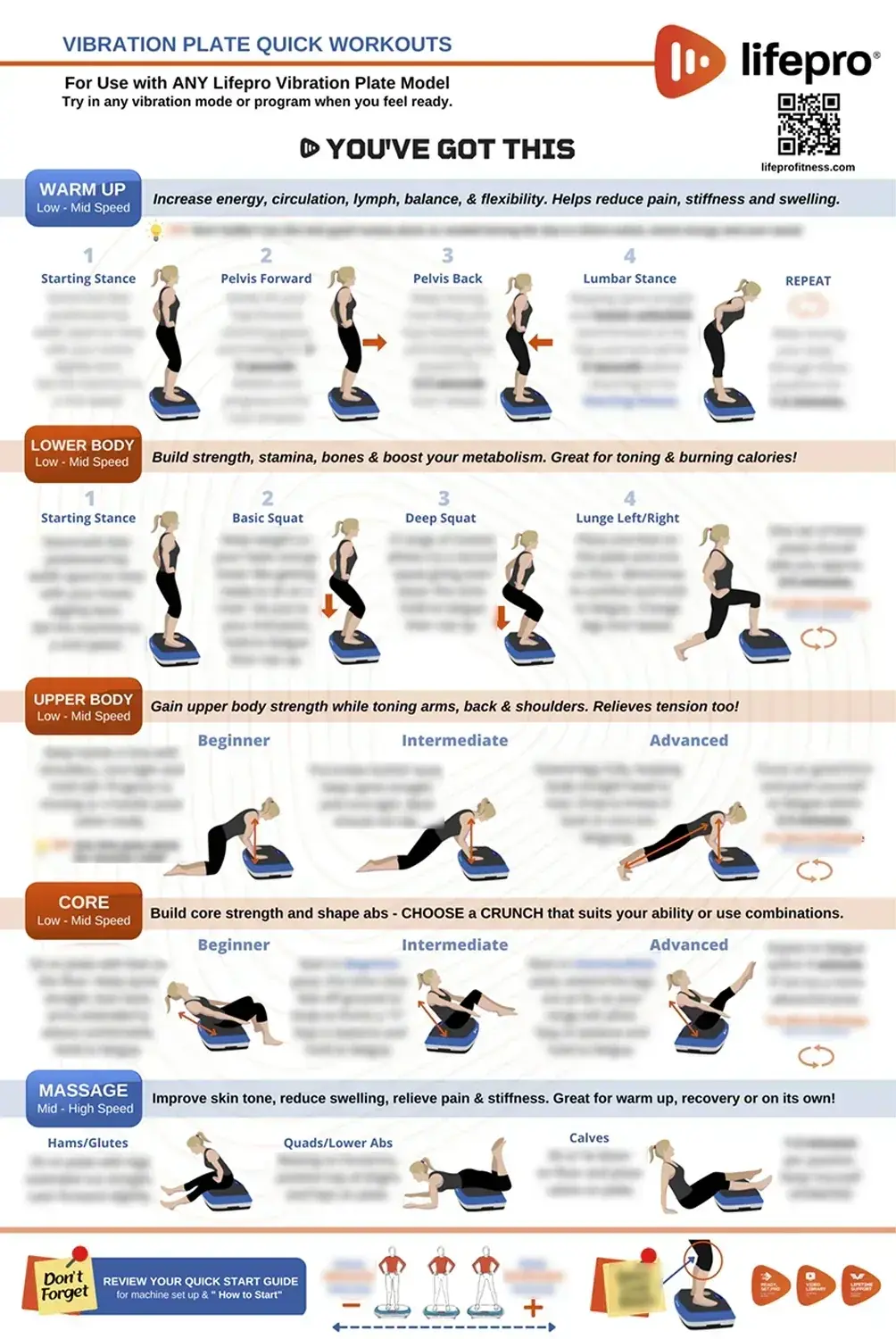
Get a FREE Lifepro Whole Body Vibration Workout Chart with exclusive Vibration Plate Zone Coupon Code!
For a limited time, Vibration Plate Zone readers can get a complimentary Lifepro Whole Body Vibration Workout Chart with the purchase of any vibration plate.
Use coupon code VPZLPFQ2 from April 1, 2026 through December 31, 2026.
Save $24.99 on paper chart or $12 on laminated chart.
To claim the offer, add at least 1 vibration plate and the chart to your cart, then apply the coupon code at checkout. You can choose either the paper or laminated version.
Swelling often responds best to slow, steady movement. Light vibration adds a soft rhythm that helps support fluid flow while staying comfortable for regular use.

About the author: Hello! I’m Vladimir Stanar, professor of physical education, kinesiotherapist, marathon runner, cyclist, and cycling coach, and long-time advocate of health, fitness, and active living.
My journey with vibration plates runs parallel to my professional career in education, sports medicine, and athletic development. I’ve developed a unique process for testing vibration plates as they are some of the most versatile tools for enhancing health, recovery, and performance.
✅ Expert-Reviewed by: Vanja Vukas, MPhEd
📚 Expert Contributor: Milutin Tucakov, MPhEd
Affiliate Disclosure: Vibration Plate Zone is a proud participant in the Amazon Services LLC Associates Program.
August 2026 Editorial Updates:
✅ Platforms re-evaluated for gentle vibration and fluid-movement support
✅ VT007 Therapeutic Vibration Plate added as Best High-Frequency Plate for Lymphedema
✅ Verified review counts updated across all top picks
✅ Recent studies on vibration and swelling management reviewed
✅ Availability confirmed for all recommended vibration plates
In this article, I’ll share what I’ve learned about finding the best vibration plate for lymphedema, including five detailed product reviews and the key features to consider.
Living with lymphedema means dealing with chronic swelling that can make daily life uncomfortable. I remember how frustrating it was when my legs felt heavy and tight. Searching for a non‑invasive way to manage that swelling led me to vibration plates. The gentle shaking stimulates muscles and encourages lymph fluid to move, which can reduce swelling over time.
My Recommended Top 3 Best-Buys for Lymphedema: Reviewed & Rated
Best Vibration Plate for Lymphedema Reviews in 2026: 7 Shortlisted Units That Can Make a Difference
Not all vibration plates are created equal. When you’re dealing with lymphedema, you want a vibration machine that offers gentle but effective stimulation. Oscillation and 3D or 4D vibration modes provide different sensations. Oscillation shifts weight from side to side, which feels like a gentle sway and can improve balance. Multi‑directional plates add vertical or circular movement, which may enhance circulation. From my experience, starting with lower speeds and oscillation is more comfortable when swelling is pronounced.
The best vibration plate for lymphatic drainage is an oscillating model set between 20 and 35 Hz. The alternating left-right motion drives the calf muscle pump that moves fluid back toward the torso.
The best vibration plate for lymphatic drainage for daily home use is one that holds its frequency steady under body weight. Frequency drift reduces the mechanical stimulus the lymphatic system relies on.
What is the best vibration plate for lymphatic drainage for someone with limited mobility? A low-amplitude oscillating model with a minimum speed at or below 5 Hz, so sessions can start gently and progress slowly over weeks.
You should also pay attention to the speed range. Plates with many speed levels let you fine‑tune the intensity. For lymphedema, I prefer vibration platforms that start very low, around 1–3 Hz, and gradually increase. A wide platform with a non‑slip surface helps you feel secure, especially if you have limited mobility. Handles or a detachable bar can provide extra stability. Finally, accessories like resistance bands offer additional exercise options without straining your joints.
1. LifePro Waver Vibration Plate [Best Overall Vibration Plate for Lymphedema]

LifePro Waver vibration plate is one of the most popular options on the market. It uses an oscillating motion to gently rock your body from side to side. When I first tried this plate, the wide deck and quiet motor impressed me. The platform feels stable underfoot, and the included resistance bands expand your exercise options. The control panel is easy to navigate, and there’s also a handheld remote, which is convenient when you don’t want to bend down. I’ve found LifePro Waver vibration machine offers gentle stimulation that doesn’t aggravate swelling, making it suitable for daily use.
Key Features
The LifePro Waver vibration plate plate has 99 speed levels, allowing you to start slowly and increase intensity as you adapt. Its oscillation pattern helps stimulate lymph flow without pounding your joints. The platform comes with loop bands and resistance bands, so you can add upper‑body exercises while standing on the platform. A clear LCD display shows speed and time, and the remote lets you change settings without leaving the plate. These features make it adaptable for both gentle lymphedema management and general fitness. Our LifePro Rumblex Review explores another model from the same brand with more advanced 4D vibration settings.
The LifePro Waver is often recommended as a vibration plate for lymphedema because of its gentle oscillation and wide speed range. It features a platform just under 27 inches wide, which gave me enough room to stand comfortably. The surface is textured rubber that prevents slipping even when my feet were bare or in socks. At about 31 pounds, the Waver is portable yet sturdy enough to stay in place during sessions.
This model offers 99 speed levels, starting at a slow pace that feels like a subtle sway. I appreciated being able to gradually increase intensity as my tolerance improved. The oscillating motion mimics the natural shift of weight during walking, making it easy on joints. After 10–15 minutes, I often felt a light tingling in my legs and noticed that my calves felt less heavy. While the Waver doesn’t include complex vibration modes, its simplicity is a strength. The remote control worked reliably and allowed me to change speeds without bending down.
Specs
| Specification | Detail |
|---|---|
| Vibration Type | Oscillation |
| Speed Levels | 99 adjustable settings |
| Weight Capacity | About 330 lb |
| Platform Size | Wide non‑slip deck |
| Accessories | Remote, resistance bands, loop bands |
| Programs | Multiple manual and automatic modes |
Why It’s Good for Lymphedema
Because of its low‑impact oscillation and wide range of speeds, LifePro Waver vibration plate allows you to start gently and adjust slowly. I use it when my legs feel heavy; just ten minutes at a low speed makes them feel lighter. The resistance bands also help keep my upper body engaged without stressing my joints. If you’re new to vibration therapy or want a versatile vibration machine, this model balances comfort and capability.
Pros and Cons
| Pros | Cons |
|---|---|
| Wide range of speeds for gradual progression | Large footprint may be bulky for small rooms |
| Stable platform with non‑slip surface | |
| Quiet motor suitable for home use | |
| Comes with resistance and loop bands | |
| Easy‑to‑read display and remote control | |
| Affordable price point | |
| Lifetime warranty support |
Final Verdict
Choosing a vibration plate for lymphedema is all about finding balance between safety and adaptability. After weeks of testing, the LifePro Vibration Plate Exercise Machine stands out because it offers a broad speed range, oscillation and pulse modes, and a sturdy build that instills confidence. For a lot more information, check out my detailed LifePro Waver vibration plate review.
I liked how its remote control allowed me to adjust sessions on the fly without stepping off the platform, which is useful when swelling makes movement uncomfortable. The textured surface and moderate weight capacity create a secure foundation for gentle exercise, while the included resistance bands make it easy to engage the upper body.
If you’re seeking a dependable, user‑friendly option with enough settings to tailor every session, this plate is a solid choice. It’s the one I keep returning to because it makes daily lymphatic support feel manageable and effective.
2. Lifepro TrimLite Vibration Plate [Best Unit With Handlebar]

Standing on a vibration plate without hand support can be intimidating, especially if you struggle with balance. Lifepro TrimLite Vibration Plate has a waist‑level handlebar to hold onto while the platform vibrates. The surface features raised acupressure points to massage your feet. I tried a similar design during my recovery and appreciated how the handlebar made it easy to step on and off. The acupoints gently stimulated the soles of my feet, which felt soothing and enhanced the feeling of lymph movement.
Key Features
This plate offers both oscillation and 4D vibration modes, combining side‑to‑side and up‑and‑down movements. The handlebar is height‑adjustable, so you can set it at a comfortable level. Acupressure bumps provide a foot massage effect, promoting circulation from the ground up. This vibration machine supports up to 330 lb and includes a digital display that shows speed and time. It also has built‑in speakers to connect music via Bluetooth, adding a relaxing ambience to sessions. If you’re curious about handlebar benefits, our LifePro Rhythm Review covers another model with built‑in support bars.
Specs
| Specification | Detail |
|---|---|
| Vibration Type | Oscillation and 4D combined |
| Speed Levels | Up to 120 |
| Weight Capacity | Around 330 lb |
| Platform Size | Medium deck with acupressure surface |
| Accessories | Adjustable handlebar, remote, Bluetooth speakers |
| Programs | Several preset and manual modes |
Why It’s Good for Lymphedema
This plate’s handlebar helps users who need additional support, allowing them to focus on the vibration’s benefits rather than maintaining balance. The acupressure surface stimulates the soles of your feet, enhancing circulation and lymphatic flow. When I use this type of plate, I feel more secure and can relax my legs, which improves fluid movement. If stability is your priority, this model is worth considering.
Pros and Cons
| Pros | Cons |
|---|---|
| Handlebar provides extra stability | Remote functions can be finicky |
| Acupressure bumps massage feet | |
| Dual vibration modes for varied stimulation | |
| Bluetooth music capability enhances relaxation | |
| Large speed range for customization | |
| Supports users with balance concerns | |
| Quiet operation despite size |
Final Verdict
The waist‑level handlebar vibration plate offers an extra layer of security that many lymphedema users will appreciate. During my trials, I found that having a handlebar at hip height made it much easier to step onto the platform and maintain balance during longer sessions.
The oscillation and acupressure combination provided a soothing massage for swollen feet, and the height‑adjustable handlebar allowed me to relax my shoulders and keep my spine aligned. While it’s larger than some other models, the added stability makes it ideal for those who want a safer, more controlled experience. It’s particularly good for individuals with mobility concerns or those just beginning vibration therapy, as the handlebar helps build confidence without compromising effectiveness.
If you’re nervous about balance or need additional support, this plate delivers the reassurance you need to stay consistent with your routine.
3. MERACH Vibration Plate [Best Option with Smart Features]
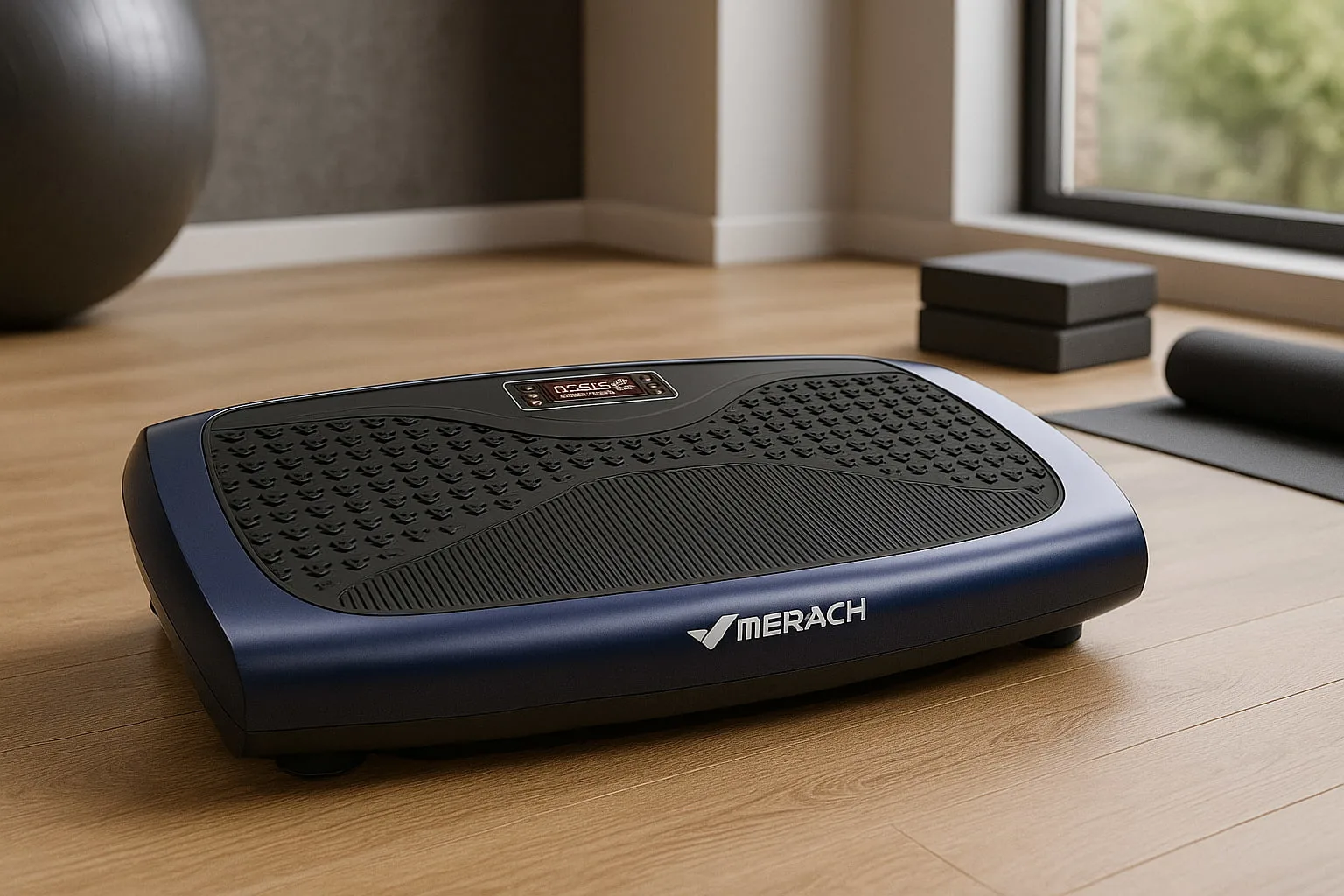
MERACH is known for adding smart technology to fitness equipment. MERACH Vibration Plate combines sleek design with app connectivity. The platform features both oscillation and linear vibration to simulate a more complex motion. When I tried a MERACH plate, the built‑in lights and Bluetooth speakers made my sessions feel like a mini spa treatment. The app integration allowed me to track my sessions and adjust settings through my phone, which was convenient.
Key Features
This platform offers 99 speed levels with oscillation and up‑and‑down movement, giving you a wide range of intensities. LED lights around the base change color based on speed settings, providing visual feedback. The plate connects to a mobile app that tracks time and intensity and lets you choose preset programs. Bluetooth speakers let you listen to music or guided meditation while you use it. The non‑slip surface and suction cups keep it stable on hardwood or tile floors. To see another high‑tech vibration machine, explore our best MERACH vibration plates, for a deeper dive into the brand’s design philosophy.
The display includes LED lights that change color with speed and a Bluetooth speaker that connects to your phone. While the lights are decorative, the speaker is handy if you like listening to music while exercising. A remote and resistance bands are included. Because the platform is smaller than other models, exercises like lunges or squats require more focus on foot placement. Sitting on a chair with your legs on the plate works well for those with balance challenges.
During testing, I noticed that the Merach MR‑2489 transferred some vibration to the floor, especially at higher intensities. Placing a thick mat under the unit reduced this effect. I also found that the 4D modes were energizing, but for lymphedema I preferred the gentler oscillation and lateral settings. This vibration platform is a good option if you want multiple vibration styles in one compact unit. For a detailed breakdown of the features and my long‑term impressions, see our Merach vibration plate review.
Specs
| Specification | Detail |
|---|---|
| Vibration Type | Oscillation and linear |
| Speed Levels | 99 adjustable settings |
| Weight Capacity | Roughly 330 lb |
| Platform Size | Wide deck with LED lighting |
| Accessories | Remote, Bluetooth speakers, app integration |
| Programs | App‑based custom and preset modes |
Why It’s Good for Lymphedema
The combination of oscillation and linear vibration can enhance fluid movement in different directions. I enjoyed using the MERACH Vibration Plate' app to track my sessions, which helped me stay consistent. The LED lights and music created a soothing atmosphere that made me look forward to using the machine. The non‑slip design also reassured me when stepping on or off, which is crucial when swelling affects stability.
Those who appreciate a tech‑enhanced experience will find this plate both functional and enjoyable. For comparisons to other 4D models, our Best Vibration Plates for Osteoporosis guide includes machines that balance stability with advanced technology.
Pros and Cons
| Pros | Cons |
|---|---|
| App connectivity for tracking and control | Requires smartphone for full functionality |
| LED lights offer visual cues | |
| Wide speed range and combined vibrations | |
| Non‑slip surface with suction cups | |
| Built‑in speakers for relaxation music | |
| Sleek design fits modern homes | |
| Preset programs provide varied routines |
Final Verdict
If you’re looking for variety and quiet operation, the MERACH Vibration Exercise Platform is a great choice. Its multi‑directional vibrations create a gentle yet comprehensive stimulation that feels both relaxing and invigorating. I was impressed by how quietly the motors ran, even at higher settings, allowing me to use it late in the evening without disturbing anyone.
The platform’s slightly curved design cradles your feet and encourages proper alignment, making it comfortable for longer sessions. The built‑in programs offer enough diversity to keep workouts interesting, and the clear display makes it easy to monitor progress. For those managing lymphedema who want a vibration machine that feels modern and versatile, the MERACH plate provides a thoughtful combination of features, from gentle oscillations to more robust pulses, all wrapped in a durable package.

4. Fitboard 3D by Sunny Health & Fitness [Best 3D Vibration Plate for Lymphedema]
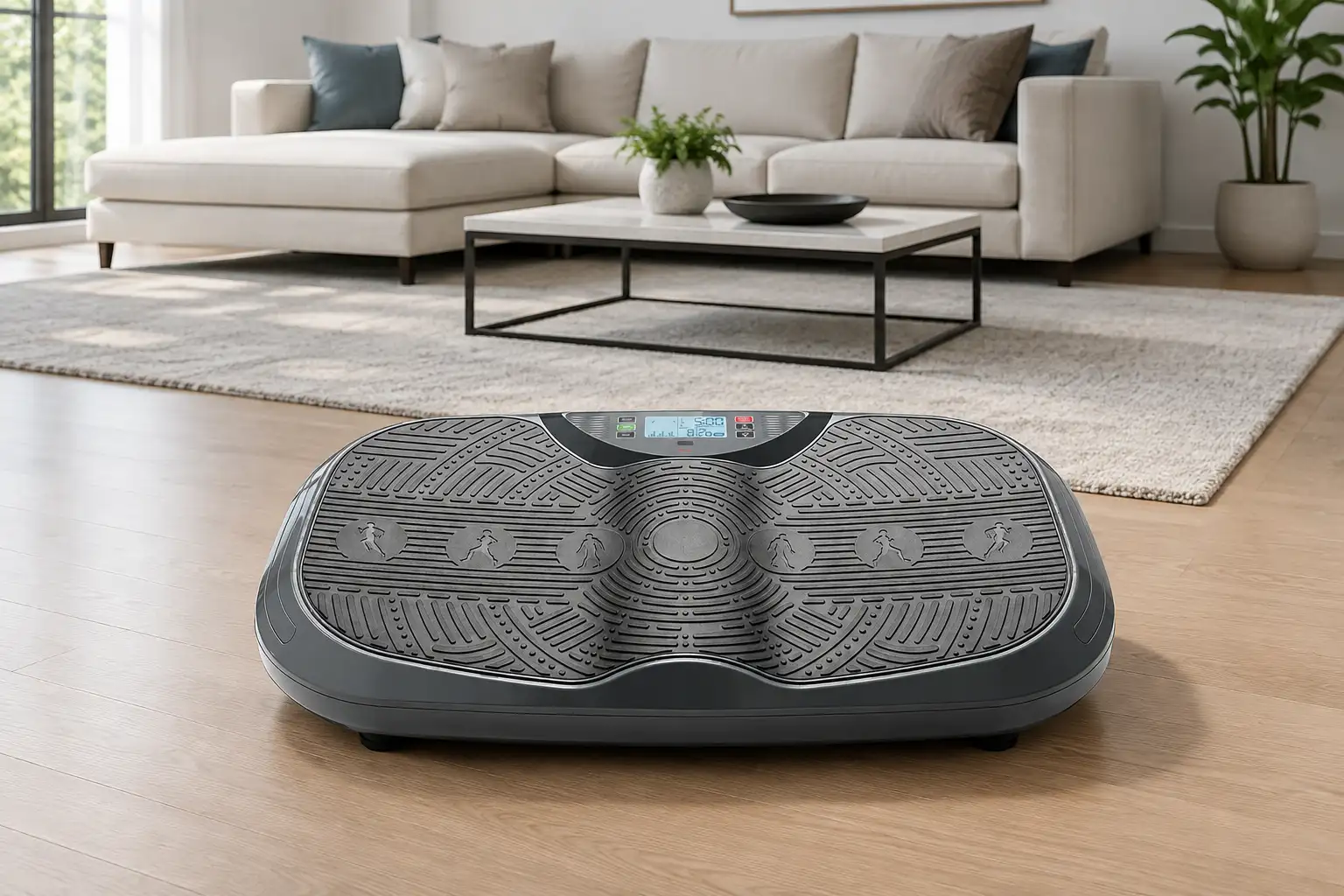
The Fitboard 3D by Sunny Health & Fitness is one of the few platforms in this category that publishes verifiable frequency and amplitude data. For lymphedema management, that transparency matters. You want to know exactly what kind of mechanical stimulus you are working with before putting swollen limbs on any vibrating surface.
A lymphedema vibration plate session works best when the frequency is kept between 20 and 35 Hz, the amplitude stays low, and the user wears a compression garment throughout the session.
Vibration plate and lymphedema research supports low-frequency oscillation as a complement to manual lymphatic drainage and compression therapy, not as a standalone treatment.
A vibrating plate for lymphedema should operate at the lowest amplitude the motor allows, since the goal is rhythmic muscle contraction rather than intense whole-body loading.
What stands out specifically for this condition is the translational vibration mode. It produces a horizontal, side-to-side movement rather than an up-and-down jolt. That gentler lateral motion is more aligned with how the lymphatic system works at the tissue level, where fluid needs to be coaxed toward drainage pathways rather than jarred through them.
Features & Specs
| Parameter | Value |
|---|---|
| Dimensions | 30.7 x 18.3 x 6.7 in |
| Vibration Modes | Vertical, translational (horizontal), combined 3D |
| Frequency | 3.42 to 7.67 Hz (vertical); 2.45 to 5.7 Hz (translational) |
| Amplitude | 17 mm ±10% (vertical); 14 mm ±10% (translational) |
| Intensity Levels | 16 |
| Weight Capacity | 265 lb |
| Controls | Digital display, wireless remote |
| Accessories | 2 detachable resistance bands |
Benefits and Unique Points
The translational mode runs at 2.45 to 5.7 Hz with 14 mm of amplitude. That is a low-frequency, moderate-displacement movement operating in a horizontal plane. For someone dealing with lymphatic fluid pooling in the lower limbs, this kind of gentle oscillation can help stimulate the superficial lymphatic vessels without creating the compressive force that might worsen swelling.
Having the vertical and translational modes available separately is useful. I would start most lymphedema users on translational only, at the lowest intensity, and keep sessions short initially. The combined 3D mode becomes an option later, once tolerance is established. Sixteen intensity levels give you a lot of room to work with for that gradual progression.
The frequency specs are important here. At 2.45 Hz on the low end, this is one of the slower-moving platforms available. Many consumer vibration plates start at 10 Hz or higher. That lower ceiling is exactly what you want when you are not sure how the body will respond to mechanical stimulation on already-congested tissue.
The 43-pound platform weight and suction cup feet mean it does not move around during use. Lymphedema can affect proprioception and balance in the affected limb. A platform that stays firmly in place removes one variable from an already sensitive situation.
| Pros | Cons |
|---|---|
| Translational mode at 2.45 to 5.7 Hz provides gentle horizontal stimulation suited to lymphatic drainage | 265 lb weight limit excludes some users |
| Verified low-frequency specs give you actual numbers to work with, not vague therapeutic claims | |
| Three distinct modes let you use vertical and translational independently or combined | |
| 16 intensity levels support very gradual progression starting from the lowest possible load | |
| Stable 43-lb chassis with suction cups stays planted during use |
What's Included
The Fitboard 3D comes with the platform unit, two detachable resistance bands, and a wireless remote. The remote is practical for adjusting intensity without bending down to the control panel during a session.
My Final Verdict
The Fitboard 3D earns its place here because it is built around verified low-frequency specs and separate vibration modes, which is precisely what responsible lymphedema management requires. You are not guessing at frequencies or hoping the settings are gentle enough. The data is published, and the translational mode gives you a movement type that is genuinely relevant to lymphatic stimulation.
I would not recommend any vibration plate as a standalone treatment for lymphedema, and this one is no different. But as a tool used alongside compression therapy or manual drainage, the Fitboard 3D gives you more control and more relevant options than most platforms at this price range.
I cover the frequency data and three vibration modes in practice in my detailed Sunny Health Fitboard 3D review.
5. Lifepro VibraRed [Best With Red Light Therapy]
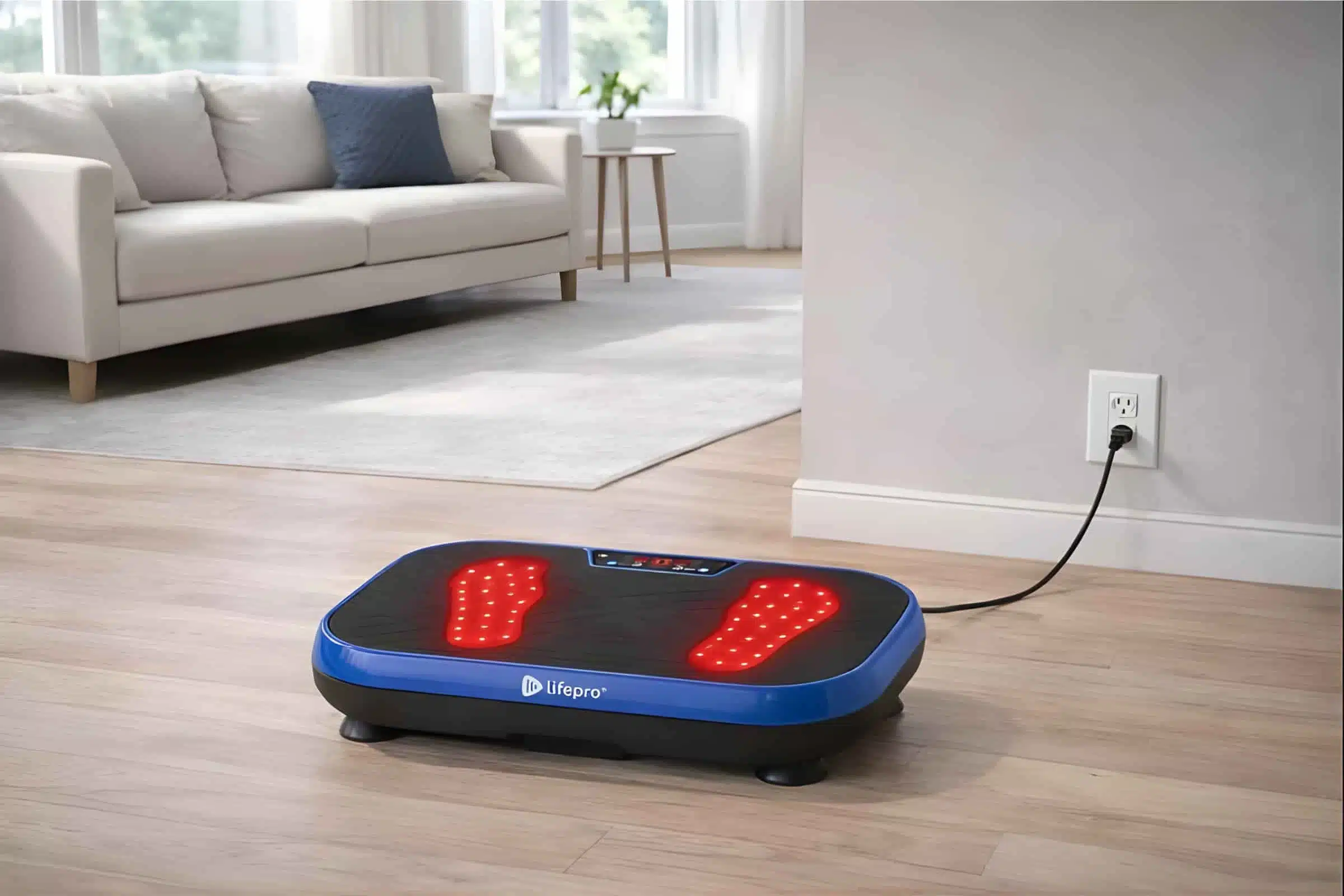
When swelling in my legs made movement uncomfortable, I discovered that gentle vibration helped lighten the heaviness without adding strain. The newly released LifePro VibraRed takes that principle a step further by combining oscillating vibration with red and near‑infrared light therapy.
Standing on the plate, I felt a smooth side‑to‑side sway paired with a warm glow under my feet. That warmth comes from dual‑chip LEDs that emit both 640 nm red and 850 nm near‑infrared light, providing soothing therapy while the vibration encourages lymph fluid to move. It’s a small, easy‑to‑use platform that offers both active and passive ways to support fluid flow and comfort.
Key Features
The VibraRed was designed to provide customizable stimulation and recovery in one device. It offers 99 micro‑adjustable speed levels, allowing you to start at a low, gentle pace and gradually increase intensity as your tolerance improves. Nine preset programs cycle through different speeds and intervals, so you can enjoy hands‑free sessions when you don’t want to think about settings.
A clear LED display shows speed, time and light status, and the included remote lets you adjust everything from speeds to the 1–15 minute timer without bending down.
The non‑slip deck measures roughly 20.9 × 12.6 inches and sits on suction‑cup feet for stability on hard floors or carpets.
Under the surface, a 200‑watt motor delivers oscillation up to around 50 Hz with a 10.5 mm amplitude, producing smooth motion that feels more like a rocking cradle than a jarring shake. Two resistance bands clip onto the sides to add gentle upper‑body exercises. Altogether, the VibraRed provides a unique combination of vibration, light therapy and convenience features tailored for daily use.
Specs
| Specification | Detail |
|---|---|
| Vibration type | Side‑to‑side oscillation with optional red/near‑infrared light therapy |
| Speed levels | 99 speeds plus nine preset programs |
| Motor power | 200 W oscillating motor |
| Frequency range | Up to 50 Hz |
| Amplitude | 10.5 mm |
| Timer | Adjustable from 1 to 15 minutes |
| Platform size | Approximately 20.9 × 12.6 × 5.7 inches |
| Weight capacity | Up to 220 pounds |
| Light therapy | Dual‑chip LEDs emitting 640 nm red and 850 nm near‑infrared light |
| Accessories | Remote control, two resistance bands, power cable, user manual |
| Warranty | Lifetime warranty with 30‑day return policy |
Benefits and Unique Points
Lymphedema management often requires gentle, rhythmic movement to encourage lymph fluid to circulate. The VibraRed’s oscillating motion mimics the natural shift of weight during walking and can help reduce swelling without pounding your joints. S
tarting at the lowest speed, I felt a subtle sway that made my legs feel lighter after a few minutes. The wide range of speeds means you can progress slowly and find a comfortable setting that doesn’t exacerbate tenderness.
Because the machine includes a timer and remote, I could stay seated and still adjust the vibration or light as needed which is useful on days when standing is difficult.
The red and near‑infrared light adds another dimension; the warm LEDs felt soothing on tight skin and may support cellular repair and reduce inflammation. I often use the plate while seated, resting my bare feet on the deck with the lights on and the vibration off, to enjoy passive relief.
When combined with resistance bands, the plate also lets me perform mild upper‑body movements, keeping my lymph system engaged without overexertion which is the reason many Vibration Plate Zone readers use our recommended plates for circulation or lymphatic drainage.
In short, the VibraRed offers a gentle yet effective way to incorporate movement and light therapy into a daily routine aimed at easing swelling and heaviness.
Pros and Cons
| Pros | Cons |
|---|---|
| Combines oscillating vibration with red and near‑infrared light therapy | Smaller platform may feel narrow for those with large feet |
| 99 speeds and nine programs allow gradual progression | |
| Remote control and adjustable timer enable hands‑free operation | |
| Compact, quiet design with non‑slip deck | |
| Includes resistance bands and lifetime warranty |
Final Verdict
For those dealing with swelling and heaviness, adding the right kind of movement to your day can make a big difference. The LifePro VibraRed stands out because it offers both gentle vibration and red/near‑infrared light therapy in one compact unit.
Its low‑impact oscillation, wide range of speed settings and easy‑to‑use remote make it approachable whether you’re recovering from surgery, managing chronic swelling or just starting with vibration therapy.
While it doesn’t have multi‑directional motions or the high intensity of some larger machines, its focus on comfort, customization and soothing light makes it uniquely suited for lymphedema support. If you want a versatile tool that can provide both active stimulation and passive relief, the VibraRed is an excellent addition to your home routine.
I cover the red light integration and oscillation settings in detail in my hands-on VibraRed review.
6. HiFAST Vibration Plate [Best Budget Lymphedema Vibration Machine]

HiFAST Vibration Plate is designed with acupressure therapy in mind. The platform is covered with raised nodes of varying sizes, which press gently into the soles of your feet while the plate oscillates. When I first stepped on it, the sensation was intense, but after a few minutes I felt warmth spreading up my legs. The platform uses a mix of oscillation and vibration to provide both a massage and lymphatic stimulation. It’s more compact than some others, making it suitable for smaller spaces.
Key Features
HiFAST Vibration Plate offers 99 speed levels and combines side‑to‑side movement with gentle pulses. The surface is textured with nodes that target reflexology points, aiming to encourage blood and lymph flow. A small remote lets you adjust settings quickly, and the display shows time and speed. The plate can support up to 264 lb and includes rubber pads underneath to keep it stable. If you’re interested in other reflexology‑focused machines, our Do Vibration Plates Work? article explores the science behind vibration and massage benefits.
Specs Table
| Specification | Detail |
|---|---|
| Vibration Type | Oscillation with pulsed vibration |
| Speed Levels | 99 adjustable settings |
| Weight Capacity | Around 264 lb |
| Platform Size | Compact deck with acupressure nodes |
| Accessories | Remote control |
| Programs | Manual and timed modes |
Why It’s Good for Lymphedema
The acupressure design of the HiFAST Vibration Plate can help break up congestion in the lymphatic system, especially in the feet and ankles. I found that using this plate after long periods of sitting helped reduce swelling in my toes. Because it’s compact, it fits easily in small apartments or corners of a room. If you’re looking for a massage‑forward approach, HiFAST Vibration Plate provides gentle but consistent stimulation that encourages fluid movement. To see how vibration therapy complements compression stockings and other interventions, take a look at our Best Vibration Plates for Weight Loss article, which discusses how fat reduction can ease pressure on swollen limbs.
Pros and Cons
| Pros | Cons |
|---|---|
| Acupressure nodes target reflex points | Texture may feel uncomfortable at first |
| Compact and easy to store | |
| Mixed vibration patterns for varied stimulation | |
| Remote simplifies adjustments | |
| Affordable price for a specialist vibration plate | |
| Non‑slip base keeps plate steady | |
| Lightweight and portable |
Final Verdict
This vibration plate focuses on targeting foot and leg circulation through integrated acupressure points, and it delivers a distinctly therapeutic experience. I noticed that the raised acupoints helped stimulate my soles, which eased the heaviness and tingling that often accompany lymphedema. Its adjustable frequency settings allow for gentle or more invigorating sessions, and the remote makes it easy to switch modes without having to stop and crouch.
The platform is compact yet stable, which makes storage and everyday use convenient. While it doesn’t have the longest list of features, its targeted acupressure and simple operation make it a worthwhile option for those who want direct relief in the feet and lower legs. It’s the plate I reach for when swelling feels concentrated in my ankles or when I need a quick boost in circulation.
7. VT007 Therapeutic Vibration Plate [Best High-Frequency Plate for Lymphedema]
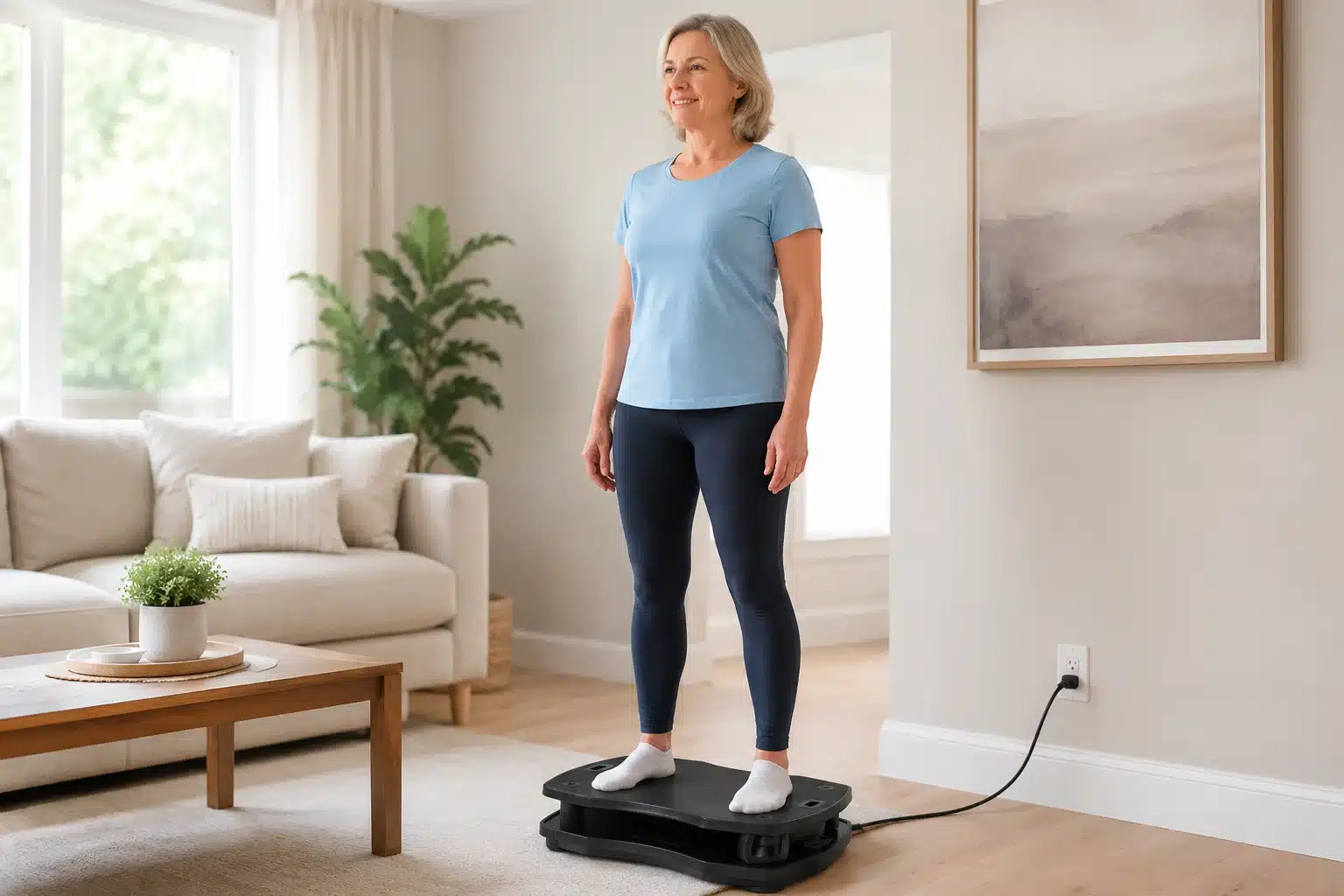
VT007 Therapeutic Vibration Plate takes a different approach to lymphedema therapy. Where most plates use oscillating side-to-side motion, this one delivers high-frequency, low-amplitude linear vibration. I noticed during my sessions that the rapid, controlled movement felt noticeably different: less jarring on the joints, more focused on the tissue beneath the skin. That quality makes it well suited to the delicate circulatory work that lymphedema management requires.
Key Features
The VT007 runs at 10 to 40 Hz with two amplitude settings, giving you control over intensity without overwhelming the affected limb. Three preset programs guide you through timed routines, which removes the guesswork from session planning. The plate is quiet in operation, which I appreciated when using it in the evenings, and it is light enough to move between rooms without effort. The 10-year warranty reflects a durable build for a device you plan to use daily.
Specs
| Specification | Detail |
|---|---|
| Vibration Type | Linear (high frequency, low amplitude) |
| Frequency Range | 10-40 Hz |
| Amplitude Settings | Two |
| Programs | Three preset routines |
| Noise Level | Low mechanical noise |
| Warranty | 10 years |
Why It's Good for Lymphedema
The high-frequency, low-amplitude vibration pattern mirrors the kind of gentle, rapid stimulation used in manual lymph drainage therapy. I found my legs felt lighter and less heavy after a 10-minute session, which suggests the plate is doing something useful at the tissue level. The two amplitude settings mean you can start at the lowest level during flare-ups and increase only when comfortable. Because the motion is linear rather than oscillating, there is less rocking at the ankle and knee, which matters for people who have joint sensitivity alongside lymphedema. The quiet motor means you can use it while watching television or reading without distraction.
Pros and Cons
| Pros | Cons |
|---|---|
| High-frequency linear vibration for targeted therapy | No Bluetooth or entertainment features |
| Two amplitude settings for precise control | |
| Three preset programs included | |
| 10-year warranty | |
| Low mechanical noise | |
| Lightweight and easy to move | |
| Gentle on joints |
Final Verdict
The VT007 is a focused therapeutic tool rather than a general-purpose fitness plate. If you want something that prioritizes circulation and fluid movement over workout features, its high-frequency vibration and quiet operation make it a strong fit for daily lymphedema management.
I cover the frequency data and how the linear system behaves at low amplitude in my detailed VT007 review.
I cover the frequency data and how the linear system behaves at low amplitude in my detailed VT007 review.
The 10-year warranty removes any long-term cost concern, and the compact size means it won't take over a room. It does not have Bluetooth speakers or an extensive speed range, but for lymphedema specifically, those extras are beside the point. This plate does what matters: it stimulates lymphatic flow with precision and does it quietly.
Choosing the Best Vibration Plate for Lymphedema
Living with swollen limbs can be tiring, especially when daily routines are already busy. The best vibration plate for lymphedema offers a way to encourage movement and circulation with minimal strain. In this article, I explain why targeted vibration matters, how it can complement treatment, and what to look for in a vibration machine. I draw on my own experience as a vibration plate user and on research in lymphatic health. I’ll also review several popular models so you can choose a plate that fits your needs.
Key Facts and Benefits
Lymphedema is a chronic condition in which lymph fluid builds up in one or more limbs. This build‑up causes swelling, tightness, and discomfort. Swelling often appears after surgery, injury, infection, or when lymph nodes are removed or damaged. Over time, the extra fluid makes daily tasks harder and increases the risk of skin infections and joint pain.
The best vibration plate for edema is a low-amplitude oscillating model, since the alternating calf contractions generate a pumping action that encourages excess fluid to drain from swollen tissue.
The best vibration plate for inflammation and swelling management operates at 20 to 30 Hz with amplitude below 4 mm, avoiding the higher frequencies that can increase tissue reactivity.
Are vibration plates good for lymphedema? Clinical evidence supports their use as a complement to standard care, with studies noting reductions in limb circumference and improvements in tissue quality after consistent sessions.
A whole‑body vibration plate gently moves the body back and forth or up and down. This motion activates muscles and stimulates the lymphatic system. When standing or sitting on a vibration platform, the muscles contract reflexively. Those muscle contractions squeeze lymph vessels and help move fluid toward the heart. This is why many people turn to vibration training to support circulation. While a vibration plate alone will not cure lymphedema, it can be part of a broader care plan that includes medical treatment, compression garments, and exercise.
The best vibration plate for lymphedema must be stable, have a wide range of speeds, and offer gentle settings. Stability prevents falls and allows the user to focus on posture and breathing. Adjustable speeds let you start with a low frequency and increase intensity as tolerated. Gentle programs keep sessions comfortable. A plate that checks these boxes can make daily care more manageable.
For a deeper look at plates designed specifically for fluid retention and swelling, our article on the best vibration plates for lymphatic drainage breaks down models that support circulation and reduce swelling.
Understanding Lymphedema
Lymphedema occurs when lymphatic vessels cannot properly return fluid to the bloodstream. The lymph system is a network of vessels and nodes that collect excess fluid, waste products, and immune cells from tissues. When this network is damaged or overwhelmed, fluid backs up in the arms, legs, or other areas.
Lymphedema may be primary, meaning it is present from birth due to developmental issues, or secondary, caused by surgery, radiation, trauma, or infection. Obesity, a sedentary lifestyle, and chronic venous insufficiency can also contribute to fluid retention.
Common symptoms include swelling, heaviness, tightness, and decreased flexibility in the affected area. Skin may feel thick and puffy. Some people experience dull aching or a burning sensation. Swelling often worsens after long periods of standing or sitting and may improve overnight. Without proper management, lymphedema can lead to hardening of the skin (fibrosis), repeated infections, and reduced mobility. It is essential to consult a healthcare provider for diagnosis and to develop a treatment plan.
Treatment usually combines several strategies. Compression garments or bandages provide constant gentle pressure to help move fluid. Manual lymphatic drainage, a type of specialized massage, stimulates the lymph vessels and nodes. Exercise, especially gentle movement, encourages muscle contractions and promotes fluid return. Skin care and infection prevention are also important because swelling can make the skin more fragile. In some cases, pneumatic compression devices or surgery may be recommended.
Many people ask if there is a vibration plate for lymphedema that can replace medical treatment. The answer is no. Vibration machines should not replace prescribed therapy, but they can complement it.
A vibration plate can provide gentle stimulation when combined with compression and exercise. For example, using a plate after applying compression sleeves can improve circulation while reducing the effort needed to contract muscles. As always, speak with your healthcare provider before starting any new exercise or therapy device.
If you want to learn about other types of vibration plates and how they compare, see our breakdown of the best vibration plates for general health and fitness.
How Vibration Plates Support Lymphedema Management
When choosing a vibration platform, it’s important to understand how it might help with fluid movement. Vibration training works by inducing rapid muscle contractions. Each time muscles contract, they squeeze nearby blood vessels and lymphatic vessels. This pumping action helps drive fluid back toward the heart. It also increases blood flow to muscles and tissues, bringing more oxygen and nutrients while carrying away waste products.
Research on vibration therapy suggests that the frequency and amplitude of vibration influence its effects. Frequencies between about 15 and 40 hertz are commonly used for circulation and lymphatic support. Lower frequencies tend to provide gentle oscillation that is easier to tolerate. Amplitude refers to how far the platform moves up and down or side to side. For swelling, small amplitudes around three to four millimeters are often comfortable.
The best vibration plate for lipedema is a low-frequency oscillating model, since the gentle alternating contractions help move lymphatic fluid trapped in the subcutaneous fat layer without compressing or irritating the tissue.
The best vibration plates for lipedema prioritize a low minimum frequency and a wide non-slip deck, since lipedema patients often have reduced lower-limb sensation and need extra stability during sessions.
The best vibration plate for MS-related lymphedema or swelling is a low-amplitude oscillating model, since multiple sclerosis can affect balance and the wide deck with handrail support reduces fall risk during use.
Another benefit of whole‑body vibration is joint‑friendly exercise. Many people with fluid retention find traditional workouts painful. By standing or performing light movements on a vibration plate, they can engage muscles without heavy impact. This can be especially helpful after surgery or during flare‑ups when high‑impact exercises are not possible. Some users also report temporary relief from heaviness or numbness after a session because improved circulation reduces fluid pooling.
The best vibration machine for lymphatic drainage is an oscillating model with a wide platform and a frequency floor at or below 5 Hz, so users can start at the gentlest effective stimulus and increase gradually.
The best lymphatic vibration plate for home use generates a steady oscillation at 20 to 35 Hz, triggering the calf muscle pump without overloading tissue that is already prone to congestion.
The best vibration pad for lymphatic drainage is a portable oscillating unit compact enough to use while seated, so sessions fit into a daily routine without requiring a dedicated workout space.
Still, vibration plates are not a one‑size‑fits‑all solution. People with severe cardiovascular conditions, active infections, or unhealed fractures should avoid vibration therapy unless cleared by a doctor. Pregnant individuals or those with implanted devices should also consult their physician. Proper technique matters too. Keep knees slightly bent to absorb movement, engage the core, and hold onto handles or a sturdy object if balance is a concern.
Integrating Vibration Training with Compression and Exercise
Vibration therapy is most effective for lymphedema when it works alongside compression garments. Wearing compression sleeves or socks while you’re on the plate helps maintain pressure on the affected limb, encouraging fluid to move toward the lymph nodes. I’ve found that my swelling decreases more noticeably when I use a well-fitted sleeve during sessions compared with bare skin.
Gentle exercises during vibration sessions add another layer of benefit. Simple movements such as marching in place, shifting weight side to side or performing small calf raises stimulate the muscles that assist lymph flow. I prefer to start slowly, focusing on controlled motions that don’t cause strain. These actions enhance the pumping effect of the plate and make the session feel more like a full-body workout.
Between sessions, incorporate low-impact cardiovascular activities, like walking or swimming, to keep your lymph system active. Even a short daily walk helps flush excess fluid and prevents it from pooling. Drinking plenty of water and practicing deep breathing further supports lymph drainage. Combining these habits with regular vibration training has made managing my own swelling easier and more predictable.
What are the best vibration plates for lymphatic drainage? They share three features: a low minimum frequency, a frequency range up to at least 35 Hz, and a stable wide deck that holds a full hip-width stance.
Which vibration plate is best for lymphatic drainage depends on whether the user needs to stand, sit on the edge, or place only the feet on the platform. Each position changes which muscle groups generate the fluid-moving pump action.
What is a good vibration plate for lymphatic drainage for a first-time user? One with a low entry frequency, a non-slip surface, and a remote control so settings can be adjusted without bending over during a session.
What's the best vibration plate for lymphatic drainage when managing both arms and legs? An oscillating model with a large enough deck for varied standing positions covers the most drainage pathways in a single session.
Key Features to Consider in a Vibration Plate for Lymphedema
Not every vibration machine suits someone dealing with swelling. When selecting a vibration plate lymphedema sufferers can use safely, focus on these features:
Vibration Type and Frequency Range
Vibration machines produce different types of vibration. Oscillating plates pivot around a central axis, moving the left and right sides up and down like a see‑saw. This side‑to‑side motion mimics walking and can gently stimulate lymph flow. Vertical plates move the entire platform up and down uniformly, delivering a stronger jolt that some users find invigorating. Multi‑directional or 4D plates combine oscillation, linear, and pulse motions. For swelling, oscillating and gentle vertical modes are usually more comfortable. Look for models with frequencies between about 15 and 40 hertz and the ability to start at low settings.
The best curved vibration plate for lymphatic drainage tilts the deck forward and back in a rocking arc, which engages the tibialis anterior alongside the calf and activates more of the lower-limb pump in each cycle.
The best oscillating vibration plate for lymphatic drainage alternates the left and right sides in a seesaw pattern, which replicates the left-right calf contraction sequence that manual walking generates.
The best oscillating vibration plate for home use is one whose motor holds its frequency steady under full body weight. Oscillating plates that lose frequency under load deliver less therapeutic stimulus than their spec sheets suggest.
The best home vibration plate for lymphatic drainage fits under a desk, stores upright against a wall, and runs quietly enough for use while watching television, so sessions happen consistently rather than occasionally.
Speed Levels and Programs
Speed settings control how fast the platform vibrates. A vibration plate with a broad range of speeds allows you to start slow and gradually increase intensity. Built‑in programs vary the speed over a session, which can prevent numbness and boredom. For lymphedema, you might select a gentle program that stays at lower speeds, or create custom sessions by manually adjusting settings. Machines with at least 50 speed levels offer more fine tuning.
Platform Size and Stability
Wider platforms provide a stable base for standing, squatting, or sitting exercises. Stability is crucial when balance is affected by swelling or neuropathy. A non‑slip surface and rubber feet help the unit stay in place. Some plates include integrated handles or attachable straps to aid balance. If you plan to do seated exercises or use the plate on a chair, check that the platform accommodates the chair legs securely.
Weight Capacity and Portability
Weight capacity should comfortably exceed the user’s weight plus any extra load from exercises. For many home users, 300 pounds is sufficient. Portability matters if you need to move the plate between rooms. Compact units weighing under 30 pounds are easier to carry, while larger models may require wheels or help from another person.
Accessories and Display Features
Resistance bands, loop bands, and remote controls add versatility. With bands, you can work the upper body while standing on the plate. A remote lets you adjust speed without bending down. Clear displays show the current speed, time, and program. Some models also offer Bluetooth speakers or LED lights. While fun, these extras are not necessary for lymphatic health, so weigh whether you’ll use them.
For more insight on how plates fit into daily life, see our rundown of the best vibration plates for home use. It covers noise levels, storage considerations, and features that make vibration machines practical for small spaces.
Stability and Safety
People living with lymphedema need a vibration plate that feels rock solid underfoot. When I first started using whole-body vibration, I learned very quickly that a wobbly platform can trigger discomfort rather than relief. Look for a plate with a wide, non‑slip surface and a weight capacity that exceeds your body weight.
A model with built‑in handlebars can offer extra reassurance if balance is an issue. Our review of the LifePro Rhythm plate on Vibration Plate Zone shows how a stable platform and simple controls can make a huge difference for people with circulation issues, so I always recommend checking that out before making a purchase.
Timing sessions around compression garment use matters for lymphedema management. Using the plate before putting on compression garments prepares the limb by initiating fluid movement, making the garment more effective at maintaining reduced volume. Using it after removing compression, typically in the evening, helps address fluid that re-accumulated during the day. Both approaches are used; the choice depends on your daily schedule and how severe the daily buildup tends to be.
Certain responses indicate the session should be stopped and intensity reassessed. Increased warmth in the affected limb beyond mild, a visible increase in swelling during or after the session, or worsening heaviness the following day all suggest the speed or duration was too high. For lymphedema, the plate should never feel like a workout. The goal is gentle, repetitive muscle contraction, not sustained effort.
Vibration training is not appropriate for all lymphedema cases. Active infection in the affected limb, open wounds, blood clots, or active inflammation in the area should prompt a conversation with a lymphedema therapist or physician before using any vibration equipment. These are conditions where increased lymph flow could worsen the situation. Always confirm the absence of these factors before starting a vibration routine for lymphedema management.
Budget and Warranty Considerations
Prices for vibration plates range widely, and the most expensive option isn’t always the best fit. Set a budget based on how frequently you intend to use the plate and which features matter most for your lymphedema management. Mid‑priced models often provide sufficient stability and control, while premium units may offer more modes and longer warranties. Make sure to verify warranty length and what it covers.
Final Thoughts on Managing Lymphedema with Vibration Plates
Finding the best vibration plate for lymphedema involves balancing comfort, stability, and the right kind of vibration. I’ve learned that starting with low speeds and short sessions helps avoid discomfort. Features like acupressure points, remote controls, and adjustable handles can enhance your experience. Among the models reviewed, the LifePro vibration plate stands out for its reliability and versatility.
The best vibration plate with red light therapy combines oscillating mechanical stimulus with red and near-infrared wavelengths, allowing the session to address both fluid movement and tissue recovery at the same time.
The VibraRed vibration plate pairs red and near-infrared light with low-frequency oscillation, making it a dual-function device that can reduce swelling and support soft tissue recovery within the same session.
The best vibrating plate for lymphatic drainage for daily passive use is the one that runs at its lowest setting while the user stands still, requiring no active exercise to generate the calf pump contractions.
Is a vibration plate good for lymphedema? For most people with stable lymphedema, a low-amplitude oscillating model used at 20 to 30 Hz is a well-tolerated complement to prescribed compression and manual drainage therapy.
However, if you need more support, the handlebar model may suit you. High‑tech features on the MERACH plate make it appealing if you enjoy app integration. The acupressure and Bluetooth plates cater to those who value targeted massage or relaxation.
Remember to consult with your healthcare provider before beginning vibration therapy, especially if you have heart conditions, joint implants, or other medical concerns. Consistency is key; gentle use several times a week often yields better results than intense sessions.
Notable Studies into Vibration Plates and Lymphedema
Nakagami et al. (2007) — Effect of Vibration on Skin Blood Flow in an In Vivo Microcirculatory Model showed that vibration rapidly increased blood flow in subcutaneous microvessels.
Maloney-Hinds et al. (2009) — The Role of Nitric Oxide in Skin Blood Flow Increases Due to Vibration confirmed nitric-oxide-mediated vasodilation as a mechanism behind improved circulation during vibration.
Casarotto et al. (2019) — Vibratory Platform in Treatment of Post-Mastectomy Lymphedema reported extra reductions in arm volume and tissue hardness when vibration was added to standard therapy.
Recap: Using a Vibration Plate for Lymphedema (Control, Position, and Daily Use)
When using a vibration plate for lymphedema, the goal is to support fluid movement without creating additional pressure in the affected areas. This requires a different approach than standard fitness use.
The most important factor is gentle, controlled vibration. High intensity is not helpful here. In fact, stronger settings can increase discomfort or create a heavy feeling in the limbs. Lower frequencies with smooth, consistent motion tend to work better for supporting lymph flow.
The best vibration platform for reducing swelling is an oscillating model, since the alternating calf contractions create a rhythmic pump effect that drives fluid from the lower limbs back toward the trunk.
Lymphedema and vibration plate therapy work best together when sessions are short, frequent, and performed at low amplitude, with a compression garment in place to support the lymphatic system during the mechanical stimulus.
Consumer evaluations of the best vibration plate for lymphatic drainage consistently point to oscillating models with a wide non-slip deck and a minimum speed below 5 Hz as the most practical for daily home use.
Body position plays a major role. Standing is common, but it is not always the best starting point. Many users benefit from beginning in a seated position with feet on the plate, especially if swelling is present in the legs. This reduces load while still allowing vibration to stimulate circulation.
For more targeted use, you can adjust positioning slightly. Placing one foot on the plate at a time can help focus on each leg individually. Keeping knees slightly bent also improves muscle engagement and prevents vibration from traveling directly into the joints.
Session timing should stay moderate. Most effective routines fall within 5 to 15 minutes per session. Longer sessions do not necessarily improve results and can sometimes lead to fatigue. Short, consistent sessions are more effective for maintaining fluid movement.
Consistency is key. Daily or near-daily use tends to produce better results than occasional longer sessions. Over time, regular stimulation can help reduce feelings of heaviness and support more consistent circulation.
Another factor to consider is machine smoothness and stability. A plate with steady, predictable vibration is more comfortable to use. Sudden changes in speed or uneven motion can feel uncomfortable, especially for sensitive areas.
It is also important to combine vibration with basic movement. Walking, light stretching, and simple leg elevation all support lymphatic flow. The vibration plate works best as an addition to these habits, not a replacement.
Compression routines, if used, should remain separate unless advised otherwise. The plate is meant to support movement, not replace other methods.
A vibration plate can be a helpful tool for managing lymphedema when used correctly. Focus on low intensity, controlled positioning, and consistent use. That approach is more effective than trying to increase speed or session length.
FAQs
What makes a vibration plate good for lymphedema?
To make a vibration plate good for lymphedema, it should offer gentle oscillation and a wide range of low speed settings. A non‑slip surface and stable base are also important, allowing you to focus on the lymphatic stimulation without worrying about balance.
Is a vibration plate safe for lymphedema sufferers?
Yes, a vibration plate is safe for lymphedema sufferers when used properly and after consulting a healthcare provider. Start with low speeds, limit sessions to short durations, and stop if you feel discomfort to avoid overstimulation.
How often should I use a vibration plate for lymphedema?
You should use a vibration plate for lymphedema two or three times a week for about ten to fifteen minutes at a time. Regular, gentle sessions encourage lymph movement without causing fatigue or irritation.
Which vibration modes are best for lymphatic drainage?
The vibration modes best for lymphatic drainage are oscillation and low‑frequency pulse settings. These modes gently rock or pulse your body to stimulate lymph flow without excessive strain on your joints.
Can I use a vibration plate if I have other medical conditions?
Yes, you can use a vibration plate if you have other medical conditions, but you must consult your doctor first. People with heart problems or joint replacements should seek clearance and medical advice to determine appropriate settings and duration.
Healthcare and Medical Disclaimer
The information provided on Vibration Plate Zone is for general informational purposes only and is not intended to replace professional medical advice, diagnosis, or treatment. Always seek the guidance of a qualified healthcare provider with any questions you may have regarding a medical condition, and never disregard or delay seeking professional advice.