Affiliate Disclosure: Vibration Plate Zone is a proud participant in the Amazon Services LLC Associates Program.
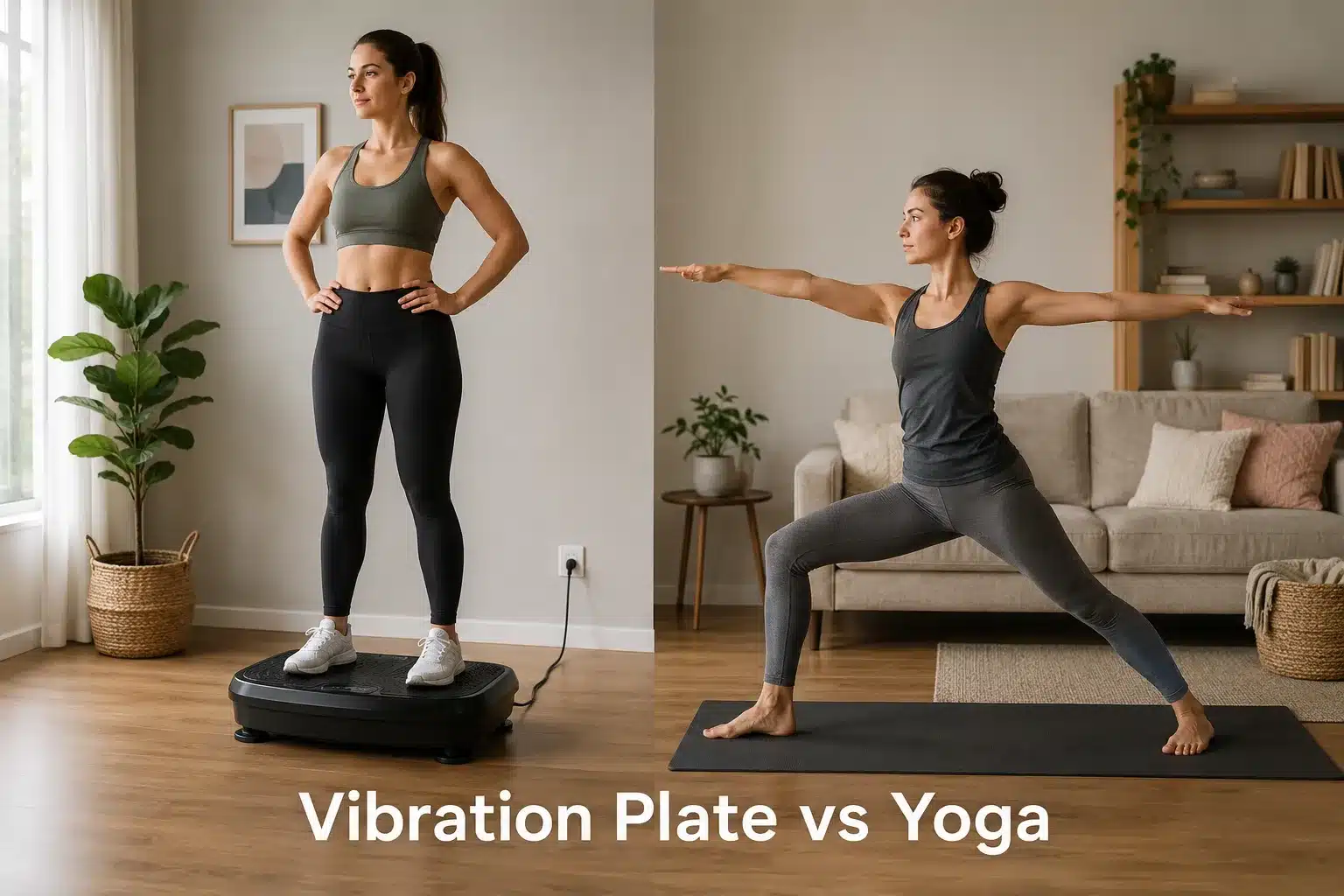
A vibration plate vs yoga: both can support balance, flexibility, strength, and regular movement, but they work in very different ways. Yoga is the more complete standalone activity because it combines movement, stretching, balance, breathing, and relaxation. A vibration plate is better suited to short sessions built around rapid muscle activation and mechanical stimulation. It can make simple exercises feel more demanding and may suit people who struggle to stay consistent with longer workouts.

About the author: Hello! I’m Vladimir Stanar, professor of physical education, kinesiotherapist, marathon runner, cyclist, and cycling coach, and long-time advocate of health, fitness, and active living.
My journey with vibration plates runs parallel to my professional career in education, sports medicine, and athletic development. I’ve developed a unique process for testing vibration plates as they are some of the most versatile tools for enhancing health, recovery, and performance.
✅ Expert-Reviewed by: Vanja Vukas, MPhEd
📚 Expert Contributor: Milutin Tucakov, MPhEd
The best choice depends on your main goal. Yoga has the edge for flexibility, mobility, breathing, and stress management, while a vibration plate may be more useful for brief lower body activation, warmups, and exercise variety.
How a Vibration Plate Works
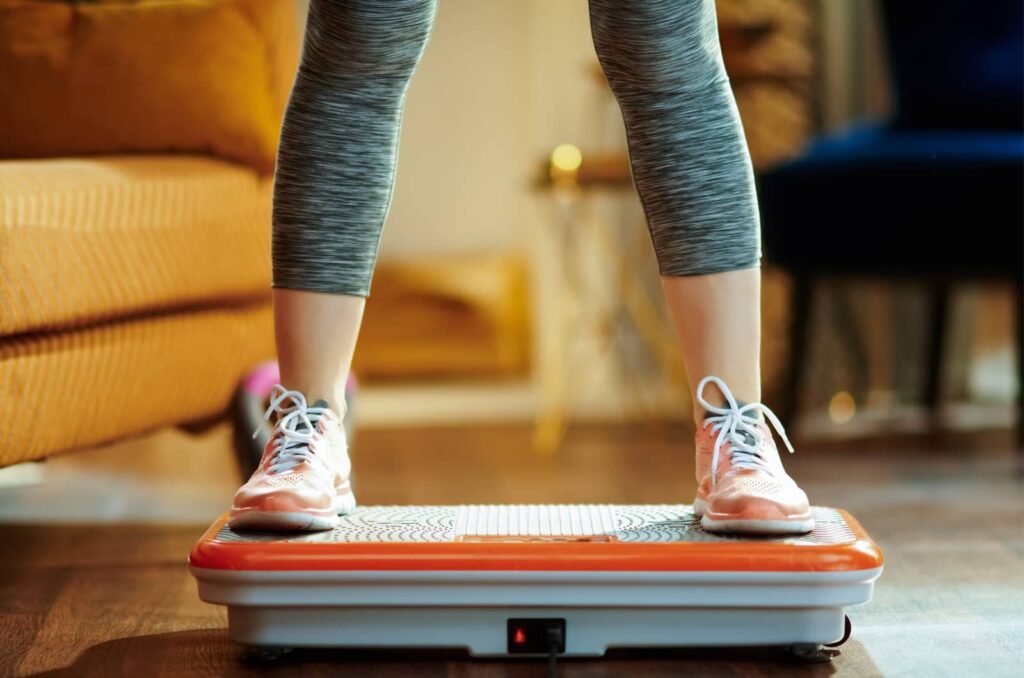
A vibration plate creates rapid mechanical movement beneath your feet or hands. Your muscles respond with repeated contractions as the body tries to maintain posture and stability.
The physical demand depends on the vibration type, frequency, amplitude, stance, and exercise. Standing still requires some muscular activity, but shallow squats, calf raises, and supported holds place more demand on the legs and trunk.
A wider stance can increase the movement felt on many oscillating platforms. Keeping the knees slightly bent also helps the legs absorb the vibration instead of allowing too much movement to travel upward.
Most vibration sessions last between five and fifteen minutes. This makes the plate practical for short workouts, warmups, or lighter movement days.
How Yoga Works
Yoga usually combines physical poses, controlled movement, breathing, concentration, and relaxation. Some styles are slow and gentle, while others involve longer holds, flowing transitions, and demanding bodyweight positions.
Restorative yoga may focus on relaxation and supported stretching. Hatha yoga often uses slower poses and breathing, while Vinyasa and power yoga usually involve more continuous movement and physical effort.
Yoga can train several qualities in one session. A typical practice may include hip mobility, hamstring stretching, trunk stability, upper body support, single leg balance, and breathing control.
The results depend on the style, instructor, session length, and how consistently the person practices. A gentle ten minute routine and a demanding sixty minute class should not be treated as the same activity.
Vibration Plate vs Yoga: Quick Comparison
| Category | Vibration Plate | Yoga |
|---|---|---|
| Main Stimulus | Rapid muscle contractions | Poses, movement, stretching, and breathing |
| Strength | Strongest through the legs and stabilizing muscles | Full body, depending on the poses and style |
| Flexibility | May support stretching but is not a complete flexibility practice | One of its main benefits |
| Balance | Challenges stability on a moving surface | Builds controlled balance through poses and weight shifts |
| Stress Relief | May feel relaxing but has no built in breathing practice | Strong breathing and relaxation component |
| Session Length | Usually 5 to 15 minutes | Often 20 to 60 minutes |
| Equipment | Requires a powered machine | Usually requires only a mat |
| Storage | Needs a dedicated space | Minimal storage |
| Learning Curve | Requires safe settings and posture | Requires correct pose technique |
| Typical Cost | Higher initial purchase | Low cost at home, classes may add expense |
Which Is Better for Strength?
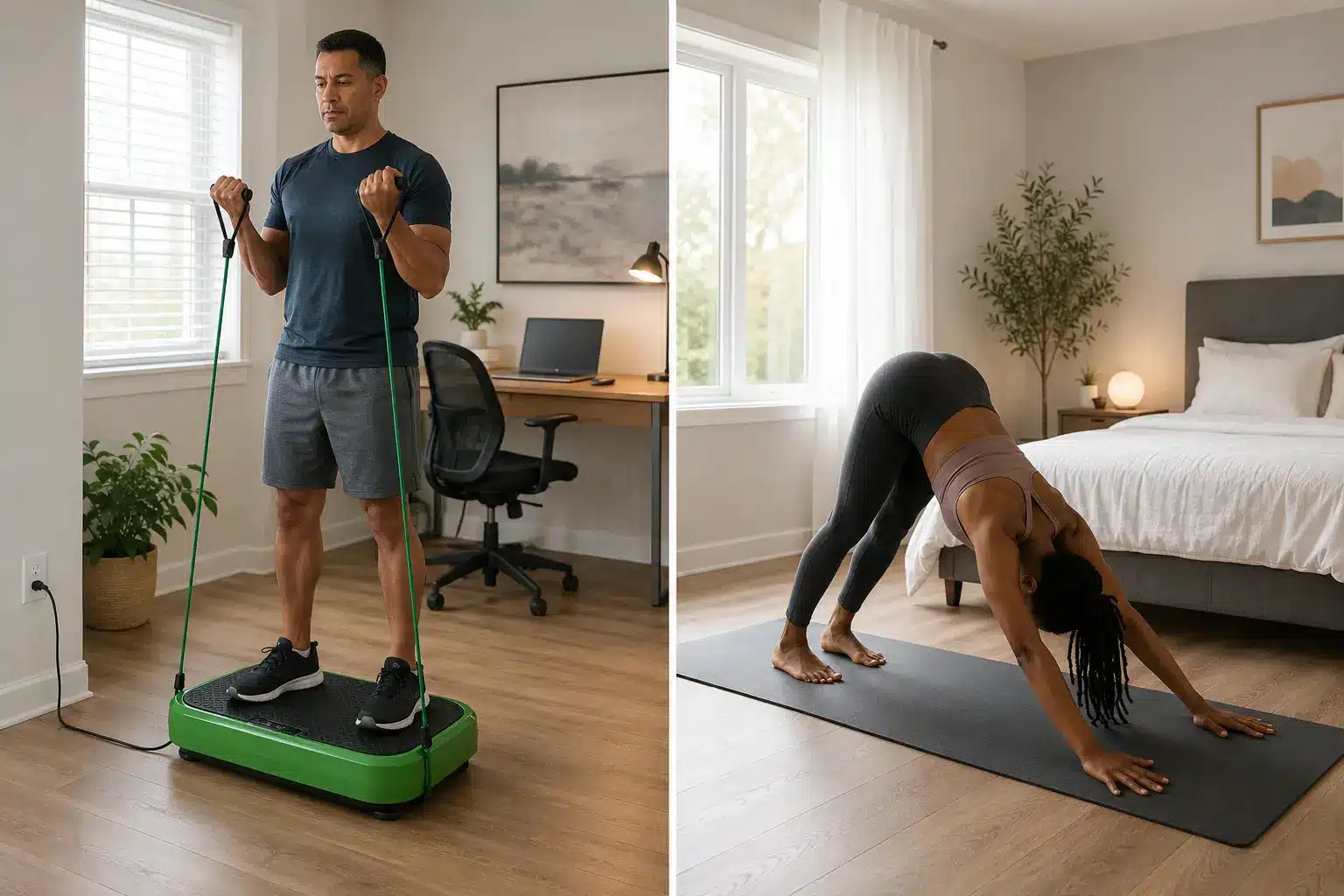
A vibration plate can make basic lower body exercises feel more demanding. A shallow squat or calf raise performed on a moving platform requires repeated muscle adjustments throughout the exercise.
This can be useful for activating the calves, thighs, glutes, and postural muscles during short sessions. The strongest effect is usually felt in the muscles closest to the platform.
Yoga develops strength through bodyweight support, longer holds, transitions, and controlled positions. Planks, chair pose, lunges, downward dog, and arm-supported poses can challenge the upper body, lower body, and trunk.
Yoga is likely to train a wider range of muscle groups across a full session. A vibration plate may create stronger immediate activation in the legs during a short routine.
Neither option fully replaces progressive resistance training when building muscle and maximum strength is the goal. Weights, resistance machines, and gradually harder exercises provide a clearer path for increasing load over time.
If you want an evidence-based answer to whether vibration training produces measurable results, I address that directly in my guide on do vibration plates work.
Which Is Better for Flexibility and Mobility?
Yoga is the stronger choice for flexibility and mobility. It moves the joints through several positions and often holds controlled stretches long enough to work on range of motion.
A complete yoga session may target the hips, calves, hamstrings, shoulders, chest, and spine. The practice can also teach better control within those ranges.
Whole body vibration may produce short term or gradual improvements in some flexibility measures. The movement can change muscle tone and may make certain stretches feel easier.
The plate does not create a complete stretching routine on its own. You still need to place the body in appropriate positions and control the range of motion.
I would choose yoga if stiffness and limited mobility were my main concerns. I would use the vibration plate as a possible warmup before stretching, provided it did not cause fatigue or dizziness.
Which Is Better for Balance?
This is a closer comparison because both activities challenge balance in useful but different ways. A vibration plate creates rapid instability that forces the legs and postural muscles to make repeated corrections.
Yoga develops balance more slowly and deliberately. Single leg positions, controlled weight shifts, visual focus, and transitions help improve body awareness and coordination.
The plate may provide a strong balance stimulus during a short standing session. Yoga gives you more time to practice moving into, holding, and leaving a position with control.
People with poor balance should use stable support with either method. A fixed rail or solid chair can help during vibration training, while chair yoga can reduce the risk of falling during a yoga session.
For older adults managing balance and safety concerns, my guide on vibration plate for elderly covers appropriate exercises, settings, and precautions for this group.
Which Is Better for Stress and Mental Wellbeing?
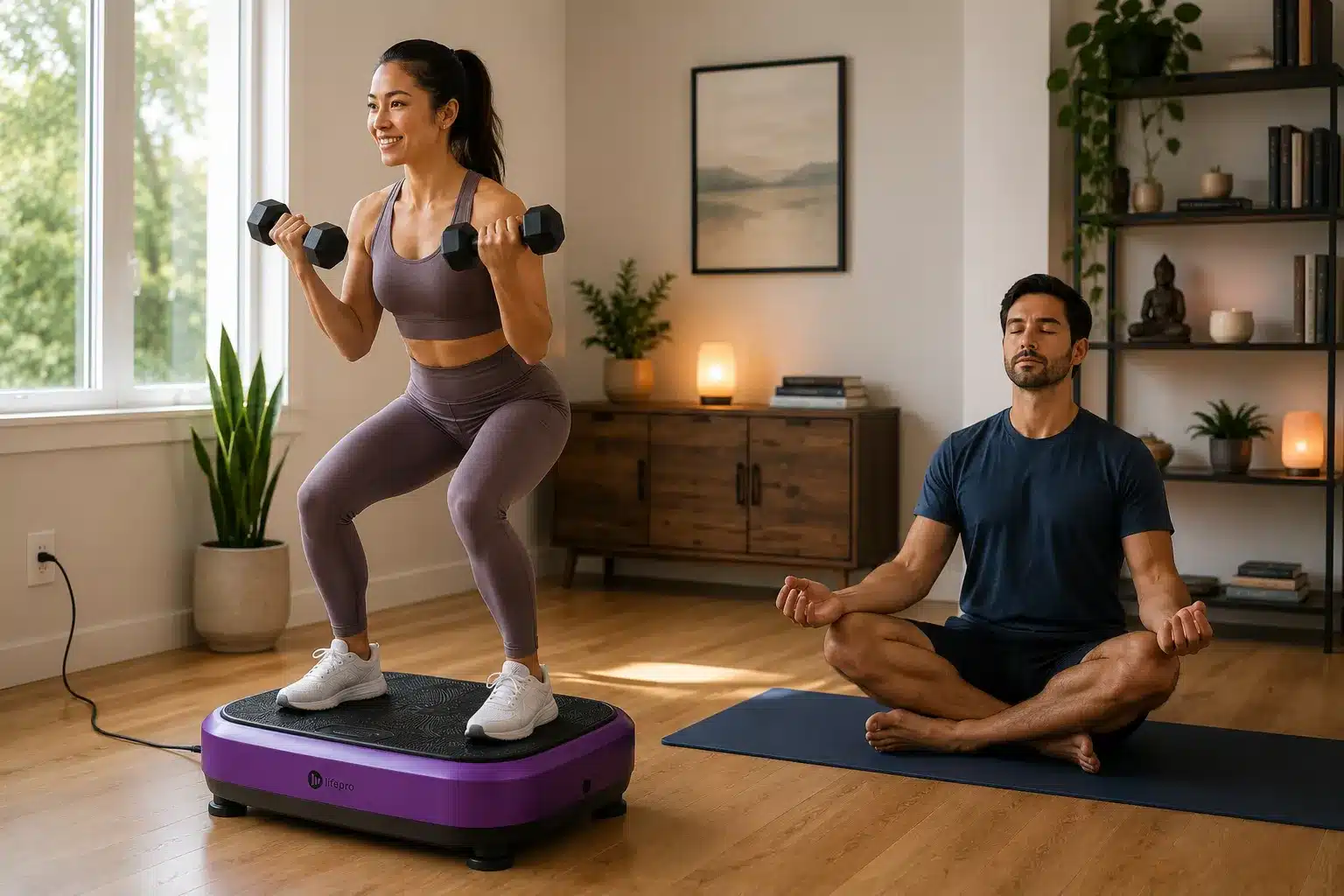
Yoga is the clear winner for stress management and mental relaxation. Breathing, attention, slower movement, and deliberate relaxation are built into many yoga practices.
The mental side of yoga can help people shift attention away from daily stress. A guided class may also encourage slower breathing and better awareness of tension in the body.
A vibration plate can feel relaxing, especially during a gentle session after sitting or exercise. Some users enjoy the sensation and feel less stiff afterward.
That does not make it a direct replacement for breathing practice, meditation, or guided relaxation. The plate mainly provides a physical stimulus unless the user intentionally adds a calming routine.
Which Is Better for Weight Loss?
Neither yoga nor a vibration plate is a powerful weight loss method on its own. Fat loss depends mainly on long term calorie balance, total daily movement, nutrition, and consistent activity.
An active yoga session may use more energy than standing passively on a vibration plate. Faster flowing styles usually involve more continuous movement than restorative or seated yoga.
A vibration plate workout becomes more demanding when you add squats, calf raises, lunges, and resistance exercises. Passive standing uses some muscular energy, but it is unlikely to create substantial weight loss.
I would choose the option I could perform consistently and then combine it with walking, cycling, swimming, or another form of aerobic activity. The type of session matters more than the name of the method.
Readers specifically focused on abdominal fat rather than total weight loss can find a detailed overview in my vibration plate belly fat guide, which examines what the evidence shows about visceral fat reduction and waist size.
If a vibration plate is part of your approach, my guide to the best vibration plate for weight loss covers the machines and exercise combinations most useful for that goal.
Which Is Easier on the Joints?
Both methods can be low impact when used correctly. Neither requires the repeated landings found in running or jumping workouts.
For people managing bone density concerns, my picks for the best vibration plate for osteoporosis cover machines with the frequency ranges that research supports for bone health.
A vibration plate still creates repeated mechanical forces. Strong settings, locked knees, poor posture, and long sessions can irritate sensitive joints or the lower back.
Yoga can be adapted with chairs, blocks, straps, cushions, and smaller ranges of motion. Gentle poses may suit people who cannot tolerate more demanding exercise.
Deep stretches and difficult transitions can still cause discomfort when mobility or technique is limited. Sharp pain should never be treated as a normal part of either practice.
People managing joint conditions specifically may find my guide to the best vibration plate for arthritis useful, as it covers machines and settings suited to that use case.
The better option depends on which positions and movements your body tolerates. Someone who dislikes floor work may prefer standing on a plate, while another person may feel safer with supported chair yoga.
Vibration Plate vs Yoga for Older Adults
A vibration plate may suit an older adult who prefers short standing sessions and has a stable support nearby. It can provide lower body muscle activity without requiring a long routine or repeated floor transfers.
Yoga may offer broader benefits for flexibility, balance, mobility, and mental wellbeing. Chair yoga and beginner classes can make the practice more accessible for people who are uncomfortable getting down onto a mat.
The moving platform creates an extra balance challenge, so a vibration plate is not automatically the safer choice. Older users should begin at a low setting and avoid unsupported positions.
My picks for the best vibration plate for seniors cover models with the safety features and resistance ranges that suit older adults well.
Yoga poses also need to be adapted to current ability. An instructor who understands older adults can make the session safer and more useful.
Vibration Plate vs Yoga for Beginners
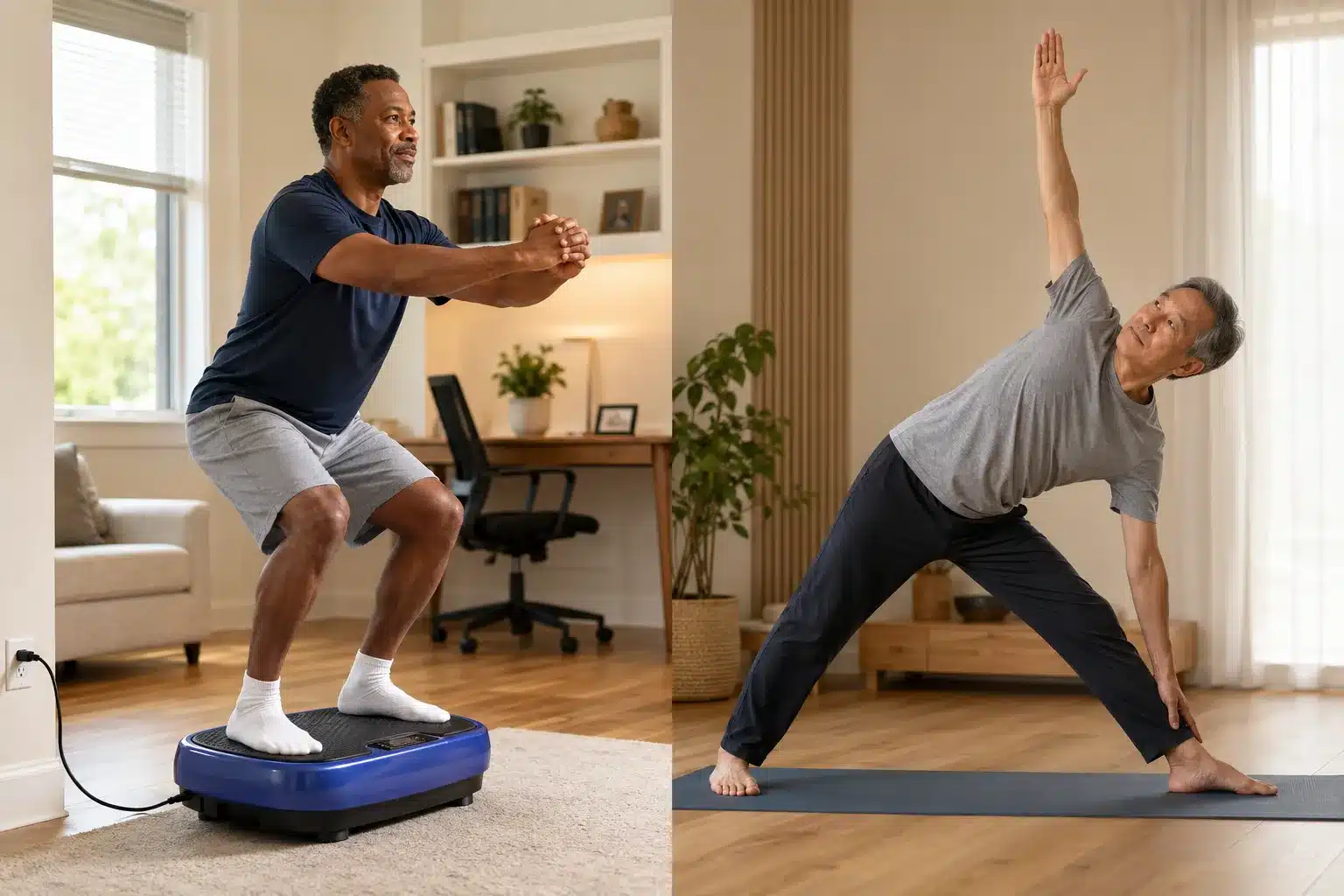
A vibration plate is simple to start because the first session may involve little more than standing with slightly bent knees. The main risk is starting at an unnecessarily strong setting or using poor posture.
Yoga requires learning more positions and movement patterns. Beginner classes, short videos, and chair-based routines allow gradual progression.
Someone who dislikes long workouts may find it easier to stay consistent with five minutes on a vibration plate. A person who enjoys guided movement, breathing, and relaxation may be more likely to continue with yoga.
Consistency matters more than choosing the method that appears better on paper. A modest routine performed regularly will usually be more useful than an ideal routine that is rarely completed.
Can You Do Yoga on a Vibration Plate?
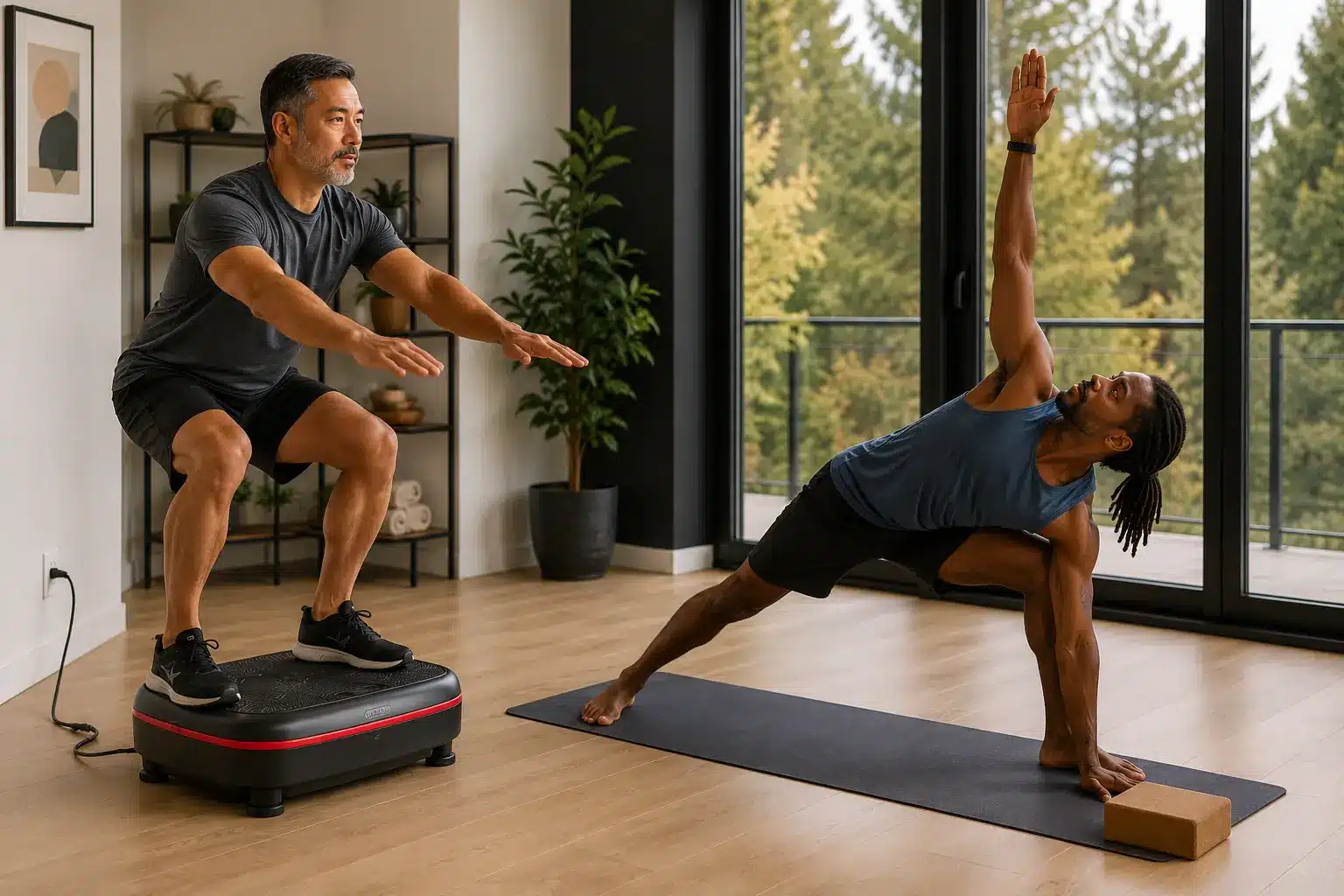
You can perform some yoga-inspired positions on a vibration plate, but the moving surface changes the difficulty. The muscles must work harder to maintain posture, and balance becomes less predictable.
A shallow chair pose, supported squat hold, seated stretch, or downward dog with the hands on the platform may be practical. The intensity should remain low until you understand how the vibration affects the position.
Single leg poses, deep stretches, inversions, headstands, and complex transitions are poor starting choices. Vibration can increase muscle activity, but it can also reduce control when a pose is already difficult.
A small study has examined yoga performed with vibration, but direct research remains limited. There is not enough evidence to claim that vibration yoga provides better long term results than standard yoga.
When a Vibration Plate May Be Better
A vibration plate may be the better choice when you want a short routine that fits into a busy day. It is also useful when your main goal is lower body activation, a warmup, or adding challenge to simple exercises.
For a full picture of what regular vibration plate use can deliver, I cover the documented physical and health outcomes in my vibration plate benefits guide.
It may suit someone who does not enjoy long guided classes or floor-based movement. The machine can remain ready in a home gym, office, or living room for brief sessions.
For recommendations on which models work best in a home setting, my guide to the best vibration plate for home use covers the top options suited to everyday home training.
The plate can also complement an existing exercise routine. I may use it before strength training, after prolonged sitting, or on a lighter recovery day.
For people deciding between a vibration plate and a rowing machine for home training, my vibration plate vs rowing machine guide covers how the two differ in cardiovascular output, muscle engagement, and space requirements.
When Yoga May Be Better
Yoga is usually the better choice when flexibility, mobility, breathing, and stress reduction are the main goals. It also provides a broader full body practice without requiring expensive equipment.
The wide range of yoga styles makes it easier to adapt the practice. A person can choose chair yoga, restorative sessions, gentle Hatha yoga, or a more active flowing style.
Yoga may also appeal more to someone who enjoys structured classes and gradual skill development. Learning new poses and transitions can keep the practice engaging over time.
Can You Combine Vibration Plate Training and Yoga?
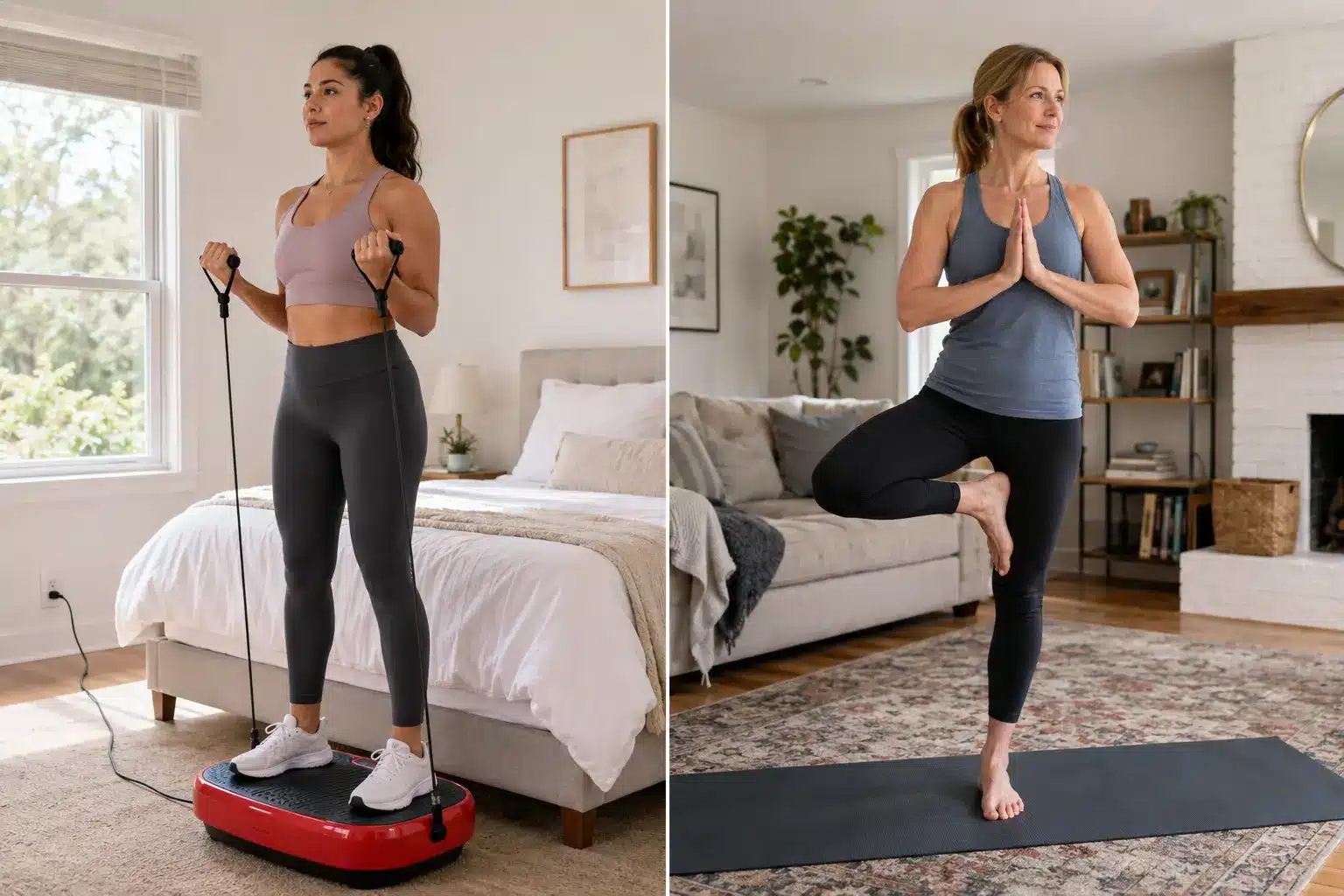
A vibration plate and yoga can work well together because they provide different training effects. A short, low intensity vibration session may warm the legs before yoga and help the body feel ready to move.
If circulation support is a priority alongside warmup use, my picks for the best vibration plate for circulation cover machines and frequency settings suited to that goal.
Strong vibration should not be used immediately before difficult balance poses. Temporary muscle fatigue can make single leg work and complex transitions less controlled.
Another option is to use the plate and yoga on different days. The vibration plate can focus on lower body activation, while yoga provides mobility, stretching, breathing, and relaxation.
For people choosing between a vibration plate and an elliptical for their cardio and movement needs, my vibration plate vs elliptical guide covers how the two differ in training demands, cardiovascular output, and joint loading.
My Practical Take on Vibration Plates and Yoga
Yoga is the better all-around choice for flexibility, mobility, breathing, stress management, and broad full body practice. It requires little equipment and can be adapted to many fitness levels.
A vibration plate is more useful for short sessions, rapid lower body activation, and adding instability to simple exercises. It can also serve as a warmup or a supplement to a wider workout plan.
For many people, the best answer is not a vibration plate or yoga. A sensible combination can provide muscle stimulation, mobility work, balance practice, and relaxation without expecting either method to cover every fitness need.
If you are ready to add a vibration plate to your routine, my guide to the best vibration plate covers the top picks across resistance types and price points to help you choose the right machine.
The practical distinction comes down to adaptation speed. A yoga practice requires weeks of consistent attendance before basic movements become accessible, particularly for people with stiff hips, tight hamstrings, or limited shoulder mobility. A vibration plate produces measurable circulation and muscle activation from the first session, making it the faster entry point for people starting from a deconditioned baseline.
Recovery is where vibration plates add value alongside an existing yoga practice. Post-yoga soreness, particularly after classes involving deep hip openers or extended balance work, responds well to 10 minutes of low-frequency vibration, which increases circulation to worked muscles and supports faster fluid clearance. Using the plate as a recovery tool after yoga classes rather than as a competing practice combines the flexibility benefits of yoga with the recovery benefits of vibration.
The cost and space comparison is relevant for most home users. A yoga mat costs under $30 and requires minimal storage. A vibration plate typically costs $150 to $600 and requires dedicated floor space. For someone choosing between the two with a tight budget, yoga is the higher-value investment per dollar. For someone who already has a consistent yoga practice and wants to add a recovery or circulation tool, a vibration plate is a practical addition rather than a replacement.
The same reasoning applies when comparing a vibration plate to an exercise bike; my vibration plate vs exercise bike guide covers how the two differ in cardiovascular output, training demands, and the role each plays in a weekly routine.
FAQs
Is a vibration plate better than yoga?
A vibration plate is not generally better than yoga because the two methods serve different purposes. The plate is useful for short muscle activation sessions, while yoga offers broader benefits for flexibility, balance, breathing, and relaxation.
Does yoga or a vibration plate improve balance more?
Yoga and a vibration plate can both improve balance through different mechanisms. Yoga uses controlled poses and weight shifts, while a vibration plate creates rapid instability that requires repeated postural adjustments.
Is a vibration plate or yoga better for weight loss?
Neither a vibration plate nor yoga is enough for substantial weight loss by itself. Active yoga may use more energy than passive vibration standing, while vibration exercises can become more demanding when squats and other movements are added.
Can you do yoga poses on a vibration plate?
Yes, you can do some yoga poses on a vibration plate, but the vibration increases the balance and muscle demands. Simple supported poses are more appropriate than inversions, deep stretches, or difficult single leg positions.
Is yoga better than a vibration plate for flexibility?
Yes, yoga is better than a vibration plate for flexibility because stretching and controlled ranges of motion are central parts of the practice. Vibration may support flexibility, but it does not replace a complete mobility and stretching routine.
Which is better for seniors, yoga or a vibration plate?
Yoga or a vibration plate may be better for seniors depending on balance, mobility, and personal preference. Chair yoga may be safer for someone with poor balance, while a vibration plate may suit a person who prefers short standing sessions with rigid support.
Can I use a vibration plate before yoga?
Yes, you can use a vibration plate before yoga at a low intensity for a short warm-up. Avoid strong settings before difficult balance poses because temporary leg fatigue may reduce control.
Notable Studies
- National Center for Complementary and Integrative Health. Yoga: Effectiveness and Safety. This resource reviews evidence related to yoga, balance, stress, sleep, physical health, and safe practice.
- Sivaramakrishnan D, et al. The Effects of Yoga Compared to Active and Inactive Controls on Physical Function and Health Related Quality of Life in Older Adults. This systematic review and meta-analysis assessed strength, balance, flexibility, wellbeing, and quality of life.
- Youkhana S, et al. A Systematic Review of Yoga for Balance in a Healthy Population. The review examined yoga and balance while noting differences in study quality and reporting.
- Polsgrove MJ, et al. Meta-Analysis of the Effect of Yoga Practice on Physical Fitness in the Elderly. The analysis reported positive effects on strength, balance, mobility, and lower body flexibility.
- Alizadeh S, et al. Effects of Whole-Body Vibration on Flexibility and Stiffness: A Literature Review. This paper reviewed acute and longer-term vibration effects on flexibility and tissue stiffness.
- Lam FMH, et al. The Effect of Whole Body Vibration Exposure on Balance and Functional Mobility in Older Adults. This systematic review and meta-analysis examined balance and mobility outcomes after vibration exposure.
- Yang F, et al. Effect of Two Frequencies of Whole-Body Vibration Training on Balance and Flexibility of the Elderly. This randomized trial compared vibration frequencies and measured balance and flexibility.
- National Center for Complementary and Integrative Health. 5 Things You Should Know About Yoga. This resource explains the combination of postures, breathing, meditation, potential benefits, and general safety considerations.