Affiliate Disclosure: Vibration Plate Zone is a proud participant in the Amazon Services LLC Associates Program.
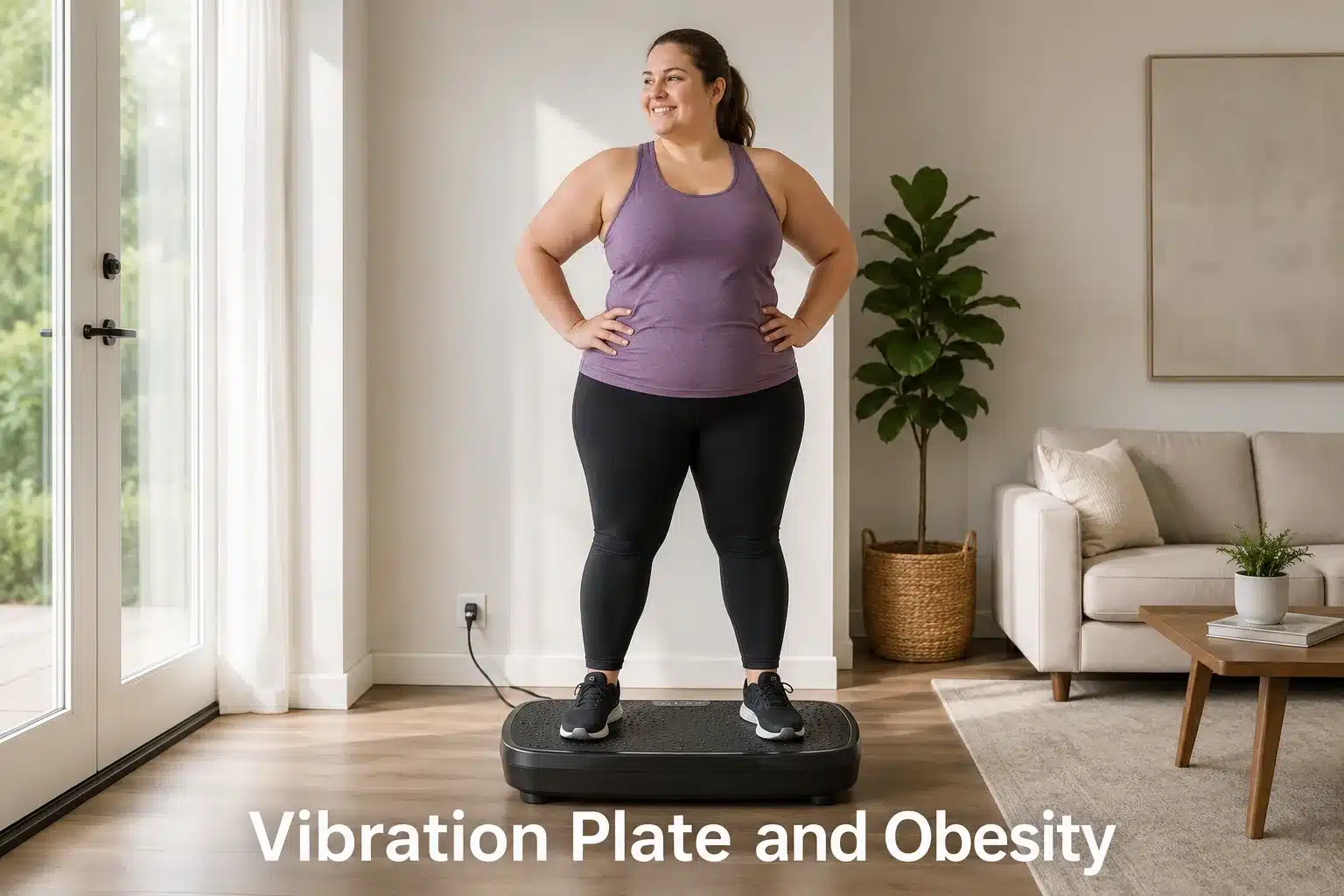
A vibration plate may support people with obesity by providing a lower impact way to activate muscles, perform basic exercises, and become more physically active. Research suggests that whole-body vibration may produce modest improvements in body composition, strength, and some metabolic measures, especially when it is combined with dietary changes or conventional exercise.

About the author: Hello! I’m Vladimir Stanar, professor of physical education, kinesiotherapist, marathon runner, cyclist, and cycling coach, and long-time advocate of health, fitness, and active living.
My journey with vibration plates runs parallel to my professional career in education, sports medicine, and athletic development. I’ve developed a unique process for testing vibration plates as they are some of the most versatile tools for enhancing health, recovery, and performance.
✅ Expert-Reviewed by: Vanja Vukas, MPhEd
📚 Expert Contributor: Milutin Tucakov, MPhEd
A vibration plate is not a passive weight loss machine. Standing on one for a few minutes will not create the calorie expenditure needed for substantial fat loss, and it cannot replace nutrition, walking, cardiovascular activity, or progressive strength training.
Its most useful role may be helping someone begin moving when regular exercise feels difficult. For a person dealing with low fitness, knee discomfort, reduced mobility, or fear of high impact workouts, a vibration plate can provide a manageable starting point.
How Whole Body Vibration Works
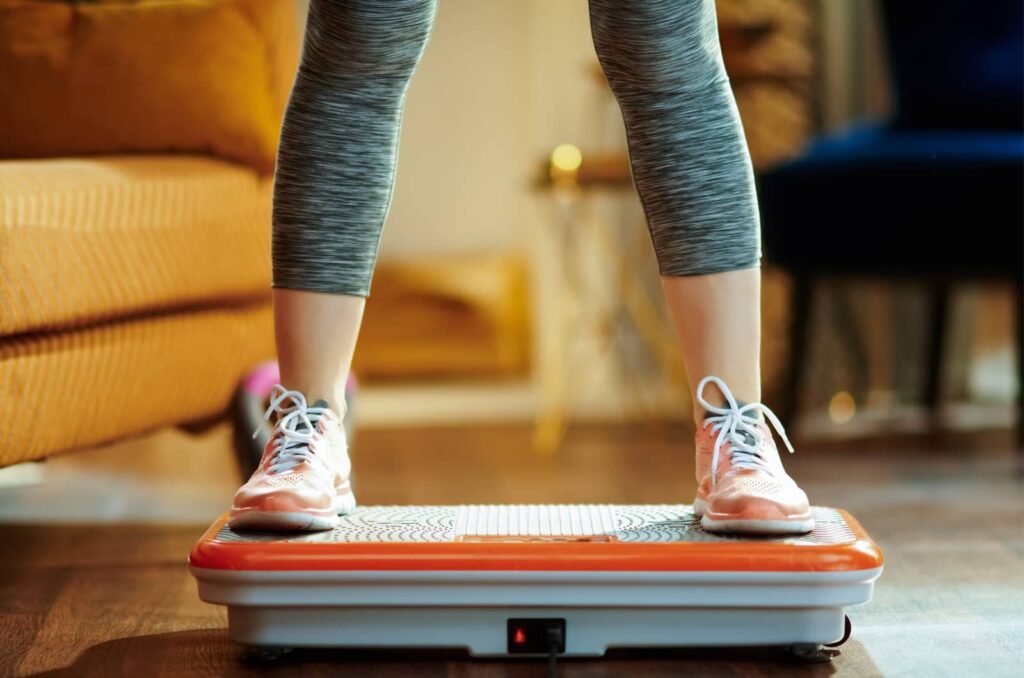
A vibration plate creates rapid mechanical movements beneath the feet. The body responds by making repeated muscular adjustments to maintain posture and balance.
These contractions happen much faster than normal voluntary movements. The user may look relatively still, but the calves, thighs, hips, and postural muscles continue responding to the platform.
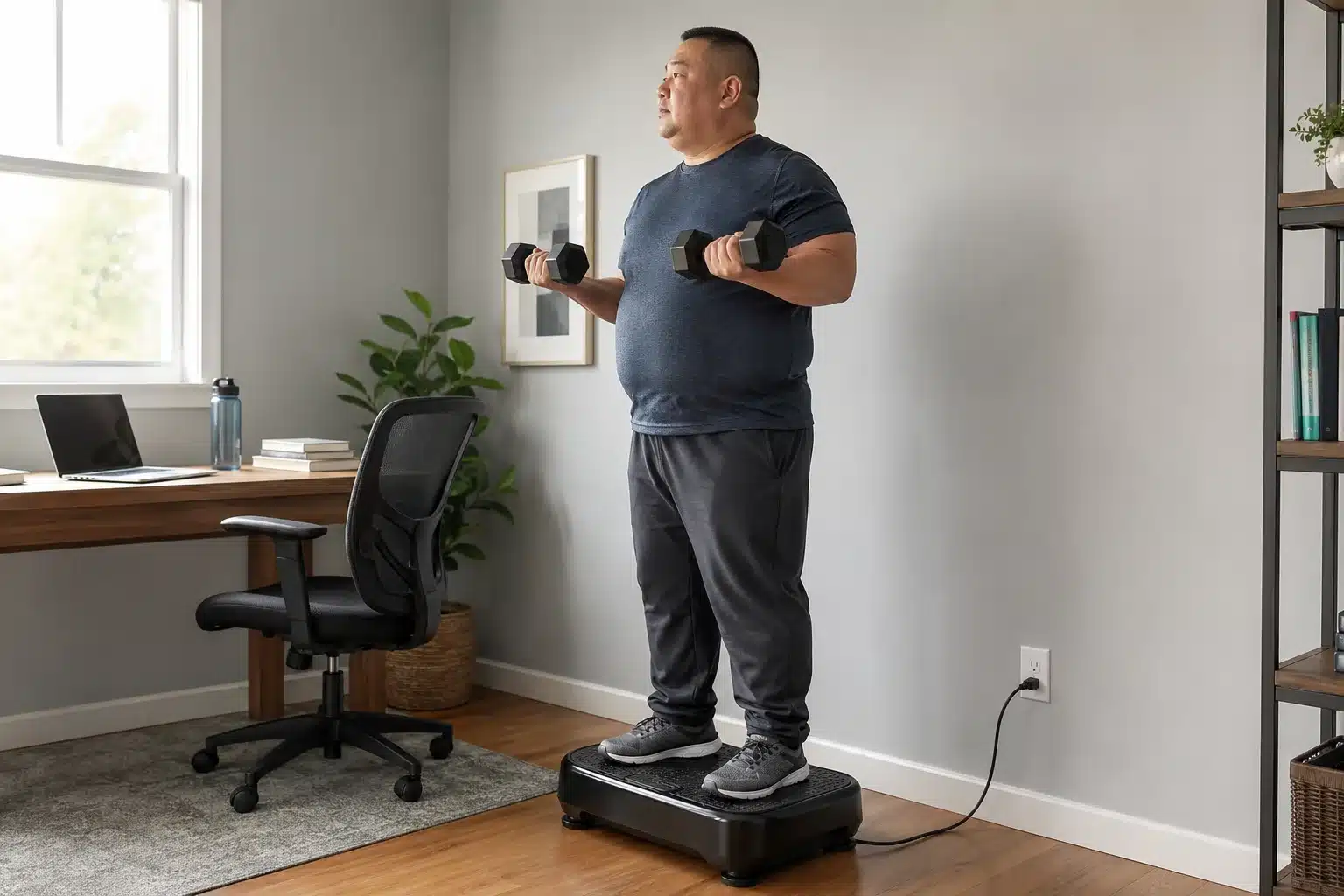
The training effect depends heavily on what the person does during the session. Passive standing requires some muscle activity, but shallow squats, calf raises, supported holds, and other controlled exercises create a greater demand.
Frequency describes how many vibration cycles the platform completes each second. Amplitude describes how far the platform moves during each cycle, while stance width and knee position can also change how strong the vibration feels.
People new to whole body vibration should start at a low setting with slightly bent knees. Locked knees reduce the body's ability to absorb the movement and may cause more vibration to travel toward the spine and head.
Can a Vibration Plate Help With Obesity?
A vibration plate can support an obesity management plan, but it does not treat obesity by itself. Obesity is a complex condition influenced by food intake, physical activity, sleep, hormones, medication, genetics, mental health, and the surrounding environment.
Effective care may include nutrition changes, behavioral support, resistance exercise, aerobic activity, medication, or bariatric treatment. The right approach depends on the person's health, goals, mobility, and medical history.
Whole body vibration can fit into that plan as a form of physical activity. It may be most useful when it helps someone move more frequently, build confidence, or perform exercises that otherwise feel difficult.
A plate can also add muscular demand to simple movements without requiring heavy weights. This may help people who are not yet ready for long walks, deep squats, or traditional gym workouts.
What Research Shows About Weight and Fat Loss
Research on whole body vibration and obesity has produced mixed results. Some trials report reductions in fat mass, waist measurements, or visceral fat, while others find little meaningful change in body weight.
A recent review of randomized trials found that whole body vibration used alone did not significantly reduce body weight, BMI, fat mass, fat free mass, or body fat percentage. This supports the view that the plate should not be treated as a stand alone weight loss method.
Earlier reviews found more promising body composition results in people with overweight and obesity. The better outcomes often appeared when vibration training was combined with calorie restriction or another type of exercise.
These findings are not necessarily contradictory. Vibration may contribute to a structured program, but it may not create enough energy use to change body weight when everything else stays the same.
Body Weight and BMI
Scale weight and BMI may change very little during a vibration plate program. A short vibration session does not burn calories at the same rate as brisk walking, cycling, swimming, or an active strength workout.
This does not mean the session has no value. A person may gain leg strength, improve movement tolerance, or lose some body fat without seeing a dramatic change on the scale.
Body weight also includes muscle, water, bone, organs, and stored food. It cannot show where a change occurred or explain whether physical function has improved.
Total Body Fat
Some studies have reported modest reductions in fat mass after whole body vibration training. The effect appears more likely when users perform active exercises and follow a reduced calorie eating plan.
Passive standing should not be expected to create the same result. Squats, calf raises, lunges, and supported holds require more muscle work and increase the physical demand of the session.
The evidence still varies across studies. Programs use different machines, frequencies, amplitudes, exercises, session lengths, and participant groups, making it difficult to identify one ideal routine.
Waist Circumference and Visceral Fat
One small controlled trial found that participants who combined calorie restriction with whole body vibration had a larger long term reduction in visceral fat than some other groups. Visceral fat is stored around internal organs and is linked with increased metabolic risk.
The finding is promising, but it does not prove that vibration directly targets abdominal fat. Fat cannot be selectively shaken or burned from the belly, thighs, arms, or another chosen area.
A reduction in waist size may result from total fat loss, dietary changes, increased activity, or several factors working together. Claims that a vibration plate melts belly fat should be treated with skepticism.
Muscle Strength and Function
Strength may be one of the more practical reasons to use a vibration plate during weight loss. Losing weight without adequate protein and resistance exercise can lead to loss of muscle along with fat.
Holding a shallow squat or performing calf raises on a vibrating surface requires repeated muscle contractions. Over time, this may support lower body strength and make everyday activities feel more manageable.
Stronger legs can help with standing from a chair, climbing stairs, walking, and maintaining balance. These improvements may encourage more activity throughout the day, which is useful even when the scale changes slowly.
Why Vibration Training May Help People With Obesity
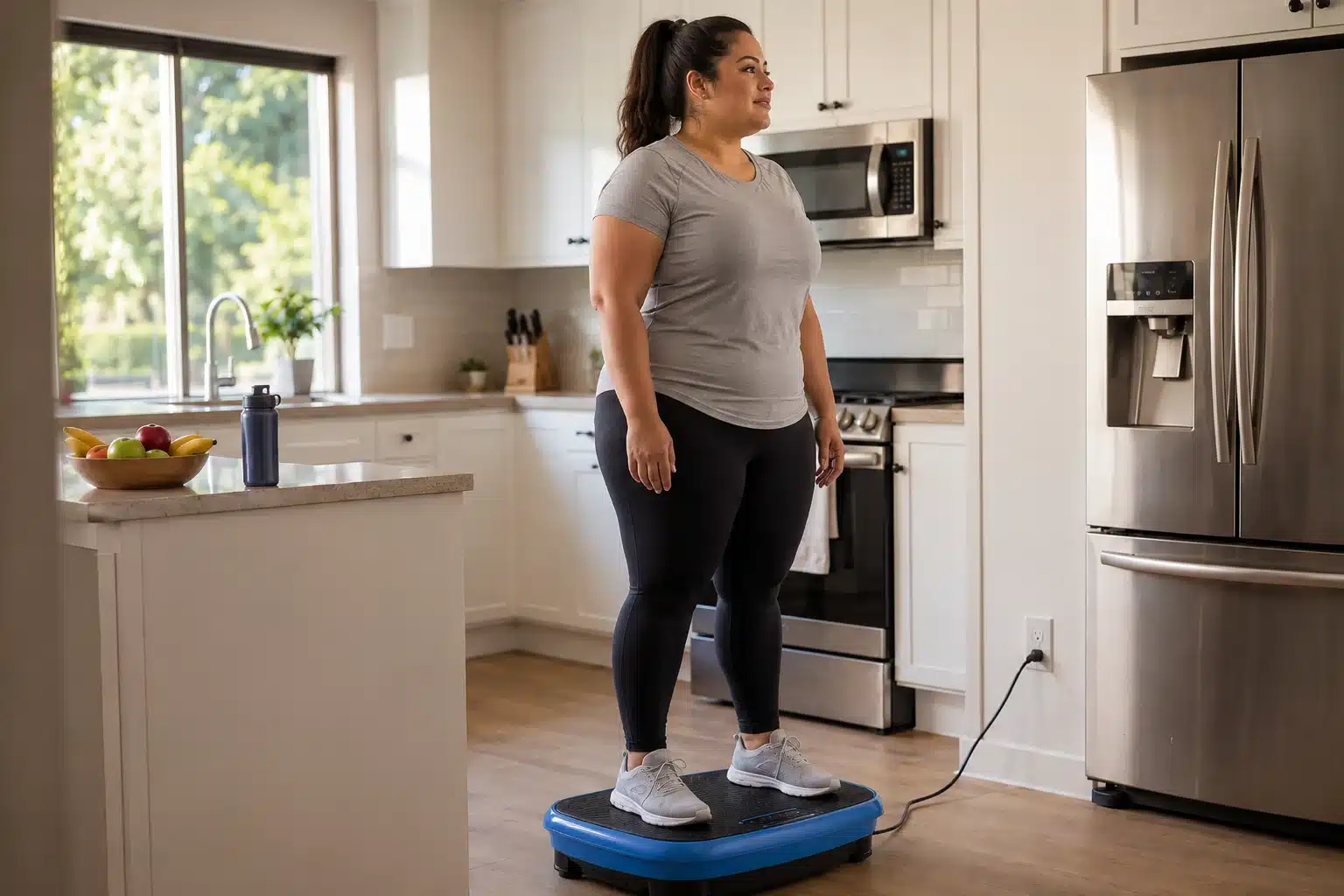
Some people living with obesity experience knee pain, back discomfort, poor balance, shortness of breath, or low confidence with exercise. High impact workouts and floor based routines may feel uncomfortable or impractical.
If back discomfort is part of that picture, my guide on vibration plate for back pain covers exercises and machine settings suited to joint-sensitive users.
A vibration plate allows the user to begin with a supported standing position. The intensity can be adjusted, and the first sessions can last only a few minutes.
This lower barrier to entry may improve consistency. A simple routine completed several times per week is more useful than an intense program that is abandoned after two sessions.
For people who prefer to train at home, my breakdown of the best vibration plate for home use covers compact and quiet options that fit a residential space.
Whole body vibration may also work as a bridge toward other activities. As strength and confidence improve, the person can add walking, cycling, swimming, resistance training, or supervised rehabilitation.
The plate should support progression rather than become the only form of movement. Cardiovascular fitness, walking capacity, and real world strength still require activities beyond standing on a vibrating platform.
Elderly people who prioritise gentle, low impact movement will also find my guide on the best vibration plate for seniors useful, as it covers machines suited to the same goals around safety and ease of use.
Is a Vibration Plate Easier on the Knees?
A vibration plate may feel easier on the knees than running, jumping, or deep unsupported squats because it does not require repeated impact landings. The user can also control the depth of each movement and hold a stable support.
Research involving people with knee osteoarthritis suggests that vibration combined with strengthening exercise may improve pain, knee extensor strength, and physical function. It should be viewed as an addition to an appropriate exercise plan rather than a replacement for rehabilitation.
For models suited to joint-sensitive users, my guide on the best vibration plate for arthritis covers platform frequencies and amplitude ranges that work better for people managing ongoing joint conditions.
Poor technique can still irritate the knees. Excessive intensity, very wide stances, deep squats, and long sessions may place more demand on painful joints.
I would begin with a comfortable stance and a small bend in the knees. Any exercise that causes sharp pain or worsening symptoms should be stopped and modified.
Does Passive Standing Burn Enough Calories?
Passive standing on a vibration plate uses some energy because the muscles make repeated adjustments. The calorie expenditure is unlikely to be large enough to cause meaningful fat loss on its own.
Active exercise increases the demand. Shallow squats, calf raises, supported lunges, and resistance band movements involve more muscle tissue than simply standing still.
Even an active vibration workout should be seen as one part of total daily movement. Fat loss still depends largely on maintaining an energy deficit over time.
Calorie displays on vibration plates should also be treated as rough estimates. Most machines do not know enough about the user's body, posture, muscle activity, or exercise technique to calculate energy use accurately.
Vibration Plates and Insulin Resistance
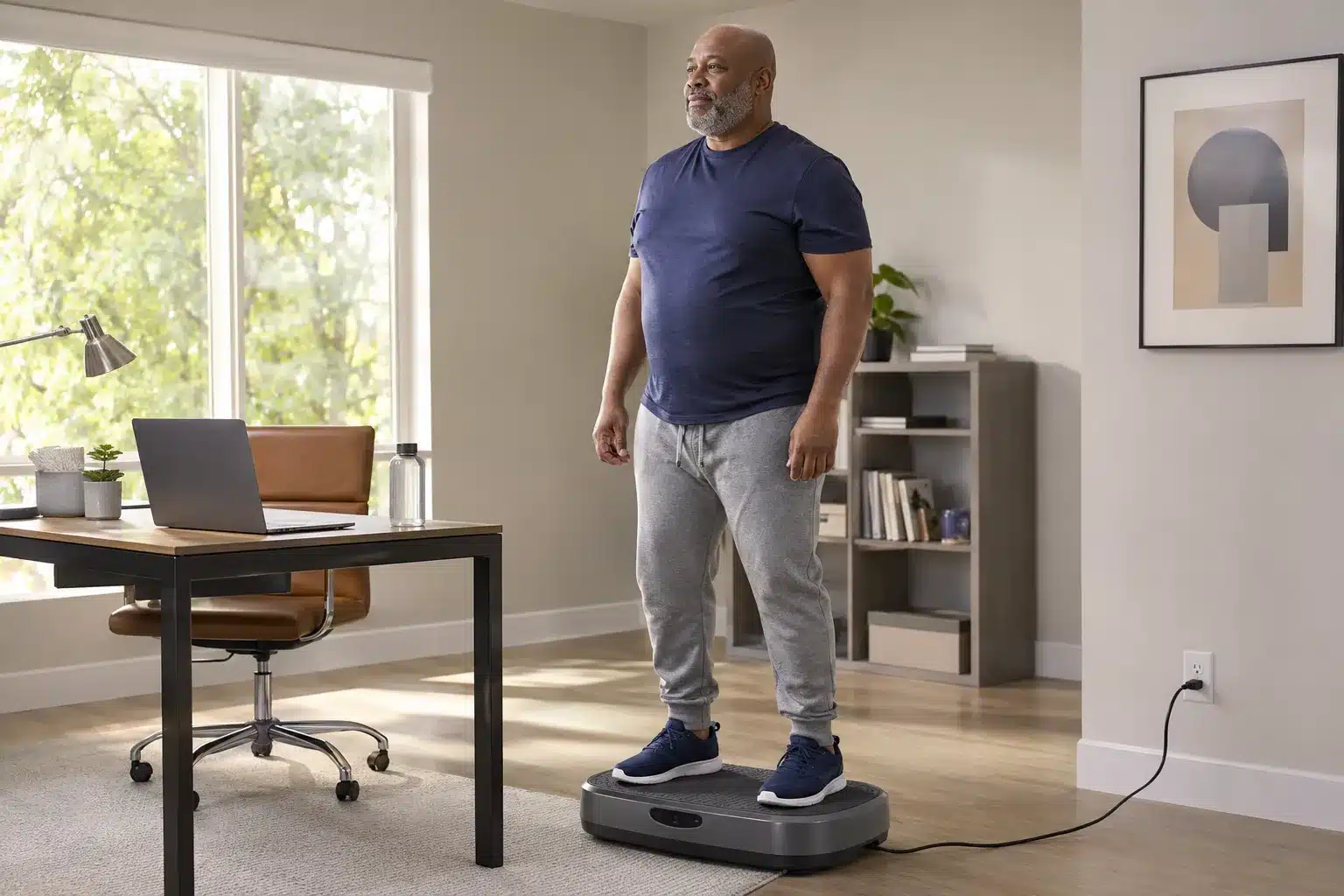
Small human trials have reported possible improvements in insulin sensitivity when whole body vibration was added to a reduced calorie diet. In one study, both the diet only and vibration groups lost similar percentages of body weight, but the vibration group experienced a greater reduction in body fat and a larger improvement in an insulin sensitivity measure.
This finding shows why weight is not the only outcome worth tracking. Metabolic changes may occur even when two groups lose a similar amount on the scale.
The evidence is not strong enough to claim that vibration plates treat insulin resistance or diabetes. People using insulin or glucose lowering medication should also consider the timing of exercise, meals, and medication with their healthcare provider.
Neuropathy can create another concern. Reduced sensation in the feet may make it harder to notice pressure, discomfort, or poor positioning on the platform. For people managing this alongside weight concerns, my guide on the best vibration plate for neuropathy covers platforms with wider decks and gentler settings suited to reduced foot sensitivity.
How to Start Safely
Check the plate's weight capacity before stepping on it. I prefer a machine with a stated limit comfortably above the user's current body weight rather than one operating at its maximum capacity.
Place the plate on a flat and stable floor. A wider platform can make it easier to use a secure stance without placing the feet on the machine's housing or control area.
Use a fixed rail or another solid support if balance is uncertain. Elastic resistance bands should not be treated as safety handles because they move when pulled.
Begin at a low intensity for about five minutes. Keep the knees slightly bent and allow time to judge how the body responds during the session and later that day.
Progress one variable at a time. Increase the duration, setting, stance width, or exercise difficulty rather than changing everything during the same session.
Stop if the plate causes sharp pain, dizziness, numbness, chest discomfort, unusual shortness of breath, or loss of balance. People with major health conditions or severe mobility limitations should get individual guidance before starting.
For a step-by-step breakdown of settings, positions, and session progressions for new users, my guide on how to begin using a vibration plate covers the variables that matter most for a safe and consistent routine.
Those managing chronic back pain alongside a weight management program will find more detailed guidance in my article on vibration plate for back pain, including movements to approach carefully.
Choosing a Vibration Plate for a Larger Body
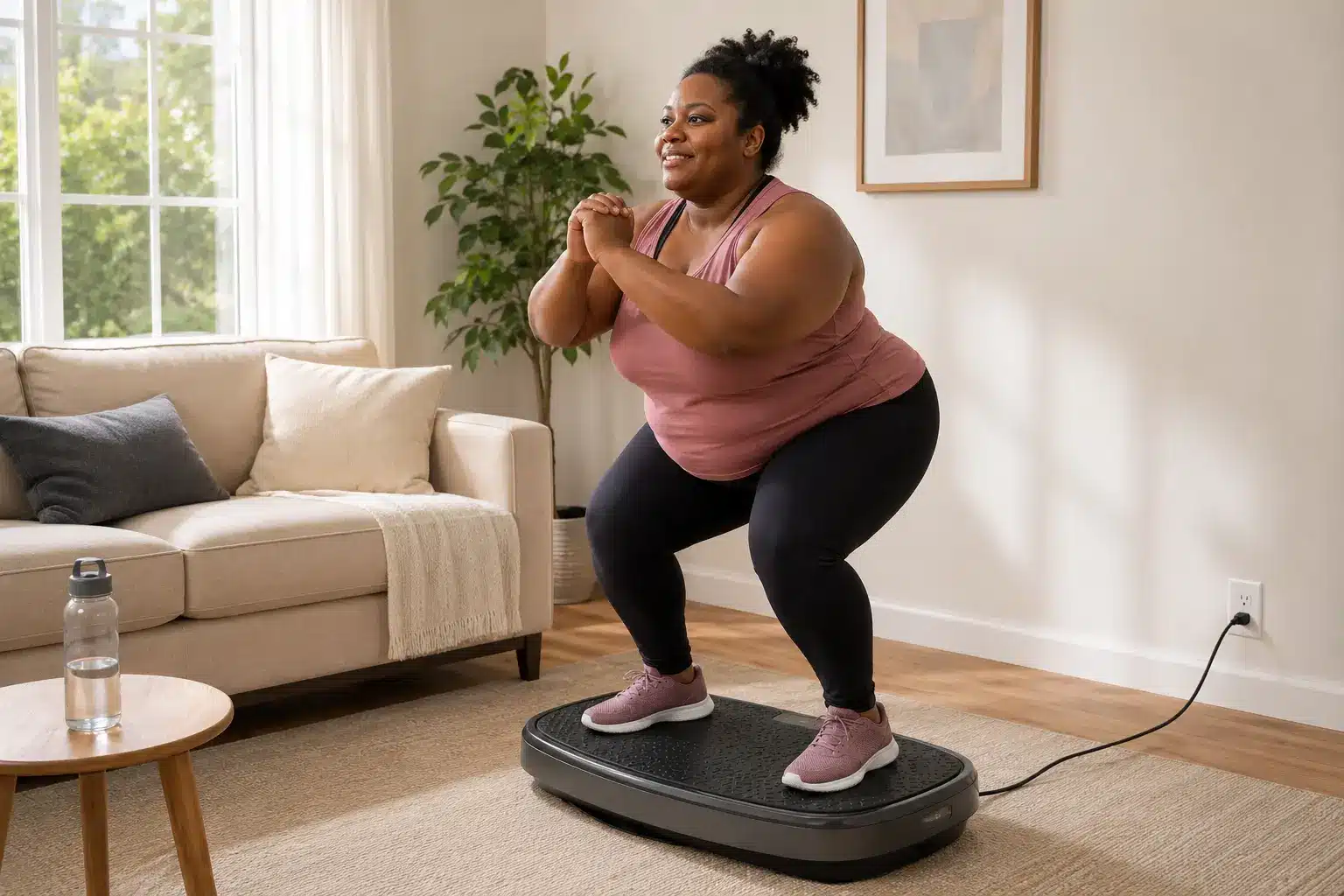
Weight capacity is the first specification I would check. A higher capacity usually provides a better safety margin, though the number alone does not guarantee strong construction.
Platform size matters too. A broad deck allows a stable stance and leaves room for small changes in foot position.
Machine weight, suction feet, and floor grip affect stability. Very light plates may be easier to carry, but heavier models often feel more settled at stronger settings.
Handrails can help people with balance concerns, but they should be rigid and properly attached. A nearby wall rail may provide better support than loose straps supplied with the machine.
Many beginners find oscillating platforms comfortable because they create alternating side to side motion. The best vibration type still depends on the user's tolerance, goals, and physical condition.
For a full comparison across categories, my guide to the best vibration plates covers tested models at different price points with notes on platform size and weight capacity.
What a Vibration Plate Cannot Do
A vibration plate cannot remove fat from one chosen body part or replace the calorie deficit needed for weight loss. It also cannot provide complete cardiovascular conditioning or replace progressive resistance training.
It does not treat obesity, diabetes, arthritis, or another medical condition. Any benefits depend on how the machine is used and what else is included in the person's plan.
The most misleading claim is that someone can stand still for ten minutes and receive the same benefits as a full conventional workout. Whole body vibration can increase muscle activity, but it does not reproduce every effect of walking, strength training, or aerobic exercise.
For a broader review of what the evidence actually supports, my guide on do vibration plates work examines the research across multiple health outcomes.
My Practical Take on Vibration Plates and Obesity
A vibration plate can be useful for someone with obesity when it makes movement more accessible. It may help activate the legs, support basic strengthening, and provide a manageable starting point for a person who currently struggles with conventional exercise.
Its value depends on realistic expectations. The plate works best alongside nutrition changes, regular movement, appropriate strength training, sleep, and clinical support when needed.
For a broader picture of what these machines have been shown to support, my overview of vibration plate benefits covers the evidence across areas including circulation, strength, and mobility.
I would not buy one as a passive fat loss shortcut. I would consider one as a practical exercise tool that may help someone begin moving, improve strength, and build a routine that can grow over time.
If weight management is the primary goal, my picks for the best vibration plate for weight loss highlight models worth considering as part of a structured plan.
The main mechanical benefit for people with obesity is the ability to stimulate muscle activity without joint loading. Conventional exercise at higher body weights increases impact forces on the knees and hips, which limits what is tolerable early in a weight management program. Vibration plate exercise at low frequencies produces muscle contraction without the impact cycle, allowing earlier entry into structured physical activity.
Caloric burn during vibration sessions is modest. A 10-minute standing session burns roughly the equivalent of a short walk. The more relevant metabolic impact comes from the muscle mass preserved or built over weeks of regular use, which raises resting metabolic rate. Viewing vibration plate use as a tool for metabolic conditioning rather than direct caloric expenditure produces more realistic expectations.
People with obesity often see better balance outcomes from vibration plate training than from conventional exercise in early sessions. The plate provides a fixed, stable stimulus that trains proprioception and postural control without requiring complex coordination. Better balance and proprioception reduce fall risk and make it easier to progress to higher-demand activities as weight decreases.
FAQs
Can an obese person use a vibration plate?
Yes, an obese person can use a vibration plate if the machine has a suitable weight capacity and the person can use it safely. A stable platform, solid balance support, and low starting intensity are particularly important.
Do vibration plates help obese people lose weight?
Vibration plates may help obese people lose weight when they are combined with dietary changes and regular exercise. Whole body vibration used alone has not consistently produced meaningful reductions in body weight or BMI.
Can a vibration plate reduce belly fat?
A vibration plate cannot selectively reduce belly fat. Some studies have reported changes in waist measurements or visceral fat during combined weight loss programs, but these results do not show that vibration targets abdominal fat directly.
What weight capacity should a vibration plate have?
A vibration plate should have a weight capacity comfortably above the user's current weight. Operating below the maximum limit provides a better margin and may improve platform stability and long term durability.
Is a vibration plate easier on the knees than walking?
A vibration plate may feel easier on the knees than high impact activity, but it is not automatically easier than walking for every person. The setting, stance, squat depth, vibration type, and existing knee condition all affect comfort.
How long should a beginner with obesity use a vibration plate?
A beginner with obesity should usually start with about five minutes at a low setting. Session length can increase gradually if there is no worsening pain, dizziness, numbness, or unusual fatigue.
Can vibration plates help with insulin resistance?
Vibration plates may support improvements in insulin sensitivity when combined with dietary changes, according to small clinical trials. They are not a treatment for insulin resistance or diabetes, and the current evidence remains limited.
Notable Studies
Gou P, et al. Effectiveness of whole body vibration training on body mass reduction: A systematic review and meta-analysis. International Journal of Obesity, 2025. This review included 20 randomized trials and found no significant effect of whole body vibration alone on body weight, BMI, fat mass, fat-free mass, or body fat percentage.
Zago M, et al. Whole body vibration training in obese subjects: A systematic review. PLOS ONE, 2018. The review examined 18 studies involving adults with obesity and evaluated body composition, cardiovascular outcomes, physical performance, and vibration exposure.
Rubio Arias JA, et al. Effects of whole body vibration training on body composition, cardiometabolic risk, and strength in the population who are overweight and obese: A systematic review with meta-analysis. Archives of Physical Medicine and Rehabilitation, 2021.
Vissers D, et al. Effect of long-term whole-body vibration training on visceral adipose tissue: A preliminary report. Obesity Facts, 2010. The controlled trial compared calorie restriction, conventional fitness training, and vibration training in adults with overweight and obesity.
Bellia A, et al. Effects of whole body vibration plus diet on insulin resistance in middle-aged obese subjects. International Journal of Sports Medicine, 2014. The study compared a reduced calorie diet alone with diet plus whole body vibration over eight weeks.
Wang P, et al. Effects of whole body vibration therapy on knee osteoarthritis: A systematic review and meta-analysis of randomized controlled trials. Journal of Rehabilitation Medicine, 2022. The review evaluated pain, physical function, muscle strength, stiffness, balance, and adverse events.