Affiliate Disclosure: Vibration Plate Zone is a proud participant in the Amazon Services LLC Associates Program.
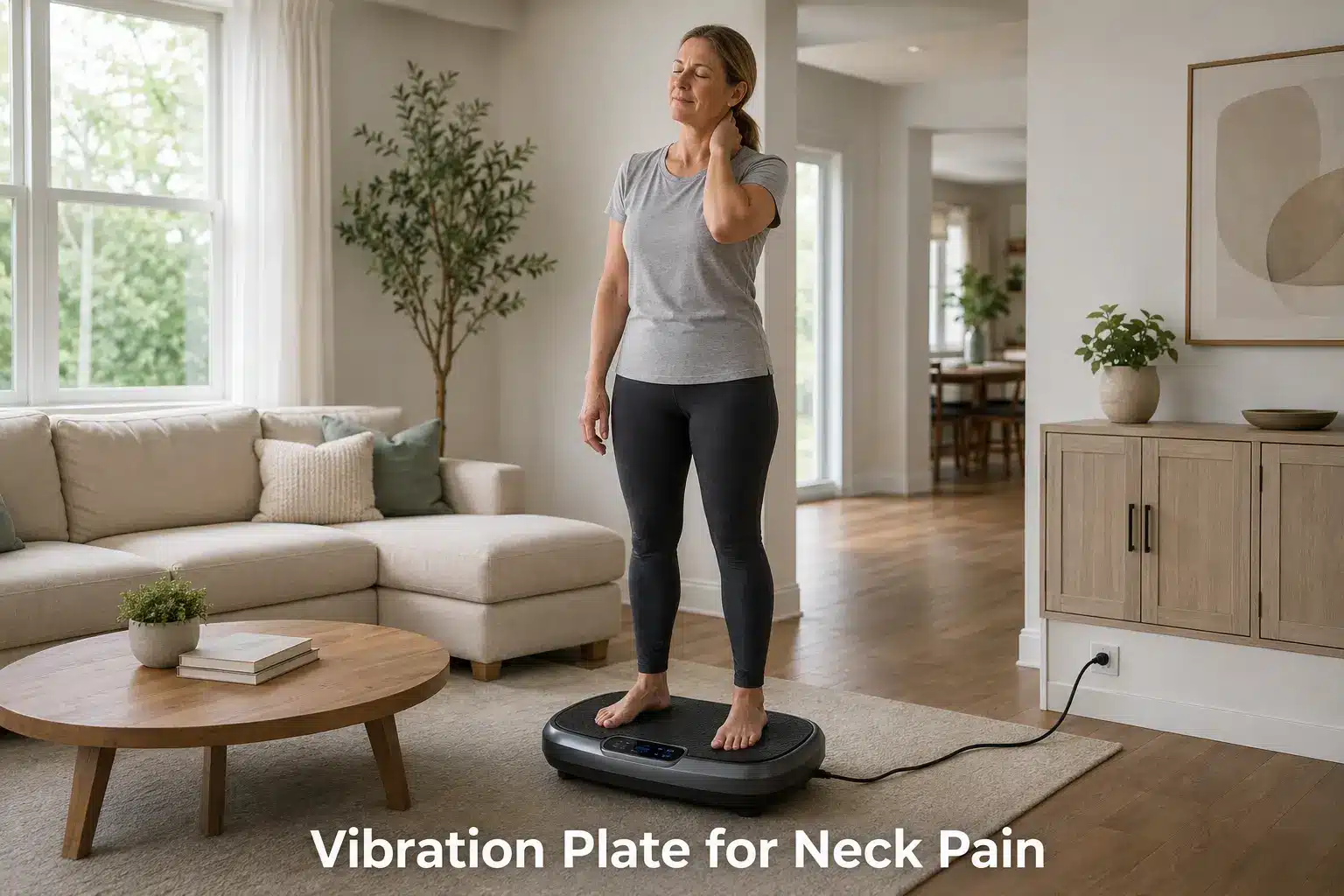
A vibration plate for neck pain may help some people with mild neck stiffness become more active, but it is not a proven treatment for neck pain. Current positive research mainly involves vibration applied directly to painful neck muscles, which is different from standing on a whole body vibration platform.

About the author: Hello! I’m Vladimir Stanar, professor of physical education, kinesiotherapist, marathon runner, cyclist, and cycling coach, and long-time advocate of health, fitness, and active living.
My journey with vibration plates runs parallel to my professional career in education, sports medicine, and athletic development. I’ve developed a unique process for testing vibration plates as they are some of the most versatile tools for enhancing health, recovery, and performance.
✅ Expert-Reviewed by: Vanja Vukas, MPhEd
📚 Expert Contributor: Milutin Tucakov, MPhEd
A home vibration plate sends movement upward from the feet through the legs and trunk. Depending on the setting and posture, this may create gentle postural muscle activity or allow too much vibration to reach the shoulders, neck, jaw, and head.
The likely cause of the pain matters. A routine that feels comfortable for mild muscular tension may be unsuitable for someone with a pinched nerve, cervical instability, recent whiplash, dizziness, or symptoms that spread into the arm.
Why Neck Pain Is Not One Single Condition
Neck pain can develop after long periods of sitting, poor workstation setup, limited movement, muscular tension, or repeated strain. These cases are often described as nonspecific neck pain because no single serious structural cause has been identified.
Other cases may involve arthritis, a cervical disc problem, nerve compression, recent trauma, inflammatory disease, or instability between the vertebrae. These conditions require a more careful approach because vibration may affect symptoms differently.
The location of the pain does not always reveal its cause. Pain near the neck and shoulder may come from the upper trapezius, cervical joints, nerves, or structures elsewhere in the upper body.
This is why I would not treat every stiff or painful neck with the same vibration routine. Persistent pain, arm symptoms, weakness, or pain after an accident should be assessed before experimenting with a moving platform.
How a Vibration Plate Affects the Neck
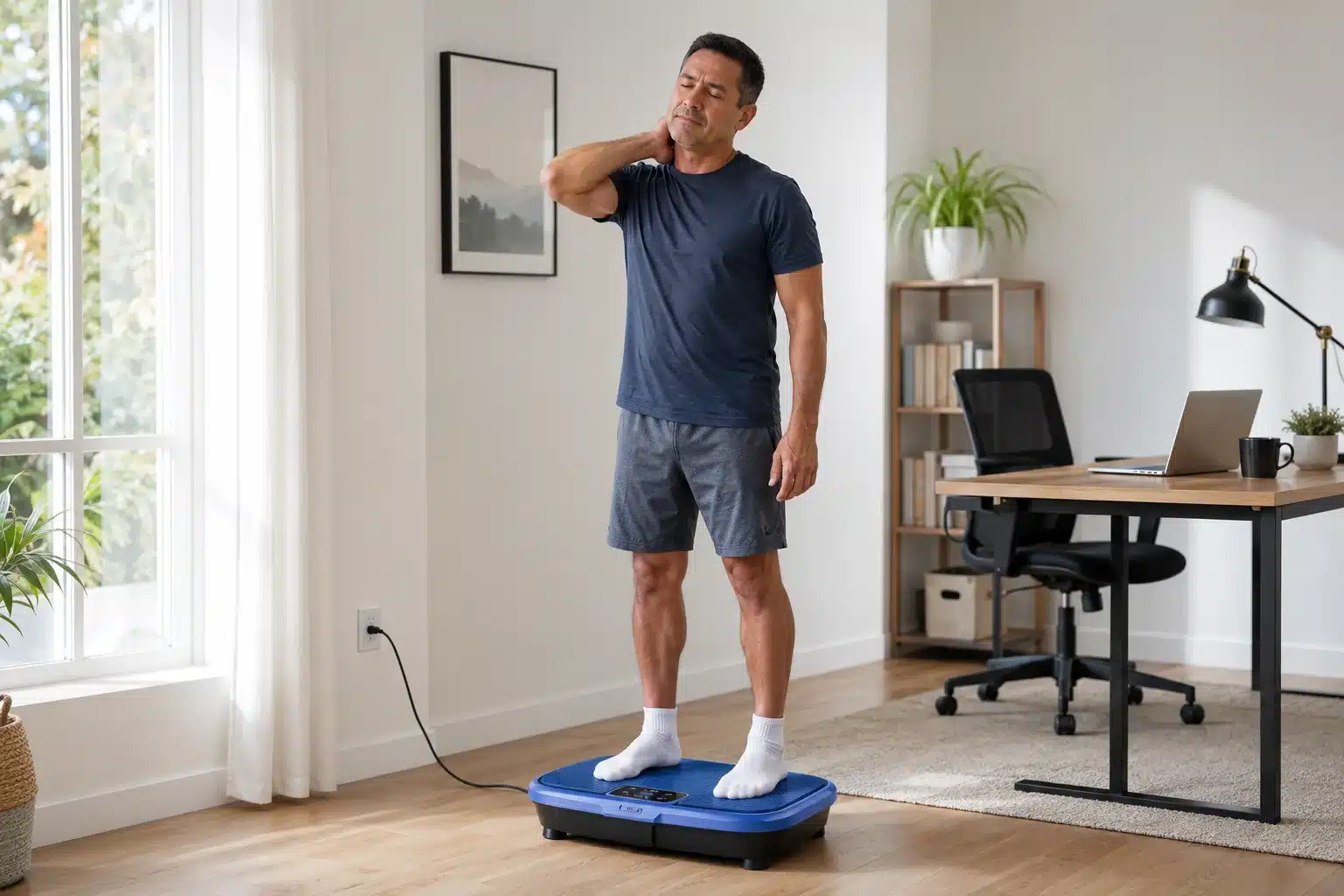
A vibration plate creates mechanical movement beneath the feet. The ankles, knees, hips, muscles, and soft tissues absorb part of that movement before it reaches the upper body.
Posture changes how much vibration travels upward. Slightly bent knees allow the legs to absorb more movement, while locked knees create a more rigid path through the body.
A vibration plate does not directly massage the neck. Any effect on the cervical area comes through postural adjustments, muscle activity, general movement, and vibration transmitted through the body.
Strong settings can make the shoulders tense or cause the head to shake. If the jaw chatters, vision appears unstable, or the neck muscles tighten against the movement, the intensity is too high for that position.
Vibration Plate Therapy Versus Direct Neck Vibration
Research on direct neck vibration should not be confused with research on vibration plates. Direct vibration therapy places a small vibrating device against muscles such as the upper trapezius or levator scapulae.
A small randomized trial involving people with chronic nonspecific neck pain found improvements in disability and pressure pain sensitivity after ten sessions of self applied local vibration. The treatment was applied directly to painful trigger points rather than delivered through the feet.
A newer placebo controlled study also found that direct neck muscle vibration improved cervical movement sense and pressure pain sensitivity. Both real and placebo treatment reduced resting pain, showing that expectation may have contributed to part of the pain response.
These results make local vibration an interesting area of research. They do not prove that standing on a consumer platform produces the same benefits because the method, vibration location, and dose are different.
Anyone questioning whether consumer platforms deliver measurable results more broadly can find an honest look at the evidence in my guide on do vibration plates work.
Can a Vibration Plate Reduce Neck Pain?
A vibration plate may help indirectly when neck discomfort is connected with inactivity, general stiffness, weak postural muscles, or poor movement habits. A short session can encourage lower body activity and require the trunk to make repeated postural adjustments.
Some people may also feel less stiff after gentle whole body vibration. This could make it easier to follow the session with walking, mobility work, or appropriate strengthening exercises.
There is not enough completed research to claim that home vibration plates directly reduce cervical pain. Whole body vibration studies for chronic neck pain and forward head posture are still limited, and some available projects are study protocols rather than published outcome trials.
I would therefore view a vibration plate as a possible supporting exercise tool. Targeted neck movement, strengthening, education, and appropriate rehabilitation remain better established.
Anyone building a vibration routine around general stiffness or movement can also read my guide on whole body vibration, which covers the mechanisms, research, and practical recommendations.
Neck Pain, Posture, and Movement Sense
The muscles and joints of the neck contain sensory receptors that help the brain understand the position of the head. This ability is often called cervical proprioception or joint position sense.
Chronic neck pain may affect this movement sense. Some people become less accurate when returning the head to a neutral position and may also experience changes in balance or postural control.
A vibration plate challenges the body to make rapid balance corrections. This may explain why researchers are interested in whole body vibration for neck pain and sensorimotor training.
The plate does not correct forward head posture on its own. Lasting posture changes require better movement habits, workstation adjustments, mobility, endurance, and control of the neck and upper back muscles.
Many of the desk workers who develop neck pain also spend long hours seated. My guide on using a vibration plate for sedentary desk workers covers how to combine short vibration sessions with better movement habits to reduce the impact of prolonged sitting.
For a broader picture of what a vibration plate can and cannot realistically achieve, my overview of vibration plate benefits covers the areas where evidence is strongest.
Can a Vibration Plate Make Neck Pain Worse?
Yes, a vibration plate can make neck pain worse if too much mechanical movement reaches the upper body. Excessive intensity, long sessions, locked knees, rigid posture, and shoulder tension can all contribute.
Looking down at the console may also aggravate symptoms. Holding the neck in a bent position while the platform moves can increase strain around already sensitive muscles and joints.
Pain may also worsen if the person has an acute injury, nerve irritation, severe arthritis, instability, or motion related dizziness. Increased pain is not a sign that the plate is breaking up tension or releasing damaged tissue.
For readers with existing joint disease, my picks for the best vibration plate for arthritis cover models with gentle amplitude settings suited to sensitive joints.
I would reduce the setting immediately if the neck begins to tighten. If the symptoms continue after changing posture and lowering the intensity, I would stop the session.
Why the Head or Neck May Shake
Some vibration normally travels upward during whole body vibration. The amount depends on the vibration type, amplitude, frequency, platform design, stance, and body position.
Straight legs make the body more rigid and can allow more movement to reach the spine and head. Soft knees usually reduce upper body shaking by allowing the leg muscles to absorb more of the stimulus.
Teeth chattering, visual shaking, headache, jaw tension, or strong neck movement should not be ignored. These are practical signs that the current position or setting is not suitable.
Lower the intensity, bend the knees, relax the jaw, and keep the head neutral. Stop if those changes do not quickly improve the experience.
Is a Vibration Plate Safe for a Pinched Nerve?
A pinched or irritated cervical nerve may cause pain that travels into the shoulder, arm, or hand. Other possible symptoms include tingling, numbness, weakness, or changes in grip.
A vibration plate does not remove the pressure affecting a nerve. Claims about circulation should not be used to suggest that vibration can correct nerve compression.
For readers primarily interested in what vibration actually does for blood flow, my best vibration plate for circulation guide covers the evidence and the machines that perform best for that goal.
Someone with radiating pain or neurological symptoms should get professional guidance before using whole body vibration. New weakness, poor coordination, or increasing numbness requires assessment rather than another session.
Readers managing ongoing nerve sensitivity alongside lower-body conditions can also check my guide on the best vibration plate for neuropathy, which covers machines best suited to low-amplitude, gentle use.
Vibration Plates and Cervical Disc Problems
Cervical disc changes are common, and not every disc bulge causes symptoms. The importance of a scan finding depends on the person's pain, neurological signs, medical history, and examination.
A vibration plate cannot move a disc back into place. It may be tolerated by some people with stable degenerative changes, but it may aggravate others.
Medical or rehabilitation guidance is sensible when disc disease is accompanied by arm pain, tingling, weakness, severe neck pain, or recent symptom onset. I would not use strong vibration during an acute flare.
Readers with bone density concerns alongside cervical changes can review my best vibration plate for osteoporosis guide, which focuses on machines suited to cautious, low-intensity use.
Vibration Plates After Whiplash or Concussion
Whiplash may involve neck pain, headaches, dizziness, movement sensitivity, balance problems, and altered cervical control. These symptoms can be aggravated by rapid movement or vibration.
A vibration plate is not an appropriate unsupervised treatment soon after a collision or another traumatic event. The neck and nervous system should be assessed before adding a moving platform.
Concussion symptoms can also include headache, dizziness, nausea, visual sensitivity, and poor balance. Someone recovering from a concussion should only use whole body vibration after receiving individual medical clearance.
Exercises That May Be More Suitable
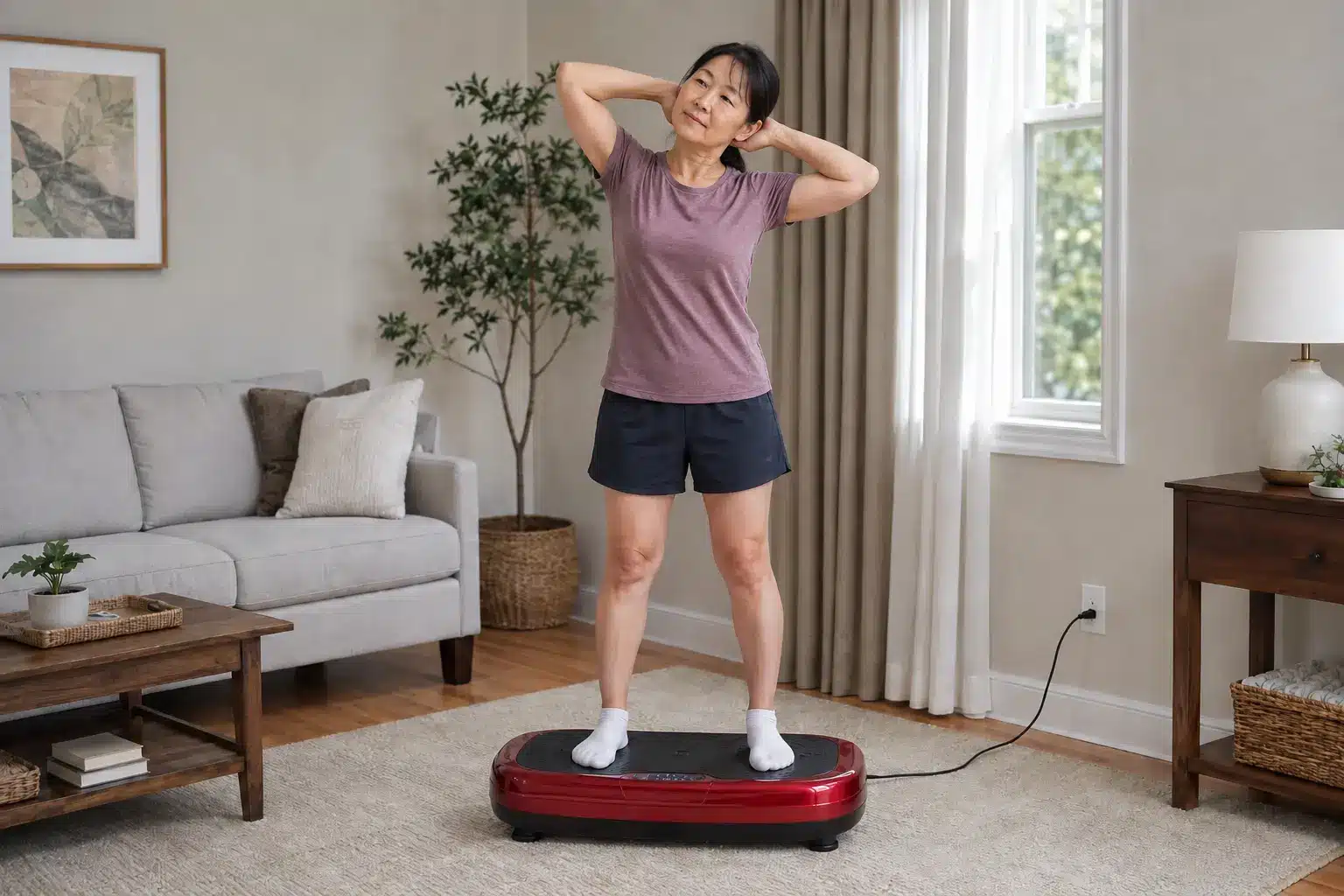
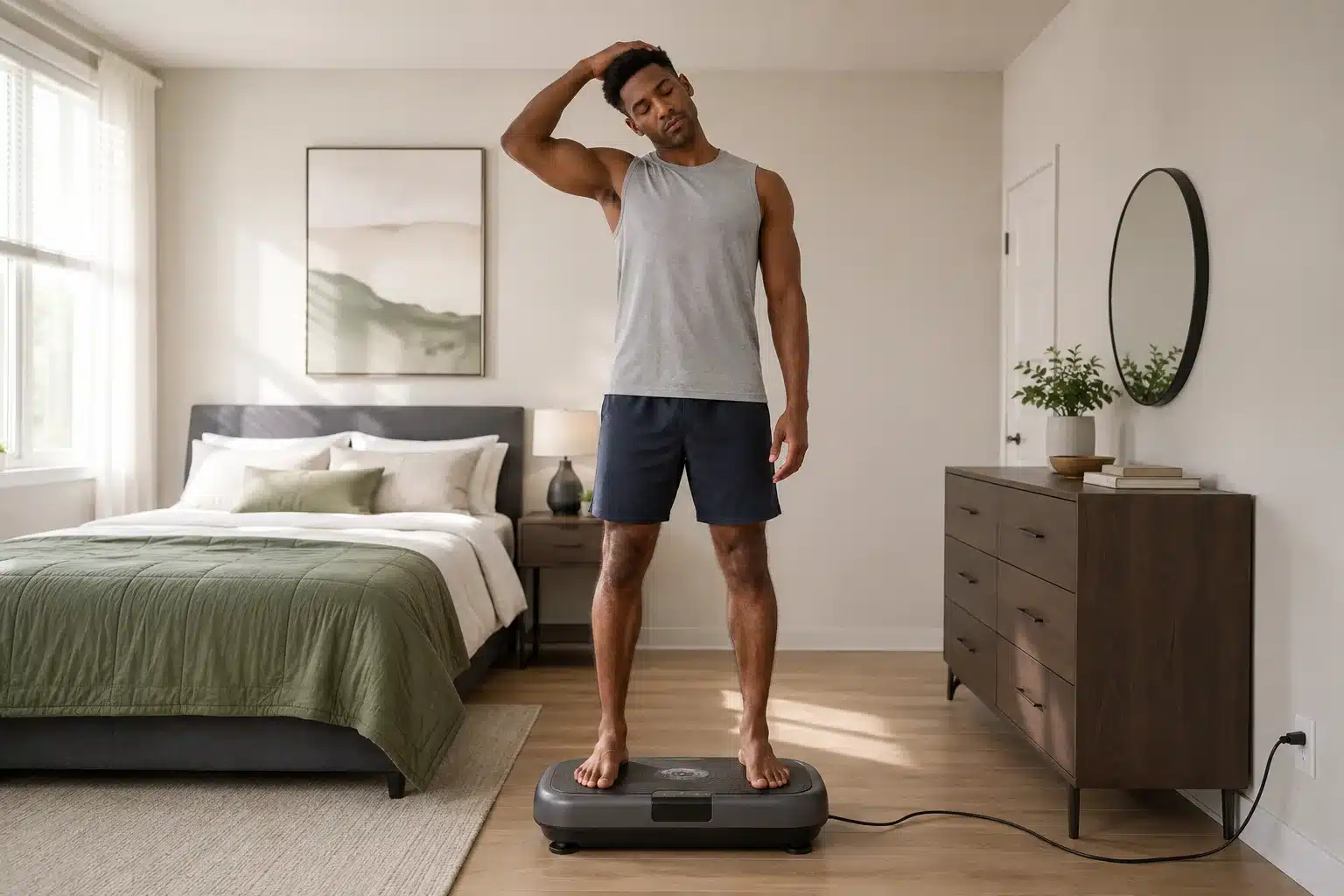
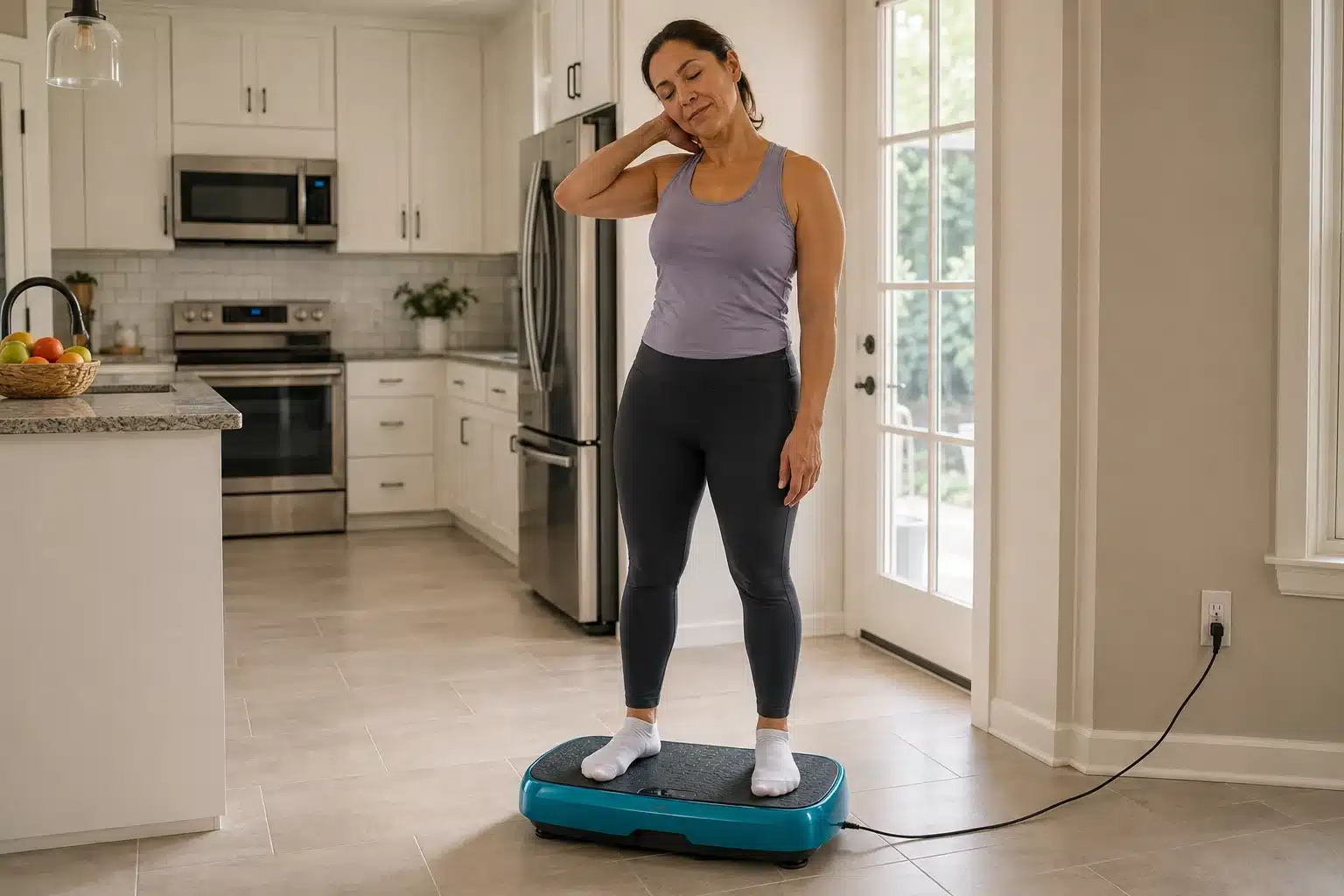
The safest starting position is usually standing upright with a small bend in the knees. The head should remain neutral, the shoulders relaxed, and the eyes directed forward rather than down at the controls.
Supported calf raises can add gentle lower body activity without requiring large neck movements. Shallow squats may also be suitable when they can be performed without straining, breath holding, or shoulder tension.
A seated position with the feet resting on the platform may reduce the amount of body weight placed on the machine. The vibration can still travel through the legs, so the setting should remain low.
I would avoid direct head contact with the platform, unsupported inversions, neck loading, or difficult planks during a pain flare. Complex balance positions also add risk without providing a clear neck specific advantage.
How to Start Safely
Start by considering why the neck hurts. Mild stiffness after prolonged sitting is different from pain after trauma or symptoms extending down the arm.
Use the lowest practical setting for three to five minutes. Keep the knees soft, relax the shoulders and jaw, and maintain a neutral head position throughout the session.
Use a rigid rail or solid support if balance is uncertain. Elastic exercise bands should not be treated as safety handles because they move when pulled.
Increase only one variable at a time. Add a small amount of time, a gentle exercise, or a slightly stronger setting instead of changing all three in one session.
Stop if pain intensifies, spreads, or changes character. Symptoms later in the day also matter, so do not judge tolerance only by how the session feels while the plate is running.
For a full guide on settings, positions, and session progressions for users with specific sensitivities or pain areas, my article on how to use a vibration plate for pain management covers the key variables in detail.
Anyone starting at home and wanting a machine suited to controlled, low-setting sessions can review my picks in the best vibration plate for home use guide.
When to Stop Using the Plate
Stop immediately if vibration causes increasing neck pain, severe headache, dizziness, nausea, blurred vision, loss of balance, or unusual head movement. Do not continue simply to finish the timer.
New arm pain, tingling, numbness, weakness, poor coordination, or changes in grip require greater caution. These symptoms may suggest nerve involvement and should be professionally assessed.
Anyone using a vibration plate alongside a cardiovascular condition should also review my guide on vibration plate and high blood pressure, which covers additional safety considerations.
Urgent medical attention is appropriate when neck pain follows significant trauma or occurs with difficulty speaking, swallowing, walking, or controlling the arms or legs. A vibration plate should never delay evaluation of serious symptoms.
What Works Better for Neck Pain?
Current neck pain guidelines place greater emphasis on staying active, education, self management, and exercise. Chronic nonspecific neck pain often responds better to an active plan than to relying only on passive treatments.
Useful rehabilitation may include cervical mobility, deep neck flexor training, upper back strengthening, shoulder endurance, and proprioception exercises. The exact plan should match the symptoms and physical findings.
A vibration plate may add general movement or balance stimulation. It should not replace targeted exercises that address the neck, shoulders, and upper back directly.
If you are evaluating machines before starting, my best vibration plate roundup covers the options I tested across a range of intensities and price points.
My Practical Take on Using a Vibration Plate for Neck Pain
A vibration plate may be useful for someone with mild muscular stiffness who wants a short, low intensity way to become more active. Its possible value comes from general movement and postural muscle activity rather than direct treatment of the cervical spine.
The strongest positive research involves vibration applied locally to neck muscles under controlled conditions. That evidence cannot be transferred directly to a platform beneath the feet.
I would use a home vibration plate cautiously, with soft knees, a neutral head, and relaxed shoulders. Anyone with radiating symptoms, recent trauma, instability, dizziness, severe headaches, or neurological changes should get professional guidance before use.
Older adults managing age-related cervical changes alongside general conditioning goals can find suitable options in my best vibration plate for seniors guide, which covers machines suited to cautious, low-intensity use.
The vibration plate's effect on neck pain is indirect, operating through two mechanisms. Improved circulation in the upper thoracic and cervical regions reduces muscle tension and accelerates clearance of inflammatory byproducts. The proprioceptive stimulus from standing on the plate activates postural muscles throughout the kinetic chain, including the deep cervical flexors and thoracic extensors, which are often underactivated in people with desk-related neck pain.
Head position during sessions is the most important safety variable. A forward head posture during vibration amplifies the load on the cervical spine and can produce or worsen neck pain. The head should be directly over the shoulders, with the chin slightly tucked and the gaze forward. For people with chronic forward head posture, this position requires conscious effort and can be practiced before stepping onto the plate.
Pairing vibration plate sessions with targeted cervical exercises produces better outcomes than the plate alone. Standing on the plate while performing slow chin tucks, gentle cervical rotation, or scapular retractions adds active muscle engagement to the passive vibration stimulus. The combination trains the muscles while improving circulation, addressing both the structural and vascular contributors to chronic neck pain.
FAQs
Can a vibration plate help neck pain?
A vibration plate may indirectly help mild neck pain by encouraging movement and postural muscle activity. Evidence specifically showing that consumer whole body vibration plates treat neck pain remains limited.
Can a vibration plate make neck pain worse?
Yes, a vibration plate can make neck pain worse if the setting is too strong or too much vibration reaches the upper body. Locked knees, shoulder tension, poor posture, and existing cervical problems can increase the risk.
Why does my neck hurt after using a vibration plate?
Your neck may hurt after using a vibration plate because excessive vibration traveled upward or your neck and shoulder muscles tensed during the session. Poor posture, high intensity, and looking down at the console can also contribute.
Is a vibration plate safe for a pinched nerve in the neck?
A vibration plate should not be used as self treatment for a pinched nerve in the neck. Arm pain, numbness, tingling, or weakness should be professionally assessed before whole body vibration is attempted.
Can I use a vibration plate with a cervical disc bulge?
You may be able to use a vibration plate with a cervical disc bulge if the condition is stable and a healthcare professional considers it appropriate. Radiating pain, weakness, numbness, or an acute flare require greater caution.
Is a vibration plate safe after whiplash?
A vibration plate may not be safe soon after whiplash because vibration can aggravate pain, headache, dizziness, and movement sensitivity. Medical or rehabilitation clearance is sensible before use.
Can vibration plates help forward head posture?
Vibration plates do not directly correct forward head posture. They may support general postural activity, but lasting improvement requires movement changes, strengthening, mobility work, and better daily habits.
How should I stand on a vibration plate to protect my neck?
Stand on a vibration plate with the knees slightly bent, head neutral, shoulders relaxed, and eyes facing forward. Use a low setting and stop if the jaw, vision, head, or neck begins to shake strongly.
Notable Studies
Dueñas L, et al. The effect of vibration therapy on neck myofascial trigger points: A randomized controlled pilot study. The study tested ten sessions of local vibration applied to upper trapezius and levator scapulae trigger points in 28 people with chronic nonspecific neck pain. It reported lower disability scores and higher pressure pain thresholds after treatment.
Good vibes for the brain: Placebo versus real vibration in patients with chronic neck pain. This randomized crossover study compared direct neck muscle vibration with placebo vibration in 23 people. Real vibration improved cervical joint position sense and pressure pain sensitivity, while both conditions reduced resting pain.
Igbokwe EO, et al. A Comparison of the Effects of Stochastic Resonance Therapy, Whole Body Vibration and Balance Training on Pain Perception and Sensorimotor Function in Patients with Chronic Nonspecific Neck Pain. This source describes a randomized trial protocol examining pain, disability, pressure sensitivity, and cervical movement sense. It does not provide completed outcome evidence.
El Allawy A, et al. Clinical Practice Guideline: Nonspecific Neck Pain. The guideline recommends activation, education, self management, and exercise as central approaches for nonspecific neck pain after serious structural causes have been excluded.
Gallego Izquierdo T, et al. Comparison of cranio cervical flexion training versus cervical proprioception training in patients with chronic neck pain. This randomized trial examined neuromuscular control, pain sensitivity, disability, and proprioception after two forms of targeted neck exercise.
Effects of Cervical Mobilization on Balance and Proprioception in Patients With Nonspecific Neck Pain. This randomized clinical trial evaluated pain, cervical movement, balance, and proprioception, supporting the connection between neck symptoms and sensorimotor control.