Affiliate Disclosure: Vibration Plate Zone is a proud participant in the Amazon Services LLC Associates Program.
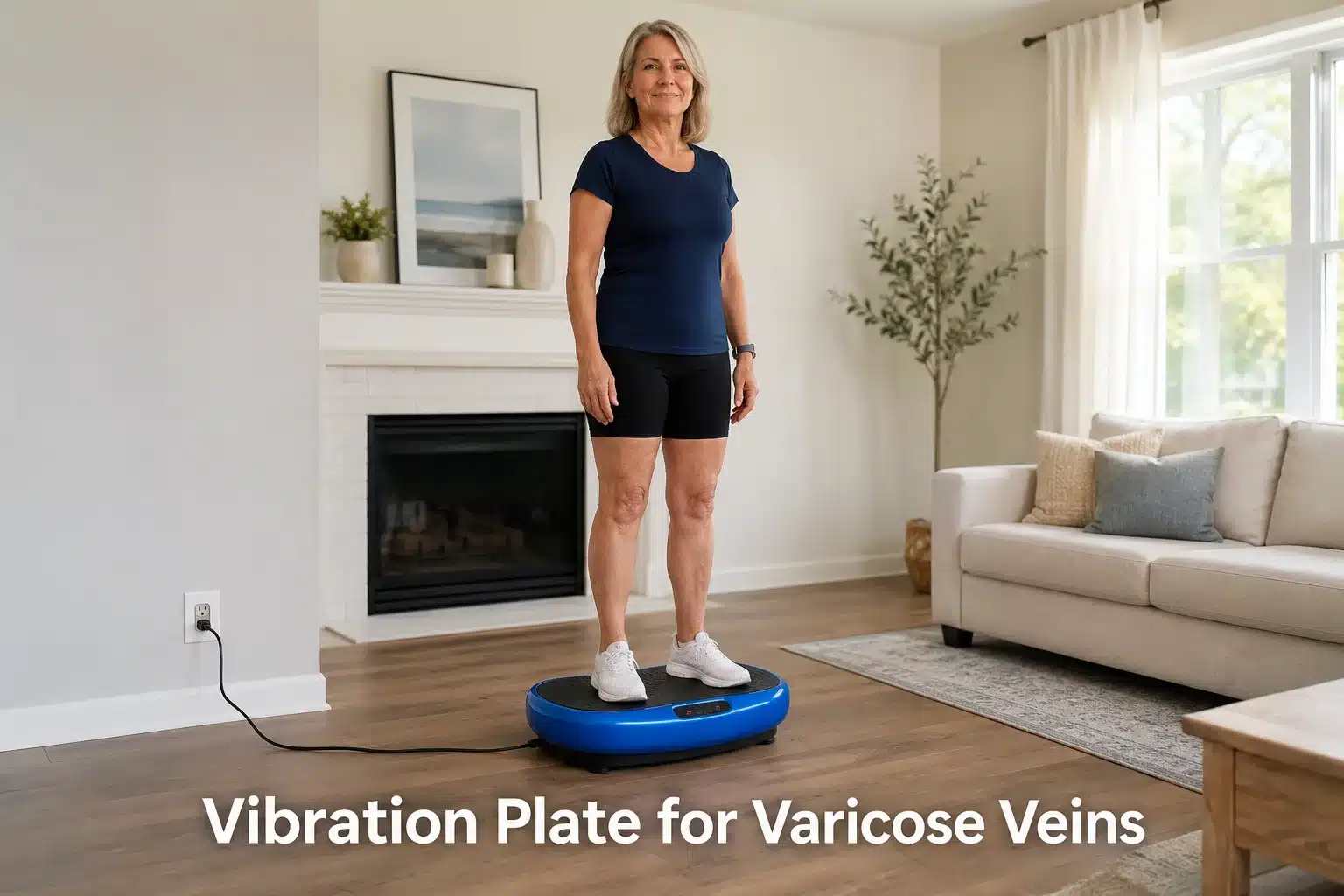
If you have varicose veins, there is a good chance you are not only thinking about how they look. In my experience, most people are really asking about how their legs feel. They notice heaviness, aching, throbbing, tired legs, swollen ankles, mild edema, or that familiar stagnant feeling after sitting too long or standing all day. That is usually the point where they start wondering whether a vibration plate for varicose veins might help.

About the author: Hello! I’m Vladimir Stanar, professor of physical education, kinesiotherapist, marathon runner, cyclist, and cycling coach, and long-time advocate of health, fitness, and active living.
My journey with vibration plates runs parallel to my professional career in education, sports medicine, and athletic development. I’ve developed a unique process for testing vibration plates as they are some of the most versatile tools for enhancing health, recovery, and performance.
✅ Expert-Reviewed by: Vanja Vukas, MPhEd
📚 Expert Contributor: Milutin Tucakov, MPhEd
Varicose veins commonly come with an achy or heavy feeling in the legs, swelling in the lower legs, and discomfort that tends to worsen after long periods of standing or sitting.
As a licensed kinesiotherapist, I think this is a fair question, but it needs a realistic answer. Whole body vibration for varicose veins may help some people with circulation support, leg comfort, calf-muscle activation, and mild swelling, but it does not cure varicose veins, repair weak vein valves, or replace medical treatment when venous disease is progressing. The core issue in chronic venous insufficiency is that blood has trouble flowing back toward the heart, which can lead to pooling, pressure, swelling, and discomfort in the legs.
My honest view is this: a vibration machine can sometimes be a useful supportive tool for symptom relief, especially when the goal is to improve leg circulation, reduce the feeling of heavy legs, and make light movement easier. But I would never describe vibration therapy for varicose veins as a fix for the underlying structural problem. That distinction matters, and it is the one I keep coming back to throughout this topic.
What Are Varicose Veins, Really?
Varicose veins are enlarged, bulging, twisted superficial veins that usually appear in the legs. Some people call them ropey veins because they stand out under the skin in a winding pattern. They can be mainly cosmetic, but they can also come with symptoms such as aching legs, heavy legs, throbbing legs, swollen ankles, lower-leg swelling, itching, and leg discomfort that gets worse later in the day.
One thing I often explain is that varicose vein symptoms and poor circulation language tend to overlap in everyday conversation. A person may not say, “I think I have chronic venous insufficiency.” They are much more likely to say, “My legs feel heavy,” “my ankles swell,” or “my calves ache after work.” From a content point of view, that is important, because vibration plate for leg circulation and vibration plate for heavy legs are often really part of the same question.
Why Varicose Veins Happen: Weak Valves, Blood Pooling, and Chronic Venous Insufficiency
To understand whether a vibration plate can help, I think it is important to understand why varicose veins happen in the first place. Your leg veins contain one-way valves that are supposed to help blood move upward toward the heart. When those valves become weak or faulty, blood does not move up as efficiently as it should. Instead, some of it flows backward and pools in the lower legs. Over time, the extra pressure can enlarge the superficial veins and contribute to chronic venous insufficiency. For those also dealing with systemic high blood pressure, my guide on vibration plate and blood pressure examines how the cardiovascular load from vibration training interacts with elevated readings.
This is why I am careful with cure language. If a person has weak vein valves or progressive venous disease, a vibration platform for varicose veins is not going to fix the valve damage itself. It may still help with symptoms, movement, and circulation support, but it is not changing the underlying valve mechanics. That is one of the most important truths to keep in mind when writing or reading about vibration plate for chronic venous insufficiency.
Can a Vibration Plate Help Varicose Veins?
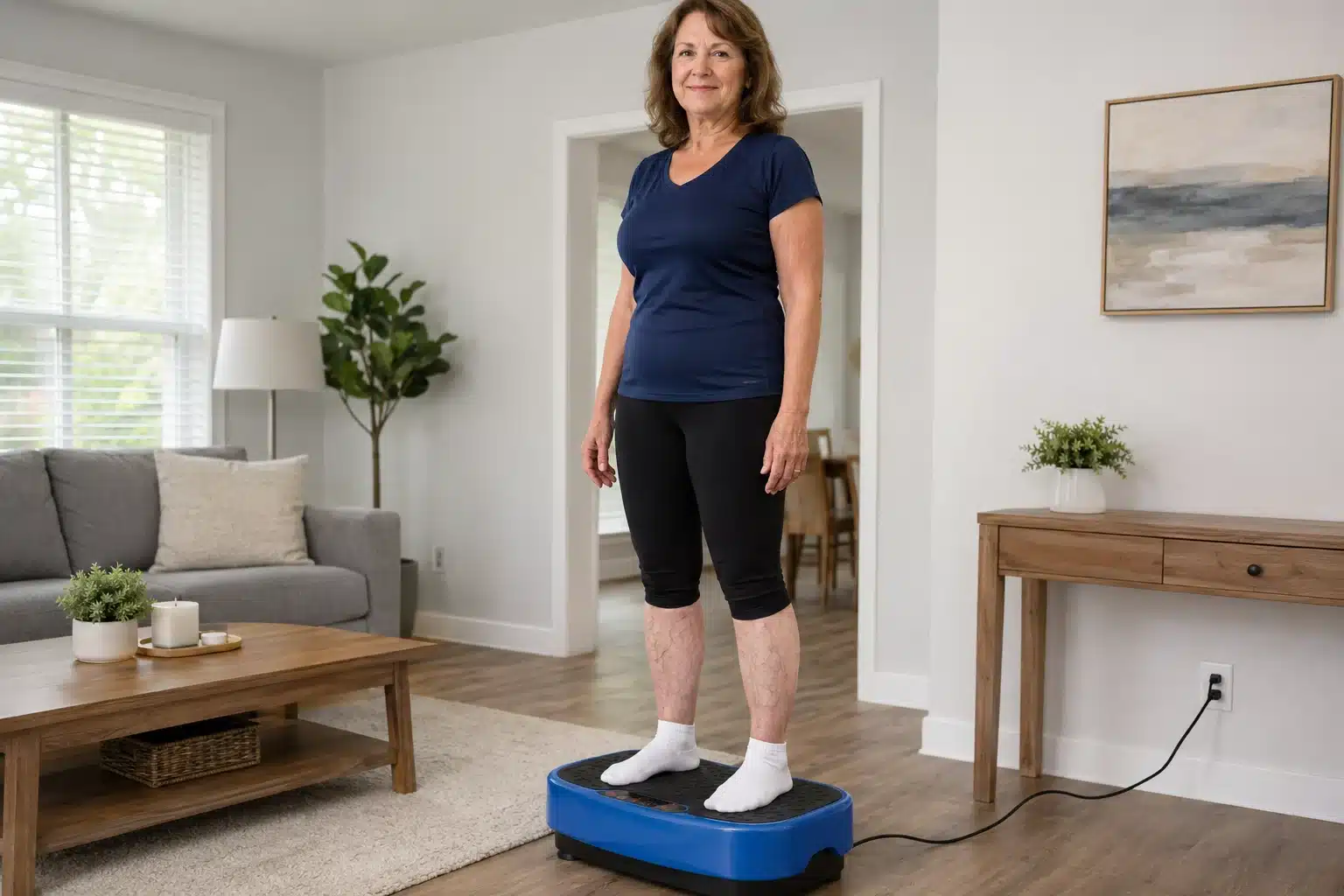
Yes, a vibration plate can help varicose veins in some cases, but I would frame that help as symptom support, not structural repair.
When people ask me, “Can a vibration plate help varicose veins?” or “Does a vibration plate help varicose veins?” I usually answer this way: it may help your legs feel better, but it will not remove the root venous problem. A vibration plate may support blood flow in the legs, help activate the calf muscle pump, reduce the feeling of stagnation after prolonged sitting or standing, and make tired legs feel lighter. Even so, I do not think it should be viewed as a replacement for compression, medical evaluation, or vein treatment when those are needed.
That said, I do not think it is accurate to say that a vibration plate is automatically good for varicose veins in every case. If a person has severe swelling, skin changes, suspected clotting, ulcers, or more advanced venous disease, I do not want them treating a vibration plate as a substitute for proper medical evaluation. For me, the right framing is this: a vibration machine for varicose veins may help with heaviness, mild swelling, movement, and comfort, but it is not a replacement for compression stockings, vein procedures, or medical management when they are needed.
Readers interested specifically in how vibration-driven circulation changes may affect skin collagen and appearance can find a full breakdown in my guide on vibration plate for skin and collagen.
How a Vibration Plate May Help with Varicose Vein Symptoms
There are a few practical reasons a vibration plate may help with varicose vein symptoms. It may encourage calf-muscle activity, support venous return, reduce the heavy stagnant feeling in the legs, and make mild swelling or discomfort feel more manageable for some people. The most realistic way to view it is as a supportive circulation and movement tool, not as something that fixes the underlying vein damage.
It may support the calf muscle pump
This is the most useful way to explain the topic.
Every time you walk, your calf muscles squeeze and help push blood upward through the veins. That concept helps explain why movement matters so much in venous return. If the calf muscles are not doing much, blood is more likely to stagnate and pool in the lower legs.
This is where a vibration plate may help. Even light whole-body vibration can create small muscle contractions and encourage calf-muscle activation. In practical terms, that means a person who has poor circulation in the legs, sits too much, or stands statically for long periods may get some benefit from a tool that helps wake up the lower legs. I see this as one of the strongest arguments for using a vibration plate for vein health: not because it changes the veins directly, but because it may support the muscular pumping action that helps venous return.
If you are comparing machines with lower-limb circulation support as a priority, my best vibration plates for circulation guide covers the options I would consider for this purpose.
It may help heavy, tired legs feel lighter
Heavy legs and tired legs are among the most common real-world complaints I hear from people with varicose veins or early CVI. Sometimes they do not even focus much on the visible veins. They just keep saying their legs feel tired, full, achy, or sluggish by the end of the day.
That is the kind of situation where low-intensity vibration may help. If the vibration supports circulation, reduces the feeling of pooling, and makes the lower legs feel more active, the person may notice less leg fatigue and less discomfort after long periods of standing or sitting.
For readers interested in the broader circulatory and metabolic effects of vibration, my guide on vibration plates and hormones covers the evidence on insulin sensitivity, adiponectin, and other hormonal markers that have been studied in the context of circulation and metabolic health.
For readers interested in the broader circulatory and metabolic effects of vibration, my guide on vibration plates and hormones covers the evidence on insulin sensitivity, adiponectin, and other hormonal markers that have been studied in the context of circulation and metabolic health.
It may help with mild swelling and lower-leg circulation
I want to be careful here, but this is another area where people may notice benefit.
If swelling is mild and related to reduced circulation, prolonged sitting, prolonged standing, or reduced calf-muscle activity, a short post-walk vibration session or simple circulation routine for legs may help the lower legs feel less puffy. The reason is not magical. It is more likely that the combination of muscle activation, movement, and circulation support helps fluid move more efficiently.
For machines specifically evaluated for fluid movement and lower-leg swelling reduction, my best vibration plates for lymphatic drainage guide covers what I tested and recommend.
I would not oversell this by saying a vibration plate treats edema broadly. But for mild lower-leg swelling or swollen ankles that are part of a bigger picture of inactivity, heaviness, or venous sluggishness, I do think cautious use may help some people feel better.
What a Vibration Plate Cannot Do for Varicose Veins
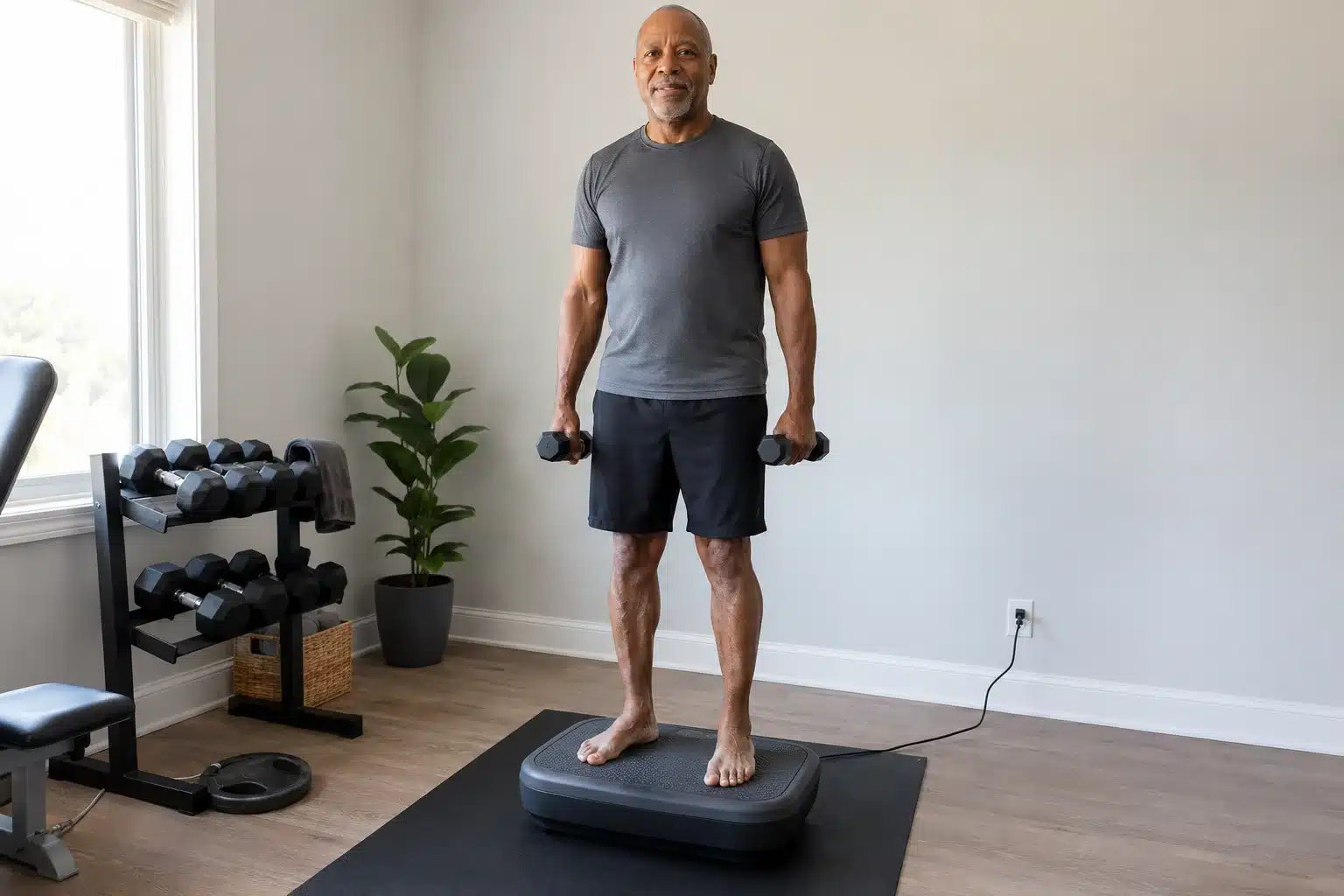
A vibration plate does not cure varicose veins. It does not fix faulty valves. It does not reverse chronic venous insufficiency. It does not replace compression stockings. And it does not replace medical treatment when symptoms are progressing or the condition is becoming more severe. A person may feel better after a session because circulation and muscle activity improved, but that is very different from correcting the structural problem in the veins.
That may sound obvious, but I think it needs to be said plainly because symptom relief and structural improvement are not the same thing. A person may feel better after a session because their calf muscles activated, their legs moved more, and circulation improved. That does not mean the damaged valve function has been repaired.
So if I am being fully honest, I would describe vibration therapy for varicose veins as a supportive lifestyle tool, not a primary treatment for significant vein disease.
The Type of Person Who May Benefit Most
In my experience, the person most likely to benefit from a vibration plate for varicose veins is not the person with the most severe symptoms. It is more often the person with mild to moderate symptoms, poor movement habits, lots of sitting or static standing, tired heavy legs, early swelling, or a general sense that their lower legs wake up when they move.
That profile also describes a large portion of older adults, and for that group my best vibration plates for seniors guide covers machines suited to safe, accessible daily use.
People managing nighttime leg heaviness or restlessness alongside varicose veins may also benefit from reading my guide on vibration plates for RLS, since the two conditions can overlap in their evening symptom pattern.
For example, if someone spends long hours seated at a desk and notices poor circulation in the legs, swollen ankles at the end of the day, or that stagnant heavy feeling after work, I am more open to trying low-intensity vibration as part of a conservative care approach. The same goes for someone who stands a lot but does not actually move much, because prolonged standing is associated with venous disease risk and static standing does not activate the calf muscle pump the same way walking does.
I am less enthusiastic when symptoms are more severe, more advanced, or more medically concerning. If the person has skin changes, open ulcers, major swelling, significant pain, or any red flags for clotting, I do not treat a vibration plate as a first-line idea.
People managing obesity alongside mild varicose vein symptoms often fit the first profile, and my guide to vibration plate for obesity management explains how to build activity safely when movement has been limited.
The same caution applies to any head-related symptoms during a session, and my guide on whether vibration plates are bad for the brain covers which warning signs should prompt you to stop.
My Practical Rule as a Licensed Kinesiotherapist
My practical rule is simple.
If the picture looks like heaviness, tired legs, mild swelling, reduced calf-muscle activity, poor circulation habits, and symptoms that improve with movement, I am more open to vibration work.
If the picture looks like severe swelling, new pain, skin changes, ulcers, suspected clotting, or advanced chronic venous insufficiency, I am much more conservative.
A simple example: if someone tells me, “My legs feel better after I walk, but terrible after I sit for hours,” I immediately think about ways to improve venous return and calf-muscle activity. A vibration plate may fit there. But if someone tells me, “One leg is suddenly more swollen, painful, red, or tender,” I am not thinking about home tools. I am thinking about medical evaluation, because clot-related problems are not something I want anyone self-managing casually.
How to Use a Vibration Plate Safely With Varicose Veins
If you want to try a vibration plate for varicose veins, I would keep the approach conservative.
Start with short sessions. Use low-intensity vibration. Keep a soft, comfortable stance. Do not treat this like a hard workout. In most cases, I think a vibration plate works best here as a circulation-support tool, not a performance tool.
For a plate with precise low-frequency settings suited to gentle daily use, my VT007 vibration plate review covers a linear model with therapeutic frequency control.
If you are still in the process of choosing a machine for this kind of gentle routine, my best vibration plates for home use guide covers the options I recommend for low-intensity daily use.
I also like the idea of using it after walking or after gentle movement. That sequence makes sense because walking already activates the calf muscle pump, and the vibration may then add a little more lower-leg activity and circulation support. More broadly, walking and simple foot-and-ankle movement are often useful for venous return because the lower-leg muscles help push blood upward.
Pay attention to how your legs feel later, not just during the session. Did they feel lighter afterward? Did swelling seem better, worse, or unchanged? Did aching legs calm down? Or did throbbing, discomfort, or swelling increase?
If symptoms worsen, stop. If severe swelling develops, stop. If you notice skin changes, ulcers, or unusual pain, stop and seek medical advice.
For guidance on frequency settings, standing positions, and how to structure sessions for circulatory goals, my article on how to set up and progress a vibration plate routine covers the key variables in detail.
Best Vibration Plate Exercises for Varicose Veins
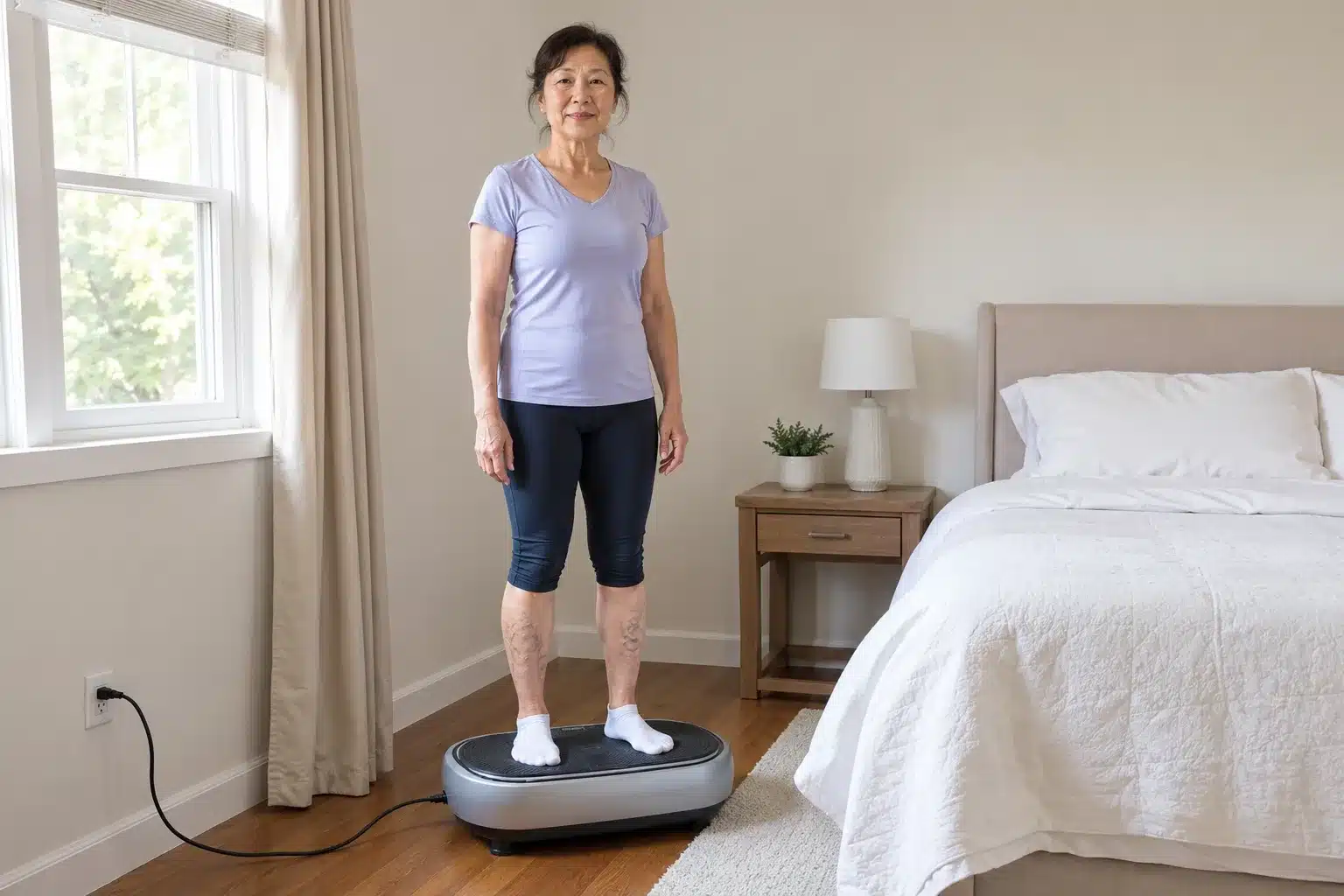
These are the exercises I think make the most sense because they match the actual circulatory goal.
Gentle standing hold
This is the simplest starting point.
Stand comfortably on the plate with soft knees and relaxed posture. Let your calves and lower legs experience the vibration without forcing anything. This is often enough to test tolerance and see how your legs respond.
Ankle pumps
Ankle pumps are one of my favorite simple exercises for venous return. Moving the ankles up and down helps activate the lower leg and encourages blood flow.
Toe raises and heel raises
Toe raises and heel raises are excellent because they directly involve the calf muscles and lower leg. They are simple, practical, and very easy to scale.
Calf raises
If a person tolerates them well, calf raises are probably the strongest exercise in this context because they directly target the calf muscle pump. If I had to pick one movement to explain why low-impact exercise for varicose veins matters, it would be this family of movements.
Weight shifting
Weight shifting adds gentle movement and keeps the session from becoming passive. It can also help break up static standing patterns.
Chair-assisted circulation work
For someone older, deconditioned, or not fully comfortable standing on the plate, chair-assisted use can make the whole routine more accessible. I like that because the point here is not athletic challenge. It is better venous return, better lower-leg circulation, and better tolerance to movement.
Symptoms a Vibration Plate May and May Not Address
A vibration plate may be more likely to help the feel of varicose veins than the visible vein changes themselves. In other words, it may help more with heavy legs, aching legs, throbbing legs, tired legs, mild swelling, night cramps, or that stagnant uncomfortable feeling after sitting too long. It may help less with the actual appearance of bulging veins or the underlying weak vein valves that caused them.
For people who also manage lower-limb swelling that goes beyond what varicose veins alone cause, my best vibration plates for lymphedema guide covers machines I would consider for that overlap.
That is why I think the best promise here is modest but useful: a vibration plate may help your legs feel better, not necessarily look dramatically different.
When a Vibration Plate May Not Help or May Be the Wrong Tool
There are situations where I would not lean on a vibration plate.
If there is an active blood clot or suspected clot, it is the wrong tool. If there are open ulcers, it is the wrong tool. If swelling is severe and unexplained, it is the wrong tool. If there are major skin changes or more advanced chronic venous insufficiency, I want medical input before anyone experiments much with home equipment.
I would also use pregnancy precautions and general medical common sense. Pregnancy can increase the likelihood of varicose veins, but any unusual swelling, calf pain, or other concerning symptoms deserves medical guidance rather than self-treatment alone.
People using a vibration plate alongside neck conditions face comparable caution, and my guide on vibration plate use for neck pain covers which cervical diagnoses require professional assessment before any session.
If underlying connective tissue or autoimmune conditions are part of the picture, my guide on vibration plates and autoimmune disease covers how to navigate vibration therapy when the immune system is involved.
When to Stop Using a Vibration Plate and Get Medical Help
I would stop using a vibration plate and seek medical evaluation if:
- swelling becomes severe or rapidly worse
- one leg becomes much more swollen than the other
- you develop new pain, redness, or tenderness
- skin changes begin to appear or worsen
- you suspect a clot
- you have open sores or ulcers
- symptoms are progressing instead of improving
Those are not situations where I want someone relying on DIY circulation tools. They are situations where a vein specialist or other qualified clinician may need to assess what is going on.
My Honest Take: Is a Vibration Plate Worth Trying for Varicose Veins?
Yes, I think a vibration plate is worth trying for varicose veins in the right situation. I think it is most worth trying when the main goals are circulation support, calf-muscle activation, less leg heaviness, less mild swelling, and better comfort after prolonged sitting or standing. But I do not think it should be presented as a cure. It does not repair damaged valves, reverse venous reflux, or replace compression therapy or medical treatment when the condition is more advanced.
If I had to sum up my view in one sentence, it would be this: a vibration plate is most useful for varicose veins when it helps your legs move and feel better, not when you expect it to solve vein disease by itself.
If you are ready to choose a machine and want a full overview of the market, my best vibration plates guide covers options across every budget, size, and frequency range.
The calf-pump mechanism is central to understanding why a vibration plate helps varicose veins. Veins in the lower leg rely on muscle contractions, particularly the calf muscles, to push blood upward against gravity. Chronic standing or sitting inhibits this mechanism, causing blood to pool. Low-frequency vibration at 10 to 15 Hz produces rhythmic calf muscle contractions that replicate the pumping action of walking, moving venous blood upward toward the heart.
The direction of vibration matters more for venous return than it does for most other applications. Oscillating plates, which tilt side-to-side and load each leg alternately, produce better lower-leg muscle activation patterns for circulation than linear vertical plates, which load both legs symmetrically. For people targeting venous insufficiency, an oscillating plate is the more appropriate choice.
Timing sessions in relation to prolonged sitting or standing improves outcomes. Using the plate for 10 minutes after a long flight, a day of desk work, or extended standing shifts fluid that has pooled in the lower legs and reduces the feeling of heaviness or tightness that varicose vein sufferers experience by evening. It is most useful as a circulatory reset tool rather than a treatment used at arbitrary times.
For a fuller view of what vibration plates offer beyond circulatory support, my article on what the research shows about vibration plate results covers the evidence on muscle activation, bone density, and metabolic outcomes.
FAQs
Can a vibration plate improve leg circulation?
It may. That is one of the most plausible benefits. Since movement and calf-muscle activity help venous return, a vibration plate may support circulation in the lower legs, especially when paired with walking or ankle-and-calf exercises.
Can a vibration plate reduce swelling in the legs?
It may help with mild swelling related to inactivity, prolonged sitting, or reduced calf-muscle activity, but it is not a treatment for severe or unexplained swelling. Severe swelling needs medical evaluation.
Can a vibration plate make varicose veins worse?
It can be the wrong tool in some situations, especially if symptoms are severe, if there is clot risk, or if the condition is more advanced. For mild symptoms, low-intensity use is more reasonable than aggressive use.
Is a vibration plate safe for chronic venous insufficiency?
Sometimes, but not automatically. It depends on symptom severity, overall health, and whether there are complications such as ulcers, significant swelling, or suspicion of clotting.
What vibration plate exercises are best for varicose veins?
The most logical choices are gentle standing holds, ankle pumps, toe raises, heel raises, calf raises, and weight shifting, because they all support calf-muscle activity and lower-leg movement.
Can a vibration plate replace compression stockings?
No. Compression therapy is a recognized supportive treatment for varicose veins and chronic venous insufficiency. A vibration plate may be an additional tool, but it is not a replacement for compression when compression is recommended.