Affiliate Disclosure: Vibration Plate Zone is a proud participant in the Amazon Services LLC Associates Program.
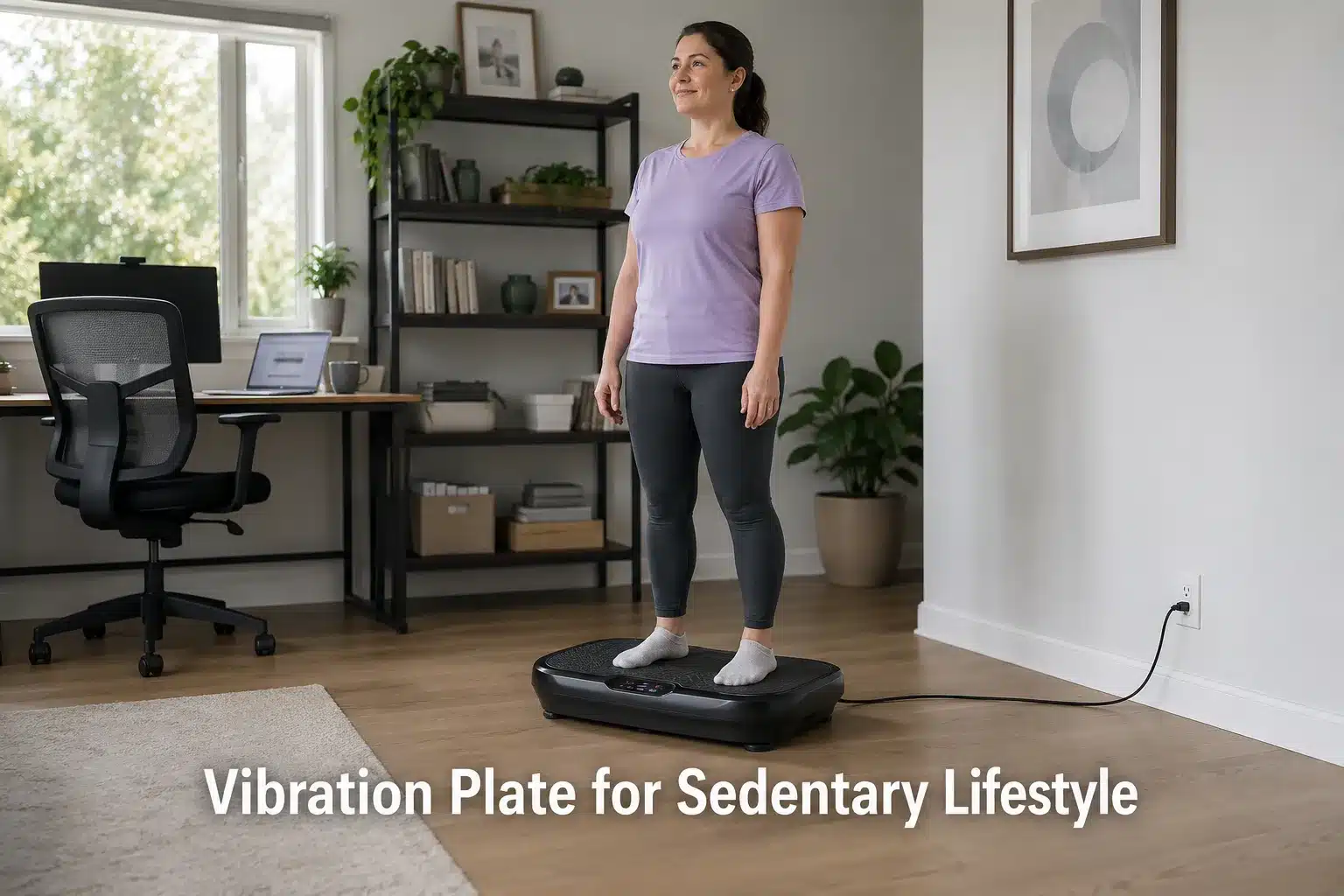
A vibration plate can provide short periods of low impact movement and muscle activation for someone with a sedentary lifestyle. It may be especially useful when low fitness, limited confidence, joint discomfort, or lack of time makes conventional exercise feel difficult.

About the author: Hello! I’m Vladimir Stanar, professor of physical education, kinesiotherapist, marathon runner, cyclist, and cycling coach, and long-time advocate of health, fitness, and active living.
My journey with vibration plates runs parallel to my professional career in education, sports medicine, and athletic development. I’ve developed a unique process for testing vibration plates as they are some of the most versatile tools for enhancing health, recovery, and performance.
✅ Expert-Reviewed by: Vanja Vukas, MPhEd
📚 Expert Contributor: Milutin Tucakov, MPhEd
It cannot cancel the effects of sitting for most of the day. A short vibration session also cannot replace walking, aerobic activity, progressive strength training, or regular movement between workouts.
The most practical role of a vibration plate is helping an inactive person begin. Short supported sessions can activate the legs, interrupt sitting, and create a manageable routine that gradually expands into more complete exercise.
What Is a Sedentary Lifestyle?
A sedentary lifestyle involves spending large parts of waking time sitting, reclining, or lying down while using very little energy. Common examples include desk work, driving, watching television, gaming, and using a phone while seated.
Working from home can make the problem less obvious. Someone may move from the bed to a desk, then to the sofa, without walking much farther than a few rooms.
Sedentary behavior and physical inactivity are related, but they are not identical. Sedentary behavior describes how much time someone spends sitting, while physical inactivity usually means not completing enough moderate or vigorous activity.
A person can exercise for 30 minutes and still remain highly sedentary during the rest of the day. This is why completing one workout does not automatically solve the problem of prolonged sitting.
Why Sitting All Day Affects the Body
The muscles in the legs, hips, and trunk become less active during long periods of sitting. Daily energy use also falls because the body performs less physical work.
Extended inactivity may contribute to reduced exercise tolerance, weaker legs, poorer mobility, and difficulty returning to regular activity. Tightness around the hips and ankles can also make walking, squatting, and climbing stairs feel less comfortable.
Some people notice back, hip, shoulder, or neck discomfort after sitting for long periods. The position itself is not always the only cause, since staying in almost any posture for hours can become uncomfortable.
A sedentary routine may also make weight management harder. Lower daily movement reduces energy expenditure, while fatigue and deconditioning can make planned exercise feel more difficult.
These changes often develop gradually. Someone may not notice the decline until a short walk, a flight of stairs, or standing from a low chair feels harder than it used to.
How a Vibration Plate Works
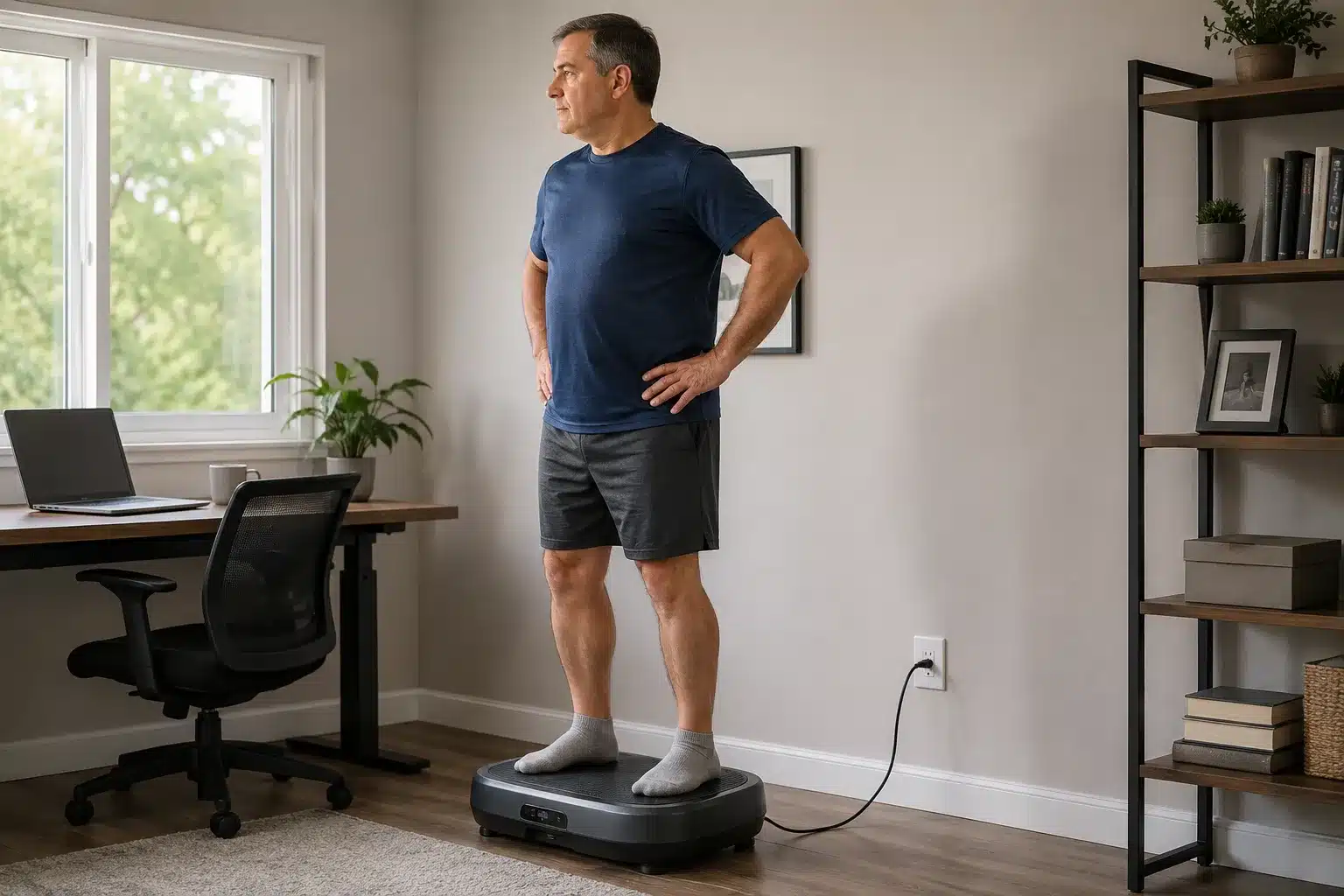
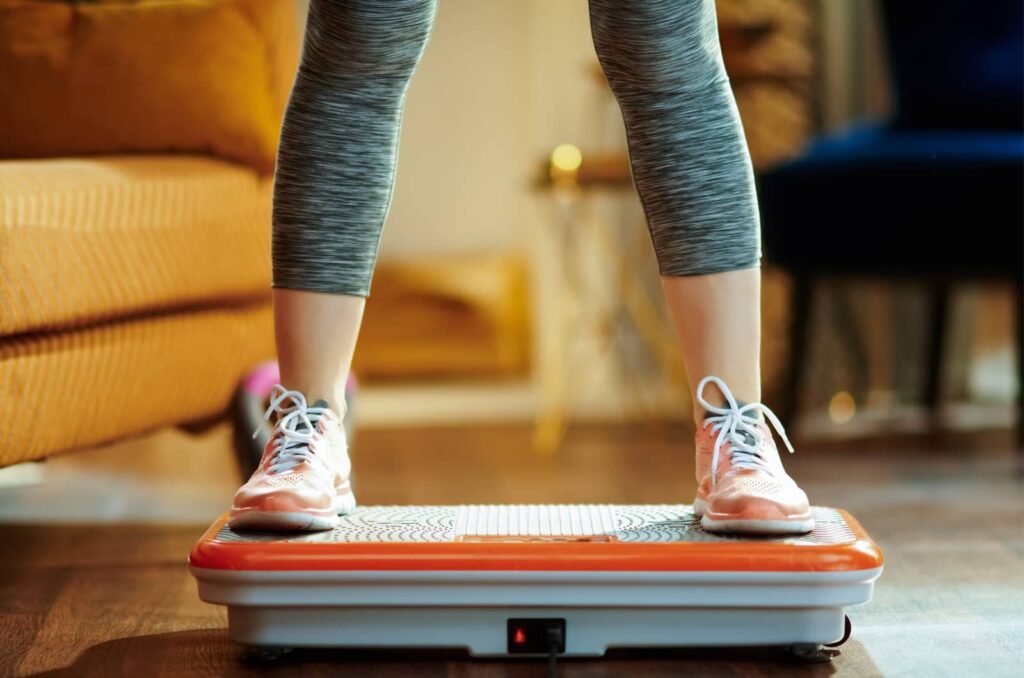
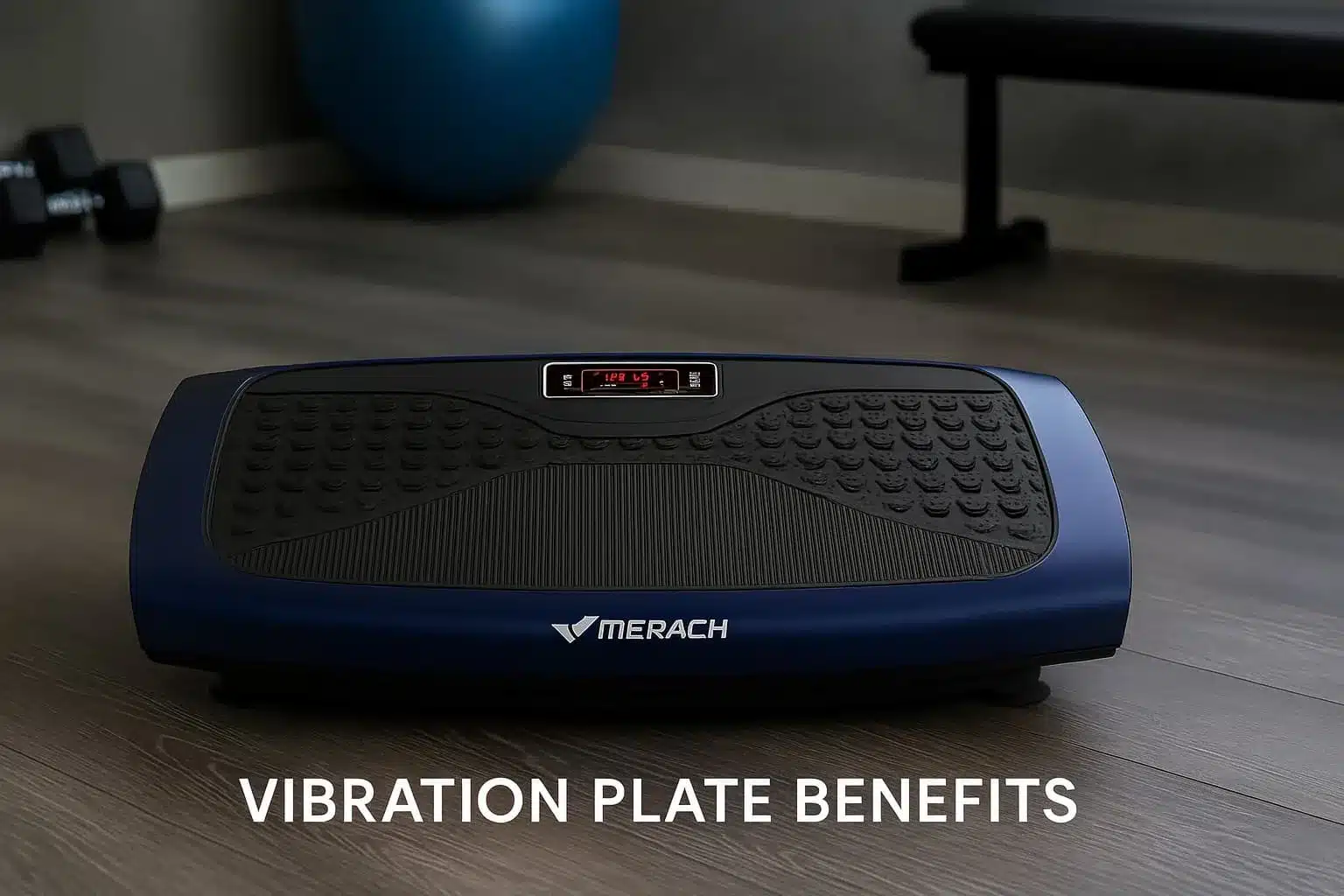
A vibration plate creates rapid mechanical movement beneath the feet or hands. The body responds with repeated muscle contractions and postural corrections while trying to maintain balance.
The physical demand depends on the vibration frequency, amplitude, platform type, stance, knee angle, session length, and exercise choice. A shallow squat usually requires more muscle activity than standing upright.
Soft knees allow the legs to absorb more of the movement. Locked knees can create a more rigid path through the body and may allow stronger vibration to reach the back, neck, jaw, or head.
The plate can make simple movements feel more demanding. That does not mean it reproduces every effect of walking, cycling, swimming, or conventional resistance training.
Does Standing on a Vibration Plate Count as Exercise?
Standing on a vibration plate creates more muscular activity than sitting still. The calves, thighs, hips, and postural muscles make repeated adjustments as the platform moves.
For someone beginning from almost complete inactivity, this may count as a small amount of physical activity. It can also provide an approachable first step when a normal workout feels overwhelming.
Passive standing still has important limitations. It involves little joint movement, limited cardiovascular demand, modest energy use, and very little progressive resistance.
The body may also adapt quickly. Once someone can stand comfortably for several minutes, passive use may become too easy to produce continued improvement.
Active exercises make the session more exercise like. Squats, calf raises, weight shifts, marching, and resistance band movements involve more muscles and create a greater physical challenge.
What Research Shows in Sedentary Adults
Research involving sedentary adults suggests that structured whole body vibration training may improve selected measures of fitness. Reported changes have included strength, flexibility, muscular endurance, body composition, and neuromuscular performance.
One study followed previously sedentary adults through a progressive 12 week vibration program performed three times per week. The sessions lasted up to 30 minutes and produced improvements in several fitness measures.
This was much more substantial than standing passively for five minutes. The program involved repeated training, progression, and a meaningful weekly time commitment.
A pilot study in sedentary postmenopausal women compared vibration training with aerobic exercise and circuit resistance training. All programs were progressive and completed three times per week for eight weeks.
Another study involving sedentary young men used squat exercises on vibration platforms for ten weeks. Changes in thigh muscle size and lower body performance were assessed, but the intervention combined vibration with active squatting.
These studies show that whole body vibration can provide a genuine training stimulus. They do not show that casual passive standing produces the same results.
The research also has limitations. Studies often include small groups, different machines, different settings, and participants with different ages and health profiles.
Can a Vibration Plate Reverse a Sedentary Lifestyle?
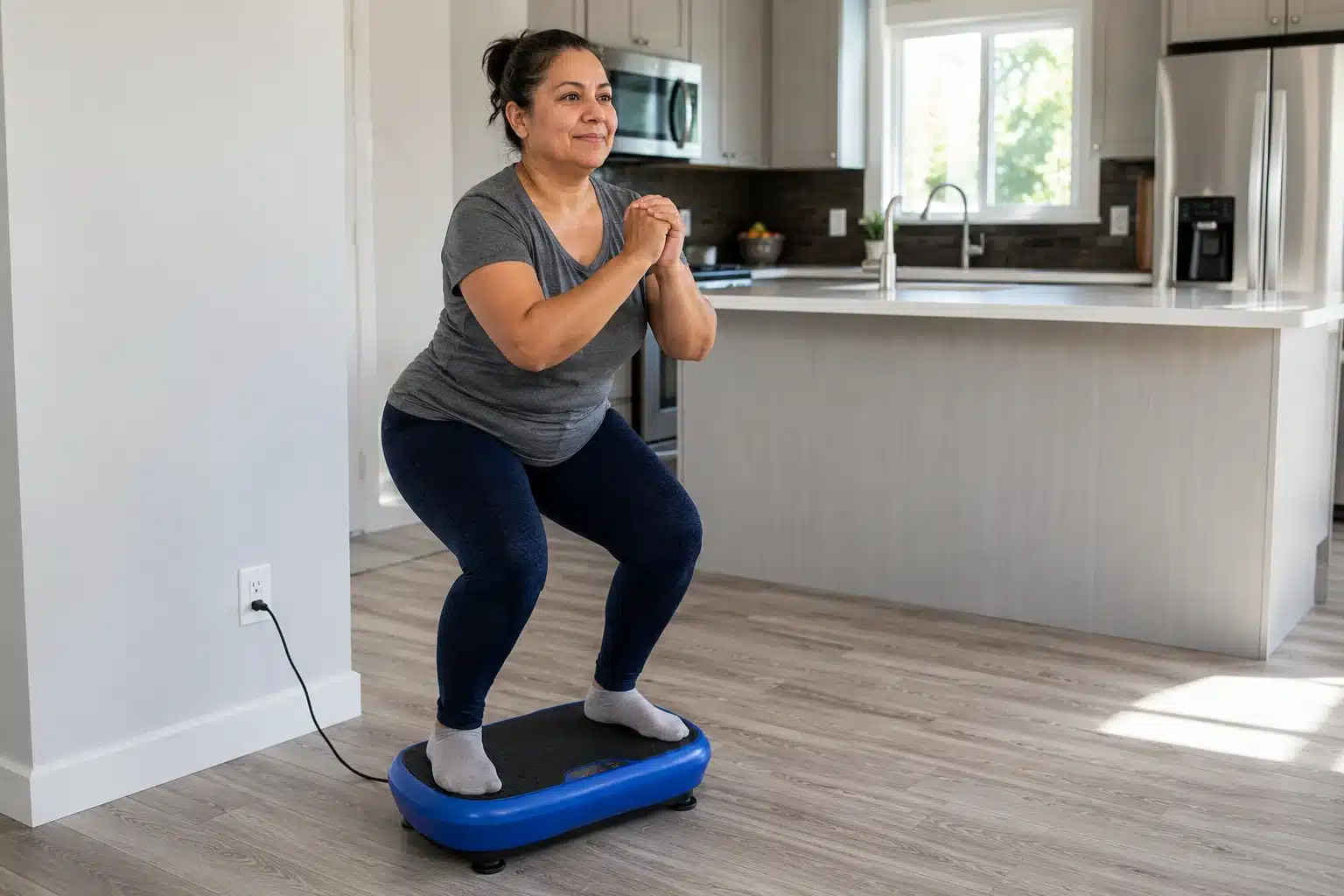
A vibration plate cannot reverse a sedentary lifestyle while someone continues spending nearly the entire day seated. No single device or workout can fully compensate for a lack of movement during most waking hours.
The plate can still help someone begin changing that pattern. It provides an easy reason to stand up, activate the legs, and complete a short movement break.
Convenience can improve consistency. A machine positioned near a desk or television may be easier to use than driving to a gym or preparing for a long workout.
The plate may also make exercise feel more interesting. Someone who finds ordinary squats or calf raises boring may be more willing to perform them on a moving platform.
The lasting goal should be increasing total daily movement. The vibration session should lead toward more walking, household activity, strength work, and less uninterrupted sitting.
Can It Help Weak or Deconditioned Legs?
A sedentary routine can reduce lower body strength and exercise tolerance. The thighs, calves, hips, and postural muscles receive less frequent challenge when most of the day is spent sitting.
A vibration plate can make simple standing positions more demanding. Keeping the knees slightly bent requires the thighs and calves to remain active while the body responds to the platform.
Shallow squats, calf raises, static holds, and supported marching create a stronger training effect. Resistance bands can also involve the upper body while the legs maintain balance.
Strength improves only when the challenge progresses. This may involve adding repetitions, increasing the range of motion, extending the session, or moving to a more difficult exercise.
Maximum vibration intensity is not required. Better movement control and gradual progression are more useful than standing on the strongest setting.
Older adults starting from limited activity can also review my picks for the best vibration plate for seniors, which covers platforms with stable bases and gentle amplitude suited to beginner use.
Does a Vibration Plate Improve Circulation After Sitting?
Repeated contractions in the calf and leg muscles help move blood through the lower limbs. A short vibration session may make the legs feel less stiff or heavy after prolonged sitting.
Part of the benefit may simply come from standing up. Gentle walking, ankle pumps, calf raises, and normal leg movement can also support blood flow after a desk based period.
A vibration plate should not be treated as a cure for poor circulation. It cannot diagnose or treat blood clots, venous disease, arterial disease, or swelling caused by a medical condition.
For readers primarily interested in circulation support, my guide to the best vibration plate for circulation covers what the evidence supports and the machines that work best for that goal.
One sided swelling, warmth, redness, or leg pain requires medical assessment. These symptoms should not be addressed by increasing the vibration setting.
Can a Vibration Plate Improve Cardiovascular Fitness?
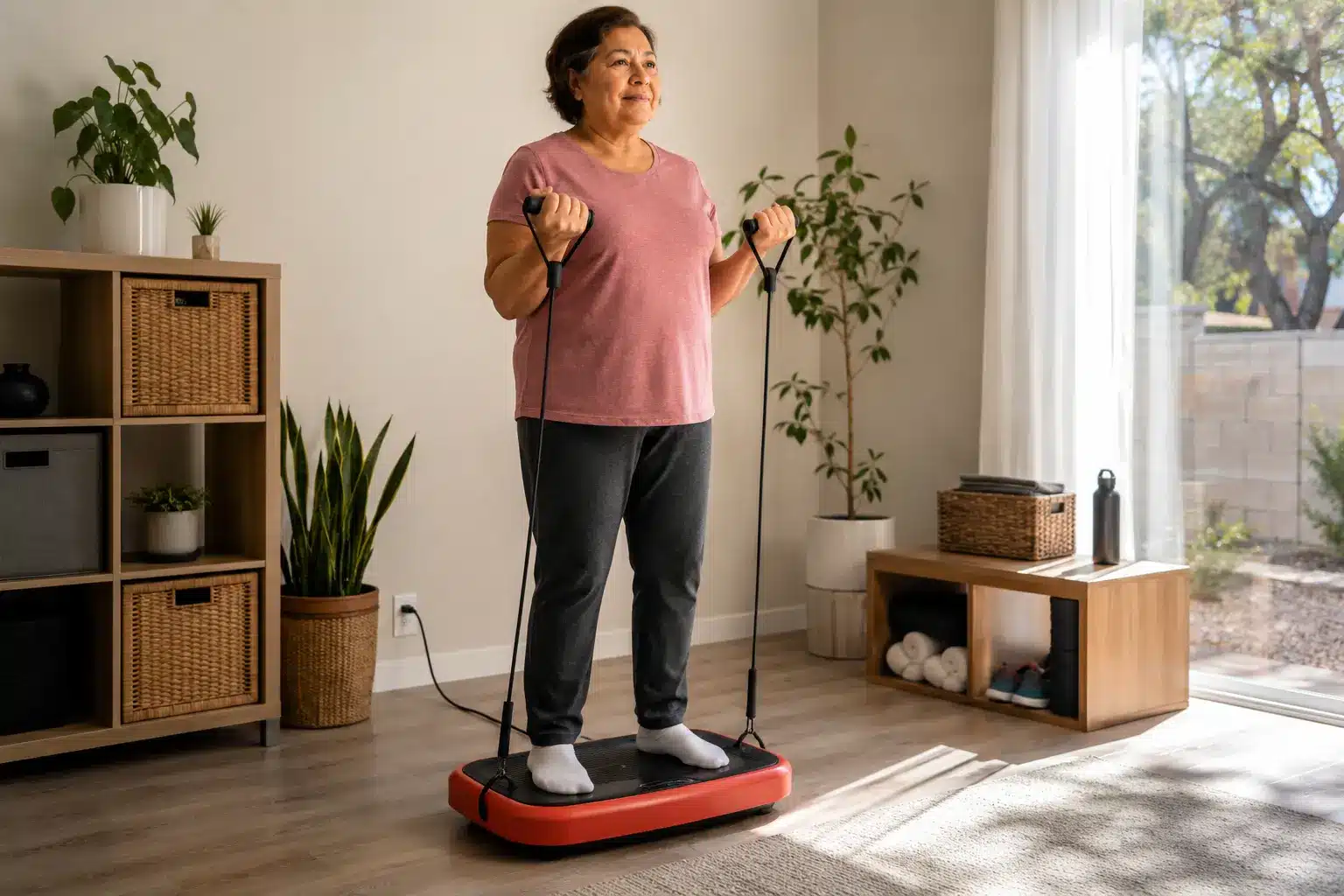
Most short home vibration sessions do not create enough sustained oxygen demand to provide complete cardiovascular training. Passive standing may raise muscle activity without meaningfully challenging the heart and lungs.
Continuous squats, marching, and other active movements may raise the heart rate more. The cardiovascular demand still may not match brisk walking, cycling, swimming, or another sustained aerobic activity.
Whole body vibration research more commonly reports outcomes related to strength, balance, mobility, and physical function. Evidence for major improvements in aerobic capacity is less consistent.
Anyone wanting a deeper look at the science behind whole body vibration as a training method can read my guide, which covers the mechanisms, research quality, and practical takeaways.
A vibration plate can support a cardiovascular plan by making it easier to begin moving. It should not become the only activity used for heart and lung fitness.
Readers interested in how vibration may also influence metabolism and hormonal markers can read my guide on vibration plate hormonal benefits, which covers what the research shows for body composition and energy.
Vibration Plate Versus Walking
A vibration plate offers convenience. It can be used at home, sessions can be short, and the platform provides muscle activation without requiring much space.
It may suit someone who feels unsteady outside, dislikes bad weather, or needs a very gentle starting point. The moving surface can also challenge balance and make simple exercises more demanding.
Walking provides sustained whole body movement and more closely reflects normal daily mobility. It usually creates greater cardiovascular demand and energy use than passive standing on a platform.
Walking also allows simple progression. Someone can increase the duration, pace, distance, frequency, or terrain without buying additional equipment.
For reducing sedentary time, walking is usually the more complete activity. A vibration plate can still help someone gain enough confidence or leg strength to begin walking more often.
For a broader picture of what regular vibration training can offer alongside walking and daily movement, my overview of vibration plate benefits covers the areas where evidence is strongest.
Passive Standing Versus Active Vibration Training
Passive Standing
Passive standing may be appropriate during the first few sessions. It allows a beginner to learn how the machine feels and assess balance, comfort, and tolerance.
It may also be useful as a brief movement break during a desk based day. Even then, the knees should remain slightly bent and the upper body relaxed.
Passive use should usually be treated as a starting point. Remaining at the same easy level for months is unlikely to produce continued strength or fitness improvements.
Active Vibration Training
Active training combines vibration with controlled movement. Shallow squats, calf raises, supported marching, and weight shifts increase muscle involvement.
Resistance band rows and brief squat holds can add upper body and postural work. Supported reverse lunges may be introduced when balance and knee comfort allow.
Active movements do not need to be fast. Slow, controlled repetitions are often easier to perform safely and make it simpler to maintain posture.
For readers managing joint sensitivity alongside inactivity, my picks for the best vibration plate for arthritis cover platforms with gentle amplitude that suit cautious, low-impact use.
A Beginner Vibration Plate Routine
This general progression is intended for an otherwise healthy beginner. Someone with significant health concerns, severe deconditioning, or major balance limitations may need individual guidance.
Weeks 1 and 2
Use the plate three or four times per week for three to five minutes. Choose a low setting and keep the knees slightly bent.
Begin with supported standing and gentle weight shifts. Use a rigid rail, countertop, or sturdy chair rather than relying on flexible exercise bands for balance.
The purpose is to learn the movement and judge how the body responds. Stop before fatigue affects posture.
Weeks 3 and 4
Increase the session to five to eight minutes if the first two weeks feel comfortable. Add slow calf raises and shallow supported squats.
Keep the range small enough to maintain control. Exercise quality matters more than completing a high number of repetitions.
Continue three or four sessions each week. Add short walks on separate days or immediately after the plate session.
Weeks 5 and 6
Build toward eight to twelve minutes. Add resistance band rows, supported marching, or brief squat holds.
Alternate active exercises with short periods of easy standing. This allows the session to become more demanding without turning it into one long static hold.
Combine the plate routine with regular walking. The goal is gradually relying less on passive vibration as general fitness improves.
For a specific home plate that gives beginners three distinct vibration modes to progress through, my review of the Sunny Fitboard 3D vibration plate covers a model with a 16-level intensity range suited to gradual progression.
How to Use the Plate During a Desk Based Day
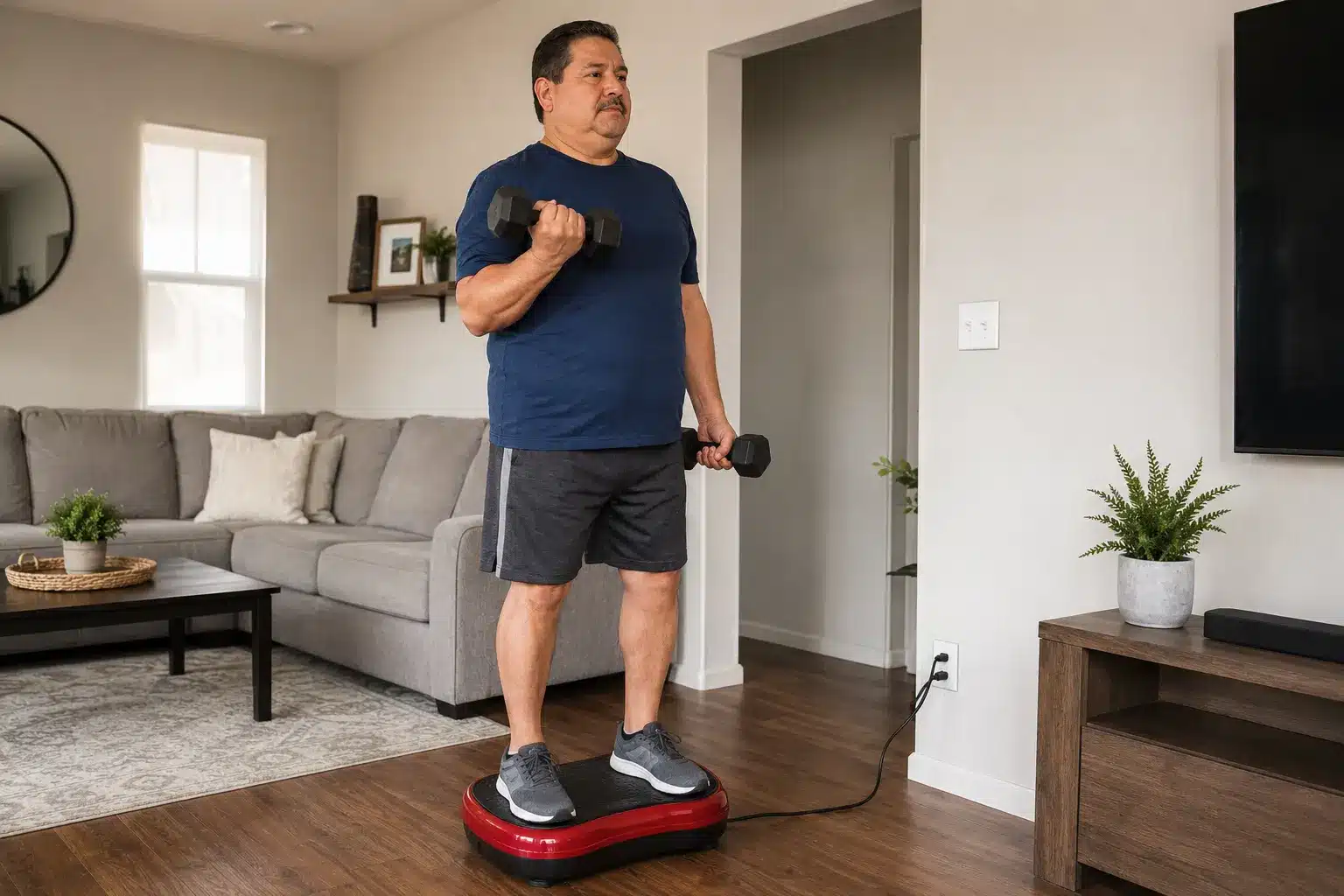
A short session before work can help establish an active start to the day. It can also serve as a warmup before a morning walk.
During the workday, use the plate for three to five minutes after a long meeting or extended period of focused desk work. Gentle weight shifts and calf raises may be more useful than standing completely still.
Another option is a brief active session after finishing work. This creates a clear transition between desk time and evening activity.
The plate should not become a reason to remain seated for several more hours. Stand, walk, stretch, or perform a household task regularly throughout the day.
For a full guide on settings, positions, and routines suited to different goals, my breakdown of getting the most from a vibration plate covers session structure, frequency, and how to progress as the body adapts.
Can Five Minutes Make a Difference?
Five minutes will not reverse years of inactivity or create complete cardiovascular fitness. It can still interrupt sitting and activate muscles that were previously doing very little.
A short session may also reduce the mental barrier to exercise. Beginning often feels easier when the commitment is only a few minutes.
Five minutes can lead into another activity. Someone may finish the session and feel more willing to take a short walk, perform strength exercises, or complete household tasks.
The value comes from repetition and progression. Five minutes used consistently is more useful than an ambitious routine that is abandoned after a few days.
How Often Should a Sedentary Beginner Use It?
Three or four sessions per week is a reasonable starting frequency. This allows time to judge muscle soreness, joint comfort, balance, and general recovery.
Brief daily use may also be appropriate when the setting is low and the sessions are not demanding. Daily passive standing should not replace more active training.
Progress through better movement quality, more active exercises, or slightly longer sessions. Avoid increasing duration, intensity, exercise difficulty, and weekly frequency at the same time.
Recovery matters even for beginners. Persistent soreness, unusual fatigue, or worsening joint pain suggests that the routine needs to be reduced or changed.
For readers still deciding which platform to start with, my best vibration plate roundup covers the models I tested across a range of intensities and price points.
How to Become Less Sedentary Beyond the Plate
Stand during phone calls when practical. Walk for a few minutes each hour instead of remaining seated through an entire morning or afternoon.
Short walks after meals can add movement without requiring a formal workout. Household tasks, errands, gardening, and taking the stairs also contribute to daily activity.
Add strength training twice per week as fitness improves. This can include bodyweight exercises, resistance bands, dumbbells, or machines.
Anyone managing bone density concerns alongside deconditioning can find suitable options in my best vibration plate for osteoporosis guide, which covers machines with the frequency specs suited to that need.
Gradually work toward regular aerobic activity. Health guidance commonly recommends 150 to 300 minutes of moderate aerobic activity per week for adults, but someone starting from very low activity can build toward that target slowly.
The first goal does not need to be perfection. Replacing some sitting with any comfortable movement is a useful step.
Common Claims to Ignore
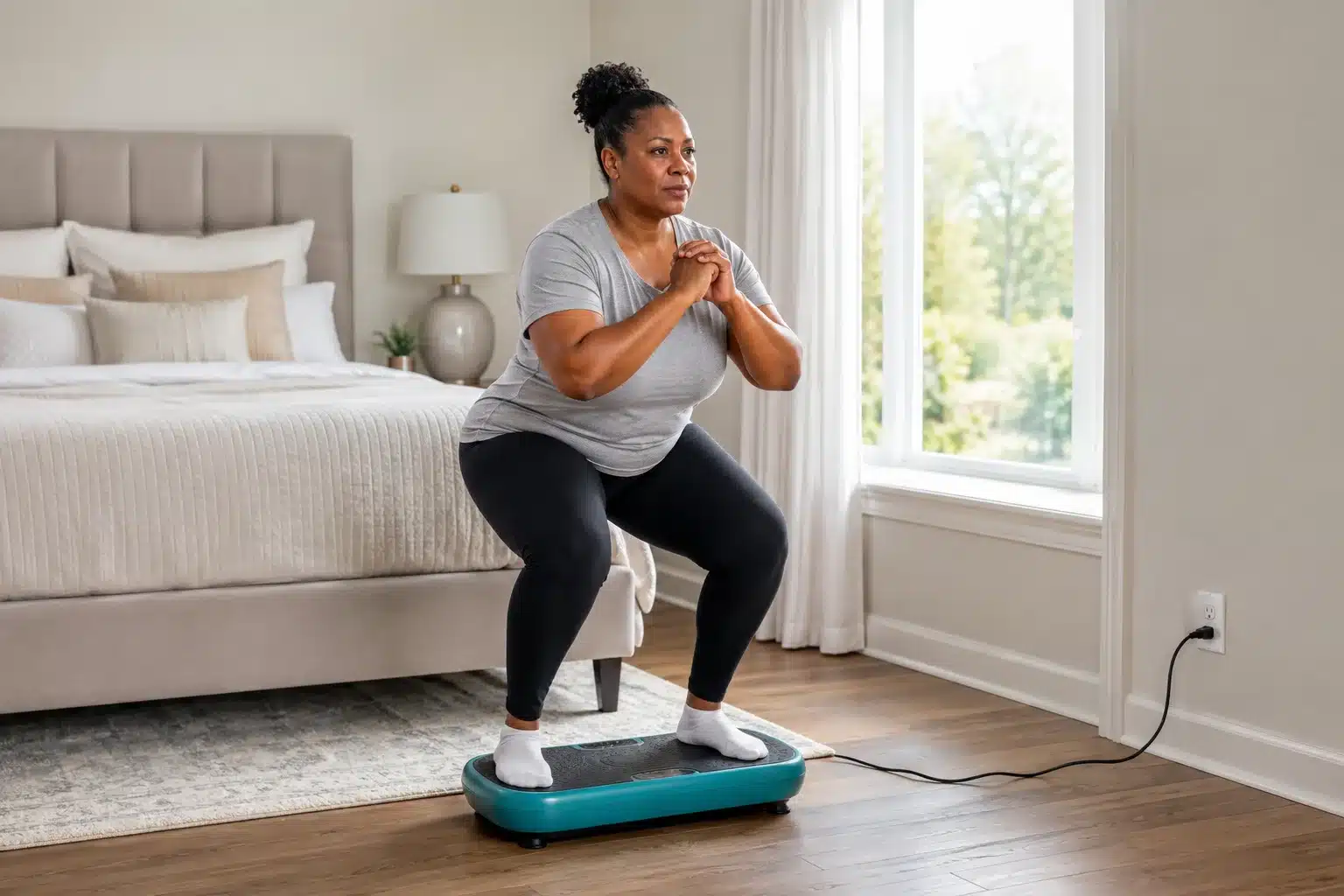
Ten Minutes Replaces an Hour of Walking
Vibration and walking create different physical demands. The plate activates muscles, while walking provides sustained movement, cardiovascular work, and normal walking practice.
Ten minutes on a plate should not be presented as identical to an hour of walking.
Readers who also want to understand what this means for belly fat specifically can read my guide on using a vibration plate for stomach fat, which separates realistic fat loss expectations from common marketing claims.
Passive Standing Is a Complete Workout
Passive standing creates muscle activity, but it provides limited joint movement, cardiovascular conditioning, and progressive resistance.
A more complete routine still requires active exercise.
The Plate Cancels the Effects of Sitting
One vibration session cannot erase an otherwise inactive day. Sitting less and moving more throughout the day remain important.
Tingling Means Circulation Problems Are Fixed
Tingling may result from vibration, pressure, or nerve sensation. It does not confirm that a circulation problem has been treated.
Maximum Speed Produces Faster Results
Strong vibration may make posture harder to control. It can also increase discomfort without producing better long term outcomes.
A Vibration Plate Is Enough for Weight Loss
Weight management depends on total daily movement, nutrition, sleep, medication, health conditions, and long term energy balance. A plate can contribute to activity but cannot replace the wider plan.
For those building the plate into a broader activity plan, my breakdown of the best vibration plate for weight loss covers the models that perform well for progressive home training.
Who Should Get Medical Guidance?
Medical or rehabilitation guidance is sensible for someone with severe deconditioning, significant cardiovascular disease, poorly controlled blood pressure, frequent dizziness, or major balance problems.
Recent surgery, neurological conditions, severe back or joint pain, and unexplained leg swelling also require a more cautious approach.
Readers dealing with neck pain from prolonged desk work can find specific guidance in my post on a vibration plate for neck pain, which covers when vibration may help and when caution is needed.
Exercise related chest pain or unusual shortness of breath should be assessed before beginning a new routine. A vibration plate is still a form of physical stress, even when the session feels gentle.
When to Stop the Session
Stop if the plate causes chest discomfort, faintness, unusual shortness of breath, severe headache, nausea, or loss of balance.
New numbness, weakness, sharp joint pain, or strong head and vision shaking are also reasons to stop. Do not push through symptoms simply to complete the timer.
One sided leg pain or swelling requires medical assessment rather than another vibration session. Persistent or severe symptoms should always be taken seriously.
My Practical Take on Using a Vibration Plate for a Sedentary Lifestyle
A vibration plate can be valuable when it helps an inactive person take the first manageable step toward movement. Short sessions may activate the legs, interrupt sitting, support beginner strengthening, and make exercise feel less intimidating.
It cannot provide every benefit of walking, cardiovascular exercise, resistance training, and spending less time seated. Passive standing should not become the final goal.
I would use the plate as a bridge. Begin with short supported sessions, add controlled exercises, and gradually build a daily routine that includes walking, strength work, and frequent movement away from the chair.
Anyone choosing a machine for this purpose can review my picks in the best vibration plate for home use guide, which covers models suited to daily beginner sessions in a small space.
The most important outcome of vibration plate use for a sedentary person is not the session itself but what follows. A 10-minute plate session raises energy level and reduces physical inertia in a way that makes subsequent movement more likely. People who use the plate in the morning report being more likely to take the stairs, walk during phone calls, and make other incidental movement choices throughout the day. The plate functions as a movement trigger, not just as exercise.
Habit anchoring determines if the plate becomes part of daily life or becomes furniture. Placing the plate in a visible, accessible location, next to the desk, in front of the television, or beside the bed, removes the decision point. Equipment stored in a closet requires a deliberate retrieval step that is easy to skip. Equipment in plain sight acts as a low-effort prompt. The physical location of the plate predicts its use frequency more reliably than motivation.
Progress for a sedentary user is not measured in fitness metrics at first but in tolerance and frequency of use. The first goal is consistent weekly use for 30 days, regardless of session length or intensity. Within that period, most people notice improved circulation in the lower legs, reduced afternoon fatigue, and better sleep quality. None of these require high-intensity sessions to produce. These early gains are what build the habit before the physical adaptations become measurable.
For a full view of what vibration plates can deliver over time across different goal areas, my guide on the clinical evidence on vibration plate outcomes covers the research on fitness, circulation, and metabolic health.
FAQs
Is a vibration plate good for a sedentary lifestyle?
A vibration plate can be useful for a sedentary lifestyle when it helps someone begin moving and activate inactive muscles. It should support a wider increase in walking, strength training, and daily movement rather than replace them.
Does standing on a vibration plate count as exercise?
Standing on a vibration plate creates some muscular activity and may count as a small amount of physical activity. It provides less cardiovascular and strength stimulus than active vibration exercises, walking, or conventional training.
Can a vibration plate replace walking?
A vibration plate cannot fully replace walking. Walking provides sustained cardiovascular activity, normal mobility practice, and greater total body movement.
How long should an inactive beginner use a vibration plate?
An inactive beginner can start with three to five minutes at a low setting. Duration can increase gradually as balance, comfort, and exercise tolerance improve.
Can a vibration plate help weak legs from sitting?
A vibration plate may help weak legs when it is used for progressive exercises such as shallow squats, calf raises, and supported marching. Passive standing alone may become too easy to provide continued strength gains.
Does a vibration plate improve circulation after sitting?
A vibration plate may encourage leg muscle contractions and make the legs feel less stiff after sitting. It does not treat blood clots, vascular disease, or medically significant swelling.
Can five minutes on a vibration plate make a difference?
Five minutes can interrupt sitting, activate the legs, and help build a consistent exercise habit. It is not enough to provide complete fitness benefits unless it leads into a broader movement routine.
How often should a sedentary person use a vibration plate?
A sedentary beginner can use a vibration plate three or four times per week. Brief daily sessions may also be appropriate at low intensity when they are comfortable and well tolerated.
Can a vibration plate improve cardiovascular fitness?
Active vibration exercises may raise the heart rate, but most home sessions do not provide the sustained demand needed for complete cardiovascular conditioning. Walking, cycling, swimming, or another aerobic activity remains important.
Can a vibration plate cancel the effects of sitting all day?
A vibration plate cannot cancel the effects of sitting all day. Long sitting periods still need to be interrupted with standing, walking, and other forms of movement.
Notable Studies
World Health Organization. WHO Guidelines on Physical Activity and Sedentary Behaviour: At a Glance. The guidance recommends 150 to 300 minutes of moderate aerobic activity per week for adults and emphasizes that any amount of physical activity is better than none.
Kholvadia A, Baard ML. Whole Body Vibration Improves Body Mass, Flexibility and Strength in Previously Sedentary Adults. Participants completed progressive whole body vibration training three times per week for up to 30 minutes over 12 weeks.
Figueroa A, et al. Efficacy of Whole Body Vibration as a Modality for Inducing Changes in Body Composition, Aerobic Fitness, and Muscular Strength: A Pilot Study. The study compared progressive vibration, aerobic, and circuit resistance programs in sedentary postmenopausal women.
Ebing J, et al. Hypertrophy and Explosive Reactive Functioning in Sedentary Men After 10 Weeks of Whole Body Vibration. The trial studied thigh muscle size and neuromuscular performance after squat exercise on two types of vibration platforms.
Prioreschi A, et al. Whole Body Vibration Exercise Improves Functionality in Postmenopausal Women: A Systematic Review. The review reported possible improvements in strength, balance, jumping ability, and trunk function while noting limitations in study quality.
Tsai CL. Impacts of Aerobic Exercise and Whole Body Vibration Interventions on Myokines and Neurocognitive Performance in Postmenopausal Women. This 2025 study compared aerobic exercise, aerobic exercise combined with isometric vibration exercise, and no exercise in sedentary postmenopausal women.