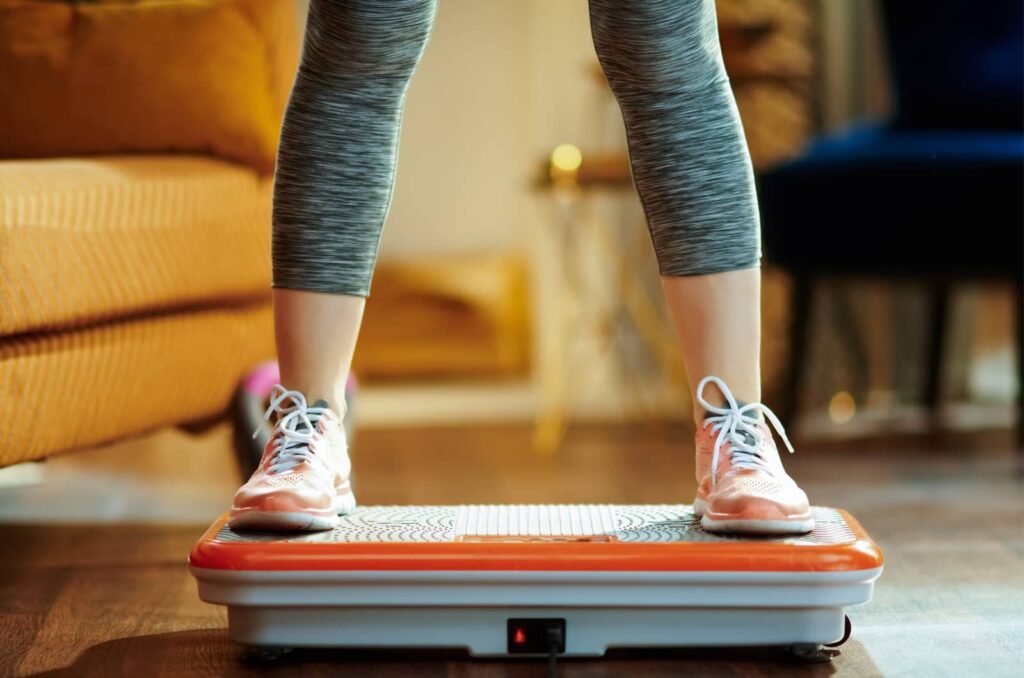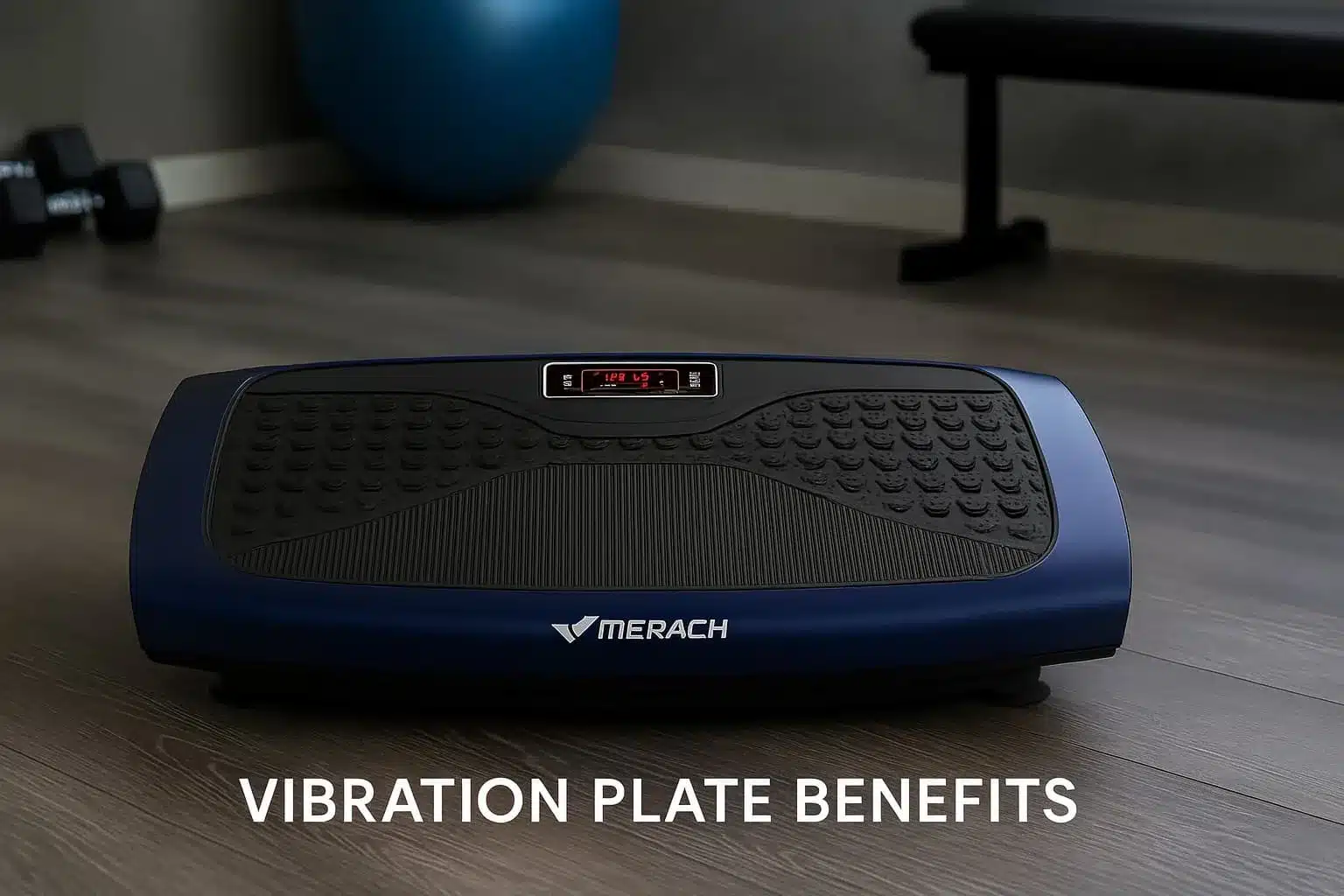
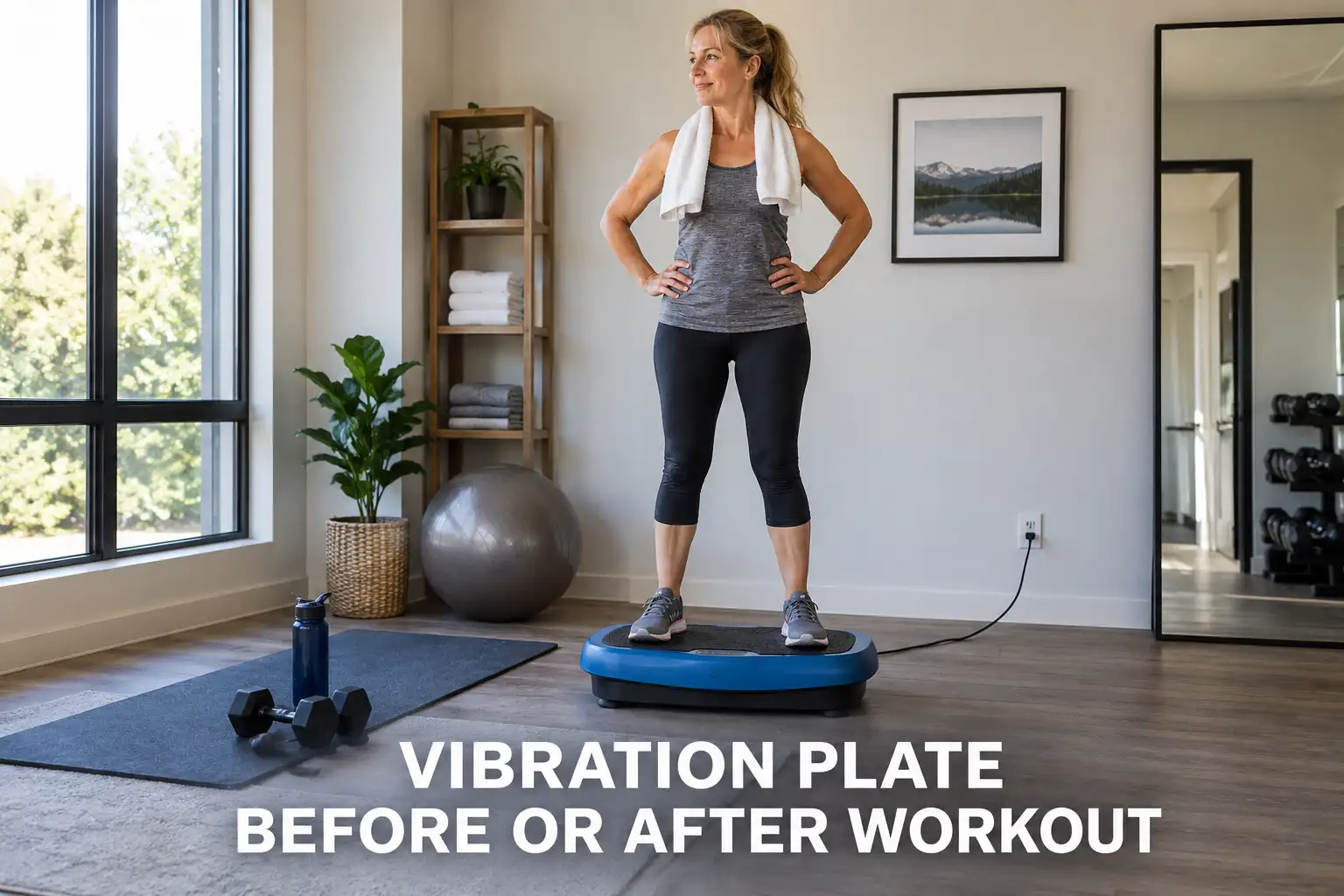
Use a vibration plate before a workout when your main goal is warming up, increasing range of motion, or gently activating the muscles. Use it after exercise when your priority is reducing soreness, performing light movement, stretching, or making the transition into recovery.

About the author: Hello! I’m Vladimir Stanar, professor of physical education, kinesiotherapist, marathon runner, cyclist, and cycling coach, and long-time advocate of health, fitness, and active living.
My journey with vibration plates runs parallel to my professional career in education, sports medicine, and athletic development. I’ve developed a unique process for testing vibration plates as they are some of the most versatile tools for enhancing health, recovery, and performance.
✅ Expert-Reviewed by: Vanja Vukas, MPhEd
📚 Expert Contributor: Milutin Tucakov, MPhEd
Neither timing is universally better. Research does not show that pre-workout vibration consistently improves strength, power, jumping, or athletic performance, while reduced soreness after post-workout vibration does not necessarily mean that muscle strength has recovered faster.
If I had to choose between before and after, I would base the decision entirely on the goal of that day's session. Before training, the plate should leave you feeling prepared rather than fatigued. After training, it should feel easier than the workout you just completed rather than becoming another workout of its own.
Why Timing Changes What You Get From the Plate
Whole-body vibration creates repeated muscular contractions and postural adjustments while providing strong sensory stimulation through the feet, muscles, joints, and skin. It can also temporarily increase peripheral blood flow and range of motion under some conditions.
Readers who want a broader overview of how whole-body vibration works and what it can realistically do across different applications will find that context in my guide on whole-body vibration.
Those effects can be useful at different times for different reasons. Before exercise, increased movement, muscle activity, and range of motion may help with physical preparation. After exercise, low-demand vibration may be useful for soreness, gentle movement, and stretching.
Anyone who wants to structure that post-exercise stretching work on the plate with specific positions and durations will find detailed guidance in my vibration plate stretching and flexibility guide.
The mistake is assuming that every physiological response automatically improves performance or recovery. More muscle activity before a workout does not necessarily make you stronger, while more circulation after exercise does not prove that damaged muscle fibers have repaired faster.
Using a Vibration Plate Before a Workout
A vibration plate can work as one part of a warm-up, particularly if you have been sitting for a long time or feel stiff before training. Short bouts of standing, weight shifting, calf raises, and shallow squats can get the legs moving before the main session begins.
I would not make the vibration plate the entire warm-up. Running, lifting, jumping, and other activities still benefit from movements that progressively resemble what you are about to do.
Using It as Part of a Warm-Up
A useful warm-up gradually prepares the body for the demands of the upcoming workout. Depending on the activity, that may include increasing movement, raising tissue temperature, rehearsing exercise technique, and progressively exposing the muscles to greater force.
A vibration plate can contribute to the first part of that process. Five minutes of whole-body vibration has been studied as a warm-up, and participants have shown improvements from baseline in measures such as jumping, flexibility, and reaction time.
The important detail is that performing the same warm-up movements without vibration produced similar improvements in a recent randomized trial. That suggests the vibration itself should not receive all the credit for the warm-up effect.
Muscle Activation Before Exercise
Vibration causes muscles to make repeated contractions and adjustments as the body responds to movement beneath the feet. This is why the legs can feel noticeably active even during a short session.
That makes "muscle activation" a reasonable description of what happens. I would be more cautious about turning activation into promises of better performance, because an activated muscle is not automatically stronger, faster, or more powerful during the workout that follows.
How you use the platform matters too. A few shallow squats or calf raises produce a very different training load from ten minutes of deep squat holds at high intensity.
Flexibility and Range of Motion Before Training
The evidence for acute range-of-motion changes is stronger than the evidence for an immediate athletic-performance boost. Large reviews of vibration research have found that mechanical vibration can temporarily increase flexibility, although the size of the effect varies substantially.
That can make pre-workout use appealing when stiffness or range of motion is limiting the start of a session. I might use a short vibration session before completing the dynamic mobility exercises and warm-up sets I would normally perform.
Greater range of motion is not always the same as better movement, however. You still need control and strength throughout that range, which is why I would not turn a pre-workout vibration session into a maximum-flexibility test.
Does Pre-Workout Vibration Improve Strength, Power, or Athletic Performance?
This is where marketing claims tend to move ahead of the research.
Some individual studies have reported improvements in jump performance, force production, or other performance measures after vibration. When the research is analyzed collectively, however, the acute effects on athletic performance are generally small and inconsistent.
Readers training seriously who want a full breakdown of how vibration fits into sport-specific programming can find a dedicated guide in my post on vibration plate for athletes.
A systematic review involving competitive and elite athletes found little evidence that whole-body vibration reliably enhances actual athletic performance. More recent research has also shown that a vibration warm-up can improve several measures from baseline without outperforming the same warm-up exercises performed without vibration.
That does not make pre-workout vibration useless. A warm-up can still feel good and prepare you to move even when it does not increase your vertical jump or add weight to your squat.
I would therefore use the plate because it fits my warm-up, not because I expect it to function as a guaranteed performance enhancer.
For readers who want to add this kind of optional warm-up tool without a large upfront investment, my picks for the best budget vibration plate cover machines that deliver the core frequency range and platform stability needed.
Can Pre-Workout Vibration Reduce Post-Workout Soreness?
Interestingly, one of the stronger arguments for using a vibration plate before exercise has less to do with immediate performance and more to do with what happens later.
A systematic review and meta-analysis of randomized trials found that vibration performed before strenuous eccentric exercise reduced subsequent delayed-onset muscle soreness and improved several indirect markers associated with exercise-induced muscle damage.
One individual trial used only a short vibration exposure before demanding eccentric quadriceps exercise. Participants subsequently experienced less soreness, lower creatine kinase, and smaller losses in strength than those who did not receive vibration.
That is encouraging, but I would not copy one laboratory protocol and treat its frequency and amplitude as the universal pre-workout setting. The research uses different machines, positions, amplitudes, frequencies, and exercise protocols.
The more useful takeaway is that a short pre-exercise vibration session may help reduce the severity of later DOMS, even when it does not make the upcoming workout dramatically better.
Using a Vibration Plate After a Workout
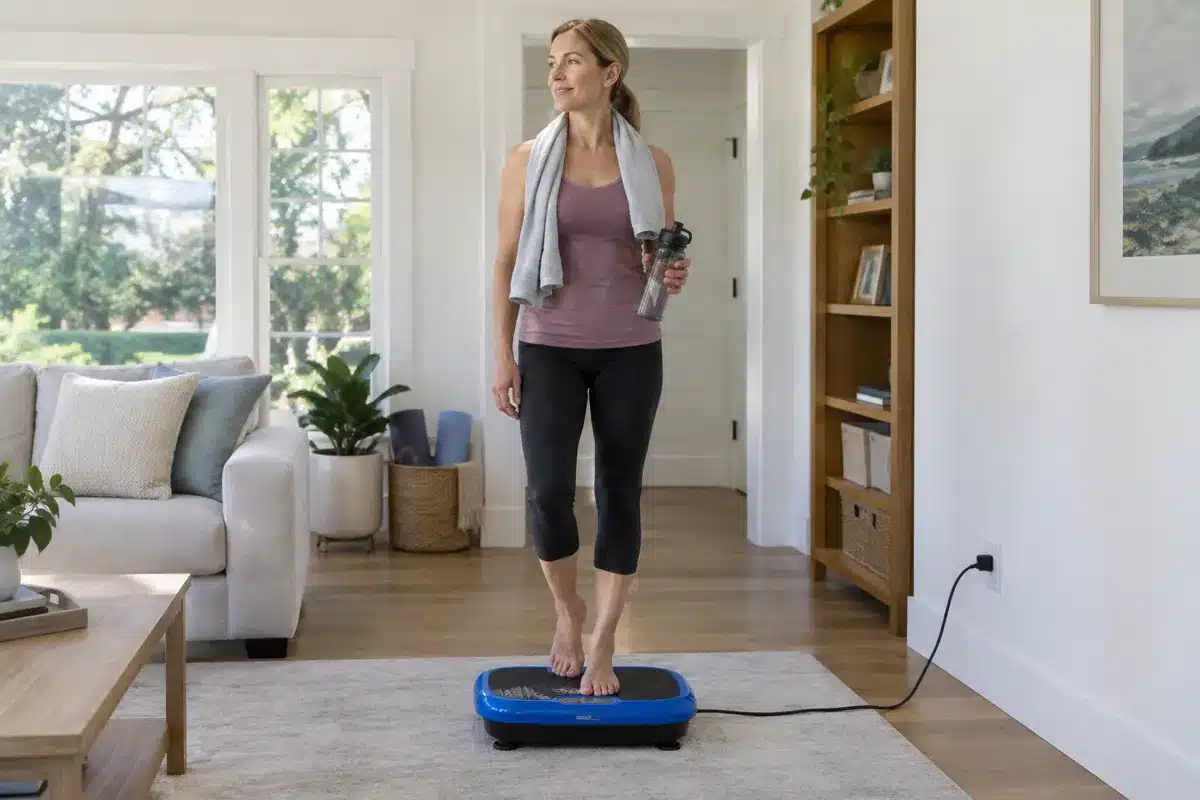
Post-workout use has a different purpose. At this point, I am no longer trying to maximize force or prepare for heavy sets. I am trying to transition away from hard training without adding unnecessary fatigue.
A low-demand vibration session may help sore muscles feel better, provide gentle movement, and make stretching feel easier. The evidence for reducing DOMS is reasonably encouraging, although the evidence for speeding complete muscle recovery is much less certain.
Muscle Soreness and DOMS
Research into vibration and delayed-onset muscle soreness is one of the stronger areas of the recovery literature.
A meta-analysis of ten studies involving 258 participants found lower reported soreness at 24, 48, and 72 hours following vibration interventions. Creatine kinase, which researchers often use as an indirect marker of exercise-induced muscle damage, was also lower at 24 and 48 hours.
That makes soreness reduction a reasonable expectation from post-workout vibration. It does not mean every user will experience the same effect or that soreness will disappear completely.
The studies also use different types of vibration, including some localized interventions, so not every result can be transferred directly to every home vibration plate.
Does Post-Workout Vibration Actually Speed Recovery?
This is the distinction I consider most important.
In one randomized study, participants performed difficult eccentric quadriceps exercise and then received three one-minute bouts of whole-body vibration. The vibration group experienced less soreness and lower creatine kinase during recovery.
However, peak isometric strength did not recover faster.
That means the muscles could feel better while their force-producing capacity was still recovering. I would not use reduced soreness after a vibration session as automatic permission to repeat another heavy workout for the same muscles.
Recovery is broader than pain. Strength, fatigue, coordination, movement quality, sleep, nutrition, and overall training load matter too.
Does a Vibration Plate Increase Blood Flow Before and After Exercise?
Whole-body vibration can acutely increase peripheral blood flow, which is one reason muscles may feel warmer during or after a session. This can be useful before exercise when someone has been inactive and may also contribute to the comfortable feeling some people experience during post-workout vibration.
The evidence becomes much weaker when circulation is turned into claims about "flushing toxins" or automatically repairing muscle tissue. Increased blood flow is a measured physiological response, but it does not prove faster glycogen restoration, muscle-fiber repair, strength recovery, or removal of some vague collection of toxins.
The same applies to lactic acid. Delayed muscle soreness is not caused by lactate remaining trapped inside the muscles for several days, so a vibration plate does not need to "flush lactic acid" to have a legitimate recovery effect.
Before vs After: Which Is Better for Different Goals?
The best timing depends on what you want the vibration session to accomplish.
| Goal | Better Timing | Why |
|---|---|---|
| Warm-up | Before | Provides movement and muscle activation |
| Flexibility / ROM | Before or during | Acute ROM improvements are reasonably well supported |
| Maximum strength or power | Unclear | Performance benefits are inconsistent |
| Reducing later DOMS | Before may help | Pre-exercise vibration has reduced soreness in research |
| Post-workout soreness | After | DOMS evidence supports post-exercise vibration |
| Stretching | Before, during, or after | Depends on the purpose of the stretch |
| Relaxation | After | Lower-demand use fits recovery better |
| Recovery | After | Useful for soreness and light movement, but not proven to restore strength faster |
| General fitness | Either | Depends on how the plate fits the session |
| Vibration plate as main workout | Neither is inherently better | The plate session itself is the workout |
This is why I would not follow a rule that says vibration plates should always be used before or always after exercise. The same device can serve different purposes depending on where it appears in the session.
Can You Use a Vibration Plate Both Before and After a Workout?
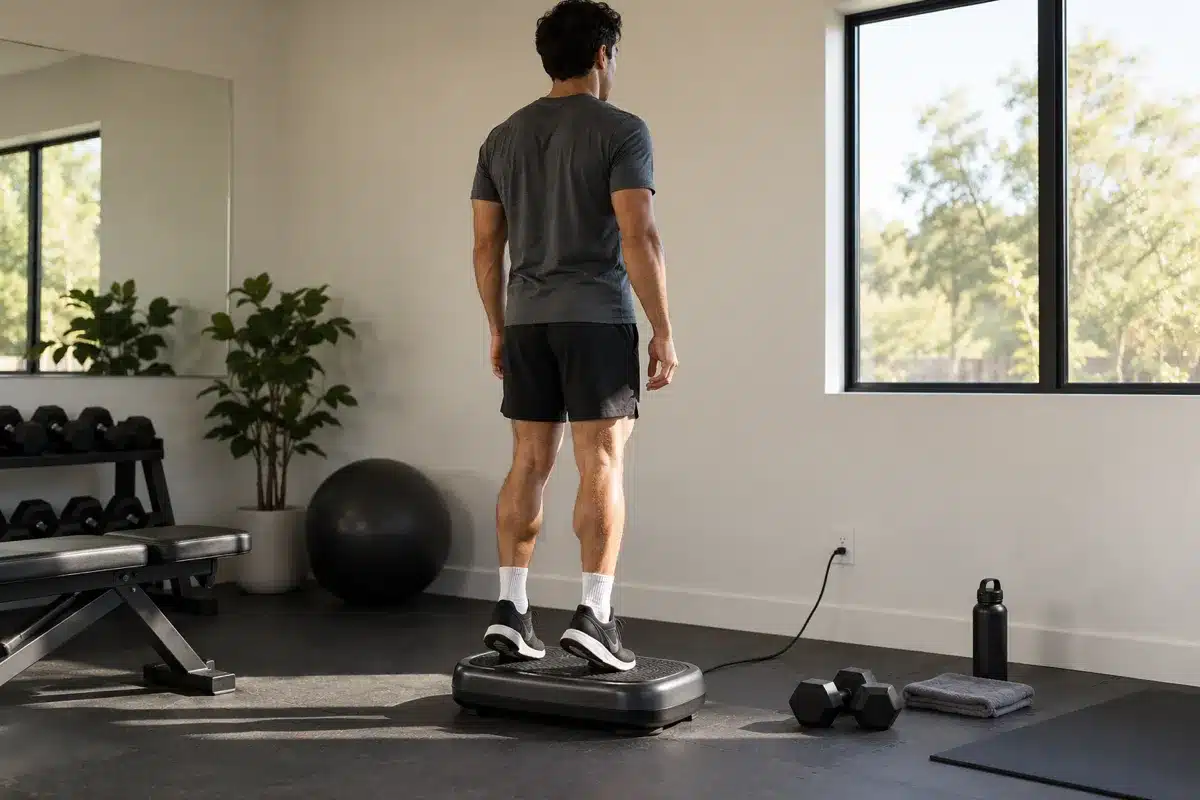
Yes, but there is no requirement to do so. A short session before training and another short, easier session afterward may be perfectly reasonable when both serve a clear purpose.
For athletes and regular exercisers setting up this kind of dual-use routine at home, my picks for the best vibration plate for home use cover the machines built for that kind of consistent daily demand.
I would not assume that using the plate twice automatically doubles the results. Total exercise load still matters, and adding unnecessary vibration simply because the machine is available can turn a useful routine into extra fatigue.
If I used the plate at both ends of a workout, the sessions would look different. The pre-workout session would involve controlled activation and movement, while the post-workout session would be easier and focused on comfort, gentle movement, and perhaps stretching.
Vibration Plate Before or After Strength Training?
Before lifting weights, I would keep vibration brief and use it as a transition into the normal warm-up. Easy standing, calf raises, shallow squats, and weight shifts can prepare the legs before progressing to unloaded movements and increasingly heavier warm-up sets.
I would avoid long squat holds, high-intensity vibration, or demanding leg exercises immediately before heavy squats, deadlifts, or other strength work. Those exercises can create fatigue before the workout has even started.
After strength training, I would use the plate much more gently. A short low-demand session may help with soreness and stiffness, but I would not perform another demanding vibration squat circuit and label it recovery.
Vibration Plate Before or After Running?
Before running, dynamic preparation remains more important than simply standing on a vibration plate. Walking, easy jogging, leg swings, ankle movement, and running-specific drills prepare the movement patterns you will actually use.
A short vibration session can be added if it helps your legs feel less stiff or improves your comfortable range of motion. Current evidence does not establish that it will make you run faster or improve endurance.
For runners and endurance athletes using vibration as part of a body-composition strategy alongside regular cardio, my picks for the best vibration plate for weight loss identify the machines best suited to that combination.
Post-run vibration may be more appealing after unusually difficult sessions, especially running that involves substantial eccentric loading such as downhill work. The goal should again be light movement rather than another demanding leg session.
Vibration Plate Before or After HIIT?
HIIT already places a substantial demand on the cardiovascular system and often on the legs. I would therefore keep any pre-workout vibration short enough that it does not reduce the quality of the intervals that follow.
After HIIT, there is even less reason to chase high vibration settings. If the plate is used, I would treat it as a short cooldown or soreness-management tool rather than another conditioning block.
The same principle applies to circuits and bootcamp-style workouts. The more demanding the main session, the less sense it makes to add hard vibration exercise immediately afterward in the name of recovery.
Vibration Plate Before or After Stretching?
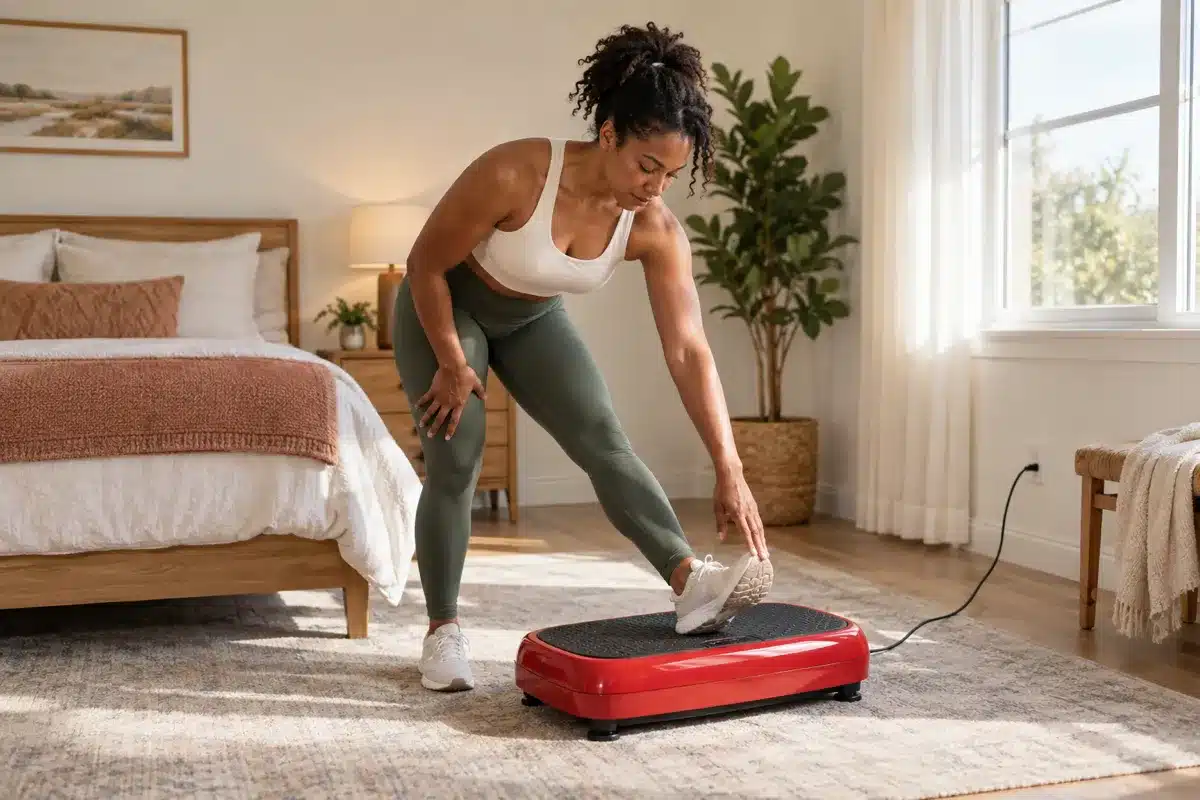
Both options can make sense, and you can also stretch while vibration is active.
Using the plate briefly before stretching may temporarily increase range of motion or make movement feel easier. Stretching directly on the platform combines the mechanical vibration with the stretch itself, which has improved flexibility in some studies but has not consistently outperformed normal stretching.
After a workout, vibration-assisted static stretching may fit naturally into the cooldown because immediate power output is no longer the priority. Before demanding strength or explosive exercise, I would favor shorter controlled stretches and dynamic movement rather than prolonged aggressive static stretching.
What Vibration Frequency Is Best Before or After a Workout?
There is no scientifically established universal frequency for either timing.
Commercial guides frequently recommend one frequency range for pre-workout activation and another for post-workout recovery. Research does not support presenting those ranges as universal prescriptions.
Studies reporting benefits have used very different frequencies, amplitudes, vibration types, body positions, session lengths, and exercise combinations. Large research reviews continue to identify this lack of standardization as a major limitation in the WBV literature.
For a deeper look at what the research actually says about frequency ranges and their effects, my guide on frequencies in vibration plates covers the evidence without the marketing claims.
I would therefore choose a setting that allows good posture and controlled movement. Before training, the session should feel stimulating without becoming fatiguing, while post-workout use should remain comfortable enough to function as recovery rather than more training.
For athletes who want a machine with the frequency range to handle both roles without compromise, my guide to the best Lifepro vibration plate covers models that perform well across activation and recovery settings.
How Long Should You Use a Vibration Plate Before a Workout?
There is no single proven pre-workout duration. Research includes useful protocols ranging from very short exposures to several minutes.
For practical home use, I would generally start with around 3 to 5 minutes. That is enough time for standing, weight shifts, calf raises, and a few controlled squats without unnecessarily extending the warm-up.
The most important test happens when you step off the plate. You should feel ready to continue training rather than as though you have already completed your first hard set.
How Long Should You Use a Vibration Plate After a Workout?
Post-workout research shows that useful effects can occur with relatively short exposures, including protocols consisting of only several one-minute bouts.
For home use, roughly 3 to 10 minutes is a reasonable practical range when the session remains comfortable. I would begin at the lower end and increase only when the longer session actually feels useful.
There is no reason to assume that 20 minutes automatically produces twice the recovery benefit of 10 minutes. More exposure can also mean more muscular work.
A Simple Pre-Workout Vibration Plate Routine
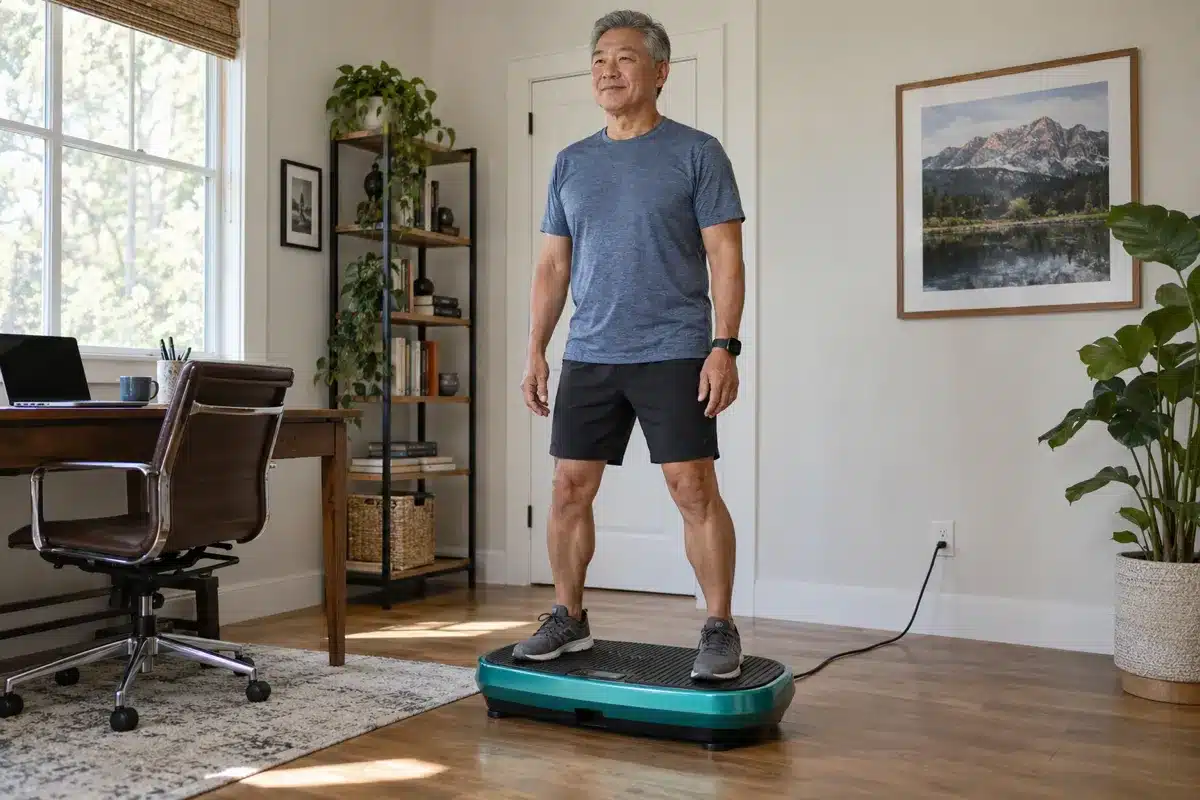
Easy Standing
Begin with a comfortable stance and slightly bent knees. Use a low-to-moderate setting that allows you to remain relaxed through the upper body.
The objective is to begin moving rather than test how much vibration you can tolerate.
Gentle Weight Shifts
Transfer weight gradually from one leg to the other while keeping both feet on the platform. This introduces movement without creating substantial fatigue.
Calf Raises
Perform several slow calf raises while maintaining balance and control. Avoid bouncing rapidly through the movement simply because the platform is moving.
Shallow Squats
Use a small range and controlled repetitions. I would keep the volume low before a demanding leg workout because the purpose is preparation rather than accumulating extra squat work.
Finish With Your Normal Warm-Up
Step off the plate and continue with the movements appropriate to your workout. That might include dynamic mobility, unloaded exercise practice, easy running, or progressive warm-up sets with weights.
My guide to vibration plate exercises covers the specific movements that work best at each point in a session, organized by goal, so you can build a purposeful sequence rather than just standing on the platform.
The vibration plate should complement this process rather than replace it.
A Simple Post-Workout Vibration Plate Routine
Comfortable Standing
Use an easy stance with soft knees and a setting that feels noticeably less demanding than the workout you just completed. There is no need to reproduce the strongest intensity you used during training.
Gentle Weight Shifts
Slow movement can keep the legs active without turning the session into another conditioning block. Keep your breathing relaxed and avoid deliberately creating muscle burn.
Light Calf Movement
Gentle calf raises or ankle movements may feel comfortable after training if the muscles are not already excessively fatigued.
Runners and athletes dealing with persistent lower-leg or foot soreness after training should also look at my guide to the best vibration plate for plantar fasciitis, which covers machines suited to calf and foot recovery protocols.
Controlled Stretching
You can incorporate comfortable calf, hamstring, hip, or other stretches where the platform design allows a stable position. Use mild-to-moderate tension rather than exploiting the vibration to push farther than normal.
The session should finish before it begins to feel like additional training.
Can Using a Vibration Plate Before Exercise Make You Tired?
Yes. Whole-body vibration creates real muscular activity, so the idea that it can only "activate" muscles without fatiguing them is too simplistic.
Long sessions, deep squats, prolonged isometric holds, lunges, high amplitudes, and strong settings can all increase the workload. That may be fine when the vibration session itself is the workout, but it is less useful immediately before sprinting, jumping, or heavy strength training.
My rule is simple: a pre-workout vibration session should prepare you for the workout, not become the workout.
Athletes who want a machine built specifically around that preparation role should look at my breakdown of the best VibePlate vibration plates, a brand engineered for professional and performance training environments.
Can Using a Vibration Plate After Exercise Slow Recovery?
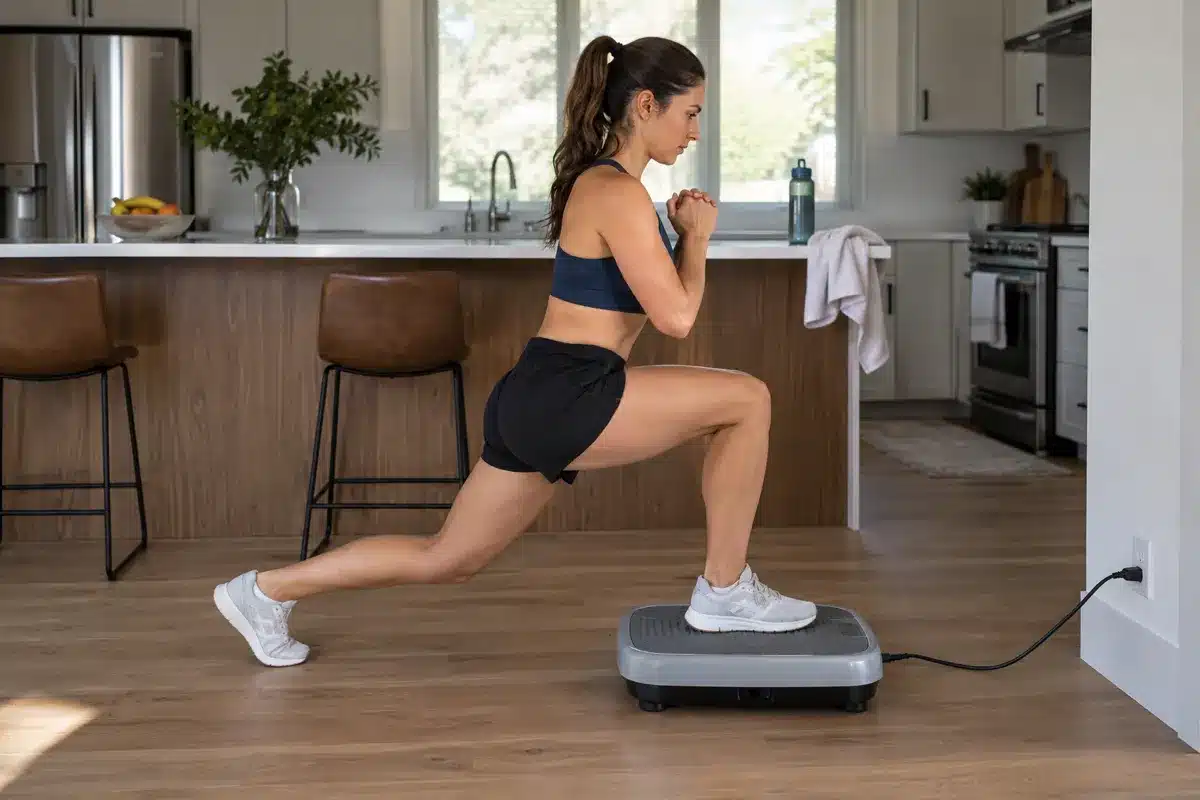
A gentle session is unlikely to create the same load as another full workout, but intensity still matters.
If you finish heavy leg training and immediately perform deep vibration squats, long squat holds, and demanding lunges, you are still asking tired muscles to produce more force. Calling that sequence a recovery routine does not change the training stress.
For recovery-focused use, I would deliberately reduce the difficulty. The vibration session should feel easier than the workout you are recovering from.
Common Timing Claims to Ignore
There is no evidence-based rule that vibration plates must always be used before exercise or always be used afterward. The appropriate timing changes with the goal, and using the plate twice does not automatically produce twice the benefit.
Specific claims that 30 to 40 Hz is the universally ideal pre-workout setting or that a particular lower frequency is scientifically proven for recovery are also too strong. Research protocols remain too variable to establish one universal setting for either purpose.
Claims about "flushing toxins" or clearing the lactic acid responsible for DOMS should also be avoided. Most importantly, less soreness after vibration should not be interpreted as proof that strength, performance, and muscle tissue have completely recovered.
What I Would Realistically Expect
Before a Workout
I would realistically expect a short vibration session to provide movement, muscle activity, and possibly a temporary increase in comfortable range of motion. Pre-exercise vibration may also reduce subsequent DOMS under some conditions.
I would not expect it to reliably increase maximal strength, guarantee a higher jump, improve sprint speed, or transform workout performance. The evidence for those acute performance outcomes is much less consistent.
After a Workout
I would realistically expect gentle post-workout vibration to provide light movement and potentially reduce muscle soreness. It may also increase peripheral circulation and make stretching or the transition into recovery feel more comfortable.
Readers who prioritize that post-workout circulation response should look at my guide to the best vibration plate for circulation, which covers models specifically suited to recovery-focused use.
I would not expect the plate to guarantee faster restoration of muscle strength, dramatically accelerate tissue repair, flush toxins, or eliminate DOMS. Those claims go considerably further than the available research.
My Take on Using a Vibration Plate Before or After a Workout
I would not choose between before and after as though one timing were universally superior. Before training, I see the vibration plate primarily as a short optional warm-up and mobility tool. After training, I see it primarily as a gentle recovery and soreness-management tool.
The research also gives us a good reason to keep expectations realistic. Pre-workout vibration can prepare the body without consistently improving subsequent athletic performance, while post-workout vibration can reduce soreness without necessarily restoring strength faster.
If you are ready to add a machine to your routine for either purpose, my picks for the best vibration plate cover the models that hold up to regular pre- and post-workout use.
What I would avoid at either end of the workout is doing too much. Pre-workout vibration should leave you ready to train, while post-workout vibration should leave you feeling less taxed rather than more.
FAQs
Should I use a vibration plate before or after a workout?
Either can be appropriate. Use it before exercise when your priority is warming up, increasing range of motion, or gently activating the muscles, and after exercise when soreness, light movement, stretching, or recovery is the priority.
Neither timing has been proven universally superior.
Is a vibration plate good before weight training?
It can be incorporated into a strength-training warm-up. Keep the session short and avoid high-volume squats, lunges, or other vibration exercises that could fatigue the muscles before heavy lifting.
Is a vibration plate good after weight training?
It may be useful for gentle movement and reducing post-workout soreness. Post-exercise vibration has reduced DOMS in research, although it has not consistently accelerated strength recovery.
Can I use a vibration plate before running?
Yes, but I would use it only as one part of the warm-up. Dynamic movement and running-specific preparation remain important, and vibration has not been proven to reliably improve running performance.
Is a vibration plate good after running?
It may be useful after a demanding run if you find gentle vibration comfortable, particularly when muscle soreness is a concern. Keep the session low demand rather than turning it into another leg workout.
How long should I use a vibration plate before exercise?
There is no universal evidence-based duration. Around three to five minutes is a practical starting range for home use, followed by the normal dynamic or exercise-specific warm-up.
How long should I use a vibration plate after exercise?
Approximately three to ten minutes of comfortable vibration is a reasonable practical range. Some research has found recovery-related effects with even shorter exposures.
Can I use a vibration plate both before and after my workout?
Yes. A short session before and an easier session afterward can be used when both serve a clear purpose, but using the plate twice is not automatically better than using it once.
Does a vibration plate warm up your muscles?
Whole-body vibration creates muscle activity and can increase peripheral blood flow and range of motion under some conditions. It can therefore form part of a warm-up, although it should not replace movement specific to the workout you are about to perform.
Does a vibration plate help post-workout soreness?
Research suggests that vibration can reduce delayed-onset muscle soreness after strenuous exercise. The effect does not necessarily mean muscle strength or performance has completely recovered.
Can vibration improve workout performance?
Not consistently. Some studies show acute improvements in selected performance measures, while meta-analyses and controlled comparisons find small, inconsistent, or no additional benefits for actual athletic performance.
What vibration frequency is best before a workout?
No universal pre-workout frequency has been established. Research uses widely different frequencies and amplitudes, so I would choose a setting that allows controlled movement without creating fatigue.
What vibration frequency is best after a workout?
There is no scientifically established universal recovery frequency. Use a comfortable setting that keeps the post-workout session low demand rather than trying to reproduce one laboratory protocol.
Should I use a vibration plate before or after stretching?
Both approaches can work. A short vibration session before stretching may temporarily increase range of motion, while stretching on the platform combines both stimuli directly. After a workout, vibration-assisted stretching may also fit naturally into a cooldown.
Notable Studies
- Amato A, et al. Whole-Body Vibration as an Effective Sports Competition Warm-Up: A Randomized Controlled Trial in a Young and Healthy Population. A five-minute vibration warm-up improved several measures from baseline, but the same warm-up performed without vibration produced similar changes.
- Tan J, et al. Effects of Pre-Exercise Acute Vibration Training on Symptoms of Exercise-Induced Muscle Damage: A Systematic Review and Meta-Analysis. Six randomized trials examined pre-exercise vibration and its effect on subsequent DOMS and muscle-damage markers.
- Aminian-Far A, et al. Whole-Body Vibration and the Prevention and Treatment of Delayed-Onset Muscle Soreness. Reviewed WBV as a pre- and post-exercise intervention for reducing delayed-onset muscle soreness and associated performance decrements.
- Timon R, et al. Effects of Whole-Body Vibration After Eccentric Exercise on Muscle Soreness and Muscle Strength Recovery. Post-exercise WBV reduced soreness and creatine kinase but did not improve recovery of peak isometric strength.
- Lu X, et al. Does Vibration Benefit Delayed-Onset Muscle Soreness? A Meta-Analysis and Systematic Review. The review included ten randomized studies and found reductions in soreness at 24, 48, and 72 hours and lower CK at 24 and 48 hours.
- Whole-Body Vibration Decreases Delayed-Onset Muscle Soreness Following Eccentric Exercise in Elite Hockey Players: A Randomised Controlled Trial. Post-exercise WBV combined with stretching reduced pain and quadriceps tightness more than stretching alone.
- Games KE, Sefton JM, Wilson AE. Whole-Body Vibration and Blood Flow and Muscle Oxygenation: A Meta-Analysis. Acute whole-body vibration increased peripheral blood flow, while effects on muscle oxygenation were less consistent.
- Chen J, et al. Optimizing Athletes' Recovery and Performance: A Review of Vibration Therapy, Compression Garments, and Massage. The 2025 review examined 29 vibration-therapy studies and found recovery evidence varies considerably while optimal timing parameters remain insufficiently standardized.
Healthcare and Medical Disclaimer
The information provided on Vibration Plate Zone is for general informational purposes only and is not intended to replace professional medical advice, diagnosis, or treatment. Always seek the guidance of a qualified healthcare provider with any questions you may have regarding a medical condition, and never disregard or delay seeking professional advice.