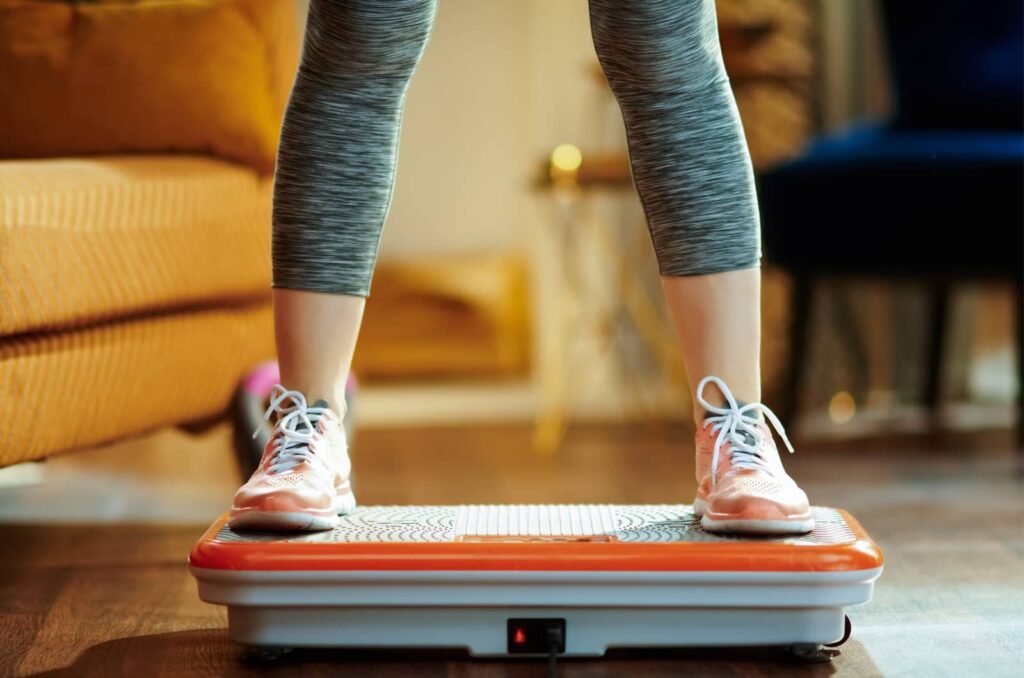
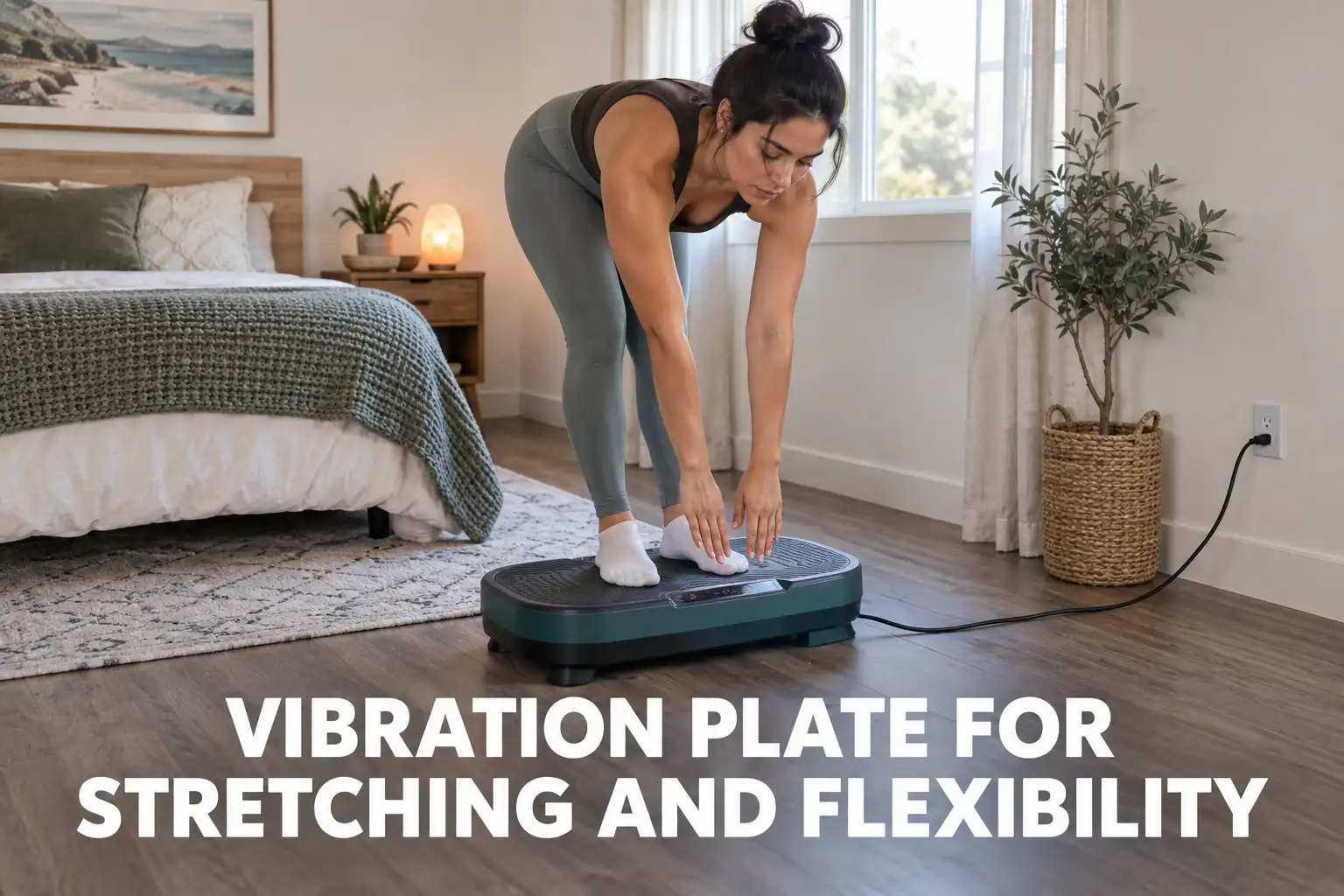
A vibration plate can improve flexibility and range of motion, both immediately after a session and potentially over longer periods of regular training. Research also suggests that combining vibration with stretching can produce additional flexibility gains in some situations.

About the author: Hello! I’m Vladimir Stanar, professor of physical education, kinesiotherapist, marathon runner, cyclist, and cycling coach, and long-time advocate of health, fitness, and active living.
My journey with vibration plates runs parallel to my professional career in education, sports medicine, and athletic development. I’ve developed a unique process for testing vibration plates as they are some of the most versatile tools for enhancing health, recovery, and performance.
✅ Expert-Reviewed by: Vanja Vukas, MPhEd
📚 Expert Contributor: Milutin Tucakov, MPhEd
That does not mean vibration is automatically better than ordinary stretching. Static stretching already works very well, and newer research shows that adding vibration does not consistently produce a larger improvement. I would therefore use a vibration plate as an optional addition to a good flexibility routine rather than a replacement for stretching.
The plate can make short mobility sessions more engaging and may help you temporarily access a greater range of motion. There is no need to chase extreme settings or unusually deep stretches to get value from it.
What Do Flexibility, Range of Motion, and Mobility Actually Mean?
These terms are often used interchangeably, but they describe slightly different things. Range of motion refers to how far a joint can move through a particular movement, while flexibility relates more specifically to the ability of muscles and other soft tissues to allow that movement.
Mobility is broader. It includes not only available range of motion but also the strength, balance, coordination, and control required to use that range effectively.
This distinction matters with vibration plates. Being able to reach farther toward your toes after a vibration session shows increased range of motion, but it does not necessarily mean you suddenly have better control or strength throughout that additional range.
Does a Vibration Plate Improve Flexibility?
Overall, the research is fairly encouraging. A large systematic review and meta-analysis published in 2025 examined 65 studies of mechanical vibration and flexibility, finding improvements after both single vibration sessions and longer-term vibration programs.
The acute effect is especially interesting because several studies have shown that people can temporarily reach farther or move through a greater range shortly after whole-body vibration. Longer programs have also produced improvements over several weeks.
Studies involving athletes, dancers, recreationally active adults, and other groups suggest that repeated vibration exposure can contribute to flexibility gains. However, results vary considerably between studies because the vibration equipment, frequency, amplitude, exercises, stretching methods, session duration, and populations are far from standardized.
My interpretation is straightforward: vibration can improve flexibility, but the result is not automatic and there is no single protocol that works best for everyone.
What Does the Research Show?
The evidence becomes easier to understand if we separate the immediate effects from changes that occur after repeated training.
Immediate Flexibility Improvements
Some of the strongest acute studies show improvements after just one vibration session. One study tested side-to-side whole-body vibration at several different frequencies and amplitudes, and flexibility increased immediately after the vibration and remained higher 15 minutes later.
Interestingly, 15, 20, and 30 Hz all produced improvements. Different amplitudes also worked without one setting clearly outperforming the others.
Another study using individualized whole-body vibration frequencies found acute improvements in lower-back and hamstring flexibility. Some of the increase remained measurable several minutes after the vibration ended.
These results make vibration potentially useful before activities where greater range of motion is desirable. The effect may be temporary, however, so I would not interpret one better toe-touch as permanent flexibility development.
Longer-Term Flexibility Improvements
Repeated vibration training may produce more durable changes. One randomized trial compared ordinary static hamstring stretching with static stretching performed on a vibration platform, with participants training five days per week for four weeks.
Static stretching alone improved flexibility by about 14%, while vibration-assisted stretching improved it by about 22%. Three weeks after the intervention ended, the vibration group also retained more of its improvement.
Other studies have found flexibility improvements after several weeks of whole-body vibration in female athletes and dancers. That suggests the plate can be more than a temporary warm-up tool, and consistent training may contribute to longer-term improvements, particularly when vibration is combined with movements that actually challenge range of motion.
Where the Evidence Is Less Convincing
Not every trial has produced an impressive result. A study examining ankle dorsiflexion found changes of less than five degrees after whole-body vibration and concluded that the clinical importance was unclear.
More recent studies have also complicated the idea that vibration automatically improves stretching. In one randomized crossover study, stretching alone, vibration alone, and stretching combined with vibration all improved ankle range of motion, but adding vibration to the stretching did not produce a larger ROM improvement than stretching by itself.
Research on limited hip-adductor flexibility has produced a similar result. Stretching improved range of motion, but adding whole-body vibration did not provide a meaningful additional flexibility gain.
That is why I would not tell someone they need a vibration plate to become more flexible.
Does Stretching on a Vibration Plate Work Better Than Regular Stretching?
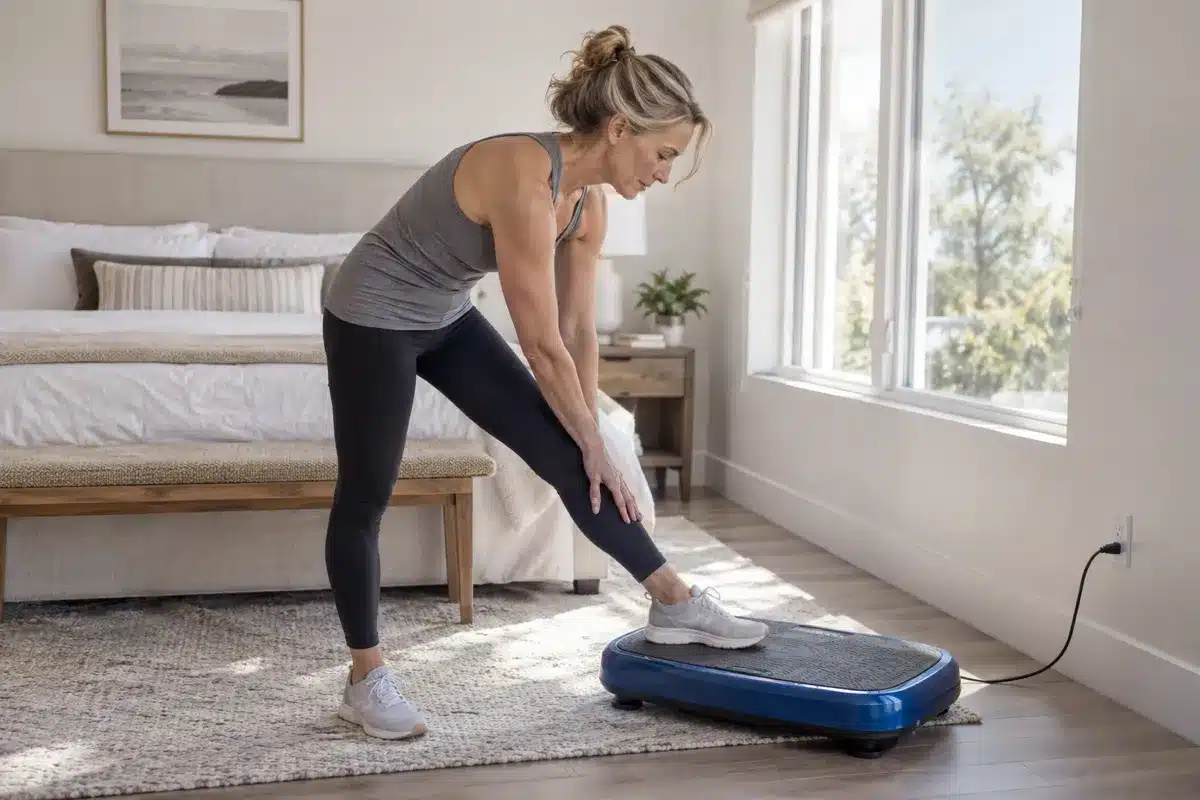
Sometimes it may, but the evidence is not consistent enough to say that vibration-assisted stretching is universally superior. The four-week hamstring study is particularly encouraging because vibration plus stretching produced a larger improvement than stretching alone and appeared to preserve more of the gain after training stopped.
Other research, however, has found no additional range-of-motion benefit from adding vibration to a stretch. This probably reflects differences in muscle group, vibration method, stretching position, frequency, amplitude, training history, and other variables.
If I already owned a vibration plate, I would happily incorporate it into some flexibility sessions. I would not buy one solely because someone told me ordinary stretching no longer works without vibration.
How Might Vibration Increase Range of Motion?
Researchers have proposed several mechanisms, but none completely explains the effect.
Increased Stretch Tolerance
One possibility is that vibration changes how a stretch feels. You may become more comfortable moving farther into the position before the sensation becomes uncomfortable, producing additional range of motion even if the muscle has not physically become longer during those few minutes.
This is important because flexibility tests measure how far you can move, not just the physical length of muscle fibers.
Changes in Passive Resistance and Stiffness
Mechanical vibration may temporarily affect the passive resistance you feel as tissues are stretched. The recent vibration meta-analysis found reductions in passive stiffness alongside flexibility improvements in some studies, which may partly explain why certain stretches feel easier immediately after vibration.
Long-term structural changes are less clear. More research is needed to determine exactly what changes inside the muscle-tendon unit after repeated vibration training.
Sensory and Neuromuscular Effects
Vibration creates strong sensory stimulation through the muscles, tendons, joints, and skin. It also causes repeated neuromuscular responses while the body maintains posture on the moving platform.
These effects may temporarily influence muscle tone, stretch sensation, and how the nervous system responds as you approach the end of your range. I would avoid reducing this to claims that vibration simply "switches off the stretch reflex," because the response is more complicated than that.
Blood Flow and Tissue Temperature
Whole-body vibration can increase peripheral blood flow under certain conditions and may increase local tissue temperature. Warm tissues and active muscles can feel easier to move than muscles that have been completely inactive for several hours, which may contribute to the immediate flexibility effect.
Readers who want to understand how circulation benefits extend across different training goals will find my picks for the best vibration plate for circulation a useful companion resource.
Again, increased circulation is one possible contributor rather than proof of a specific flexibility mechanism.
Does a Vibration Plate Actually Lengthen Your Muscles?
Not necessarily, especially after one short session. An immediate increase in range of motion can occur because you tolerate the stretch better or because passive resistance changes, so the muscle does not need to physically grow longer in five minutes for you to reach farther.
This applies to ordinary stretching too. Modern stretching research suggests that improvements in stretch tolerance and passive tissue properties contribute substantially to changes in range of motion.
Over longer training periods, more structural adaptations may occur. The important point is that a larger range of motion should not automatically be described as "lengthened muscles."
Can a Vibration Plate Improve Mobility?
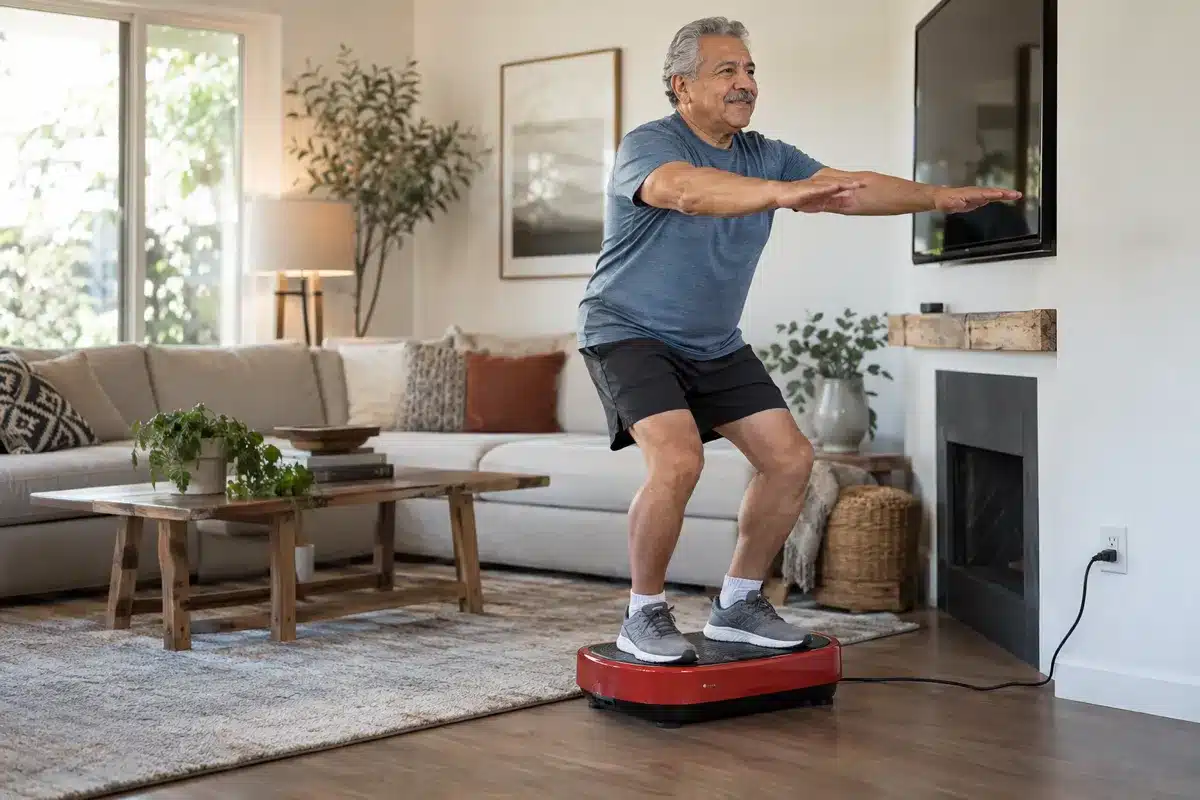
Potentially, but increased flexibility alone does not guarantee better mobility. Suppose you gain another ten degrees of hip range but have very little strength or control near the end of that range. You may be more flexible without having gained much useful movement capability.
Readers focused on translating flexibility into functional movement will find specific protocols in my guide on using a vibration plate for mobility and balance.
I would combine flexibility work with controlled movement and strength exercises when improved mobility is the real goal. This is one advantage of a vibration plate because, instead of only holding stretches, you can also perform controlled squats, lunges, calf raises, and other movements that require you to stabilize the available range.
Anyone combining flexibility work with bone-density goals will find my breakdown of the best vibration plate for osteoporosis helpful for selecting a model suited to both aims.
Is a Vibration Plate Good for Tight Muscles?
A vibration plate may temporarily make some tight or stiff muscles feel easier to move and may increase range of motion. That can be useful after sitting for a long time or before a mobility session, and I often prefer gentle movement before stretching rather than trying to force a cold muscle immediately into its deepest position.
Anyone dealing with joint stiffness alongside tight muscles will find my picks for the best vibration plate for arthritis a useful starting point for selecting a model suited to that combination.
Persistent tightness is more complicated. A muscle can feel tight because of training fatigue, weakness, pain, limited joint movement, repeated posture, injury, or simply your normal anatomy, so more stretching is not automatically the answer to every sensation of tightness.
Readers experiencing tightness that traces back to a specific spine or disc issue will find more targeted guidance in my article on using a vibration plate for back pain.
Vibration Plate vs Static Stretching
If your only goal is to become more flexible, conventional static stretching remains extremely effective. A recent meta-analysis included 189 studies and more than 6,600 adults, with static stretching producing meaningful immediate improvements and even larger changes when performed consistently over time.
That is a much larger research base than we have for vibration plates. Some vibration studies suggest that adding vibration can enhance or help retain stretching gains, while other studies find no additional benefit.
For me, the practical conclusion is simple: stretching is the foundation, and vibration is an optional extra.
Vibration Plate vs Dynamic Stretching
Dynamic stretching uses controlled movement through an available range rather than holding a static position. That usually makes it particularly useful before exercise because you can increase range of motion while also raising muscle temperature and preparing the movement patterns you are about to use.
I would generally prioritize dynamic movement before activities involving running, jumping, heavy lifting, or rapid changes of direction. A brief vibration session can complement that warm-up.
Static stretching has a useful place too, but very long static holds immediately before maximum strength or explosive activity can temporarily reduce some measures of performance.
Should You Stretch on a Vibration Plate Before or After Exercise?
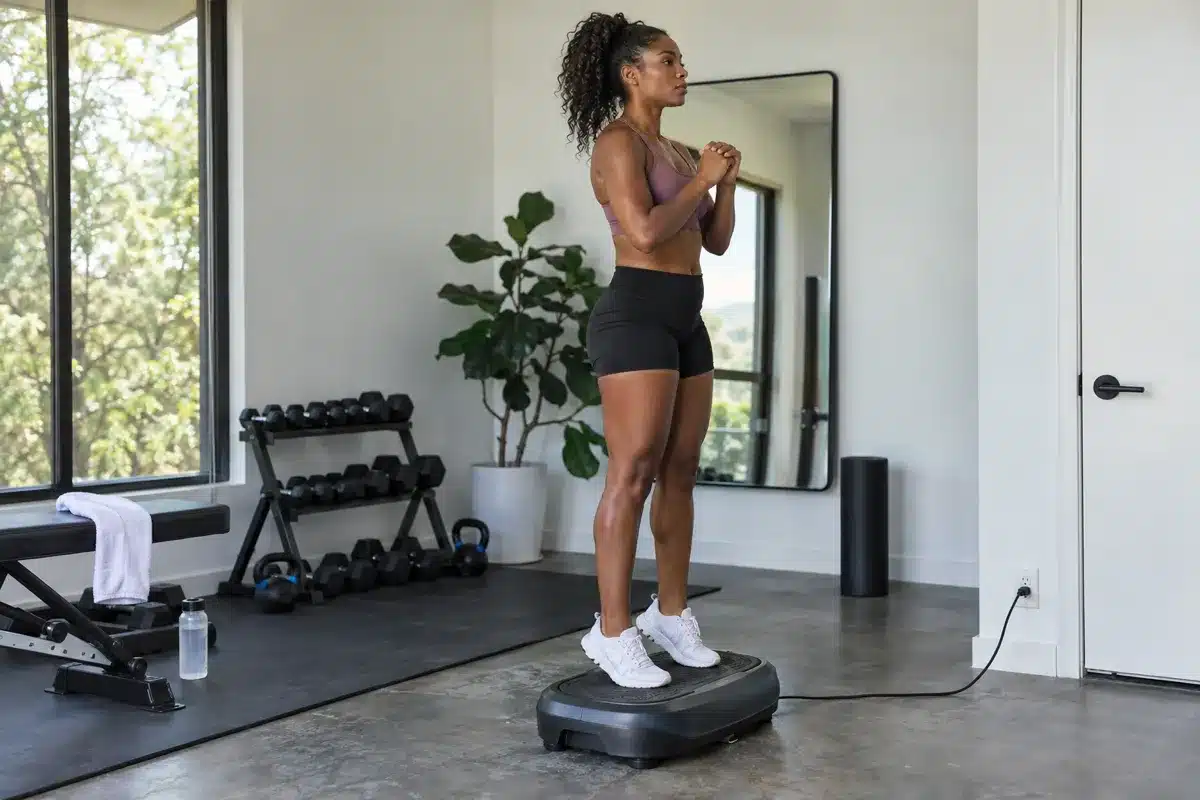
Both can make sense, but I would use the plate differently depending on timing.
For a full breakdown of how timing decisions affect both flexibility and overall training outcomes, I cover this in depth in my guide on vibration plate timing around workouts.
Before Exercise
Keep the vibration session relatively brief and avoid turning it into a maximum-flexibility test. Gentle calf raises, shallow squats, hip movements, and short controlled stretches can prepare the body before transitioning into a more specific dynamic warm-up.
I would not spend a long time pushing deeply into static stretches immediately before heavy lifting or explosive training.
After Exercise
After training, performance during the next few minutes is usually less important. This is where longer static or vibration-assisted stretches make more sense to me because the muscles are already warm and you can focus more directly on range of motion.
Athletes looking for a machine that supports both performance flexibility and recovery work can find my top picks in my guide to the best vibration plate for athletes.
The stretch should still feel controlled rather than painful.
Dedicated Flexibility Session
A separate flexibility session gives you the most freedom. You can use short vibration bouts, static stretches, active mobility exercises, and controlled strength work without worrying about immediately performing a heavy squat or sprint afterward.
Anyone building a home setup specifically for flexibility and mobility work will find my picks for the best vibration plate for home use a useful starting point.
For someone serious about increasing flexibility, I would probably choose this approach over trying to squeeze everything into the warm-up.
What Vibration Frequency Is Best for Flexibility?
There is no scientifically established universal flexibility frequency. Research has reported positive results using a wide range of frequencies, including approximately 15, 20, 30, 35, and 40 Hz, along with individualized frequencies.
The recent meta-analysis also found that frequency, amplitude, acceleration, and duration did not clearly explain the differences in flexibility results across studies. That does not mean settings are irrelevant, but it does mean the current research does not allow us to say that one number is the best.
I would therefore ignore claims such as "30 Hz is the scientifically proven flexibility frequency." Use a comfortable setting that allows you to maintain a controlled position without excessive shaking or instability.
How Long Should You Use a Vibration Plate for Stretching?
There is no validated universal duration specifically for vibration-assisted stretching. For normal home use, I would begin with roughly three to five minutes of total stretching work on the plate, and if that feels comfortable, gradually build toward five to ten minutes.
Those considering a dedicated home stretching machine will find my breakdown of the best LifePro vibration plate helpful for comparing models across that range of duration and intensity.
Longer is not automatically better. Conventional stretching research also shows that flexibility improvements do not simply keep increasing indefinitely as more stretching time is added, so consistency over weeks matters more than turning one session into an endurance event.
Readers who want a broader picture of session structure, frequency, and position options will find everything covered in my guide on how to use a vibration plate.
Practical Vibration Plate Stretching Routine
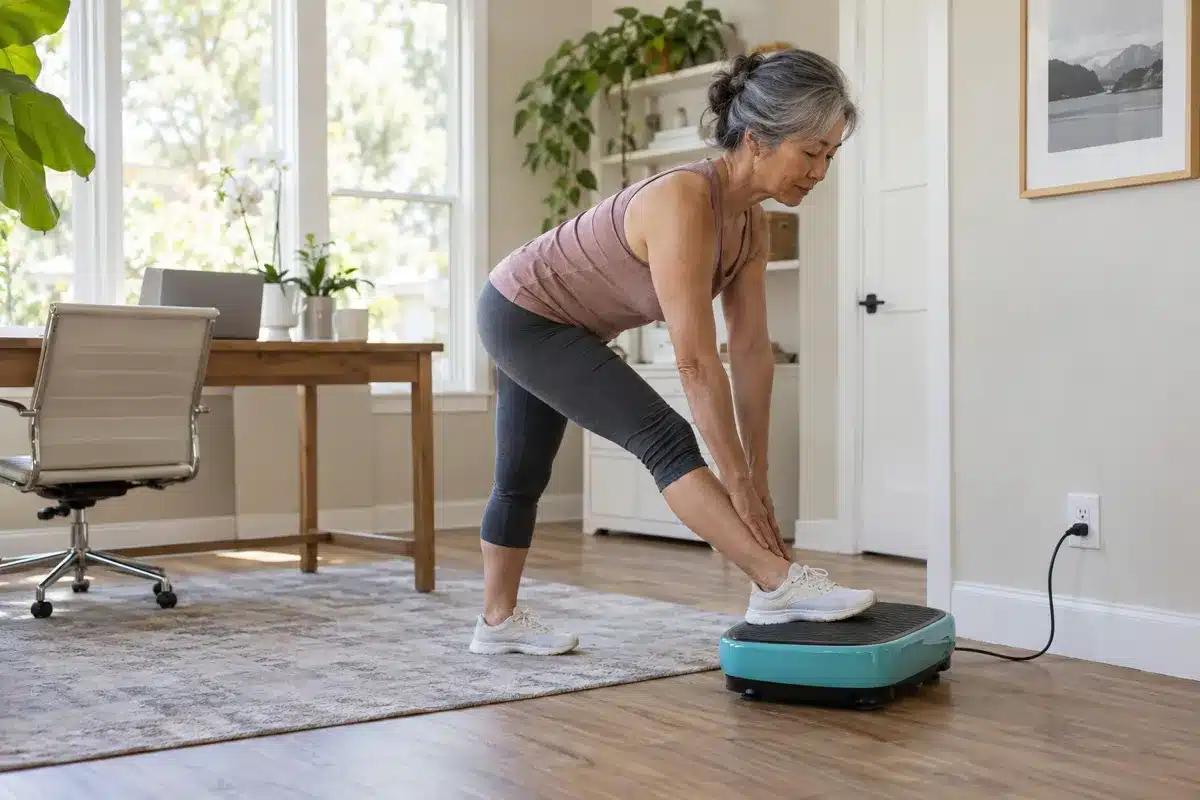
Hamstring Stretch
Stand with one foot on the plate and hinge forward from the hips while keeping the spine controlled. Move until you feel mild tension through the back of the thigh rather than trying to reach as far toward the floor as possible.
I prefer a supported version when balance is uncertain because stability should not become the limiting factor in a flexibility exercise.
Older users who want a model with handrails or a stable platform that removes balance as a concern will find my picks in my guide to the best vibration plate for seniors.
Calf Stretch
Position the foot securely and move the ankle into controlled dorsiflexion while keeping the heel supported when the exercise setup allows it. Avoid bouncing repeatedly into the deepest position because a gentle sustained stretch or slow controlled movement is enough.
Hip Flexor Stretch
Use a split stance or supported lunge position that allows you to keep the pelvis controlled. The goal is to create tension through the front of the hip without dramatically arching the lower back to make the movement look larger.
Inner-Thigh Stretch
Use a controlled wide stance or supported lateral position and gradually shift weight until tension develops through the inner thigh. Do not suddenly increase stance width simply because the vibration makes the muscles feel looser.
Upper-Back and Shoulder Stretch
Place the hands or forearms securely on the platform and move the hips backward while allowing the upper back and shoulders to lengthen. Keep the movement controlled and avoid loading the neck directly with vibration.
Can Vibration Make You Overstretch?
Potentially. If vibration makes a stretch feel more comfortable or temporarily increases stretch tolerance, you may be able to move farther than you normally would, but that additional range should not be treated as a challenge to see how far you can force the joint.
The goal is usable range of motion, not maximum range at any cost. I would move toward mild or moderate tension and stop if the stretch becomes painful, unstable, numb, or difficult to control.
How Often Should You Use a Vibration Plate for Flexibility?
There is no evidence-based requirement to use a vibration plate four, five, or seven days per week for flexibility. A few short sessions each week can be incorporated into a broader stretching or mobility routine if you enjoy them and recover comfortably.
Consistency matters more than finding a magic schedule. Ordinary stretching research shows that repeated exposure over time produces lasting flexibility improvements, so I would focus on maintaining a routine rather than trying to maximize vibration frequency.
Common Claims to Ignore
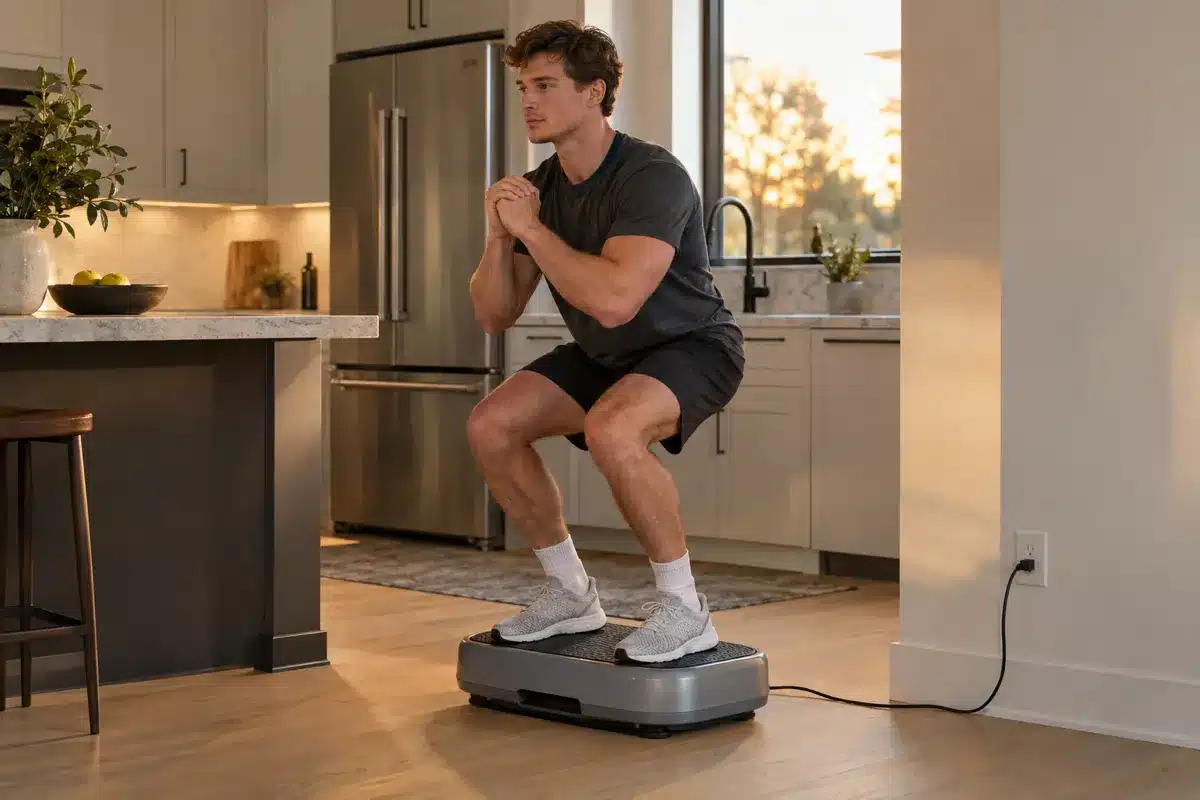
Claims that vibration permanently lengthens muscles after one session, breaks up fascia or adhesions, or has one scientifically perfect flexibility frequency go beyond the current evidence. More vibration is also not automatically better because a stronger setting that makes your body unstable may actually make it harder to maintain a precise stretching position.
A vibration plate does not replace stretching, and gaining more passive range does not automatically fix mobility. Range of motion is useful only when you can control it appropriately.
What I Would Realistically Expect
I would realistically expect a vibration plate to produce a temporary increase in range of motion for some people and potentially make certain stretches feel easier. Consistent use, particularly when combined with actual stretching, may also contribute to longer-term flexibility improvements.
I would not expect vibration to permanently lengthen muscles after one session, eliminate every feeling of tightness, correct a restricted joint, remove fascial adhesions, prevent injuries, or produce unlimited mobility. The strongest reason to use the plate is that it gives you another way to perform flexibility work, not that it makes traditional stretching obsolete.
My Take on Vibration Plates for Stretching and Flexibility
I think flexibility is one of the more credible reasons to incorporate a vibration plate into an exercise routine. We have both immediate and longer-term human research showing improvements in range of motion, and some studies suggest that vibration can enhance traditional stretching or help retain flexibility gains.
Readers who are ready to choose a machine can find my full breakdown of top vibration plate options across all budgets and use cases.
The evidence also gives us a good reason not to oversell it. Ordinary stretching already works very well, and newer studies show that adding vibration does not always produce additional flexibility.
I would treat the plate as a useful supplement that can make short stretching sessions more varied and potentially improve range of motion, rather than a superior replacement for conventional flexibility training.
FAQs
Does a vibration plate improve flexibility?
Yes, research suggests whole-body vibration can increase flexibility and range of motion. Improvements have been observed immediately after individual sessions and after repeated training over several weeks, although the size of the effect varies considerably between protocols and individuals.
Can you stretch on a vibration plate?
Yes. A vibration plate can be incorporated into hamstring, calf, hip, inner-thigh, upper-back, and other stretches when the position is stable and appropriate for the platform.
Use controlled positions and avoid bouncing or forcing the joint into its maximum range.
Is vibration better than regular stretching?
Not consistently. Some studies show greater flexibility gains when vibration is added to static stretching, while other research finds no meaningful additional ROM improvement compared with stretching alone.
Does vibration loosen tight muscles?
Vibration may temporarily reduce feelings of stiffness and allow greater range of motion. However, persistent muscle tightness can have many causes and is not always solved by stretching.
Does a vibration plate improve mobility?
A vibration plate may contribute to mobility by increasing available range of motion and allowing controlled movement exercises. Complete mobility also requires strength, balance, coordination, and control.
What vibration frequency is best for flexibility?
No single frequency has been proven best. Positive flexibility studies have used multiple frequencies and amplitudes, and current meta-analysis does not establish one universally optimal setting.
How long should I stretch on a vibration plate?
There is no established ideal duration. I would start with approximately three to five minutes of total stretching work and gradually progress toward five to ten minutes if comfortable.
Should I use a vibration plate before or after stretching?
Either approach can be used, and stretching itself can also be performed while vibration is active. A brief vibration session before stretching may make range of motion feel easier, while vibration-assisted stretching combines both stimuli directly.
Should I stretch on a vibration plate before or after a workout?
Brief controlled vibration and mobility work can be incorporated before training, but I would prioritize dynamic movement when preparing for strength, speed, or explosive exercise. Longer static or vibration-assisted stretches usually fit better after exercise or during a separate flexibility session.
Can vibration help hamstring flexibility?
Yes. Several studies have reported improvements in hamstring flexibility, including research comparing static hamstring stretching with the same stretching performed alongside whole-body vibration.
Can you overstretch on a vibration plate?
Yes. If vibration temporarily increases stretch tolerance, you may feel capable of moving farther than usual, but that does not make every additional degree of range desirable.
Keep the stretch controlled and stop before pain or instability develops.
Notable Studies
- Jochum D, et al. The Merit of Superimposed Vibration for Flexibility and Passive Stiffness: A Systematic Review With Multilevel Meta-Analysis. The meta-analysis found that superimposed vibration during stretching produced meaningful acute improvements in flexibility and reductions in passive stiffness.
- Fowler BD, et al. Effects of Whole-Body Vibration on Flexibility and Stiffness: A Literature Review. The review found that acute WBV can improve flexibility, with effects depending on vibration parameters and the muscle group examined.
- Feland JB, Hawks M, Hopkins JT, Hunter I, Johnson AW, Eggett DL. Whole Body Vibration as an Adjunct to Static Stretching. WBV combined with static stretching produced greater hamstring flexibility improvements than stretching alone.
- Gerodimos V, et al. The Acute Effects of Different Whole-Body Vibration Amplitudes and Frequencies on Flexibility and Vertical Jumping Performance. The study found that WBV acutely improved sit-and-reach flexibility, with higher frequencies producing greater effects.
- Di Giminiani R, et al. Effects of Individualized Whole-Body Vibration on Muscle Flexibility and Mechanical Power. Vibration frequency matched to individual resonance characteristics produced flexibility improvements alongside gains in mechanical power output.
- Fagnani F, et al. The Effects of a Whole-Body Vibration Program on Muscle Performance and Flexibility in Female Athletes. Eight weeks of WBV training improved flexibility and muscle performance in female athletes compared with controls.
- Marshall LC, Wyon MA. The Effect of Whole-Body Vibration on Jump Height and Active Range of Movement in Female Dancers. Acute WBV improved active range of movement in female dancers, with the greatest gains in hip flexion and shoulder elevation.
Healthcare and Medical Disclaimer
The information provided on Vibration Plate Zone is for general informational purposes only and is not intended to replace professional medical advice, diagnosis, or treatment. Always seek the guidance of a qualified healthcare provider with any questions you may have regarding a medical condition, and never disregard or delay seeking professional advice.