Affiliate Disclosure: Vibration Plate Zone is a proud participant in the Amazon Services LLC Associates Program.
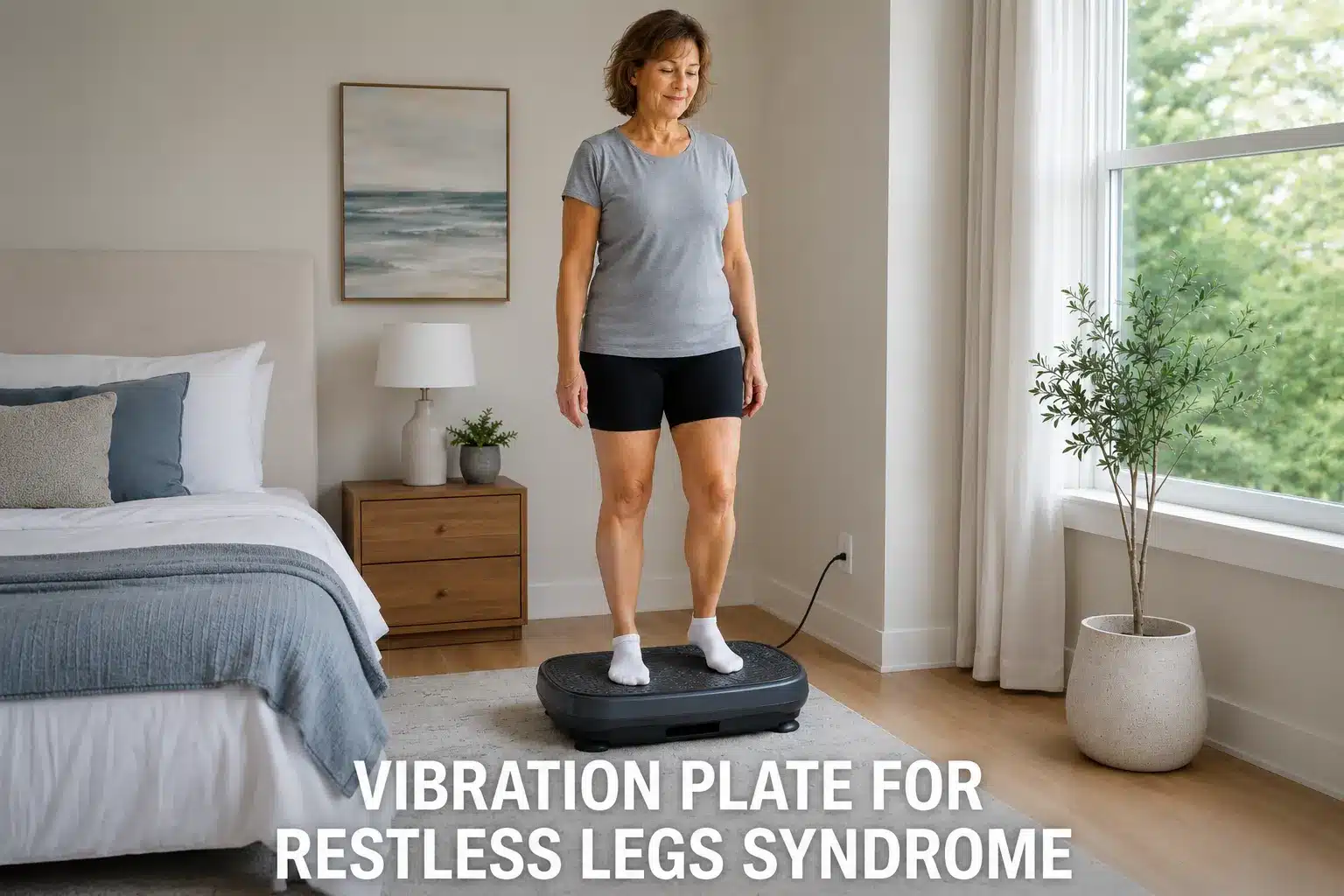
If you have restless legs syndrome, you already know the hardest part is often not the legs themselves. It is the timing. Symptoms tend to show up when you finally sit down, lie down, or try to fall asleep. That is why people search for a vibration plate for restless leg syndrome in the first place. They want something that might calm the urge to move, reduce the uncomfortable sensations, and make bedtime less frustrating.

About the author: Hello! I’m Vladimir Stanar, professor of physical education, kinesiotherapist, marathon runner, cyclist, and cycling coach, and long-time advocate of health, fitness, and active living.
My journey with vibration plates runs parallel to my professional career in education, sports medicine, and athletic development. I’ve developed a unique process for testing vibration plates as they are some of the most versatile tools for enhancing health, recovery, and performance.
✅ Expert-Reviewed by: Vanja Vukas, MPhEd
📚 Expert Contributor: Milutin Tucakov, MPhEd
Restless legs syndrome is defined by an urge to move the legs, symptoms that begin or worsen during rest, at least temporary relief with movement, and a clear tendency to worsen in the evening or at night.
As a licensed kinesiotherapist, I think this is a fair question, but it needs a realistic answer. Whole body vibration for restless leg syndrome may help some people with temporary symptom relief, sensory distraction, muscle relaxation, circulation support, and better pre-bed settling. But I would never describe it as a cure. RLS is a neurologic sensorimotor disorder, and while symptoms can often be managed, the condition itself is not something a vibration plate fixes.
My honest view is this: a vibration plate can be worth trying for restless legs at night when the goal is symptom management, not fixing the condition itself. In other words, I think the best use case is bedtime support. If the vibration helps your legs feel less agitated, less “jumpy,” and less uncomfortable for a while, that is meaningful. But I would not want anyone to mistake temporary symptom relief for a solution to the underlying cause, especially because RLS can be linked to issues like iron deficiency, pregnancy, kidney disease, peripheral neuropathy, and medication effects.
What Is Restless Leg Syndrome, Really?
Restless legs syndrome is more than ordinary fidgeting. It is a condition marked by an irresistible urge to move the legs, usually with unpleasant sensations in the legs that are hard to describe. People often talk about a crawling sensation in the legs, tingling in the legs at night, itching sensation in the legs at rest, burning sensation in the legs at rest, pulling sensation in the legs, or just a strange internal discomfort that makes them feel like they cannot keep still. The most important clinical clue is that these symptoms show up or worsen when resting and improve, at least for a while, when the person moves.
That is one reason RLS is often misunderstood. Some people think it is only a circulation problem. Others think it is just muscle tension. But the classic pattern is more specific than that: symptoms worsen at rest, symptoms worsen in the evening or at night, and movement such as walking, stretching, or shifting position brings at least temporary relief. That pattern matters a lot when I think about whether vibration therapy for restless leg syndrome makes sense. If movement helps, then a low-impact form of stimulation may help some people too.
In practical terms, when someone tells me, “My legs feel fine during the day, but the second I lie down they feel agitated,” that sounds much more like classic RLS than a general circulation complaint. When they add, “Walking around helps, but only for a little while,” that makes the picture even clearer.
Why Restless Leg Syndrome Feels Worse at Night
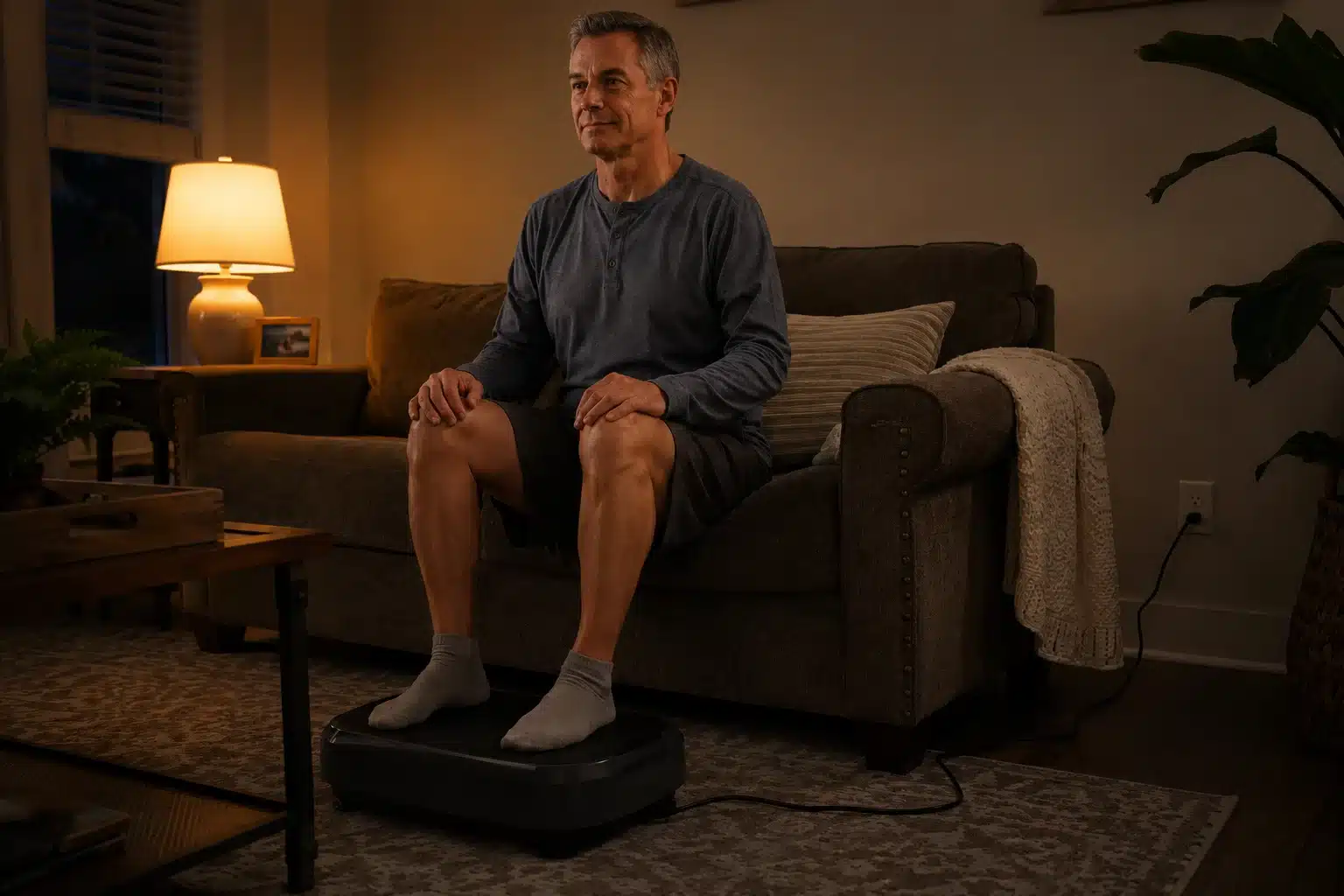
This is one of the main reasons the condition is so disruptive. RLS does not just create discomfort. It often shows up right when a person is trying to settle down and sleep. Symptoms commonly intensify in the evening, get worse when lying down, and create restless legs when trying to sleep. That can lead to poor sleep, repeated sleep disruption, and daytime fatigue the next day.
As a kinesiotherapist, I think this timing issue changes the whole conversation. If symptoms were random, I would approach the topic differently. But because nighttime leg discomfort, leg twitching at night, and the urge to move the legs tend to flare during rest, I see why people want a pre-bed tool. A vibration plate for nighttime restless legs is appealing because it is easy to use before bed, after long periods of sitting, or as part of a bedtime routine. That does not guarantee it will work, but it fits the symptom pattern logically.
What Causes Restless Leg Syndrome?
RLS is not always caused by one simple thing. Sometimes there is no clear single cause. But major medical sources repeatedly point to possible contributors such as dopamine dysfunction, iron deficiency and restless legs syndrome, pregnancy and restless legs syndrome, peripheral neuropathy, chronic kidney disease, and other secondary forms of the condition. Some people have primary restless legs syndrome without a clear reversible cause. Others have secondary restless legs syndrome, where the symptoms are linked to another medical issue.
That is why I do not like reducing RLS to bad circulation. Circulation support may still help some people feel better, but the condition itself is not defined that way. It is a neurologic sensorimotor disorder, and in some people it overlaps with periodic limb movements during sleep, which can further disrupt rest.
From a practical standpoint, this means I think a vibration platform for restless leg syndrome makes the most sense as one supportive tool, not as a replacement for medical workup. If someone has severe symptoms, worsening symptoms, or signs that point to an underlying condition, I want that assessed.
Can a Vibration Plate Help Restless Leg Syndrome?
Yes, I think a vibration plate can help restless leg syndrome in some cases. But the word I would emphasize is help, not cure.
When people ask me, “Can a vibration plate help restless leg syndrome?” or “Does a vibration plate help restless leg syndrome?” I usually answer this way: it may help your symptoms settle for a while, especially before bed, but it is not going to eliminate the condition itself.
Why might it help? First, movement is already known to temporarily relieve RLS symptoms. Second, vibration provides low-impact leg stimulation that may act as sensory distraction or sensory modulation. Third, some people may experience it as soothing input to the legs, which can help calm the jumpy, agitated feeling they get at rest. If a short session makes your legs feel less uncomfortable and helps you fall asleep more easily, that is a real benefit, even if it is temporary.
I also think it helps that a vibration plate is easy to use in the exact window when symptoms often show up. A short evening vibration routine or pre-bed vibration routine is more practical for many people than doing a full workout late at night. That makes it a realistic option for conservative symptom management.
If evening timing is what you are working with, my full guide on using a vibration plate before bed goes deeper into duration, intensity, and how to structure a wind-down session without disrupting sleep.
How a Vibration Plate May Help with RLS Symptoms
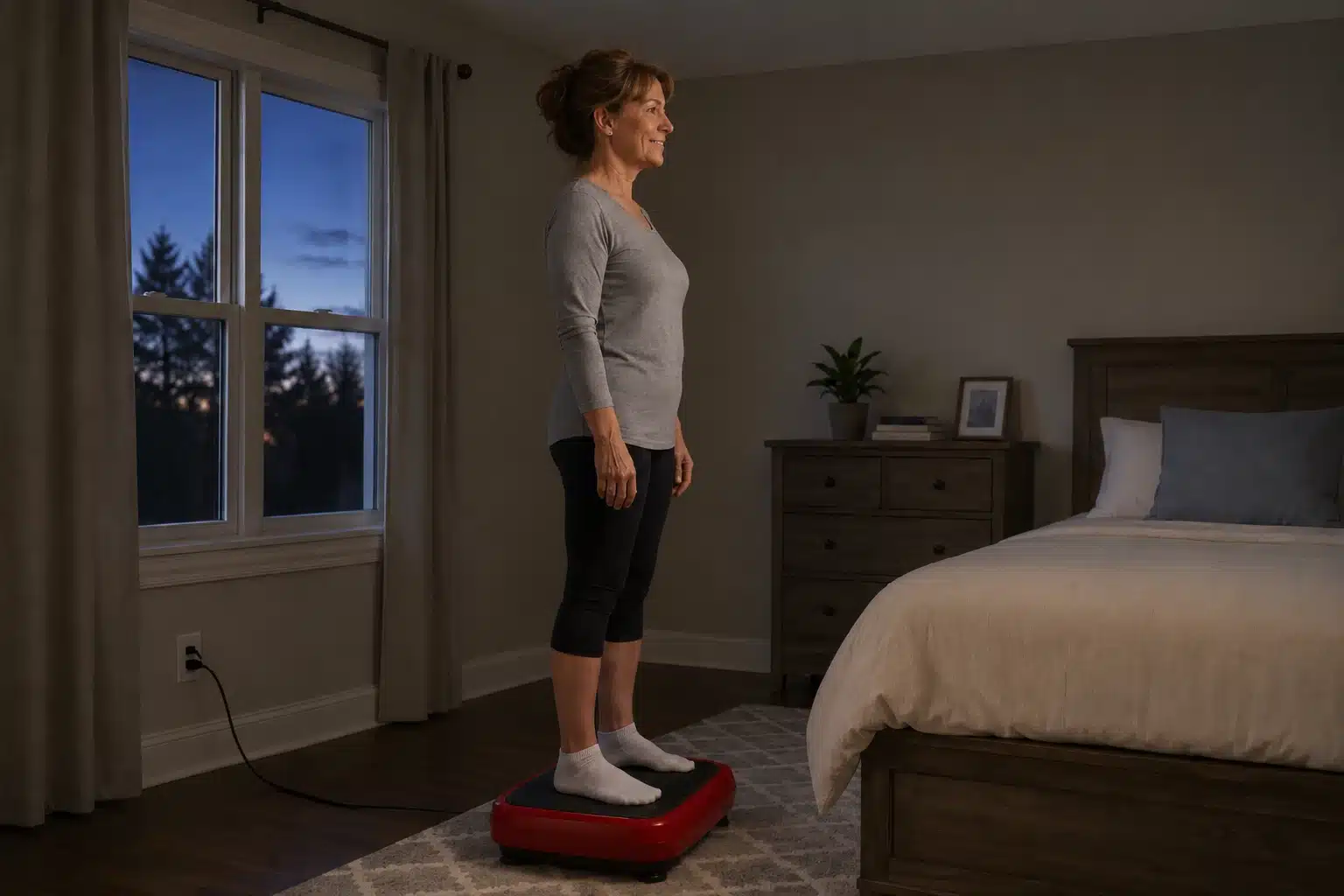
There are a few practical reasons a vibration plate may help with RLS symptoms. It may provide a different form of sensory input when the legs feel agitated, support relaxation before bed, stimulate light muscle activity, and give some people temporary relief that makes it easier to settle down. The most realistic benefit is short-term symptom management, especially in the evening, not correction of the underlying condition.
It may provide sensory relief when your legs feel agitated
This is probably the most important mechanism in day-to-day use. A lot of people with RLS do not describe pain as their main problem. They describe weird, uncomfortable, impossible-to-ignore sensations. When that is the issue, a vibration plate may help by giving the nervous system a different form of sensory input. I think of it as competing input. Instead of only feeling the internal agitation, the person also feels a steady external stimulus. For some people, that can make the legs feel less jumpy and less agitated.
It may help you settle your legs before bed
This is another strong use case. RLS symptoms are often worst right when a person wants to sleep, so a tool that helps create a smoother transition into bedtime has clear value. I would not say it guarantees better sleep, but I do think it may support relaxation before sleep in some people.
People who find anxiety is also part of what prevents them from settling into sleep may find my article on vibration plate for anxiety symptoms helpful, as it addresses the stress and autonomic effects from a dedicated perspective.
It may support circulation and gentle calf-muscle activation
I do not think circulation is the whole story with RLS, but I also would not dismiss it. A vibration plate can stimulate blood flow and activate the lower legs in a gentle way. Since movement often brings temporary relief, it makes sense that gentle leg stimulation may be part of why some people feel better afterward. I see this as a support mechanism, not the defining mechanism.
If improving leg blood flow is your main priority, my roundup of the best vibration plate for circulation covers the machines that perform best in that specific category.
It may reduce muscle tension
Some people with restless legs at night also feel like their calves, shins, or lower legs are tight or overactive. In those cases, muscle relaxation may be part of the benefit. Again, I would not overstate it, but if the vibration session leaves the legs feeling calmer, looser, and less irritated, that is useful.
For those also dealing with leg swelling or fluid buildup alongside RLS, my guide to the best vibration plates for lymphatic drainage covers machines optimized for moving fluid through the lower body.
What a Vibration Plate Cannot Do for RLS
A vibration plate does not cure restless leg syndrome. It is not a replacement for medical treatment, and it is not a reason to ignore possible underlying contributors such as iron deficiency or other health conditions linked to RLS. It may help with symptoms for some people, but it should still be viewed as one supportive tool inside a broader management plan.
If you also have questions about other neurological effects of vibration, my guide on vibration plates and the brain addresses those concerns directly.
That matters because some people with RLS need more than symptom tools. If iron deficiency is part of the problem, that deserves attention. If chronic kidney disease, peripheral neuropathy, pregnancy, or medication-related triggers are involved, that matters too. A vibration plate might still help with temporary symptom relief, but it should not distract from the bigger clinical picture.
If peripheral neuropathy is the underlying cause of your RLS symptoms, the right machine and approach shifts considerably, which I cover in my guide to the best vibration plate for neuropathy.
The Type of Person Who May Benefit Most
In my experience, the type of person most likely to benefit from a vibration plate for restless leg syndrome is someone with classic bedtime symptoms: restless legs while sitting, leg discomfort relieved by walking, symptoms that are worse in the evening, and nighttime restlessness that makes it hard to settle down. That person is already someone whose body responds to movement, so a short, low-impact routine may simply be another way of giving the nervous system the kind of input it already responds to.
I am less enthusiastic when symptoms are severe, rapidly worsening, or mixed with broader neurologic or medical concerns. The same goes for people whose symptoms are not clearly following the classic RLS pattern. If the story does not sound like true RLS, I do not like assuming that a vibration machine for restless legs is the answer.
For older adults managing RLS, platform stability and handrail support become more important considerations, and I address those in my roundup of the best vibration plates for seniors.
My Practical Rule as a Licensed Kinesiotherapist
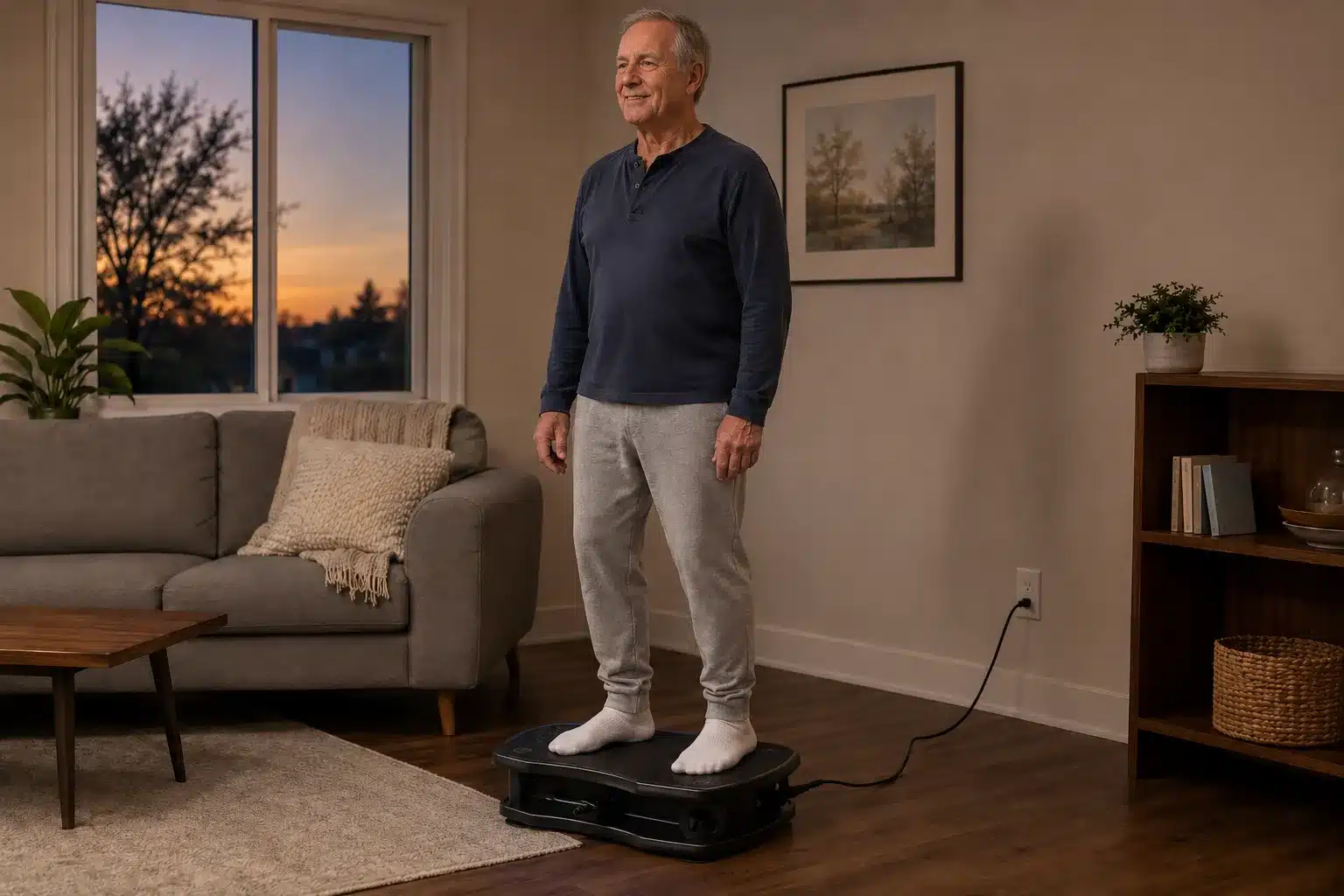
My practical rule is simple.
If symptoms look like classic RLS, meaning there is an urge to move the legs, symptoms worsen at rest, movement brings temporary relief, and the problem is mostly a bedtime or evening issue, I am more open to cautious vibration work. If symptoms are unusual, worsening, tied to pregnancy complications, clear peripheral neuropathy, kidney disease, or major sleep disruption, I become more conservative and more interested in medical evaluation first.
A simple example: if someone tells me, “My legs feel awful when I sit to watch TV and when I get into bed, but walking around the room helps,” I think a short pre-bed vibration routine is reasonable to try. If someone tells me, “My symptoms are getting stronger, I barely sleep, and I also have neuropathy or kidney problems,” I do not want a home tool to become the whole strategy.
For a full breakdown of how timing interacts with circadian rhythm, energy levels, and specific health goals, my guide on the best time of day to use a vibration plate covers all scenarios.
How to Use a Vibration Plate Safely for Restless Legs
If you want to try a vibration plate for RLS, I would keep the approach conservative. Start with short sessions, low-intensity vibration, and a simple routine that fits naturally into the evening rather than waiting until symptoms are already at their worst. In practice, it often makes more sense to use it before bed or after long periods of sitting and then judge it by the result that matters most: whether your legs settle more easily and your sleep improves afterward.
I think seated feet-on vibration plate use can be a very good starting option, especially for people who are older, deconditioned, or not comfortable standing on the plate at night. A standing hold can work too, but I do not think standing is mandatory for this topic. Since the goal is gentle leg stimulation and sensory relief, a seated setup may be enough.
I also tell people to judge the routine by the outcome that matters most: did sleep improve afterward? Did the legs feel calmer? Did the urge to move decrease for long enough to fall asleep? If the answer is yes, then the routine may be helping. If the answer is no, or symptoms worsen, it may not be the right tool.
For a detailed walkthrough of settings, timing, and progressions that apply to any vibration plate routine, my guide on how to use a vibration plate correctly covers the variables that matter most.
For a compact, quiet machine suited to evening home sessions, my guide to the best vibration plates for home use covers models that fit small spaces without compromising performance.
Best Vibration Plate Exercises for Restless Leg Syndrome
If joint sensitivity limits your exercise options alongside RLS, my guide to the best vibration plates for arthritis includes machines with lower-intensity settings designed for exactly that.
Gentle standing hold
This is the easiest starting point for many people. Stand on the plate with soft knees and a relaxed posture. The goal is not exercise intensity. The goal is low-impact leg stimulation and symptom relief.
Seated feet or calves on the plate
For restless legs at night, this may be one of the most practical variations. If someone mainly wants to target the lower legs and calves without much effort, seated use can make a lot of sense.
Ankle pumps
Ankle pumps are a simple add-on because they create gentle movement without much strain. They also fit the logic of RLS well: symptoms improve with motion, so small rhythmic movement can be useful.
Toe raises and calf raises
If the person tolerates them well, toe raises and calf raises can add a little more active stimulation to the lower legs. I would still keep them light. The aim is not fatigue. The aim is to help the legs feel calmer.
Post-sitting relief routine
I also like the idea of using the plate after long periods of sitting, because sitting still is one of the classic triggers for symptom flare-ups. A short post-sitting relief routine can be just as relevant as bedtime use.
Symptoms a Vibration Plate May and May Not Address
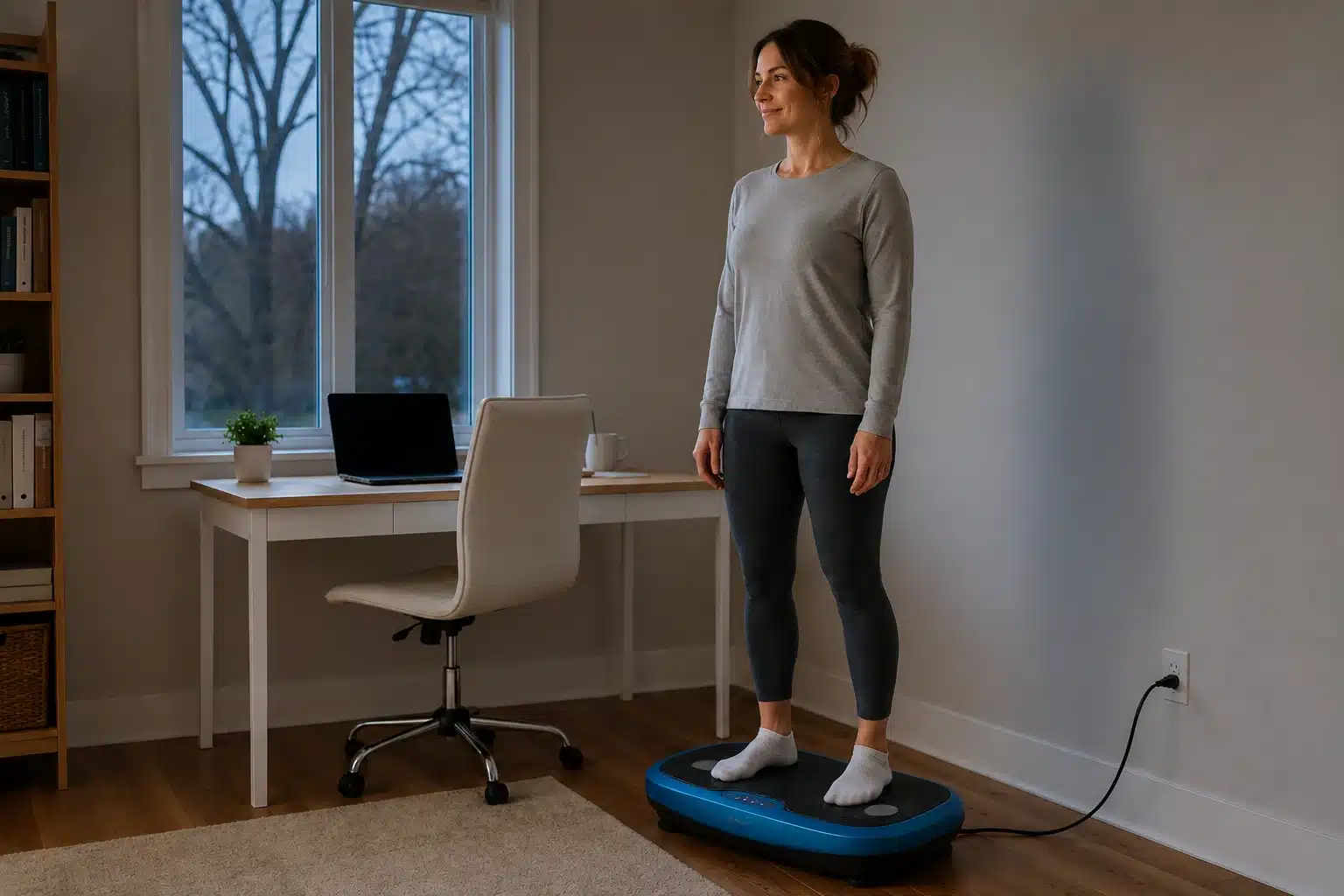
A vibration plate may be more likely to help the immediate sensory side of RLS than the underlying cause. That means it may help more with the urge to move the legs, creepy-crawly feelings, tingling, burning, or that agitated nighttime discomfort that shows up when a person lies down. It may help less with the broader medical drivers behind the condition, and it may not improve symptoms for everyone.
It may help less with the broader drivers of the condition, such as iron deficiency, kidney disease-related RLS, or other medical contributors. It also may not improve symptoms for everyone. That is why I think the fairest promise is temporary symptom relief, not broad correction of the disorder.
If visible vein changes or chronic leg heaviness accompany your RLS, there may be a venous component involved, which I cover separately in my guide on using a vibration plate for varicose veins.
When a Vibration Plate May Not Help or May Be the Wrong Tool
There are situations where I would not lean heavily on a vibration plate.
If symptoms are worsening, unusually severe, tied to pregnancy concerns, peripheral neuropathy, chronic kidney disease, or major insomnia, I want proper evaluation. The same goes for people whose symptoms do not really improve with movement, because that makes the RLS picture less typical.
I would also be cautious if the vibration itself seems to make the legs more agitated. Not every nervous system responds the same way. If the stimulation feels activating instead of calming, I would stop.
If you are unsure whether your leg symptoms are RLS or nerve compression from the spine, my guide on using a vibration plate for sciatica explains the differences and how the approach changes.
When to Stop Using a Vibration Plate and Get Medical Help
I would stop using a vibration plate and get medical help if symptoms are clearly worsening, sleep becomes severely disrupted, the sensations spread or change in a concerning way, or there is reason to suspect an underlying medical issue that has not been evaluated.
In other words, a vibration plate should not delay appropriate care. It can be a supportive tool, but it should not become a substitute for figuring out why the symptoms are happening.
My Honest Take: Is a Vibration Plate Worth Trying for Restless Leg Syndrome?
Yes, I think a vibration plate is worth trying for restless leg syndrome in the right situation. I think it is most worth trying when the goal is bedtime relief, sensory comfort, and a calmer transition into sleep. That is the strongest and most honest use case, because RLS symptoms worsen at rest, worsen at night, and tend to improve temporarily with movement. A vibration plate may fit that pattern as one supportive option for some people, especially when used conservatively.
But I do not think it should be oversold. A vibration plate does not cure restless leg syndrome, and it does not replace proper evaluation when underlying causes are present. The most trustworthy middle ground is this: a vibration plate for restless leg syndrome may be a helpful symptom-management tool for some people, especially before bed, but it belongs inside a broader plan, not in place of one.
If you are ready to move forward and want a full comparison of top-rated machines, my guide to the best vibration plate covers the leading options tested across different budgets and use cases.
Timing is a key variable for RLS. Symptoms typically worsen in the evening, and most people notice relief when a short vibration session is used before the symptom peak rather than after it. A five to ten minute session at low frequency, taken 30 to 60 minutes before the typical onset time, may interrupt the buildup phase more effectively than using the plate after symptoms have already intensified.
Positioning also matters. Seated use with the feet or calves resting on the plate removes the need to stand, which is helpful during symptom episodes when the urge to move makes balance unpredictable. Seated sessions at low amplitude target the lower leg muscles and circulatory system directly without requiring effort or concentration, which makes them easier to maintain consistently.
People with RLS often have co-occurring iron deficiency, sleep disorders, or medication effects that influence symptom severity. A vibration plate addresses only the sensory and circulatory component of the condition. Tracking if sessions reduce symptom severity on specific nights gives you useful data for your healthcare provider and helps distinguish if the benefit is real and repeatable or coincidental.
For an overview of what the research shows on vibration therapy outcomes across different conditions, my article on the clinical evidence for vibration plates covers the key studies in detail.
FAQs
Can a vibration plate calm restless legs before bed?
It may. That is probably its most practical use. Since RLS symptoms often flare in the evening and are relieved by movement, a short pre-bed vibration routine may help some people feel calmer and settle more easily.
Can a vibration plate improve sleep in restless legs syndrome?
It may improve sleep indirectly if it reduces nighttime symptoms enough to help you fall asleep. But it is not a guaranteed sleep treatment, and it does not address every cause of poor sleep in RLS.
Can a vibration plate make restless legs worse?
Possibly. Not everyone responds the same way to stimulation. If the session leaves your legs more agitated or seems to intensify symptoms, I would stop using it.
Is a vibration plate safe for restless legs during pregnancy?
Pregnancy can be associated with RLS, but pregnancy symptoms deserve extra caution. I would not treat a vibration plate as the default answer without discussing it with a healthcare provider first.
What vibration plate exercises are best for restless leg syndrome?
The most practical options are a gentle standing hold, seated feet or calves on the plate, ankle pumps, and light toe raises or calf raises. The goal is calming stimulation, not a hard workout.
Can a vibration plate replace medical treatment for RLS?
No. It may help with symptoms, but it does not replace medical treatment or evaluation, especially when RLS may be linked to iron deficiency or another underlying condition.