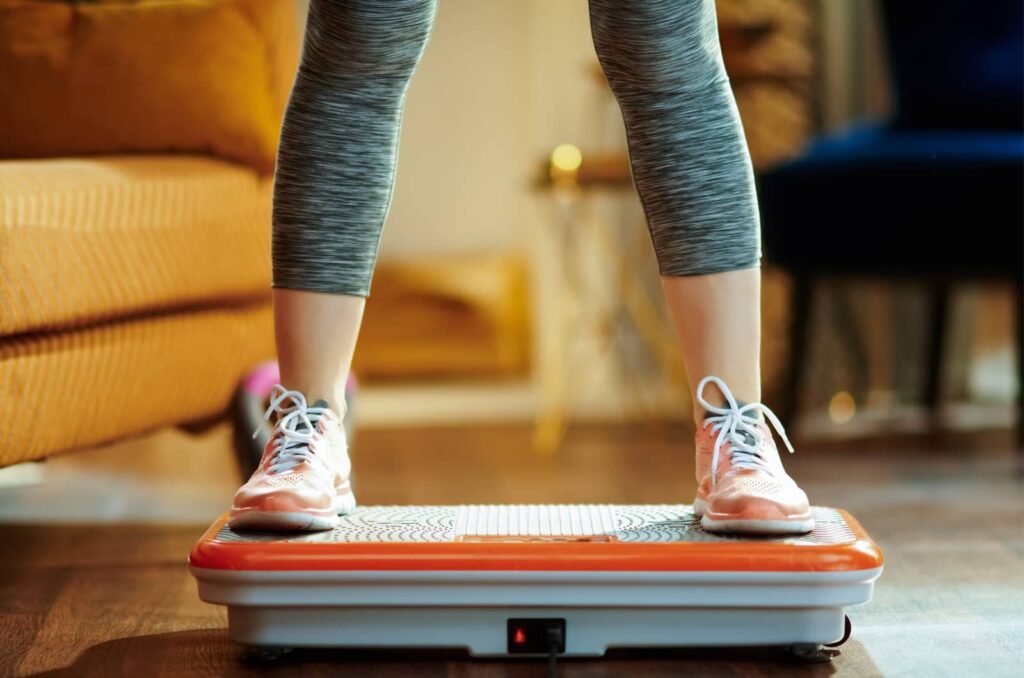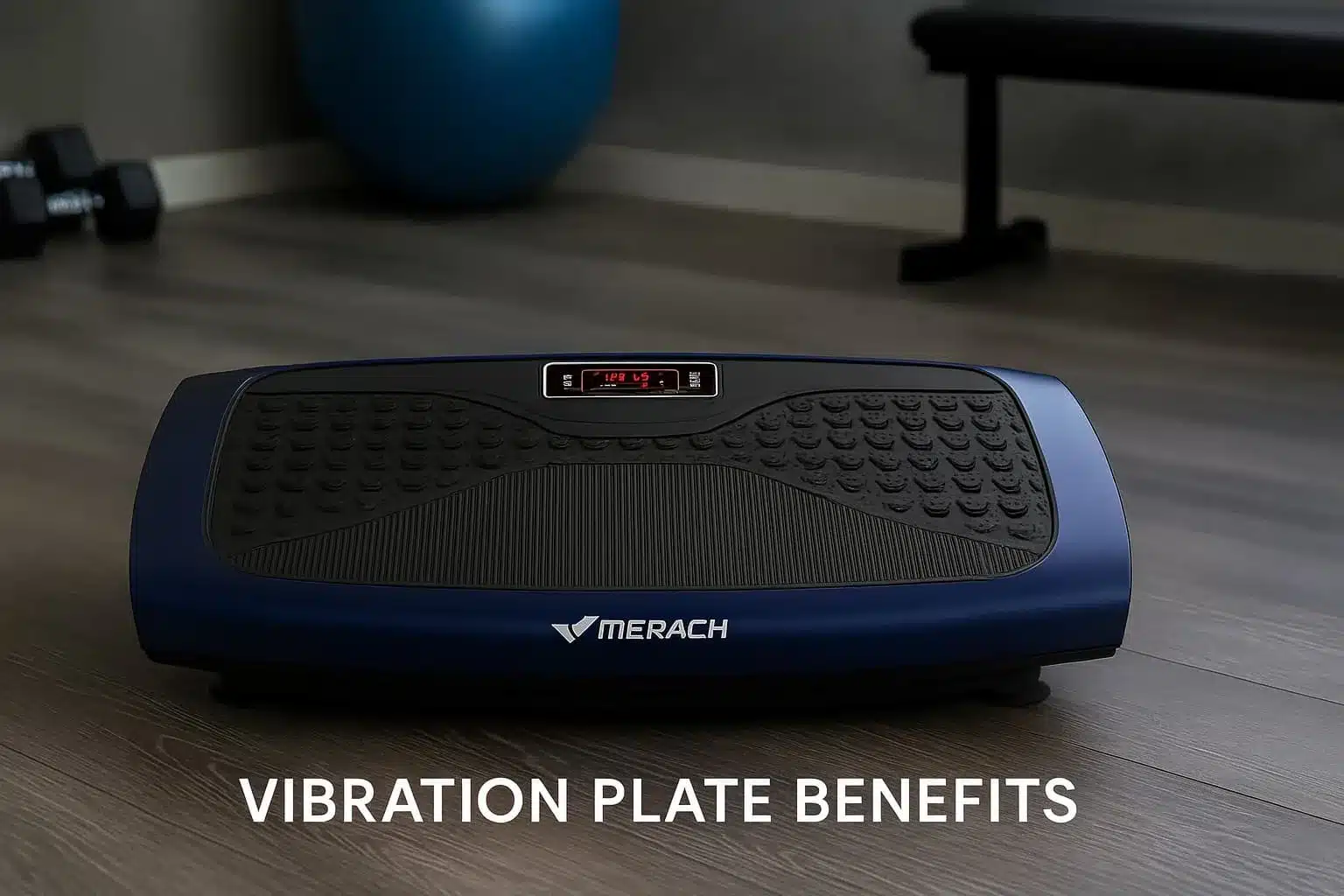
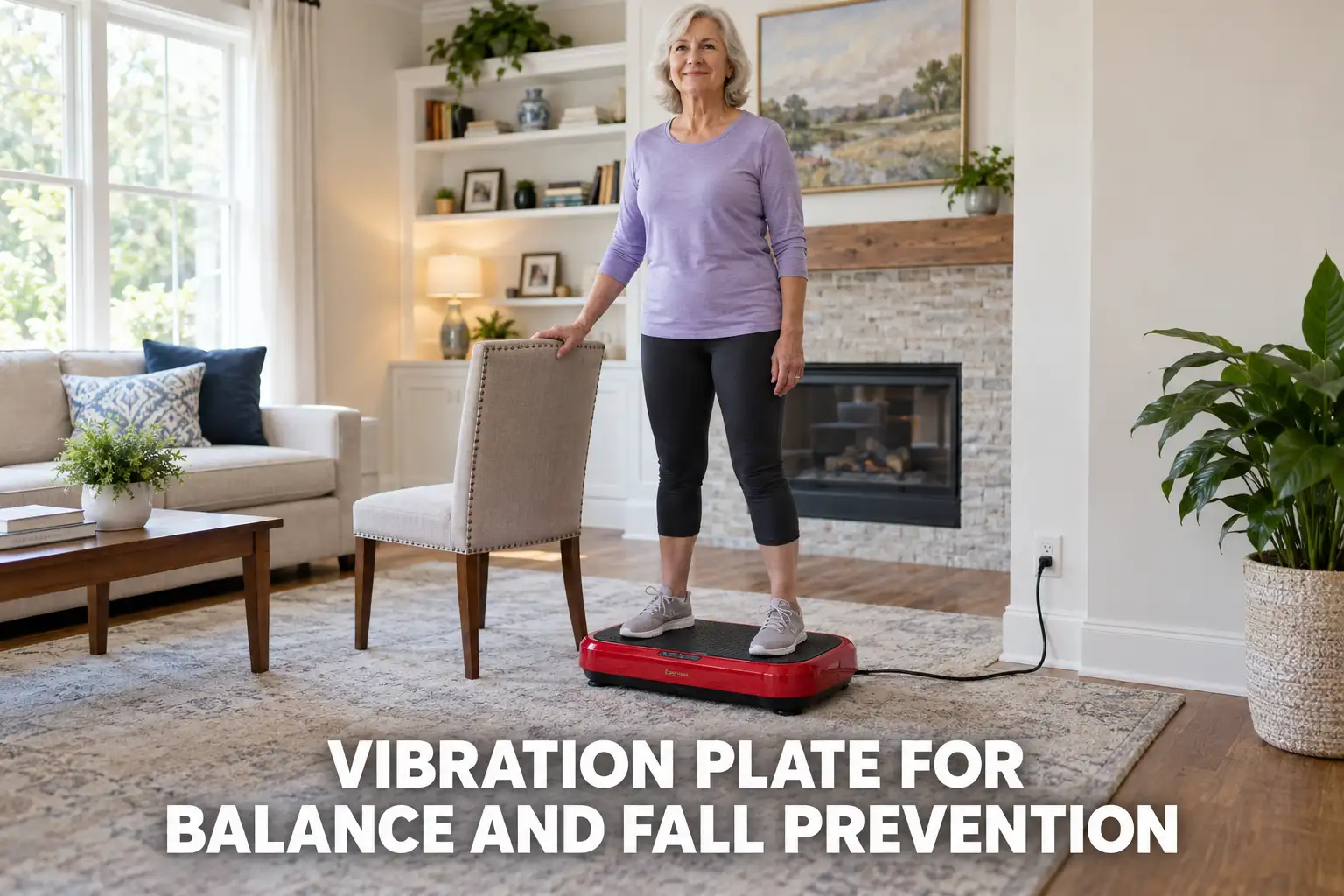
A vibration plate can improve selected measures of balance, mobility, gait, and lower-body function, particularly in older adults and some people with limited mobility. Research involving frail and very old adults is encouraging too, with improvements reported in tests involving standing balance, getting up from a chair, walking, and lower-body strength.

About the author: Hello! I’m Vladimir Stanar, professor of physical education, kinesiotherapist, marathon runner, cyclist, and cycling coach, and long-time advocate of health, fitness, and active living.
My journey with vibration plates runs parallel to my professional career in education, sports medicine, and athletic development. I’ve developed a unique process for testing vibration plates as they are some of the most versatile tools for enhancing health, recovery, and performance.
✅ Expert-Reviewed by: Vanja Vukas, MPhEd
📚 Expert Contributor: Milutin Tucakov, MPhEd
The evidence becomes less convincing when we move from better balance to actual fall prevention. Improving the physical abilities associated with staying upright makes sense, but current research has not established that using a vibration plate by itself reliably prevents real-world falls.
I would therefore use a vibration plate as one part of a broader balance and strength program. Conventional exercise has stronger direct evidence for fall prevention, while vibration can provide an additional low-impact way to challenge the legs, posture, and stability.
Older adults who also want to support circulation alongside that balance work should look at my guide to the best vibration plate for circulation, which covers models suited to low-impact daily use.
Why Balance Becomes More Important With Age
Balance depends on much more than the ability to stand still. Your muscles, joints, nervous system, vision, inner ear, sensation in the feet, and brain continually work together to determine where your body is and keep it upright.
Age-related changes can affect several of these systems simultaneously. Lower-body strength may decline, reactions can become slower, walking may become less confident, and reduced activity can make the problem worse by providing fewer opportunities to challenge balance.
This is one reason falls are rarely explained by a single cause. A person may have weaker legs and poorer balance while also taking medication that causes dizziness or living in a home with difficult stairs and inadequate lighting.
A vibration plate can potentially help with some physical parts of that picture. It cannot address every reason someone might fall.
What Do We Mean by Balance?
Balance is often treated as one ability, but researchers measure several different aspects of it. Understanding the difference helps explain why one vibration study can report a large improvement while another finds very little change.
Static Balance
Static balance is the ability to maintain a relatively stable position while the body is not moving very much.
Standing upright without excessive sway is a simple example. More challenging versions include narrowing the stance or standing on one leg.
Vibration training may improve static balance because the moving platform repeatedly forces the legs and trunk to make small corrections. Several studies involving older adults have reported improvements in static postural control after repeated training.
Dynamic Balance
Dynamic balance involves maintaining stability while the body moves or responds to a changing situation.
Walking, turning, reaching, stepping around an object, or recovering when your body shifts unexpectedly all require dynamic balance.
This is particularly relevant to falls because most real-world falls do not happen while someone is standing perfectly still on a flat laboratory floor.
Functional Balance
Functional balance combines stability with everyday tasks.
Standing from a chair, beginning to walk, turning around, returning to the chair, and sitting back down involve strength, coordination, mobility, and balance simultaneously.
Tests that measure these tasks may tell us more about daily function than a simple standing-sway test. That is why functional tests appear frequently in vibration research involving older adults.
Does a Vibration Plate Improve Balance?
Overall, the evidence suggests that whole-body vibration can improve some measures of balance in older adults.
A major 2026 systematic review examined 36 studies of whole-body vibration training in adults aged 60 and older. Around half of the studies examining balance or functional outcomes found meaningful improvements, with some of the clearest benefits appearing in frail or mobility-limited participants.
Earlier systematic reviews reached broadly similar conclusions. Improvements have been reported in single-leg stance, postural stability, functional mobility, and several standardized balance tests, although not every outcome improves consistently.
I think the fairest interpretation is that balance is one of the better-supported uses of whole-body vibration, but the effect depends heavily on the person, training program, exercises, and outcome being measured.
For readers who want to start a balance training routine without a large upfront investment, my picks for the best budget vibration plate cover machines that deliver the platform stability and low-frequency range needed for this kind of work.
What Does the Research Show?
The evidence is particularly interesting because it includes healthy older adults, people at increased fall risk, nursing-home residents, and frail adults in their eighties.
Evidence From the 2026 Systematic Review
The newest broad review included 36 intervention studies and examined lower-body strength, balance, and functional performance.
Approximately two-thirds of the included studies reported improvements in lower-limb strength, particularly knee-extension strength. Around half of those measuring balance or functional outcomes such as the Timed Up and Go or chair-rise tests found significant benefits.
The results were less impressive when vibration was compared with another active exercise program rather than with little or no exercise. This matters because it suggests that part of the benefit comes from exercising, while vibration may provide an additional stimulus in certain situations.
The review's most important limitation for this topic was straightforward: none of the included studies was specifically designed with enough statistical power to determine whether vibration prevented actual falls as its primary outcome.
Evidence in Very Old and Frail Adults
The findings are not limited to relatively healthy people in their sixties.
A trial involving 44 frail adults with an average age above 85 used whole-body vibration for eight weeks. Participants improved in the Timed Up and Go test, knee-extension strength, postural stability, balance confidence, and general health measures.
A separate study involving frail older adults compared strength and balance exercise with the same type of exercise plus vibration. Both groups improved, but the vibration group showed larger short-term improvements in the Timed Up and Go and six-meter walking test.
Those advantages were not maintained six months later. For me, that is a useful reminder that balance improvements usually require continued physical activity rather than an eight-week intervention followed by months of inactivity.
Readers who want a broader look at how vibration plates fit into everyday health and mobility routines for older adults will find a full overview in my guide on vibration plate for elderly users.
Earlier Balance Meta-Analyses
Earlier reviews also found benefits, but they illustrate why the word "balance" needs qualification.
A 2012 meta-analysis found improvements in the Tinetti total score, the Tinetti balance score, and the Timed Up and Go test. It did not find a significant improvement in the Tinetti gait score, and the effect on actual falls remained uncertain.
A later meta-analysis found improvements in single-leg stance and Timed Up and Go but inconsistent results for other balance and mobility measurements. Another review suggested that vibration could improve static balance in relatively independent older adults and may help dynamic balance in people with greater functional limitations.
Taken together, the evidence is positive enough to be useful but inconsistent enough that I would avoid promising the same result to every user.
Can a Vibration Plate Actually Prevent Falls?
This is a much harder question than whether it can improve a balance test.
A 2017 systematic review and meta-analysis found a lower overall rate of falls among adults receiving whole-body vibration in several trials. However, the pooled analysis did not clearly show that vibration reduced the likelihood of becoming someone who experienced at least one fall.
More recently, a 2024 randomized trial followed 130 older adults at increased fall risk for one year. Whole-body vibration produced some improvements in physical performance, but it did not significantly reduce the number of falls compared with a low-intensity chair-based wellness program.
The newest 2026 review therefore concludes that whole-body vibration may improve physical capacities related to falling, but whether it actually reduces fall incidence remains unclear.
That is the distinction I would keep in mind: a vibration plate may train abilities that matter for avoiding a fall, but we cannot currently say that owning or using one has been proven to prevent falls.
Better Balance Does Not Automatically Mean Fewer Falls
Research often relies on what are called surrogate outcomes. Instead of waiting months to record actual falls, researchers measure strength, balance, walking speed, chair rises, or Timed Up and Go performance.
Those measurements are useful because poorer performance in several of these areas is associated with increased fall risk. Improving them is a reasonable goal.
However, a person can perform better on a balance test and still fall because of medication-related dizziness, poor eyesight, a loose rug, a sudden drop in blood pressure, a neurological problem, or simply an unexpected obstacle.
This is why I would be comfortable saying that vibration can improve fall-related physical capacities while being much more cautious about saying it prevents falls.
For readers whose fall concern is connected to low bone density, my guide on using a vibration plate for osteoporosis covers the specific research, settings, and expectations that apply to that population.
How Might a Vibration Plate Improve Balance?
Several mechanisms may contribute, and they probably work together rather than independently.
Muscle Activation and Lower-Body Strength
Standing on a moving platform requires repeated contractions through the calves, thighs, hips, and postural muscles. A slight squat increases the demand because the legs must maintain position while responding to the vibration.
Lower-body strength matters for balance because muscles need to produce force quickly when your center of mass moves unexpectedly. Stronger legs can also make everyday tasks such as rising from a chair and climbing stairs easier.
The evidence does not show that vibration is the best way to build strength, though. Recent comparisons suggest traditional training remains more effective for muscle-strength outcomes.
Continuous Postural Adjustments
The platform continually changes beneath the feet, forcing the body to make small corrections at the ankles, knees, hips, and trunk.
Over repeated sessions, this may provide a useful training stimulus for postural control. The effect becomes more relevant when users perform controlled exercises rather than standing rigidly in one position.
Sensory and Proprioceptive Input
Vibration strongly stimulates sensory receptors in muscles, tendons, joints, and skin. This produces a large amount of information about body position and movement.
Researchers have proposed changes in proprioceptive and neuromuscular processing as one explanation for balance improvements. I would not simplify that into saying that a vibration plate "repairs proprioception," because the underlying adaptations are more complicated and still being studied.
Functional Movement
Active vibration sessions may combine several useful demands at once.
A supported mini squat involves leg strength, joint control, postural stability, and repeated sensory feedback. Gentle weight shifts require the user to deliberately move the center of mass while controlling the body's response.
That is why I think active, controlled use generally makes more sense for balance development than standing passively forever.
Readers who want a broader understanding of how whole-body vibration works and what it can realistically do will find that foundation in my guide on whole-body vibration.
What Is the Timed Up and Go Test?
The Timed Up and Go test, commonly shortened to TUG, appears repeatedly in vibration research.
A person begins seated in a chair, stands up, walks a short distance, turns around, walks back, and sits down. The time required to complete the sequence provides information about functional mobility.
TUG is useful because the test involves several abilities needed in normal life. You need enough leg strength to rise from the chair, balance while walking and turning, and sufficient control to sit down again.
Several whole-body vibration trials have reported improvements in TUG performance. That is encouraging, but a faster TUG result still does not prove that someone will avoid every future fall.
Can Vibration Improve Walking and Gait?
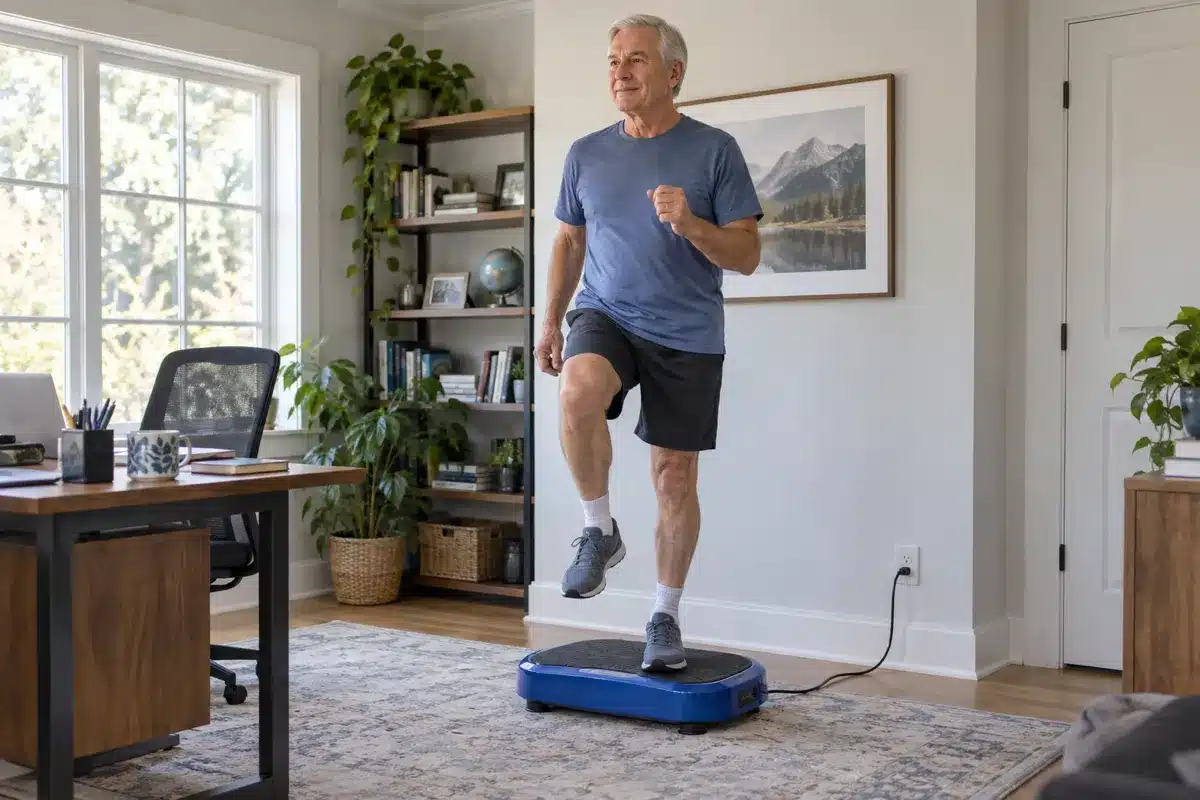
Some research suggests it can, although gait findings are less consistent than the strongest balance and strength results.
The recent frequency meta-analysis found that higher-frequency WBV performed well for gait outcomes, while several individual studies have reported faster short-distance walking or improved functional mobility after vibration training.
Other studies have found little or no meaningful improvement in specific gait measures. This probably reflects differences in baseline function, training programs, vibration settings, and what aspect of gait was measured.
I would consider improved walking a possible benefit, particularly for someone with limited mobility, rather than an outcome every user should expect.
Can It Improve Fear of Falling?
Possibly, but again the evidence is mixed.
A 12-week trial involving women over 60 who were already at increased fall risk found improvements in Timed Up and Go, walking endurance, and chair-stand performance. Fear-of-falling scores did not significantly improve.
Other work involving frail elderly adults has reported improvements in balance confidence. Physical ability and psychological confidence therefore may improve together in some people but not others.
This makes intuitive sense. Someone who has experienced a serious fall may continue to feel apprehensive even after measurable strength and balance have improved.
Passive Standing vs Active Balance Training
Passive standing can be a useful starting point when someone is learning how the platform feels. It allows the user to become familiar with vibration, stance width, knee position, and balance without adding another movement.
I would not make passive standing the permanent goal. Studies reporting useful functional improvements often incorporate static or dynamic exercises rather than treating the platform purely as something to stand on.
Supported mini squats, controlled weight shifts, calf raises, and stance changes gradually add more meaningful balance and strength demands.
My guide to vibration plate exercises covers the specific movements that work best for balance and stability training, organized by difficulty, so you can build progressive sessions rather than defaulting to passive standing.
For someone at significant fall risk, progression should be conservative. Making an exercise less stable is not automatically the same as making it better.
Vibration Plate vs Conventional Balance Exercise
Conventional exercise has much stronger direct evidence for preventing falls.
Large reviews used by the U.S. Preventive Services Task Force show that exercise programs reduce overall fall rates, the number of older adults experiencing falls, and injurious falls. Successful programs commonly combine gait, balance, functional movement, and resistance exercises.
For older adults whose fall risk is connected to bone density loss, my picks for the best vibration plate for osteoporosis identify the machines best suited to the low-amplitude protocols used in bone-health research.
That gives conventional training an important advantage over vibration: we have direct evidence connecting the intervention with fewer falls.
I would therefore add a vibration plate to conventional balance and strength work rather than replace those exercises with it. Walking, stepping, turning, rising from chairs, strengthening the legs, and practicing controlled balance still matter because those activities resemble the situations encountered in normal life.
What Vibration Frequency Is Best for Balance?
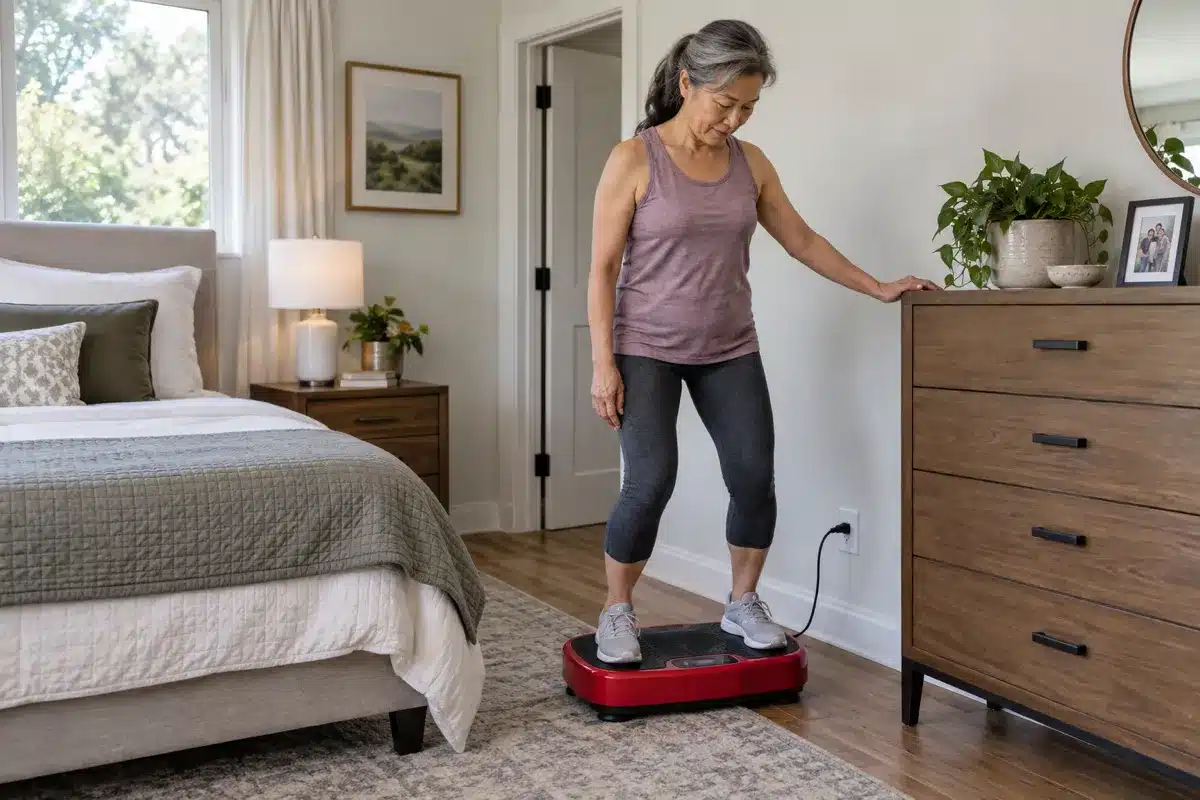
Newer research gives us some useful clues, but it does not give us one universal setting.
A 2026 network meta-analysis of 27 randomized trials involving 1,608 older adults divided training into low frequency below 20 Hz, medium frequency from 20 to under 30 Hz, and higher frequency from 30 to 40 Hz.
Medium-frequency vibration ranked highest for static balance. Higher-frequency vibration ranked highest for dynamic balance and gait, while traditional training performed best for improving strength.
For users who want a machine with a broad enough frequency range to cover both balance and supplementary strength work, my guide to the best Lifepro vibration plate covers models that perform reliably across that full range.
I would not convert those findings into instructions such as "25 Hz prevents falls" or "35 Hz is the best balance setting." The studies involved different machines, amplitudes, training programs, body positions, and populations.
For normal home use, comfort, control, and stability matter more than trying to reproduce one research frequency exactly.
Readers setting up a home balance routine will find practical guidance on the right equipment in my picks for the best vibration plate for home use, which covers the machines best suited to consistent, low-intensity home training.
Practical Vibration Plate Balance Routine
Supported Standing
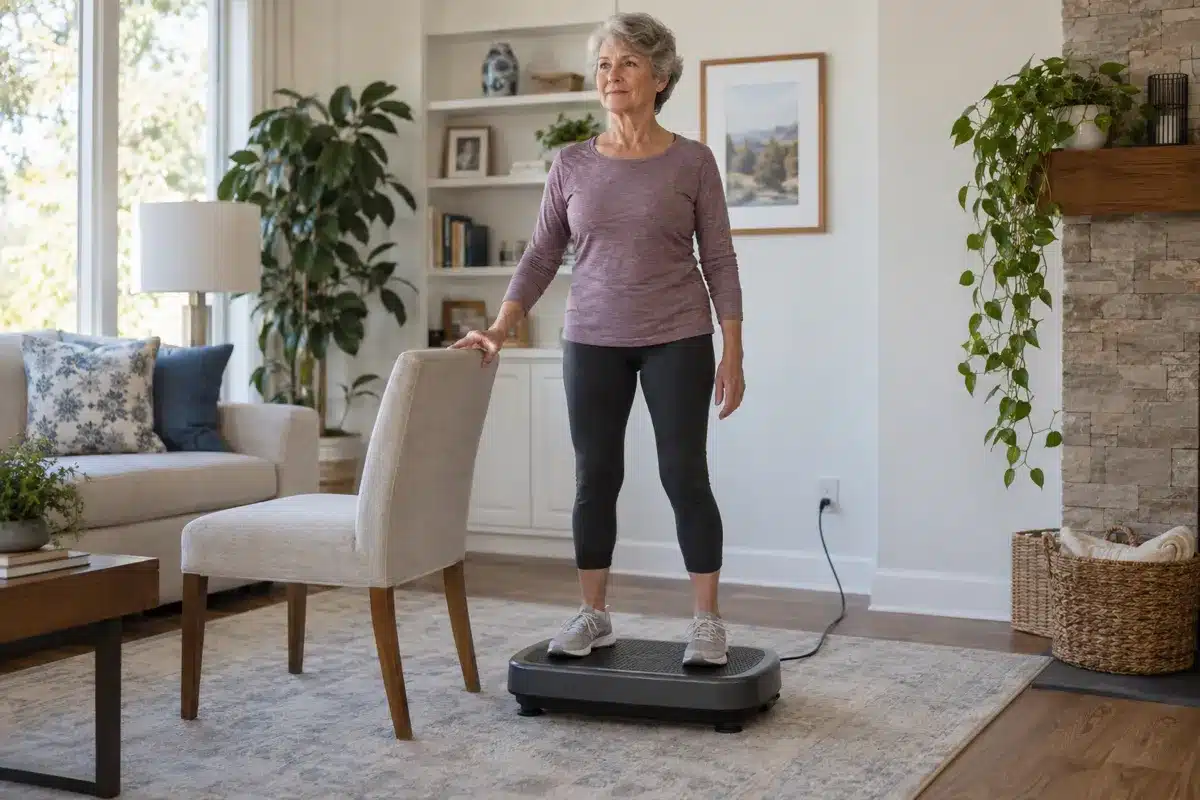
Begin at a low comfortable setting with both feet securely on the platform and a slight bend in the knees. Use a fixed handrail, solid countertop, or another rigid support if balance is uncertain.
The goal during the first sessions is to become comfortable with the movement rather than challenge balance aggressively.
Gentle Weight Shifts
Gradually transfer more body weight toward one leg and then the other while keeping both feet on the platform. Keep the movement slow enough that you remain in control throughout the shift.
A rigid support can remain available even if you only touch it lightly.
Supported Mini Squats
Lower into a small squat and return to standing while using support when needed. Keep the movement range small enough that the knees, hips, and trunk remain controlled.
I would prioritize smooth repetitions over increasing the machine's intensity.
Calf Raises
Slowly lift the heels and lower them again while holding a secure support if necessary. Calf strength and ankle control both contribute to postural stability.
Users dealing with foot or lower-leg discomfort that limits their ability to stand and train on the platform should also look at my guide to the best vibration plate for plantar fasciitis, which covers machines suited to gentle calf and ankle protocols.
This is a simple way to move beyond passive standing without turning the session into a difficult balance drill.
Controlled Stance Changes
As confidence and control improve, small changes in stance width can alter the balance demand. Reliance on the hands can also be reduced gradually when that can be done safely.
I would not rush toward unsupported single-leg exercises simply because they look more advanced.
Exercises I Would Avoid for Someone at High Fall Risk
I would avoid unsupported one-leg standing, eyes-closed balance drills, jumping, rapid lunges, and other exercises where losing control could result in an actual fall. The same applies to stepping onto or off the machine while the platform is still moving.
Resistance bands attached to the platform should not be treated as handrails. They move when pulled and cannot provide the same reliable support as a rigid rail, countertop, or properly positioned fixed structure.
How Long Should a Balance Session Last?
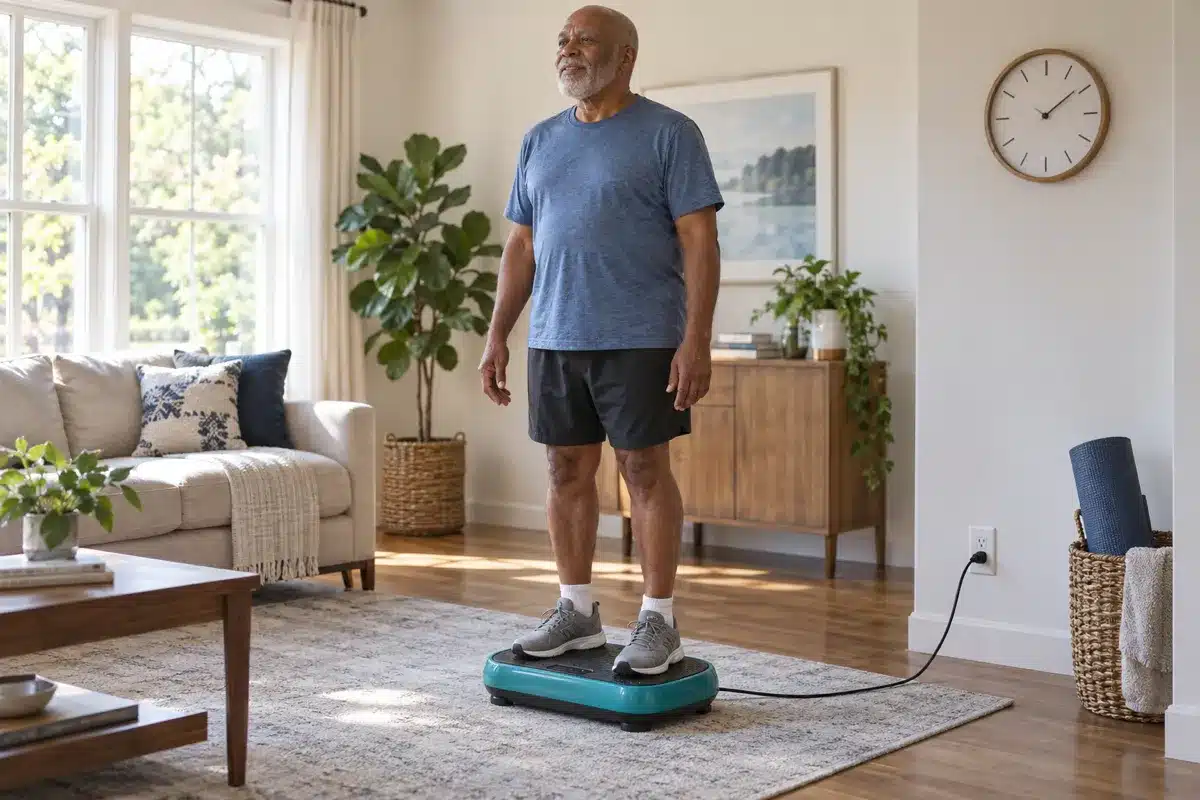
Research protocols vary widely, ranging from repeated one-minute bouts to longer sessions spread across several exercises.
For home use, I would start with approximately three to five minutes at a comfortable setting. Someone who remains stable and tolerates the vibration well can gradually progress toward roughly five to ten minutes.
There is no evidence that making the session as long as possible produces better balance. Exercise quality and consistency matter more than simply increasing the timer.
How Often Should You Use It?
Many balance studies have used whole-body vibration around two or three times per week over periods of six to twelve weeks or longer.
That provides a useful general pattern without giving us a clinically proven universal schedule. Someone beginning from very low activity may need more conservative progression than a healthy older adult who already exercises regularly.
The more important goal is creating a routine that can be performed consistently while gradually increasing the quality of the exercises.
Does a Vibration Plate Need Handles for Balance Training?
Not every user needs a handled machine.
A healthy adult with good balance may have no difficulty using an open platform. Someone with substantial balance limitations is different, and I would strongly prefer access to a rigid support during the session.
Integrated handrails can make that easier, but a stable countertop or fixed rail may also work depending on the setup. What I would not rely on is an elastic resistance band as a substitute for balance support.
Can a Vibration Plate Make Falling More Likely?
It can if the machine is used inappropriately.
The moving surface deliberately challenges postural control, which is part of why vibration may be useful for balance training. That same movement can create a problem if the user already struggles to stand safely without support.
The platform should be stopped before someone with limited balance steps on or off. Strong vibration, unstable footwear, unsuitable exercises, dizziness, or reaching for an unsecured chair can all turn a training session into an unnecessary fall hazard.
Someone experiencing recurrent falls, unexplained dizziness or fainting, substantial neurological symptoms, or severe mobility limitations should not rely on independent vibration training as the only response to the problem.
Fall Prevention Is More Than Balance Training
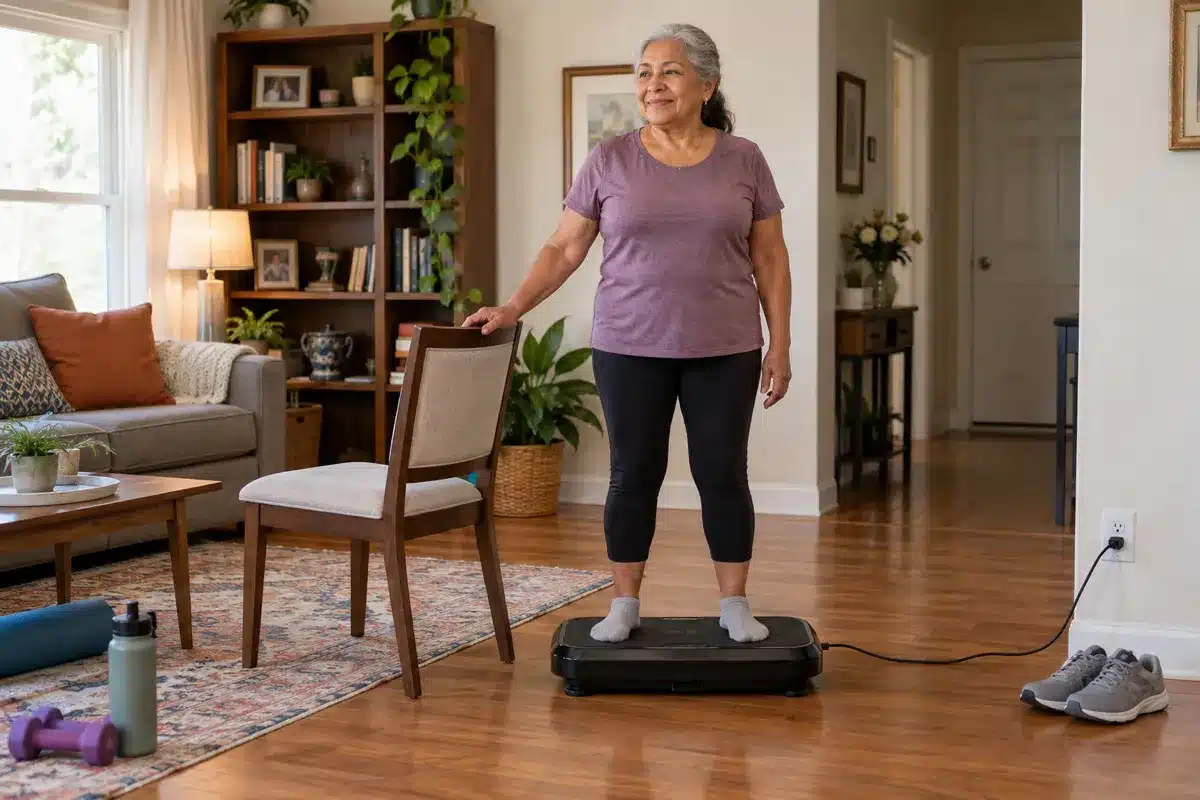
Falls are multifactorial, so preventing them requires looking beyond one piece of exercise equipment.
Exercise can address strength, gait, functional movement, and balance. Other important issues may include vision, medications, footwear, home hazards, blood-pressure changes, cognition, neurological conditions, and a previous history of falling.
This is why comprehensive fall-prevention programs sometimes combine exercise with medication review, vision assessment, environmental changes, and other individualized interventions.
A vibration plate can potentially contribute to the exercise portion of that strategy. It cannot fix a loose rug, impaired vision, or medication-related dizziness.
Common Claims to Ignore
Claims that ten minutes of vibration per day guarantees fall prevention or that a plate completely "fixes proprioception" go beyond the research. Higher vibration intensity is also not automatically better, especially when the person has difficulty maintaining a stable position.
Better performance on a balance test does not mean someone can no longer fall, and passive standing should not be presented as a replacement for conventional balance exercise. A vibration plate can provide an additional training stimulus, but fall risk is too complicated for one machine to eliminate.
What I Would Realistically Expect
I would realistically expect consistent vibration training to improve selected balance or functional measures in some older adults, particularly when the machine is used for controlled exercises rather than passive standing alone. Improvements in Timed Up and Go, chair-standing ability, lower-body strength, postural stability, and some gait measures are all reasonable possibilities based on current research.
I would not expect a vibration plate to guarantee fewer falls, eliminate fall risk, correct every cause of poor balance, automatically restore confidence, or make challenging unsupported exercises safe. I would also not expect one frequency or one ten-minute routine to work equally well for every older adult.
My Take on Vibration Plates for Balance and Fall Prevention
I think balance is one of the better-supported reasons for an older adult to consider vibration training. Multiple trials and systematic reviews show improvements in selected measures of balance, mobility, and lower-body function, including research involving frail adults and people well into their eighties.
For older adults ready to invest in a machine suited to this kind of regular balance and stability work, my picks for the best vibration plate for seniors cover the models that are stable, easy to use, and appropriate for lower-intensity protocols.
I would be much more careful with the phrase fall prevention. Improving the physical abilities associated with staying upright is worthwhile, but the current evidence does not show reliably that a vibration plate by itself prevents real-world falls.
I would use the machine alongside conventional strength, gait, and balance exercises, with rigid support whenever needed. That gives the vibration plate a useful role without asking it to solve a problem that is much broader than balance alone.
If you are ready to add a machine to your routine for that purpose, my picks for the best vibration plate cover the models that consistently perform well across stability, build quality, and real-world usability.
FAQs
Does a vibration plate improve balance?
Yes, whole-body vibration can improve selected balance measures in older adults. Studies have reported improvements in postural stability, single-leg stance, Timed Up and Go, and other functional outcomes, although results are not consistent across every test.
Can a vibration plate prevent falls?
It may improve several physical abilities associated with fall risk, but direct evidence that vibration plates reliably prevent real-world falls remains insufficient. A large one-year randomized trial did not find a significant reduction in falls.
Are vibration plates good for seniors with poor balance?
They may be useful, particularly when exercise options are limited, but safety becomes more important as balance impairment increases. A rigid support and conservative progression are sensible, and someone with recurrent falls or severe mobility limitations may need individualized guidance.
What vibration frequency is best for balance?
Recent research suggests that frequencies from 20 to under 30 Hz may perform well for static balance, while 30 to 40 Hz may favor dynamic balance and gait. These ranges should not be treated as universal home prescriptions because machine type, amplitude, posture, and exercise protocol also matter.
How long should an older adult use a vibration plate?
A conservative home session can begin around three to five minutes and gradually progress toward five to ten minutes if the user remains comfortable and stable. There is no universally established fall-prevention session length.
How often should you use a vibration plate for balance?
Many studies use two or three sessions per week over several weeks. Consistent, controlled training is more important than trying to use the plate every day.
Should a vibration plate for seniors have handles?
Handles are not essential for every older adult, but rigid support can be very useful for someone with reduced balance. Integrated rails, a fixed handrail, or a stable countertop are preferable to resistance bands when actual balance support is required.
Is standing on a vibration plate enough to improve balance?
Passive standing may provide some stimulus and can be useful when learning the machine. Active exercises such as supported weight shifts, mini squats, and calf raises generally create a more complete balance and strength challenge.
Can vibration improve walking and gait?
Some studies have found improvements in walking and functional mobility after whole-body vibration, while others report smaller or inconsistent changes. Recent meta-analysis suggests that vibration frequency may influence gait outcomes.
Does a vibration plate improve proprioception?
Vibration provides substantial sensory input to muscles, joints, tendons, and skin and may influence processes involved in postural control. It is too simplistic to say that the machine directly "repairs" or completely restores proprioception.
Can a vibration plate make you fall?
Yes, particularly if someone with poor balance performs unsupported exercises, uses excessive intensity, or steps on and off while the platform is moving. Fixed support and conservative progression become more important as fall risk increases.
Is a vibration plate better than normal balance exercises?
Not overall. Conventional exercise has stronger direct evidence for preventing falls and remains important for strength, gait, functional movement, and balance.
A vibration plate is better viewed as an additional training option rather than a replacement for proven fall-prevention exercise.
Notable Studies
- Dong M, et al. Effects of Whole-Body Vibration Training on Fall-Related Physical Capacities in Older Adults: A Systematic Review. The review included 36 studies and found generally positive strength outcomes, mixed-to-positive balance and functional outcomes, and insufficient direct evidence that WBV reduces fall incidence.
- Xing K, et al. Does Frequency of the Mechanical Vibration Matter? Evaluating the Impact of Whole-Body Vibration Training on Older Adults Strength, Balance, and Gait Performance. The network meta-analysis included 27 RCTs and 1,608 participants and compared low-, medium-, and high-frequency WBV with traditional training.
- Jepsen DB, et al. Effect of Whole-Body Vibration Exercise in Preventing Falls and Fractures: A Systematic Review and Meta-Analysis. Examined fall rates, numbers of fallers, and fracture outcomes in adults aged 50 and older.
- Sievänen H, et al. Effect of 10-Week Whole-Body Vibration Training on Falls and Physical Performance in Older Adults: A Blinded, Randomized, Controlled Clinical Trial With 1-Year Follow-Up. The trial examined 130 older adults at fall risk and found no significant fall-prevention advantage from WBV during the one-year study.
- Nawrat-Szołtysik A, et al. Effect of Whole-Body Vibration Training on Selected Intrinsic Risk Factors in Women Aged 60+ at Fall Risk: A Randomized Controlled Trial. WBV improved gait and dynamic balance, exercise tolerance, and functional leg strength but not fear of falling.
- Lam FMH, et al. The Effect of Whole Body Vibration on Balance, Mobility and Falls in Older Adults: A Systematic Review and Meta-Analysis. The review found improvements in several balance and mobility outcomes but inconclusive effects on fall rate.
- Orr R. The Effect of Whole Body Vibration Exposure on Balance and Functional Mobility in Older Adults: A Systematic Review and Meta-Analysis. The review found improvements in selected outcomes such as single-leg stance and Timed Up and Go while reporting inconsistent effects elsewhere.
- Rogan S, et al. Effects of Whole-Body Vibration on Postural Control in Elderly: An Update of a Systematic Review and Meta-Analysis. The review examined static and dynamic balance across older adults with different functional levels.
Healthcare and Medical Disclaimer
The information provided on Vibration Plate Zone is for general informational purposes only and is not intended to replace professional medical advice, diagnosis, or treatment. Always seek the guidance of a qualified healthcare provider with any questions you may have regarding a medical condition, and never disregard or delay seeking professional advice.