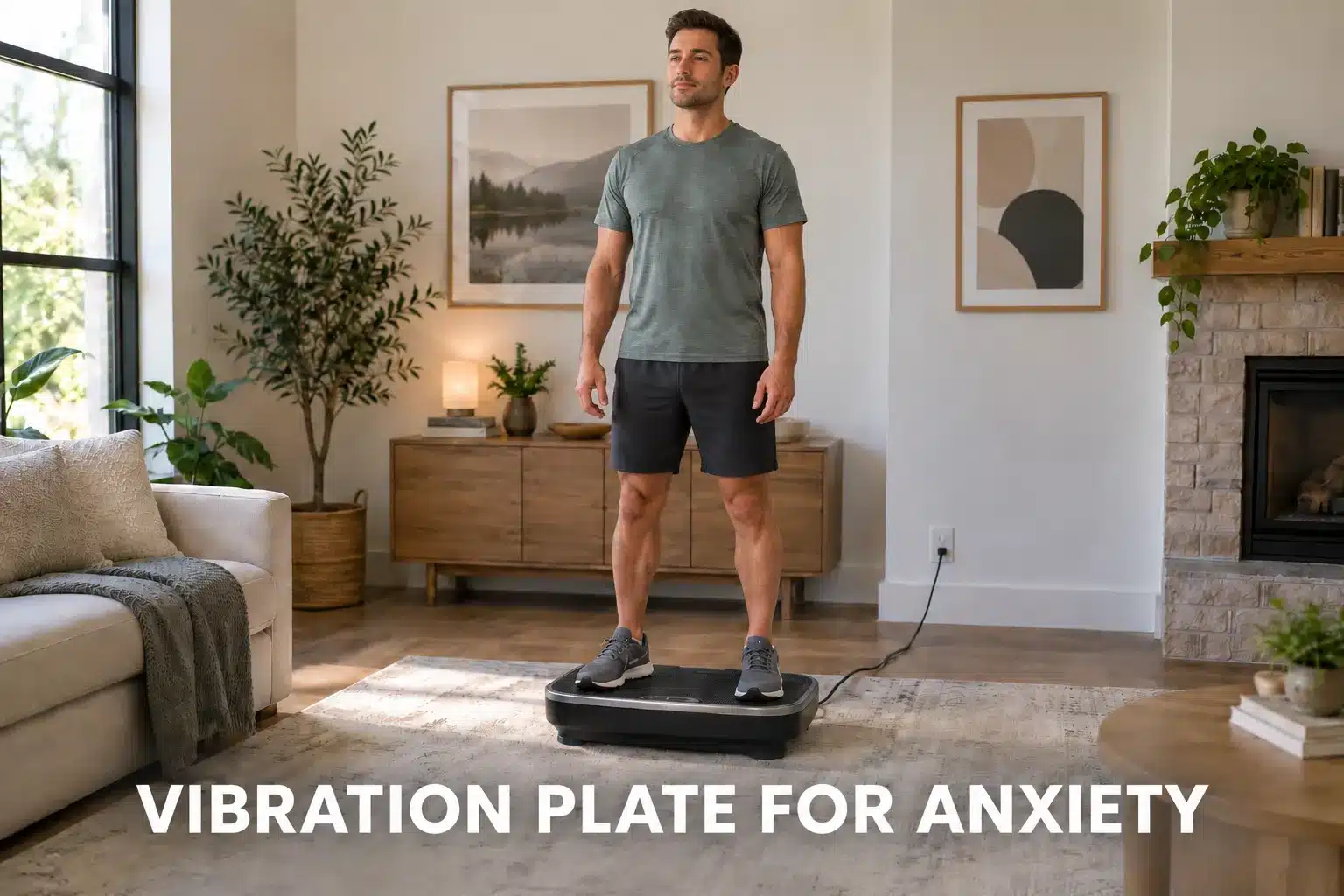
A vibration plate may help reduce anxiety and stress symptoms in some people, but the evidence is still limited. One small randomized trial found greater reductions in anxiety when physically inactive college students exercised on a vibration platform compared with performing the same exercises without vibration.

About the author: Hello! I’m Vladimir Stanar, professor of physical education, kinesiotherapist, marathon runner, cyclist, and cycling coach, and long-time advocate of health, fitness, and active living.
My journey with vibration plates runs parallel to my professional career in education, sports medicine, and athletic development. I’ve developed a unique process for testing vibration plates as they are some of the most versatile tools for enhancing health, recovery, and performance.
✅ Expert-Reviewed by: Vanja Vukas, MPhEd
📚 Expert Contributor: Milutin Tucakov, MPhEd
That makes the idea more than pure speculation, but it does not make a vibration plate an established anxiety treatment. The study was small, lasted only four weeks, and involved exercise performed on the plate rather than passive standing.
There are also interesting studies involving mood, the autonomic nervous system, and specialized forms of vibration. At the same time, common claims that vibration plates directly stimulate the vagus nerve, reliably lower cortisol, or have a specific “anxiety frequency” go well beyond what current research can support.
Vibration plate anxiety research uses phrases like anxiety frequency that describe the emotional state rather than hertz settings, and claims derived from that language go well beyond what current evidence can support.
Can a Vibration Plate Help With Anxiety?
There is preliminary human evidence suggesting that whole-body vibration may reduce measured anxiety symptoms.
Does a vibration plate help with anxiety? The most relevant evidence suggests yes, modestly: a randomized trial found reduced anxiety scores in the group that added whole-body vibration to their exercise program compared with the group that exercised without vibration.
The most directly relevant study involved 30 physically inactive college students with elevated depression, anxiety, and stress scores. Half exercised on a vibration platform, while the other half performed the same exercises without vibration.
After four weeks, anxiety, stress, and depression scores improved more in the vibration group. Measures of quality of life also improved.
That comparison is particularly interesting because both groups exercised. The difference was the addition of whole-body vibration.
However, this was only one small study. The participants were college students rather than people representing the broader population of adults with diagnosed generalized anxiety disorder, panic disorder, or other anxiety disorders.
I would therefore describe vibration as a promising exercise add-on for anxiety symptoms, not a proven therapy for anxiety.
Is a vibration plate good for anxiety? It may serve as a useful exercise add-on for mild anxiety symptoms, but framing it as a therapy for clinical anxiety disorders is not supported by the evidence: the studies involved healthy or mildly symptomatic populations rather than diagnosed anxiety conditions.
What Does the Research Actually Show?
The research is much smaller than you might assume from reading vibration plate marketing pages.
The Main Whole-Body Vibration Anxiety Study
In the 2022 randomized trial, participants trained twice per week for four weeks. The vibration group used a platform operating at 30 Hz with 2 mm amplitude.
They did not simply stand still. Their sessions included static and dynamic squat variations, weight shifting, rest intervals, and a short cool-down walk.
This matters because it means we cannot take the results and conclude that standing passively on a plate for five minutes will produce the same effect.
The vibration group nevertheless improved more than the group performing identical exercises without vibration. That suggests the vibration itself may have contributed something beyond exercise, although a much larger study would be needed to confirm the effect.
Do vibration plates help with anxiety? The evidence suggests a possible benefit, though the effect size found in available studies is modest and a much larger well-designed trial would be needed before confidently recommending the plate as an anxiety management tool.
Other Human Vibration Research
Another randomized trial published in 2024 studied a specialized type of whole-body vibration in people receiving treatment for opioid use disorder.
Participants with moderate anxiety who received the active vibration intervention showed greater improvement in anxiety scores than those receiving sham treatment. The intervention lasted 10 minutes, five times per week, for four weeks.
That is useful supporting evidence, but the technology was not a conventional home vibration plate. It used a specialized heterodyned vibration system, and the anxiety being studied was related specifically to opioid withdrawal.
I would therefore treat it as evidence that mechanical vibration may influence anxiety relief under certain conditions, not as proof that any consumer vibration plate will produce the same result.
Why Might Vibration Affect Anxiety?
We do not yet have one established mechanism that explains the anxiety results.
Several possibilities are plausible, and more than one may be involved.
Vibration plate nervous system regulation is one of the proposed mechanisms for the anxiety benefit, since multiple possibilities including autonomic nervous system effects, increased physical activity, and improved sensory input are plausible contributors to the observed results, and more than one may be involved simultaneously.
Exercise Itself Can Influence Anxiety
The first explanation is simple: using a vibration plate actively means you are exercising.
Physical activity has been studied much more extensively for anxiety than vibration plates have. Recent research suggests that resistance exercise and mind-body exercise may reduce anxiety severity, although results differ considerably between studies and populations.
That makes the 2022 vibration trial interesting because the comparison group also exercised.
Both groups performed the same movements. The vibration group improved more, suggesting that exercise alone may not explain the whole result.
Still, with only 30 participants, I would not assume that the additional benefit has been firmly established.
Somatosensory Stimulation
A vibration platform produces a strong stream of sensory information from the feet, muscles, joints, and skin.
Your attention is drawn toward maintaining balance, controlling the knees, feeling the platform, and adjusting your posture. For some people, that may temporarily pull attention away from repetitive worried thoughts.
Vibration plate for mental health works partly through a distraction mechanism: the rich sensory information streaming from feet, muscles, and joints during a session temporarily pulls attention away from worried thoughts, which may explain some of the acute mood improvement many users describe.
I can understand why someone who has been sitting at a desk worrying for an hour might find five minutes of physical vibration and movement mentally refreshing.
That is a reasonable explanation for why the experience may feel calming. It is not the same as proving that vibration corrects an underlying neurological imbalance.
Autonomic Nervous System Effects
Researchers have also investigated whether whole-body vibration changes autonomic nervous system activity.
Does vibration plate help anxiety through autonomic nervous system changes? Whether whole-body vibration alters cardiac autonomic function is uncertain: some studies found improvements in specific measures of autonomic balance, while others did not, leaving the mechanism unresolved.
The autonomic nervous system includes the sympathetic and parasympathetic systems, which help regulate functions such as heart rate, blood pressure, digestion, and physiological responses to stress.
Some vibration studies have reported shifts in heart-rate variability that could indicate changes in autonomic balance. An eight-week trial in sedentary obese postmenopausal women, for example, found improvements in some measures of cardiac autonomic function.
Other studies have not found the same effect.
That makes statements such as “a vibration plate switches your body from fight or flight into rest and digest mode” much stronger than the research currently justifies.
Readers interested in how vibration affects the nervous system more broadly may also find my guide to the best vibration plate for neuropathy useful, as it covers frequency effects on peripheral nerve sensations.
Does a Vibration Plate Stimulate the Vagus Nerve?
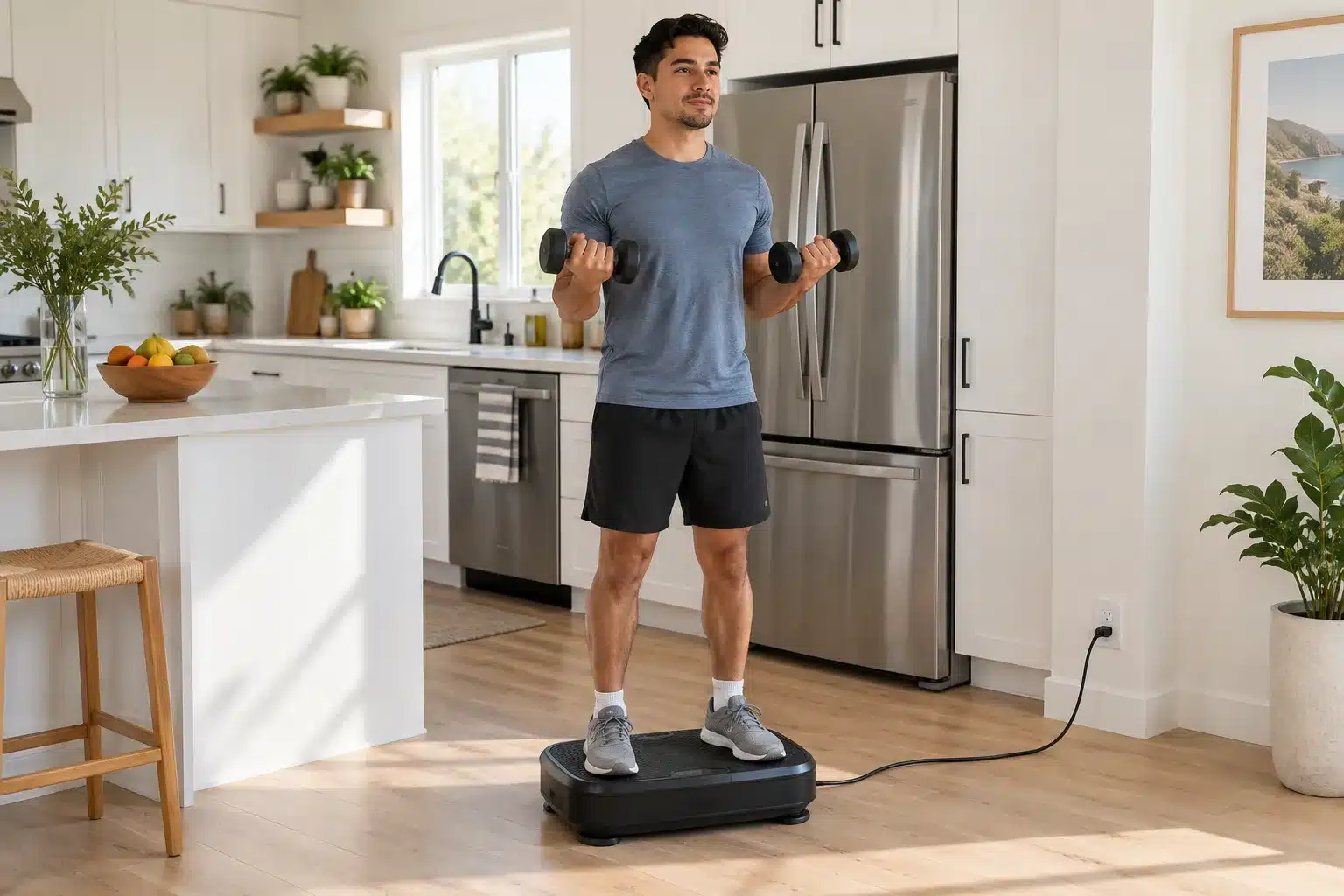
There is no strong clinical evidence showing that standing on an ordinary vibration plate directly stimulates the vagus nerve in a meaningful therapeutic way.
Vibration plate vagus nerve stimulation is a mechanism frequently cited in online explanations of why vibration reduces anxiety, but no study on consumer vibration plate use has directly proven that the platform activates the vagus nerve in any therapeutically meaningful way.
The vagus nerve is part of the parasympathetic nervous system, and it plays an important role in the regulation of numerous body functions. Because some vibration studies have found changes in autonomic activity, the vagus nerve often gets pulled into online explanations.
The problem is that showing a change in heart-rate variability or relaxation does not prove that the vibration plate directly activated the vagus nerve.
I would be particularly skeptical of a product page that presents “vagus nerve stimulation” as an established reason vibration plates reduce anxiety.
The autonomic effects are worth studying. Direct vagus-nerve stimulation from a normal home vibration plate has not been demonstrated convincingly.
Does a Vibration Plate Lower Cortisol?
The evidence does not support saying that vibration plates reliably lower cortisol.
Does power plate reduce cortisol levels? The claim that vibration plates reliably lower cortisol is not supported by the current evidence: one study found no significant cortisol change between groups, and the conditions under which a cortisol response would be expected from consumer plate use have not been established.
Cortisol is often called the stress hormone, so it appears frequently in marketing claims around anxiety, sleep, stress, and recovery.
However, a 12-week study involving young healthy women compared vibration exercise, the same exercises without vibration, and a passive control group. Researchers found no significant change in cortisol between or within the groups.
Vibration plate cortisol reduction is a widely repeated marketing claim, but the published research finding no significant cortisol change between the vibration and control groups after an exercise program suggests this claim is premature and should not be used to guide purchase or use decisions.
Other studies of whole-body vibration have also found no significant cortisol reduction after acute sessions.
There is research showing a cortisol decrease after localized low-frequency vibration in severely disabled patients, but that intervention and population were very different from an ordinary vibration plate workout.
I would not explain a possible anxiety benefit by saying, “The plate lowers your cortisol.” The human evidence is far too inconsistent for that claim.
Vibrating device for anxiety is a search that reflects user interest in whether mechanical stimulation can reduce anxious arousal, and while a vibration plate is one answer to that question, it works through a combination of physical activity, sensory input, and possible autonomic effects rather than through a single established mechanism.
Can a Vibration Plate Help With Stress?
This claim has slightly more direct support because the main 2022 study measured stress as well as anxiety and depression.
Stress scores improved more in the vibration group than in the group performing the same exercises without vibration.
There is also a practical reason the machine may feel useful during a stressful day. A short session gives you an immediate physical break from sitting, screen time, mental rumination, and inactivity.
I can see why five minutes of gentle vibration, weight shifting, and controlled movement may feel calming when you are physically tense.
If improved blood flow is part of your goal alongside stress reduction, my guide to the best vibration plate for circulation covers the machine features most relevant to vascular and circulatory health.
What I would not assume is that feeling calmer proves the machine has “reset” your nervous system or corrected a hormonal imbalance.
Vibration plate for stress relief may be effective for the kind of stress that comes from physical tension, sedentary patterns, and mental preoccupation rather than from underlying clinical conditions: the platform provides a physical anchor for attention and a mild movement stimulus that disrupts sedentary rumination.
Can a Vibration Plate Help With Panic Attacks?
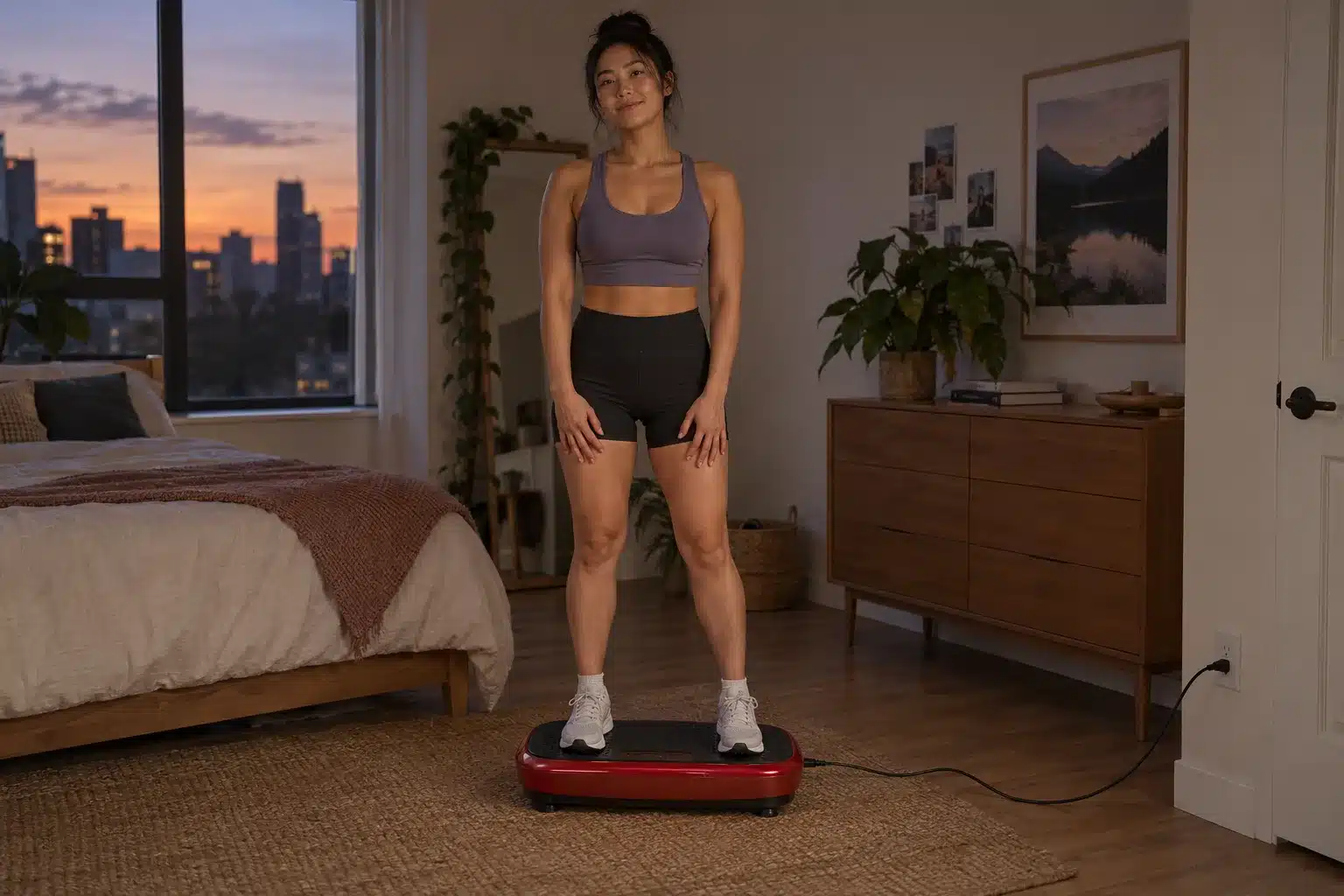
There is no convincing evidence that a normal vibration plate can stop a panic attack.
Vibration plates for anxiety should not be used as an emergency intervention for a panic attack, since the sensory intensity and body awareness the platform produces could worsen panic symptoms in users whose anxiety manifests as heightened awareness of physiological sensations.
This is an important distinction because panic attacks involve intense physical sensations already, including rapid heartbeat, trembling, dizziness, sweating, chest sensations, or feeling short of breath.
A vibration plate also creates strong physical sensations. You may feel shaking, tingling, warmth, increased muscle activity, and greater awareness of your body.
Vibration plate benefits for anxiety come from the physical activity component, the sensory richness of the session, and the possible autonomic effects rather than from the vibration alone, and these same benefits would likely apply to any engaging low-impact exercise performed consistently.
Someone who finds those sensations pleasant may feel more relaxed on a low setting. Someone who is highly sensitive to bodily sensations could find them uncomfortable or even anxiety-provoking.
Vibrating anxiety device searches reflect the growing interest in mechanical and sensory interventions for anxiety, but users should note that the proprioceptive and vestibular sensations produced by a vibration plate are markedly different from soft or localized vibration devices, and the heightened body sensations could find them uncomfortable or even anxiety-provoking in users with somatic symptom sensitivity.
I would not use a high-intensity vibration session as an emergency intervention for a panic attack.
Can Vibration Make Anxiety Feel Worse?
Yes, it can for some people.
A vibration plate is a significant sensory stimulus. Strong settings can feel jarring, disorienting, or overstimulating, particularly when someone already feels restless or physically tense.
The sensation can also make you more aware of your heartbeat, muscles, breathing, or balance. That may be relaxing for one person and uncomfortable for another.
This is another reason I would avoid the idea that more vibration automatically produces more relaxation.
It is also useful to distinguish short recreational vibration sessions from long occupational exposure. Research involving workers chronically exposed to whole-body vibration has associated that very different type of exposure with poorer mood, greater fatigue, and higher tension and anxiety.
A five-minute home session is not comparable to spending working days exposed to vibration from machinery or vehicles. The occupational findings still reinforce the point that vibration itself is not universally calming.
Readers who want a complete picture of who should approach vibration with caution can find a full breakdown in my guide on dangers of vibration machines.
Is There a Best Vibration Plate Frequency for Anxiety?
No scientifically established “anxiety frequency” exists for vibration plates.
You may see specific ranges recommended online, sometimes around 5 to 12 Hz, with claims that these settings regulate the nervous system or activate the parasympathetic response.
Those numbers should not be treated as established anxiety protocols.
The main positive anxiety study used 30 Hz and 2 mm amplitude while participants performed squat exercises. That does not mean 30 Hz is the best setting either.
One small study at one frequency cannot establish a universal prescription, particularly when vibration plates vary in amplitude, vibration type, platform movement, and how manufacturers label their settings.
I would choose a low, comfortable setting based on tolerance rather than chasing a supposed therapeutic frequency.
For a grounding overview of how frequency and amplitude work in practice, my guide on whole-body vibration covers the underlying mechanics and what different machine settings actually do.
A Practical Vibration Plate Routine for Relaxation
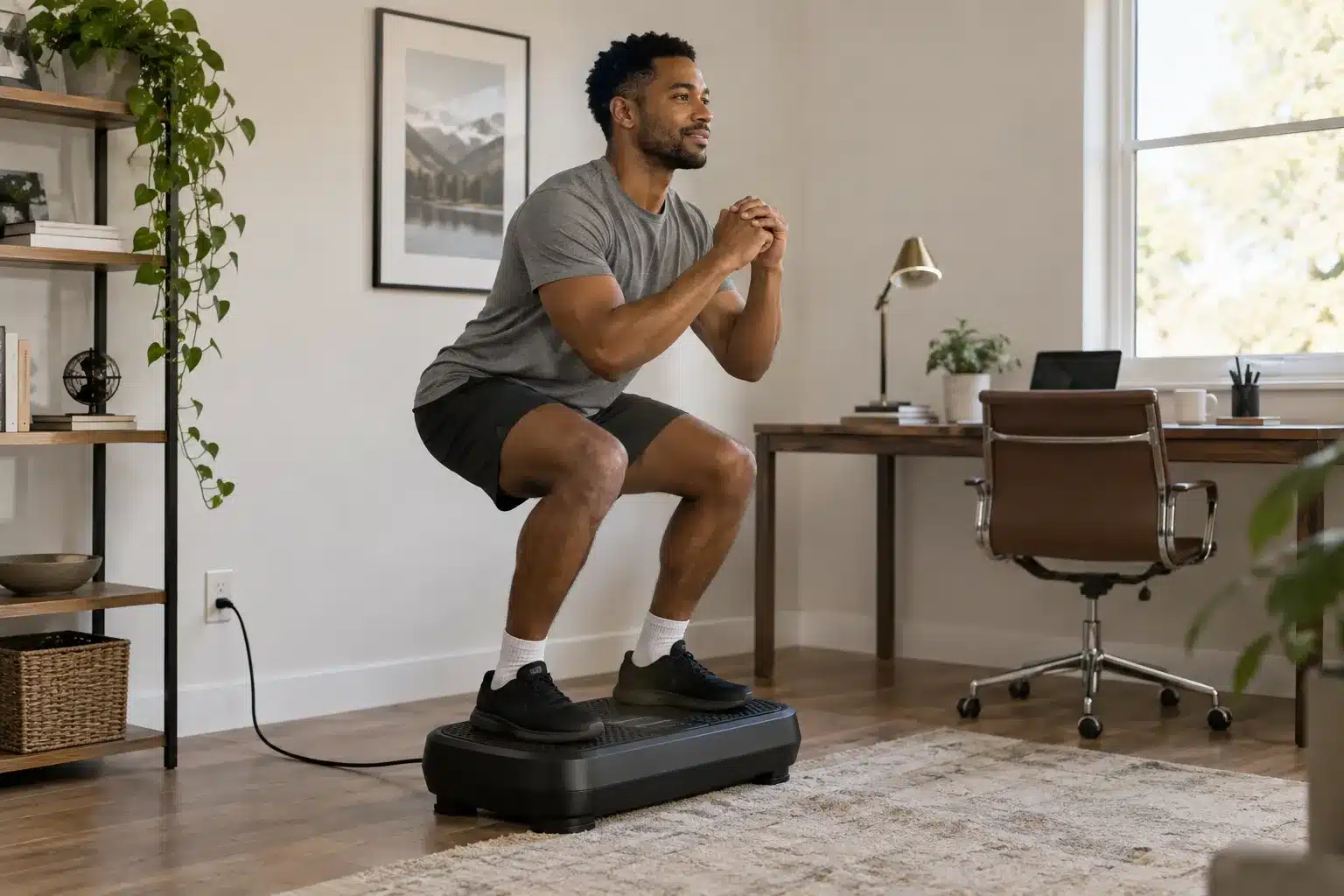
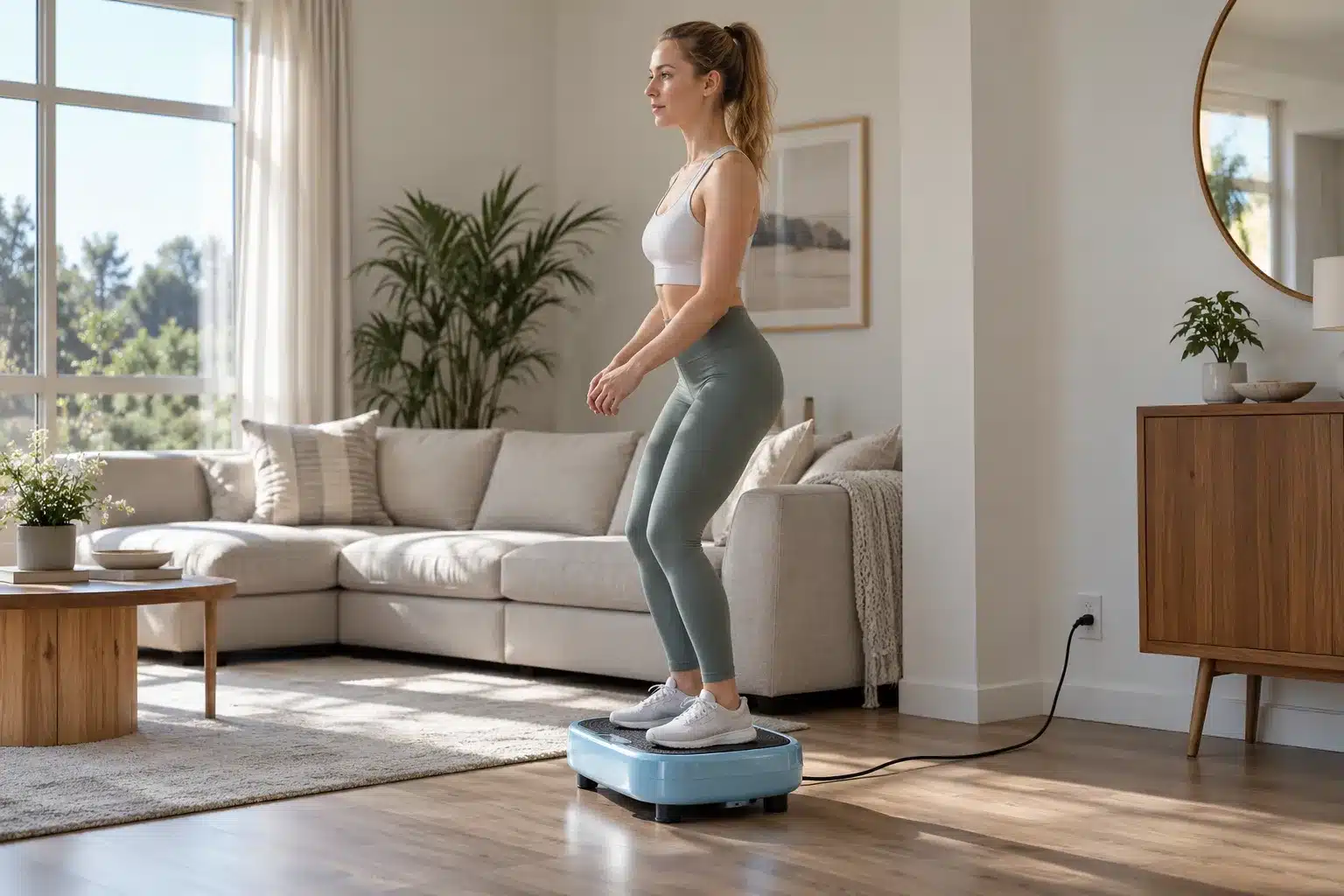
There is no clinically validated vibration plate routine for anxiety. This is simply a conservative way to use the machine if you already tolerate vibration well and find it relaxing.
Start With 3 to 5 Minutes
Use a low comfortable intensity initially.
Pay attention to whether the sensation makes you feel calmer, has no particular mental effect, or makes you feel more activated.
There is no reason to force yourself to continue simply because vibration is supposed to be relaxing.
Keep the Knees Slightly Bent
Stand comfortably with a gentle bend in the knees rather than locking the legs.
This helps the lower body absorb more of the vibration and reduces excessive movement reaching the upper body and head.
Breathe Normally
Try to avoid holding your breath or tensing the shoulders.
If slow breathing feels comfortable, you can combine it with the session. I would treat the breathing as its own relaxation technique rather than claim that vibration creates a special breathing-related nervous-system effect.
Add Gentle Movement
Once you are comfortable standing, add easy movements such as:
- Slow weight shifts
- Shallow squats
- Calf raises
I prefer gentle active movement because it gives the session an exercise component regardless of whether the vibration itself changes anxiety.
Progress Toward 5 to 10 Minutes
Increase duration gradually if shorter sessions feel comfortable.
There is no evidence that a 20-minute session provides twice as much anxiety relief as a 10-minute session.
Intensity works the same way. Stronger vibration is not automatically more calming.
Stop if You Feel More Activated
Reduce the setting or stop if you develop dizziness, nausea, excessive shaking, racing-heart sensations, head discomfort, or noticeably increased anxiety.
The goal is not to tolerate as much vibration as possible.
For readers who want a specific model before building this routine, my guide to the best Lifepro vibration plate covers the brand's range and which settings suit low-intensity, relaxation-focused use.
Vibration Plate vs Regular Exercise for Anxiety
If anxiety relief is your only objective, I would not buy a vibration plate instead of walking, resistance training, yoga, or another exercise you genuinely enjoy.
Exercise as a whole has been studied far more extensively than whole-body vibration specifically.
Recent evidence suggests that resistance exercise and mind-body exercise may be particularly useful for anxiety disorders and anxiety symptoms. At the same time, reviews have pointed out significant variation in study quality, so even the broader exercise-and-anxiety evidence should not be oversimplified.
For readers combining anxiety management with weight or body composition goals, my guide to the best vibration plate for weight loss covers the exercise protocols and machine features that support both.
A vibration plate may still have an advantage for someone who struggles to start exercising.
Five minutes on a platform in the living room can feel much more manageable than getting dressed, leaving the house, and completing a 45-minute workout.
That convenience may be valuable in its own right.
Readers in this situation can find practical options in my guide to the best vibration plate for home use, which covers compact models suited to living rooms and smaller spaces.
Can a Vibration Plate Replace Anxiety Treatment?
No, it can not. A vibration plate should not replace psychotherapy, prescribed medication, or another treatment recommended for an anxiety disorder.
Occasional nervousness or stress is also not the same thing as an anxiety disorder. Persistent anxiety that significantly affects sleep, work, relationships, concentration, or normal daily life deserves proper assessment.
For generalized anxiety disorder, established treatment approaches include psychotherapy, medication, or a combination of the two. Cognitive behavioral therapy is among the best-established psychotherapy options.
I would think of vibration as an optional form of exercise or relaxation, not mental-health treatment.
For readers using vibration as part of a wind-down routine, my article on using a vibration plate before bed covers timing, intensity, and what the sleep research suggests.
What I Would Realistically Expect
The limited research makes it especially important to separate plausible benefits from marketing claims.
Reasonable Expectations
A short vibration session may provide a physical break from sitting, worrying, or feeling tense. Some people may find the sensory experience relaxing, while active sessions provide genuine muscle activation and movement.
There is also preliminary evidence that repeated whole-body vibration exercise may reduce measured anxiety and stress symptoms. That finding is promising enough to justify further research.
Readers also exploring the lymphatic and immune-system side of vibration can find relevant options in my guide to the best vibration plate for lymphatic drainage.
Claims I Would Not Make
I would not expect a vibration plate to cure an anxiety disorder, reliably activate the vagus nerve, consistently lower cortisol, or automatically switch the body into parasympathetic mode.
There is also no proven vibration frequency for anxiety, no good evidence that passive standing alone stops panic attacks, and no reason to replace established anxiety treatment with a vibration machine.
For a broader look at the research on vibration plates across mood, depression, and stress, my guide on vibration plate mental health benefits covers the full range of what current studies show.
My Take on Using a Vibration Plate for Anxiety
I think the direct human anxiety study makes this more than a completely speculative vibration plate benefit.
Whole-body vibration added to exercise produced encouraging results in a small randomized trial, while other research provides hints that vibration can influence mood and aspects of autonomic function.
That is enough for me to say that vibration plates may help some people feel calmer. It is nowhere near enough for me to call them an anxiety treatment.
If you already want a vibration plate for exercise, balance, or muscle activation and you discover that the sensation helps you unwind, I would consider that a useful additional benefit.
If you are at the point of choosing a machine, my guide to the best vibration plate options covers the key differences between plate types, frequency ranges, and what each suits best.
I would not buy one solely because somebody claims that a particular setting stimulates your vagus nerve, lowers cortisol, or “resets” your nervous system. Those claims are currently ahead of the evidence.
FAQs
Can a vibration plate help anxiety?
Possibly. One small randomized trial found that people performing exercises on a vibration platform experienced greater reductions in anxiety than people performing the same exercises without vibration.
The evidence is promising but too limited to consider vibration plates a proven anxiety treatment.
What does research say about vibration plates and anxiety?
Direct research is limited. The strongest study involved only 30 physically inactive college students training twice weekly for four weeks.
Additional specialized vibration research has also reported anxiety improvements in other populations, but the technologies and circumstances differ from normal home vibration plate use.
Does a vibration plate calm the nervous system?
Some research suggests that vibration may influence autonomic nervous system activity, and some people find the sensation relaxing. Results are inconsistent, so it has not been established that consumer vibration plates reliably put the nervous system into a particular state.
Does a vibration plate stimulate the vagus nerve?
There is no strong clinical evidence that ordinary whole-body vibration plates directly stimulate the vagus nerve in a meaningful therapeutic way.
Does a vibration plate lower cortisol?
Not reliably. Several whole-body vibration studies have found no significant cortisol reduction, although different types of localized vibration have produced decreases in specific populations.
What vibration plate frequency is best for anxiety?
No vibration plate frequency has been established as the best frequency for anxiety. Specific “anxiety frequencies” promoted online should not be treated as proven clinical protocols.
Can a vibration plate help with stress?
It may. A small randomized study found greater reductions in measured stress when exercise was performed with whole-body vibration compared with the same exercises without vibration.
A short session may also provide a useful physical break during a stressful day.
Can a vibration plate stop a panic attack?
There is no good evidence that a vibration plate stops panic attacks. Strong vibration may actually feel uncomfortable to someone who is already sensitive to physical sensations such as shaking, tingling, or an increased awareness of heartbeat.
Can vibration make anxiety worse?
Yes. Some people may find strong or unfamiliar vibration overstimulating. Start conservatively and stop if the session noticeably increases anxiety or causes uncomfortable physical sensations.
How long should I use a vibration plate for relaxation?
There is no established therapeutic duration for anxiety. I would start with three to five minutes at a comfortable setting and gradually work toward five to ten minutes only if the experience feels pleasant.
Can a vibration plate replace anxiety treatment?
No. Vibration plate exercise should not replace psychotherapy, prescribed medication, or other appropriate treatment for an anxiety disorder.
Notable Studies
- Chawla G, Azharuddin M, Ahmad I, Hussain ME. Effect of Whole-body Vibration on Depression, Anxiety, Stress, and Quality of Life in College Students: A Randomized Controlled Trial.
- Intervention of Physical Activity for University Students with Anxiety and Depression During the COVID-19 Pandemic Prevention and Control Period: A Systematic Review and Meta-Analysis.
- Sant DW, et al. Amelioration of Anxiety Associated with Opioid Withdrawal by Activation of Spinal Mechanoreceptors Via Novel Heterodyned Whole Body Vibration.
- Lei EFC, et al. Effectiveness and Acceptability of Exercise Treatments for Adults With Anxiety Disorders: A Systematic Review and Network Meta-Analysis.
- Stonerock GL, Gupta RP, Blumenthal JA. Is Exercise a Viable Therapy for Anxiety? Systematic Review of Recent Literature and Critical Analysis.
- National Institute of Mental Health. Generalized Anxiety Disorder: What You Need to Know.
Healthcare and Medical Disclaimer
The information provided on Vibration Plate Zone is for general informational purposes only and is not intended to replace professional medical advice, diagnosis, or treatment. Always seek the guidance of a qualified healthcare provider with any questions you may have regarding a medical condition, and never disregard or delay seeking professional advice.