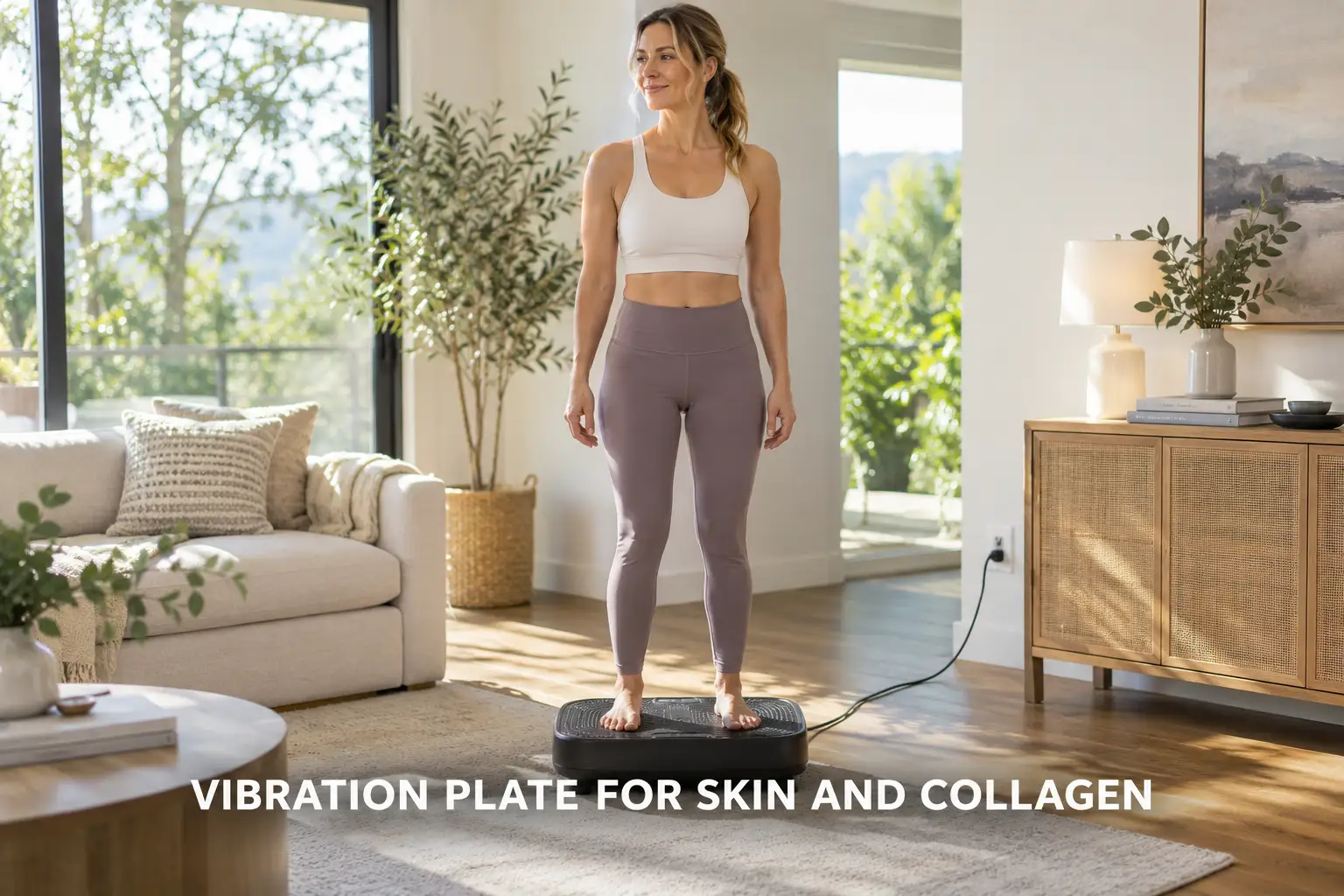
A vibration plate may temporarily increase skin blood flow and could indirectly influence how the skin looks and feels, but there is not yet convincing human evidence that ordinary whole-body vibration plate use increases skin collagen or significantly tightens loose skin.

About the author: Hello! I’m Vladimir Stanar, professor of physical education, kinesiotherapist, marathon runner, cyclist, and cycling coach, and long-time advocate of health, fitness, and active living.
My journey with vibration plates runs parallel to my professional career in education, sports medicine, and athletic development. I’ve developed a unique process for testing vibration plates as they are some of the most versatile tools for enhancing health, recovery, and performance.
✅ Expert-Reviewed by: Vanja Vukas, MPhEd
📚 Expert Contributor: Milutin Tucakov, MPhEd
The strongest skin-related evidence involves circulation. There is also some interesting research on cellulite and on how skin cells respond to direct mechanical vibration, but those findings should not be stretched into claims that a home vibration plate rebuilds collagen or removes wrinkles.
I would therefore look at possible skin benefits as a bonus rather than the main reason to buy a vibration plate. Its better-established uses remain muscle activation, balance, strength support, mobility, and short low-impact exercise sessions.
Vibration plate for skin tightening is a search that reflects user interest in whether the mechanical stimulus can improve the firmness and elasticity of loose skin, and this guide reviews the actual evidence for and against that expectation.
Does a Vibration Plate Help Your Skin?
A vibration plate can affect the skin indirectly by changing blood flow, increasing local temperature, activating the muscles underneath the skin, and creating repeated mechanical movement through the tissues.
The most consistent immediate effect is increased circulation in the areas closest to the platform, particularly the legs. Skin may feel warmer or look slightly pinker after a session because more blood is temporarily reaching the area.
Does a vibration plate help with loose skin? The session produces a temporary improvement in how the skin looks immediately afterward due to increased blood flow, but the structural changes needed to actually tighten loose or crepey skin require sustained collagen remodeling that takes much longer than individual sessions can produce.
That does not automatically mean the skin is producing more collagen. Circulation, cellulite appearance, collagen remodeling, skin tightening, and fat loss are separate processes and should not be treated as interchangeable.
How Vibration Could Affect the Skin
The skin is a living tissue that responds to mechanical forces, blood flow, hormones, UV exposure, age, nutrition, and many other factors. Vibration introduces a mechanical stimulus, but the response depends heavily on where the vibration is applied and how strong it is.
Vibration plate loose skin: the platform increases circulation and delivers a mechanical stimulus to the tissues of the lower limbs, and while this process may over time support the collagen-producing mechanisms in those tissues, the effect depends heavily on where the vibration reaches and how strong it is.
A whole-body vibration plate also differs from a cosmetic vibration device. With a plate, the movement begins under the feet and travels through multiple joints and tissues before reaching areas such as the abdomen, arms, neck, or face.
Increased Skin Blood Flow
Whole-body vibration can temporarily increase peripheral circulation. The repeated contractions of the leg muscles and the mechanical movement of the tissues appear to influence blood flow during and shortly after exposure.
This is one of the skin-related effects I am comfortable describing with some confidence. Several human studies have measured increased lower-extremity blood flow or skin perfusion after vibration sessions.
The effect is still temporary. Better blood flow during or after a workout should not be presented as permanent skin rejuvenation or proof that collagen synthesis has increased.
Skin Temperature and the Temporary “Glow”
Some people notice that their legs look pinker or slightly smoother immediately after using a vibration plate. That is most likely related to increased blood flow and skin temperature rather than new structural changes in the skin.
Will a vibration plate help with loose skin? A single session produces a temporary improvement in skin appearance by increasing blood flow and tissue warmth, but the lasting structural improvements that would meaningfully tighten loose skin require collagen synthesis changes that accumulate over many weeks rather than individual sessions.
The effect is similar in principle to the temporary flushed appearance you can get after walking, cycling, or another activity that increases circulation.
I would not use this immediate change as evidence that the machine is tightening the skin. Collagen remodeling takes much longer than a 10-minute workout.
Does Vibration Increase Collagen Production?
This is where the research becomes interesting but also much easier to misinterpret.
Skin contains fibroblasts, which are cells involved in producing collagen and other components of the extracellular matrix. Fibroblasts can respond to mechanical forces through a process called mechanotransduction.
Laboratory research using human skin tissue has shown that controlled mechanical vibration can influence structural proteins associated with the dermis and the junction between the dermis and epidermis. Some experimental frequencies produced increases in markers related to collagen and other skin-supporting proteins.
That suggests the biological idea is plausible. Skin cells are capable of responding to vibration, and mechanical stimulation may influence some of the processes involved in maintaining the extracellular matrix.
The Big Limitation
The important problem is that laboratory vibration applied directly to skin tissue is not the same thing as standing on a vibration plate.
In the laboratory research, the vibration was delivered directly to the skin samples under carefully controlled conditions. A whole-body vibration plate delivers movement through the feet first, with the vibration then passing through the ankles, knees, hips, and other tissues.
We therefore cannot take a laboratory result at a specific frequency and conclude that setting a home vibration plate to the same number will rebuild skin collagen.
There is currently no well-established human vibration plate protocol for increasing skin collagen. I would be particularly skeptical of claims such as "use 60 Hz for collagen production" because the research does not support that kind of direct recommendation.
Can a Vibration Plate Tighten Loose or Crepey Skin?
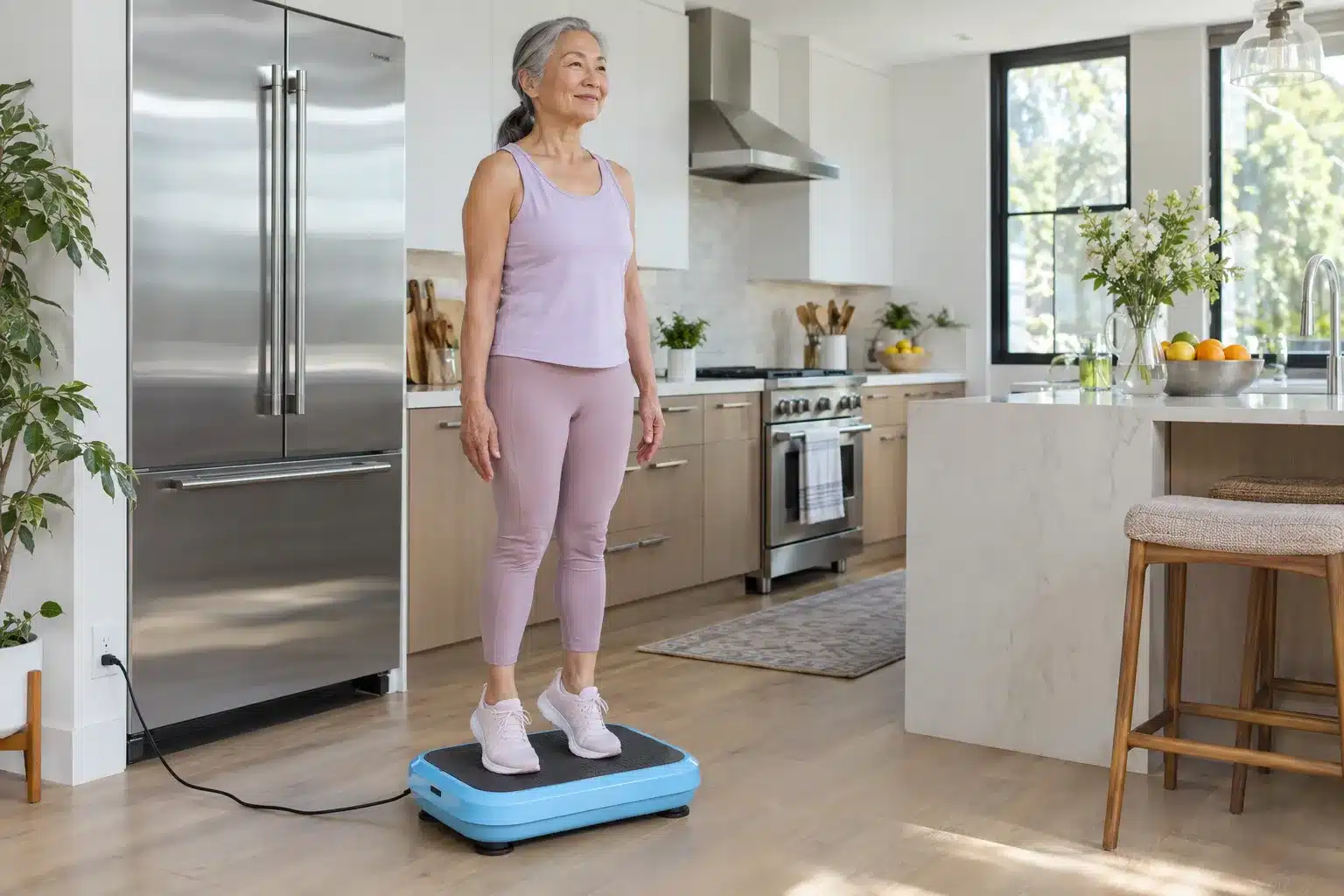
There is no strong evidence that whole-body vibration plates meaningfully tighten loose or crepey skin.
Can a vibration plate help with loose skin meaningfully? The honest answer is that whole-body vibration plates have not been shown to meaningfully tighten loose or crepey skin in the research conducted to date, and any benefit for loose skin is more accurately described as a possible secondary effect of the circulation improvement rather than a primary outcome.
Skin laxity is influenced by collagen, elastin, dermal thickness, age, sun exposure, genetics, hormonal changes, weight loss, and the amount of underlying tissue. A vibration plate does not directly control most of those factors.
Muscle development underneath the skin can sometimes change how an area looks. Improving the strength and tone of the thighs, glutes, calves, or abdomen may make the body look firmer even if the skin itself has not changed structurally.
Does vibration plate help with loose skin by increasing lower-body muscle tone? Improved muscle tone under the skin can make the overlying tissue look firmer even without structural skin changes, and this indirect effect on appearance is the most plausible mechanism through which the plate contributes to the perception of improved skin firmness.
Temporary increases in blood flow may also make the skin look slightly fuller or smoother immediately after a workout.
I would not buy a vibration plate specifically to tighten loose or crepey skin. If you already want one for exercise, any improvement in skin appearance should be considered a possible secondary benefit rather than an expected result.
Can a Vibration Plate Help With Cellulite?
The evidence for cellulite is more interesting than the evidence for loose skin or wrinkles.
Small human studies have reported improvements in the visible appearance of cellulite after repeated vibration treatments. Some also measured increases in skin temperature and microcirculation.
That does not mean the vibration eliminated cellulite. Cellulite is influenced by connective tissue structure, fat distribution, skin thickness, hormones, genetics, and other factors.
The improvements reported in research have generally involved appearance rather than a permanent structural cure.
Will vibration plate help with loose skin over the long term? The research on vibration and skin structure generally found improvements in appearance rather than permanent structural cures, and any user hoping for a lasting result needs to combine the plate with other skin health habits rather than relying on the vibration sessions alone.
It is also important to distinguish whole-body vibration from localized vibrational massage. Some cellulite studies have used devices that apply vibration directly to the target skin rather than transmitting it through the feet.
For me, the reasonable conclusion is that vibration may temporarily or modestly improve cellulite appearance in some people, but it should not be marketed as a reliable way to eliminate cellulite.
What About Wrinkles and Facial Skin?
There is no good evidence that standing on a whole-body vibration plate removes facial wrinkles or increases facial collagen.
Does vibration tighten skin? Not directly: the platform does not generate the forces needed to restructure the dermis, and claims that vibration removes facial wrinkles or increases facial collagen are not supported by any evidence from consumer-plate research.
Research on cosmetic microvibration and other mechanical skin treatments is interesting because the vibration is delivered directly to the target tissue. That is completely different from standing several feet away from the face on a moving platform.
I would also avoid placing the head or face directly against a standard vibration plate. These machines are designed for whole-body exercise through the feet, hands, or other supported positions, not direct facial treatment.
Vibration plate for face is not an appropriate application: the platform transmits vibration through the feet and legs, and by the time that stimulus reaches the face, the mechanical forces are so attenuated by the intervening body structures that no meaningful skin-restructuring effect at the facial level is plausible.
If facial collagen or wrinkles are the actual concern, a dermatologist or appropriately qualified skin professional can discuss treatments that have been studied specifically for facial skin.
Can Better Circulation Improve Skin Health?
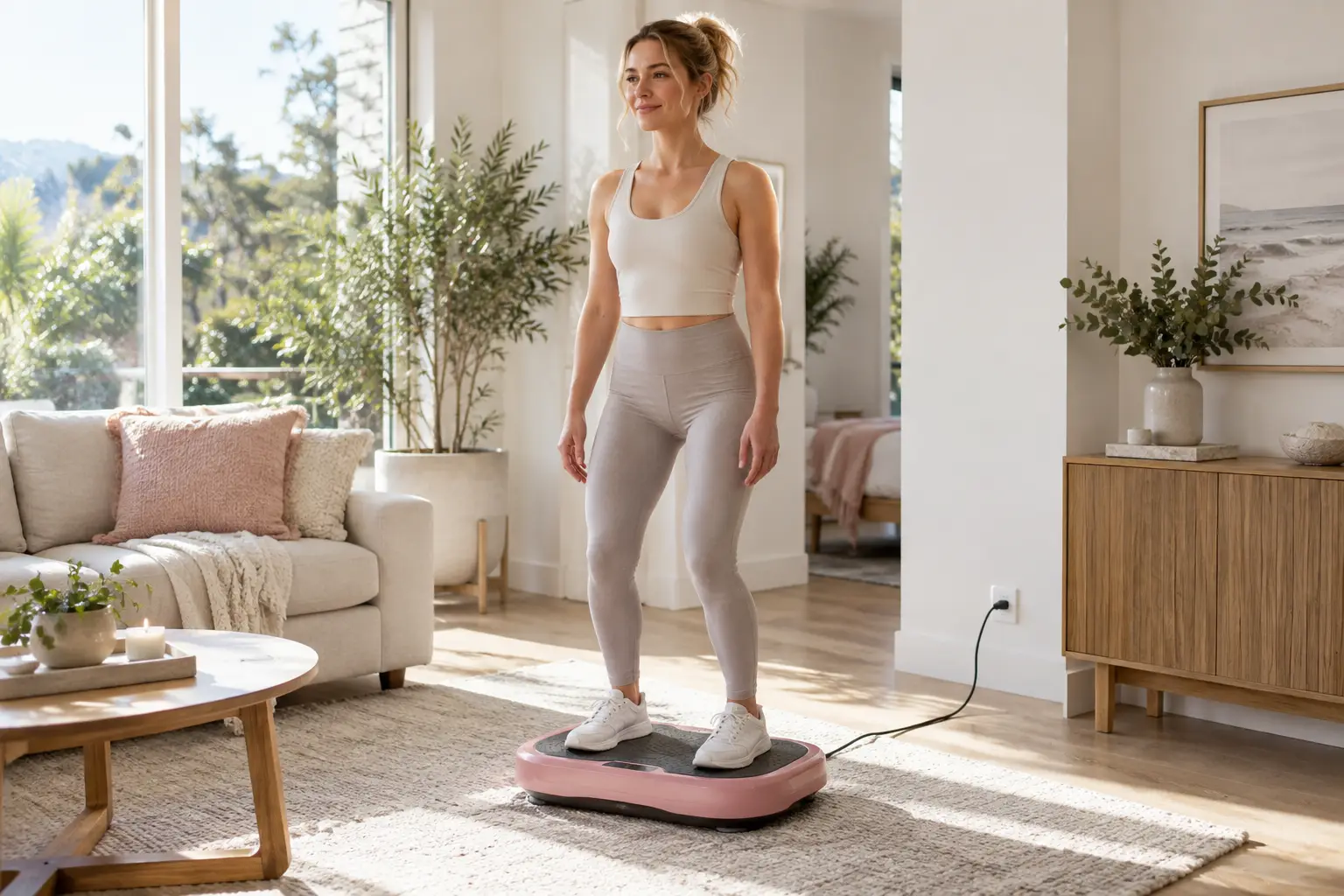
Healthy skin depends on adequate blood flow to deliver oxygen and nutrients and support normal tissue metabolism.
Whole-body vibration can increase lower-extremity circulation in the short term, which is a legitimate physiological effect. Several reviews suggest that lower-frequency vibration may be particularly effective at increasing blood flow in the legs, although results vary between protocols.
This does not mean more circulation automatically produces younger skin.
I think the distinction is important: better circulation is supported by human vibration research. Calling that effect “collagen production,” “detoxification,” or “skin tightening” goes beyond what the evidence currently shows.
Does More Vibration Mean Better Skin Results?
No. Higher frequency, higher amplitude, and stronger vibration do not automatically produce better skin effects.
The response of blood vessels and tissues depends on the frequency, amplitude, duration, body position, area exposed, and type of vibration. Human research has shown that some vibration protocols increase skin blood flow while others produce smaller effects or even different vascular responses.
This is another reason I would not chase a supposed "collagen setting."
More intense vibration can also become uncomfortable and make posture harder to control. I would rather use a moderate setting comfortably than select maximum intensity in the hope that more shaking means more collagen.
How to Use a Vibration Plate if Skin Benefits Are One of Your Goals
There is no validated vibration plate routine specifically for collagen production. I would therefore use the machine according to normal exercise principles rather than trying to reproduce laboratory skin experiments.
Start With 5 Minutes
Begin with a low comfortable setting and learn how your body responds.
Keep your feet at a comfortable width and avoid trying to maximize the movement during the first session.
Keep the Knees Soft
Maintain a slight bend in the knees rather than locking the legs completely.
This allows the lower body to absorb more of the vibration and reduces the amount of movement transmitted upward toward the head.
Add Active Exercises
Once standing feels comfortable, add movements such as shallow squats, calf raises, gentle weight shifts, or resistance-band rows.
I prefer this approach because it gives the session broader fitness value regardless of whether any meaningful skin changes occur.
Progress Toward 10 to 15 Minutes
Increase session duration gradually if the plate remains comfortable.
There is no reason to assume that a 30-minute vibration session will produce twice the skin benefit of a 15-minute session.
Do Not Chase a “Collagen Frequency”
No specific vibration plate frequency has been clinically established for stimulating collagen in healthy human skin.
A frequency that influenced skin tissue in a laboratory experiment should not be copied onto a whole-body vibration machine and treated as a proven cosmetic protocol.
Do Not Put Your Face or Head on the Plate
A standard whole-body vibration plate is not a facial treatment device.
Use the machine in the positions recommended for exercise and avoid intentionally transmitting strong vibration directly through the head.
What I Would Realistically Expect
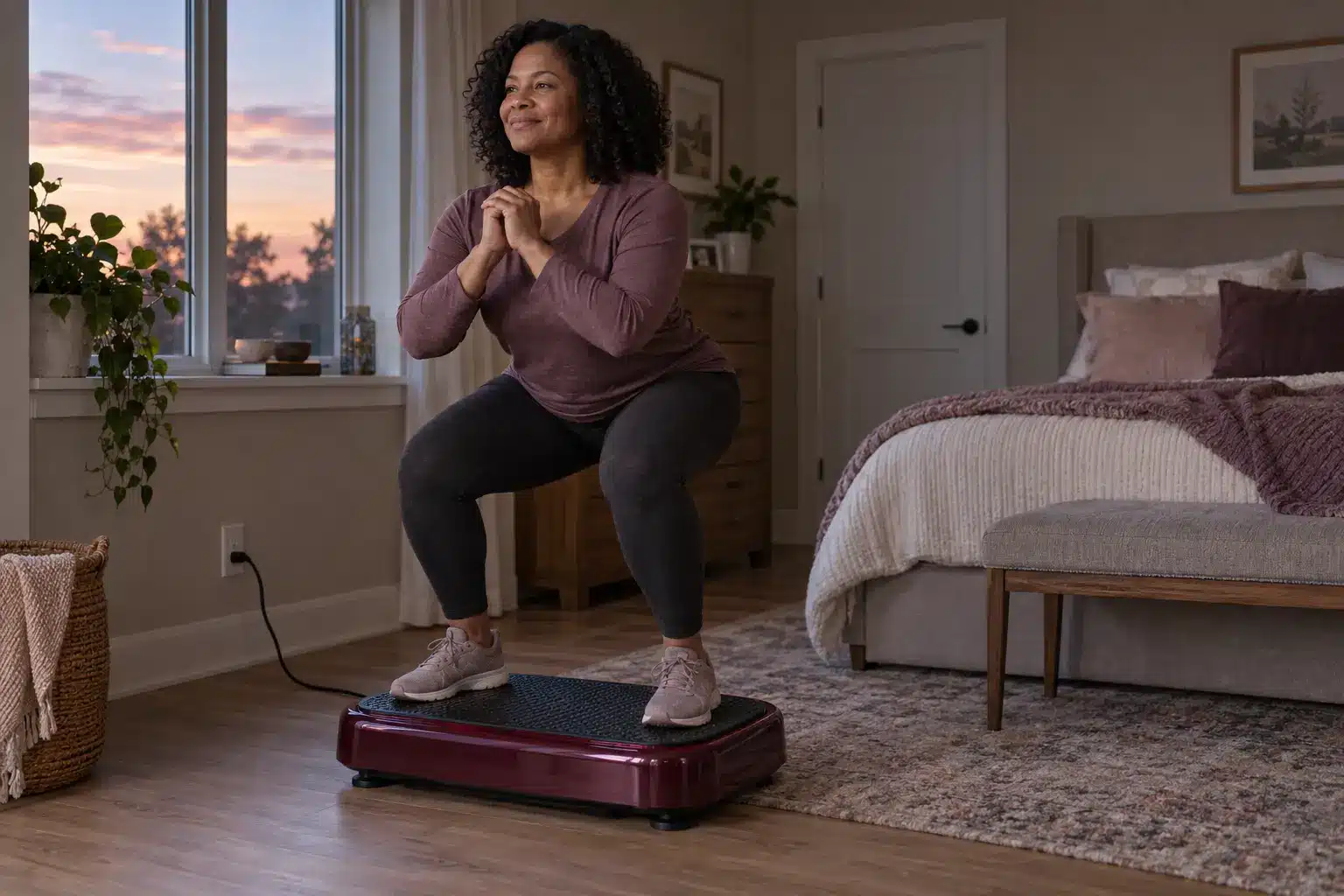
Vibration plate marketing can make skin-related benefits sound much more certain than the research suggests.
Reasonable Expectations
A session may temporarily increase skin warmth and blood flow, particularly in the legs. Regular active use can also strengthen the muscles underneath the skin, which may influence overall body appearance.
There is some early evidence that repeated vibration treatments may improve visible cellulite in certain situations. I would treat that as a possible cosmetic bonus rather than a guaranteed outcome.
Claims I Would Not Expect
I would not expect a vibration plate to reliably rebuild collagen, remove wrinkles, eliminate cellulite, tighten substantial loose skin, or reverse crepey skin.
Those claims require much stronger direct human evidence than we currently have.
The distinction matters because a temporary change in circulation can be visible immediately, while genuine structural remodeling of the skin involves a much more complicated biological process.
Who Should Be Careful?
Someone who is pregnant, recently had surgery, has significant cardiovascular disease, severe balance problems, an acute injury, or certain implanted medical devices should get appropriate professional guidance before starting whole-body vibration.
The same applies when there are unexplained skin lesions, significant swelling, open wounds, or other medical concerns affecting the area.
Animal research has explored vibration and wound healing, including changes in collagen deposition, but that does not establish vibration plates as a treatment for human wounds.
I would not stand on a vibration plate specifically to treat an open wound or another skin condition without professional guidance.
My Take on Vibration Plates for Skin and Collagen
I think circulation is the most credible skin-related benefit of a vibration plate.
There is enough human evidence to say that vibration can influence peripheral and skin blood flow, and the cellulite research is interesting. Laboratory work also gives us a plausible reason to keep studying how mechanical vibration might affect fibroblasts and collagen-related proteins.
What I would not do is turn those findings into a claim that a home vibration plate has been proven to rebuild skin collagen.
The direct human evidence simply is not there yet.
If you already want a vibration plate for strength support, balance, mobility, or short home workouts, improved circulation and possible changes in skin appearance can be viewed as additional benefits. I would not make collagen production or skin tightening the primary reason for purchasing one.
FAQs
Does a vibration plate increase collagen?
There is laboratory evidence showing that controlled direct vibration can affect collagen-related proteins in human skin tissue, but there is no strong clinical evidence that standing on a whole-body vibration plate increases collagen in healthy human skin.
Can a vibration plate tighten loose skin?
There is no good evidence that vibration plates significantly tighten loose skin. Improved muscle tone and temporary changes in circulation may influence appearance, but that is different from rebuilding the skin itself.
Does a vibration plate help crepey skin?
Crepey skin has not been well studied in whole-body vibration trials. A vibration plate may temporarily increase circulation, but it has not been proven to restore dermal thickness or eliminate crepey skin.
Can vibration plates reduce cellulite?
Some small human studies have reported improvements in cellulite appearance after repeated vibration treatments. The evidence is promising but limited, and vibration should not be expected to eliminate cellulite permanently.
Does a vibration plate help wrinkles?
There is no convincing evidence that whole-body vibration plates reduce facial wrinkles. Research involving cosmetic microvibration devices should not be treated as evidence for standard floor-based vibration platforms.
Can vibration improve skin circulation?
Yes. Human research has shown that whole-body vibration can temporarily increase peripheral and skin blood flow, particularly in the lower extremities.
What vibration plate frequency is best for collagen?
No vibration plate frequency has been clinically established as the best frequency for collagen production. Laboratory skin experiments cannot be directly converted into home vibration plate settings.
How long should I use a vibration plate for skin benefits?
There is no validated session length specifically for skin or collagen benefits. A general beginner routine can start around five minutes and gradually increase toward 10 to 15 minutes if the vibration remains comfortable.
Can I use a vibration plate on my face?
I would not place the face or head directly on a standard whole-body vibration plate. These machines are designed for exercise rather than direct cosmetic treatment of facial skin.
Notable Studies
- Caberlotto E, et al. Effects of a Skin-Massaging Device on the Ex-Vivo Expression of Human Dermis Proteins and In-Vivo Facial Wrinkles.
- Springer A, et al. Mechanically Induced Skin Renewal: Evidence-Based Insights Into Clinical, Structural and Inflammatory Changes Activated by Microneedling, Microdermabrasion and Microvibration.
- Johnson PK, et al. Effect of Whole Body Vibration on Skin Blood Flow and Nitric Oxide Production.
- Games KE, et al. Whole-Body Vibration and Blood Flow and Muscle Oxygenation: A Meta-Analysis.
- Mahbub MH, et al. A Systematic Review of Studies Investigating the Effects of Controlled Whole-Body Vibration Intervention on Peripheral Circulation.
- Impact of Vibration on Skin Blood Flow: A Scoping Review.
- Cristovam DN, et al. Whole-Body Vibration in the Reduction of the Cellulite.
- Piotrowska A, et al. Changes in Skin Microcirculation Resulting from Vibration Therapy in Women with Cellulite.
Healthcare and Medical Disclaimer
The information provided on Vibration Plate Zone is for general informational purposes only and is not intended to replace professional medical advice, diagnosis, or treatment. Always seek the guidance of a qualified healthcare provider with any questions you may have regarding a medical condition, and never disregard or delay seeking professional advice.