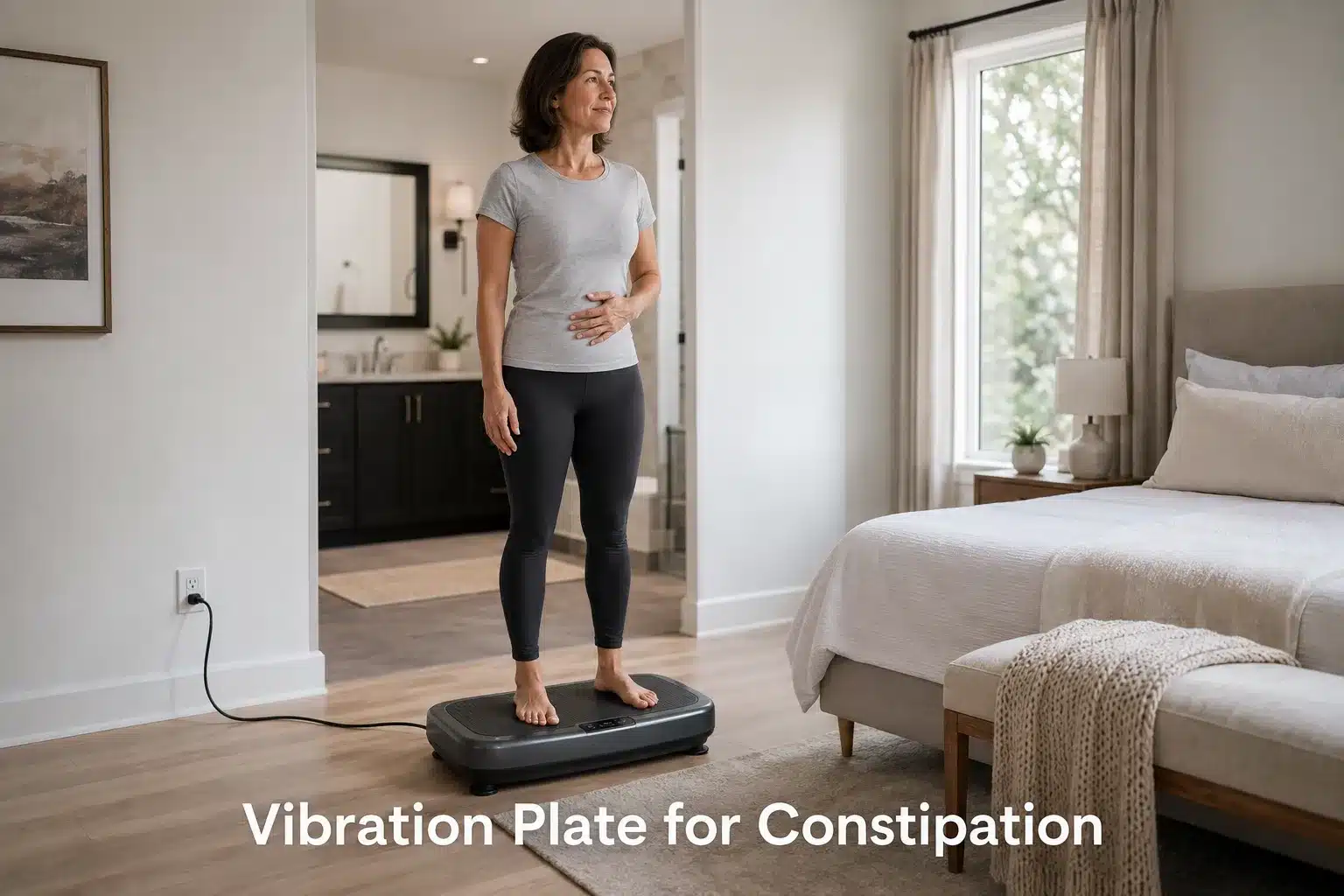
A vibration plate may help some people with functional constipation, but the evidence is still limited. One small controlled trial found improvements in total constipation severity and difficulty passing stool after low intensity whole body vibration.

About the author: Hello! I’m Vladimir Stanar, professor of physical education, kinesiotherapist, marathon runner, cyclist, and cycling coach, and long-time advocate of health, fitness, and active living.
My journey with vibration plates runs parallel to my professional career in education, sports medicine, and athletic development. I’ve developed a unique process for testing vibration plates as they are some of the most versatile tools for enhancing health, recovery, and performance.
✅ Expert-Reviewed by: Vanja Vukas, MPhEd
📚 Expert Contributor: Milutin Tucakov, MPhEd
The same study did not find meaningful improvements in abdominal pain, slow transit symptoms, or constipation related quality of life. This means a vibration plate should be viewed as a supporting movement tool rather than a proven constipation treatment.
Regular physical activity, adequate fiber, enough fluids, consistent bowel habits, and appropriate medical treatment remain more established parts of constipation care. A vibration plate may fit into that wider plan when it helps someone move more regularly.
A vibration plate bowel movement benefit is the most commonly reported digestive effect among users who add a standing session to their daily routine, and understanding whether this effect is real and who it applies to requires looking closely at the type of constipation involved.
Constipation Is Not One Single Problem
Constipation can involve infrequent bowel movements, hard stools, straining, incomplete emptying, or difficulty passing stool. Two people may both describe themselves as constipated while experiencing very different underlying problems.
Whether a vibration plate makes you poop depends heavily on which underlying mechanism is causing the delay, since the oscillation has a better theoretical case for functional constipation than for the slow-transit type where the issue lies deeper in the colon.
Functional constipation is diagnosed when symptoms persist without a clear structural cause. Slow transit constipation involves delayed movement of stool through the colon, while obstructed defecation involves difficulty emptying stool from the rectum.
Pelvic floor dysfunction can also cause constipation. In this situation, the muscles involved in bowel movements may tighten or fail to relax at the correct time.
Constipation may also result from dehydration, low fiber intake, reduced activity, pregnancy, medication, diabetes, hypothyroidism, neurological conditions, or intestinal blockage. The likely cause affects whether a vibration plate has any realistic role.
A vibration plate for IBS requires a more cautious evaluation than for simple constipation, since altered gut sensitivity in IBS means that mechanical stimulation can increase discomfort for some users even when it provides symptomatic relief for others.
How a Vibration Plate Might Affect Bowel Function
A vibration plate creates rapid movement beneath the feet. The body responds with repeated contractions in the legs, hips, abdomen, and postural muscles.
This activity may provide a small amount of general movement for someone who spends much of the day sitting. Reduced physical activity is one factor associated with constipation, so becoming more active may support regular bowel function.
For those using a vibration plate primarily to increase general movement and circulation, my picks for the best vibration plates for circulation cover the models best suited to daily low-intensity sessions aimed at blood flow and activity rather than peak fitness output.
The relationship between vibration plate use and constipation centers on increased abdominal circulation, mild core activation during postural corrections, and the light physical activity the session provides, all of which address sedentary-related bowel sluggishness more than they target transit directly.
Vibration may also create gentle movement through the trunk and pelvis. Researchers have suggested that this mechanical stimulation could affect abdominal muscles, pelvic movement, or the nervous system pathways involved in bowel function.
These explanations remain partly theoretical. Research has not clearly shown that external vibration directly increases colon transit or creates stronger intestinal contractions.
Why a vibration plate might make you poop is not fully established, but the most plausible mechanism involves mechanical stimulation of the abdominal wall and the autonomic signals generated during the session rather than the vibration acting directly on intestinal smooth muscle.
For a broader look at what whole body vibration has and has not been shown to do, my overview of vibration plate benefits covers the evidence across cardiovascular, musculoskeletal, and general health outcomes.
What the Main Constipation Study Found
The strongest direct evidence comes from a small randomized controlled trial involving 27 people with chronic functional constipation. Fourteen participants received whole body vibration, while thirteen received no vibration treatment.
The vibration group completed six sessions over two weeks. Each session lasted 15 minutes and used an oscillating platform set at 12 Hz with 2 mm of amplitude.
Total constipation severity improved more in the vibration group than in the control group. Scores related to obstructed defecation also improved, suggesting that some participants found stool easier to pass.
The treatment did not significantly improve the chronic inertia part of the symptom scale. This section relates more closely to slow bowel movement through the colon.
Abdominal pain did not improve significantly either. Constipation related quality of life also remained similar between the groups.
The vibration plate poop question is more complex than search results suggest because the published studies differ considerably in population, protocol, constipation type, and duration, which limits how widely any single finding can be applied.
The findings suggest that gentle whole body vibration may help certain evacuation symptoms. The study was too small and too short to establish vibration as a standard treatment.
What Research Says About Postpartum Constipation
A later randomized trial studied 40 women with constipation after childbirth. Both groups received dietary guidance, pelvic floor exercises, and static abdominal exercises for six weeks.
One group also completed whole body vibration sessions three times per week. This group experienced greater improvements in constipation symptoms and quality of life than the group that performed the exercises and followed dietary guidance without vibration.
The results support a possible complementary role for vibration. They do not show that the vibration plate worked independently because it was combined with several other treatments.
Postpartum constipation can also involve pain, medication, hormonal changes, reduced movement, pelvic floor dysfunction, and fear of straining. A vibration plate cannot address all of these factors.
There is no evidence that a vibration plate causes constipation, and its physiological effects on circulation and mild muscle activation all suggest the opposite, but the plate cannot resolve constipation that has an anatomical, neurological, or severe pelvic floor cause.
Anyone who recently gave birth should get appropriate guidance before beginning vibration training, especially after a Cesarean section, significant tearing, pelvic pain, bleeding, or complications.
Can a Vibration Plate Make You Poop?
A vibration plate may create an urge to have a bowel movement in some people. Movement, abdominal muscle activity, meal timing, hydration, and stool already present in the rectum may all contribute.
An immediate bowel movement does not prove that vibration has corrected chronic constipation. The timing may be partly coincidental or related to the normal gastrocolic reflex, which increases bowel activity after eating.
For users who find that a vibration plate makes them poop during or shortly after a session, the timing aligns closely with the gastrocolic reflex, a normal physiological response to postural change, activity, and increased abdominal circulation.
Some users may notice no digestive response at all. Individual bowel habits, medication, fiber intake, activity level, and the cause of constipation all affect the result.
I would not raise the intensity simply because a low setting did not produce an urge. Stronger vibration has not been proven to improve constipation more effectively.
Does a Vibration Plate Improve Gut Motility?
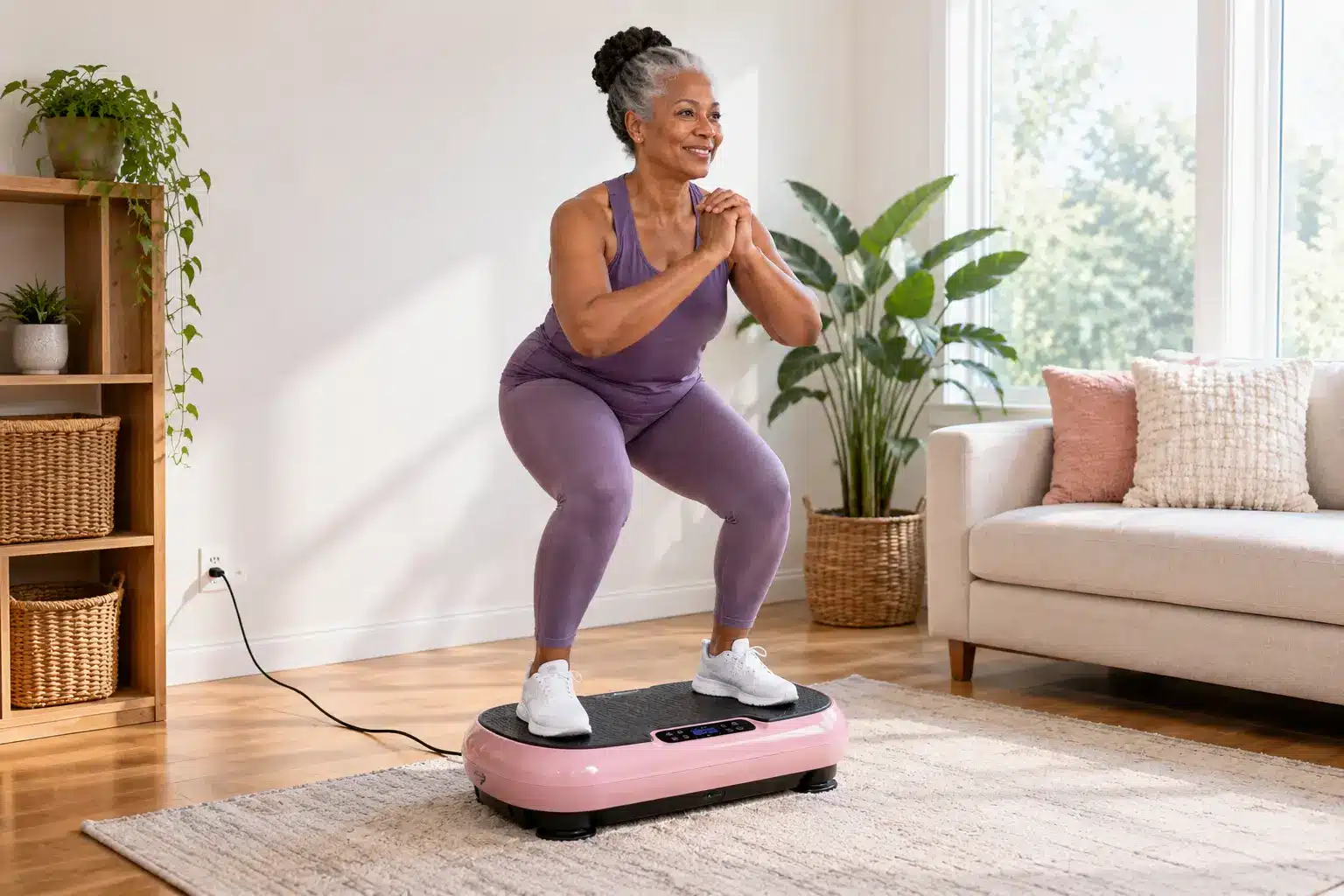
There is not enough evidence to say that a vibration plate reliably improves gut motility. The main constipation trial did not significantly improve the chronic inertia symptom score.
That finding is relevant because chronic inertia reflects symptoms associated with slow movement through the bowel. The results may indicate that vibration has more effect on evacuation than on the speed at which stool travels through the colon.
The study was too small to prove this difference with confidence. More research would be needed to measure colon transit directly and identify which types of constipation respond best.
A vibration plate should not be marketed as a way to speed up digestion or cleanse the colon. Those claims go beyond the available evidence.
Constipation Versus Bloating
Constipation and bloating often occur together, but they are not the same problem. Bloating may involve gas, stool retention, food intolerance, irritable bowel syndrome, or changes in abdominal sensation.
Whether vibration plates help with constipation is most accurately answered by constipation type: the available evidence points toward possible benefit for functional and slow-transit forms, with much less reason to expect improvement when IBS, food intolerance, or structural dysfunction is the primary driver.
Someone may feel less tense after a vibration session without passing stool or improving constipation. General movement can change how the abdomen feels even when bowel transit remains unchanged.
Claims about lymphatic drainage are also frequently mixed with digestive claims. The lymphatic system and the movement of stool through the colon are separate processes.
My guide on vibration plates for lymphatic drainage explains what the actual evidence says about lymphatic stimulation and which claims from manufacturers go beyond what research supports.
A reduction in water retention or a temporary feeling of lightness does not mean that the bowel has been emptied.
For anyone specifically looking for a machine marketed for lymphatic support, my breakdown of the best vibration plates for lymphatic drainage explains which features and frequency settings are associated with that use case.
How to use a vibration plate for constipation is not standardized in any published guideline, but the protocols nearest to those in research studies involve daily sessions at 12 to 20 Hz lasting 10 to 15 minutes, combined with gentle movement rather than completely passive standing.
Passive Standing Versus Active Exercise
Passive standing on a vibration plate creates some muscle activity. The body must make repeated postural corrections while the platform moves.
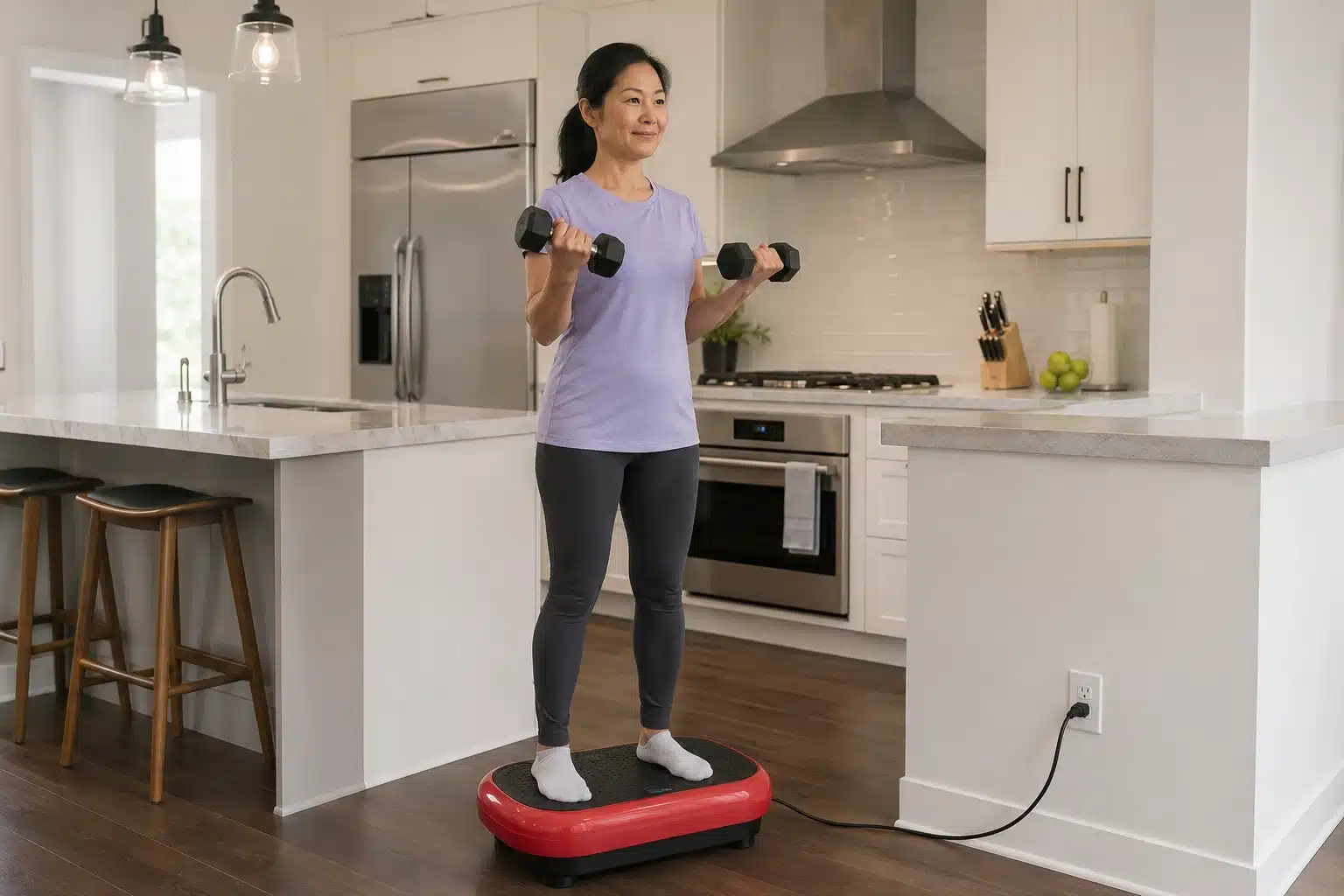
Gentle calf raises, weight shifts, and shallow supported squats create a broader movement response. These exercises may be more useful for general activity than standing completely still.
For those using the plate as part of a broader activity routine, my guide to the best vibration plates for weight loss covers the models that pair well with regular movement habits and calorie management.
There is no evidence that a demanding vibration workout provides better constipation relief. The direct trial used a relatively gentle 12 Hz protocol rather than maximum intensity.
The goal should be comfortable and repeatable movement. Abdominal straining, breath holding, or gripping the pelvic floor against strong vibration may be counterproductive.
How to Use a Vibration Plate for Constipation
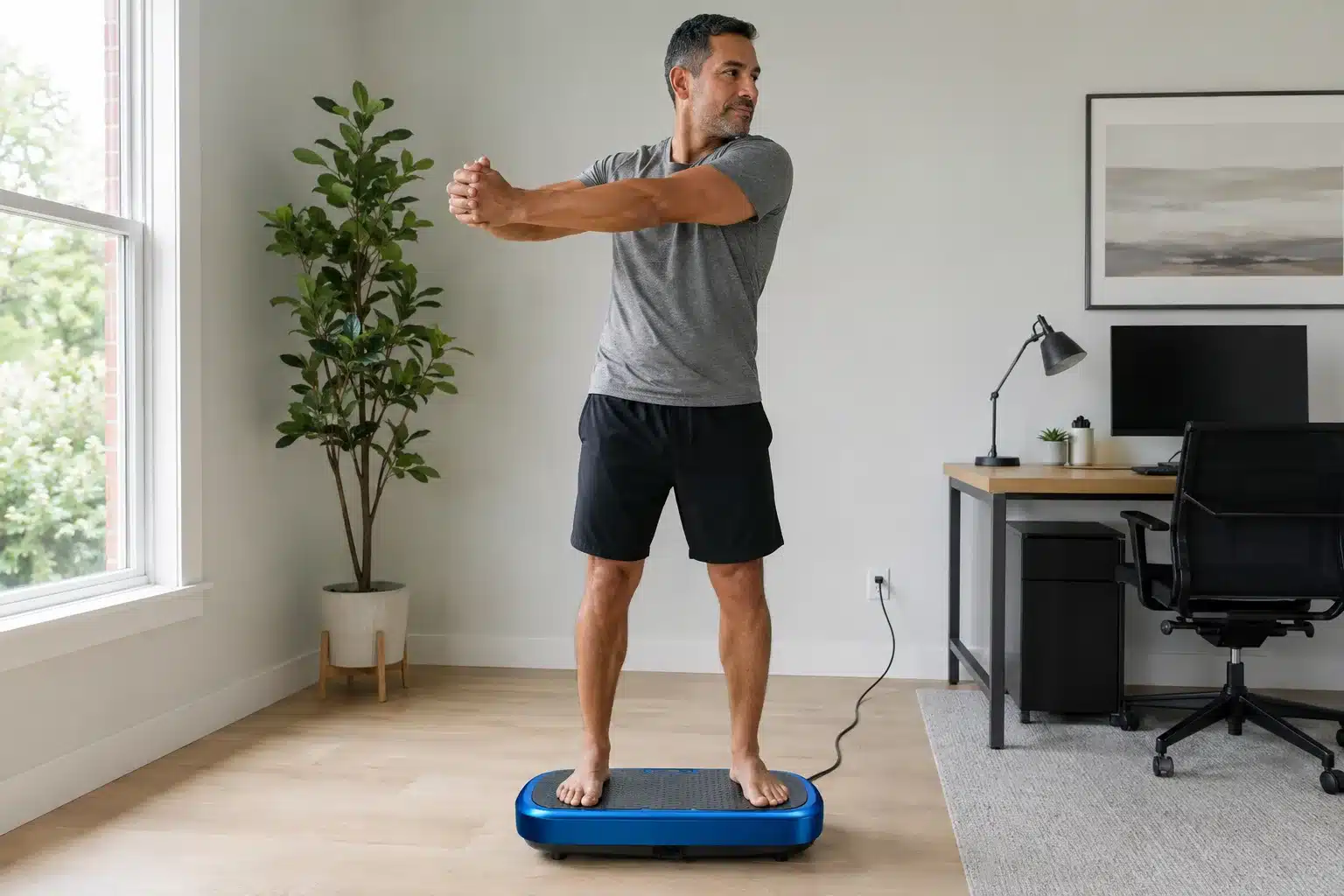
Place the vibration plate on a level and stable floor. Use a fixed support if balance is uncertain.
Begin at a low setting for about five minutes. Keep the knees slightly bent and allow the legs to absorb the movement.
Breathe normally throughout the session. Avoid holding the breath or forcefully tightening the abdomen in an attempt to stimulate the bowel.
Gentle weight shifts or slow calf raises can be added once basic standing feels comfortable. These movements provide more general activity without creating excessive abdominal pressure.
The clinical trial used 15 minute sessions, but beginners do not need to start with that duration. Increase time gradually only when the session causes no pain, dizziness, nausea, or pelvic discomfort.
If you are still deciding which machine to buy, my guide to the best vibration plates for home use covers the models that combine stable platforms, adjustable low-frequency settings, and a footprint suitable for daily home sessions.
Using the plate at a consistent time may help it become part of a bowel routine. A morning session or use after light walking may be practical, but no specific time has been proven to work best.
Vibration Plates and the Pelvic Floor
The pelvic floor must relax and coordinate correctly during a bowel movement. Some people with constipation tighten these muscles instead of relaxing them.
Whole body vibration does not teach proper pelvic floor coordination. A person who braces against the moving platform may increase pelvic tension rather than reduce it.
Symptoms such as prolonged straining, incomplete emptying, the need to press around the rectum, or a feeling that stool is blocked may suggest a defecation disorder. Pelvic floor assessment and biofeedback therapy are better established for this problem.
A vibration plate may still provide general movement, but it should not replace condition specific treatment.
My guide on the dangers of vibration machines covers the contraindications, risk categories, and specific conditions where whole body vibration should be avoided or used only under medical supervision.
What Else Should Be Part of a Constipation Plan?
Dietary fiber can help soften stool and support regular bowel movements. Adults are generally advised to get around 22 to 34 grams per day, with increases made gradually to reduce gas and discomfort.
Fluids help fiber work properly. Someone who raises fiber intake without drinking enough may experience harder stools or greater bloating.
Regular physical activity may also help. Walking, gentle exercise, and spending less time sitting are practical options that do not require special equipment.
For older adults looking to add gentle movement at home, my guide to the best vibration plates for seniors covers the models that prioritize balance safety, low amplitude settings, and ease of use for daily sessions.
Bowel training can involve sitting on the toilet at a consistent time, often after a meal. Responding to the natural urge rather than delaying it may also support regularity.
Some people require fiber supplements, osmotic laxatives, stimulant laxatives, or prescription medication. The correct option depends on the type and duration of constipation.
People taking calcium supplements for osteoporosis, which are a known contributor to constipation, may also be looking for a low-impact activity option; my guide to the best vibration plates for osteoporosis covers the models suited to that dual need.
Medication should not be stopped because a vibration session produces one bowel movement. Any changes should be discussed with a healthcare professional.
When Constipation Needs Medical Assessment
A vibration plate should not be used to delay evaluation of severe or persistent constipation. Blood in the stool, unexplained weight loss, vomiting, fever, or severe abdominal pain require medical attention.
The inability to pass stool or gas with increasing abdominal swelling may suggest an obstruction. This situation needs urgent assessment rather than home exercise.
New constipation in an older adult, symptoms lasting several weeks, or a major change in normal bowel habits should also be evaluated. Alternating constipation and diarrhea may require further investigation.
Constipation may also begin after a new medication. Pain medicines, iron supplements, some antidepressants, and several other drug groups can affect bowel function.
My Practical Take on Using a Vibration Plate for Constipation
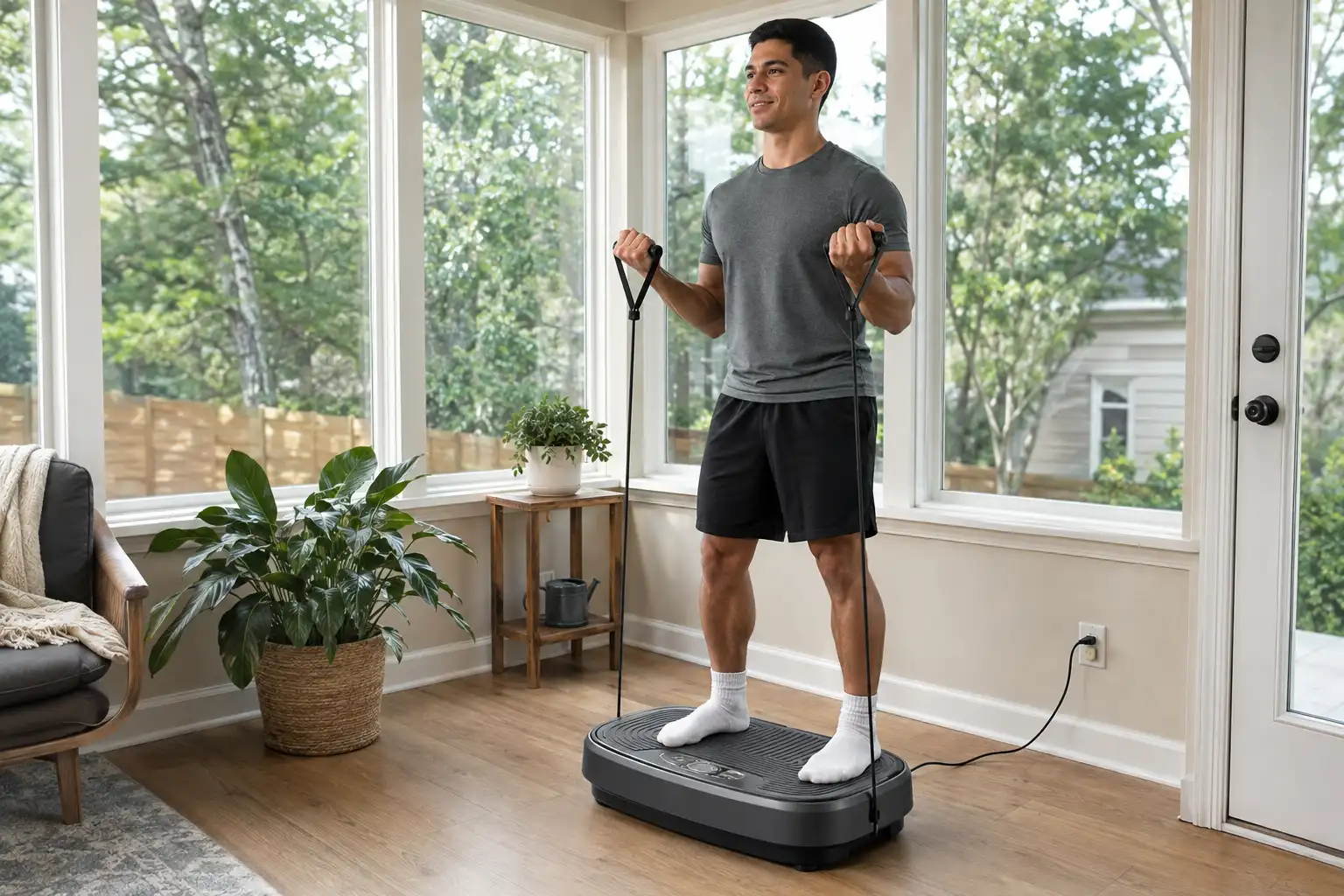
A vibration plate may help some people with functional constipation, particularly when difficulty passing stool is part of the problem. The strongest direct trial found improved total symptom severity and obstructed defecation scores after gentle vibration.
The same study did not improve every symptom. There is not enough evidence to say that vibration reliably speeds colon transit, relieves abdominal pain, or works for all forms of constipation.
For a broader examination of what whole body vibration actually achieves across different health goals, my guide on do vibration plates work covers the research evidence across musculoskeletal, metabolic, and circulatory outcomes.
I would use a vibration plate as an optional addition to regular movement, fiber, fluids, consistent bowel habits, and appropriate medical care. I would not use it as a colon cleanse, a replacement for laxatives, or a guaranteed way to produce a bowel movement.
For a comparison of the top-performing models across budgets and use cases, my guide to the best vibration plates covers verified specs, platform types, and which machines hold up well under regular daily use.
FAQs
Can a vibration plate help constipation?
A vibration plate may help constipation symptoms in some people, particularly difficulty passing stool. The direct evidence comes from a small trial, so whole body vibration should remain a supporting tool rather than a primary treatment.
Can a vibration plate make you poop?
A vibration plate may create an urge to poop in some users through movement and muscle activity. This response is not guaranteed and does not prove that chronic constipation has been treated.
How long should you use a vibration plate for constipation?
You should start with about five minutes on a low setting when using a vibration plate for constipation. The main clinical trial used 15 minute sessions, but beginners should increase duration gradually.
What setting should you use for constipation?
A low vibration setting is the most sensible starting point for constipation. The direct trial used an oscillating platform at 12 Hz and 2 mm amplitude, but this does not establish one ideal setting for every machine or user.
Does vibration improve gut motility?
Vibration has not been proven to reliably improve gut motility. The main whole body vibration trial improved some constipation symptoms but did not significantly improve symptoms associated with slow bowel transit.
Can a vibration plate help bloating?
A vibration plate may help someone feel less stiff or tense, but it is not a proven treatment for bloating. Bloating can have several causes, including gas, stool retention, food intolerance, and irritable bowel syndrome.
Is a vibration plate safe for postpartum constipation?
A vibration plate may be appropriate for postpartum constipation after medical or pelvic health clearance. Recent surgery, significant tearing, pain, bleeding, prolapse symptoms, or childbirth complications require greater caution.
Can a vibration plate replace laxatives?
No, a vibration plate cannot replace laxatives when medication is medically appropriate. Constipation treatments should be selected according to the cause, symptom severity, and professional guidance.
Notable Studies
Wu TJ, et al. Whole body vibration for functional constipation: A single centre, single blinded, randomized controlled trial. Colorectal Disease, 2012. The study included 27 people with chronic functional constipation and tested six 15 minute sessions at 12 Hz and 2 mm amplitude over two weeks. It reported improvements in total constipation severity and obstructed defecation, but not abdominal pain, chronic inertia, or quality of life.
El Nahas EM, et al. Effect of six weeks of whole body vibration in treatment of postnatal constipation. The randomized controlled trial included 40 women and compared pelvic floor exercise, abdominal exercise, and dietary guidance with or without whole body vibration.
National Institute of Diabetes and Digestive and Kidney Diseases. Treatment for Constipation. This resource covers fiber, fluids, physical activity, bowel training, medication, biofeedback, and other established treatment options.
National Institute of Diabetes and Digestive and Kidney Diseases. Eating, Diet, and Nutrition for Constipation. This resource explains recommended fiber intake, gradual dietary changes, and the role of adequate fluid intake.
National Institute of Diabetes and Digestive and Kidney Diseases. Symptoms and Causes of Constipation. This resource reviews inactivity, diet, medication, pregnancy, metabolic conditions, neurological disorders, and intestinal obstruction as possible causes.
Saeed A, et al. The efficacy and safety of vibrating capsules for functional constipation: A systematic review and meta analysis of randomized controlled trials. This research concerns swallowed vibrating capsules rather than external vibration plates and is included to clarify the difference between the two interventions.
Healthcare and Medical Disclaimer
The information provided on Vibration Plate Zone is for general informational purposes only and is not intended to replace professional medical advice, diagnosis, or treatment. Always seek the guidance of a qualified healthcare provider with any questions you may have regarding a medical condition, and never disregard or delay seeking professional advice.