Affiliate Disclosure: Vibration Plate Zone is a proud participant in the Amazon Services LLC Associates Program.
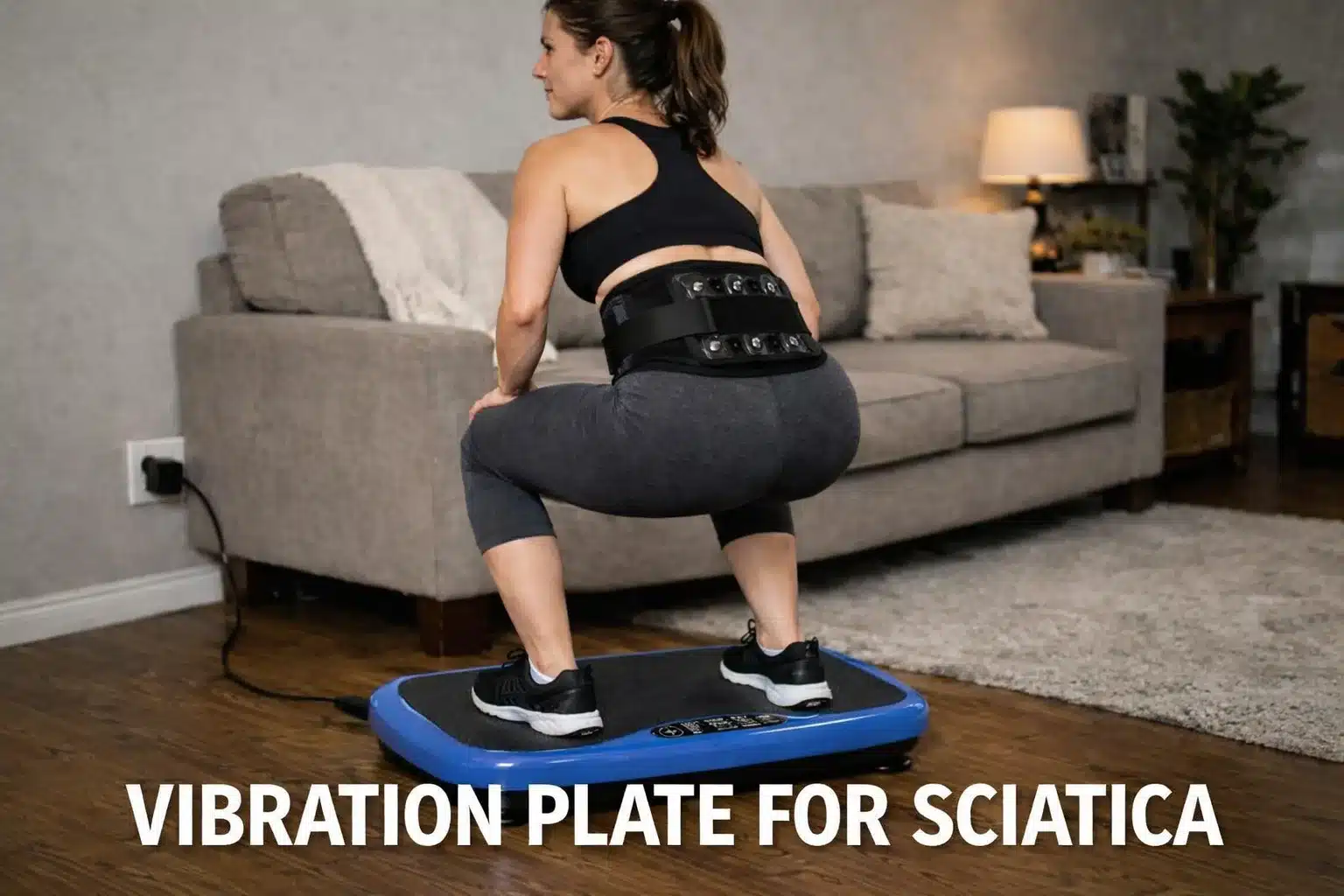
If you are dealing with sciatica, there is a good chance you have already tried more than one thing to calm it down. Maybe you have stretched more, walked more, sat less, changed shoes, used heat, used ice, or searched for every possible tool that might give you even a little relief.
That is usually the point where people start asking me about using a vibration plate for sciatica.

About the author: Hello! I’m Vladimir Stanar, professor of physical education, kinesiotherapist, marathon runner, cyclist, and cycling coach, and long-time advocate of health, fitness, and active living.
My journey with vibration plates runs parallel to my professional career in education, sports medicine, and athletic development. Over time, I’ve come to see vibration plates as one of the most versatile tools for enhancing health, recovery, and performance.
✅ Expert-Reviewed by: Vanja Vukas, MPhEd
📚 Expert Contributor: Milutin Tucakov, MPhEd
As a licensed kinesiotherapist, I think this is a fair question. I also think it needs a careful answer. Sciatica can feel simple when you describe it as pain running from the lower back into the buttock and down the leg, but in real life it is not always simple.
Sciatic nerve pain can come from nerve compression, nerve irritation, lumbar radiculopathy, a herniated disc, spinal stenosis, piriformis syndrome, deep gluteal syndrome, or other forms of pressure on the nerve. That means a vibration plate may help some people, may do very little for others, and may aggravate symptoms if it is used the wrong way or at the wrong time.
My honest view is this: whole body vibration for sciatica can sometimes be useful as a low-impact tool for mobility, circulation, flexibility, gentle muscle activation, and recovery support. But I would never present it as a cure, and I would never tell someone with severe sciatica, worsening numbness, or leg weakness to just stand on a vibration machine and hope for the best. A vibration plate for sciatic nerve pain makes the most sense when it is used conservatively, with realistic expectations, and with attention to how your body responds.
What Is Sciatica, Really?
Sciatica is not just random low back pain which vibration plates can help with. It is a symptom pattern linked to the sciatic nerve pathway. In plain English, that usually means pain, tingling, numbness, burning pain, or weakness that starts in the lower back or buttocks and travels down the leg. Some people describe it as sharp pain. Others describe it as electric shock pain, radiating leg pain, nerve pain down the leg, or buttock pain that runs into the calf, foot, or toes.
From a clinical point of view, sciatica is often related to lumbar radiculopathy, which means one of the nerve roots in the lower spine is compressed or irritated. This is why the symptoms can travel. The source of the problem is often near the lumbar spine, but the symptoms are felt much farther down the leg. That is also why sciatica can feel very different from one person to another. One person may mainly have lower back and leg pain. Another may have tingling and numbness in the leg. Another may notice numbness in the foot or toes. Another may feel leg weakness from sciatica when climbing stairs or standing for a long time.
When I explain this to people, I often use a simple example. If someone tells me, “I have pain in my calf and foot, but my lower back is not that bad,” I do not dismiss that as unrelated. I know the nerve pathway can create symptoms far away from the original compression. That is why I always look at the full symptom pattern instead of focusing only on where the pain feels strongest.
Common Causes of Sciatic Nerve Pain
Sciatic pain relief starts with understanding the likely cause. The most common causes include a herniated disc, bulging disc, spinal stenosis, bone spur formation, and other degenerative changes that create nerve compression. Piriformis syndrome sciatica is another possibility. In that case, the piriformis muscle presses on or irritates the sciatic nerve, which can create pain, numbness, or tingling in the butt, hip, or upper leg. Some people also fall into the broader deep gluteal syndrome category, where structures around the gluteal region contribute to sciatic nerve irritation.
This matters because even a good Lifepro vibration plate and your sciatica are not a one-size-fits-all match.
If the main issue is tight muscles, reduced mobility, stiffness, and movement intolerance, vibration therapy for sciatica may offer some support. If the main issue is severe nerve root compression from a large herniated disc or advanced spinal stenosis, the effect may be limited or symptoms may flare more easily.
If your nerve symptoms are connected to an autoimmune condition like multiple sclerosis rather than spinal compression, my guide on using a vibration plate for autoimmune conditions addresses that distinction directly.
That is one of the biggest mistakes I see online. People ask, “Are vibration plates good for sciatica?” as if all sciatica is identical. It is not. A person with mild chronic sciatica from muscular tension and a person with acute sciatica from significant disc irritation should not expect the same response.
Can a Vibration Plate Help Sciatica?

Yes, a quality vibration plate can help sciatica in some cases, but I would describe it as a support tool, not a stand-alone solution.
When people ask me, “Does a vibration plate help sciatica?” my answer is usually that it can help with certain parts of the problem. A vibration plate may improve circulation, loosen tight muscles, reduce stiffness, improve flexibility, improve mobility, and make light exercise feel more manageable. That can be valuable, especially if sciatica has made regular movement feel aggravating or intimidating. The most realistic way to view it is as a low-impact support tool that may help some people move more comfortably when it is used gently and at low settings.
But I do not think it is accurate to say that whole-body vibration for sciatica directly fixes the cause. It does not remove a herniated disc. It does not reverse spinal stenosis. It does not magically decompress a pinched nerve in the lower back. What it may do is help the body tolerate movement better, reduce muscle guarding around the hips and lower back, and make certain gentle exercises more effective or more comfortable.
That distinction is important.
Those same physiological changes, including the hormonal signals that vibration triggers in the nervous system and muscles, are examined in my guide on vibration plate hormonal responses, which covers what the evidence shows for growth hormone, cortisol, and metabolic markers.
Those same physiological changes, including the hormonal signals that vibration triggers in the nervous system and muscles, are examined in my guide on vibration plate hormonal responses, which covers what the evidence shows for growth hormone, cortisol, and metabolic markers.
If I use WBV for sciatica in practice, I am usually not using it because I think the platform itself is the treatment. I am using it because it may help the person move with less stiffness, less protective tension, and better movement tolerance.
Exercise bikes are another commonly recommended tool for sciatica management; my vibration plate or exercise bike guide covers how the two differ in joint loading, movement pattern, and practical use for someone managing sciatic nerve discomfort.
How a Vibration Plate May Help Sciatica

There are a few practical reasons a vibration plate may help with sciatica. It can encourage gentle muscle activation, help relax tight areas around the hips and lower back, improve circulation, reduce stiffness, and make simple movement feel easier to tolerate. In that sense, it is often most useful not because it directly fixes the cause of sciatica, but because it may help the body move with less guarding and less discomfort.
It may relax tight muscles around the hips, glutes, and lower back
A lot of people with sciatic nerve pain do not just have nerve irritation. They also have secondary tightness in the glutes, hamstrings, calves, and lower back. Glute tightness sciatica and hamstring tightness sciatica often show up together. Sometimes piriformis compression is part of the picture too.
This is where a vibration plate may help. The vibration can create gentle muscle activation and may help tense areas relax enough for movement to feel less guarded. I have seen people who could not tolerate a normal stretch very well feel more comfortable after a short, low-intensity standing session followed by easy mobility work.
I am careful here, though. I do not assume that more vibration means more relief. In my experience, aggressive settings can backfire, especially when using a vibration plate for seniors in the wrong way. For sciatica, I would much rather start too gently than too hard.
It may make movement feel easier
Sciatica often creates a vicious cycle. Pain leads to less movement. Less movement leads to more stiffness. More stiffness leads to worse flexibility, more guarded posture, and less confidence with daily activities.
A vibration platform for sciatica may help interrupt that cycle a little. If it improves mobility and flexibility enough for the person to do a calf stretch, hamstring stretch, glute stretch, or short walk more comfortably afterward, that is meaningful progress.
Those who want to take that stretching work further using the plate specifically will find a detailed breakdown of positions and protocols in my article on using a vibration plate for stretching.
This is one of the reasons I do not judge a session only by what happened on the machine. I ask a bigger question: did the person move better after? Could they sit, stand, or walk with a little less discomfort? Did their movement tolerance improve?
It may support light exercise when higher-impact movement feels too aggravating
People with sciatica often do better with low-impact exercise for sciatica than with anything jarring. A vibration machine is not impact-free, but it can still fit into a conservative care approach when used properly.
For example, if a person cannot yet tolerate lunges, brisk walking, or longer standing sessions, a short standing vibration plate routine with soft knees, good posture, and low settings may be a way to reintroduce movement without asking too much too soon. This is part of why vibration plate exercises for sciatica can be useful when they are selected carefully.
Ellipticals are another low-impact option often recommended for sciatica; my vibration plate or elliptical guide covers how the two differ in joint loading, movement pattern, and practical suitability for someone managing sciatic nerve discomfort.
When a Vibration Plate May Not Help Sciatica
This is the section I wish more articles handled honestly.
A vibration plate may not help every cause of sciatica. In some cases, it may not help much at all. In other cases, it can make symptoms worse.
If someone has severe sciatica, worsening numbness, worsening weakness, sharp radiating pain that escalates with vibration, or a clear flare-up triggered by even small amounts of movement, I do not push vibration work. The same goes for people whose symptoms strongly suggest significant nerve root irritation that has not been properly assessed yet.
In those cases, the smarter move is not to force more stimulation. The smarter move is to pause, reassess, and get appropriate medical input.
The same principle applies to cervical nerve compression, and my guide on vibration plate for neck and cervical pain explains how to recognize when a pinched nerve in the neck warrants the same cautious approach.
If your symptoms include any head-related effects during a session, my guide on vibration plates and brain safety explains which signals warrant stopping and why.
This is one of my biggest practical rules as a licensed kinesiotherapist: I do not chase the idea of “doing something” just because the person wants relief quickly. Sometimes the best choice is to reduce intensity, simplify the plan, or stop using the vibration plate until symptoms settle.
For those exploring gentler movement options in the meantime, my vibration plate and yoga comparison covers both approaches side by side, including what each can realistically offer for someone managing nerve-related discomfort.
My Practical Rule as a Licensed Kinesiotherapist
When I think about using a vibration plate for sciatic pain, I ask four questions.
First, what is the likely cause?
Second, how irritable are the symptoms right now?
Third, what movements make it better or worse?
Fourth, does the person respond well to small, controlled amounts of stimulation?
If symptoms seem movement-sensitive but not highly explosive, and if the pattern looks more like stiffness, muscle guarding, reduced mobility, and manageable radiating pain, I am more open to trying a vibration plate.
If symptoms are severe, highly reactive, or clearly worsening, I become much more conservative.
People managing excess body weight who are also dealing with sciatic pain often start with limited movement options, and my guide to vibration plates for obesity covers how to approach vibration training when physical activity has been restricted.
A simple example: if I have a person who says, “My pain eases once I get moving, but I stiffen up badly after sitting,” I may consider a short, low-intensity vibration session followed by stretching and walking. If that same person says, “My foot is going numb more often, my leg feels weaker, and the pain shoots hard down my leg every time I try to stand,” I am not thinking about more vibration. I am thinking about caution.
How to Use a Vibration Plate Safely With Sciatica
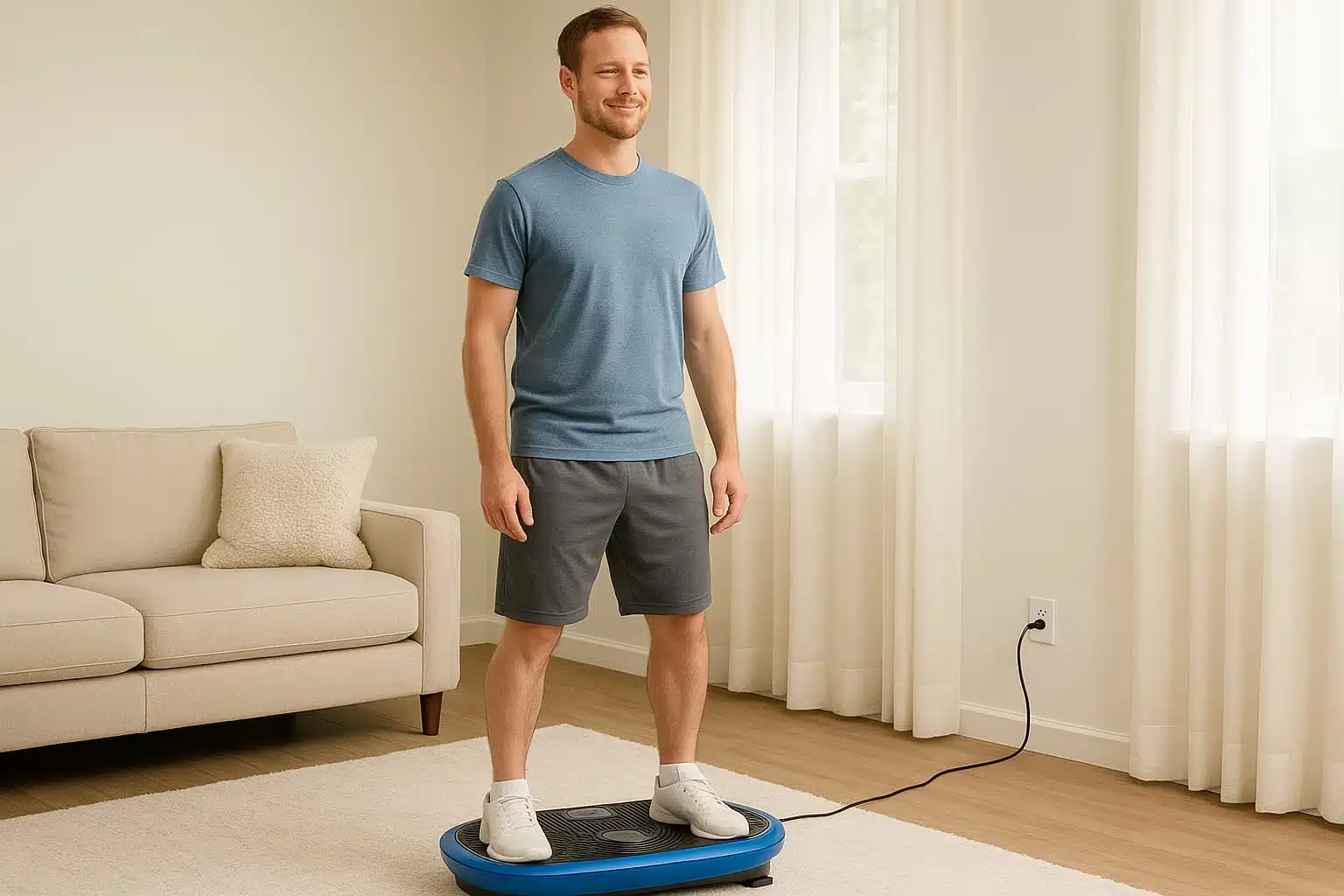
If you want to try using a reliable vibration plate for home to help with sciatica, I recommend a very conservative approach. Start with short sessions, low settings, and a soft-knee stance rather than locking the legs. The goal is to test whether gentle vibration helps you move more comfortably, not to push intensity. In general, it makes more sense to build slowly, stay with simple positions at first, and stop right away if pain, tingling, dizziness, or other symptoms increase.
Start with very short sessions
I would rather see someone do a brief session and feel fine than do too much and trigger a flare-up.
Use low settings first
This is not the time to chase intensity. If you are dealing with sciatic nerve pain, low intensity is usually the smartest first step.
Watch how your leg symptoms respond, not just your back
A lot of people judge the session only by what their lower back feels like. I also want to know whether tingling, numbness, calf symptoms, or foot symptoms changed.
Stop if your pain, tingling, or weakness gets worse
Those are not signs to push through. If symptoms are strong, severe, or unclear, get proper medical guidance.
Best Vibration Plate Exercises for Sciatica
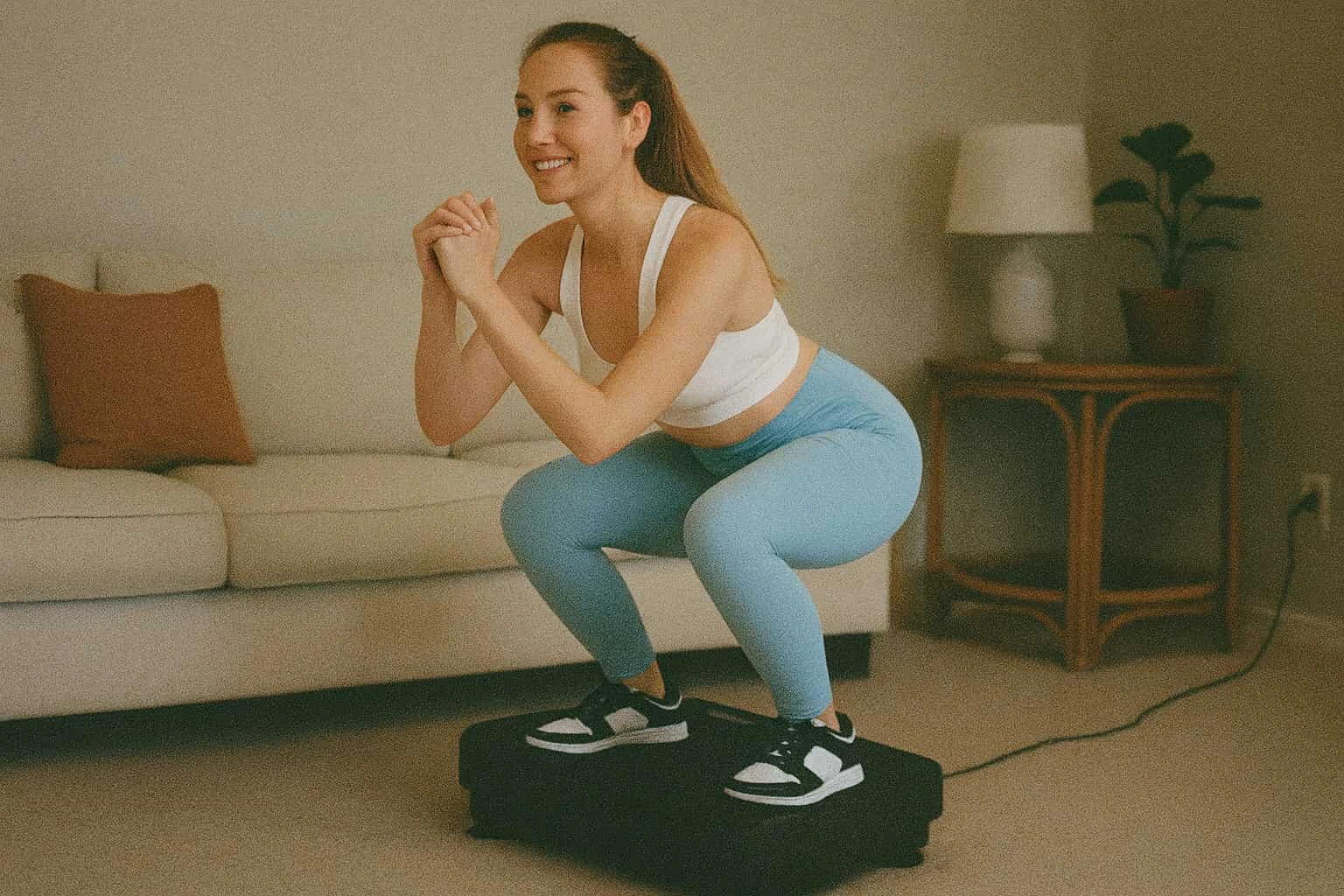
These are the vibration plate exercises for sciatica that I would consider the safest starting options for many people. Not every exercise fits every body, so I still want the person to use judgment and back off if symptoms worsen.
1. Gentle standing hold with soft knees
This is often where I start.
Stand on the platform with feet about hip-width apart. Keep a small bend in the knees. Stay tall through the spine, but do not force a rigid posture. Let the body settle.
This simple standing vibration plate position can already be enough for some people. It introduces low-impact movement, gentle muscle activation, and a bit of circulation support without asking for much range of motion.
If someone asks me, “Is standing on a vibration plate enough for sciatica?” my answer is: sometimes it is enough for a starting point. Not always enough as a full solution, but enough to test tolerance and reduce stiffness.
2. Calf stretch on a vibration plate
Sciatica often changes how people load the lower leg, and calf tension can build up fast. A light calf stretch may help if the movement feels relieving rather than provocative.
I use this carefully. I do not push an aggressive stretch. I only want a mild sensation.
3. Hamstring stretch on a vibration plate
A gentle hamstring stretch can be useful when hamstring tightness sciatica is part of the picture. Again, this should not be a hard pull. I want length, not strain.
I often tell people to think about breathing and reducing guarding rather than trying to force flexibility.
4. Glute or piriformis-focused mobility work
If piriformis syndrome sciatica or deep gluteal syndrome seems relevant, some gentle glute stretch or piriformis stretch work may help. This is especially true when the buttock area feels tight and sitting aggravates symptoms.
This is one of those situations where I watch the response closely. For some people, it helps. For others, especially during an acute flare-up, it can be too much.
5. Mini squats or supported squats
Mini squats can be a good way to add gentle strengthening without asking for large range of motion. They can also support balance, posture, and core engagement.
Those goals overlap significantly with the improvements documented in my dedicated guide on vibration plate for balance, which covers how proprioceptive training on a plate translates to safer, more controlled movement.
I like these when someone is past the most sensitive phase and needs to reintroduce controlled lower-body work.
6. Light balance or core-engagement work
Simple balance exercises and light core strengthening for sciatica can be useful if they do not provoke symptoms. The goal is not to make the session hard. The goal is to rebuild confidence, control, and movement tolerance.
When I program these, I think in terms of calm, controlled movement. Not athletic performance.
Readers without sciatica who want to use vibration plates specifically for sport or competition preparation should look at my dedicated guide on vibration plate for sport and competition preparation.
Exercises and Situations I Would Avoid During a Sciatica Flare-Up

During an acute sciatica flare-up, I become much more selective.
If someone has sharp pain, electric shock pain, severe radiating pain, major pain when standing, or symptoms that spike hard with movement, I do not start with dynamic vibration work.
I also avoid turning the session into a challenge. This is not the time for deeper squats, longer sessions, more frequency, or more amplitude.
I am also cautious with aggressive hamstring stretching during a hot flare-up. Sometimes people assume the whole problem is tight hamstrings, when in reality the nervous system is already irritated and the stretch just pulls on an already sensitive chain.
In those situations, I would rather use a simpler approach, watch how symptoms behave over 24 hours, and then adjust gradually.
Sciatica Symptoms a Vibration Plate May and May Not Address
A vibration plate may be more helpful for stiffness, guarded movement, muscle tension, and discomfort that tends to ease once the body gets moving. It may be less helpful for stronger numbness, clear weakness, or symptoms driven by more significant nerve compression. That does not mean it has no value in tougher cases, but it does mean expectations should stay realistic and the response should be monitored carefully.
If someone tells me, “My lower back feels stiff, my glutes feel tight, and I feel less pain once I start moving,” I am more optimistic.
If someone tells me, “My toes are going numb more often, my calf pain is stronger, and my leg feels weak,” I am much more cautious.
When to Stop Using a Vibration Plate and Get Medical Help
There are times when I would not keep experimenting with a vibration plate.
I would stop using it and seek medical input if:
- the pain is getting progressively worse
- numbness is increasing
- weakness is increasing
- the symptoms are severe or constant
- you cannot find any position that reduces the pain
- the leg symptoms are becoming more dominant over time
Those are signs that the situation may need more than home management.
I know many people want a practical tool they can use right away, and I understand that. But with sciatica, I always respect the fact that nerve-related symptoms deserve caution.
My Honest Take: Is a Vibration Plate Worth Trying for Sciatica?
Yes, I think a vibration plate is worth trying for sciatica in the right situation.
I do not think it is a miracle tool. I do not think it replaces good assessment, smart exercise selection, or common sense. But I do think it can be a helpful option for some people with sciatic nerve pain, especially when the goal is to reduce stiffness, improve circulation, increase mobility, and make gentle exercise feel more manageable.
Readers who want to understand whether to schedule those sessions before or after other physical activity will find the evidence and practical guidance in my guide on vibration plate use before or after training.
If I had to summarize my view in one sentence, it would be this: a vibration plate for sciatica can be useful when it helps you move better, not when it simply gives you more stimulation.
That is the standard I use.
If your leg symptoms tend to worsen in the evening or at rest rather than following a nerve compression pattern, my guide on using a vibration plate for restless legs is worth reading, since RLS is sometimes mistaken for sciatica.
If the session leaves you looser, calmer, and better able to walk, stretch, and function, that is a good sign.
If it leaves you with more radiating pain, more tingling, more numbness, or more weakness, it is not the right tool for that moment.
The position on the plate determines which structures are loaded and which are decompressed. A slight forward lean shifts weight to the front of the foot and activates the glutes and hamstrings more than the lumbar extensors, which benefits most sciatic presentations where lumbar nerve root compression is the underlying cause. A completely upright stance with the spine in full extension can increase posterior disc pressure, which aggravates rather than relieves nerve root symptoms.
Session length for sciatica should start shorter than the general recommendations. Five minutes is a practical starting point for a first trial. Sciatica symptoms can be delayed: the session may feel fine, but nerve-related inflammation can amplify symptoms two to four hours later. A short initial session with a long observation window before the next session is more informative than a full 10-minute session with same-day re-assessment.
The plate works best as a complement to active rehabilitation, not as a passive treatment. Standing on a vibrating plate while performing a supported hip hinge, a controlled calf raise, or a single-leg balance hold activates the supporting muscles around the sciatic nerve pathway more than passive standing alone. The combination of vibration stimulus and active muscle engagement produces the neurological adaptation that supports long-term sciatica management.
Readers who want a broader picture of the evidence can find a research-backed summary in my article on how well vibration plates work across different goals and conditions.
FAQs
Can a vibration plate make sciatica worse?
Yes, it can. If the settings are too intense, if the timing is wrong, or if your nerve irritation is already severe, symptoms may worsen. That is why I recommend starting with low settings, short sessions, and close attention to how your body responds.
How often should I use a vibration plate for sciatica?
I prefer starting small. A few short sessions per week is usually a better test than daily aggressive use. I want to see how the body responds over time rather than assuming more is better.
Is standing on a vibration plate enough for sciatica?
Sometimes it is enough as a starting point. Standing with soft knees can be a gentle way to test tolerance, reduce stiffness, and improve circulation. It may not be enough as a full plan, but it can still be useful.
Can I use a vibration plate if I have a herniated disc?
Possibly, but I would be careful. A herniated disc can create real nerve root irritation, so response varies a lot. If symptoms are severe, worsening, or unclear, I would get professional guidance before using a vibration machine for sciatica.
What vibration plate exercises are best for sciatic nerve pain?
The safest starting options are usually a gentle standing hold, calf stretch, hamstring stretch, glute or piriformis-focused mobility work, mini squats, and light balance exercises. I always start with the least provocative option first.
Should I use a vibration plate during a sciatica flare-up?
Not always. During an acute flare-up, I am much more cautious. If movement and stimulation sharply increase symptoms, I would not force it. I would simplify the plan and reassess.