Affiliate Disclosure: Vibration Plate Zone is a proud participant in the Amazon Services LLC Associates Program.
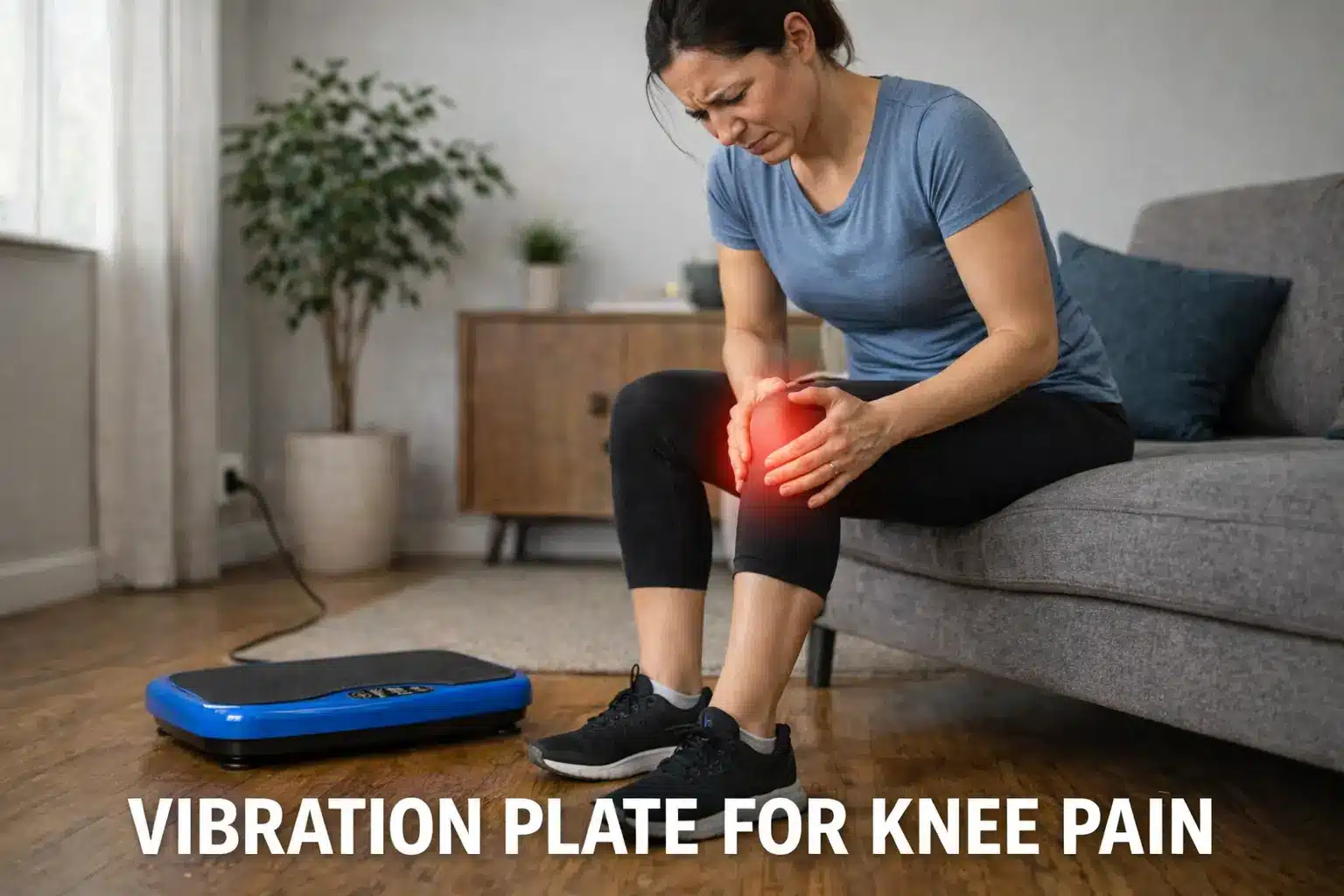
If you have knee pain, you already know how quickly it can affect everything. Walking upstairs can feel different. Standing up from a chair can feel different. Even getting moving in the morning can take more effort than it should. That is why so many people ask me about using a vibration plate for knee pain.

About the author: Hello! I’m Vladimir Stanar, professor of physical education, kinesiotherapist, marathon runner, cyclist, and cycling coach, and long-time advocate of health, fitness, and active living.
My journey with vibration plates runs parallel to my professional career in education, sports medicine, and athletic development. Over time, I’ve come to see vibration plates as one of the most versatile tools for enhancing health, recovery, and performance.
✅ Expert-Reviewed by: Vanja Vukas, MPhEd
📚 Expert Contributor: Milutin Tucakov, MPhEd
My honest view is this: whole body vibration for knee pain can be useful in the right context, especially when the knee is stiff, achy, deconditioned, or limited by weakness and poor movement tolerance. It makes the most sense as part of a broader rehab-minded approach, not as a miracle fix.
What Causes Knee Pain in the First Place?
Before I talk about whether a vibration machine for knee pain makes sense, I always start with the same point: not all painful knees are painful for the same reason.
One person may have knee joint pain from knee osteoarthritis or arthritis knee pain. Another may have runner’s knee, also called patellofemoral pain syndrome, with pain around the kneecap or pain under the kneecap. Another may have meniscus irritation, tendon irritation, or knee bursitis. Another may mainly notice inner knee pain, outer knee pain, knee pain when bending, knee pain when walking, or knee pain when climbing stairs. Some people also describe sore knees, aching knees, painful knees, or knee pain after sitting for too long.
From a practical standpoint, I care about that difference because treatment choices should match the problem. A stiff knee joint from wear and tear knee pain is not the same situation as a recently swollen knee after a twist, fall, or sports injury. If I ignore that difference, I risk giving the right tool to the wrong person.
When I work with someone who has chronic knee pain, I want to know more than just where it hurts. I want to know when it hurts, what movements aggravate it, whether there is swelling, whether the knee feels weak or unstable, and whether gentle movement improves symptoms or makes them worse.
That tells me much more than the phrase “my knee hurts.”
The Type of Knee Pain That Makes the Most Sense for a Vibration Plate
If we are talking about the type of knee pain that makes the strongest case for trying a vibration platform, I usually think first about knee osteoarthritis, osteoarthritis knee pain, and degenerative knee pain with stiffness, reduced mobility, and deconditioning. That is where the goals are usually the most practical: reducing stiffness, improving physical function, strengthening the muscles that support the knee, and making daily movement feel easier again.
In those cases, the goal usually is not to fix the knee overnight. The goal is to improve physical function, reduce stiffness, support joint-friendly exercise, strengthen the muscles that support the joint, and make daily activities easier.
That is where using a vibration plate at home for knee arthritis or whole body vibration for knee osteoarthritis becomes a more realistic conversation.
If the knee is mainly stiff, achy, weak, and less tolerant of movement than it used to be, I am much more open to cautious vibration work. If the knee is freshly injured, sharply swollen, unstable, or severely irritated, I am much more conservative.
Can a Vibration Plate Help Knee Pain?
Yes, a vibration plate can help knee pain in some cases.
If someone asks me, “Can a vibration plate help knee pain?” or “Does a vibration plate help knee pain?” my answer is usually yes, sometimes, but the reason matters. I do not think a vibration plate is automatically good for every painful knee.
But I do think it may help with knee pain relief when the real problems are stiffness, poor mobility, weakness, lower exercise tolerance, and reduced confidence with movement. This is especially relevant in knee osteoarthritis, where whole-body vibration has shown potential benefits for pain, physical function, and muscle strength when used as part of a broader exercise or rehabilitation approach.
That is close to how I think about it in practice. I do not use vibration therapy for knee pain because I think the machine itself is magic. I use it because it may create a better entry point into movement. It may reduce stiffness. It may improve circulation. It may improve mobility. It may help with gentle muscle activation. And for some people, that is enough to make exercise feel possible again.
How a Vibration Plate May Help Knee Pain
There are a few practical reasons a vibration plate may help with knee pain. It may reduce stiffness, improve mobility, support better physical function, and make gentle exercise feel more manageable. It may also contribute to muscle activation and joint-friendly loading when the person is not ready for more demanding exercise. The most realistic way to view it is as a support tool for movement and function, not as a cure for every painful knee.
It may reduce stiffness and make movement feel easier
This is one of the biggest potential benefits.
Many people with chronic knee pain or knee osteoarthritis do not just hurt. They feel stiff. The joint feels less free. The first few steps feel awkward. Bending the knee feels limited. Standing up after sitting feels slow.
A vibration plate may help reduce stiffness and improve mobility enough that simple movements feel less unpleasant. That alone can matter. If the knee is not quite as stiff, the person may walk better, move more, and do their exercises more consistently. Since stiffness and reduced mobility are common features of knee osteoarthritis, even a modest improvement here can make a practical difference.
I often think of this as a doorway effect. The vibration session may not be the whole solution, but it may make the next good thing easier to do.
It may help strengthen the muscles that support the knee
A painful knee is often a weaker knee, especially if the person has been moving less for months.
One of the most important support systems for the knee is the quadriceps. When quadriceps strength drops, the knee can feel less supported, less stable, and less capable during everyday tasks.
That matters a lot to me as a kinesiotherapist. I do not just want a person to feel better for ten minutes. I want them to become stronger and more capable over time.
If a vibration plate helps with quadriceps activation, leg strength for knee support, and overall knee strengthening, that can make it a worthwhile tool inside a larger knee rehabilitation plan.
It may improve balance and proprioception
Painful knees are often not just painful. They are hesitant. They feel less stable. The person trusts the leg less.
This is where balance and proprioception come in. Proprioception is your body’s sense of joint position and movement. If balance is poor and the knee feels unreliable, even simple daily tasks may become more awkward or more tiring.
Whole-body vibration has been associated in some studies with improvements in balance and physical function in people with knee osteoarthritis. That does not mean every person will feel a dramatic change, but it does support the idea that vibration work may help restore some confidence and control.
I have seen this in a simple way with some clients: once the knee feels a little less stiff and the body feels a little more responsive, movement gets smoother and less guarded.
It may support joint-friendly, low-impact exercise
This is another major advantage.
Some people with knee pain are not ready for higher-load exercise. They may not tolerate deeper squats, longer walks, step-ups, or repeated bending very well yet. That does not mean they should do nothing. It means the starting point has to match their current tolerance.
A vibration platform can support joint-friendly exercise by making very simple movements more effective or more tolerable. In other words, it can act as a bridge between doing almost nothing and doing more later.
That is exactly how I like to use it: as a stepping stone, not a finish line.
When a Vibration Plate May Not Help Knee Pain
This is where I think many articles become too vague or too optimistic.
Not every type of knee pain responds the same way. A vibration plate may make sense for arthritis-related stiffness and reduced function. It may make less sense for an acutely swollen knee, recent surgery, significant meniscus irritation, sharp tendon pain, or a knee that feels unstable and reactive after almost any loading.
If someone has severe knee pain, fresh swelling after exercise, a recent injury, or pain that clearly spikes with even low levels of movement, I do not rush toward vibration work. The same goes for people with a knee that locks, gives way, or feels hot and inflamed.
Cause matters. Timing matters. Irritability matters.
So when people ask me, “Can vibration plates hurt your knees?” or “Can a vibration plate make knee pain worse?” my answer is yes, they can, if the person is not a good candidate, if the settings are too aggressive, if posture is poor, or if the knee is simply too irritated for that type of stimulus right now.
My Practical Rule as a Licensed Kinesiotherapist
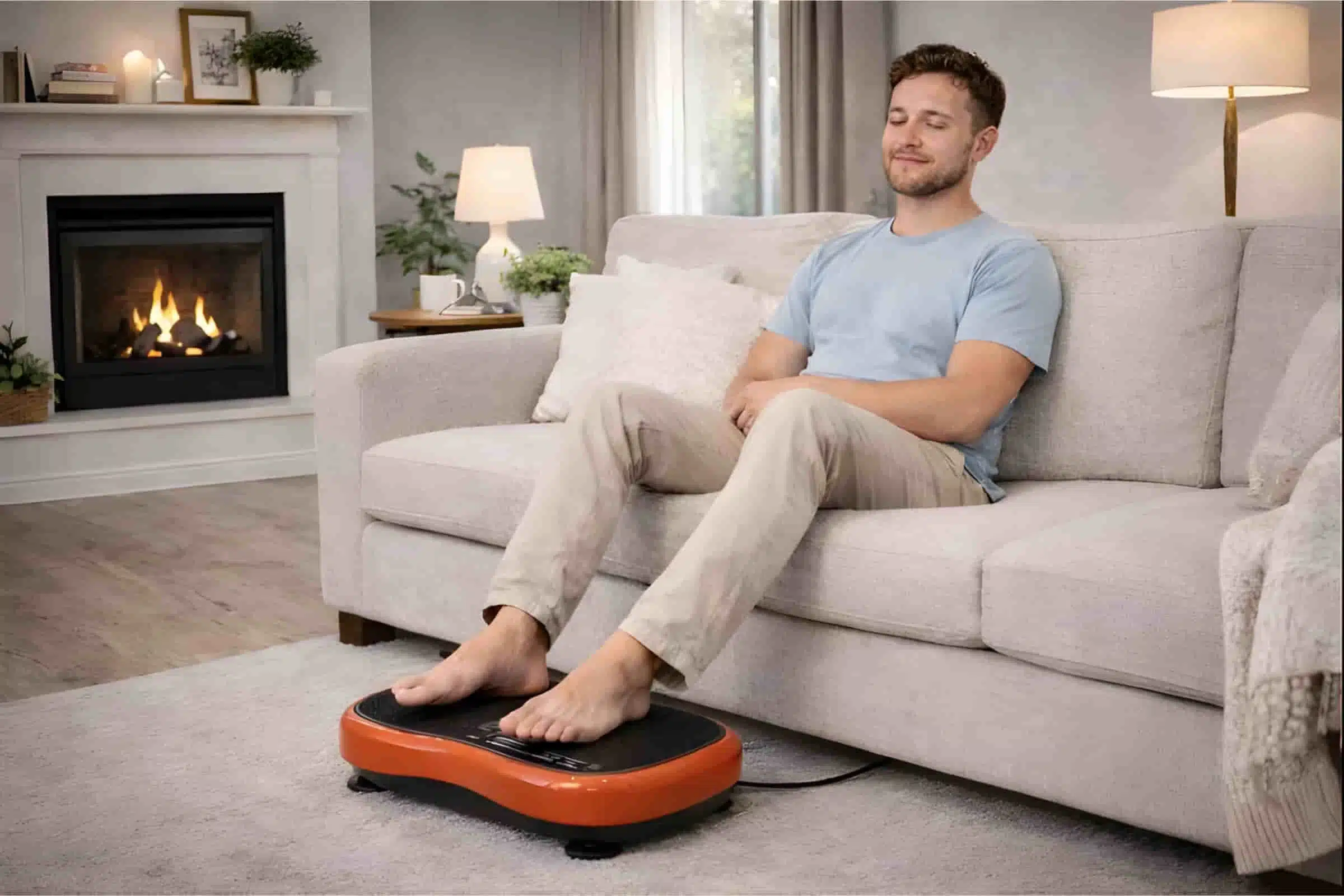
When I decide whether using a vibration plate for knee pain is a good idea, I usually ask myself four questions.
What is the likely cause?
How irritable is the knee right now?
Does gentle movement help or worsen symptoms?
Is the person ready for exercise, or are they still in a phase where the knee reacts badly to almost everything?
If the knee is stiff, achy, deconditioned, and movement tends to improve symptoms once the person gets going, I am more open to using vibration therapy for knee pain.
If the knee is acutely swollen, sharply painful, unstable, or recently injured, I become much more conservative.
A simple example: if someone tells me, “My knee feels terrible first thing in the morning and after sitting, but once I warm up it moves better,” I may consider a short, low-intensity session followed by strengthening and mobility work. If another person tells me, “My knee swells quickly, hurts sharply with bending, and feels worse every time I load it,” I am not thinking about more stimulus. I am thinking about reducing aggravation and getting better assessment.
How to Use a Vibration Plate Safely With Knee Pain
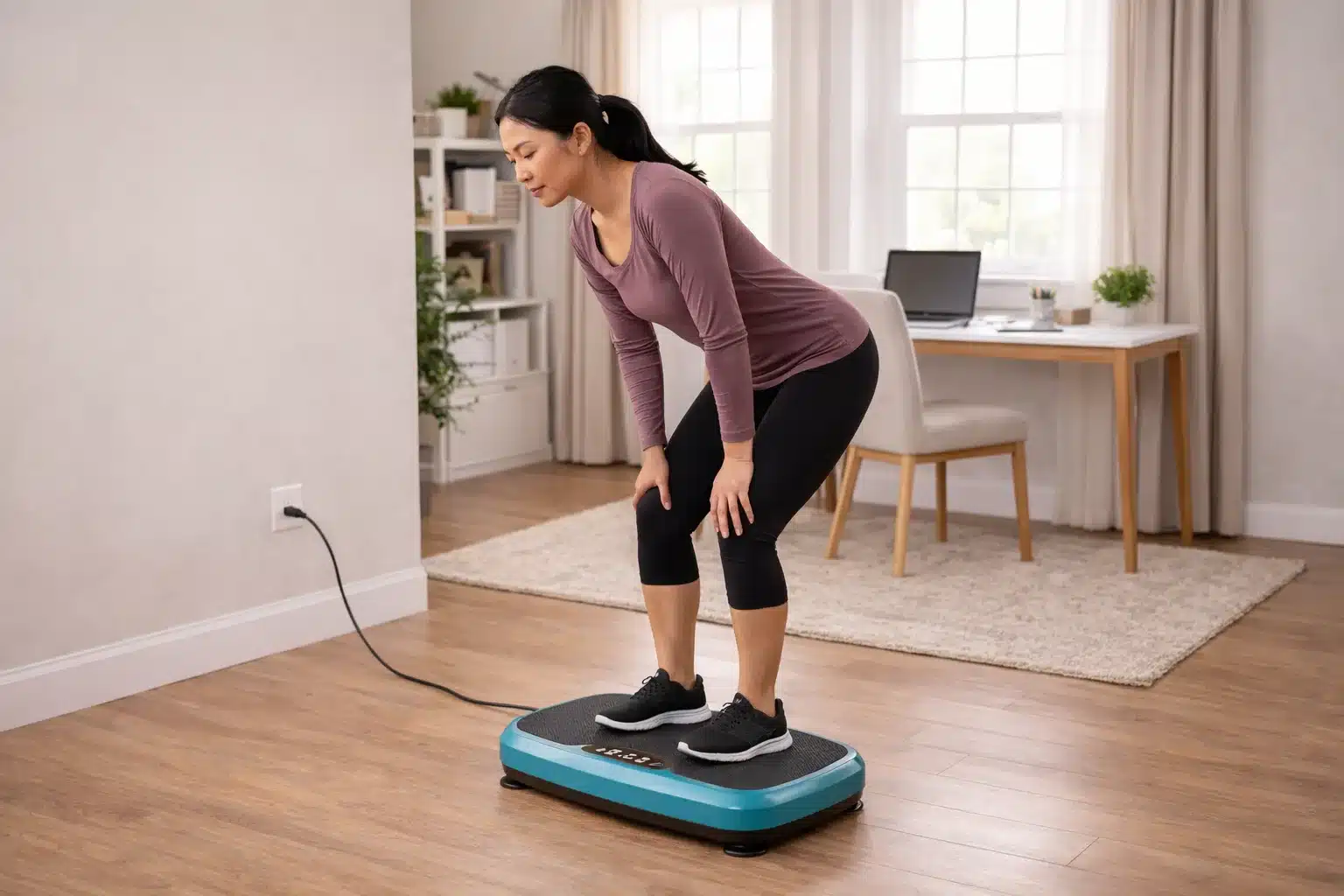
If you want to try a vibration plate for knee pain, my advice is simple: start gently. Begin with low settings, short sessions, and a soft bend in the knees rather than locking them. The goal is to test whether the knee tolerates the movement well and whether stiffness, comfort, and control improve afterward. In general, it makes more sense to build slowly, use simple positions first, and stop if pain, swelling, or instability increases.
That last part matters a lot.
Some people judge a session only by what they feel in the moment. I also want to know how the knee behaves afterward. Did the knee feel looser? Did walking feel easier? Or did swelling, sharp pain, or discomfort increase later?
I usually recommend a soft-knee stance because locking the knees can make the vibration feel harsher and less controlled. In practical terms, soft knees help the body absorb the vibration more comfortably.
If pain worsens, stop. If swelling increases, stop. If the knee feels more unstable, stop. If the pain is severe or the cause is unclear, consult a healthcare provider before continuing.
For guidance on positioning, session length, and frequency settings across different goals, my breakdown of the right technique on a vibration plate covers the key variables for safe and effective use.
Best Vibration Plate Exercises for Knee Pain
These are the vibration plate exercises for knee pain that I consider the most reasonable starting options for many people. I am not saying they fit every person, but they fit the general logic of safe exercises for knee pain.
Gentle standing hold
This is often the simplest place to begin.
Stand on the plate with feet about hip-width apart. Keep a soft bend in the knees. Stay tall through the torso. Let the body settle.
This standing hold on a vibration plate is useful because it is easy to control. It gives you a chance to test tolerance without adding too much movement too soon.
If someone asks me whether standing on a vibration plate is enough for knee pain, I would say it can be enough for a starting point. Not the full solution, but a reasonable entry.
Weight shifting
Once basic standing feels comfortable, gentle weight shifting can help with balance exercises, proprioception, and confidence in load transfer.
I like this because it teaches the body to accept movement without needing a deep knee bend. It is a simple way to challenge control without making the session too aggressive.
Mini squats or partial squats
Mini squats and partial squats can be very useful when the person is ready for more active knee rehabilitation exercises.
I do not start deep. I keep the movement small, slow, and controlled. Supported squats can be even better if balance is limited or the knee feels nervous.
This is where knee strengthening begins to matter more. The goal is not to burn out the legs. The goal is to improve control, quadriceps strength, and confidence with bending.
Calf raises
Calf raises are often overlooked, but they can support leg strength for knee support, ankle control, and better lower-limb function overall.
A better-functioning lower leg can help the knee too. I often think of the knee as part of a chain, not an isolated hinge.
Gentle knee bends with support
Chair-assisted exercises or light knee bends with support can be useful for people who need a little more range of motion practice but are not ready for more dynamic movement.
Again, I keep the emphasis on control. No bouncing. No chasing depth. No trying to prove toughness.
Warm-up or cool-down sessions
A vibration plate can also be used as a warm-up on a vibration plate before simple strength work, or as a cool down on a vibration plate after exercise if the person feels it helps reduce stiffness.
That is often a better fit than trying to make the plate the entire workout.
Exercises and Situations I Would Avoid With a Painful Knee
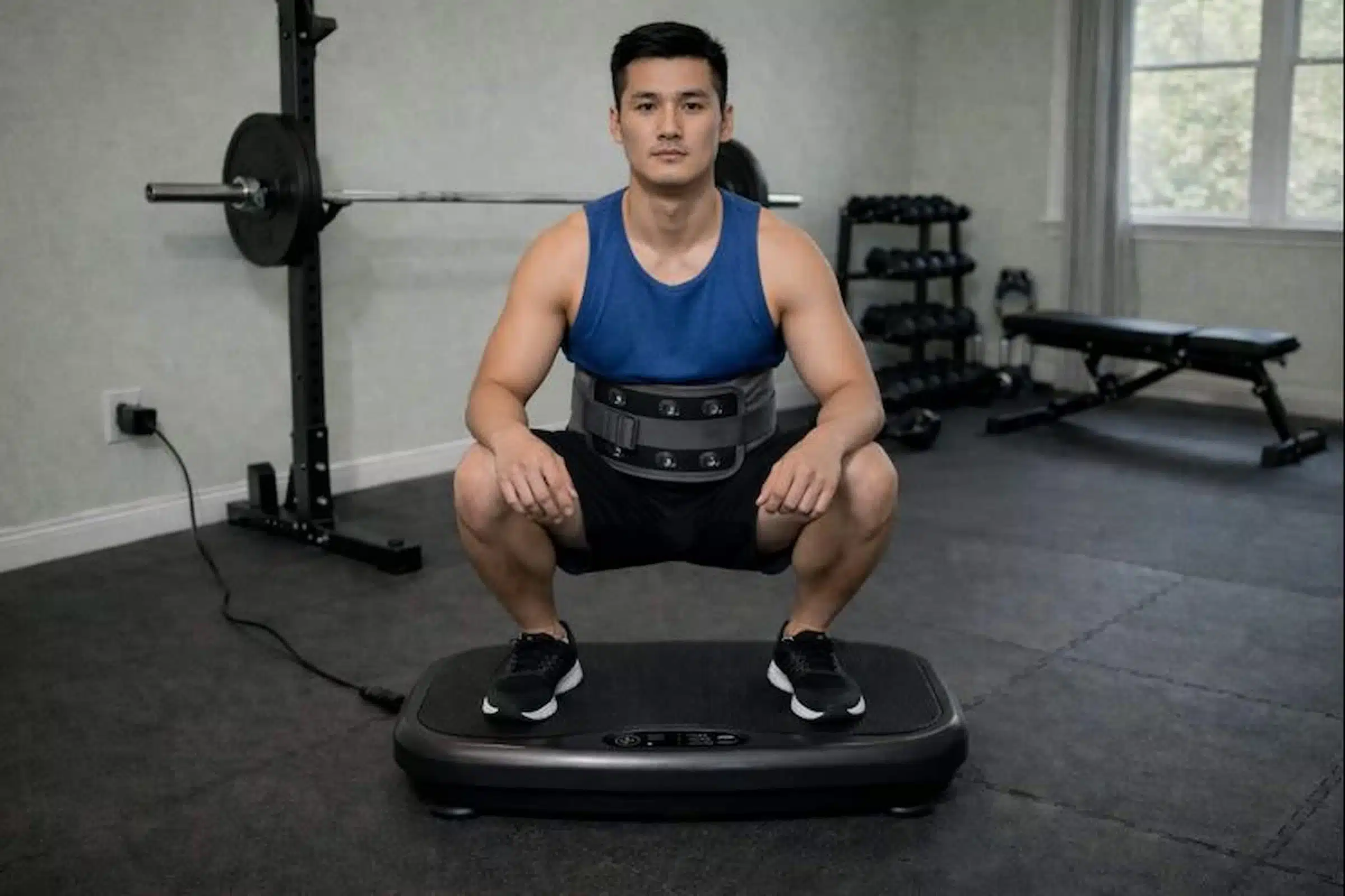
There are some situations where I would be cautious or avoid vibration work entirely.
I do not like using it when the knee is freshly swollen, sharply painful, obviously unstable, or irritated after recent surgery unless the person is following a medically guided rehab plan.
I am also cautious with poor posture on a vibration plate. If the knees are locked, the body is stiff, and the person is just enduring the vibration instead of controlling it, I do not think the setup is good.
I also would not force deeper squats, long sessions, or higher intensity just because the person wants faster results. In my experience, that mindset often backfires with knee pain.
Even good exercises can be badly timed.
Knee Pain Symptoms a Vibration Plate May and May Not Address
A vibration plate may be more useful for some symptoms than others.
It may help more when the knee is stiff, achy, deconditioned, or limited by reduced mobility and weakness. It may help when the person needs better physical function, more confidence with movement, or a lower-impact way to start training again.
It may help less when the knee is acutely swollen, sharply painful, or dominated by a fresh structural problem that needs a different plan.
That is why I do not sell it as a cure for every painful knee. I treat it as a tool that may help certain types of sore knees and aching knees move better, especially when the bigger picture is osteoarthritis, stiffness, weakness, and poor exercise tolerance.
When to Stop Using a Vibration Plate and Get Medical Help
I would stop using a vibration plate and seek medical input if the knee pain becomes sharply worse, if swelling after exercise increases, if the knee feels unstable or gives way, or if the symptoms are severe enough that normal walking becomes difficult.
I would also be cautious if the pain is unexplained, progressive, or clearly not behaving like simple exercise-related stiffness.
A painful knee that is getting worse needs better information, not just more trial and error.
My Honest Take: Is a Vibration Plate Worth Trying for Knee Pain?
Yes, I think a vibration plate is worth trying for knee pain in the right situation. I think it is especially worth trying when the knee problem looks like osteoarthritis, stiffness, weakness, reduced mobility, and low tolerance for impact. That is where whole-body vibration makes the most sense to me, and it is also where the evidence is most encouraging, with research supporting possible benefits for pain, physical function, stiffness, and muscle strength when it is used as part of a rehab-minded plan.
If I had to sum up my view in one sentence, it would be this: a vibration plate for knee pain is most useful when it helps you move better, exercise more confidently, and rebuild strength around the joint.
That is the standard I use.
If it helps reduce stiffness, improve mobility, and support knee rehabilitation, it is doing its job.
If it increases pain, swelling, or instability, it is the wrong tool for that moment.
The knee condition where whole body vibration has the strongest evidence base is mild to moderate osteoarthritis. Multiple small trials have shown reductions in pain scores and improvements in walking speed after 8-12 weeks of consistent vibration training in OA patients. The mechanism is primarily reduced muscle atrophy around the joint and improved proprioceptive signaling. Tendinopathy (patellar tendon pain, IT band syndrome) responds differently; vibration may aggravate tendon pain in the acute phase and is better introduced only in the sub-acute or chronic phase under clinical guidance.
Progression after initial pain response is the phase most users handle incorrectly. If two weeks of low-speed sessions reduce stiffness and the knee feels more stable, the next step is not to immediately increase speed. The correct next step is to maintain the same speed but add light lower-body exercises: calf raises, mini squats, or weight shifts. Once those feel comfortable, speed can increase by one or two levels per week. Rushing past this phase undoes the joint-preparation work and brings the pain back.
For those who want to understand the broader evidence base before starting a routine, my guide on whether vibration plates produce real results covers the research across joint health, muscle activation, and circulation.
FAQs
Can a vibration plate make knee pain worse?
Yes. It can make knee pain worse if the settings are too aggressive, if the knee is too irritated, if posture is poor, or if the knee pain comes from a problem that does not respond well to this kind of loading.
Are vibration plates safe for sore knees?
They can be, but not automatically. I think they are most appropriate when the knee is stiff, achy, or deconditioned rather than freshly injured, unstable, or very swollen.
Is standing on a vibration plate enough for knee pain?
Sometimes it is enough as a starting point. A gentle standing hold can help test tolerance and reduce stiffness, but it usually works best when combined with other simple exercises.
What vibration plate exercises are best for knee pain?
I usually start with a gentle standing hold, weight shifting, mini squats, calf raises, and supported knee bends. Those give me a good balance of safety, strength, and control.
Should I use a vibration plate if my knee is swollen?
I am much more cautious when swelling is present, especially if it is new or increasing. In that situation, I would not push through. I would reduce aggravation first and get a proper medical assessment.