
About the author: Hello! I’m Vladimir Stanar, professor of physical education, kinesiotherapist, marathon runner, cyclist, and cycling coach, and long-time advocate of health, fitness, and active living.
My journey with vibration plates runs parallel to my professional career in education, sports medicine, and athletic development. Over time, I’ve come to see vibration plates as one of the most versatile tools for enhancing health, recovery, and performance.
✅ Expert-Reviewed by: Vanja Vukas, MPhEd
📚 Expert Contributor: Milutin Tucakov, MPhEd
Let's tackle the question: "Why does vibration make my skin itch?" Itching is a sensory response triggered by a combination of mechanical and physiological factors. When a vibration plate shakes, it sends tiny waves through your body. Those waves cause muscles to contract, improve circulation, and stir up nerve signals. The skin is rich with nerve endings, and those endings can interpret the stimulation as itch, tingle, or pins and needles. Understanding these mechanisms helps us manage them.
Blood Flow, Vasodilation and Histamine Release
One reason you feel vibration plate itching is increased blood flow to the skin. Vibration training triggers repeated muscle contractions that push blood toward the surface. As blood vessels dilate and fill, they activate nearby nerves. During exercise, our bodies also release histamine. Histamine widens blood vessels and supports circulation, but it also makes nerve endings more sensitive.
When I first used a high‑frequency setting on my vibration plate, my legs warmed quickly and the itch coincided with a pink blush on my skin. As my body adapted and I started at lower settings, the tingling subsided sooner.
Mechanical Stimulation of Nerves
Another factor behind vibration plate makes me itchy sensations is direct mechanical stimulation. The skin has mechanoreceptors that detect touch and vibration. When those receptors fire rapidly, your brain may interpret the signals as itch. Vibration plates intensify those mechanical signals, especially at higher frequencies and amplitudes. The effect feels similar to when a limb “falls asleep” and then tingles as blood flow returns. Standing in one pose on a powerful plate can press on nerves long enough to make them send itch signals.
Friction, Dry Skin and Clothing

Vibration increases micro‑movements between your skin and whatever touches it. If your skin is dry or you wear rough clothing, those tiny shifts can create friction that irritates nerve endings.
I noticed more itching on days when my skin was dehydrated or when I wore loose cotton pants that rubbed against my legs. Switching to soft, moisture‑wicking leggings and applying a light moisturizer thirty minutes before training reduced the friction. Keeping your skin hydrated and choosing smooth fabrics can ease the sensation.
Metabolites and Micro‑Contractions
The rapid muscle contractions induced by whole‑body vibration rely on both aerobic and anaerobic energy.
When intensity is high or your muscles are untrained, they produce byproducts like lactate and hydrogen ions that can irritate nerve endings. This is similar to runner’s itch, where increased blood flow and metabolic build‑up during cardio create a prickly feeling. As your muscles adapt and your sessions become moderate, metabolite accumulation decreases and itching becomes less noticeable.
Rare Conditions and Allergic Reactions
In rare cases, itching after vibration plate use may signal a condition called vibratory urticaria. This genetic disorder causes hives, swelling and intense itching when the skin is subjected to vibration or rubbing. Symptoms appear quickly and may include facial swelling or low blood pressure.
If your itching is accompanied by raised welts, swelling of lips or eyes, dizziness or difficulty breathing, stop using the plate and consult a doctor. Most people will never encounter these disorders, but awareness is important.
How Plate Design and Settings Influence Itching
Not all vibration plates feel the same. Machine design, motion type, frequency, amplitude, and how you use the device can change whether you experience itchy legs after vibration plate workouts. In this section I break down these factors so you can adjust your sessions and choose devices that minimize discomfort.
Frequency and Amplitude
Frequency describes how many times per second a plate moves, measured in hertz. Amplitude is how far the platform travels up and down or side to side. Higher frequencies deliver faster, sharper vibrations. Larger amplitudes move your body more. When combined, these variables determine the intensity. Machines often list frequencies between five and forty hertz. Oscillating platforms may have higher amplitudes but lower frequencies, while linear machines may offer higher frequencies with lower amplitudes.
I noticed that high‑frequency settings coupled with a wide stance made my skin tingle quickly. The fast pulses activated nerve endings more intensely. Lower frequencies felt gentler and gave my body time to adapt. When in doubt, start with low frequency and amplitude, then adjust gradually. Our best vibration plates for circulation guide explains how different machines let you fine‑tune these settings for comfort.
Types of Motion
Quality vibration plates come in different motion styles: pivotal, linear and multi‑plane.
Pivotal (oscillating) plates tilt around a center point, causing one side to rise while the other falls. They work at lower frequencies and higher amplitudes, producing a rocking motion that often feels softer on the skin.
Linear plates move straight up and down at higher frequencies with lower amplitude.
Multi‑plane models combine vertical, horizontal and circular movements. Oscillating plates with adjustable amplitude are less likely to cause itch because their slower motion produces fewer rapid mechanical impulses. Linear plates can feel more stimulating and may trigger itching sooner. Choosing a motion style that suits your sensitivity matters.
Session Variables: Duration, Stance and Environment
How you stand and how long you stay on the plate influence whether you develop itch. A wide stance increases the distance between your feet on an oscillating platform, effectively raising the amplitude your body experiences. This added movement can stretch skin and press on nerves more strongly. A narrow stance reduces the amplitude and usually feels milder.
Shorter sessions allow you to adapt and avoid metabolite build‑up. I suggest starting with thirty‑second intervals separated by rest.
The environment plays a role too. Using the plate in a warm room or immediately after an intense workout may heighten vasodilation and sweat, making skin more sensitive. Training in a cool, well‑ventilated space helps. Also pay attention to your body position: keeping knees slightly bent and shifting your weight occasionally reduces prolonged pressure on one area.
Machine Quality and Testing
The stability and construction of a vibration plate affect how evenly forces are distributed. A sturdy base with minimal vibration on the frame reduces unwanted shaking that can irritate the skin. Knowing how a machine performs under realistic conditions helps you pick one that feels smoother and less harsh. For sensitive users, our best vibration plate for neuropathy roundup highlights stable machines designed for gentle operation.
Methods I Use to Reduce Vibration Plate Itching
Over time I developed strategies to reduce or prevent itching sensations. These methods are straightforward, and many come from trial and error. Use them individually or together to find what works best for you.
Start at Low Intensity
When you are new to whole‑body vibration, begin with low frequency and amplitude. This allows your skin, muscles and nerves to adjust gradually. I started with ten‑hertz sessions of about thirty seconds. As I felt more comfortable, I increased frequency and session length in small increments. This approach helped me build tolerance and reduced initial itching. If the sensation intensifies, lower the settings until you adapt.
Adjust Your Stance and Movement
On oscillating plates, keep your feet closer to the center to reduce amplitude. On linear plates, bend your knees softly. Shift your weight slightly during the session. These small movements prevent prolonged pressure on a single area and reduce nerve compression. Changing position every twenty seconds made a noticeable difference for me.
Wear Appropriate Clothing and Moisturize
Smooth, moisture‑wicking fabrics reduce friction between your skin and clothing. I found that compression leggings and thin socks work well. Avoid rough seams or materials that can cause irritation. Hydrating your skin helps too; apply a light, fragrance‑free moisturizer at least thirty minutes before your workout. Hydrated skin is more supple and less prone to micro‑tears and itching.
Hydrate and Eat Well
Staying well‑hydrated supports circulation and helps flush metabolites. Drink water before and after your sessions. Your diet influences skin and nerve health as well. Our diet for vibration plate therapy article outlines how nutrient‑rich foods and proper hydration can enhance your results and comfort. Maintaining balanced electrolytes and blood sugar can keep nerves calmer and reduce itch sensations.
Break Sessions into Intervals and Train in a Cool Environment
Instead of one long continuous session, divide your workout into intervals with short rest periods. Rest allows circulation and metabolites to normalize, which reduces the chance of itch. Training in a cool, air‑conditioned room minimizes heat build‑up and reduces sensitivity. If you train at home, adjust the thermostat or use a fan. Avoid starting a session right after a strenuous workout when your body temperature is already elevated.
Consistency and Progression
Regular use at comfortable settings helps your nervous system adapt. Commit to a consistent schedule, perhaps three sessions per week. As your tolerance improves, you can gradually increase intensity. After several weeks of regular use, I found my skin stopped itching at the same settings that previously bothered me.
When Itching Signals Something More
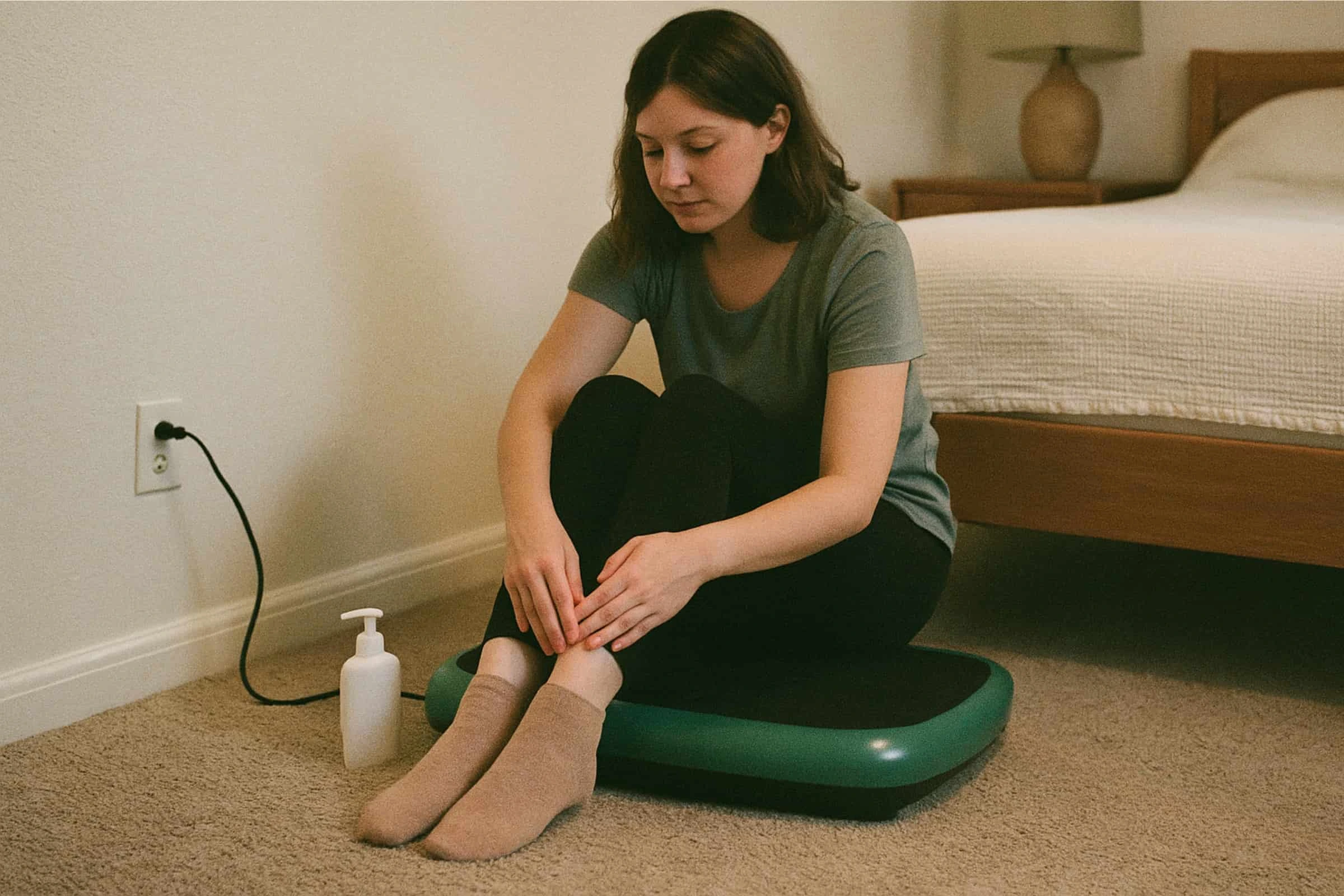
Most cases of itching after vibration plate use are harmless and fade quickly. However, it’s important to distinguish normal responses from signs that warrant medical attention. If you notice any of the following, stop using the device and consult a health professional:
- Raised, itchy welts or hives
- Swelling of lips, tongue, or eyelids
- Difficulty breathing or wheezing
- Dizziness or faintness
- Pain, numbness, or tingling that persists long after the session
These symptoms may indicate vibratory urticaria, angioedema or another allergic reaction. People with certain medical conditions should speak with a clinician before starting vibration training, including pregnant individuals, those with implants, people with uncontrolled hypertension, deep vein thrombosis, recent surgery or fractures, and individuals with severe diabetes or neuropathy. In those cases, medical consultation, low intensity, and close monitoring are essential.
Choosing the Right Vibration Plate for Your Needs and To Minimize Itching
Selecting a machine that matches your comfort level and fitness goals can make a big difference in whether you experience itchy sensations. Here are features and considerations I look for when shopping for a vibration plate:
Adjustable Settings and Motion Type Options
A good vibration plate lets you modify frequency and amplitude to suit your tolerance. Look for models with a wide range of speeds and intensity levels. A slow start mode that gradually ramps up vibrations helps your body adapt. Many machines also let you choose between oscillating and linear modes.
If you find yourself sensitive to itch, a pivotal platform often feels gentler. Multi‑plane devices let you switch between modes, so you can start with oscillation and progress later. Reading reviews and testing machines, if possible, helps you understand what each type feels like before committing to purchase and use.
Stable Construction and Performance Data
The quality of the platform matters. A sturdy frame with a non‑slip surface and minimal wobble reduces unwanted vibrations that can irritate your skin. Check the machine’s weight capacity and ensure it suits your body size. Our best vibration plates for seniors article highlights models designed for stability and gentle operation, ideal if you have sensitive nerves or medical concerns.
Manufacturers sometimes overstate frequency and amplitude. When shopping, look for brands that provide measured data and transparent specifications. Knowing the actual performance helps you select a machine that aligns with your comfort zone and reduces the risk of itching.
Accessories and Safety Features
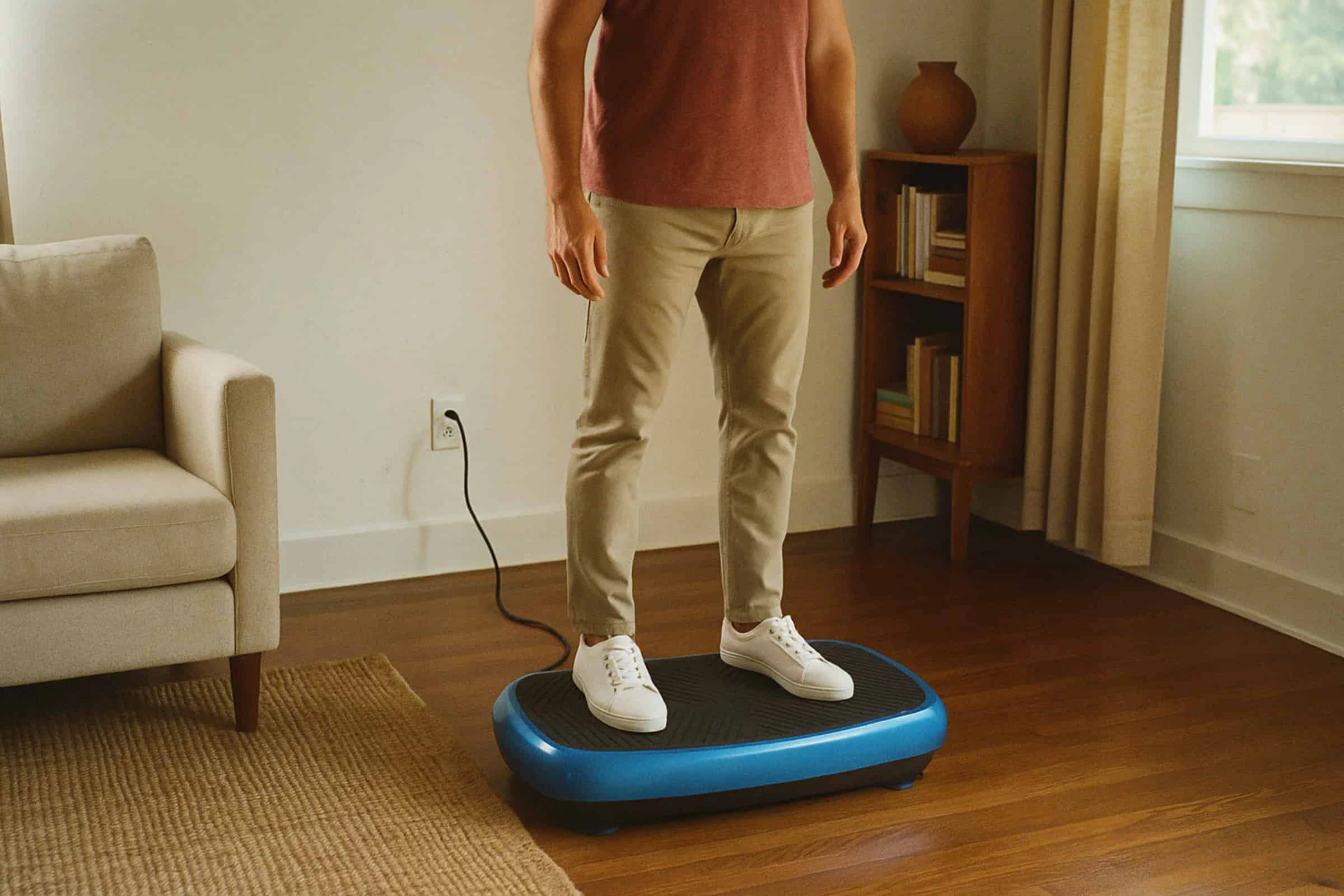
A removable mat can cushion the surface and reduce friction. Handrails add stability and allow you to shift weight safely. Some machines include remote controls so you can change settings without bending down. Safety features like automatic shut‑off timers prevent sessions from running too long. Sneakers are recommended for the elderly so that they are safe while reaping vibration plate benefits. Considering these details ensures your experience is both safe and comfortable.
Personal Insights and Experiences
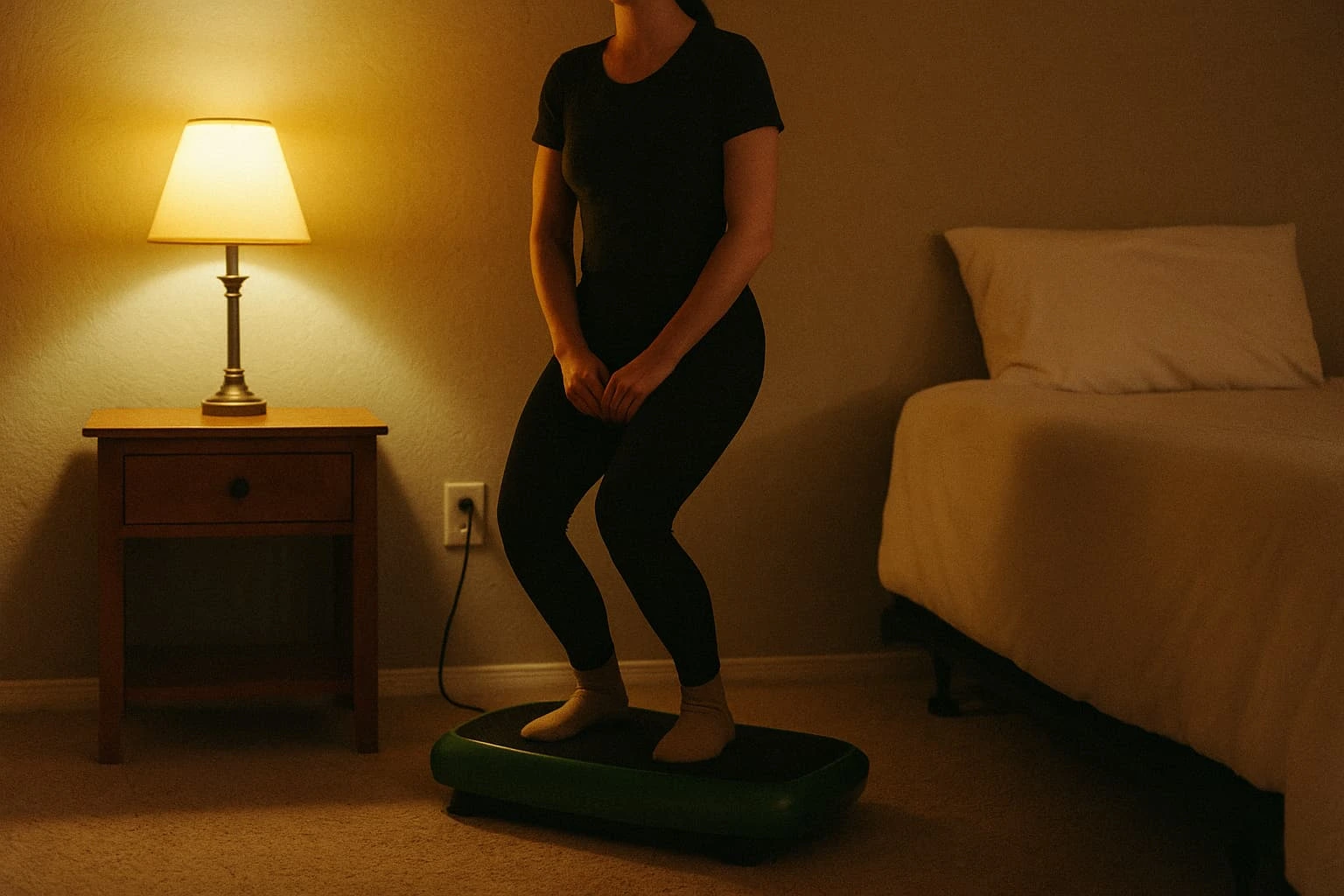
My journey with vibration plates began several years ago when I sought an efficient way to support recovery and circulation. The first machine I tried was a compact linear platform with limited speed control. During my initial session, I cranked it up too high and stood with my feet wide apart. Within a minute, my thighs and calves started itching intensely. At first I thought something was wrong with the machine or my skin. I later learned through our resources and personal experimentation that the settings were the culprit.
Over time I adjusted my approach. I switched to a pivotal plate with lower starting frequency, narrowed my stance, and wore smooth leggings. The difference was remarkable: the itch was mild and faded quickly. I used intervals instead of one long session and kept a fan blowing to stay cool. I also moisturized before training and drank extra water. After several weeks, I could use moderate frequencies without discomfort. This experience taught me that small changes can make a big impact.
I’ve since tested many models. Oscillating machines remain my favorite because they feel gentle and allow me to focus on posture and balance. Linear plates still have a place in my routine for high‑intensity training, but I use them with caution and at lower settings. The ability to adjust intensity and motion type is what ultimately keeps the itch at bay.
Final Thoughts on “Why Does Vibration Make My Skin Itch?” Concern
The sensation stems from increased blood flow, nerve stimulation, friction, and metabolite build‑up. Most of the time, itching is a sign that your body is responding to the new stimulus, not that something is wrong. When you understand the causes, adjust your machine settings, care for your skin and hydration, and select the right equipment, you can reduce or eliminate itching. Listen to your body and consult a clinician if you have underlying health conditions.
Whole‑body vibration can be a valuable tool for improving strength, circulation and recovery. If you’re ready to choose a machine, explore our best vibration plates for circulation or our best vibration plates for neuropathy guides for recommendations. These resources, along with our testing methods, will help you make an informed choice so you can enjoy the benefits of vibration training without discomfort.
FAQs
Why does my skin itch after using a vibration plate?
To answer why your skin itches after using a vibration plate, the sensation arises because the vibrations increase blood flow and activate nerve endings near the skin. These combined effects create a tingling or itchy feeling. Starting with low intensity and wearing smooth clothing helps reduce it.
Why do my legs itch after using vibration plate machines?
When you wonder why your legs itch after using a vibration plate, the reason is that rapid muscle contractions push blood toward the surface and stimulate nerves in your legs. This can cause an itchy feeling, especially if you stand with feet wide apart or use high settings. Narrowing your stance and lowering the speed can help.
How can I stop itching from vibration plate sessions?
To stop itching from vibration plate sessions, begin at low frequency and amplitude, wear moisture‑wicking fabrics, moisturize your skin beforehand, and break workouts into shorter intervals. Staying hydrated and training in a cool room also helps prevent itchiness.
Does vibration plate itching mean the machine is unsafe?
No, vibration plate itching does not mean the machine is unsafe. It usually reflects your body’s response to increased circulation and mechanical stimulation. As long as the itch is mild, fades quickly, and you follow safety guidelines, you can continue using the machine and adjust settings for comfort.
When should I worry about itching after vibration plate use?
You should worry about itching after vibration plate use if it comes with hives, swelling of lips or eyelids, breathing difficulty, or dizziness. These may signal an allergic reaction or vibratory urticaria. Stop using the machine and consult a medical professional if these occur.