
About the author: Hello! I’m Vladimir Stanar, professor of physical education, kinesiotherapist, marathon runner, cyclist, and cycling coach, and long-time advocate of health, fitness, and active living.
My journey with vibration plates runs parallel to my professional career in education, sports medicine, and athletic development. Over time, I’ve come to see vibration plates as one of the most versatile tools for enhancing health, recovery, and performance.
✅ Expert-Reviewed by: Vanja Vukas, MPhEd
📚 Expert Contributor: Milutin Tucakov, MPhEd
Affiliate Disclosure: Vibration Plate Zone is a proud participant in the Amazon Services LLC Associates Program.
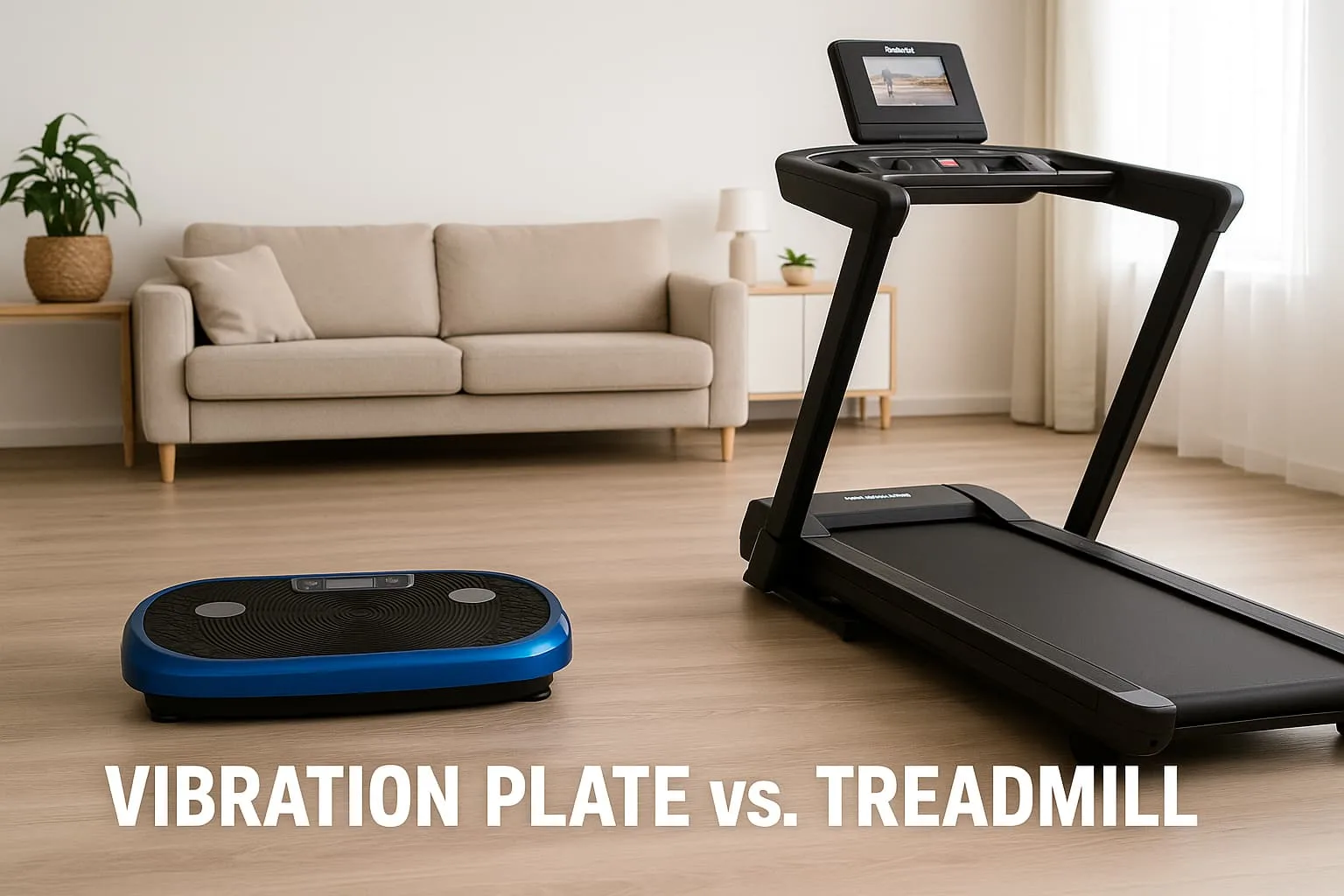
Two popular machines, treadmills and vibration plates, offer different paths toward better health. By understanding the nuances of the vibration plate vs treadmill debate, you can invest wisely and train effectively.
A treadmill is a moving belt that lets you walk or run indoors at speeds and inclines you choose. A vibration plate is a stable platform that sends gentle oscillations through your body and prompts reflexive muscle contractions, giving you a distinct kind of workout. As someone who has used both devices, I know how each can support your goals.
This guide explains how they work, reviews their benefits and drawbacks, shares sample workouts, and helps you decide whether one or both deserve a place in your routine.
Vibration Plate vs Treadmill: Understanding Vibration Plates
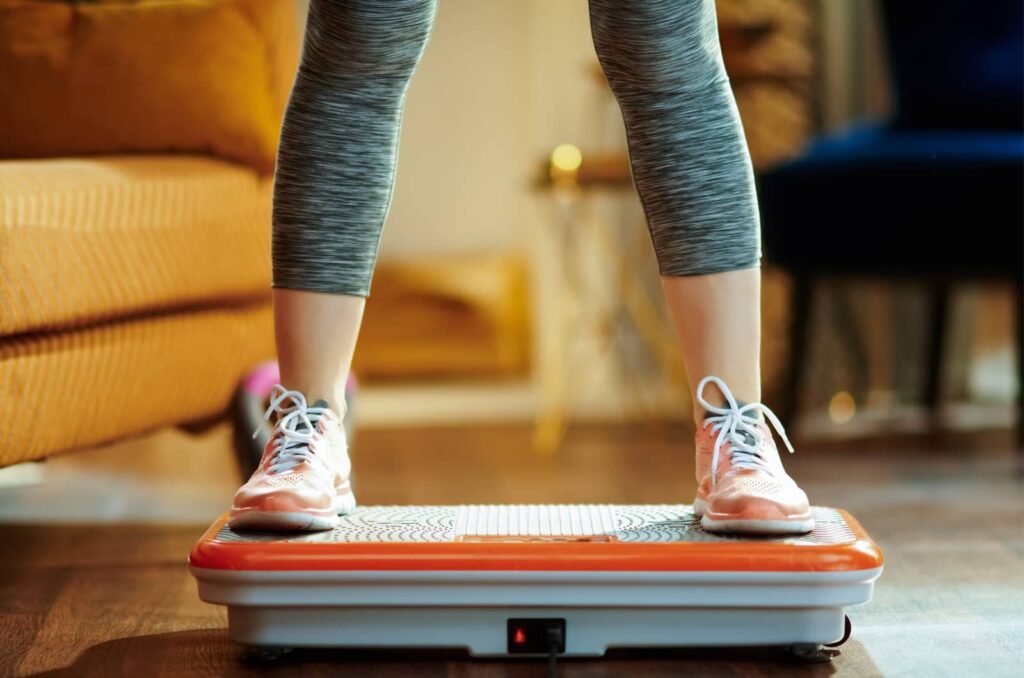
A vibration plate is more than a simple platform. It contains a motor that produces rapid movements (oscillations), either vertically or side to side, that send mechanical waves through your feet and legs. Your nervous system responds by contracting your muscles to keep you balanced.
Because these contractions occur many times per second, you engage both large muscles and smaller stabilisers without having to move across the room. Sessions are typically short because the rapid firing of muscle fibres leads to fatigue quickly.
You can adjust three main settings on most home vibration plates: frequency, amplitude, and duration.
Frequency describes how many times per second the platform vibrates. Low frequencies around 10 to 20 hertz provide gentle stimulation ideal for beginners and elderly users. Medium frequencies between 20 and 35 hertz increase the challenge and are common for strength and toning. High frequencies of 35 to 50 hertz induce rapid contractions that advanced users may employ for sports performance.
Amplitude tells you how far the platform travels with each vibration. A larger amplitude means a bigger range of motion.
Duration refers to how long you stay on the plate. Most people start with five‑minute sessions and gradually work up to ten or fifteen minutes. Because vibration training is efficient, you rarely need longer sessions.
Not all plates feel the same. Some move straight up and down, others tilt from side to side like a see‑saw, and a few combine both directions.
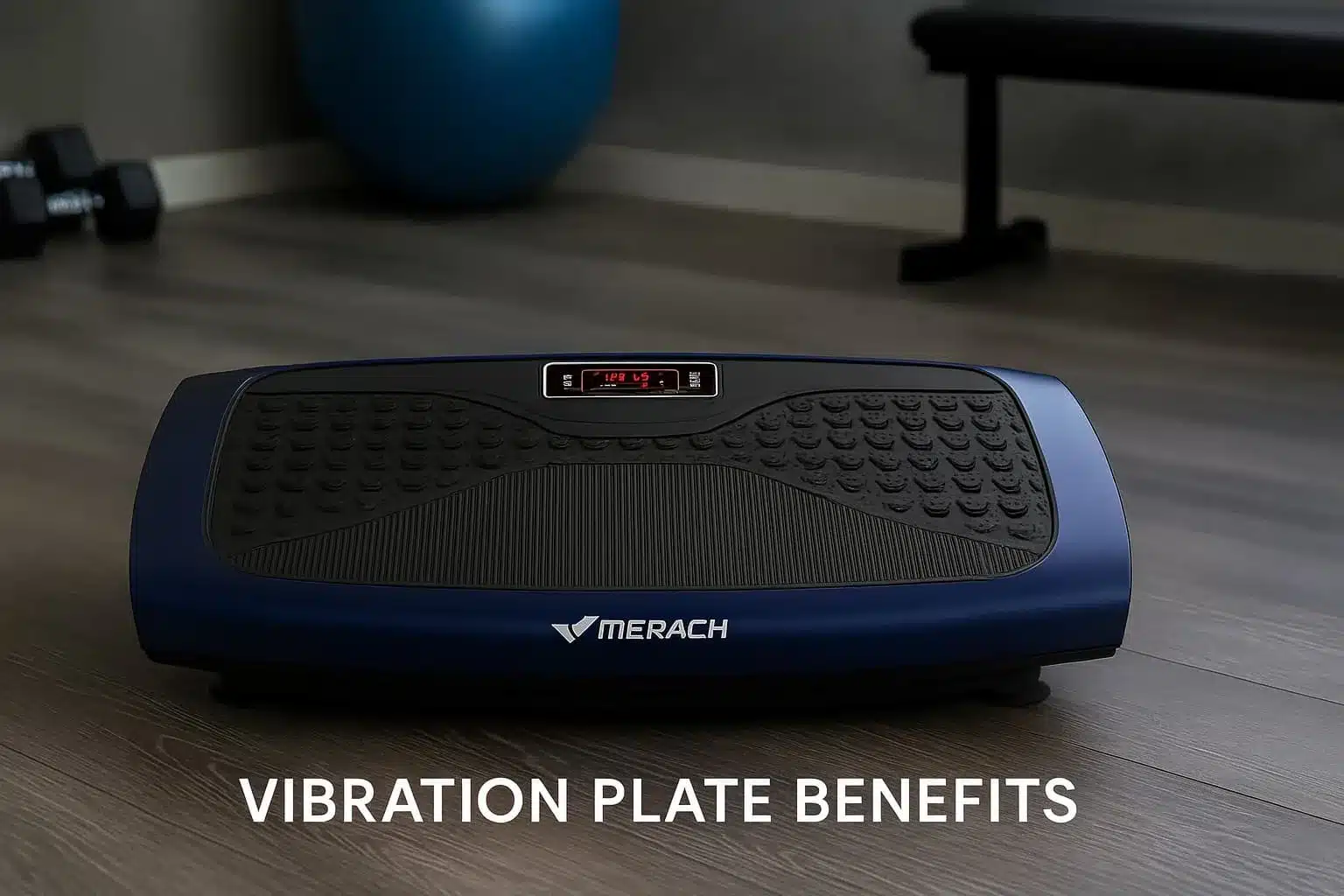
Oscillating plates, which pivot around a central axis, tend to produce a rocking motion that many people find comfortable. Many devices offer preset programs for balance, strength, or recovery and include accessories like resistance bands or handles. Our best vibration plate roundup compares different models by frequency range, platform size, and extra features to help you select the right machine.
Vibration training appeals to a wide range of people.
Athletes use brief sessions to wake up their muscles before training and to aid recovery afterward. Individuals with limited mobility appreciate that vibration provides weight‑bearing activity without stressful impact.
Office workers may step onto a plate during breaks to improve circulation and counteract the effects of prolonged sitting.
Physical therapists incorporate vibration plates into rehabilitation programs to stimulate muscles after injury or surgery.
Because these machines are compact, they fit easily into small homes and apartments as I explained in my best vibration plate for home use roundup.
Benefits of Vibration Plate Training
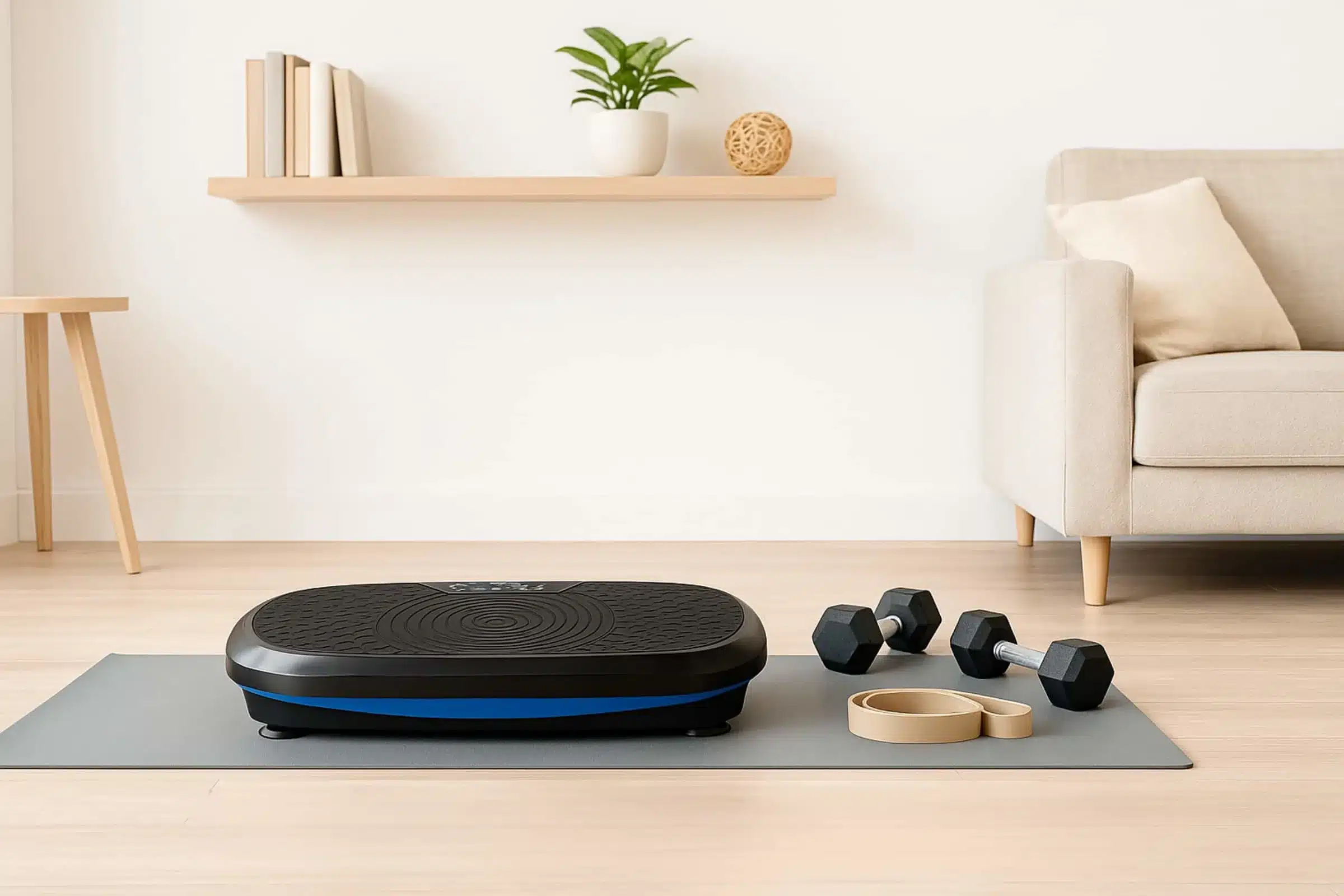
Vibration plates offer several benefits that complement traditional exercise. They can be a useful addition to a holistic fitness program. Vibration plates' main benefits include improved muscle activation, better circulation, stronger bones, better balance, metabolic support, quicker recovery, and mental well‑being.
Muscle Activation and Strength: Each vibration triggers a reflex that causes your muscles to contract. Because both large movers and small stabilisers engage, a simple squat on a vibration plate challenges your glutes, thighs, and core more than the same movement on solid ground. Over time this leads to stronger legs and better posture. Athletes may use vibration to prime fast‑twitch fibres before explosive movements like jumps.
Circulation and Lymphatic Flow: Rapid muscle contractions encourage blood vessels to widen slightly, allowing blood to flow more freely and deliver oxygen and nutrients to tissues. If your main aim is to improve blood flow, bone health is a priority, our best vibration plate for circulation round up will help you choose a plate to achieve just that.
Vibration also stimulates the lymphatic system, helping remove waste products and reduce swelling. If you sit for hours at a desk, a few minutes on the plate can relieve the heavy feeling in your legs.
Bone Density and Joint Health: Gentle mechanical loading from the plate stimulates bone‑building cells, making vibration appealing to people concerned about osteoporosis. Because you are not jumping or running, there is minimal stress on cartilage and joint surfaces. Strengthening the muscles around your joints also provides extra support. If bone health is a priority, our best vibration plate for osteoporosis guide can help you choose a machine with wide platforms and adjustable frequencies.
Balance and Coordination: Balancing on a vibrating platform requires constant micro‑adjustments. Over time this trains your proprioception, which is your sense of body position, and can reduce fall risk. Improved coordination benefits athletes who need quick footwork. Models with handrails and wider decks support those seeking better balance.
Metabolic Support: While vibration plates don’t burn as many calories as running, the increased muscle activation slightly raises your resting metabolic rate. Maintaining muscle helps your body use more energy at rest. Some people find that quick vibration sessions energise them and encourage more movement throughout the day. If weight loss is a goal, combining vibration training with a healthy diet and cardio exercise can help. Our best vibration plate for weight loss review discusses machines with programs tailored to fat‑loss goals.
Recovery and Relaxation: Many users describe vibration sessions as soothing. The gentle waves increase blood flow to tired muscles, which may reduce soreness. Low‑frequency sessions after workouts or at the end of the day can relax tight areas in your back, hips, and legs. Sitting with your feet on the platform helps reduce ankle swelling after standing or traveling. If you want more targeted recommendations, read our best vibration plate for plantar fasciitis guide.
Mental Well‑Being: The rhythmic motion and hum of a vibration plate can be calming. A brief session in the morning may help you feel alert, while an evening routine might help you unwind. Individual responses vary, but many people report reduced stress and improved mood after using vibration plates.
Additional Benefits and Target Users
Beyond the core advantages described above, vibration plates offer subtle benefits that serve specific groups.
For example, people with limited mobility can perform gentle seated exercises on the platform, benefiting from improved circulation and muscle engagement without standing.
Studies exploring whole‑body vibration in older adults suggest it may help maintain or increase bone mineral density when paired with other load‑bearing activities. If you are seeking a machine suited to older adults, see our best vibration plate for seniors guide, which highlights devices with handrails and wide decks.
Individuals who stand all day for work can use a vibration plate to relieve foot and leg fatigue, while those with mild balance issues can practise short sessions at low frequencies to build stability safely.
Because the plates are compact, they are particularly useful for apartment dwellers who want strength and wellness benefits but lack space for larger equipment. Advanced users can combine vibration training with light weights or resistance bands to increase intensity, though caution and proper form are essential.
Another promising use of vibration training is in rehabilitation. Physiotherapists and kinesiotherapists (like myself) sometimes incorporate vibration sessions to help patients regain muscle activation after injuries such as ankle sprains or knee surgery. The gentle oscillations can activate dormant muscle fibres and improve proprioception without placing high loads on healing tissues.
For people experiencing peripheral neuropathy, light vibration may encourage blood flow to extremities and stimulate nerves, although supervision from a health professional is advised. Because the best vibration platforms for neuropathy have benefits for the nervous system, it can also benefit posture and gait retraining.
As with any therapeutic modality, it is important to follow a structured plan and consult with healthcare providers to ensure vibration is used safely and effectively.
Drawbacks and Considerations of Vibration Plates
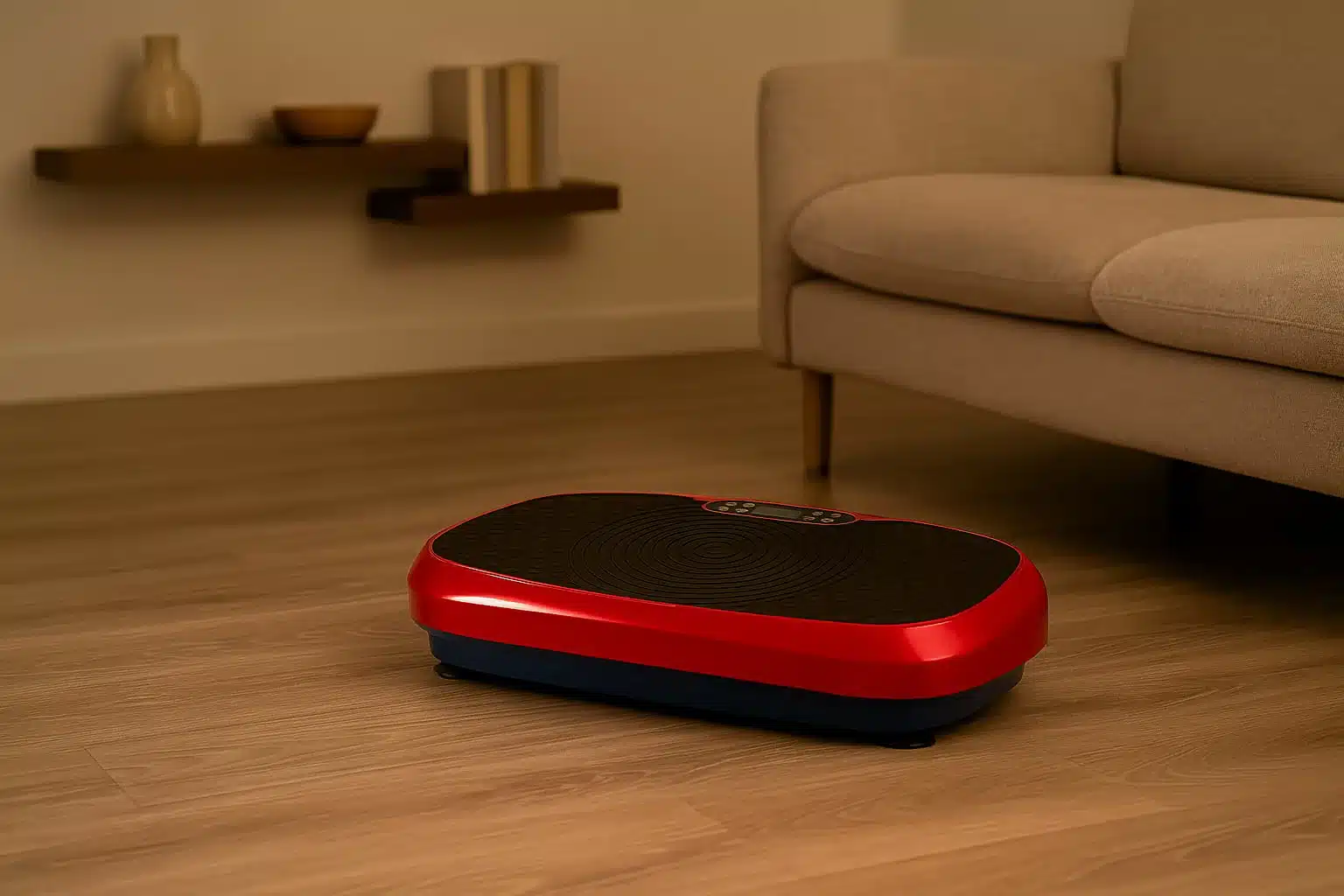
Vibration plates are not perfect for every situation. Understanding their limitations helps you decide how to incorporate them.
Limited Cardiovascular Challenge: Because you stay mostly in one place, your heart rate doesn’t rise as high as it does during running or cycling. Vibration training should complement, not replace, aerobic exercise if heart health and endurance are priorities.
Learning Curve and Technique: Proper posture is essential. Beginners may lock their knees or tense their shoulders, which reduces effectiveness and can cause discomfort. Start with low frequencies and short sessions. Maintain a slight bend in the knees, engage your core, and keep your shoulders relaxed. Gradually increase intensity as you gain confidence.
Contraindications: Vibration plates are not recommended for everyone. People who are pregnant, have pacemakers, have recently undergone surgery, or have serious cardiovascular or musculoskeletal conditions should consult a healthcare provider before using a vibration plate. Those with epilepsy, acute hernias, or thrombosis should avoid vibration training entirely.
Equipment Quality and Cost: Not all vibration plates are equal. Inexpensive units may produce uneven vibrations, lack power, or have low weight capacities. Investing in a well‑built machine ensures more effective training and greater durability.
Key Vibration Plate Exercises and Routines
To get the most from a vibration plate, combine static holds with dynamic movements. Always warm up before stepping on the platform and keep sessions short when you’re starting out.
- Basic Stance: Stand with feet shoulder‑width apart, knees slightly bent, and core engaged. This position helps you get used to the vibrations and activates stabilising muscles.
- Squat Variations: Begin with quarter squats, then progress to deeper squats. Hold each position for 15 to 30 seconds or perform ten slow repetitions. For extra challenge, pulse up and down slightly while holding a squat.
- Lunges and Split Squats: Place one foot on the plate and the other on the floor. Bend both knees to lower your body, then return to the start. Perform eight to ten repetitions on each side. Keep your front knee aligned with your toes.
- Planks and Push‑Ups: Put your forearms or hands on the platform and extend your legs behind you. Hold a plank for 20 to 45 seconds. For push‑ups, bend your elbows to lower your chest toward the plate, then press back up. Modify by keeping your knees on the floor if needed.
- Glute Bridges: Lie on your back with your feet on the platform. Lift your hips until your body forms a straight line from shoulders to knees, squeeze at the top, then lower down. Perform eight to twelve repetitions. For an added challenge, extend one leg and perform single‑leg bridges.
- Side Planks: Rest one forearm on the plate and stack or stagger your feet. Lift your hips and hold for 15 to 30 seconds per side to target your obliques. For extra difficulty, lift your top leg.
- Calf Raises and Balance Drills: Stand on the platform and rise onto your toes, then lower. Repeat ten to fifteen times. Try standing on one leg or closing your eyes to improve balance. Hold onto the rail for support if needed.
- Stretch and Recovery: Use the plate to improve stretches. Sit with your legs on the platform and lean forward gently to stretch your hamstrings, or sit cross‑legged to relax your hips. Keep movements slow and controlled. Use low frequencies for recovery.
For beginners, two or three five‑minute sessions per week are sufficient. Increase session length gradually to ten or fifteen minutes as you become comfortable. Rest at least a day between sessions. Focus on proper form and avoid jumping into high frequencies too quickly.
Advanced Vibration Plate Moves
Once you master basic exercises, you can add complexity to continue progressing.
Weighted Squats: Hold a pair of light dumbbells at your sides or a kettlebell at your chest while performing squats on the plate. The added weight increases load on your legs and core, intensifying the challenge.
Plank to Push‑Up Transitions: Start in a forearm plank position on the plate. Press up onto your hands one at a time, then lower back down. Alternate leading arms with each repetition to work your shoulders and core evenly.
Dynamic Lunges: Step onto the platform with one foot and drive the opposite knee upward as if performing a high‑knee march, then step back down. This move integrates balance, coordination, and cardiovascular demand.
Single‑Leg Deadlifts: Stand on the plate with one foot and hold a light weight in the opposite hand. Hinge at your hips, extend the free leg behind you, and lower the weight toward the platform before returning to standing. This exercise targets hamstrings, glutes, and core stability. Incorporate one or two advanced moves into your routine once you feel confident with the basics, and always prioritise control over speed.
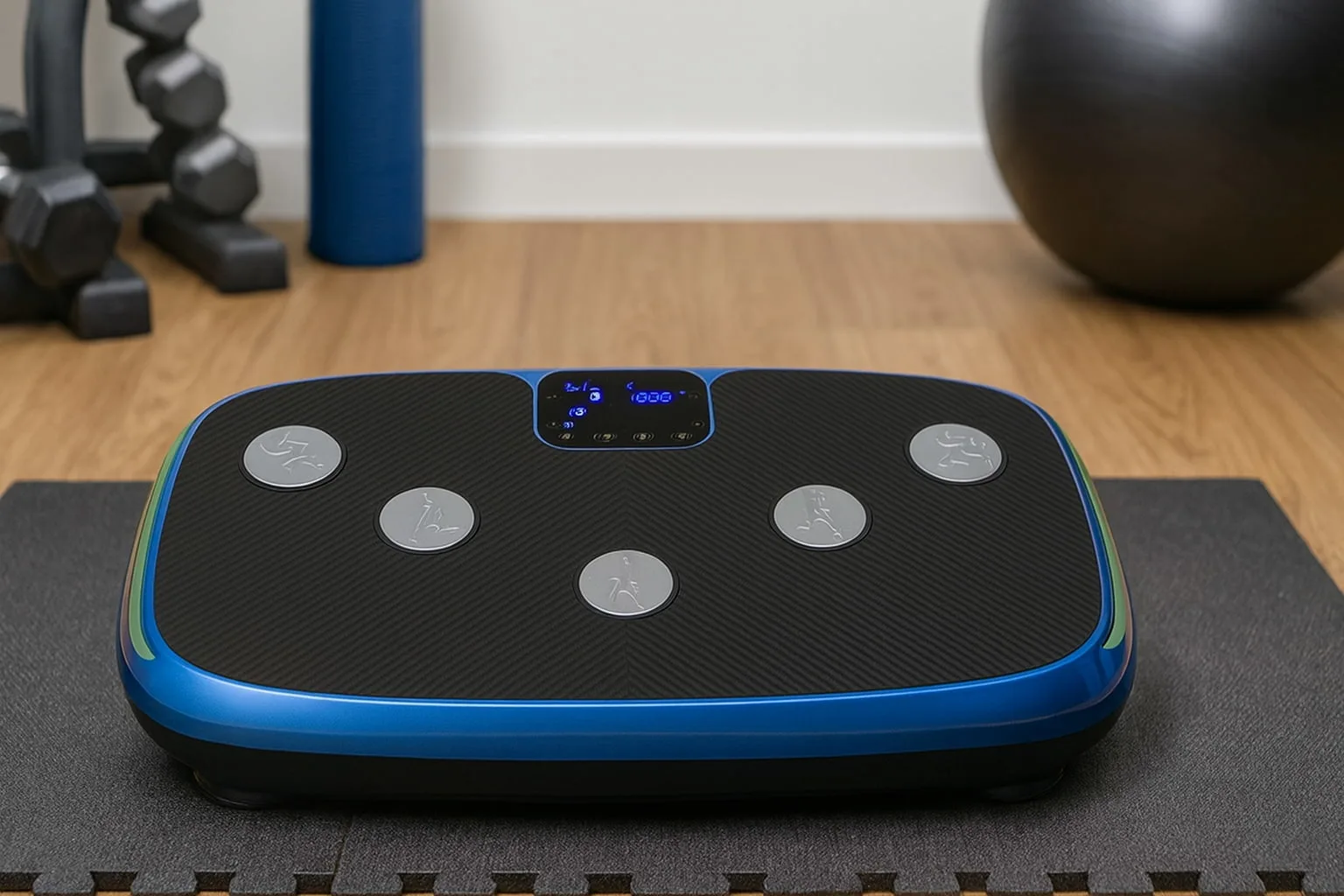
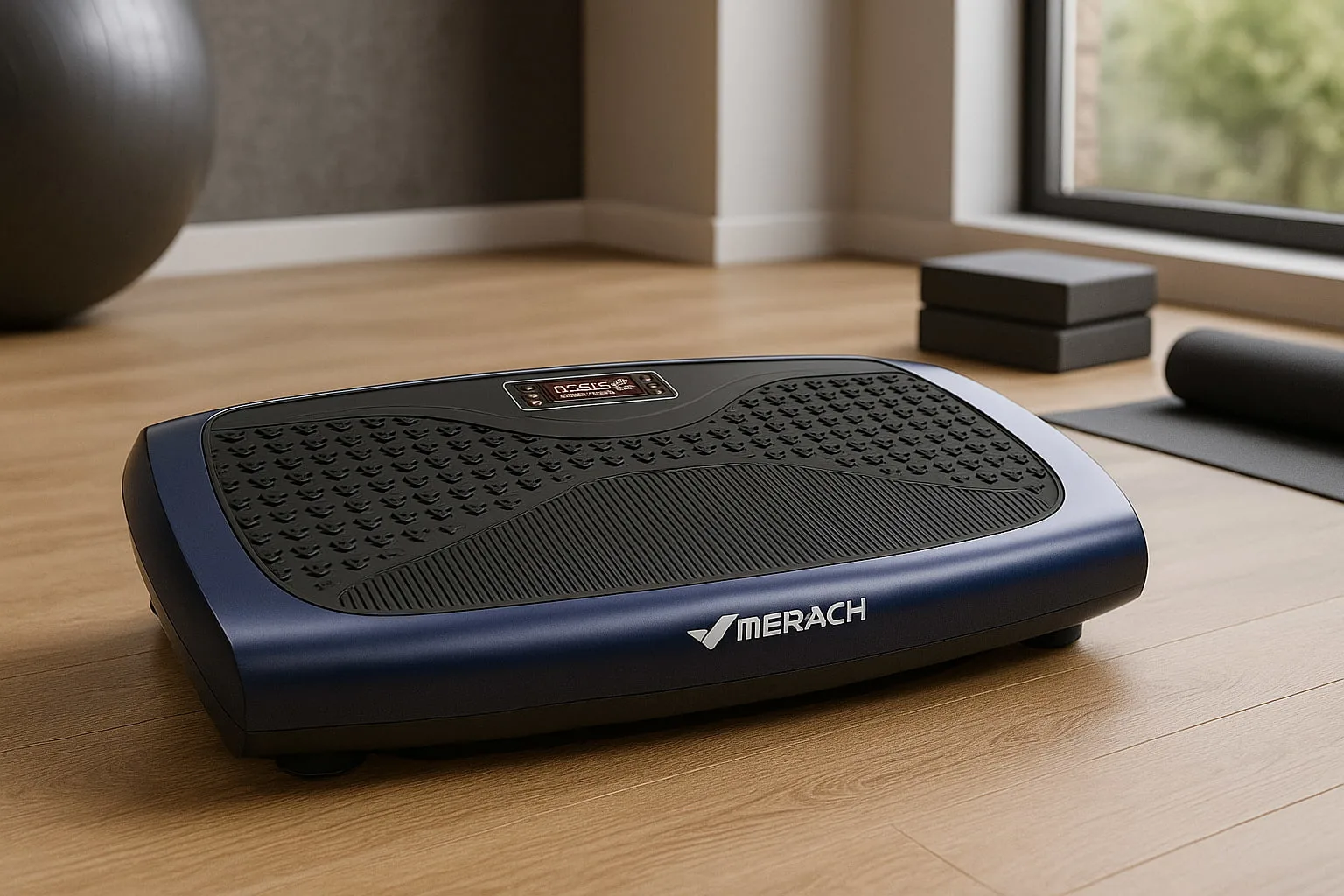
My Recommended Top 3 Best-Buys: Reviewed & Rated

Vibration Plate vs Treadmill: Understanding Treadmills
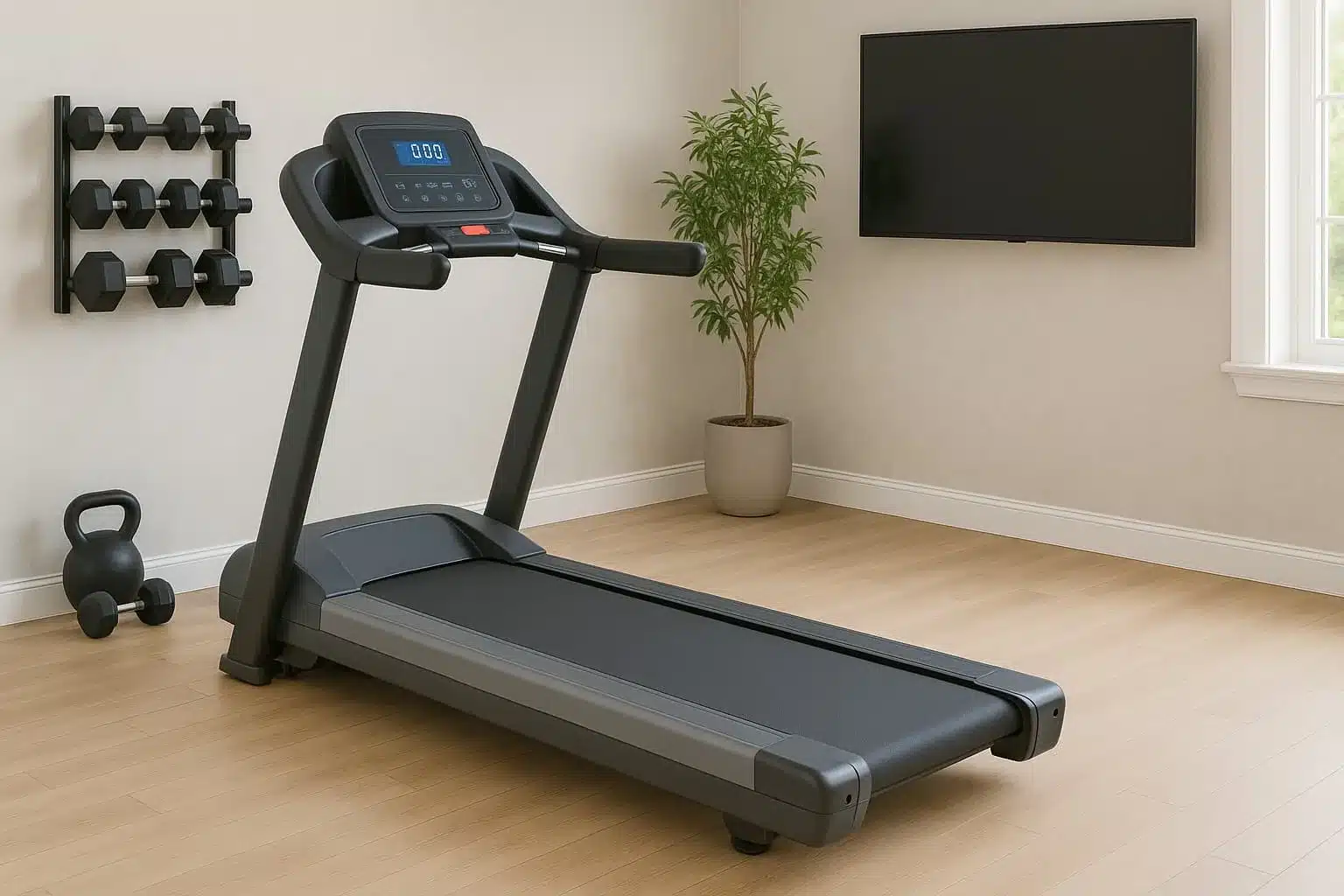
A treadmill consists of a motorised belt that allows you to walk, jog, or run in place. You control the speed and incline to simulate various terrains. The console displays metrics such as time, distance, pace, and heart rate. Handrails provide stability, and many models offer preset programs for fat burning, intervals, or endurance. Some treadmills fold for storage, while others feature large screens for streaming classes or scenic routes.
Types of Treadmills and Key Features
There are three main categories of treadmills: motorised, manual, and curved.
Motorised treadmills use an electric motor to drive the belt. They offer consistent speed control, preset workouts, and usually include cushioning to reduce impact.
Manual treadmills rely on your stride to move the belt. Because you set the pace, they can encourage a natural gait and often have a smaller footprint; however, they may lack incline options or advanced data tracking.
Curved manual treadmills feature a concave running surface that responds to your foot placement. The belt accelerates as you move toward the front of the curve and slows near the back, promoting efficient running mechanics. When evaluating a treadmill, consider belt length and width (longer, wider belts are more comfortable for running), motor power (higher horsepower supports heavier users and long sessions), and cushioning systems. Additional features like built‑in fans, tablet holders, Bluetooth connectivity, or integration with training apps can improve your experience.
Many modern treadmills connect to interactive platforms that stream coached runs, virtual races, or scenic routes. These programs adapt the speed and incline automatically to match the terrain on screen, keeping your workouts engaging and challenging. Some models also offer safety features such as heart‑rate sensors that adjust intensity if your pulse rises too high. While these extras add cost, they can transform a simple treadmill into an interactive training tool that helps you stay motivated and achieve your goals.
Treadmills can mimic outdoor conditions. A slight incline feels like a hill, while a faster speed simulates race pace. Manual treadmills require you to power the belt yourself, which can be more demanding but offers a natural feel. Curved manual models respond to your stride and encourage proper running form. When shopping for a treadmill, consider motor strength, cushioning, size, weight capacity, and extra features like heart‑rate monitoring or Bluetooth connectivity.
Benefits of Treadmill Training
Treadmills remain popular because they provide effective cardiovascular workouts and other health benefits. Treadmill main benefits encompass cardiovascular conditioning, calorie burn, muscle strength and endurance, convenience, mental health, and rehabilitation.
Cardiovascular Conditioning: Continuous walking or running raises your heart rate, strengthening your heart and lungs. Adjusting speed and incline lets you tailor intensity to your fitness level. Even brisk walking for twenty minutes supports heart health and endurance.
Calorie Burn and Weight Management: Because you move constantly, treadmills help burn calories efficiently. Intervals, in which you alternate faster and slower paces or steeper and gentler inclines, can increase energy expenditure further. Combined with sensible eating, treadmill workouts support weight loss or maintenance.
Muscle Strength and Endurance: Treadmills primarily work your legs, including glutes, quadriceps, hamstrings, and calves. Running or walking at an incline increases the load on these muscles, promoting strength and endurance. Maintaining good posture engages your core. Walking backwards at a very slow pace provides a novel challenge for your hamstrings and improves coordination.
Convenience and Safety: Exercising indoors means weather, traffic, and uneven surfaces are not issues. Adjustable settings help you progress at your own pace. Cushioned belts reduce impact compared to running on concrete, helping protect your joints. Having a treadmill at home saves time on commuting to the gym and encourages consistency.
Mental Health and Motivation: Aerobic exercise releases endorphins, which can improve mood and reduce stress. The steady rhythm of walking or running can be meditative. Many treadmills have screens for watching shows or following guided workouts, making sessions more enjoyable. Achieving milestones on the treadmill can build confidence. Learn more about aerobic vs anaerobic exercise.
Rehabilitation and Versatility: Treadmills are useful for rehabilitation. You can start slowly and increase speed as your strength returns. Adjustable inclines and harness systems on some models allow therapists to customise sessions safely for individuals recovering from injury. Short, low‑impact sessions on a treadmill complement other forms of therapy.
Drawbacks and Considerations of Treadmills
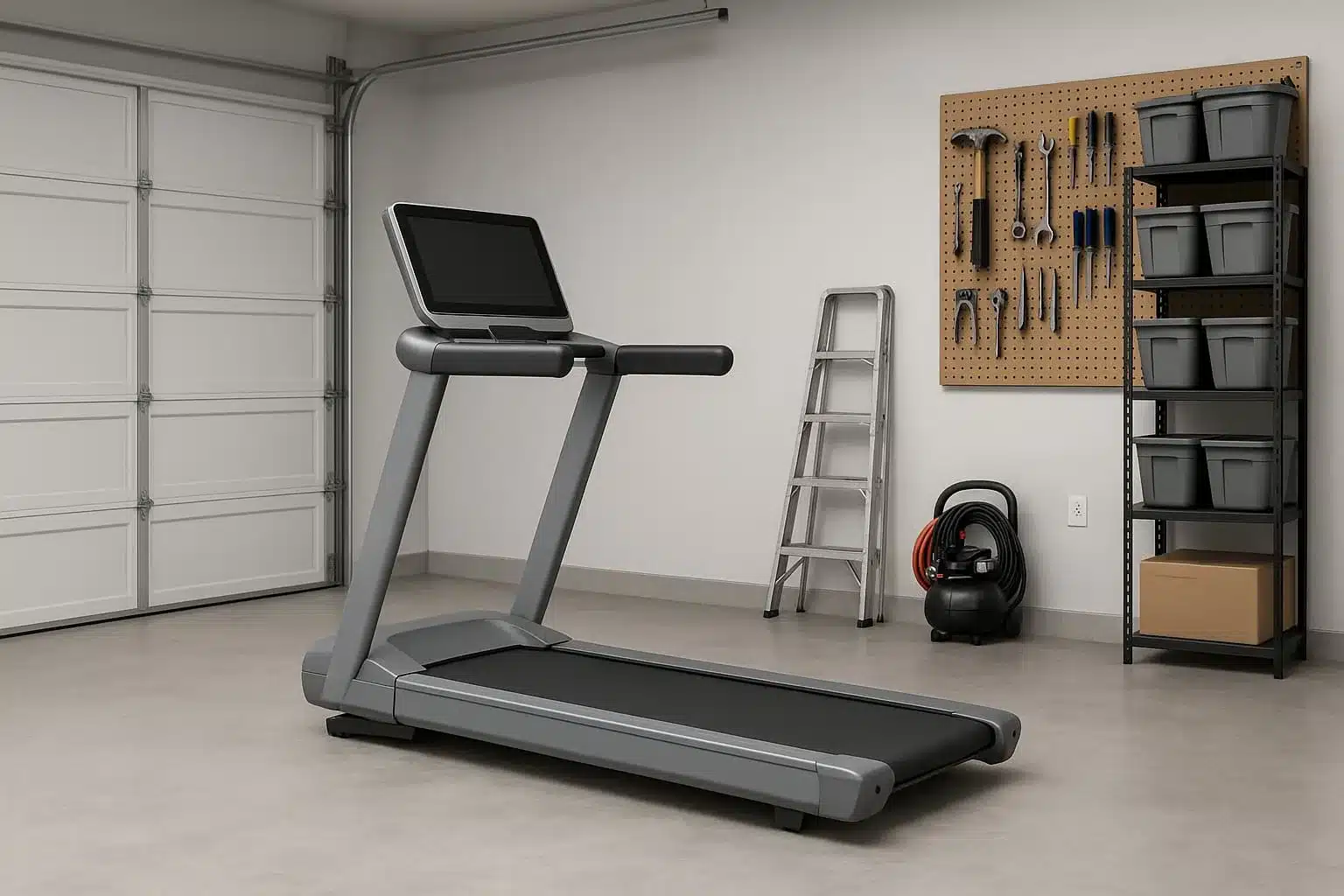
Despite their advantages, treadmills have drawbacks that may influence your decision.
Impact and Injuries: Running involves repetitive impact. Even with cushioning, treadmills can stress your ankles, knees, and hips, especially at high speeds or steep inclines. Poor running form or worn shoes compound the issue. Incorporating low‑impact cross‑training, such as cycling or swimming, and paying attention to your body can help reduce injury risk.
Cost and Space: Quality treadmills with spacious belts, strong motors, and interactive features can be expensive. They also take up more space than vibration plates and often require a dedicated area. Folding models save room but may be less stable.
Maintenance and Noise: Treadmills need regular care. You must lubricate the belt, tighten bolts, and replace parts as they wear out. Running at high speeds can create noise that may disturb others in your home. Placing a mat under the machine helps dampen sound.
Monotony and Motivation: Moving in place without changing scenery can feel tedious. To keep workouts interesting, vary speed, incline, and duration. Listen to music, watch videos, or use virtual training programs that simulate outdoor routes. Alternating indoor workouts with outdoor runs or walks can also help maintain motivation.
Safety: Treadmills can be hazardous if you lose footing. Always use the safety clip that stops the belt if you fall. Keep children and pets away while the machine is running. Start at a comfortable pace and avoid distractions like texting.
Caring for Your Treadmill
Maintaining a treadmill prolongs its life and ensures safe operation.
Lubricate the belt according to the manufacturer’s instructions; this reduces friction between the deck and the belt, preventing the motor from overworking.
Keep the machine clean by wiping down the console and side rails after use and vacuuming around the base to prevent dust from accumulating in the motor compartment.
Check bolts and fasteners periodically to ensure they remain tight. If your treadmill features a folding mechanism, inspect the hinges and locking system regularly. Listening for unusual noises during workouts can alert you to early signs of wear. When in doubt, consult the manual or contact the manufacturer for maintenance guidelines.
Sample Treadmill Workouts
Treadmills offer a wide range of workouts. Begin with a short warm‑up, then choose a routine that matches your goals.
- Steady Walk or Run: Maintain a consistent pace for 20 to 30 minutes. Start with a walk if you are new to exercise. Increase speed or incline gradually as your endurance improves.
- Incline Walking: Set the incline to 5 percent and walk for 15 to 20 minutes. Alternating between moderate and steeper inclines engages your legs and raises your heart rate without running.
- 12‑3‑30 Routine: Popular for its simplicity, this workout involves walking at 3 miles per hour on a 12 percent incline for 30 minutes. Adjust the incline down if it feels too steep and increase it as you become stronger.
- Interval Training: Alternate between 30 seconds of fast running and 90 seconds of slower recovery walking or jogging. Repeat for 15 to 20 minutes. Adjust the speeds to suit your fitness level.
- Hill Intervals: Alternate between two minutes at a 5 percent incline and two minutes at a 1 percent incline. Continue for about 20 minutes. This routine builds leg strength and aerobic fitness.
- Pyramid or Ladder Session: Increase your running interval length from one minute up to five minutes, with one‑minute walking breaks in between, then work back down. This format challenges your endurance and mental focus.
- Backward Walking: At a very slow pace, walk backward for one to two minutes, then switch back to forward walking. This variation strengthens your hamstrings and improves balance. Use the handrails lightly for stability.
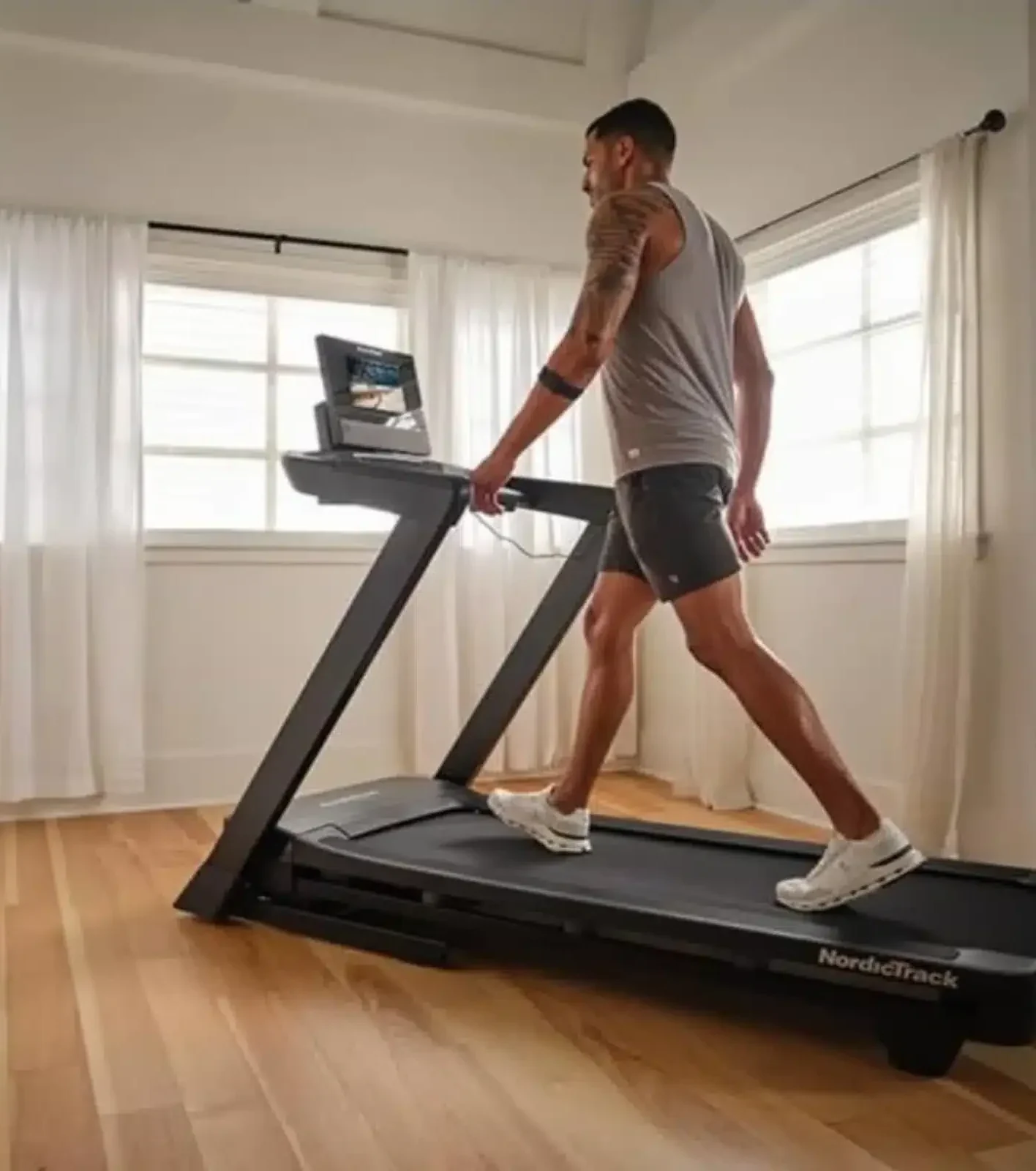
Our Recommended Treadmill for Home: NordicTrack T Series 10
Comparing Vibration Plates and Treadmills
Comparing these two machines helps you understand how they complement each other.
Muscle Engagement vs Cardiovascular Challenge: Vibration plates use mechanical waves to trigger reflexive muscle contractions, engaging deep stabilisers and larger muscles simultaneously. They excel at improving strength, balance, and neuromuscular activation. Treadmills rely on self‑powered movement, raising your heart rate and working your legs continuously. They are better for cardiovascular conditioning and calorie burn.
Heart Rate Response: Treadmill workouts significantly raise your heart rate, improving aerobic capacity. Vibration plates cause a modest increase at best, so they cannot replace true cardio training. If heart health is a priority, include running, brisk walking, or other aerobic exercises alongside vibration sessions. I explained the combined effect of various fitness workouts in the vibration plate vs. rebounder article.
Space and Portability: A vibration plate is compact and light enough to move between rooms or store in a closet. Treadmills are larger and heavier, though foldable options exist. Choose based on the space you have available and whether you need to move your equipment frequently.
Impact on Joints: Running on a treadmill can strain joints due to repetitive impact, despite cushioning. Vibration plates offer low‑impact training, making them more comfortable for people with joint pain. However, individuals with certain medical conditions should avoid vibration altogether.
Cost and Maintenance: Most home vibration plates cost less and require little upkeep. Treadmills range from affordable to expensive and need regular maintenance, such as belt lubrication and occasional part replacement. Consider long‑term costs and maintenance when making your decision.
Variety and Duration: Treadmills support longer workouts and endless variations, from steady walks to challenging intervals. Vibration plate sessions are shorter and more focused. Combining both machines can provide a comprehensive routine that addresses strength, balance, endurance, and recovery.
Treadmill vs Vibration Plate, Which Is Better?
Treadmill vs vibration plate, which is better? The answer depends on your fitness goals, physical condition, and preferences. A treadmill excels at cardiovascular conditioning and calorie burn, making it ideal for improving heart health and endurance. A vibration plate shines at muscle activation, balance, and low‑impact training, which can be valuable for rehabilitation, bone health, or convenience. Consider your needs and limitations to choose the right tool, or combine both for a well‑rounded program.
Combining Both for Balanced Fitness
Using a vibration plate and a treadmill together can yield synergy. Treadmill workouts strengthen your heart and lungs and help manage weight. Vibration sessions focus on muscle activation, balance, and joint health. Pairing the two allows you to alternate between longer, sweatier sessions and shorter, focused workouts that reinforce stability and mobility.
For example, you might perform a 30‑minute steady‑state treadmill run on Monday, follow with a brief vibration session on Tuesday to activate your core and glutes, and then do interval training on Wednesday. This varied schedule encourages different muscle groups to recover while others work. It also keeps your routine interesting, which improves adherence.
Choosing the Right Machine
Deciding between a vibration plate and a treadmill, or using both, depends on your personal goals, health, and environment.
Clarify Your Goals: If your main focus is cardiovascular fitness, a treadmill is essential. If improving balance, supporting bone health, or adding low‑impact strength work is more important, a vibration plate may serve you better. Those aiming for weight management may benefit from a combination of treadmill workouts and vibration sessions.
Assess Space and Budget: Treadmills require more room and generally cost more. Vibration plates are compact and often more affordable. Consider the space in your home and how much you can invest.
Review Your Health Status: People with joint pain or limited mobility may find vibration plates more comfortable. Those who enjoy walking or running and have no contraindications will likely benefit from a treadmill. Always consult a healthcare professional if you have medical concerns.
Stay Motivated: Choose equipment you will enjoy using. If you need variety, consider owning both machines or combining indoor and outdoor workouts. The best machine is the one that keeps you moving consistently over time.
Forming Habits and Staying Consistent
No piece of equipment can improve your health unless you use it regularly. Set realistic goals for how often you will train, and schedule workouts at times when you have energy and focus. Consider tracking your sessions in a journal or app to monitor progress.
If you struggle with consistency, find an accountability partner or join an online community for support. Start with small commitments, such as two treadmill walks and one vibration session each week, and build from there. Over time these activities become routine and support your long‑term well‑being.
Final Thoughts on Vivration Plates vs. Treadmills
The vibration plate vs treadmill conversation is not about selecting a single winner.
Each device serves a different purpose. Vibration plates stimulate muscle activation, improve balance, and offer quick, low‑impact sessions. Treadmills strengthen your cardiovascular system, burn calories, and provide versatile workout options.
Using both machines can create a balanced program that addresses strength, endurance, and mobility. Start gradually, listen to your body, and enjoy the journey toward better health.
FAQs
Is a vibration plate as effective as a treadmill for burning calories?
No, a vibration plate is not as effective as a treadmill for burning calories because it does not involve continuous movement. A treadmill burns more calories through sustained walking or running, while a vibration plate helps build muscle activation that may support metabolism over time.
Can vibration plates replace traditional cardio workouts?
No, vibration plates cannot replace traditional cardio workouts because they do not raise your heart rate as much. They are best used as a complement to walking, running, cycling, or other aerobic activities to create a balanced exercise routine.
How long should I use a vibration plate compared to treadmill sessions?
You should use a vibration plate for shorter sessions, often five to fifteen minutes, because intense muscle activation fatigues you quickly. Treadmill sessions typically last at least twenty minutes to achieve cardiovascular benefits and can extend to an hour depending on your goals.
Who should avoid using a vibration plate?
People with certain medical conditions, such as pregnancy, recent surgery, pacemakers, severe cardiovascular disorders, or epilepsy, should avoid using a vibration plate without medical advice. Always consult a professional if you have health concerns before starting vibration training.
What safety precautions are needed when using a treadmill?
The safety precautions you need when using a treadmill include using the safety key or clip, wearing appropriate shoes, and focusing on your footing. Start at a comfortable pace, avoid distractions like texting, keep children and pets away from the machine, and slow down or stop immediately if you feel pain or dizziness.