This guide distills research and practitioner advice into clear do’s and don’ts so you can enjoy your vibration plate without unwanted side effects.
Whole‑body vibration (WBV) machines promise efficient workouts and potential health benefits, but they also deliver intense mechanical stimuli to your bones, muscles and nervous system. To get the most from a vibration plate and stay safe, you need to respect its limits, understand who shouldn’t use one and follow evidence‑based best practices.
Understanding Vibration Plates
A vibration plate is a platform that oscillates at speeds measured in hertz. When you stand, sit or perform exercises on it, the rapid up-down or pivotal motion triggers reflexive muscle contractions.
Research shows that WBV can improve muscle strength, balance, visceral‑fat reduction and bone density when paired with traditional exercise and sound nutrition.
However, the same forces that make WBV effective can also pose risks if you have certain medical conditions or misuse the machine.
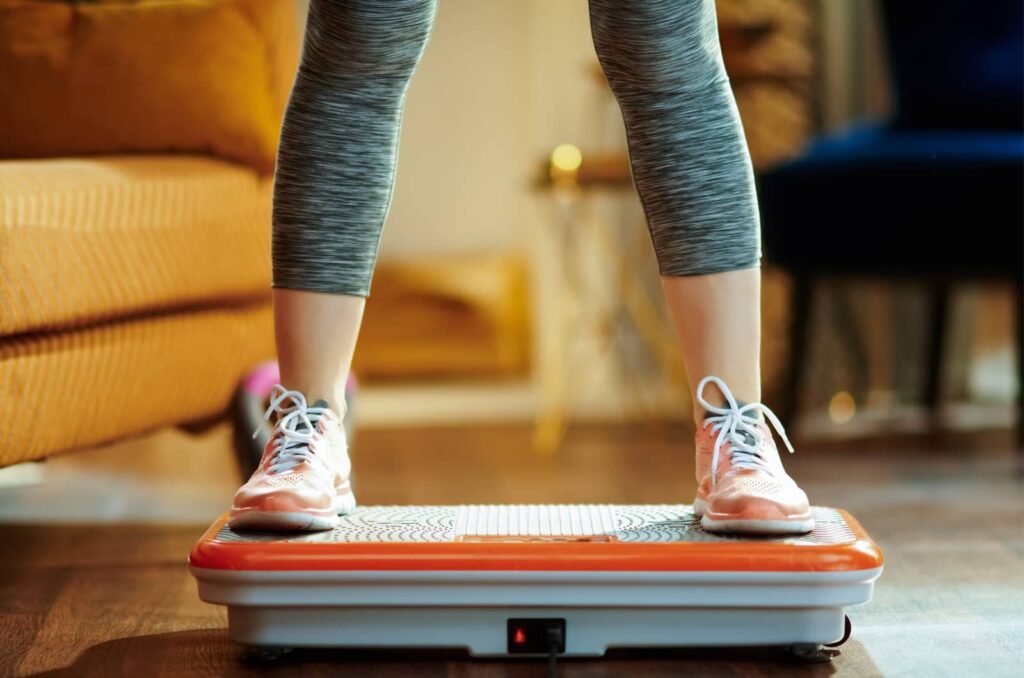
When I first tried a vibration plate, I was surprised at how much my muscles worked even while standing still.
DOs
Do check contraindications and consult your doctor
Vibration plates are not suitable for everyone. Manufacturer guidelines and medical sources consistently list several conditions that contraindicate or require medical clearance before using WBV:
- Pregnancy and implants: Avoid vibration training if you are pregnant or have a pacemaker or other implanted electronic device.
- Fresh surgery or injuries: Recent fractures, joint replacements (typically within three months) or fresh surgical procedures are reasons to skip WBV.
- Cardiovascular and clotting disorders: Serious cardiovascular disease, uncontrolled hypertension, deep‑vein thrombosis (DVT) and clotting disorders require doctor approval because increased circulation and neuromuscular activation can strain the heart or mobilize a clot.
- Neurological and metabolic conditions: People with epilepsy, seizures, migraines, severe diabetes or acute thrombosis should avoid high‑intensity vibration training. If you have osteoporosis, compression fractures or implants, stick to low‑intensity platforms and consult a specialist.
If you fall into any of these categories or have other concerns (such as cancer, kidney or bladder stones), get clearance from a healthcare provider before stepping onto a vibration plate. It’s always better to err on the side of caution.
I once had a client, Tatiana, who overlooked her peripheral neuropathy in her feet and experienced discomfort until we realised she needed clearance from her doctor and comfy shoes
Start with low frequency and short sessions
Vibration plates deliver intense mechanical stimuli, so more is not always better. Evidence‑based recommendations emphasise low frequencies and brief sessions for beginners:
- Keep sessions short: Whole‑body vibration workouts should last around 10-15 minutes at a time. Many sources recommend starting with 5-10 minutes and gradually increasing as your body adapts.
- Limit daily exposure: Even seasoned users shouldn’t exceed about 15 minutes per day. Overdoing it can lead to muscle fatigue, cramping and other side effects.
- Begin at lower frequencies: Starting around 15-20 Hz allows you to acclimate; older adults or rehabilitation clients may even start lower. High frequencies (>45 Hz) can cause muscle soreness, cramps or excessive head vibration. Increase frequency and amplitude gradually as your tolerance grows.
- Include recovery days: For novices, leave 48 hours between sessions so muscles and joints can recover. As your capacity improves, you can train three to four times per week.
In my training, I start with just a few minutes on the plate, and I've seen even fit friends like Robert struggle with dizziness when they tried to progress too quickly.
Use proper posture and equipment
Maintaining correct body positioning is crucial for absorbing vibrations safely and preventing joint strain:
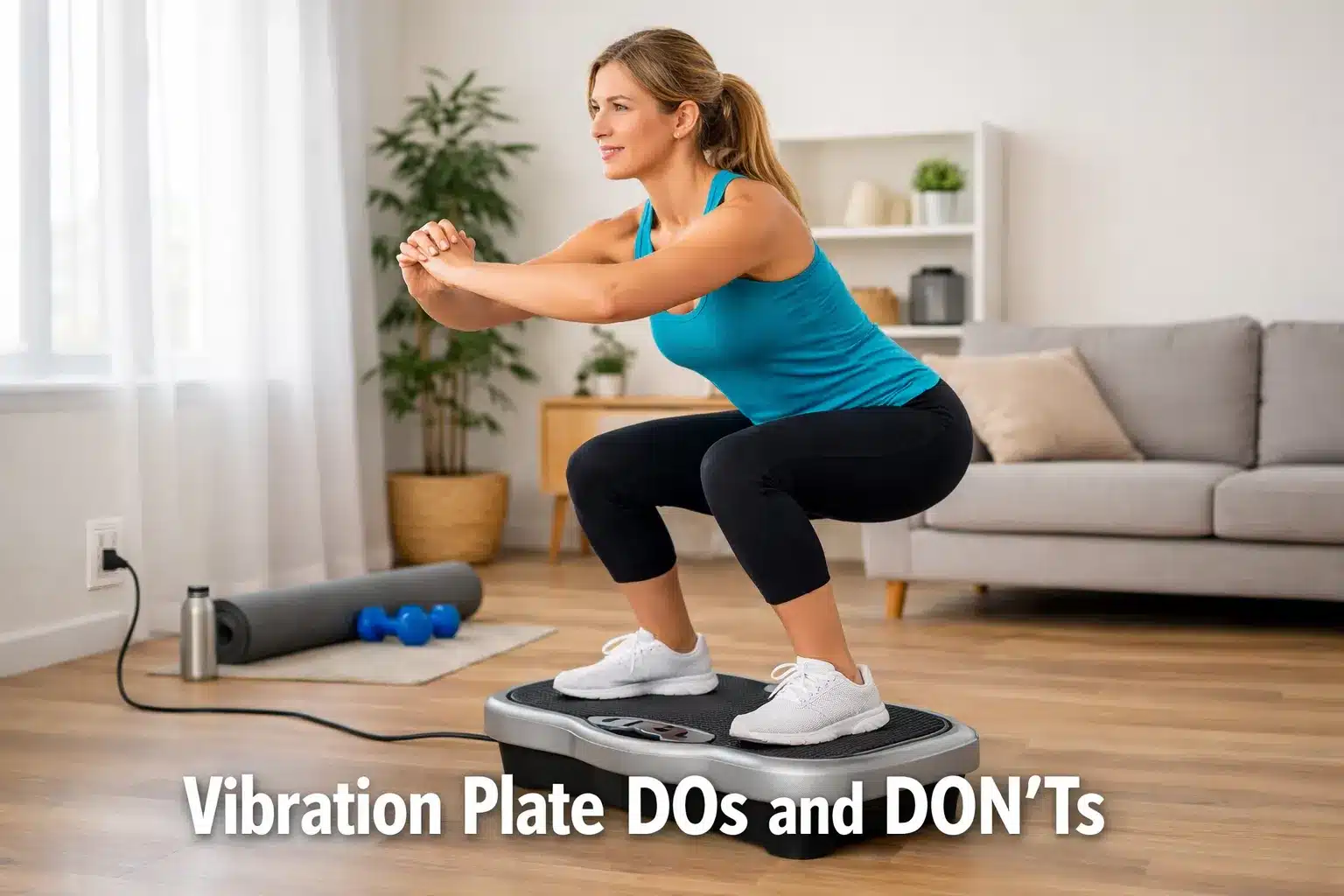
- Soft knees and engaged core: Keep your knees slightly bent and engage your core to help your muscles absorb vibrations efficiently. Avoid locking your knees or leaning too far forward or backward, which can cause poor load distribution.
- Standing position for beginners: As a beginner, exercise primarily in a standing position; this minimises head vibration and allows you to work multiple muscle groups simultaneously. Keep your feet closer to the platform’s centre to reduce amplitude and wear supportive athletic shoes to absorb shock.
- Use a non‑slip mat or handles: People with balance issues or lower body weight may find it challenging to stay stable on a vibrating platform. Placing a rubber mat on the plate and holding the machine’s handles adds stability. Keep your eyes open and avoid upper‑body exercises that require your head to be near the platform to minimise dizziness.
- Bend or straighten depending on intensity: On low‑intensity platforms you may stand straight to propagate the vibration signal, but on high‑intensity machines you should bend your knees slightly to dampen harmful vibration transfer.
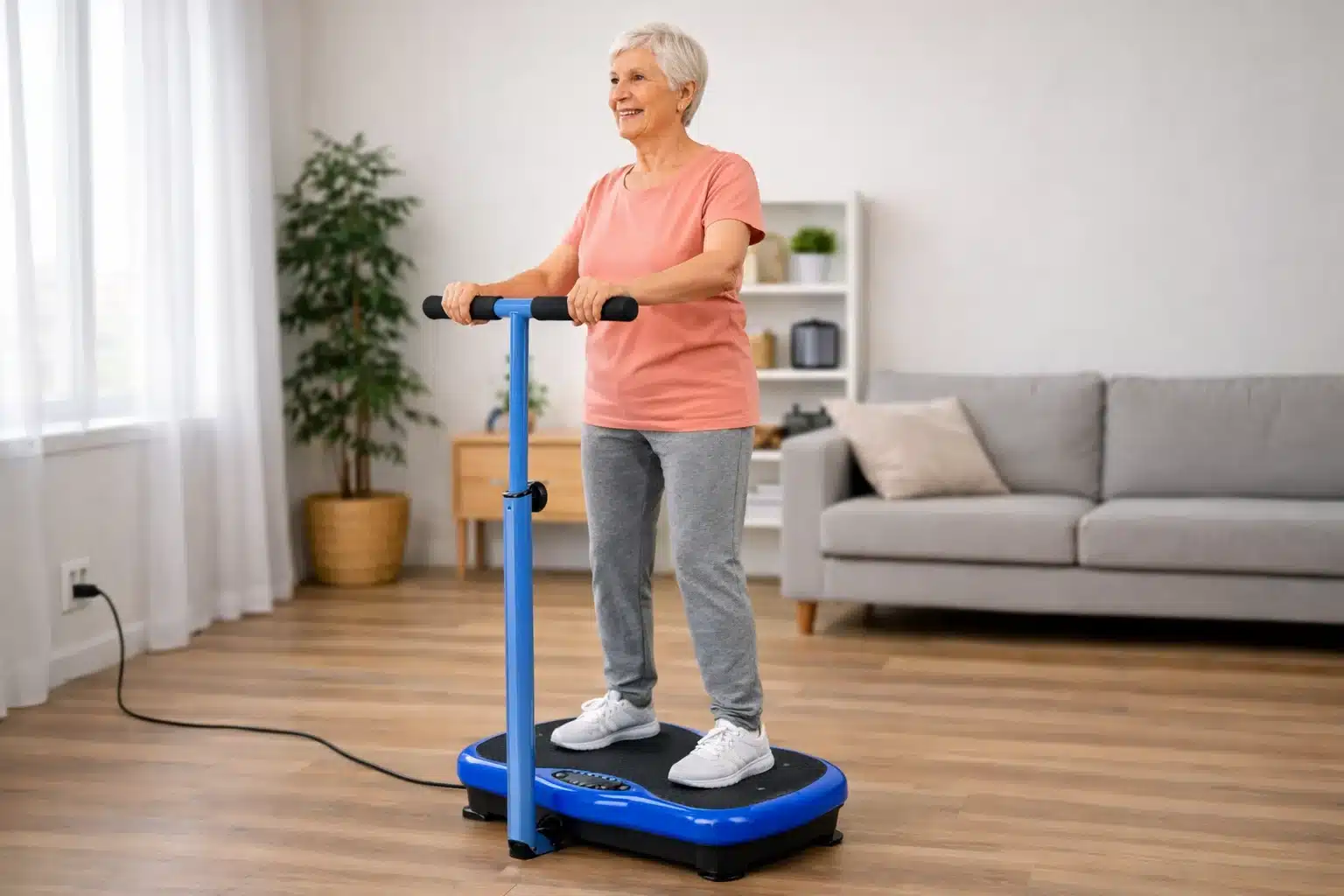
- Consider a plate with a handrail: Vibration plates for seniors often have a handrail which will ensure you exercise safely if you have stability or balance issues
I always remind myself to keep my knees soft and my core engaged, and I tell my elderly clients to get a model with handrail for extra stability.
Warm‑up, cool‑down and listen to your body
Jumping straight into WBV without preparation can shock your muscles. Spend 3-5 minutes warming up (e.g., light stretching or marching in place) and do a gentle cool‑down afterwards. Post‑session stretching helps disperse residual muscle tension.
New users sometimes experience discomfort, dizziness or mild nausea due to stimulation of the vestibular system. These sensations usually subside once you stop, but they signal that you should start with shorter sessions and progress gradually. If you feel pain or severe dizziness, pause immediately and consult a trainer or healthcare professional.
When I skipped my warm‑up once, I felt sore for 2 days, so I always stretch and encourage clients to do the same.
Incorporate exercises and treat the plate as a supplement
Simply standing on a vibration plate won’t deliver the full training effect. To target muscles effectively:
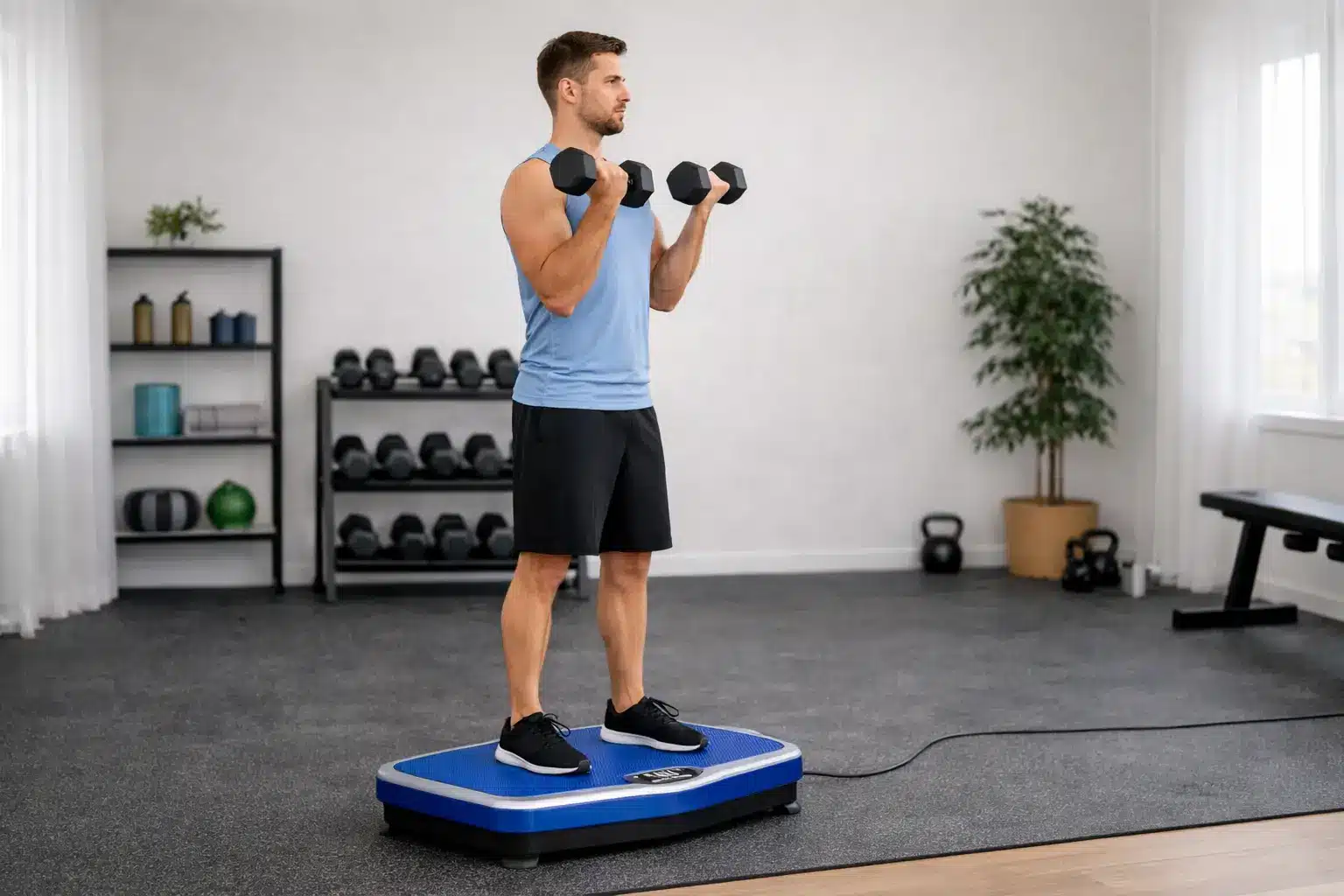
- Perform functional moves: Add squats, lunges, push‑ups or planks on the plate to engage specific muscle groups and improve strength more quickly. For example, begin with semi‑squat holds and incline push‑ups at 25-30 Hz, then progress to dynamic movements like step‑ups or plank jacks for higher intensities.
- Integrate with conventional exercise: WBV is a supplement, not a replacement. Combine vibration sessions with traditional cardio, strength and flexibility training to achieve balanced fitness. Think of the plate as an intensifier for certain exercises rather than a stand‑alone solution.
My favourite routine includes squats and push-ups on the plate, which I find energising and which my clients often enjoy.
Invest in quality equipment and follow manufacturer guidance
Choosing a reliable vibration plate for home use matters because cheap devices may generate unsafe vibration amplitudes or frequencies. Look for models with adjustable frequencies in the 15-45 Hz range and appropriate amplitude settings (1-4 mm for beginners).
Select a machine that exceeds your body‑weight capacity and offers stable, non‑slip surfaces. Always follow the user manual regarding maximum session duration and recommended exercises.
Do not go for really cheap models just to save money; you will actually waste it. There's a reason why mid-range to more expensive reliable vibration plates are priced the way they are: better quality, durability, more features, accessories, and more: quality assurance.
DON’Ts
Don’t use a vibration plate if you fall into high‑risk groups
Certain medical conditions make vibration training unsafe. Do not use a vibration plate without explicit medical clearance if you:
- Are pregnant or planning to become pregnant.
- Have implanted devices such as pacemakers, defibrillators or spinal stimulators.
- Suffer from acute thrombosis, DVT, clotting disorders or serious cardiovascular disease.
- Have recent fractures, joint replacements, surgical procedures or implants.
- Live with epilepsy, seizures, cancer, severe migraines, kidney or bladder stones or uncontrolled diabetes.
High‑intensity vibration can also aggravate inner‑ear issues and cause dizziness, headaches or hardware loosening in people with osteoporosis or recent surgery. When in doubt, talk to your physician before starting WBV.
Early in my practice, I allowed a client with osteoporosis to try a high-intensity plate, and she immediately felt uncomfortable; since then I've become more cautious.
Don’t overdo frequency, duration or intensity
More vibration isn’t better. Overuse leads to muscle fatigue, cramps, headaches and increased injury risk:
- Avoid long sessions: Do not spend more than 10-15 minutes per session, especially as a beginner. Prolonged exposure can have similar effects to occupational vibration, such as muscle soreness and unhealthy spinal stress.
- Don’t increase frequency too quickly: Beginners should resist the urge to ramp up frequency to 20 Hz or higher; instead, progress gradually and focus on form.
- Don’t train every day at high intensity: Space sessions out, particularly during your first few weeks. Too many high‑intensity workouts can cause overuse injuries and hinder recovery.
I once pushed myself through back-to-back sessions and ended up sore and fatigued, which taught me the importance of moderation.
Don’t ignore posture or stand barefoot
Incorrect posture diminishes results and can strain joints. Do not:
- Lock your knees or let your body shake uncontrollably.
- Lean too far forward or backward, which shifts stress onto your spine.
On high‑intensity platforms, don’t stand straight; bend your knees slightly to reduce vibration transmission. On low‑intensity units, avoid bending excessively so the signal propagates properly.
When I first started, I stood barefoot and ended up with sore arches, so now I personaly mostly wear supportive shoes and advise my clients to do the same.
Don’t skip warm‑up, cool‑down or recovery
Jumping onto a vibration plate without preparing your muscles is a recipe for stiffness and soreness. Don’t skip a brief warm‑up and cool‑down routine, and avoid training when fatigued or dehydrated. Extended rest days are crucial if you feel unusual pain or dizziness.
Skipping my warm‑up led to stiffness and discomfort, and I've made it a rule to never rush into a session without stretching.
Don’t rely solely on WBV for fitness or neglect safety
Treating a vibration plate as your only form of exercise is a mistake. Do not use WBV as a replacement for cardio, strength training or flexibility work. Instead, integrate it as a complement to a holistic program. Never ignore manufacturer guidelines or medical advice; listen to your body, stop immediately if you experience pain, and seek professional guidance when learning advanced exercises.
I once tried using only WBV for a few weeks and felt my cardio fitness decline, so I now emphasise that it should complement, not replace, other workouts and that following safety guidelines is essential.
Safety and Contraindications Overview
To help you quickly assess whether WBV is appropriate for you, the following table summarises major contraindications and recommended precautions. Do not use this table for long sentences; it’s a concise reference.
I keep a printed copy of this safety checklist in my studio so my clients and I can quickly review whether vibration training is appropriate.
| Category | Examples & Precautions |
|---|---|
| Medical contraindications | Pregnancy, pacemakers, clotting disorders, acute thrombosis, severe cardiovascular disease, recent surgery or fractures. Seek medical clearance before use. |
| High‑risk conditions | Osteoporosis with compression fractures, cancer, severe migraines, kidney/bladder stones, uncontrolled diabetes. Use low‑intensity platforms only under supervision or avoid. |
| Usage guidelines | Keep sessions ≤15 minutes, start at 15-20 Hz, progress slowly, take recovery days, wear supportive shoes. |
| Common mistakes to avoid | Locking knees, leaning forward/backwards, standing barefoot, skipping warm‑up/cool‑down, using high settings too soon. |
Practical Tips Based on User Experience
Many people share similar experiences when they first use a vibration plate. Here are a few lessons gleaned from real‑world practice:
- Expect a learning curve: The first few sessions may feel odd. You might notice mild dizziness or muscle vibrations that seem uncomfortable. Starting with low frequencies and short bouts helps your nervous system adapt gradually.
- Focus on quality over quantity: It’s tempting to dial up intensity to feel like you’re doing more, but proper form and controlled movement yield better results. Keeping your core engaged and knees soft reduces head vibration and distributes forces safely.
- Combine with other exercise: People who pair WBV with squats, lunges or push‑ups report improved strength and stability compared with simply standing on the plate. Use the plate to intensify familiar exercises rather than replacing them altogether.
- Listen to your body: If you experience pain, headaches or pronounced dizziness, stop immediately and evaluate your form, duration and frequency. Hydrate well and allow plenty of recovery time between sessions.
When I first stepped on a vibration plate, I felt odd and even a little nauseous, but after a few sessions it became second nature, and I share that story to reassure new users.
Conclusion
Vibration plates can be a powerful addition to your wellness routine when used thoughtfully. The key is to respect their intensity: screen for medical contraindications, start slowly, maintain proper posture, and integrate WBV with conventional exercise. Keep sessions short, bend your knees, use supportive shoes, and allow your body time to recover. Avoiding common mistakes - such as locking joints, standing barefoot, using high settings too soon or treating the plate as a stand‑alone solution - will help you reap the benefits without undue risk. By following the do’s and don’ts in this guide, you can harness the advantages of whole‑body vibration while keeping yourself safe and healthy.
Personally, following these guidelines has allowed me to enjoy the benefits of vibration training without injury or frustration, and I've seen the same with my clients.
FAQs
Are vibration plates safe to use?
Vibration plates can be safe for most healthy adults when used properly. However, people who are pregnant, have implanted devices like pacemakers, have recently undergone surgery or have serious cardiovascular, neurological or metabolic conditions should consult a doctor before using one. Always start slowly and pay attention to how your body responds.
I always double-check with my clients' physicians, and in the past I've had a client, Tatiana, whose doctor clarified her pacemaker was not compatible with the plate.
How long should I use a vibration plate per session?
Most experts recommend limiting individual sessions to about 10-15 minutes. Beginners should start with 5-10 minutes at low frequency and gradually increase the duration only as their body adapts. Overdoing vibration training can lead to fatigue and discomfort, so recovery days are important.
My personal routine rarely exceeds 10 minutes, and I build clients up slowly based on how their bodies respond.
Do vibration plates help with weight loss or fat reduction?
While some studies show that vibration plates may aid fat loss and muscle gain when combined with a calorie‑controlled diet and regular exercise, they are not a magic solution. Whole‑body vibration should supplement, not replace, traditional cardio and strength training if weight loss is your goal.
I noticed that I didn’t see much change until I paired my sessions with healthy eating and cardio; one of my clients, Robert, found the same.
Do vibration plates reduce cellulite and improve circulation?
The mechanical vibrations can stimulate blood flow and lymphatic drainage, which may temporarily improve circulation and the appearance of cellulite. However, results vary between individuals, and consistent exercise and healthy eating remain the primary strategies for long‑term changes.
I've noticed a temporary decrease in cellulite on my own legs after consistent use, but I always remind clients that it's not a miracle fix.
Can a vibration plate replace regular exercise?
No. Vibration plates provide a useful boost to certain exercises but do not deliver the comprehensive cardiovascular and muscular benefits of activities like walking, running or strength training. Use them to enhance exercises such as squats or planks, but continue to engage in a well‑rounded fitness program.
Personally, I tried relying only on the plate for a month and felt weaker during my regular workouts, so I now use it as an addition rather than a replacement.