

About the author: Hello! I’m Vladimir Stanar, professor of physical education, kinesiotherapist, marathon runner, cyclist, and cycling coach, and long-time advocate of health, fitness, and active living.
My journey with vibration plates runs parallel to my professional career in education, sports medicine, and athletic development. Over time, I’ve come to see vibration plates as one of the most versatile tools for enhancing health, recovery, and performance.
Every vibration plate promises better circulation, faster recovery, stronger muscles, and easier workouts. Some deliver those results. Others do very little. My job is to separate the two. When readers ask how I test vibration plates, the short answer is this: I test them exactly the way I use them in my own training as a kinesiotherapist, endurance athlete, and cycling coach.
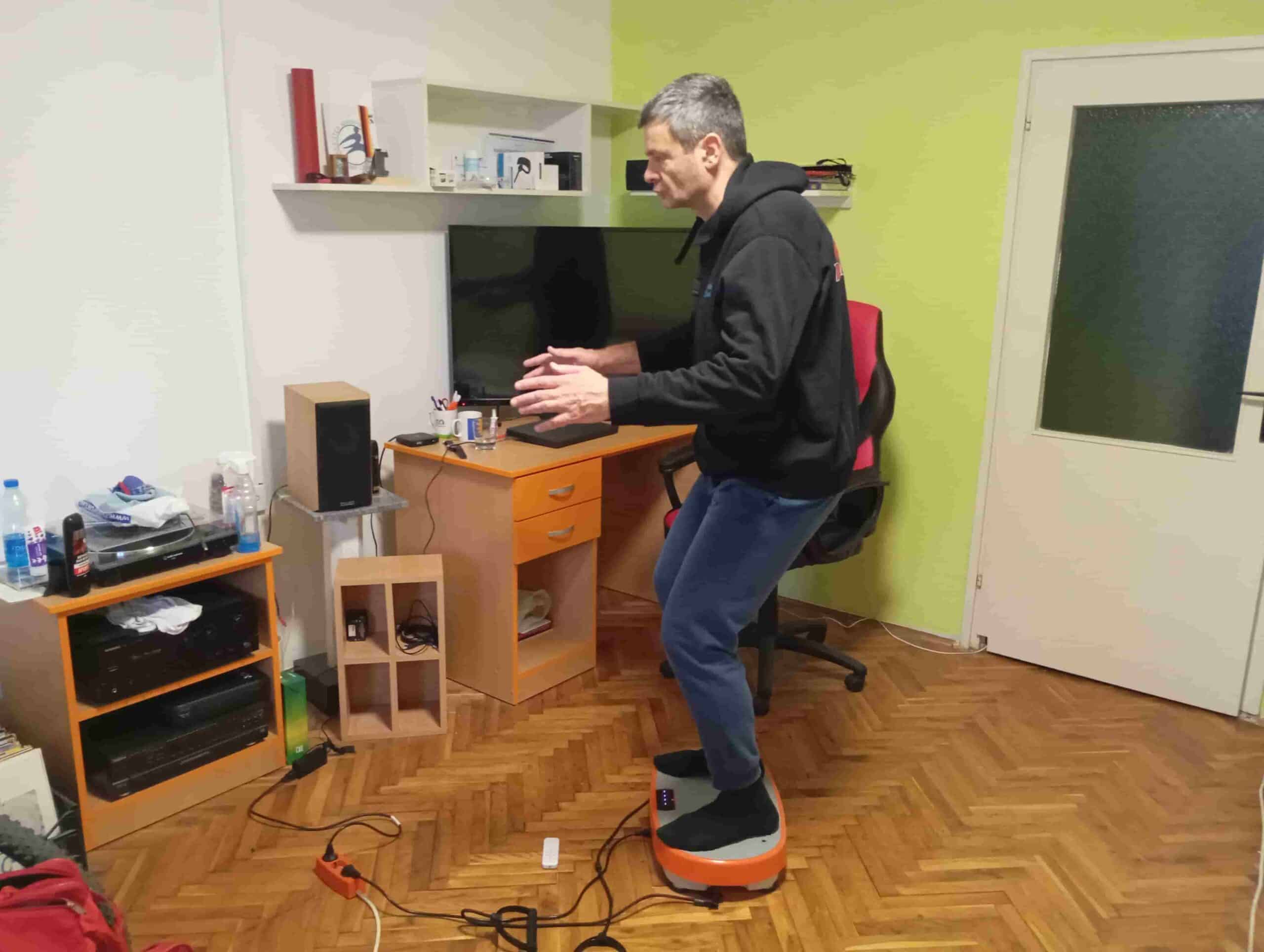
I combine those real-world sessions with structured measurements of vibration frequency, amplitude, G-force, stability, build quality, and safety. In practical terms, that means standing, balancing, squatting, and even sitting on these machines while recording hard data.
I work with vibration platforms every day, so I can feel the difference between a plate that only shakes the surface (like a loud massage pillow) and one that transfers real force into the body. In fact, studies show that as a platform vibrates, it transmits energy to the body and forces your muscles to contract and relax dozens of times each second.
Effective plates trigger strong muscle contractions, boost blood flow, and engage stabilizing muscles – benefits linked with improved strength, bone density, and flexibility. Weak plates barely move your muscles, while powerful ones make training feel easier yet more effective.
As an independent brand in vibration therapy and low-impact exercise, Vibration Plate Zone exists to help consumers compare equipment and make safer, better-informed choices.
Testing always starts with essential performance checks, then moves into targeted workouts for circulation, mobility, strength, and recovery. Only after weeks of use can I say whether a plate is worth buying. I apply the same methods to every model so comparisons stay fair. Throughout, I focus on performance, not looks: many sleek machines have weak motors, and some simple platforms deliver serious power. I also keep detailed notes on each model, building a comparison database that highlights patterns (for example, two plates may be equally powerful, but one might feel more stable or quieter than the other).
Testing Vibration Plates in Real Conditions
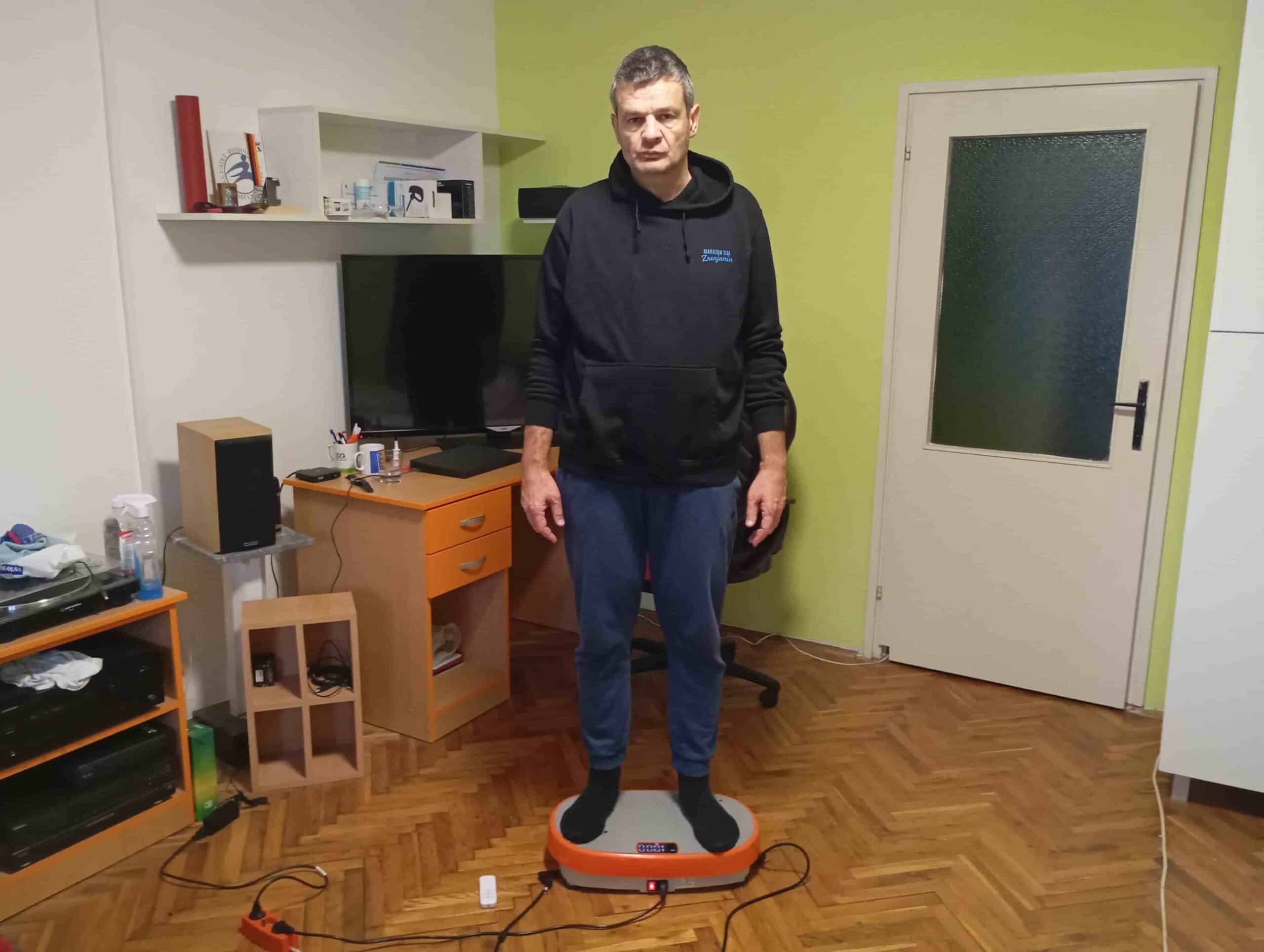
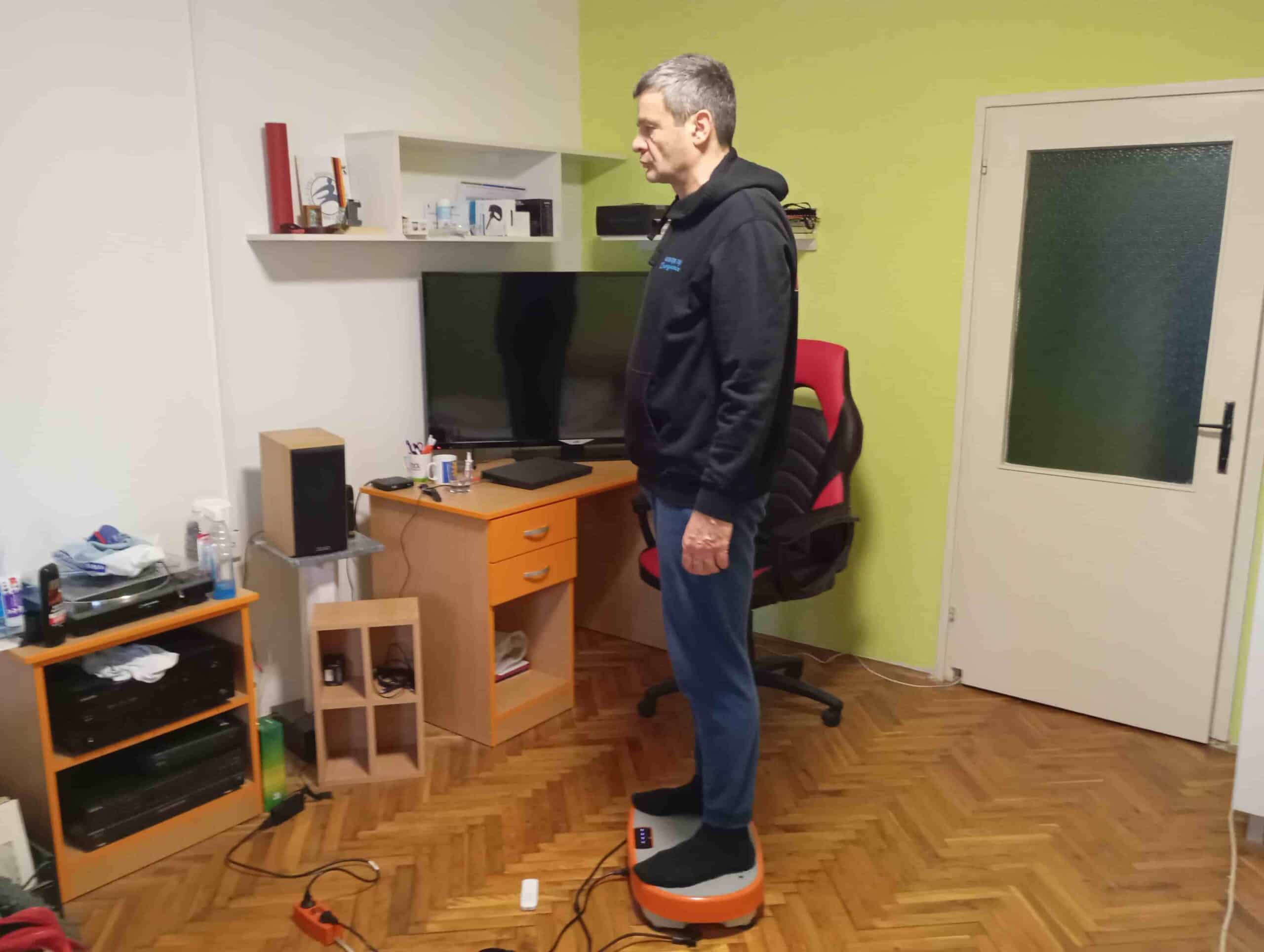
I never review a vibration plate after just ten minutes of standing on it. Real results come from repeated testing over weeks. This long-term approach reveals whether the motor holds up, if new noises develop, or if the vibration weakens under the user’s weight. In fact, even consumer guides stress looking at build quality and durability over time.
In practice, I follow a consistent checklist of stages for every plate:
- Setup quality and build inspection: I begin by assembling the machine and checking its construction. I look for a solid frame, tight screws, and clear instructions. A sturdy machine should feel rigid (no wobbling frame) and have stable leveling feet or rubber pads. Poor assembly or flimsy materials often lead to rattles and failures. For example, a vibration-plate guide notes that models supporting higher weight capacity (300+ lbs) generally have sturdier construction. I also inspect the power cord and console fit. Any unusual sounds or difficulty assembling a plate are red flags before we even plug it in.
- Frequency and amplitude verification: Next, I verify that the plate’s actual vibration settings match the manufacturer’s claims. I place an accelerometer on the platform to measure true frequency (Hz) and amplitude (mm). Frequency, measured in hertz, is how many vibration cycles happen per second; amplitude is how far the platform moves up and down. Higher frequency and amplitude produce more intense workouts. In testing, many plates claim a wide range (e.g. 30–50 Hz), but often only reach top speeds when no weight is on them. I run through all speed settings with my full body weight to see the real operating range. I also note if the platform’s amplitude stays consistent under load or if it drops off toward the center (a common flaw in cheaper units).
- Stability and noise evaluation: I then evaluate how stable and quiet the machine is. I stand on the plate at different speeds and feel for any excessive shaking, wobbling, or vibration transmitted to the knees and hips. A high-quality motor should stay smooth and quiet; cheap motors often grind, rattle or buzz under load.
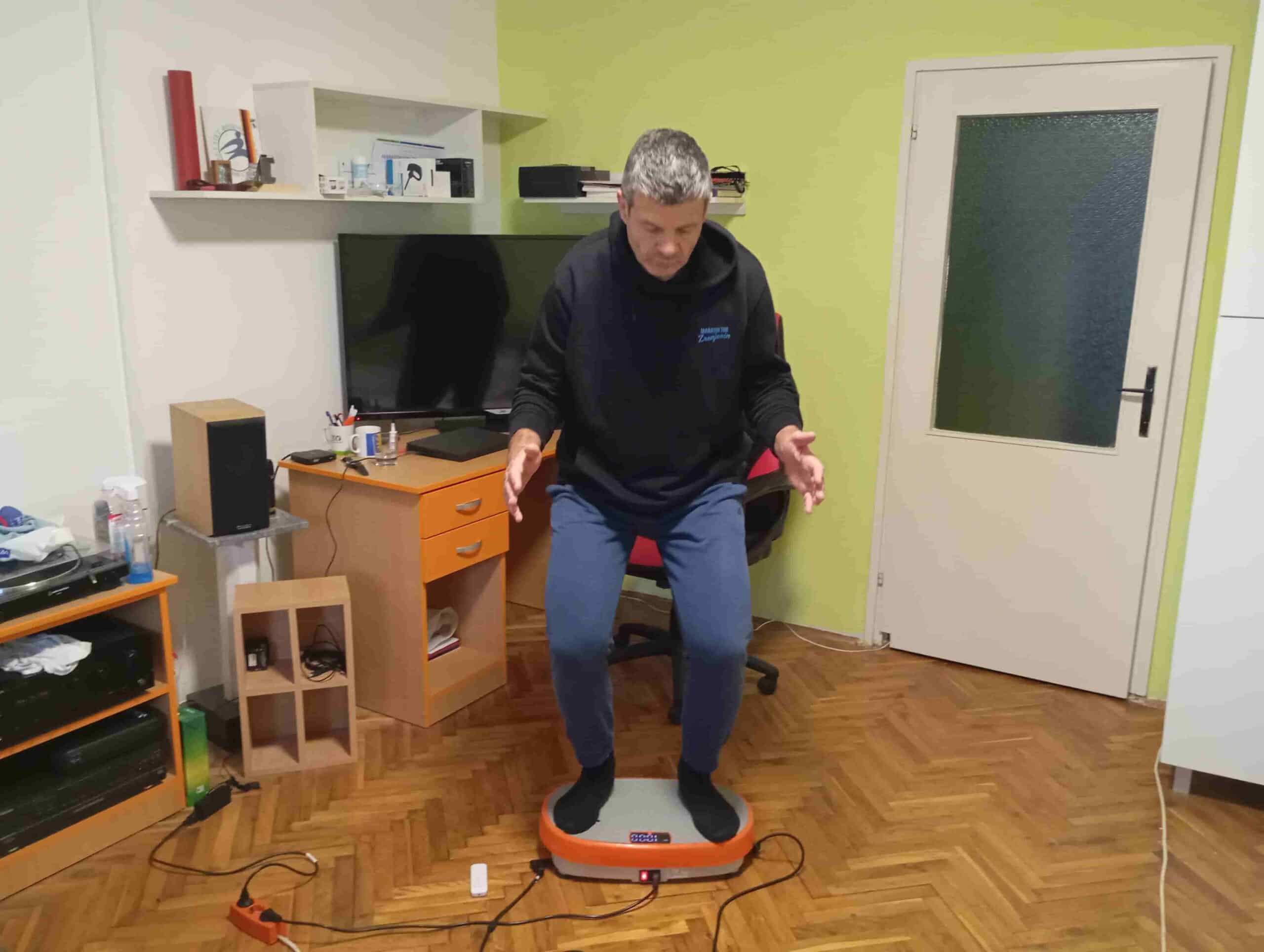
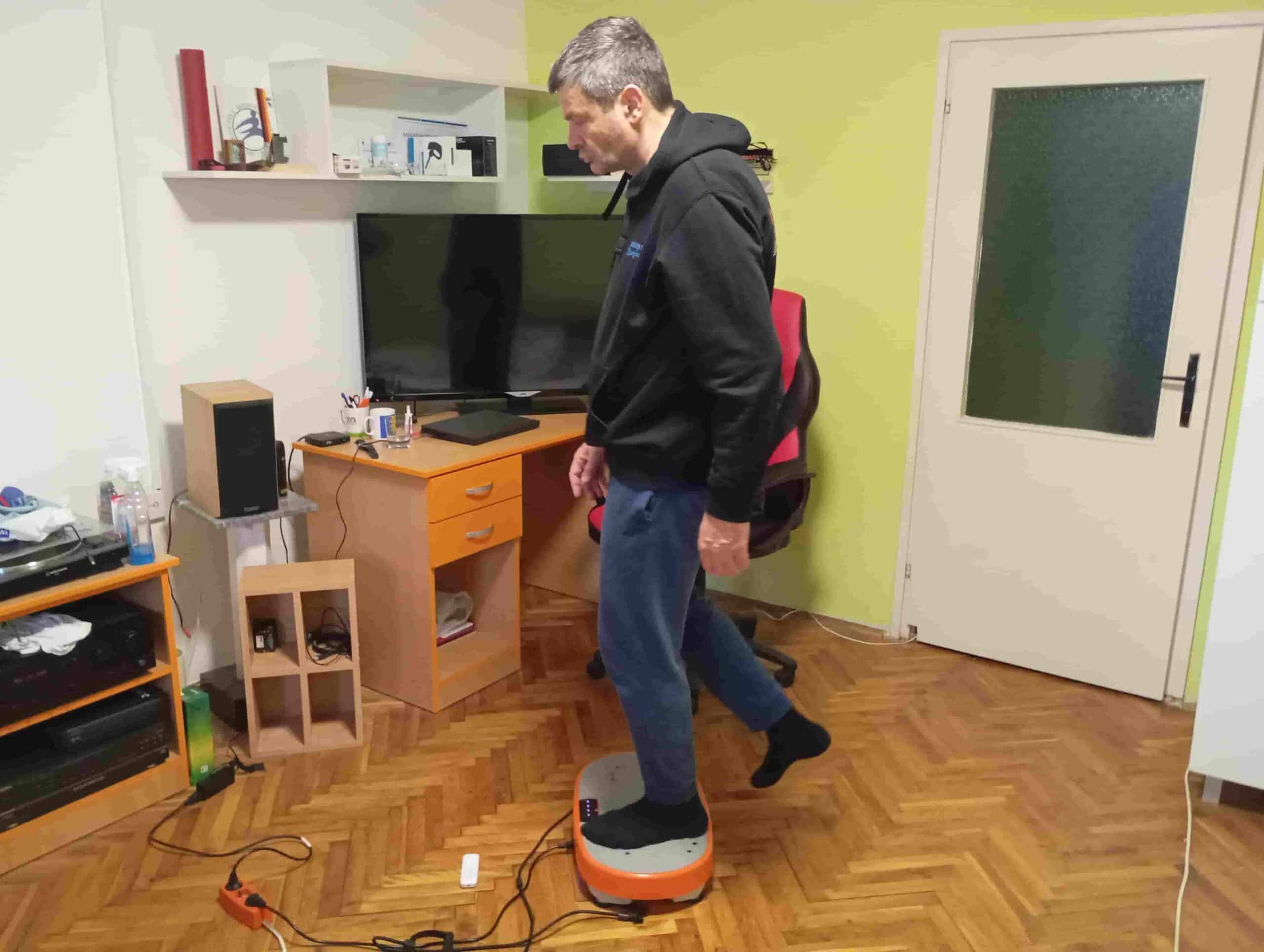
While little formal data exists on noise, user reports consistently praise “smooth and quiet” machines and complain about models that seem to shake the frame instead of the platform. I listen at each speed level and try different body positions to see if any hidden resonances or frame vibrations emerge. Additionally, I let the machine run for 10–20 minutes to check for heat buildup. Good motors stay cool even in extended sessions, whereas underpowered ones will overheat and shut down quickly. - Balance and posture control tests: Because whole-body vibration challenges stability, I run balance drills on each plate. I try standing normally, in a wide stance, on one leg, and even leaning my hands on the platform. I also do seated positions (on stools or mats on the plate) to test circulation. These positions test whether the plate can maintain even vibration under uneven weight shifts.
A strong plate should not “drop out” or shift dramatically when moving from light to heavy load (for example, during a squat). I observe if my balance is compromised or if I feel pulled forward or backward. Good plates feel predictable; poor ones can cause jitteriness or unexpected jolts when changing stance. I also check posture aids: some models include handrails or bands. These should attach firmly and not shake loose. - Workout sessions for strength, circulation, and mobility: After the initial checks, I perform targeted workouts on the plate over several days. According to clinical studies, different vibration frequencies and amplitudes can affect the body in specific way. Lower frequencies (e.g. 20–30 Hz) tend to enhance blood flow and lymphatic drainage, while higher frequencies and amplitudes promote muscle activation.
I design workouts for each plate focusing on various goals: circulation sessions (low intensity standing or seated to boost blood flow), strength routines (high intensity squats, lunges, push-ups to fatigue muscles), flexibility drills (stretches and lunges to assess range of motion gains), core exercises, and recovery protocols (gentle post-workout use). I do each workout multiple times on each machine. For example, I’ll do five days of circulation-focused routines at low speeds and five days of strength workouts at high speeds. This real-use testing reveals how each plate actually affects recovery and soreness. - Long-term wear testing: I use the plate daily, often as my warm-up or recovery tool. Over weeks, I track whether the frame loosens, plastics crack, rubber feet wear down, or electronic controls fail. Many inexpensive plates begin to shake themselves apart under long-term use, whereas high-quality ones stay solid. I note any increase in noise or any change in vibration feel. If a plate felt strong on day one but weak by day 30, that indicates a serious durability issue. I also test warranty support by seeing if anything goes wrong that needs service.
- Daily-use comfort: As I use the machine for everyday workouts, I pay attention to user comfort. I check the platform’s foot grip and texture: it must be non-slip but not so abrasive that it hurts bare feet. I train both barefoot and in shoes. A textured surface should keep feet planted firmly (especially important for users with neuropathy or joint pain), but if it’s too soft or cushioned, it can dampen the vibration and reduce muscle engagement. Platform size is another comfort factor: larger plates allow for natural squat or lunge positions without feeling cramped. Small platforms can make users feel unstable or “on a narrow step,” which can intimidate beginners or seniors. I pair these checks with actual exercises like one-leg stands and balance poses to confirm that users can safely change stance without slipping.
- Safety checks across all presets: Finally, I review each plate’s safety features. I examine the controls and user interface: the display and buttons should be clear and easy to read, and any remote control or mobile app should respond reliably from standing height. I test switching speeds and programs mid-session to ensure transitions are smooth. Good machines ramp up or down gradually; cheap ones might jump or even stop abruptly when you change settings, which can be jarring or unsafe.
I verify that there is an obvious emergency stop (often a red button or cord) that immediately kills all vibration. I also check that low-speed modes actually stay low – some plates can’t maintain very gentle vibrations, which is a problem for beginners. Along the edges of the platform, I look for design cues: ideally the foot placement zone is flat and non-slip with minimal raised edges. Some budget machines have awkward raised borders that feel unsafe during a squat. In short, I ensure every aspect of the machine’s control, preset programming, and physical design fosters safe use.
These steps give me a complete picture of how each plate performs under realistic conditions. For example, early in testing I always start with short, 10-minute daily use sessions (standing, basic movements) to see how the plate affects circulation, muscle engagement, and balance. Even here, I’m checking for any strange vibrations traveling into my knees or lower back because an uncontrolled vibration pattern can cause joint discomfort. In this phase, I also let the machine run empty between sets to see if it stays quiet or suddenly “changes its tune” after a few minutes. By the time I reach the full workouts, I know whether the plate is a reliable training partner or a novelty item.
Measuring Frequency, Amplitude, and G-Force
Two of the most important specifications of any vibration plate are its frequency and amplitude. Frequency (in hertz, Hz) is the number of vibration cycles per second, and amplitude (in millimeters, mm) is how far the platform moves up and down with each cycle. Together, these determine the plate’s G-force, which the acceleration force it delivers to the body. In fact, physics tells us that higher frequency and amplitude combine to create a stronger acceleration (G) on your body.
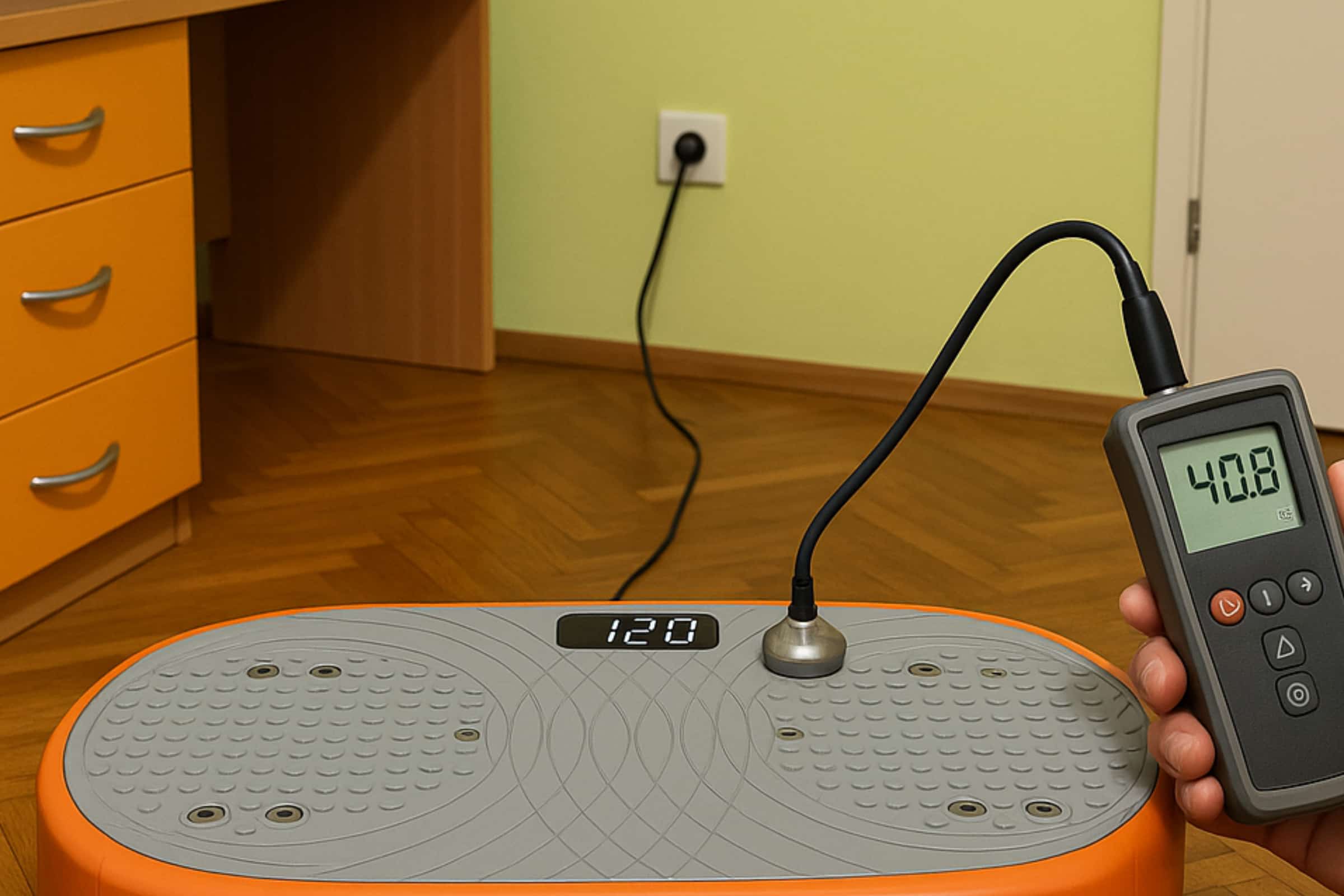
In my evaluation, I always verify these parameters for each machine:
- Frequency accuracy: I set the plate to its advertised frequencies (e.g. 30, 35, 40, 45, 50 Hz, etc.) and use an accelerometer or smartphone vibration app to measure the actual output. Often I find that unloaded (no weight) the plate can hit high frequencies, but as soon as I stand on it, the true frequency can drop. I compare the measured Hz against what the spec sheet says. If a plate claims 50 Hz but only gets to 45 Hz at 200 lbs, that’s a big mismatch. Consistency is key: I also check at multiple weights (75%, 100%, 125% of user weight) to see how loading affects frequency. A robust motor will maintain its speed even under full load, while weaker ones will slow down.
- Amplitude measurement: I measure how far the platform moves vertically at different intensities. Low amplitude (1–2 mm) feels like a mild surface jiggle, whereas high amplitude (6–8 mm or more) causes visible, aggressive shifting. Using a ruler or motion sensor at the plate’s center and edges, I quantify the stroke length. I do this with and without my weight. Many cheaper machines show strong amplitude at the edges but much less in the center, which means the advertised spec (usually taken at the edge) can be misleading. I note if the amplitude drops significantly when loaded. Strong plates should deliver near-spec amplitude even under body weight. This matters because amplitude directly influences muscle stretch; low amplitude gives gentle reflexes, high amplitude forces deep muscle contractions.
- Stability at different weights: Alongside frequency and amplitude, I check overall stability by placing progressively more weight on the plate. I stand on it normally, then with hands on the platform, then knees or push-ups (if safe). Each position increases load. An underpowered plate will often show a “step” behavior: at a moderate load it works fine, but when you squat or lean on it, the motor can’t keep up, causing the vibration to jump or fade. I monitor the accelerometer and also note by feel if the intensity suddenly drops. A well-built plate will handle the transition smoothly, maintaining speed with no sudden sag.
- G-force output: Finally, I calculate or measure the G-force if possible. Higher Gs mean more acceleration on the body, which intensifies muscle engagement. Some high-end testers use force plates or accelerometers to compute exact G-force. In practice, I ensure that on each preset or program, the acceleration seems strong and consistent. If two plates have the same frequency and amplitude specs, but one “feels” stronger (for example, its acceleration graph is steeper), it’s likely because the actual G-force is higher. Unfortunately, manufacturers rarely publish G-force, but users can infer it: look for machines with high-end motors and sturdy design (often indicated by higher weight capacity, since those must produce more force.
By rigorously measuring frequency and amplitude, I separate novelty shakers from true fitness tools.
Testing Motor Strength and Platform Stability
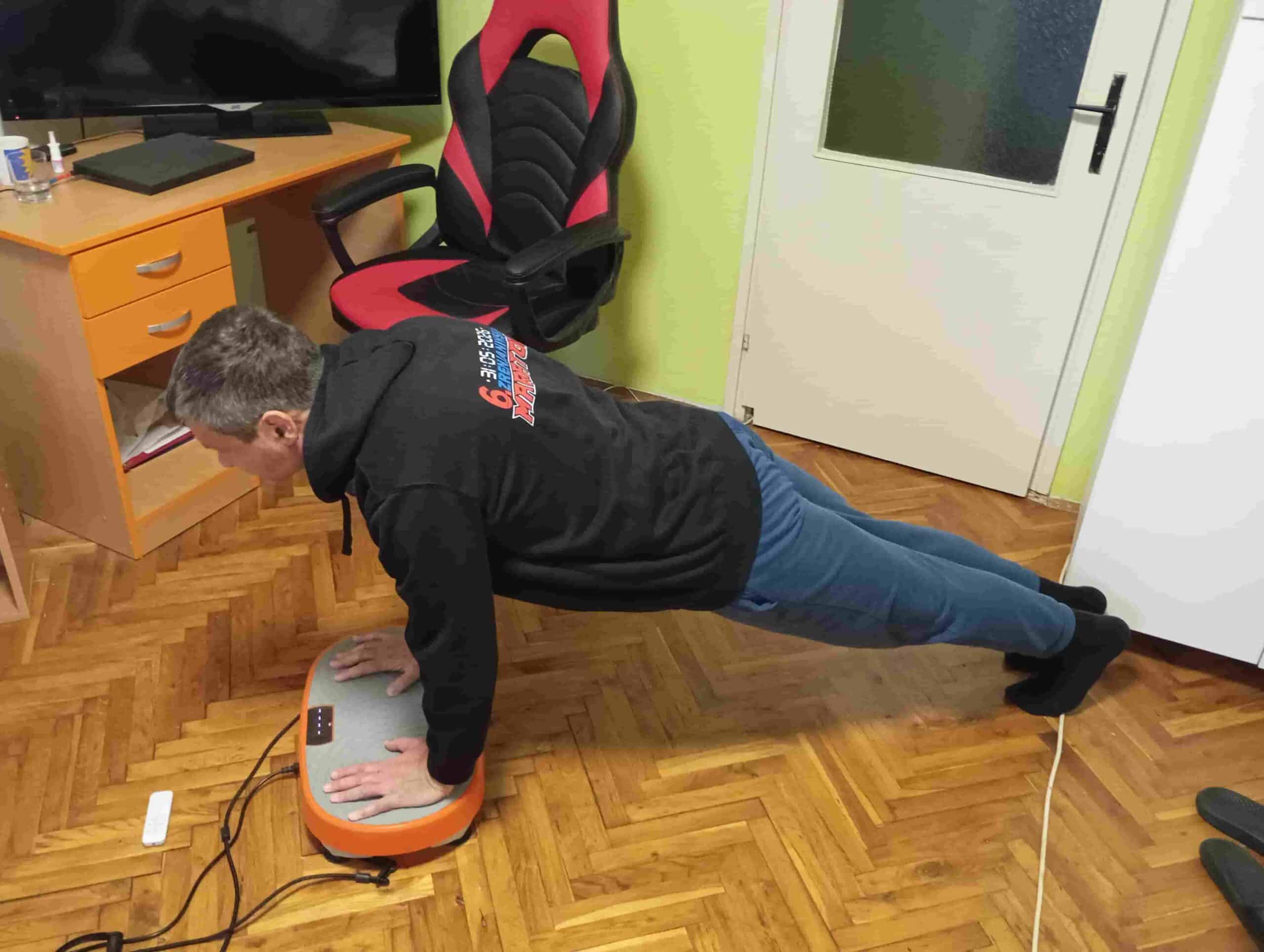
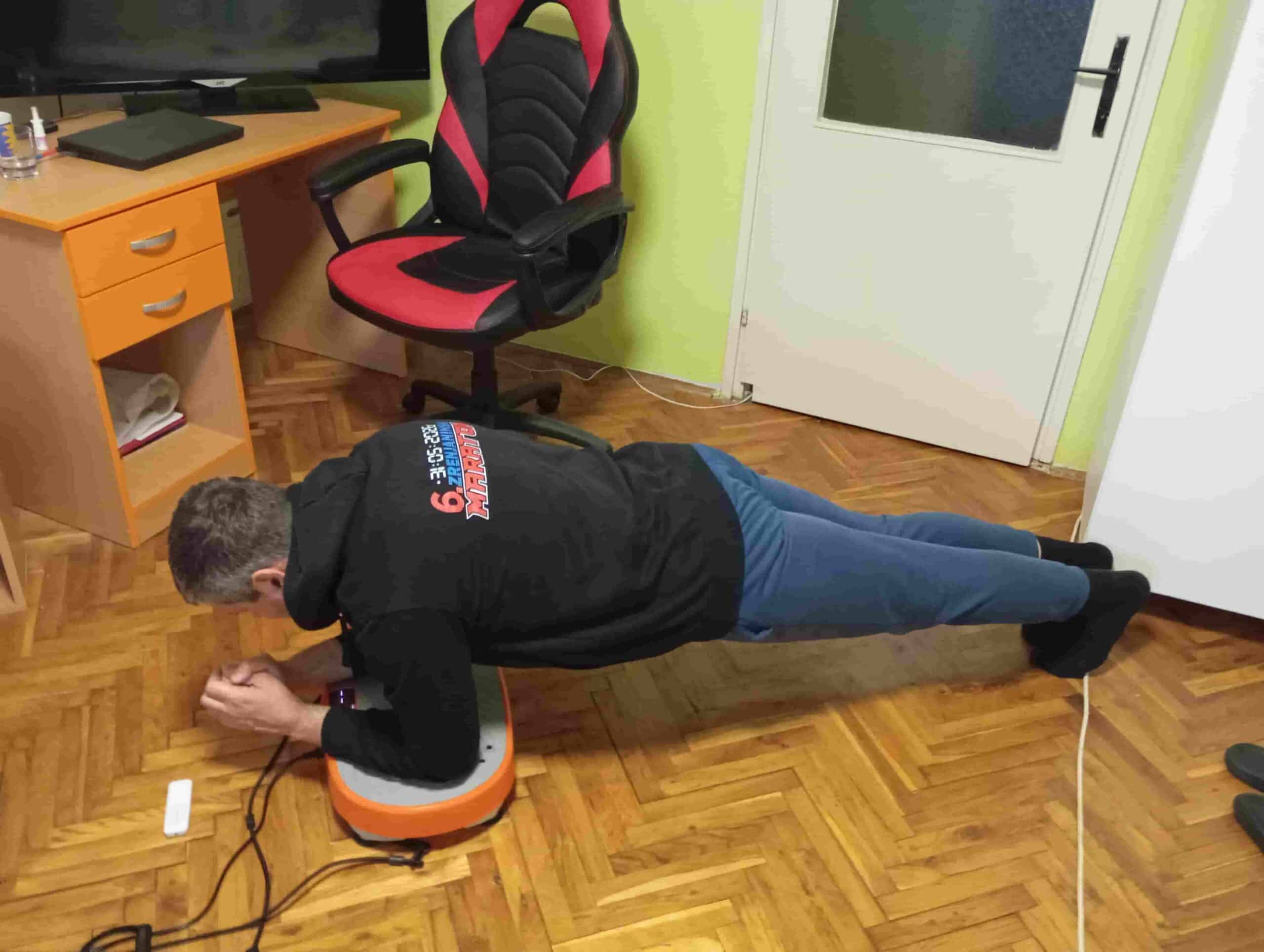
A vibration plate’s motor is its heart, and power output must hold up under real use. Weak motors will struggle as soon as weight is applied or when you move into demanding positions. In this stage, I deliberately vary body positions to challenge the motor:
- Both feet centered: I stand normally with feet shoulder-width apart. A strong motor should maintain full power and a smooth feel at each setting. I look for any change as I lean forward, backward, or shift side-to-side. If the platform lulls or surges, the motor might be hitting its limit.
- Feet wide on outer platforms: Many plates have a wide deck or texture zones. I place my feet on the edges to see if the outer platform deflects differently. This also increases torque on pivot plates. A good machine will have even vibration across the plate; a poor one might be weaker at the edges or introduce wobble.
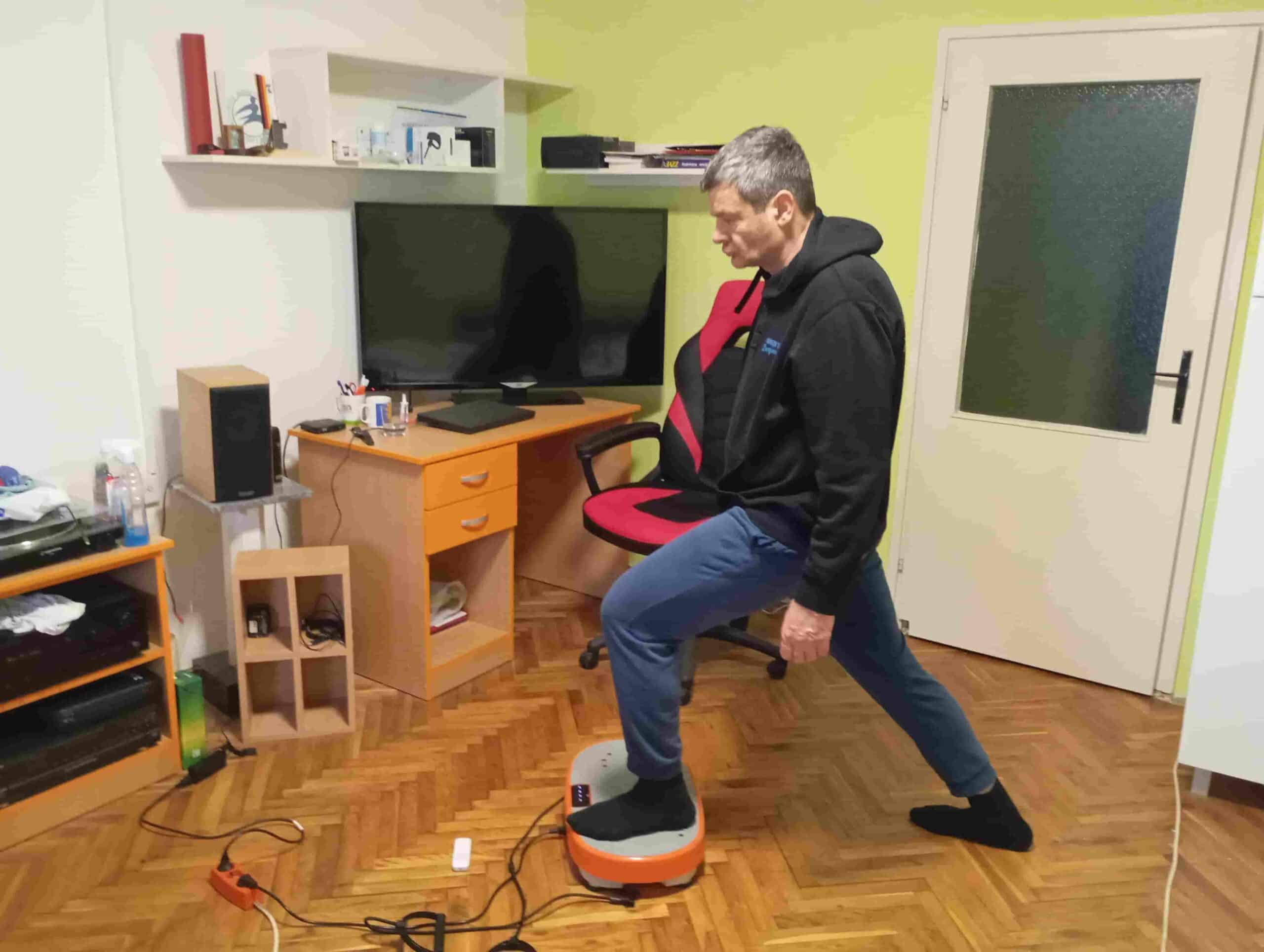
- One-leg stance: Balance poses like single-leg stands or lunges stress one side of the motor. I try standing on one foot in the center (or even doing a lunge) to see if the plate remains level. Any jerking or tilting under one-sided load means uneven force distribution. I also test upper-body versions, like supporting one knee on the plate while balancing, to replicate a user with mobility issues.
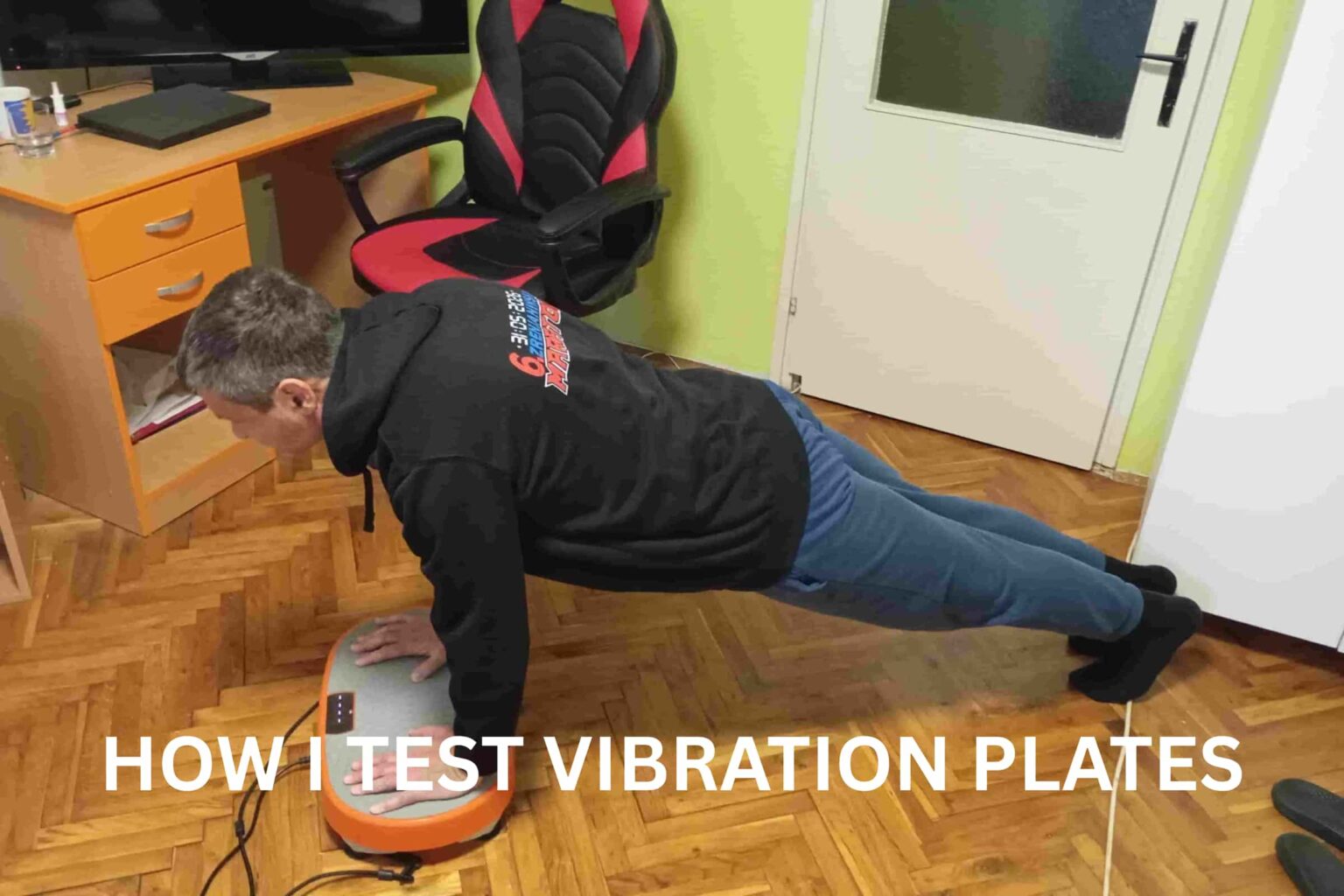
- Hands on the surface (upper-body training): I place my hands on the platform (push-up or plank positions). This not only increases load, but also tests if the vibration transmits strongly through the hands and arms (some medical reviews note whole-body vibration can help upper-body circulation as well). The motor should hold its frequency even when supporting my upper body on it. If it slows, it lacks torque.
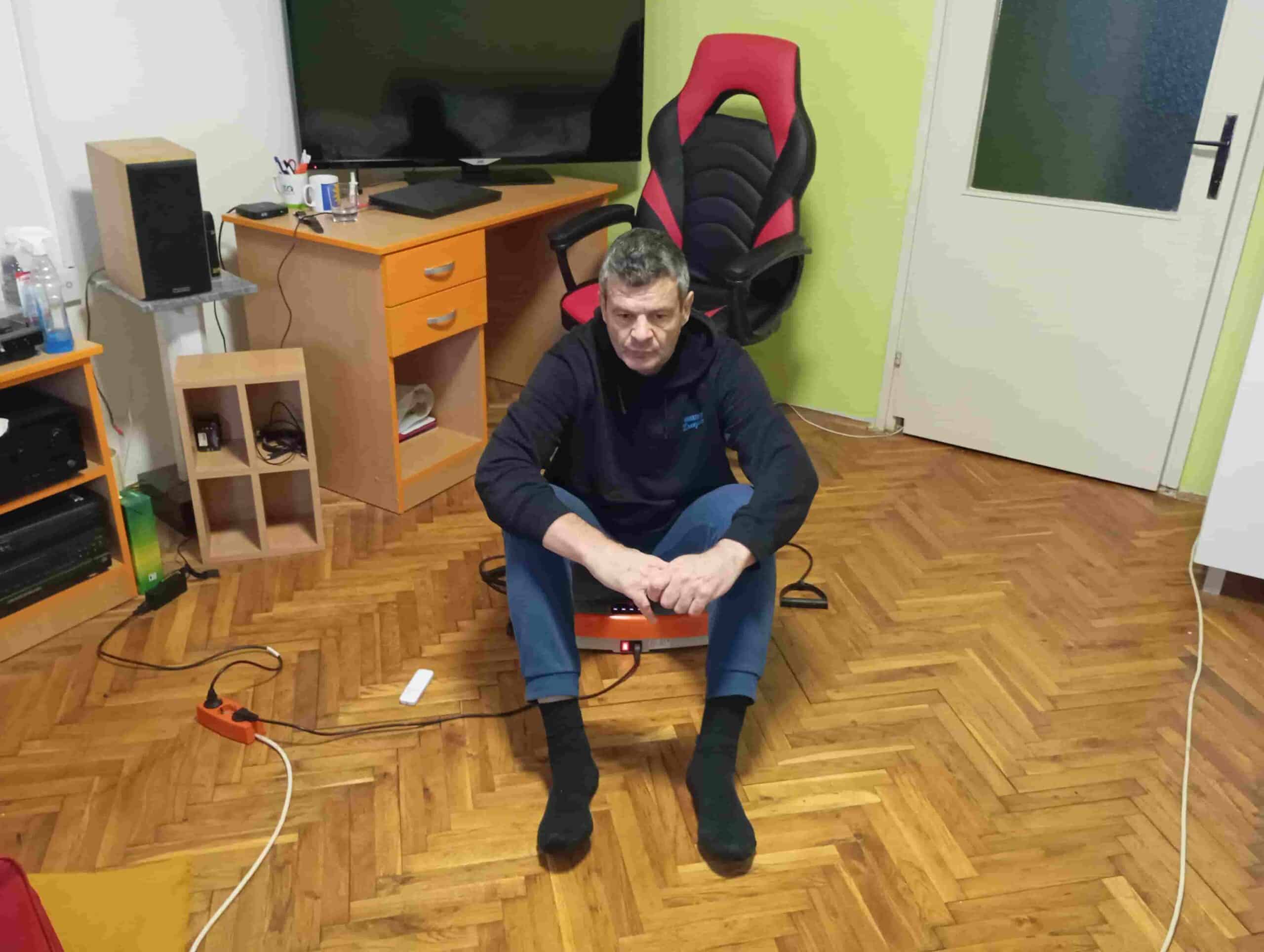
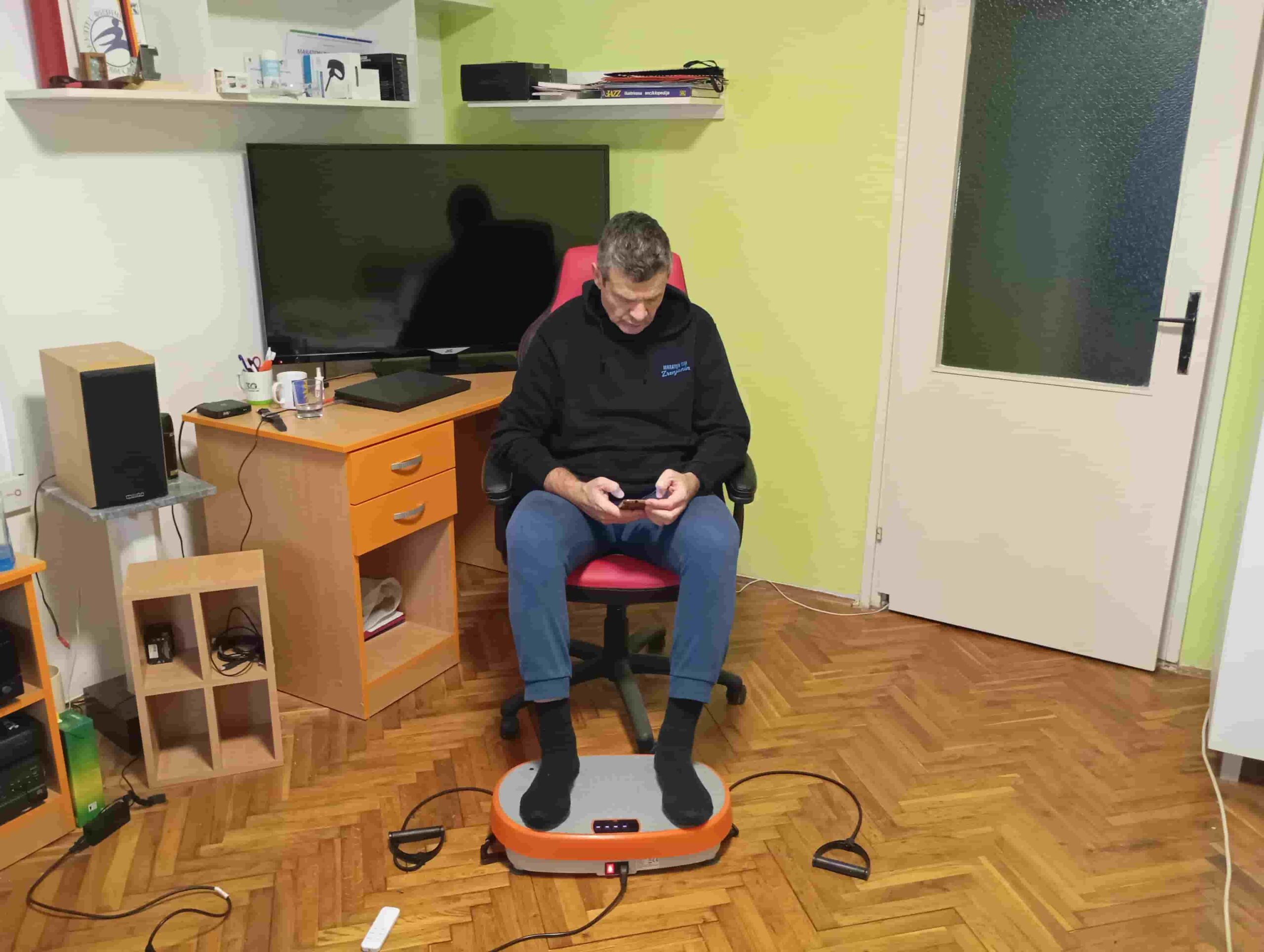
- Seated positions (circulation focus): Finally, I sit on a chair or stool placed on the plate (with lower legs on the platform). This simulates passive vibration for circulation. The motor still has to handle extra load from my seated weight. A quality plate remains consistent.
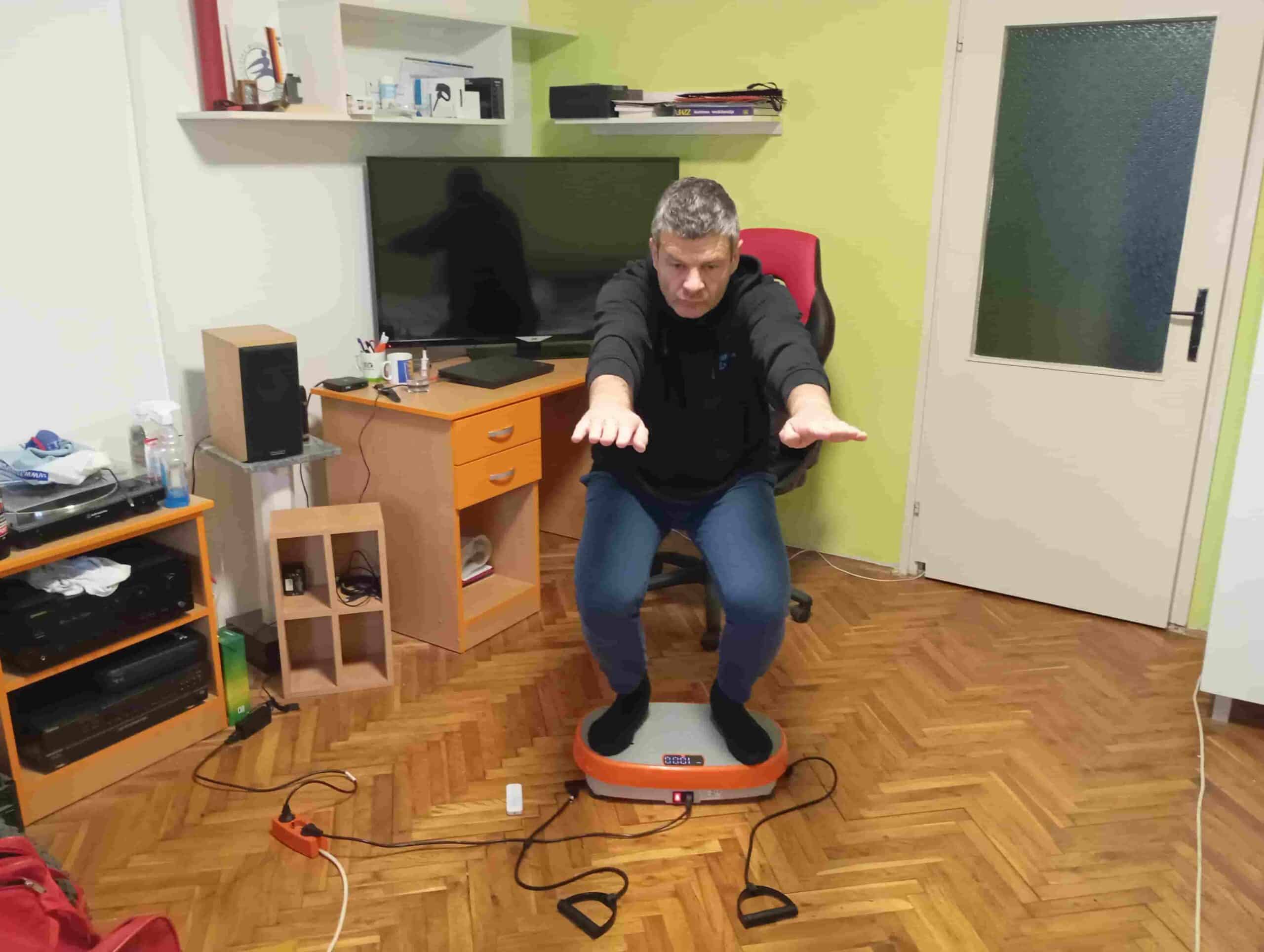
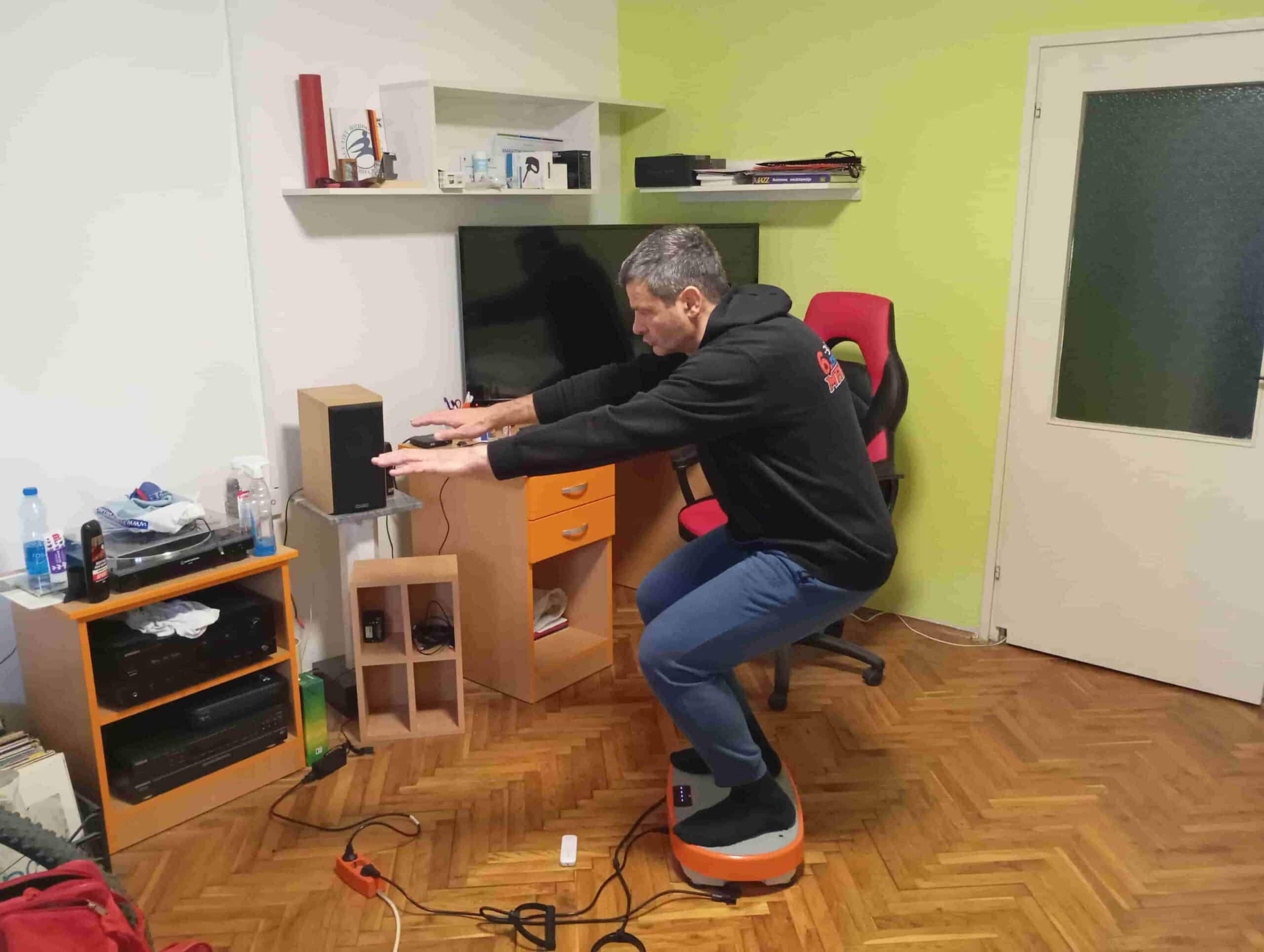
If a plate vibrates strongly with feet on it but then feels weak during squats or push-ups, it’s a sign the motor isn’t up to par. I also monitor motor temperature during these tests: some motors will overheat after 15–30 minutes of continuous use. I run a long static hold at medium-high speed to see if a thermal cutoff or speed reduction occurs. (No one wants a plate that “dies” mid-squat.)
Noise is another telltale: during these strength tests I listen for grinding or buzzing as load increases. Smooth motors stay quiet; cheap ones become noisy when pushed. Loud noise often means internal parts are straining. All of this evaluation (load, heat, and noise) tells me whether the plate will maintain performance over heavy workouts. So far, the plates that pass this stage unchanged tend to be the ones I recommend for real training use.
Testing Platform Size, Foot Grip, and Surface Comfort
A vibration plate can only help if the user feels comfortable standing on it. Many people buying WBV machines have balance challenges, neuropathy, or joint pain, so platform design is critical. In this phase, I assess three key aspects:
- Foot stability: I stand on the plate (barefoot and with shoes) to judge how secure it feels. The surface should prevent slipping. I look for non-slip rubber or texture zones that grab the foot. Platforms with large, grippy surfaces are much safer, especially for users with balance issues. Vibration plates should be “sturdy” and have traction (like rubber feet or mats) so the whole machine doesn’t move. If the entire unit shifts or vibrates underfoot, that’s unsafe. I try one-foot balance drills to confirm stability: on a good plate, I can stand on one leg without sliding; on a bad one, I feel the platform or mat moving under me.
- Grip texture: The pattern underfoot should have raised rubber or nubs, but not too aggressive. I test by wearing thin socks and trying common workout poses (squat, plank). If the texture digs into my feet painfully, it could irritate nerves during long sessions. Conversely, if the surface is too soft or padded, it will absorb the vibration and reduce muscle engagement. Striking the right balance is key.
- Platform size: I measure the deck dimensions and then actually do lunges and side stretches. A small plate (like 16×20 inches) severely restricts movement; you can’t lunge fully or even do a wide squat comfortably. Larger plates (20×30 inches or more) allow normal stance and even cross-body movements. This matters for advanced exercises (e.g. wide squats, Pilates plank, lunges) and for users who want to feel unrestricted. In everyday testing, I note if I have to shuffle feet off the plate or if any part of my body overshoots the deck. A premium plate provides plenty of room so the user can focus on the workout, not on where to place the feet.
To illustrate, imagine a senior with peripheral neuropathy: they need a stable, roomy platform with gentle surface since they may have reduced feeling in their feet. A narrow plate might make them feel unsafe (like standing on a narrow step). On the other hand, a young athlete wants to do lunges and push-ups, so they need space to move and a firm grip to hold poses. In my tests, I try both extremes (barefoot, with socks, with sneakers) to ensure the plate works for different user profiles. This helps identify models that are “all-purpose” versus those only suitable for one type of user.
Testing Controls, Presets, and Safety
Even the most powerful plate can be frustrating or dangerous without good controls. In this stage I evaluate the user interface and safety features:
- Remote responsiveness: If the plate comes with a remote control (either a hand-held device or a Bluetooth app), I test it at normal standing height and even from a distance. The remote should register commands immediately without requiring an awkward angle. I also check if I must point it right at the machine or if it works around obstacles. A simple remote will serve you just fine. Complex remotes are less of a priority if they work well, but they must not be finicky.
- Display clarity: The console display (or screen) should clearly show the current setting, time, and mode. I stand several feet away to see if numbers are readable. Since I often glance at the console while exercising, it must not be tiny or dim. Some plates have LED screens, others backlit LCD; I note the readability under normal lighting.
- Simple preset controls: I go through any built-in programs or presets (some machines have pre-programmed routines, others allow manual speed selection). I check that buttons or menu choices are intuitive. The ideal plate lets you quickly set frequency (Hz) and time with minimal fuss. I also ensure that when switching programs or speeds, the transition is smooth. Good plates change incrementally or softly ramp up/down. Cheaper ones might jump suddenly from 20 Hz to 30 Hz, which can be jarring. I do mid-session changes (e.g. press “+” or select a preset while in use) to ensure nothing glitches.
- Smooth speed transitions: Linked to presets, I specifically test whether changing speeds causes any jolting. I will, for example, gradually increase the speed during a squat and watch/listen. The motor should accelerate smoothly; it should never jerk or stall. A sudden lurch can throw off balance. If a plate does “lag” when increasing speed, I note that as a safety risk.
- Emergency stop function: Most plates have a big red safety switch or button; I verify it works instantly. I press it mid-vibration and expect an immediate shutdown. Delayed stopping is unacceptable. Also, I check any “magnetic key” or cord stop: if the plate has a pull-cord, I tug it to see if it cuts power. This simulates if someone needs to hit an emergency stop without looking at the console.
- Low-speed safety for beginners: For users new to vibration, the lowest speeds should feel gentle and controlled. I test the first few settings to see if they are truly low-intensity. Some machines can’t produce a very subtle shake at the bottom range, making it hard to start easy. Also, I observe whether the plate vibrates through the frame at low speeds. Ideally, the motion should come through the plate surface; if the frame is rattling instead (often indicated by loud noise even at low speed), that’s a sign the machine’s base isn’t stable.
Additionally, I test any accessories included for safety: resistance bands, foam handles, rail attachments, etc. Bands should hook securely without slipping out during fast vibration. If there’s a railing, I grab it firmly and see if it holds steady or wobbles. All of these features should feel like they are built for vibration, if any wiggle or rattle, it could break under stress.
Throughout this process, I also pay attention to edge safety. I try placing my feet just on the edge of the platform during a squat (a common thing users do to vary stance width). If the edge is flat and grips the foot, I feel secure. If it’s a raised lip or awkward shape, it feels unsafe; one slip could send a foot off. In short, I check that the control interface and physical design minimize risk of missteps or sudden movements.
Real Workouts to Test Circulation, Strength, and Mobility
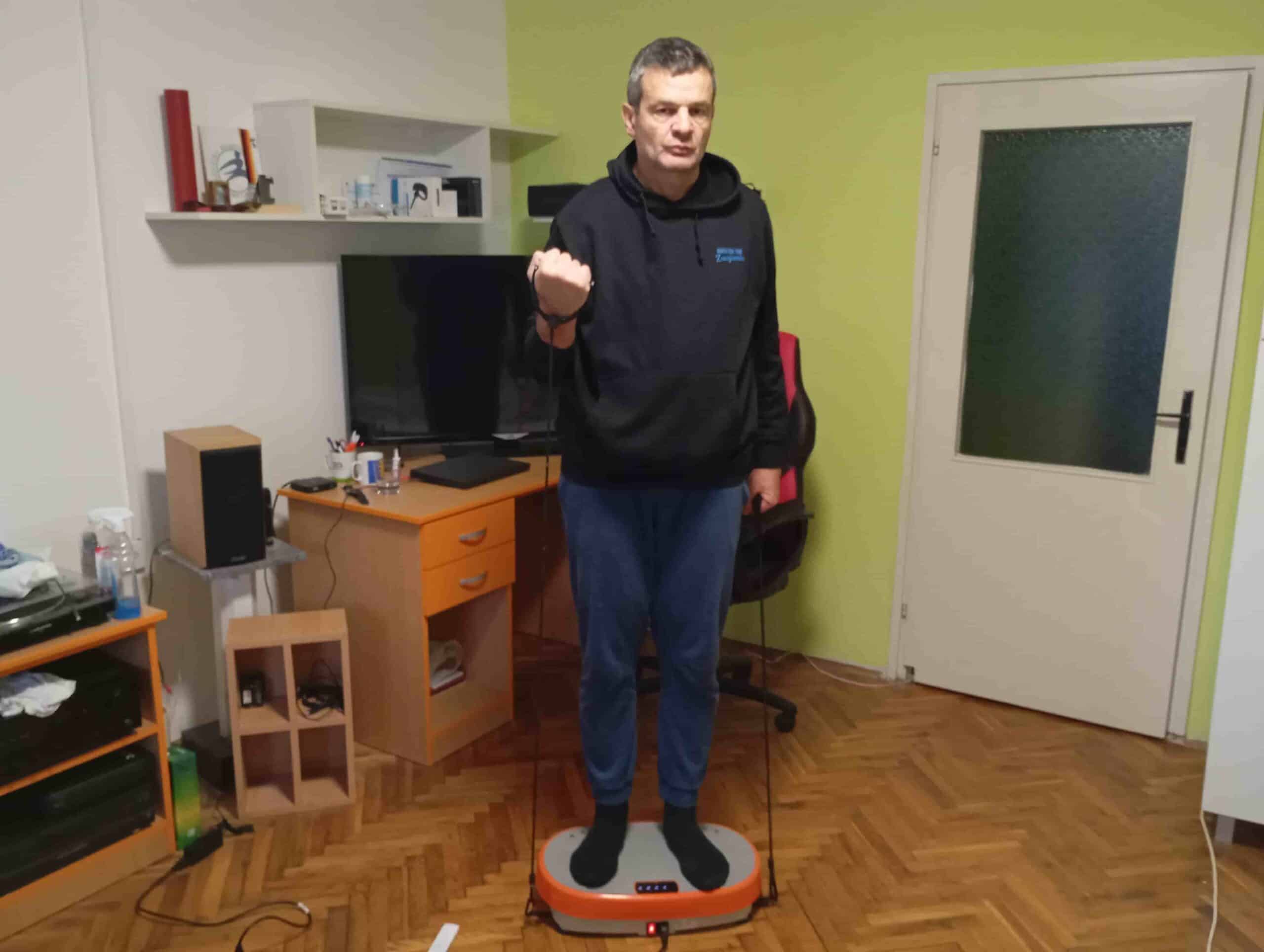
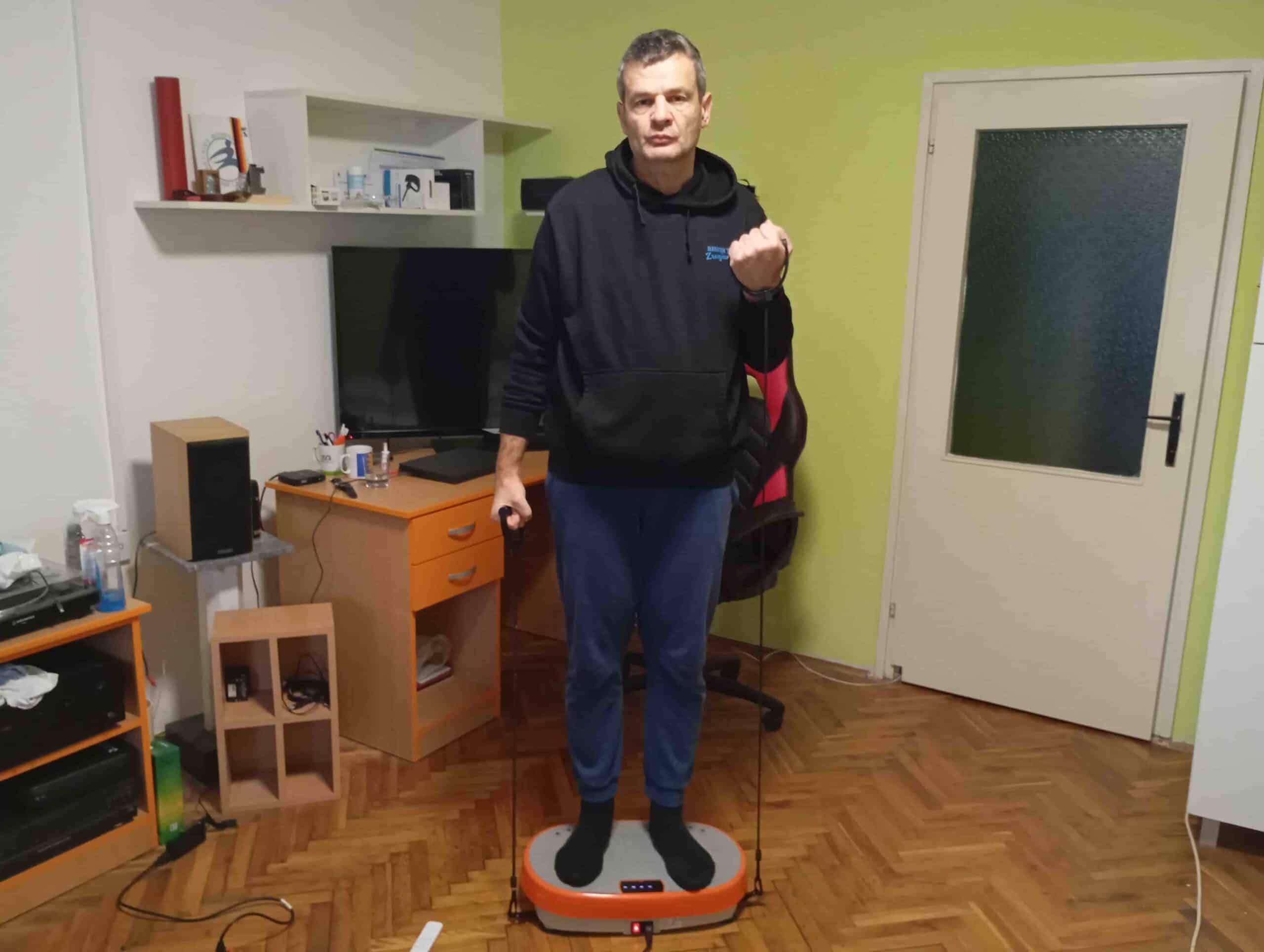
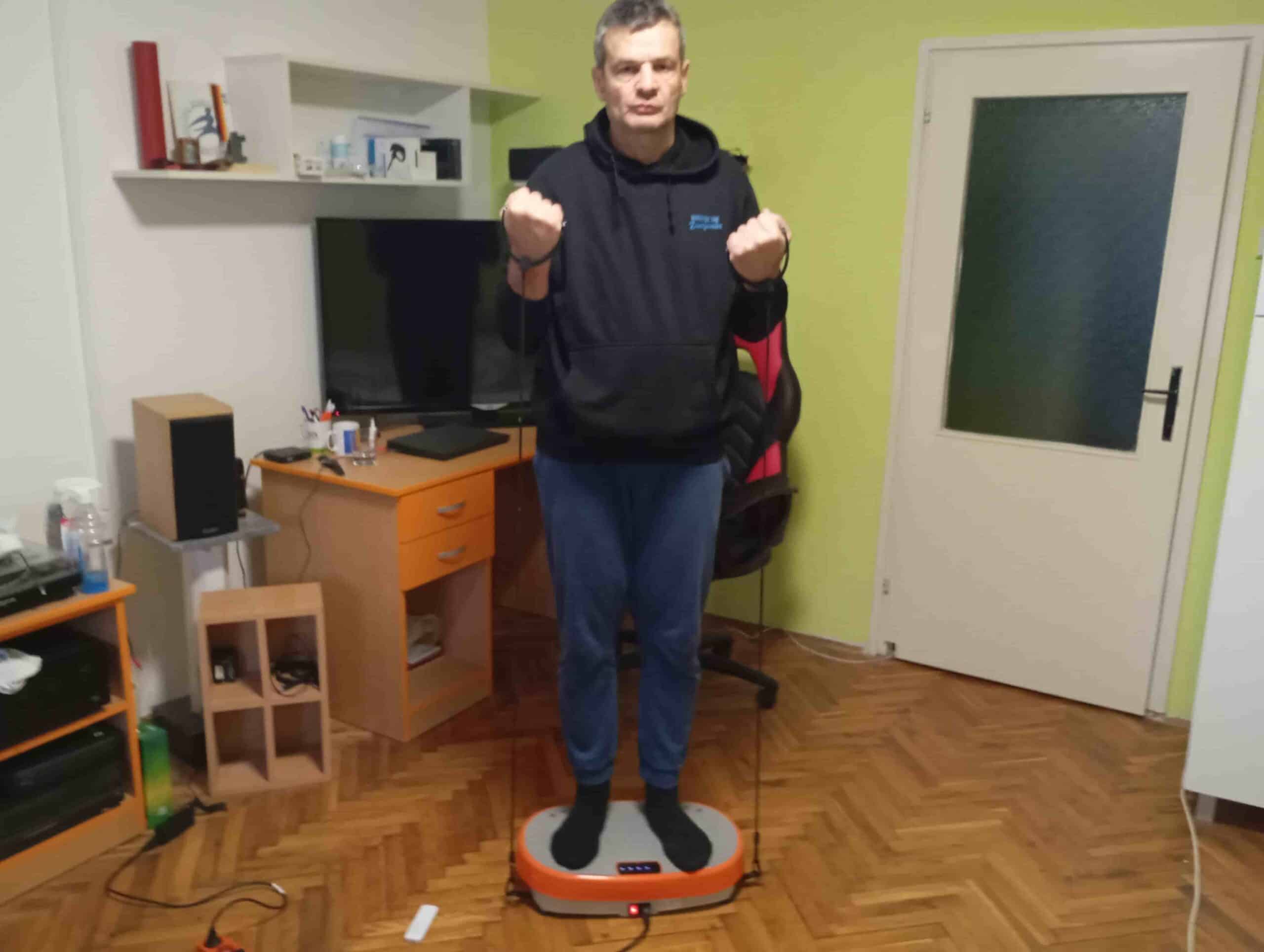
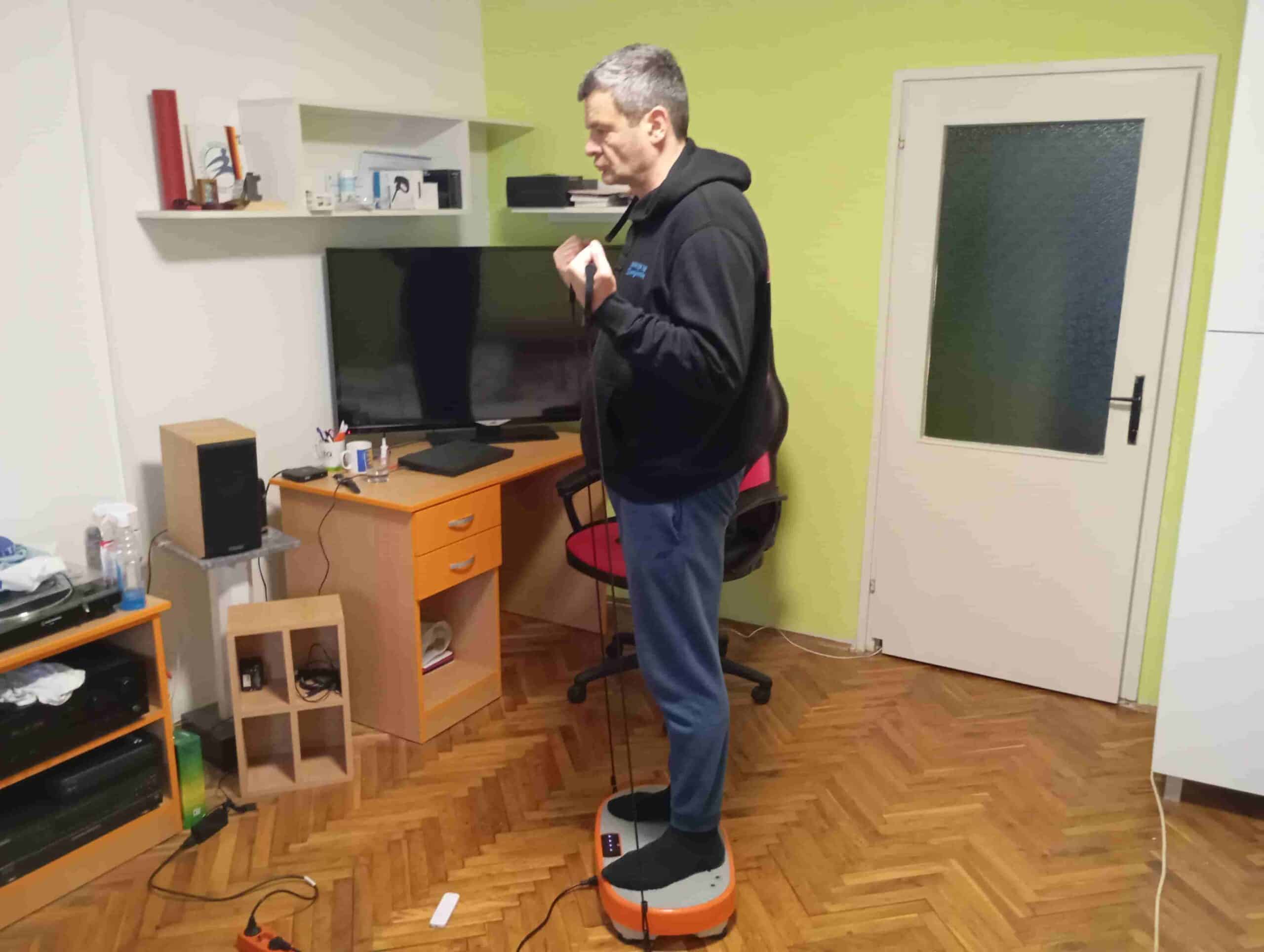
At this point, the data collection is solid, but numbers only tell half the story. I complete the testing with real workouts on each plate to see actual results on the body. I follow multiple workout styles as if I were the end user, each repeated over several days:
- Circulation and lymphatic drainage sessions: These use lower frequencies (e.g. 15–25 Hz) and generally standing or seated positions. The goal is to increase blood and lymph flow without fatiguing muscles. For example, I might do 10 minutes standing with a slight squat/knee bend rhythm at 20 Hz, or 10 minutes sitting with feet on the plate. Research suggests that WBV can acutely boost circulation; one notable study found a short period of vibration exercise doubled skin blood flow for at least 10 minutes afterward. I watch for how quickly warm-up and tingling in the legs occur. Plates with good amplitude at low frequency should cause a pleasant pulse effect.
- Strength and balance workouts: These use higher intensities. I do squats, lunges, and push-ups at each speed level, often with wider foot placement for extra challenge. Higher frequency (30–45 Hz) and amplitude settings are used here. The idea is to fatigue muscles quickly. I note how deep and rapid my contractions feel; effective plates produce strong trembling that really shakes the muscles. I also test balance: for instance, holding a one-legged squat on a vibrating platform is extremely challenging if the plate is powerful. A machine that allows me to maintain form in these exercises (without slipping or having to cut power) is performing well.
- Flexibility and mobility drills: These include dynamic stretches like forward lunges, hamstring stretches (one foot on plate, one on floor, bending at the knee), and shoulder openers (hands on plate, leaning in). The vibration should help me achieve slightly deeper stretches with lower effort. I check if, over several days, I gain any extra range of motion compared to doing the stretches off the plate. Plates that deliver consistent vertical motion (vs. jolty or oscillating motion) tend to give smoother stretching assistance.
- Core activation exercises: I also test core moves like planks or seated twists. I either place my forearms on the plate (for a vibrating plank) or sit on it and do trunk rotations. This tests how far vibration travels up into the core. A plate with strong amplitude should make these exercises noticeably harder, causing my abs/back muscles to reflexively engage.
- Recovery and soreness relief sessions: After leg-intensive workouts (like after a long ride or run), I perform light circulation sessions on the plate to see if my muscles feel less tight afterward. Anecdotally and in literature, good vibration plates can aid recovery by promoting blood flow and reducing muscle soreness. I compare notes from my legs after sessions on different plates; with the best models, I notice reduced stiffness the next day, whereas a weak plate makes no difference. While hard data on soreness is limited, I trust the subjective feedback: a plate that feels like it “loosened me up” is one that probably has enough power to make a difference.
I systematically record observations. For instance, some plates may have excellent amplitude but shaky frequency control. In that case, the vibrations feel “loose” and unpredictable during dynamic moves, reducing their effectiveness. Others might have stiff frequency but low amplitude, making the shake feel rigid and shallow. Either extreme is a problem. The ideal plates hit a balance: consistent, powerful pulses that feel rhythmic.
In these hands-on workouts, I note how each machine affects my performance and recovery. For example, I’ll track whether my legs feel fresher after riding when I use the plate for recovery. A high-quality plate often shows real benefits, whereas a poor one simply “spins” beneath me without impact.
Comparing Plates Against Each Other
All data and notes for each model go into a growing comparison database. Every new plate I test is evaluated against past results. Key comparison points include: strength under load, control options (remote, presets, app), user comfort (size, grip, noise), frequency range, safety features, and durability.
The goal is to show readers what to expect in context. For example, if two machines have similar max Hz and amplitude, I compare how they feel in practice: which stays stable at 50 Hz under a heavy squat? Which one cools its motor better? Which one has a better warranty or build? Some small brands surprise by outperforming pricier names, and vice versa. I document any patterns: do certain brand lines consistently produce stable vibrations? Does any model consistently collect dust because it can’t keep up?
I also filter marketing claims through this framework. Big promises on a box mean nothing if my tests can’t confirm them. For instance, a plate might advertise a “g-force of 12 g” but if I measure only 6 g at full load, that’s misleading. In my reports, I try to quantify differences. For example, when one plate “rattles” at high speed but another stays smooth, I’ll cite the difference in measured acceleration variability or simply describe the felt difference.
Strong machines always stand out: they remain strong throughout the testing phases. Weak machines show their flaws early on (low amplitude, slow motor, poor construction) and those issues persist. Because I use repeatable tests, readers can trust that conclusions come from consistent methods, not just one person’s gut feeling. When I say a plate is the “best overall,” it’s because it excelled in multiple categories (power, comfort, safety) consistently during my testing.
Long-Term Durability and Wear
Beyond a few weeks, I continue to monitor each plate’s condition. This answers the question: will this thing still be working in a year? I look for signs of wear:
- Motor heat and sound: If a motor heats up significantly after 20 minutes, I retest it after it cools to see if performance changed. Ideally, the motor should sound and feel the same after repeated sessions. If the motor starts to grind or the bearings get noisy, I document that.
- Frame and assembly integrity: I revisit the screws and bolts on long-term machines to see if any have loosened. I also look for plastic cracks around button housings or welds, and check the integrity of the feet and mats. Many cheap plates “vibrate themselves apart”; parts come loose or break. A good plate remains tight for a long time.
- Remote and electronics life: I test the remote or app periodically. Does the remote battery drain quickly? Does the console still respond as initially? Early failures here (buttons sticking, screen dimming) are red flags.
- Oscillation mechanism (if applicable): Some plates use belts or oscillating joints. I check their tension or lubrication over time. A belt-driven plate might need an occasional belt adjustment. I note if any mechanisms squeak or change behavior.
- Noise increase: Even without obvious damage, I compare the noise profile after a month. A stable machine will sound just as smooth after many hours of use. If it’s gotten louder or started to vibrate at low speeds it didn’t before, that indicates parts are wearing.
During this endurance phase, a plate that was solid on day one but fails by day 30 cannot rank highly. My notes will state: “After 3 weeks, model X developed a persistent rattling sound at mid-speeds,” or “motor temp remained low even after an hour for model Y.” Only plates that stay smooth, quiet, and powerful over the long haul earn a spot on my recommended list.
Safety, Balance, and User Access
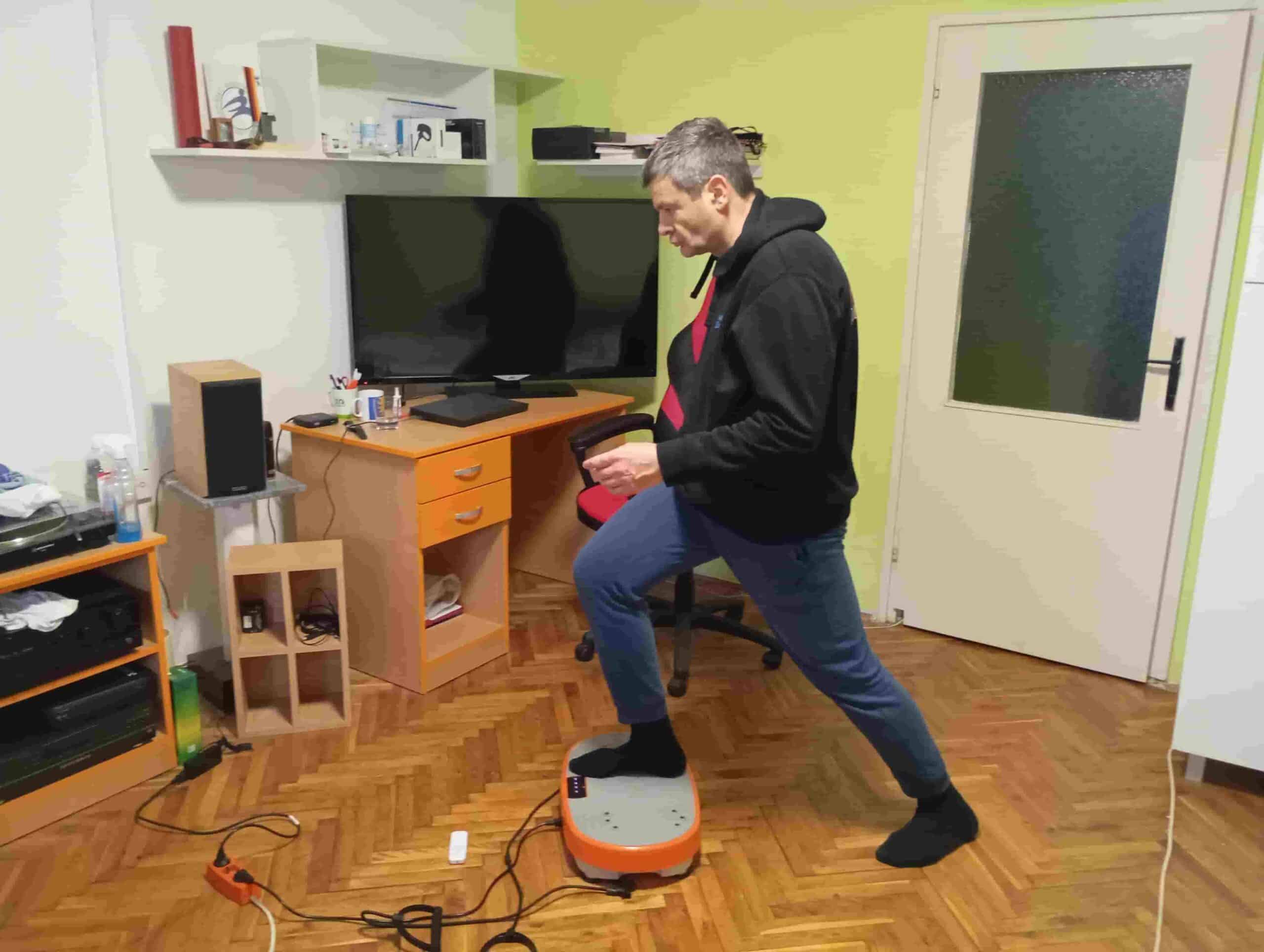
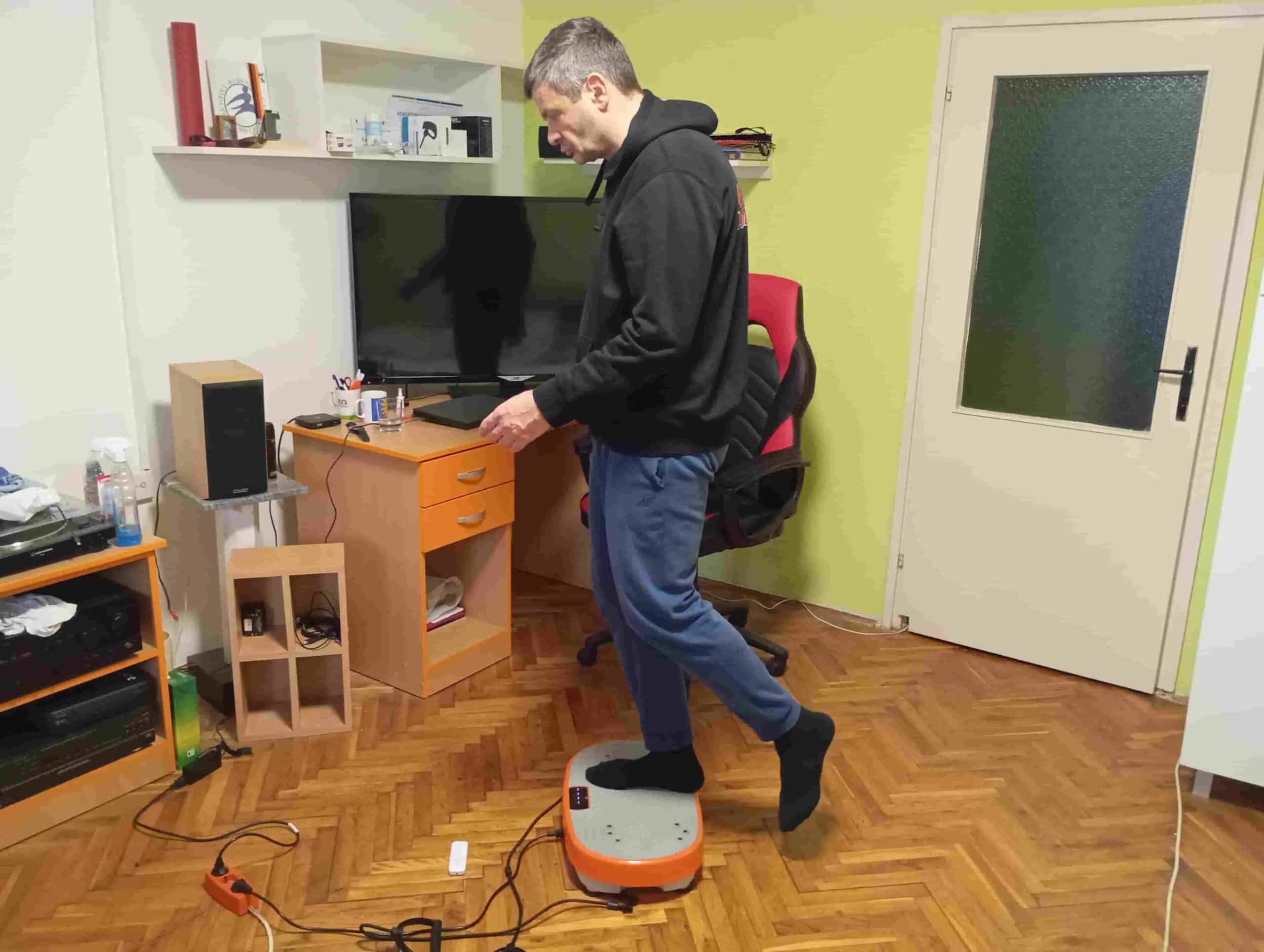
Not every buyer is an athlete. Many vibration plate users are beginners, seniors, or people recovering from injury. I evaluate each machine for how accessible and safe it is for those groups:
- Stability for beginners: I look at each plate from the perspective of a novice. Is stepping on/off easy (some have handles or side grips for support)? Are there instructions clearly printed? For someone shaky on their feet, a machine that wobbles slightly at low speed is unacceptable. I actually test beginners’ scenarios by using very low frequencies and seeing if I can keep my balance with eyes closed. If the plate is “jumpy” or unpredictable, I mark it unsafe for novices.
- Low-speed control: I advise caution for people with balance issues and at risk of falling. Please consult your doctor first. Consistent with that, I check each plate’s very lowest settings. A smooth, gentle shake is needed for those users. I note if any plate’s lowest setting still feels too aggressive or if it can’t maintain a slow constant speed.
- Safe step-on and step-off: I watch how the plate behaves as I step onto it from a low stool or step. It should start gently (some have an “acceleration mode” that slowly spins up). Also, an emergency stop should be easily reachable by hand from the plate or must include a pull-cord so a fall won’t lock someone on.
- Smooth program changes: Abrupt changes can scare or throw off a user. As mentioned, I try switching modes. If a mid-session mode change jerks the platform, I log that as unsafe.
- Clear display: For an older user, the console must have large, bright numbers and buttons that don’t require fine dexterity. I mark any display that’s too small or poorly lit. Even under normal room light, a dim screen can cause confusion.
If, during any of these tests, I lose my balance or feel uneasy, I consider that plate risky for the general population. Vibration plates demand balance, so anyone with severe balance issues, osteoporosis, or who is pregnant should proceed with caution. In my report, I’ll note which machines have extra safety features (like handrails) or lower maximum intensities that make them more friendly for such users. Ultimately, a safe vibration plate is one that people of all levels can get on, adjust, and use without fear of unexpected jolts.
What Makes a Plate Worth Buying
After all testing and research, I distill the findings into straightforward criteria for a good purchase. The final questions I ask about each plate are simple but telling:
- Does the vibration feel strong or shallow? A shallow, low-amplitude shake is essentially useless. A strong, well-delivered vibration will make exercises more effective and comfortable.
- Does the frequency stay stable under weight? If the motor slows or fluctuates when I step on, that’s a fail.
- Is the surface safe and comfortable? A safe plate has room to move and keeps the user planted; an uncomfortable or cramped surface discourages regular use.
- Does the motor stay cool during prolonged workouts? Overheating indicates the motor was underpowered to start with.
- Can beginners use it safely? Even a powerful plate is only useful if a newbie can ramp up gradually without fear.
- Does it show real results in daily use? Ultimately, does using this plate lead to noticeable circulation boost, muscle engagement, or recovery benefits?
Weak machines typically answer “no” to most of these. They end up collecting dust because they feel like a novelty. Strong machines consistently make training easier (meaning more effective) and safer. The data from my tests show the machine’s potential (numbers on G-force, frequency range, noise level), but the workouts prove whether the plate actually helps a person.
Putting it together, I assign a thumbs-up only to those plates that excel in both metrics and hands-on use. For example, if a model hits 50 Hz and 8 mm amplitude on paper, but during workouts it feels limp and unsteady, I’ll mark it down. Conversely, a plate might not have the highest spec sheet figures, but if it delivers smooth, vigorous motion and reduces muscle soreness or improves balance in my sessions, it gets credit.
My Testing Protocol Summary
My overall protocol for testing vibration plates looks like this:
- Frequency and amplitude check – Measure true output vs. claims (with and without user weight). Ensure specs match reality
- Stability and noise test – Evaluate how the plate holds up under load and at all speeds, listening for any strange noises or frame vibrations.
- Comfort and platform size check – Assess the deck space, texture, and safety of stepping on/off. Test barefoot and with shoes for grip.
- Real workouts – Perform a battery of exercises (squats, lunges, push-ups, balance holds, calf raises, and seated circulation sessions) across multiple days. Observe muscle activation, circulation effects, and ease of use.
- Safety and control testing – Check the controls (remote, buttons, display) for responsiveness and clarity. Verify the emergency stop and low-speed modes for safety.
- Long-term use – Use the plate daily for weeks, noting any wear, heating issues, or changes in performance.
- Comparison to other models – Place the data and impressions side-by-side with other plates I’ve tested to rank them fairly.
This systematic approach gives each model a fair chance to prove itself. The results show up quickly: a good plate helps people, and a bad plate becomes obvious. To help you with all your questions, I created a dedicated vibration plates FAQs page so do check it out.
Product Placement and Recommendations
Vibration Plate Zone is an independent consumer brand focused on home vibration therapy, recovery, and low-impact fitness, created to help people make informed and confident decisions. Every step in our testing process is leading to this - choosing the right vibration platform for your needs.
Based on my rigorous testing, the most reliable vibration plates are those with strong motors, solid frames, and stable vibration output. In practice, all-around performers tend to be consistently powerful over time and support a wide range of workouts. These are often the plates I recommend first. For example, models with lineal (up-down) motion typically hit higher G-forces, making them great for strength training. Models with oscillating motion are often gentler and better for circulation.
For specific needs, plates that excel in lymphatic drainage and fluid movement are usually pivotal (tilting) platforms set at lower frequencies. The plates I’ve tested that score well here have strong low-end control and a smooth action, allowing a gentle pulsing effect on the legs (important for reducing swelling). In our site’s Lymphatic Drainage guide, those machines are highlighted, and my tests confirm they indeed provide a soothing, effective action without causing joint discomfort.
For home use or compact spaces, smaller but still sturdy plates can work. In our Home Use article, we highlight units with quiet motors and stable bases. My tests show that the best compact plates still reach at least ~40 Hz at full load and have secure grip, despite their size. A key is finding the right balance: some of the smallest plates sacrifice power, so I only endorse those that kept adequate intensity in testing.
Finally, if budget is a concern, I look for plates that passed the “power and build” portions of the test despite a lower price. Occasionally, I find mid-range brands that outperform some premium models. Conversely, I’ve seen expensive plates fail durability (sometimes “over-engineered” gadgets can break under constant vibration). My recommendation list highlights these findings: every plate I recommend has proven itself through the same demanding process. In short, only machines that stay powerful, safe, and quiet over many workouts “rise to the top.”
In summary, my testing combines objective measurements (frequency, amplitude, G-force, noise) with subjective, functional workouts. This dual approach ensures that when I recommend a plate, whether it’s featured as a top pick on my site or mentioned in a comparison chart, readers know it has been vetted both in the "lab" and in real-life use. After all, a vibration plate is worth buying only if it consistently helps you feel and perform better, day after day.